


Plant Biology
Plant Biology encompasses a wide range of growth regulators, phytohormones, and reagents essential for research and applications in plant science and the food industry. These products play a critical role in regulating plant growth, development, and responses to environmental stimuli. Growth regulators and phytohormones, such as auxins, gibberellins, cytokinins, and abscisic acid, are vital for studying plant physiology, improving crop yields, and developing sustainable agricultural practices. Additionally, various reagents support experimental procedures and analytical techniques in plant biology research. At CymitQuimica, we offer a diverse selection of high-quality products tailored to meet the needs of researchers and professionals in plant science, agriculture, and the food industry, facilitating advancements in plant biology and crop management.
Subcategories of "Plant Biology"
- Antibiotics for plant biology(1 products)
- Mycosol(3 products)
- Mycotoxins for plant biology(1 products)
- Natural Products and Phytochemicals by Botanical Origin(5,995 products)
- Plant growth regulator(125 products)
- Reagents for plant biology(15 products)
Found 779 products of "Plant Biology"
Sort by
Purity (%)
0
100
|
0
|
50
|
90
|
95
|
100
MART-1 (27-35) (human)
CAS:<p>Tumour antigens recognised by cytotoxic T cells (CTLs) are a keen area of research to develop antigen-specific cancer therapies. However, hurdles are weak immunogenicity and high rates of degradation in vivo. In the search for a melanoma vaccine, the human tumour antigen Melan-A/MART-1 (27-35) has been used as a model to design peptides with improved characteristics for use in anti-tumour vaccines. The epitope can induce the production of melanoma-specific CD8+ T-cell responses. It has been included in melanoma antigen peptide vaccines, clinical trial data suggest that MART-1 (27-35) in human systems alongside other epitopes does affect the cellular and humoral responses, but much more work is required with this peptide to optimise it for clinical efficacy against melanoma.An alternate route that is possible but less studied is using MART-1 (27-35) to isolate CD8(+) T-cell clones with greater recognition for the epitope due to the contact with the T-cell receptor. This suggests melanomas could be targeted by optimising the T-cell receptor-peptide recognition of the T-cell repertoire by enhancing antigen targeting.</p>Formula:C37H67N9O11Molecular weight:813.98 g/molThifensulfuron-methyl
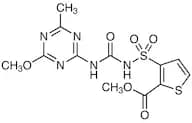
CAS:Formula:C12H13N5O6S2Purity:>97.0%(HPLC)Color and Shape:White to Almost white powder to crystalMolecular weight:387.39(-)-Deguelin
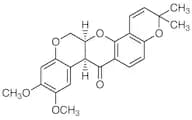
CAS:Formula:C23H22O6Purity:>95.0%(HPLC)Color and Shape:White to Yellow to Green powder to crystalMolecular weight:394.42G418 Disulfate
CAS:Formula:C20H40N4O10·2H2SO4Purity:>90.0%(HPLC)(N)Color and Shape:White to Almost white powder to crystalMolecular weight:692.70Disodium 1-Naphthyl Phosphate Hydrate [Substrate for Phosphatase]
CAS:Formula:C10H7Na2O4P·xH2OPurity:97.0 to 103.0 %(calcd.on anh.substance)Color and Shape:White to Light yellow to Light red powder to crystalMolecular weight:268.12 (as Anhydrous)Azoic Diazo Component 24 (Salt) [for Biochemical Research]
CAS:Formula:C30H28Cl2N6O6·ZnCl2Purity:>95.0%(T)Color and Shape:Yellow to Brown to Dark green powder to crystalMolecular weight:775.77Cellulose synthase 7
<p>Cellulose synthase is a crucial enzyme involved in the synthesis of cellulose. Cellulose is an aggregation of unbranched polymer chains made of β-(1-4)-linked glucose residues, and is a component of primary and secondary cell walls - functioning to primarily maintain strength and shape in cells.Cellulose is synthesised by large cellulose synthase complexes (CSCs), which consist of synthase protein isoforms (CesA) that are arranged into a unique hexagonal structure.Specifically the isoform cellulose synthase 7 takes part in secondary cell wall cellulose synthesis.</p>Molecular weight:1,084.6 g/molT-2 Toxin
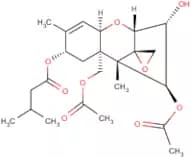
CAS:<p>T-2 Toxin</p>Formula:C24H34O9Purity:By hplc: 98.24% (Typical Value in Batch COA)Color and Shape: white powderMolecular weight:466.52g/molMethoxychlor
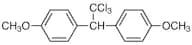
CAS:Formula:C16H15Cl3O2Purity:>95.0%(GC)Color and Shape:White to Light yellow to Dark green powder to crystalMolecular weight:345.64Murashige and Skoog modified basal salts (? micros and ? macros)
<p>Murashige and Skoog modified basal salts (? micros and ? macros)</p>Color and Shape:SolidMurashige and Skoog modified basal medium, 1 pack = 10x1L
<p>Murashige and Skoog modified basal medium, 1 pack = 10x1L</p>Color and Shape:SolidMurashige and Skoog modified basal medium (with Kinetin)
<p>Murashige and Skoog modified basal medium (with Kinetin)</p>Color and Shape:White To Off White PowderMurashige and Skoog modified basal salts (macro-nutrient salt base-1x)
<p>Murashige and Skoog modified basal salts (macro-nutrient salt base-1x)</p>Molecular weight:0.00g/molMurashige and Skoog modified basal salts (? Nitrogen)
<p>Murashige and Skoog modified basal salts (? Nitrogen)</p>Color and Shape:PowderMurashige and Skoog modified basal medium (with?2iP)
<p>Murashige and Skoog modified basal medium (with?2iP)</p>Molecular weight:0.00g/molo-Dianisidine Dihydrochloride [for Biochemical Research]
CAS:Formula:C14H16N2O2·2HClPurity:>98.0%(HPLC)Color and Shape:White to Gray to Red powder to crystalMolecular weight:317.21



![Disodium 1-Naphthyl Phosphate Hydrate [Substrate for Phosphatase]](/_next/image/?url=https%3A%2Fstatic.cymitquimica.com%2Fproducts%2F3B%2Fthumb-webp%2FP0263.webp&w=3840&q=75)
![Azoic Diazo Component 24 (Salt) [for Biochemical Research]](/_next/image/?url=https%3A%2Fstatic.cymitquimica.com%2Fproducts%2F3B%2Fthumb-webp%2FB0785.webp&w=3840&q=75)




![o-Dianisidine Dihydrochloride [for Biochemical Research]](/_next/image/?url=https%3A%2Fstatic.cymitquimica.com%2Fproducts%2F3B%2Fthumb-webp%2FD3893.webp&w=3840&q=75)