


Biochemicals and Reagents
Subcategories of "Biochemicals and Reagents"
- Biomolecules(98,572 products)
- By Biological Target(100,755 products)
- By Pharmacological Effects(6,938 products)
- Cryopreservatives(21 products)
- Desinfectants and Related Compounds(28 products)
- Hormones(467 products)
- Plant Biology(6,906 products)
- Secondary Metabolites(14,368 products)
Found 130507 products of "Biochemicals and Reagents"
MAL-dPEG®6-NHS Ester
CAS:MAL-dPEG®6-NHS Ester is a PEG compound with two different functional groups (also known as heterobifunctional). Unlike homobifunctional PEG compounds (same functional group on both ends), this type of compounds are more versatile as have two different anchor points. MAL-dPEG®6-NHS Ester is used as a linker and spacer to add a PEG moiety, via pegylation (a bioconjugation technique) to proteins, peptides, oligonucleotides, small molecules and nanoparticles.
Formula:C26H39N3O13Purity:Min. 95%Molecular weight:601.6 g/molAmino-dPEG®36-OH
CAS:Amino-dPEG®36-OH is a PEG polymer categorised as monofunctional (OH-PEG-X). Used as a linker, amino-dPEG®36-OH is used to attached PEG to proteins, peptides, oligonucleotides, nanoparticles and small molecules via pegylation, a bioconjugation technique.Formula:C72H147NO36Purity:Min. 95%Molecular weight:1,602.92 g/molm-dPEG®11-OH
CAS:m-dPEG®11-OH is a PEG polymer categorised as monofunctional (OH-PEG-X). Used as a linker, m-dPEG®11-OH is used to attached PEG to proteins, peptides, oligonucleotides, nanoparticles and small molecules via pegylation, a bioconjugation technique.Purity:Min. 95%Molecular weight:516.62 g/molMAL-dPEG®8-Acid
CAS:MAL-dPEG®8-Acid is a PEG compound with two different functional groups (also known as heterobifunctional). Unlike homobifunctional PEG compounds (same functional group on both ends), this type of compounds are more versatile as have two different anchor points. MAL-dPEG®8-Acid is used as a linker and spacer to add a PEG moiety, via pegylation (a bioconjugation technique) to proteins, peptides, oligonucleotides, small molecules and nanoparticles.
Formula:C19H38O10SPurity:Min. 95%Molecular weight:458.57 g/molThiol-dPEG®4-Acid
CAS:Thiol-dPEG®4-Acid is a PEG compound with two different functional groups (also known as heterobifunctional). Unlike homobifunctional PEG compounds (same functional group on both ends), this type of compounds are more versatile as have two different anchor points. Thiol-dPEG®4-Acid is used as a linker and spacer to add a PEG moiety, via pegylation (a bioconjugation technique) to proteins, peptides, oligonucleotides, small molecules and nanoparticles.Purity:Min. 95%Molecular weight:282.35 g/molm-dPEG®24-Amine
CAS:m-dPEG®24-Amine is a PEG compound with two different functional groups (also known as heterobifunctional). Unlike homobifunctional PEG compounds (same functional group on both ends), this type of compounds are more versatile as have two different anchor points. m-dPEG®24-Amine is used as a linker and spacer to add a PEG moiety, via pegylation (a bioconjugation technique) to proteins, peptides, oligonucleotides, small molecules and nanoparticles.Purity:Min. 95%Molecular weight:1,088.32 g/molm-dPEG®8-Thiol
CAS:m-dPEG®8-Thiol is a PEG compound with two different functional groups (also known as heterobifunctional). Unlike homobifunctional PEG compounds (same functional group on both ends), this type of compounds are more versatile as have two different anchor points. m-dPEG®8-Thiol is used as a linker and spacer to add a PEG moiety, via pegylation (a bioconjugation technique) to proteins, peptides, oligonucleotides, small molecules and nanoparticles.Formula:C34H66N4O13SPurity:Min. 95%Molecular weight:770.97 g/molm-dPEG®15-Amine
CAS:m-dPEG®15-Amine is a PEG compound with two different functional groups (also known as heterobifunctional). Unlike homobifunctional PEG compounds (same functional group on both ends), this type of compounds are more versatile as have two different anchor points. m-dPEG®15-Amine is used as a linker and spacer to add a PEG moiety, via pegylation (a bioconjugation technique) to proteins, peptides, oligonucleotides, small molecules and nanoparticles.Formula:C59H109NO28Purity:Min. 95%Molecular weight:1,280.49 g/molAmino-dPEG®6-acid
CAS:Amino-dPEG®6-acid is a PEG compound with two different functional groups (also known as heterobifunctional). Unlike homobifunctional PEG compounds (same functional group on both ends), this type of compounds are more versatile as have two different anchor points. Amino-dPEG®6-acid is used as a linker and spacer to add a PEG moiety, via pegylation (a bioconjugation technique) to proteins, peptides, oligonucleotides, small molecules and nanoparticles.
Formula:C15H31NO8Purity:Min. 95%Molecular weight:353.41 g/molAzido-dPEG®8-Acid
CAS:Azido-dPEG®8-Acid is a PEG compound with two different functional groups (also known as heterobifunctional). Unlike homobifunctional PEG compounds (same functional group on both ends), this type of compounds are more versatile as have two different anchor points. Azido-dPEG®8-Acid is used as a linker and spacer to add a PEG moiety, via pegylation (a bioconjugation technique) to proteins, peptides, oligonucleotides, small molecules and nanoparticles.Purity:Min. 95%Molecular weight:467.51 g/molFmoc-N-Amido-dPEG®12-Acid
CAS:Fmoc-N-Amido-dPEG®12-Acid is a PEG compound with two different functional groups (also known as heterobifunctional). Unlike homobifunctional PEG compounds (same functional group on both ends), this type of compounds are more versatile as have two different anchor points. Fmoc-N-Amido-dPEG®12-Acid is used as a linker and spacer to add a PEG moiety, via pegylation (a bioconjugation technique) to proteins, peptides, oligonucleotides, small molecules and nanoparticles.Purity:Min. 95%Molecular weight:839.96 g/molAzido-dPEG®12-NHS ester
CAS:Azido-dPEG®12-NHS ester is a PEG compound with two different functional groups (also known as heterobifunctional). Unlike homobifunctional PEG compounds (same functional group on both ends), this type of compounds are more versatile as have two different anchor points. Azido-dPEG®12-NHS ester is used as a linker and spacer to add a PEG moiety, via pegylation (a bioconjugation technique) to proteins, peptides, oligonucleotides, small molecules and nanoparticles.Formula:C16H34N4O7Purity:Min. 95%Molecular weight:394.46 g/molm-dPEG®23-OH
CAS:m-dPEG®23-OH is a PEG polymer categorised as monofunctional (OH-PEG-X). Used as a linker, m-dPEG®23-OH is used to attached PEG to proteins, peptides, oligonucleotides, nanoparticles and small molecules via pegylation, a bioconjugation technique.
Formula:C47H96O24Purity:Min. 95%Molecular weight:1,045.25 g/molm-dPEG®4-Tosylate
CAS:m-dPEG®4-Tosylate is a PEG compound with two different functional groups (also known as heterobifunctional). Unlike homobifunctional PEG compounds (same functional group on both ends), this type of compounds are more versatile as have two different anchor points. m-dPEG®4-Tosylate is used as a linker and spacer to add a PEG moiety, via pegylation (a bioconjugation technique) to proteins, peptides, oligonucleotides, small molecules and nanoparticles.Formula:C26H44N2O13Purity:Min. 95%Molecular weight:592.63 g/molBiotin-dPEG®7-NH2
CAS:Biotin-dPEG®7-NH2 is a PEG compound with two different functional groups (also known as heterobifunctional). Unlike homobifunctional PEG compounds (same functional group on both ends), this type of compounds are more versatile as have two different anchor points. Biotin-dPEG®7-NH2 is used as a linker and spacer to add a PEG moiety, via pegylation (a bioconjugation technique) to proteins, peptides, oligonucleotides, small molecules and nanoparticles.Formula:C26H50N4O9SPurity:Min. 95%Molecular weight:594.76 g/mol(R)-Funapide
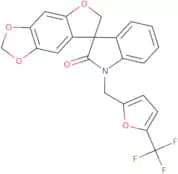
CAS:(R)-Funapide is a ligand that binds to the activator site of the nicotinic acetylcholine receptor (nAChR) and has been shown to activate this receptor. It is used as a research tool in cell biology, ion channels, peptides, and antibodies. (R)-Funapide has also been shown to inhibit protein interactions with a number of different receptors.
Formula:C22H14F3NO5Purity:Min. 95%Molecular weight:429.3 g/molML390
CAS:ML390 is a potent and selective inhibitor of the enzyme 3-phosphoglycerate dehydrogenase (3PGDH). This enzyme catalyzes the conversion of 3-phosphoglycerate to glyceraldehyde-3-phosphate, which is an important step in the synthesis of pyrimidine nucleotides. ML390 inhibits this enzyme with high selectivity and potency. It has been shown to be effective against glioblastoma cells, which may be due to its ability to inhibit their growth by targeting enzymes involved in pyrimidine biosynthesis.
Formula:C21H21F3N2O3Purity:Min. 95%Molecular weight:406.4 g/molMethoxytrityl-S-dPEG®4 Acid
CAS:Methoxytrityl-S-dPEG®4 Acid is a PEG compound with two different functional groups (also known as heterobifunctional). Unlike homobifunctional PEG compounds (same functional group on both ends), this type of compounds are more versatile as have two different anchor points. Methoxytrityl-S-dPEG®4 Acid is used as a linker and spacer to add a PEG moiety, via pegylation (a bioconjugation technique) to proteins, peptides, oligonucleotides, small molecules and nanoparticles.
Purity:Min. 95%Molecular weight:554.7 g/molAmino-dPEG®4-(m-dPEG®12)3
CAS:Amino-dPEG®4-(m-dPEG®12)3 is a PEG compound with two different functional groups (also known as heterobifunctional). Unlike homobifunctional PEG compounds (same functional group on both ends), this type of compounds are more versatile as have two different anchor points. Amino-dPEG®4-(m-dPEG®12)3 is used as a linker and spacer to add a PEG moiety, via pegylation (a bioconjugation technique) to proteins, peptides, oligonucleotides, small molecules and nanoparticles.Formula:C56H107N5O26Purity:Min. 95%Molecular weight:1,266.47 g/molZNF689 Blocking Peptide
A synthetic peptide for use as a blocking control in assays to test for specificity of ZNF689 antibody, catalog no. 70R-8408Purity:Min. 95%alpha 1 Antiplasmin antibody
alpha 1 Antiplasmin antibody was raised in goat using human alpha 1 Antiplasmin purified from plasma as the immunogen.
C1ORF174 antibody
C1ORF174 antibody was raised using the middle region of C1Orf174 corresponding to a region with amino acids EAGVSVQQGAASLPLGGCRVVSDSRLAKTRDGLSVPKHSAGSGAEESNSSKCNK6 antibody
KCNK6 antibody was raised using the N terminal of KCNK6 corresponding to a region with amino acids RLGRVVLANASGSANASDPAWDFASALFFASTLITTVGYGYTTPLTDAGKPurity:Min. 95%TRMU antibody
TRMU antibody was raised using the C terminal of TRMU corresponding to a region with amino acids ALATGQFAVFYKGDECLGSGKILRLGPSAYTLQKGQRRAGMATESPSDSPPKN2 Blocking Peptide
A synthetic peptide for use as a blocking control in assays to test for specificity of PKN2 antibody, catalog no. 70R-10386Purity:Min. 95%NTSR1 Blocking Peptide
A synthetic peptide for use as a blocking control in assays to test for specificity of NTSR1 antibody, catalog no. 70R-6966Purity:Min. 95%Norovirus G2 antibody
The Norovirus G2 antibody is a monoclonal antibody used in life sciences research. It specifically targets the G2 strain of the norovirus, which is a common cause of gastroenteritis. This antibody can be used to detect and study the protein expression of norovirus in various samples, including nuclear extracts, lysozyme, alpha-fetoprotein, and glycopeptides. The monoclonal antibody recognizes specific glycosylation patterns on the norovirus protein, allowing for accurate detection and analysis. It has also been used in studies related to androgen signaling in human serum and arginase activity. With its high specificity and sensitivity, this antibody is a valuable tool for researchers studying norovirus and its impact on human health.CROT Blocking Peptide
A synthetic peptide for use as a blocking control in assays to test for specificity of CROT antibody, catalog no. 70R-1109
Purity:Min. 95%MEF2A antibody
The MEF2A antibody is a powerful tool used in Life Sciences research. It is an antibody that specifically targets and inhibits the activity of MEF2A, a transcription factor involved in various cellular processes. This polyclonal antibody is highly specific and can be used for a wide range of applications in research laboratories.
Purity:Min. 95%PRDX6 antibody
PRDX6 antibody was raised using the C terminal of PRDX6 corresponding to a region with amino acids VATPVDWKDGDSVMVLPTIPEEEAKKLFPKGVFTKELPSGKKYLRYTPQPCD117 antibody
The CD117 antibody is a monoclonal antibody that specifically targets the CD117 protein, also known as c-Kit. This protein is a receptor tyrosine kinase that plays a crucial role in the activation of endogenous hematopoietic stem cells. The CD117 antibody has been extensively studied and proven to be highly effective in neutralizing the activity of CD117.
CD40 protein
CD40 protein is a monoclonal antibody that targets the CD40 receptor, which is expressed on various immune cells. This protein plays a crucial role in regulating immune responses and cell communication. By binding to CD40, the antibody stimulates the production of cytokines, such as tumor necrosis factor-alpha (TNF-α), and enhances the activation of immune cells.Purity:Min. 95%TP53 antibody
The TP53 antibody is a cytotoxic antibody commonly used in Life Sciences research. It specifically targets the TP53 protein, which plays a crucial role in regulating cell growth and preventing tumor formation. The TP53 antibody has been shown to inhibit the activity of epidermal growth factor (EGF) and histidine kinases, leading to a decrease in diacylglycerol production and glycoprotein synthesis.SLC22A13 antibody
SLC22A13 antibody was raised using the N terminal of SLC22A13 corresponding to a region with amino acids FFAHVFMVLDEPHHCAVAWVKNHTFNLSAAEQLVLSVPLDTAGHPEPCLMPurity:Min. 95%PRPF8 antibody
PRPF8 antibody was raised in mouse using recombinant Human Prp8 Pre- Processing Factor 8 Homolog (Yeast) (Prpf8)PGM1 antibody
PGM1 antibody was raised in rabbit using the middle region of PGM1 as the immunogenPurity:Min. 95%NBS1 antibody
The NBS1 antibody is a powerful tool used in the field of Life Sciences. It acts as a cdk4/6 inhibitor and plays a crucial role in chemotherapy. This antibody is specifically designed to target genotoxic stress and inhibit the activity of NBS1, a key protein involved in DNA damage response and repair.ADRB1 antibody
The ADRB1 antibody is a neutralizing antibody that targets the adrenergic receptor beta-1 (ADRB1). It plays a crucial role in regulating various physiological processes, including heart rate and blood pressure. This antibody specifically binds to the ADRB1 receptor and inhibits its activity, thereby modulating its downstream signaling pathways.PRMT2 Blocking Peptide
A synthetic peptide for use as a blocking control in assays to test for specificity of PRMT2 antibody, catalog no. 70R-2062Purity:Min. 95%RALB Blocking Peptide
A synthetic peptide for use as a blocking control in assays to test for specificity of RALB antibody, catalog no. 70R-4028Purity:Min. 95%VPS4A Blocking Peptide
A synthetic peptide for use as a blocking control in assays to test for specificity of VPS4A antibody, catalog no. 70R-2879Purity:Min. 95%Donkey anti Rabbit IgG (H + L) (FITC)
This antibody reacts with heavy (gamma) chains on rabbit IgG and light chains on all rabbit immunoglobulins.Purity:Min. 95%HDAC8 antibody
The HDAC8 antibody is a highly specific monoclonal antibody that targets the histone deacetylase 8 (HDAC8) protein. This antibody has been extensively validated and is widely used in life sciences research. HDAC8 plays a crucial role in regulating gene expression by removing acetyl groups from histones, thereby affecting chromatin structure and gene transcription. The HDAC8 antibody can be used in various applications, including Western blotting, immunohistochemistry, and immunofluorescence, to study the expression and localization of HDAC8 in different tissues and cell types. It has been shown to specifically bind to HDAC8 without cross-reactivity with other HDAC isoforms or related proteins. This antibody is an essential tool for researchers studying epigenetics, cancer biology, and drug discovery targeting HDACs.
Purity:Min. 95%RHOX11 antibody
RHOX11 antibody was raised in rabbit using the N terminal of RHOX11 as the immunogen
Purity:Min. 95%LETM2 antibody
LETM2 antibody was raised using the N terminal of LETM2 corresponding to a region with amino acids KNYESKKYSDPSQPGNTVLHPGTRLIQKLHTSTCWLQEVPGKPQLEQATK
MYD88 antibody
The MYD88 antibody is a highly specialized monoclonal antibody that is designed to target and neutralize the MYD88 protein. This protein plays a crucial role in the activation of immune responses and is involved in various signaling pathways. The MYD88 antibody has been extensively studied and proven to be effective in blocking the activity of MYD88, making it a valuable tool in research and therapeutic applications.EFNA2 Blocking Peptide
A synthetic peptide for use as a blocking control in assays to test for specificity of EFNA2 antibody, catalog no. 70R-10297
Purity:Min. 95%p39 antibody
The p39 antibody is a highly specialized antibody used in various fields of Life Sciences. It specifically targets fibronectin, a protein involved in cell adhesion and migration. The p39 antibody can be used in immunoassays to detect the presence of fibronectin in samples. It can also be used in research to study the role of fibronectin in various biological processes.WRNIP1 antibody
WRNIP1 antibody was raised using the N terminal of WRNIP1 corresponding to a region with amino acids PGAKRRRLSESSALKQPATPTAAESSEGEGEEGDDGGETESRESYDAPPTPurity:Min. 95%ATPAF1 antibody
ATPAF1 antibody was raised in rabbit using the middle region of ATPAF1 as the immunogen
Purity:Min. 95%ZPBP2 antibody
ZPBP2 antibody was raised in rabbit using the N terminal of ZPBP2 as the immunogenPurity:Min. 95%NFYC antibody
NFYC antibody was raised in rabbit using the C terminal of NFYC as the immunogenPurity:Min. 95%Transglutaminase Antibody
Transglutaminase Antibody is an antibody that specifically targets transglutaminase, an enzyme involved in various biological processes. It has been shown to interfere with the activity of transglutaminase and inhibit its function. This antibody can be used in research studies to investigate the role of transglutaminase in different cellular processes.PNMA1 antibody
PNMA1 antibody was raised using the middle region of PNMA1 corresponding to a region with amino acids KSNNPAITTAECLKALEQVFGSVESSRDAQIKFLNTYQNPGEKLSAYVIRAkt antibody
Akt, also known as Protein Kinase B (PKB), is a vital cellular signaling protein that governs key processes such as cell growth, survival, metabolism, and proliferation. It operates within the PI3K/Akt pathway, a major signaling route activated by growth factors and hormones like insulin to promote cell survival and growth. When activated, Akt is recruited to the cell membrane and phosphorylated by kinases, including PDK1, which fully activates it. Once active, Akt influences various downstream pathways to inhibit apoptosis, support cell growth via the mTOR pathway, and enhance glucose metabolism, which is crucial for insulin response.In diseases like cancer and diabetes, Akt’s role is particularly significant. Cancer frequently involves dysregulation of the Akt pathway, often through mutations in pathway components like PI3K, PTEN, or Akt itself, leading to increased cell survival, unchecked growth, and resistance to treatment. In diabetes, insulin resistance reduces Akt pathway activity, impairing glucose uptake and raising blood glucose levels. Because of these regulatory effects on cell growth and metabolism, the Akt pathway is a central target in therapeutic research for treating conditions where its influence is disrupted.Pygm antibody
Pygm antibody was raised in rabbit using the C terminal of Pygm as the immunogenPurity:Min. 95%MCM2 antibody
The MCM2 antibody is a highly specific monoclonal antibody used in various Life Sciences applications. It is commonly utilized for the detection and analysis of MCM2, a nuclear glycoprotein that plays a crucial role in DNA replication and cell cycle regulation. This antibody has been extensively validated and proven to have high affinity and specificity for MCM2.ALDH1L1 antibody
The ALDH1L1 antibody is a highly specialized monoclonal antibody that has been developed for its antiviral properties. This antibody specifically targets and neutralizes autoantibodies, which are antibodies that mistakenly attack the body's own cells. By neutralizing these autoantibodies, the ALDH1L1 antibody helps to prevent viral infections and promote overall health.QRSL1 Blocking Peptide
A synthetic peptide for use as a blocking control in assays to test for specificity of QRSL1 antibody, catalog no. 70R-3857Purity:Min. 95%APC1 antibody
The APC1 antibody is a collagen-specific antibody that is widely used in Life Sciences research. It is commonly used in assays to detect the presence of interferon and other serum markers. This antibody is also utilized in the development of medicines and therapies, particularly in the field of adeno-associated virus (AAV) gene therapy. The APC1 antibody is a polyclonal antibody that targets specific proteins involved in pluripotent stem cell differentiation. It has been shown to have high affinity for dopamine receptors and can be used to study the role of dopamine in various physiological processes. Additionally, this antibody can be used to detect autoantibodies and as an inhibitor for aminoacyl-tRNA synthetases. If you are looking for a specific antibody with collagen-binding capabilities, the APC1 antibody is an excellent choice.CAV1 antibody
CAV1 antibody is a monoclonal antibody that specifically targets caveolin-1 (CAV1), a protein involved in various cellular processes. This antibody has been shown to interfere with the function of CAV1, leading to changes in cell signaling and metabolism. It can be used in research and diagnostic applications to study the role of CAV1 in different diseases and conditions. The CAV1 antibody is highly specific and has been extensively validated for its neutralizing activity against CAV1. It can be used in various immunoassays, such as Western blotting, immunohistochemistry, and flow cytometry. The antibody is available as a colloidal solution for easy handling and storage. With its high affinity and specificity, the CAV1 antibody is a valuable tool for scientists studying cellular processes involving caveolin-1.CCDC90A Blocking Peptide
A synthetic peptide for use as a blocking control in assays to test for specificity of CCDC90A antibody, catalog no. 70R-6728Purity:Min. 95%HIV1 Nef protein
The 6-Fluoro-3-indoxyl-beta-D-galactopyranoside is a powerful antituberculosis drug belonging to the class of rifamycins. It is specifically designed to combat tuberculosis infection by targeting active compounds and exerting bactericidal activity. This drug works by inhibiting bacterial growth through its binding to DNA-dependent RNA polymerase, preventing transcription and replication. Extensive research has shown its high efficacy against Mycobacterium tuberculosis strains, as well as its ability to inhibit cell growth in culture. The metabolization process involves various metabolic transformations, including hydrolysis by esterases or glucuronidases, oxidation by cytochrome P450 enzymes, reduction by glutathione reductase, or conjugation with glucuronic acid.Purity:Min. 95%3-[6-(3,5-Dimethylheptyl)tetrahydro-2H-pyran-2-yl]-4-hydroxy-1-methyl-5-(2,3,4,5-tetrahydroxycyclopentyl)-2(1H)-pyridinone
CAS:Please enquire for more information about 3-[6-(3,5-Dimethylheptyl)tetrahydro-2H-pyran-2-yl]-4-hydroxy-1-methyl-5-(2,3,4,5-tetrahydroxycyclopentyl)-2(1H)-pyridinone including the price, delivery time and more detailed product information at the technical inquiry form on this page
Formula:C25H41NO7Purity:Min. 95%Molecular weight:467.6 g/molKarrikinolide 3-ethyl ester
CAS:Please enquire for more information about Karrikinolide 3-ethyl ester including the price, delivery time and more detailed product information at the technical inquiry form on this pageFormula:C10H8O5Purity:Min. 95%Molecular weight:208.17 g/mol




























![3-[6-(3,5-Dimethylheptyl)tetrahydro-2H-pyran-2-yl]-4-hydroxy-1-methyl-5-(2,3,4,5-tetrahydroxycyclo…](/_next/image/?url=https%3A%2Fstatic.cymitquimica.com%2Fproducts%2F3D%2Fthumb-webp%2FMQC35698.webp&w=3840&q=75)
