Biochemicals and Reagents
Biochemicals and reagents are fundamental substances for research and development in fields such as biotechnology, molecular biology, pharmacology, and medicine. These products are essential for a variety of applications, including compound synthesis, biological sample analysis, metabolic process research, and drug production. At CymitQuimica, we offer a wide selection of high-quality, high-purity biochemicals and reagents suitable for various scientific and industrial needs. Our catalog includes enzymes, antibodies, nucleic acids, amino acids, and many other products, all designed to support researchers and professionals in their research and development projects, ensuring reliable and reproducible results.
Subcategories of "Biochemicals and Reagents"
- Biomolecules(99,084 products)
- By Biological Target(99,070 products)
- By Pharmacological Effects(6,784 products)
- Cryopreservatives(21 products)
- Desinfectants and Related Compounds(28 products)
- Hormones(346 products)
- Plant Biology(6,693 products)
- Secondary Metabolites(14,217 products)
Found 130573 products of "Biochemicals and Reagents"
Sort by
Purity (%)
0
100
|
0
|
50
|
90
|
95
|
100
Phenyl(9H-purin-6-yl)amine
CAS:Controlled Product<p>Applications Phenyl(9H-purin-6-yl)amine (cas# 1210-66-8) is a compound useful in organic synthesis.<br></p>Formula:C11H9N5Color and Shape:NeatMolecular weight:211.22δ5-Avenasterol (E/Z mixture)
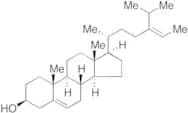
CAS:<p>Applications Δ5-Avenasterol is an analog of Stigmasterol (S686750); a plant sterol that is used as a precursor in the synthesis of progesterone.<br>References Han, P., et al.: Biotechnol. App. Biochem., 54, 105 (2009); Matsunaga, I., et al.: Anal. Biochem., 393, 222 (2009); Huang, C., et al.: Plant Physiol., 150, 1192 (2009)<br></p>Formula:C29H48OColor and Shape:White To Off-WhiteMolecular weight:412.692-Azahypoxanthine Sodium Salt
CAS:Controlled Product<p>Stability Hygroscopic<br>Applications 2-Azahypoxanthine is a major degradation product of Dacarbazine (D101400). 2-Azahypoxanthine is possibly linked with some adverse effects of Dacarbazine (D101400). AHX is a natural product that is produced by fungi that spurs the growth of grass.<br>References Baird, G., et al.: Lancet, 2, 681 (1978), Horton, J., et al.: J. Pharm. Pharmacol., 33, 808 (1981), Shetty, B., et al.: J. Pharm. Biomed. Anal., 10, 675 (1992); Chem. and Eng. News p.7 Oct.1, (2018)<br></p>Formula:C4H2N5NaOColor and Shape:NeatMolecular weight:159.08Amaranth (>85%)
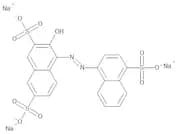
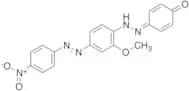
CAS:Controlled Product<p>Applications Amaranth is a food color additive that induces differential colon DNA damage in rat and mouse. Dyes and metabolites, Environmental Testing. Dyes and metabolites.<br>References Shimada, C., et al.: J. Toxicol. Sci., 35, 547 (2010); Goda, M., et al.: Shokuhin Eiseigaku Zasshi, 54, 188 (2013); Wang, M., et al.: J. Electroanal. Chem., 809, 117 (2018); Lu, L., et al.: Guangdong Huagong, 43, 117 (2016)<br></p>Formula:C20H11N2O10S3·3NaPurity:>85%Color and Shape:Dark RedMolecular weight:604.47Sunset Yellow FCF
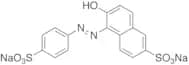
CAS:<p>Stability Light Sensitive<br>Applications Provisionally listed for use in food, drugs and cosmetics. Sunset Yellow is useful in fermented foods which must be heat treated. It may be found in orange sodas, orange jelly, marzipan, Swiss rolls, apricot jam, citrus marmalade, lemon curd, sweets, hot chocolate mix and packet soups, trifle mix, breadcrumbs, snack chips, shelf fresh noodles, cheese sauce mixes. Sunset Yellow is a sulfonated version of Sudan I, a possible carcinogen. Sunset Yellow itself may be responsible for causing an allergic reaction in people with an aspirin intolerance, resulting in various symptoms, including gastric upset, diarrhea, vomiting, nettle rash (urticaria), swelling of the skin (angioedema) and migraines. Dyes and metabolites, Environmental Testing<br>References Radomski, J.L., et al.: J. Pharmacol. Exp. Ther., 136, 259 (1962), Gaunt, I.F., et al.: Food Cosmet. Toxicol., 5, 747 (1967),<br></p>Formula:C16H10N2O7S2·2NaColor and Shape:NeatMolecular weight:452.37TCEP Hydrochloride (0.5M in water)
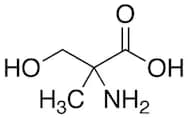
CAS:Controlled ProductFormula:C9H15O6P·ClHColor and Shape:ColourlessMolecular weight:286.65α-Methyl-D,L-serine
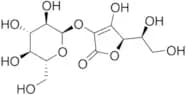
CAS:Controlled Product<p>Applications A serine derivative. Used in the synthesis of constrained amino acid buildings blocks and their incorporation into biologically active peptidomimetics.<br>References Rew, Y., et al.: J. Med. Chem., 45, 3746 (2002),<br></p>Formula:C4H9NO3Color and Shape:NeatMolecular weight:119.122-O-a-D-Glucopyranosyl-L-ascorbic Acid
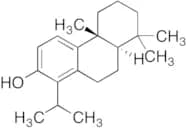
CAS:Controlled Product<p>Applications 2-O-a-D-Glucopyranosyl-L-ascorbic Acid is a useful cosmetic gel and skin cleanser.<br>References Aizawa, K., et al.: PCT Int. Appl. (2020), WO 2020226147 A1<br></p>Formula:C12H18O11Color and Shape:White To Off-WhiteMolecular weight:338.26(4bS)-trans-8,8-Trimethyl-4b,5,6,7,8,8a,9,10-octahydro-1-isopropylphenanthren-2-ol, 60%
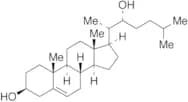
CAS:Controlled Product<p>Applications (4bS)-trans-8,8-Trimethyl-4b,5,6,7,8,8a,9,10-octahydro-1-isopropylphenanthren-2-ol is a naturally occurring diterpene that exhibits potent antimicrobial activity.<br>References Tian, M., et al.: Records of Natural Products, 14, 219 (2020)<br></p>Formula:C20H30OPurity:>90%Color and Shape:NeatMolecular weight:286.4522α-Hydroxy Cholesterol
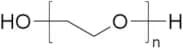
CAS:Controlled Product<p>Applications The 22R-metabolite of Cholesterol (C432501). 22-Hydroxycholesterol inhibits chemokine receptor activity.<br>References Samson, M., et al.: J. Biol. Chem., 272, 24934 (1997), Mackay, C., et al.: Nature Immunol., 2, 95 (2001), Navenot, J., et al.: J. Mol. Biol., 313, 1181 (2001),<br></p>Formula:C27H46O2Color and Shape:NeatMolecular weight:402.65Poly(ethylene Glycol) ~9000
CAS:Controlled ProductFormula:H2O(C2H4O)nColor and Shape:White To Off-WhiteMolecular weight:62.071-Hexacosene
CAS:<p>Applications 1-Hexacosene is a part of Carica papaya peel extracts and may contain antibacterial activity.<br>References Muhamad, S et al.: Int. Food. Res., 24, 976 (2017);<br></p>Formula:C26H52Purity:>85%Color and Shape:NeatMolecular weight:364.6911-Pyrenylmethyl Methanethiosulfonate
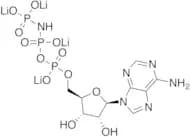
CAS:Controlled Product<p>Stability Light Sensitive, Moisture Sensitive<br>Applications A fluoresent compound used for the rapid and selective modification of sulfhydryl groups of enzymes.Fluorescence: max. Abs. 340nm; max. Em. 376nm; e x 10-3: 40<br>References Stauffer, D.A., and Karlin, A.: Biochemistry, 33, 6840 (1994), Yang, N. et al.: Neuron, 16, 113 (1996), Kuner, T. et al.: Neuron, 17, 343 (1996)<br></p>Formula:C18H14O2S2Color and Shape:NeatMolecular weight:326.43AMP PNP (~90%)
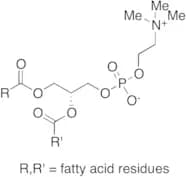
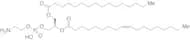
CAS:Controlled ProductFormula:C10H13Li4N6O12P3Purity:~90%Color and Shape:NeatMolecular weight:529.93Lecithin (Technical Grade)
CAS:Controlled Product<p>Stability Moisture Sensitive<br>Applications Lecithin has emulsification and lubricant properties, and is a surfactant.<br>References Shah, D.: J. Colloid and Interface Sci., 37, 744 (1971); Scholfield, C.: J. Am. Oil. Chem. Soc., 58, 889 (1981)<br></p>Formula:C7H7N3O4SColor and Shape:Light Yellow To Dark BrownErythrosin B
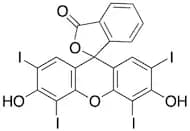
CAS:<p>Applications Erythrosin B is an organoiodine compound that is a useful biological stain. Suggested to be effective in vital exclusion staining in monolayer culture. Dyes and metabolites.<br></p>Formula:C20H8I4O5Color and Shape:NeatMolecular weight:835.893β,5α,6β-Trihydroxycholestane-d7
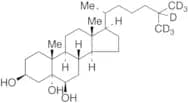
CAS:Controlled ProductFormula:C27H41D7O3Color and Shape:NeatMolecular weight:427.71Biocytin
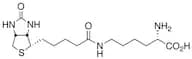
CAS:<p>Applications Useful for the synthesis of Biocytin containing peptides to study the mechanism of reactions catalyzed by biotin - containing enzymes.<br>References Bodanszky, M., and Fagan, D.T.: J. Am. Chem. Soc., 99, 235 (1977)<br></p>Formula:C16H28N4O4SColor and Shape:White To Off-WhiteMolecular weight:372.48Dipyrrometheneboron Difluoride
CAS:Controlled Product<p>Applications Dipyrrometheneboron Difluoride is a fluorescent dye and is used for the imaging of cadmium in cells.<br>References Bergstrom, F., et al.: J. Am. Chem. Soc., 124, 196 (2002); Yuan, L., et al.: Chem. Soc. Rev., 42, 622 (2013);<br></p>Formula:C9H7BF2N2Color and Shape:NeatMolecular weight:191.97N-Acetyl-S-(3-carboxy-2-propyl)-L-cysteine Disodium Salt (Mixture of Diastereomers)
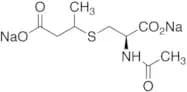
CAS:Controlled Product<p>Applications A metabolite of Crotonaldehyde.<br>References Gray, J.M., et al.: Xenobiotica, 1, 55 (1971), Chung, F., et al.: Mutat. Res., 424, 71 (1999), Smith, C., et al.: Food Chem. Toxicol., 38, 637 (2000), Pan, J., et al.: Chem. Res. Toxicol., 15, 367 (2002),<br></p>Formula:C9H13NO5S·2NaColor and Shape:NeatMolecular weight:293.25L-Methionine-3,3,4,4-d4
CAS:Controlled Product<p>Applications L-Methionine-3,3,4,4-d4 (CAS# 67866-75-5) is a useful isotopically labeled research compound.<br></p>Formula:C5D4H7NO2SColor and Shape:White To Off-WhiteMolecular weight:153.236C12 Ceramide
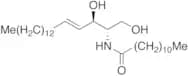
CAS:Controlled Product<p>Applications Ceramide is one of the simplest sphingolipids, consisting of a sphingosine base N-linked to a fatty acid, and is a membrane mediator for cell-signaling events. N-Acyl chain length of membrane ceramides can influence bidimensional transitions, condensed domain morphology, and interfacial thickness.<br>References Shimshick, E., et al.: Biochemistry, 1973, 12, 2351 (1973), Kolesnick, R., et al.: J. Cell Physiol., 184, 285 (2000), Goni, F., et al.: Biochim. Biophys. Acta., 1758, 1902 (2006),<br></p>Formula:C30H59NO3Color and Shape:NeatMolecular weight:481.79(2-Butyl-3-benzofuranyl)(4-Ethoxy-3,5-diiodophenyl)methanone
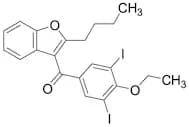
CAS:Controlled ProductFormula:C21H20I2O3Color and Shape:NeatMolecular weight:574.191L-Threonolactone
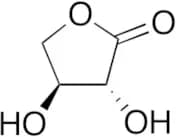
CAS:Controlled Product<p>Applications L-Threonolactone is formed in the autoxidation of L-Ascorbic acid (A786990), a compound that is essential for numerous enzymatic reactions in the body and is also responsible for scavenging free radicals to prevent oxidative damage to cells.<br>References Miyake, N., et al.: Biosci. Biotech. Bioch., 61, 2069 (1997); Kvernberg, P. & Pedersen, B.: Acta Chem. Scand., 48, 646 (1994); Tsukaguchi, H., et al.: Nature, 399, 70 (1999)<br></p>Formula:C4H6O4Color and Shape:NeatMolecular weight:118.088Fructose-leucine (mixture of diastereomers)
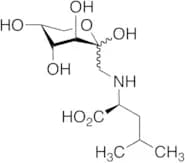
CAS:Controlled ProductFormula:C12H23NO7Color and Shape:White To BrownMolecular weight:293.31ThioGlo1
CAS:Controlled Product<p>Applications ThioGlo1 is thiol-reactive dye used for fluorescence labeling of proteomic samples.<br>References Tyagarajan, K., et al.: Electrophoresis, 24, 2348 (2003);<br></p>Formula:C20H13NO7Color and Shape:NeatMolecular weight:379.32Sodium Decyl Sulfate
CAS:Controlled Product<p>Applications Sodium Decyl Sulfate is emulsifier; used in preparation of super wear-resistant foamed Styrene Butadiene rubber.<br>References Zhou, J., et al.: Faming Zhuanli Shenqing, (2020);<br></p>Formula:C10H21O4SNaColor and Shape:NeatMolecular weight:260.33Rhodamine-123
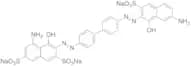
CAS:<p>Applications Rhodamine-123 is a fluorescent dye most commonly used in flow cytometry as functional reporter for Pgp. Rhodamine 123 (R123), as a typical of P-glycoprotein substrate, was widely used to quantify P-glycoprotein (P-gp) functional efflux activity in vivo. Rhodamine-123 can be used in multiparameter analyses without fluorescence interference in combination with common protein labeling dyes such as PE-Cy5 and AMCA (7-amino-4-methylcoumarin-3-acetic acid).<br>References Yumoto, R., et al.: J. Pharmacol. Exp. Ther., 289, 149 (1999), Romiti, N., et al.: Toxicol. Appl. Pharmacol., 183, 83 (2002), Mizuno, N., et al.: Pharmacol. Rev., 559, 425 (2003), del Amo, E., et al.: Eur. J. Pharm. Sci., 36, 200 (2009),<br></p>Formula:C21H16N2O3·ClHColor and Shape:NeatMolecular weight:380.82Direct Blue 2 (Technical Grade)
CAS:Controlled Product<p>Applications Direct Blue 2 is an organic azo dye and ground water pollutant, removed via enzymic decolorization by laccase.<br>References Akkaya, A.; et al.: Anal. Lett., 49, 790 (2016).<br></p>Formula:C32H21N6Na3O11S3Color and Shape:NeatMolecular weight:830.715-Fluorodihydropyrimidine-2,4-dione
CAS:Controlled Product<p>Applications A metabolite of 5-Fluorouracil. (F596000)<br>References Bocci, G., et al.: Eur. J. Clin. Pharmacol., 58, 593 (2002), Longley, D.B., Nature Rev. Cancer, 3, 330 (2003), Fischel, J., et al.: Anti-Cancer Drugs, 15, 969 (2004)<br></p>Formula:C4H5FN2O2Color and Shape:NeatMolecular weight:132.093POPE
CAS:Controlled Product<p>Stability Light Sensitive, Moisture Sensitive<br>Applications POPE is a component of E. Coli bacteria cell membrane.<br>References Tu, Y., et al.: Nature Nanotechnology, 8, 594 (2013).<br></p>Formula:C39H76NO8PColor and Shape:NeatMolecular weight:718.0cis-4-Hydroxy-L-proline
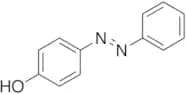
CAS:<p>Applications Hydroxyprolines are valuable chiral building blocks for organic synthesis of pharmaceuticals. Several microorganisms producing proline trans-4- and cis-3-hydroxylase were discovered and these enzymes were applied to the industrial production of trans-4- and cis-3-hydroxy-L-proline.<br>References Lawrence, C., et al.: Biochem. J., 313, 185 (1996), Mori, H., et al.: J. Bacteriol., 179, 5677 (1997), Clifton, I., et al.: Eur. J. Biochem., 268, 6625 (2001),<br></p>Formula:C5H9NO3Color and Shape:Off White Crystalline PowderMolecular weight:131.134-Phenylazophenol
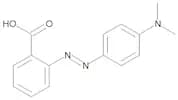
CAS:Controlled Product<p>Applications 4-Phenylazophenol is a diaryl-azo derivative with potential use as potential antifungal agents. 4-Phenylazophenol is an azo dye with toxic effects as well as a being a soil contaminant. Dyes and metabolites.<br>References Xu, H. et al.: Bioorg. Med. Chem., 20, 4193 (2010); Spadaro, J.T. et al.: Appl. Environ. Microbiol., 58, 2397 (1992);<br></p>Formula:C12H10N2OColor and Shape:NeatMolecular weight:198.224-[(5,6,7,8-Tetrahydro-3,5,5,8,8-pentamethyl-2-naphthalenyl)carbonyl]benzoic Acid
CAS:Controlled Product<p>Applications 4-[(5,6,7,8-Tetrahydro-3,5,5,8,8-pentamethyl-2-naphthalenyl)carbonyl]benzoic Acid is used in the preparation of pentamethylnaphthylmethylbenzoates as a selective retinoid X receptor ligands that induce apoptosis in leukemia cells.<br>References Boehm, M.F., et al.: J. Med. Chem., 38, 3146-55 (1995); Furmie, J.K., et al.: ChemMedChem, 7, 1551-66 (2012)<br></p>Formula:C23H26O3Color and Shape:NeatMolecular weight:350.45Dipropylene Glycol Diacrylate (~80%)
CAS:<p>Applications Dipropylene Glycol Diacrylate 57472-68-1 (cas# 57472-68-1) is a useful research chemical.<br></p>Formula:C12H18O5Purity:~80%Color and Shape:NeatMolecular weight:242.27Light Green SF Yellowish (Technical Grade)
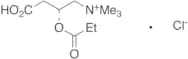
CAS:Controlled ProductFormula:C37H34N2O9S3·2NaColor and Shape:NeatMolecular weight:792.848(R)-Propionyl Carnitine Chloride
CAS:Controlled Product<p>Stability Hygroscopic<br>Applications L-Propionyl carnitine has been shown to improve the heart's mechanical recovery and other metabolic parameters after ischemia-reperfusion.<br>References Reznick, A.Z., et al.: Arch. Biochem Biophys., 296, 394 (1992),<br></p>Formula:C10H20NO4·ClColor and Shape:NeatMolecular weight:253.72Pigment Red 22 (Technical Grade)
CAS:Controlled Product<p>Applications Pigment Red 22 (cas# 6448-95-9) is a useful research chemical.<br></p>Formula:C24H18N4O4Color and Shape:NeatMolecular weight:426.4244-Amino-nicotinonitrile
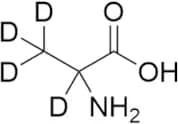
CAS:Controlled Product<p>Applications 4-Amino-nicotinonitrile<br></p>Formula:C6H5N3Color and Shape:NeatMolecular weight:119.124Glycocholic-2,2,4,4-d4 Acid
CAS:Controlled Product<p>Stability Hygroscopic<br>Applications Glycocholic-2,2,4,4-d4 Acid was an analyte found in serum bile acids. Potential application for diagnosis of pediatric liver and intestinal diseases in humans.<br>References Fu, X., et al.: Clin. Chem. Lab. Med., 58, 787 (2020)<br></p>Formula:C26D4H39NO6Color and Shape:White To Off-WhiteMolecular weight:469.6474(2R)-2-Hydroxyglutaric Acid Disodium Salt
CAS:<p>Stability Hygroscopic<br>Applications A potential inhibitor of glutamate carboxypeptidase.<br>References Wolcott, T.G., et al.: Biochem. Biophys. Res. Commun., 57, 709 (1974), Knowles, P.F., et al.: Eur. J. Biochem., 114, 139 (1981),<br></p>Formula:C5H6O5·2NaColor and Shape:NeatMolecular weight:192.08CITCO
CAS:Controlled Product<p>Applications CITCO is a cell-permeable imidazothiazole compound that acts a CAR agonist.<br></p>Formula:C19H12Cl3N3OSColor and Shape:NeatMolecular weight:436.74Pigment Yellow 83 (Technical Grade)
CAS:Controlled ProductFormula:C36H32Cl4N6O8Color and Shape:NeatMolecular weight:818.49Disperse Orange 29 (Technical Grade)
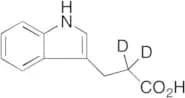
CAS:Controlled ProductFormula:C19H15N5O4Color and Shape:NeatMolecular weight:377.353-Indolepropionic-d2 Acid
CAS:Controlled Product<p>Stability Hygroscopic<br>Applications 3-Indolepropionic-d2 acid is deuterium labelled 3-Indolepropionic acid (I627170). 3-Indolepropionic acid is a deamination product of Tryptophan (T947200) that protects the hippocampus (studied in gerbils) from ischemic damage and oxidative stress. It’s ability to protect the neurons in this way is attributed to its potent antioxidative effects. 3-Indolepropionic acid is also hypothesized to have protective effects on the thyroid gland.<br>References Hwang, I., et al.: J. Neurosci. Res., 87, 2126 (2009); Karbownik, M., et al.: J. Cell. Biochem., 95, 131 (2005)<br></p>Formula:C11D2H9NO2Color and Shape:NeatMolecular weight:191.22Bis[2-(succinimidooxycarbonyloxy)ethyl] Sulfone
CAS:Controlled Product<p>Stability Moisture Sensitive<br>Applications An amine reactive homobifunctional crosslinking reagent. Used to crosslink ß-endorphin to opioid receptors.Spacer Arm: 13.0 Angstroms<br>References Zarling, D.A., et al.: J. Immunol., 124, 913 (1980), Howard, A.D., et al.: J. Biol. Chem., 260, 10833 (1985), Bouizar, Z., et al.: Eur. J. Biochem., 155, 141 (1986)<br></p>Formula:C14H16N2O12SColor and Shape:NeatMolecular weight:436.35Urolithin A
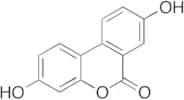
CAS:<p>Applications Urolithin A is a major metabolite of ellagitannin and exhibits anti-inflammatory and antioxidant properties.<br>References Ishimoto, H., et. al.: Bioorg. Med. Chem. Lett., 21, 5901 (2011);<br></p>Formula:C13H8O4Color and Shape:NeatMolecular weight:228.20













![4-[(5,6,7,8-Tetrahydro-3,5,5,8,8-pentamethyl-2-naphthalenyl)carbonyl]benzoic Acid](/_next/image/?url=https%3A%2Fstatic.cymitquimica.com%2Fproducts%2FTR%2Fthumb-webp%2FT294945.webp&w=3840&q=75)





![Bis[2-(succinimidooxycarbonyloxy)ethyl] Sulfone](/_next/image/?url=https%3A%2Fstatic.cymitquimica.com%2Fproducts%2FTR%2Fthumb-webp%2FB585000.webp&w=3840&q=75)