Biochemicals and Reagents
Subcategories of "Biochemicals and Reagents"
- Biomolecules(98,557 products)
- By Biological Target(101,014 products)
- By Pharmacological Effects(6,941 products)
- Cryopreservatives(21 products)
- Desinfectants and Related Compounds(28 products)
- Hormones(530 products)
- Plant Biology(6,903 products)
- Secondary Metabolites(14,371 products)
Found 130589 products of "Biochemicals and Reagents"
F-L-E-E-V
Custom research peptide; min purity 95%.Formula:C30H45N5O10Purity:Min. 95%Molecular weight:635.72 g/molPCDH15 antibody
PCDH15 antibody was raised using the N terminal of PCDH15 corresponding to a region with amino acids HSIVVQVQCINKKVGTIIYHEVRIVVRDRNDNSPTFKHESYYATVNELTPPurity:Min. 95%Cytokeratin 19 antibody (Prediluted for IHC)
Mouse monoclonal Cytokeratin 19 antibody (Prediluted for IHC)Purity:Min. 95%STAT5 antibody
The STAT5 antibody is a powerful tool in the field of Life Sciences. It is a polyclonal antibody that specifically targets and neutralizes tyrosinase, an enzyme involved in melanin production. This antibody can be used in various applications, such as immunohistochemistry, Western blotting, and ELISA assays. The STAT5 antibody has been extensively validated and has shown excellent specificity and sensitivity in detecting tyrosinase expression. It can be used to study melanoma progression, evaluate the efficacy of anti-tyrosinase therapies, and explore the role of tyrosinase in other biological processes. Whether you are a researcher or a pharmaceutical company working on developing new treatments for skin disorders, the STAT5 antibody is an essential tool for your studies.Purity:Min. 95%ENMD-1068 HYDROCHLORIDE
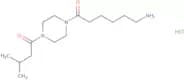
CAS:Versatile small molecule scaffoldFormula:C15H30ClN3O2Purity:Min. 95%Molecular weight:319.87 g/mol{3-Ethyl-5-[(4-ethyl-3,5-dimethyl-2H-pyrrol-2-ylidene)methyl]-2,4-dimethyl-1H-pyrrolato-N1,N5}difluoroboron
CAS:5,10,15,20-Tetrakis(4-ethyl-3,5-dimethyl-2H-pyrrol-2-ylidene)methyl]-2,4,6,8-tetrahydroimidazo[1,2a]pyridine (BODIPY FL) is a fluorescent probe for receptor and ligand binding studies. BODIPY FL has been shown to bind to the human serotonin 5HT 1A receptor with high affinity and inhibit the binding of the serotonin antagonist ketanserin. BODIPY FL also binds to the dopamine D 2 receptor with a Kd value of 0.27 nM. It is not active against other receptors or ion channels such as 5HT 2A , 5HT 3 , alpha 1A adrenergic or GABA A receptors. BODIPY FL can be used in fluorescence microscopy and flow cytometry experiments to visualize protein interactions by detecting changesFormula:C17H23BF2N2Purity:Min. 95%Molecular weight:304.19 g/molIMPG2 antibody
IMPG2 antibody was raised using the C terminal of IMPG2 corresponding to a region with amino acids VVFFSLRVTNMMFSEDLFNKNSLEYKALEQRFLELLVPYLQSNLTGFQNLPurity:Min. 95%Di-tert-butyl 5,5'-methylenebis(4-(3-methoxy-3-oxopropyl)-3-methyl-1H-pyrrole-2-carboxylate)
CAS:Di-tert-butyl 5,5'-methylenebis(4-(3-methoxy-3-oxopropyl)-3-methyl-1H-pyrrole-2-carboxylate) is a potent inhibitor of ion channels that are activated by ligands such as glutamate and acetylcholine. It has been shown to inhibit the activity of sodium, potassium, and calcium channels. Di-tert-butyl 5,5'-methylenebis(4-(3-methoxy-3-oxopropyl)-3-methyl-1H--pyrrole--2--carboxylate) is a precursor for the synthesis of peptides and antibodies. This product is offered for research purposes only and not for any clinical use.
Formula:C29H42N2O8Purity:Min. 95%Molecular weight:546.7 g/molUBE2L6 antibody
UBE2L6 antibody was raised in mouse using recombinant human UBE2L6 (1-152aa) purified from E. coli as the immunogen.
BRS3 antibody
The BRS3 antibody is a polyclonal antibody that serves as an affinity ligand for extracellular substances. It is commonly used in the field of medicine to isolate retinal autoantibodies. The BRS3 antibody has been found to be effective in inhibiting DNA double-strand break repair and can be used as a tool for studying the mechanisms involved in this process. In addition, it has been shown to inhibit the growth of pluripotent stem cells and can be used in research related to their differentiation. The BRS3 antibody is often employed in immunohistochemical studies to detect the presence of certain markers or proteins in tissue samples. Its use in life sciences research has provided valuable insights into various biological processes and pathways.Chloroquine N-oxide
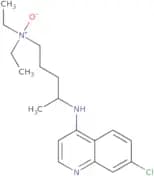
CAS:Chloroquine N-oxide is an analog of Chloroquine that acts as a potent kinase inhibitor. It has been shown to have anticancer properties and can induce apoptosis in cancer cells. Chloroquine N-oxide has been found to be effective against a variety of human tumors, including lung, breast, and colon cancers. This drug inhibits the activity of hepcidin, a protein involved in iron metabolism, which may contribute to its anticancer effects. Additionally, Chloroquine N-oxide has been detected in the urine of Chinese patients with cancer who were treated with this drug. This suggests that it may have potential as an anticancer agent for humans.
Formula:C18H26ClN3OPurity:Min. 95%Molecular weight:335.9 g/molZBTB3 antibody
ZBTB3 antibody was raised in rabbit using the middle region of ZBTB3 as the immunogenPurity:Min. 95%HS3ST1 Blocking Peptide
A synthetic peptide for use as a blocking control in assays to test for specificity of HS3ST1 antibody, catalog no. 70R-5492Purity:Min. 95%TRIM2 antibody
The TRIM2 antibody is a highly specialized monoclonal antibody that targets insulin and has neutralizing properties. It specifically binds to cholinergic receptors, inhibiting their activity and preventing the release of insulin. This antibody has been extensively studied in the field of Life Sciences and has shown promising results in various research applications.RR6
CAS:RR6 is a glycol ether that is used in the treatment of metabolic disorders. It activates AMP-activated protein kinase (AMPK) and inhibits ATP citrate lyase, thereby increasing acetyl-CoA levels and decreasing fatty acid synthesis. RR6 also reduces oxidative stress by inhibiting the production of reactive oxygen species and inhibiting mitochondrial permeability transition pore opening. This drug has been shown to be effective against choroidal neovascularization, which may be due to its ability to reduce vascular endothelial growth factor levels. RR6 is a small molecule that can be administered orally or intravenously, making it an attractive candidate for drug development.Formula:C16H18D5NO4Purity:Min. 95%Molecular weight:298.39 g/mol


![{3-Ethyl-5-[(4-ethyl-3,5-dimethyl-2H-pyrrol-2-ylidene)methyl]-2,4-dimethyl-1H-pyrrolato-N1,N5}difl…](/_next/image/?url=https%3A%2Fstatic.cymitquimica.com%2Fproducts%2F3D%2Fthumb-webp%2FFCA79981.webp&w=3840&q=75)