Biochemicals and Reagents
Subcategories of "Biochemicals and Reagents"
- Biomolecules(98,556 products)
- By Biological Target(100,865 products)
- By Pharmacological Effects(6,941 products)
- Cryopreservatives(21 products)
- Desinfectants and Related Compounds(28 products)
- Hormones(530 products)
- Plant Biology(6,904 products)
- Secondary Metabolites(14,368 products)
Found 130538 products of "Biochemicals and Reagents"
MAX antibody
The MAX antibody is a highly specific polyclonal antibody that targets the MAX antigen. It is commonly used in various assays, including those involving human serum samples. This antibody has been shown to have high affinity and specificity for the MAX protein, making it an ideal tool for research and diagnostic purposes.Leptin antibody
The Leptin antibody is a highly specialized monoclonal antibody that targets and binds to actin filaments in biomolecules. It is commonly used in Life Sciences research for various applications such as immunofluorescence, immunohistochemistry, and Western blotting. The Leptin antibody has been proven to be effective in detecting and quantifying the expression of leptin, an essential hormone involved in regulating energy balance and metabolism.ATG16L1 antibody
ATG16L1 antibody was raised using a synthetic peptide corresponding to a region with amino acids TSPVRAISRAATKRLSQPAGGLLDSITNIFGRRSVSSFPVPQDNVDTHPG06:0-06:0 NBD pg
CAS:06:0-06:0 NBD pg is a synthetic fluorescence probe which is used in the field of biochemistry and cell biology. This product is derived from phosphatidylglycerol and carries a nitrobenzoxadiazole (NBD) fluorescent group attached through an acyl chain. The mode of action involves the incorporation of the NBD-labeled lipid into biological membranes or liposomes, enabling visualization and analysis of lipid behavior and protein-membrane interactions under a fluorescence microscope or via spectroscopic methods.Formula:C24H40N5O13PPurity:Min. 95%Molecular weight:637.57 g/molTKT antibody
The TKT antibody is a potent family kinase inhibitor that targets oncostatin, a protein involved in various cellular processes. This polyclonal antibody is designed to specifically bind to oncostatin and inhibit its activity. It can be used in various life sciences applications, including immunoassays, western blotting, and immunohistochemistry.IL 1 α Human
IL-1α is a cytokine protein that has been shown to be involved in the immune system. IL-1α is an activator of the receptor and is also a ligand for it. The protein has been shown to activate ion channels, which are proteins that allow ions to pass through either by diffusion or by facilitated transport. This activation causes cells to produce more hydrogen ions, which leads to an increase in the acidity of the cell. IL-1α has also been shown to inhibit cell proliferation and induce apoptosis.
Purity:Min. 95%GSK 2250665A
CAS:GSK 2250665A is an antiviral agent, which is a product of GlaxoSmithKline's research and development. It operates as a hepatitis C virus (HCV) NS3/4A protease inhibitor. The NS3/4A protease is essential for viral replication, and by inhibiting this enzyme, GSK 2250665A effectively disrupts the viral life cycle. This mode of action specifically targets the HCV replication machinery, decreasing the viral load in patients. The use of GSK 2250665A is primarily in the treatment of chronic hepatitis C, often in combination with other antiviral medications to enhance therapeutic efficacy. Through its targeted inhibition, it contributes to viral clearance and the management of hepatitis C, a disease which, if untreated, can lead to severe liver damage and other complications.Formula:C26H29N5OSPurity:Min. 95%Molecular weight:459.61 g/molPAR1 antibody
PAR1 antibody is a Polyclonal Antibody used in Life Sciences research. It is designed to target the PAR1 receptor, which plays a crucial role in various physiological processes including coagulation, chemotherapy, and mineralocorticoid signaling. This antibody specifically binds to the extracellular domain of the PAR1 receptor, neutralizing its activity and preventing downstream signaling events. It has been extensively used as a tool in studying the function of PAR1 and its involvement in disease processes. The high specificity and affinity of this antibody make it an ideal choice for researchers looking to investigate the role of PAR1 in different biological systems.
Purity:Min. 95%Selatogrel
CAS:Selatogrel is a peptide that can activate the receptor, which is known as selatoprotein. Selatogrel binds to the receptor and inhibits ion channels, which are the proteins that selectively permit the passage of ions across a cell membrane. It is used in research as a tool for studying protein interactions and has been shown to inhibit ligand-receptor binding with high purity. Selatogrel also inhibits receptors on cells, and has been shown to block the enzyme phosphodiesterase 4 (PDE4). Selatogrel can be used in pharmacology to study protein interactions and has shown potential as an inhibitor of PDE4.
Formula:C28H39N6O8PPurity:Min. 95%Molecular weight:618.6 g/molDelcasertib
CAS:Delcasertib is a synthetic peptide inhibitor that is derived from biochemical research on protein kinase C (PKC) signaling pathways. This compound specifically targets the delta isoform of protein kinase C (PKCδ), playing a crucial role in modulating signaling pathways involved in cellular responses to stress and injury.
Formula:C120H199N45O34S2Purity:Min. 95%Molecular weight:2,880.3 g/molMHC Class II antibody
The MHC Class II antibody is a monoclonal antibody that specifically targets amyloid protein. It is widely used in Life Sciences research for various applications. This antibody has been extensively validated using techniques such as polymerase chain reaction (PCR), flow cytometry, and clinical plasma samples. The MHC Class II antibody exhibits high specificity and affinity towards its target, making it an ideal tool for studying immune responses and antigen presentation.Lys-Ala-AMC
CAS:Lys-Ala-AMC is an activator of ion channels and a ligand for receptors. It is used in research as a tool to study protein interactions, receptor pharmacology, and ion channel pharmacology. Lys-Ala-AMC binds to the α-subunit of voltage gated calcium channels and can activate these channels by increasing the rate of opening. This peptide also inhibits receptor binding by competing with the natural ligand. It has been shown to be an antagonist at the NMDA receptor and can inhibit the binding of glycine to this receptor.
Formula:C19H26N4O4Purity:Min. 95%Molecular weight:374.43 g/molCNS 5161A
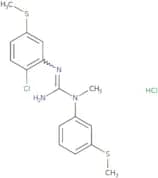
CAS:The CNS 5161A is a device for the measurement of cerebral blood flow and pressure. It is used in anesthetized animals to measure changes in cerebral blood flow, cerebral perfusion pressure and regional cerebral blood flow. The device consists of a probe that contains a thermistor that measures the temperature change when it passes through the brain tissue. The thermistor is connected to a computer that records the data. The CNS 5161A is used in clinical practice for the assessment of neuroprotective drugs and for EEG-guided surgery. This device has been shown to be useful in measuring changes in c-fos protein expression after spinal cord injury.
Formula:C16H19Cl2N3S2Purity:Min. 95%Molecular weight:388.4 g/mol