Biochemicals and Reagents
Subcategories of "Biochemicals and Reagents"
- Biomolecules(98,569 products)
- By Biological Target(100,661 products)
- By Pharmacological Effects(6,934 products)
- Cryopreservatives(21 products)
- Desinfectants and Related Compounds(28 products)
- Hormones(362 products)
- Plant Biology(6,908 products)
- Secondary Metabolites(14,364 products)
Found 130473 products of "Biochemicals and Reagents"
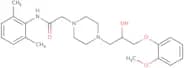
(R)-Ranolazine
CAS:(R)-Ranolazine is a potent inhibitor of kinases that has shown promise as an anticancer agent. It has been found to be effective against a variety of tumor cells, including those derived from human urine and Chinese hamster ovaries. (R)-Ranolazine works by inhibiting the activity of protein kinase C, which plays a key role in cancer cell growth and proliferation. This drug has also been shown to induce apoptosis in cancer cells, leading to their death. In addition to its anticancer properties, (R)-Ranolazine has been found to inhibit elastase, an enzyme involved in the breakdown of proteins. This inhibition may have potential therapeutic applications for conditions such as chronic obstructive pulmonary disease (COPD) and other inflammatory diseases. Overall, (R)-Ranolazine is a promising analog with potential therapeutic applications for cancer and other diseases involving abnormal kinase activity or inflammation.
Formula:C24H33N3O4Purity:Min. 95%Molecular weight:427.5 g/molONO 8130
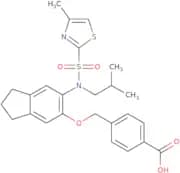
CAS:ONO-8130 is a new, potent and selective agonist of the prostanoid receptor EP2. It has been shown to have a concentration-dependent antinociceptive effect in both anesthetized and non-anesthetized animals. In functional studies, ONO-8130 inhibits the spontaneous firing of neurons from the dorsal root ganglia (DRG) in a dose-dependent manner, which may be mediated by an action on EP2 receptors. ONO-8130 also inhibits the release of nociceptive neurotransmitters such as histamine from rat peritoneal mast cells. The drug has been found to have antihistaminic activity in rats but not in guinea pigs or mice. This may be due to its ability to activate EP2 receptors in the bladder muscle and/or its affinity for vascular endothelial cells that express EP2 receptors. These actions may account for its antihistaminic effects observed in rats but not mice orFormula:C25H28N2O5S2Purity:Min. 95%Molecular weight:500.63 g/molACT-709478
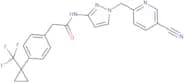
CAS:ACT-709478 is an orally bioavailable, non-peptide small molecule for the treatment of epileptic patients. It has a pharmacokinetic half-life of about 4 hours and penetrates the blood–brain barrier. ACT-709478 has been shown to be effective in animal models of cardiovascular diseases. The drug is metabolized by cytochrome P450 enzymes and has functional groups that are not well characterized. The terminal half-life of this molecule is about 2 hours.Formula:C22H18F3N5OPurity:Min. 95%Molecular weight:425.4 g/molJNK Inhibitor V
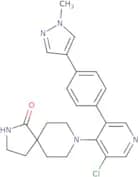
CAS:JNK Inhibitor V is a small molecule inhibitor, which is a synthetic compound with selective inhibitory activity against the c-Jun N-terminal kinase (JNK) pathway. It acts by specifically targeting the JNK enzymes, thereby blocking their interaction with downstream substrates involved in various cellular processes. The inhibition of JNK activity by JNK Inhibitor V mitigates the phosphorylation of c-Jun and other transcription factors, ultimately influencing gene expression and cellular responses.
Formula:C20H16N6SPurity:Min. 95%Molecular weight:372.45 g/molCCT251545
CAS:CCT251545 is a small molecule that inhibits the Wnt signaling pathway by binding to β-catenin. This drug may be used for the treatment of inflammatory bowel disease and other autoimmune diseases. The molecular structure of CCT251545 is still unknown but it has been shown to bind to the DNA binding proteins, which are important for gene expression. CCT251545 can also be used as a crystallography probe in X-ray crystallography experiments.Formula:C23H24ClN5OPurity:Min. 95%Molecular weight:421.92 g/mol(rac)-Benpyrine
CAS:(rac)-Benpyrine is a cell biology research tool and a pharmacology inhibitor. It is used in Cell Biology and Pharmacology to study ion channels, ligands, receptors, peptides, and protein interactions. (rac)-Benpyrine can be used as an activator or an antibody. (rac)-Benpyrine binds to the receptor site on a cell membrane and changes the shape of the channel so that ions can flow through it more easily. This can lead to an increase in the rate of depolarization of the membrane. (rac)-Benpyrine is also used as a ligand in high-affinity binding assays for proteins such as G-protein coupled receptors and protein kinases.Formula:C16H16N6OPurity:Min. 95%Molecular weight:308.34 g/molNMDAR antagonist 1
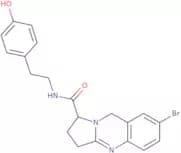
CAS:NMDAR antagonist 1 is a chemical compound that functions as a non-competitive antagonist at the N-methyl-D-aspartate receptor (NMDAR), a subtype of glutamate receptor. Sourced synthetically, this compound is designed to modify neurotransmitter activity in the central nervous system by inhibiting the action of glutamate, which is the primary excitatory neurotransmitter. Its mode of action involves blocking the ion channel of the NMDAR, thereby preventing calcium ions from entering the neuron and modulating synaptic plasticity and neuronal communication.
This antagonist is widely used in neuroscience research to study the mechanisms of excitotoxicity, which is implicated in a variety of neurodegenerative disorders such as Alzheimer's disease, Parkinson's disease, and amyotrophic lateral sclerosis (ALS). It is also utilized to explore the fundamental processes involving learning, memory, and synaptic transmission. By providing insights into glutamatergic signaling pathways, NMDAR antagonist 1 aids in the development of therapeutic strategies for conditions related to excessive neuronal activity and synaptic dysfunction.Formula:C20H20BrN3O2Purity:Min. 95%Molecular weight:414.3 g/molBD 1008 dihydrobromide
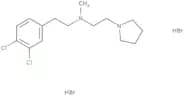
CAS:Sigma (Ï) receptor antagonistFormula:C15H24Br2Cl2N2Purity:Min. 95%Molecular weight:463.08 g/molAzapropazone
CAS:Azapropazone is a nonsteroidal anti-inflammatory drug that has been used to treat rheumatoid arthritis, osteoarthritis, and pain. It is also used as an adjunct therapy for the treatment of myocardial infarct. Azapropazone inhibits the synthesis of prostaglandins, leukotrienes, and thromboxanes by blocking cyclooxygenase enzymes. The inhibition of these enzymes by azapropazone may be due to its structural similarity to coumarin derivatives such as warfarin or dicumarol. Azapropazone has been shown to interact with other drugs such as nonsteroidal anti-inflammatory drugs (NSAIDs) and may lead to gastrointestinal bleeding.Formula:C16H20N4O2Purity:Min. 95%Molecular weight:300.36 g/molAS 101
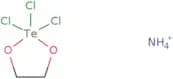
CAS:AS 101 is a mixture of polyunsaturated fatty acids that are produced by the hydrolysis of vegetable oils and animal fats. The product is used to produce supernatants for use in cancer research. AS 101 has been shown to inhibit tumor growth, as well as inhibit HIV infection in vitro. The mechanism of action is not yet known, but it may be due to its ability to increase IL-10 production and transcriptional activity in mononuclear cells.Formula:C2H4Cl3O2Te·NH4Purity:Min. 95%Molecular weight:294.01 g/molAZD9898
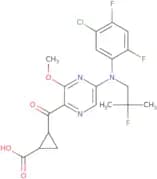
CAS:AZD9898 is a molecule that has been shown to have therapeutic effects for depression and inflammation. The chemical structure of AZD9898 is similar to that of the natural product structures. The synthesis methods for AZD9898 are enzymatic methods, which involve the conversion of an enzyme substrate into the desired product through catalysis by an enzyme. In vivo studies have shown that AZD9898 can be used as a treatment for dehydration and inflammatory diseases, with little or no side effects.Formula:C20H19ClF3N3O4Purity:Min. 95%Molecular weight:457.8 g/molPTK/PI 3-K/mTOR Inhibitor, PP121
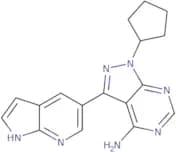
CAS:PTK/PI 3-K/mTOR Inhibitor, PP121, is a small molecule that inhibits cellular growth and proliferation. It binds to the epidermal growth factor receptor (EGFR) and blocks the binding of epidermal growth factor (EGF). This leads to the inhibition of cell growth and proliferation. PTK/PI 3-K/mTOR Inhibitor, PP121 has been shown to be effective for treating cancers, such as prostate cancer and breast cancer. It also has antiviral properties, inhibiting RIG-I signaling pathways in HIV-1 infected cells.
Formula:C17H17N7Purity:Min. 95%Molecular weight:319.36 g/molMethost-8-enol
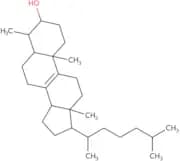
CAS:Controlled ProductMethost-8-enol is a potent inhibitor of kinases, which are enzymes involved in the regulation of various cellular processes. It is an analog of a natural product found in Chinese medicinal plants and has been shown to have anticancer properties. Methost-8-enol inhibits the growth of cancer cells by blocking the cell cycle and inducing apoptosis, or programmed cell death. This compound has been found in human urine and shows promise as a potential protein kinase inhibitor for the treatment of cancer. Its unique structure makes it an attractive target for drug development in the field of medicinal chemistry.Formula:C28H48OPurity:Min. 95%Molecular weight:400.7 g/molLonapalene
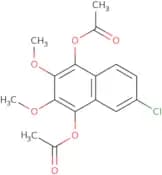
CAS:Lonapalene is a prodrug that can be converted to its active form, lonaprazan. It is used in the treatment of asthma and inflammatory bowel disease. Lonapalene inhibits the enzyme phospholipase A2 (PLA2) by binding to the hydroxyl group of arachidonic acid, which prevents arachidonic acid from being released as a substrate for PLA2. This inhibition results in an anti-inflammatory effect. Lonapalene also inhibits other enzymes such as cyclooxygenase and lipoxygenase, which are involved in the synthesis of prostaglandins and leukotrienes. Lonapalene has been shown to have anti-inflammatory activity due to its ability to inhibit prostaglandin synthesis, which may be due to its ability to bind with fatty acids.br> br>Formula:C16H15ClO6Purity:Min. 95%Molecular weight:338.74 g/molSU5408
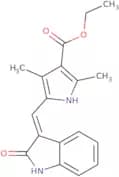
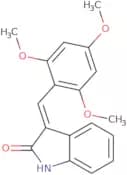
CAS:SU5408 is a small molecule that inhibits the activity of protein kinases, which are enzymes that regulate cellular processes. It has been shown to inhibit growth of abnormal cells, such as cancer cells and cells induced to grow abnormally by exposure to cancer therapy. SU5408 also blocks the production of tyrosine kinase and hydroxyindole, which are proteins involved in cell division and proliferation. The drug has been shown to be effective at doses between 0.1-10 μM in inhibiting abnormal cell growth and inducing apoptosis in human cancer cells. SU5408 has also been shown to normalize certain cancer-related genes, which may contribute to its anti-cancer effects.Formula:C18H18N2O3Purity:Min. 95%Molecular weight:310.35 g/molKYL
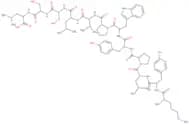
CAS:KYL is a cyclic peptide that has been shown to bind to the MT2 receptor and inhibit its activity. This receptor regulates axonal growth, and KYL is an antagonist of this receptor. The physiological function of the MT2 receptor is not known. KYL inhibits prostate cancer cells by binding to their receptors. KYL was also shown to inhibit skin cancer in vivo, which may be due to its ability to inhibit protein synthesis and cell division in these cells. Structural analysis showed that KYL binds tightly with nitrogen atoms on the surface of the MT2 receptor, which may account for its high affinity for the receptor. The affinity of KYL for the MT2 receptor can be increased by changing its structure through chemical modification. In vitro studies have shown that KYL inhibits granule neuron production in rats by binding to a different site on the MT2 receptor than it does in prostate cancer cells or skin cancer cells. Titration calorimetry revealed that KYL binds weakly withFormula:C74H108N14O17Purity:Min. 95%Molecular weight:1,465.7 g/molGNF351
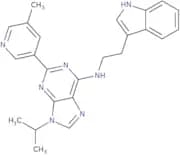
CAS:GNF351 is a growth factor that is structurally related to epidermal growth factor. It is a basic fibroblast growth factor (bFGF) with the amino acid sequence of Val-Ala-Gly-Arg-Leu-Lys. GNF351 binds to cellular receptors, which then initiate signal transduction pathways in response to extracellular stimuli. The binding of GNF351 to these receptors has been shown to induce cell proliferation and differentiation, as well as stimulation of angiogenesis and wound healing. This drug can be used for the treatment of autoimmune diseases, inflammatory skin diseases, and cancer. Treatment with GNF351 has been shown to inhibit the growth of liver cells in culture after chronic exposure, suggesting it may have a hepatoprotective effect. The detection time for this drug is very short; it can be detected in the blood after only 4 hours following administration.Formula:C24H25N7Purity:Min. 95%Molecular weight:411.5 g/molIC261
CAS:IC261 is a small molecule inhibitor of protein kinase activity. It has been shown to inhibit the proliferation of human leukemia HL-60 cells with minimal toxicity in vitro. IC261 inhibits protein synthesis by affecting the transport of proteins into the cell nuclei and inhibiting phosphorylation of proteins. IC261 also reduces cancer cell survival by inhibiting epidermal growth factor receptor signaling, which may be due to its ability to inhibit protein kinases.
Formula:C18H17NO4Purity:Min. 95%Molecular weight:311.33 g/molCatestatin
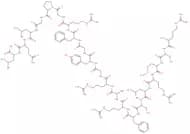
CAS:Catestatin is a peptide hormone that is found in the human body. Catestatin has been observed to have an effect on congestive heart disease, bowel disease, and cytosolic Ca2+. Catestatin binds to a receptor that is present on cells in the cardiovascular system and other tissues. The receptor belongs to the G-protein-coupled receptor family of receptors. Catestatin also has an effect on peptide hormones such as chromogranin, which regulates water and electrolyte balance. Catestatin may be involved in the development of cancer because it can inhibit proliferation of cancer cells by reducing levels of cytosolic Ca2+.Formula:C107H173N37O26SPurity:Min. 95%Molecular weight:2,425.8 g/mol1,4-Benzenedimethanethiol
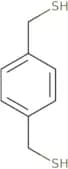
CAS:Thiol scavenger used in solid-phase peptide synthesisFormula:C8H10S2Purity:Min. 95%Molecular weight:170.3 g/mol