Biochemicals and Reagents
Subcategories of "Biochemicals and Reagents"
- Biomolecules(98,557 products)
- By Biological Target(101,014 products)
- By Pharmacological Effects(6,941 products)
- Cryopreservatives(21 products)
- Desinfectants and Related Compounds(28 products)
- Hormones(530 products)
- Plant Biology(6,903 products)
- Secondary Metabolites(14,369 products)
Found 130563 products of "Biochemicals and Reagents"
COVID-19 variant pack
SARS-CoV-2 Spike (S) glycoprotein: Spike (S) glycoprotein corresponds to one of the leading targets for COVID-19 disease. Present on the surface of Sars-CoV-2 virus, Spike S protein in a class I fusion protein that allows the virus to enter host cells. Variants package available: Some proteins of Sars-CoV-2 are identified as leading targets for COVID-19 therapies. SB-PEPTIDE offers a special pack pre-made peptide libraries of Spike protein including peptides from COVID-19 variants: UK COVID-19 variant B.1.1.7, South Africa COVID-19 variant B.1.351, Brazil COVID-19 variant B.1.1.248. SB-PEPTIDE offers additional plate containing only peptides with Spike S protein mutation of COVID-19 B.1.1.7, B.1.3.5.1 and B.1.1.248 (cited below). Variants package and Spike (S) glycoprotein peptide library can be used for T-cell assays, immune monitoring, antigen specific T-cell stimulation, T-cell expansion and cellular immune response.Biotin-SARS-CoV-2 Spike RBM 450-473 peptide
Biotin-SARS-CoV-2 Spike RBM 450-473 peptide is the biotinylated version of SARS-CoV-2 Spike RBM 450-473 peptide. SARS-CoV-2 Spike RBM 450-473 peptide is an epitope of interest of the SARS-CoV-2 Spike S glycoprotein Receptor-Binding Motif (RBM). Biotin-SARS-CoV-2 Spike RBM 450-473 peptide is useful for vaccine development and for structure-activity relationship studies
SARS-CoV-2 Spike (S) glycoprotein
Spike (S) glycoprotein corresponds to one of the leading targets for COVID-19 disease. Present on the surface of Sars-CoV-2 virus, Spike S protein is a class I fusion protein that allows the virus to enter host cells.
With a 1 273 aa length, Spike protein has 2 subunits : S1 contains the receptor-binding domain RBD and S2 induces the fusion of the viral envelop with the cellular membrane.
SARS-CoV-2 Spike RBM:
The receptor-binding domain in SARS-CoV-2 Spike protein contains a receptor-binding motif RBM. SARS-CoV-2 Spike RBM is the main functional motif in RBD and allows contacts between the S protein and the Angiotensin-Converting Enzyme receptor 2 (ACE2 receptor) which mediates the viral entry.3,4,5-Trimethoxyamphetamine hydrochloride
CAS:Controlled ProductPlease enquire for more information about 3,4,5-Trimethoxyamphetamine hydrochloride including the price, delivery time and more detailed product information at the technical inquiry form on this page
Formula:C13H21ClO3Purity:Min. 95%Molecular weight:260.75 g/molPGLa
CAS:Please enquire for more information about PGLa including the price, delivery time and more detailed product information at the technical inquiry form on this page
Formula:C88H162N26O22SPurity:Min. 95%Molecular weight:1,968.46 g/molIPAG
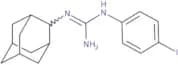
CAS:IPAG is a medicinal compound that has been shown to have potent anticancer properties. It is an analog of a natural compound found in Chinese urine, which has been used for centuries in traditional medicine. IPAG works by inhibiting kinases, enzymes that regulate cell growth and division, and promoting apoptosis or programmed cell death in cancer cells. This protein kinase inhibitor has been shown to be effective against various types of tumors in human cancer cell lines. Its unique mechanism of action makes it a promising candidate for the development of new anticancer drugs. With its ability to target specific proteins involved in cancer growth and progression, IPAG offers great potential as a therapeutic agent for the treatment of cancer.
Formula:C17H22IN3Purity:Min. 95%Molecular weight:395.28 g/molSARS-CoV-2 Spike RBD 336-347 peptide
SARS-CoV-2 Spike RBD 336-347 peptide is an epitope of interest of the SARS-CoV-2 Spike S glycoprotein Receptor-Binding Domain (RBD). SARS-CoV-2 Spike RBD 336-347 peptide is useful for vaccine development and for structure-activity relationship studies SARS-CoV-2 Spike (S) glycoprotein Spike (S) glycoprotein corresponds to one of the leading targets for COVID-19 disease. Present on the surface of Sars-CoV-2 virus, Spike S protein is a class I fusion protein that allows the virus to enter host cells. With a 1 273 aa length, Spike protein has 2 subunits : S1 contains the receptor-binding domain RBD and S2 induces the fusion of the viral envelop with the cellular membrane. SARS-CoV-2 Spike RBD: The receptor-binding domain in SARS-CoV-2 Spike protein allows binding to the Angiotensin-Converting Enzyme receptor 2 (ACE2 receptor) which mediates the viral entry. SB-PEPTIDE also offers SARS-CoV-2 Spike RBD 336-347 (Biotin-LC) peptideUracil-5,6-d2
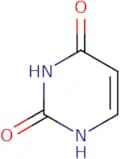
CAS:Uracil-5,6-d2 is a potent inhibitor of cyclin-dependent kinase (CDK), a protein that plays a crucial role in the regulation of cell cycle progression. It has been shown to induce apoptosis in human tumor cells and has potential as an anticancer agent. Uracil-5,6-d2 is a medicinal compound that can be used to treat various types of cancer, including leukemia. It works by inhibiting CDK activity, which leads to the suppression of cell division and proliferation. Chinese scientists have conducted extensive research on this compound and have found it to be effective against several types of cancer cells. Uracil-5,6-d2 is also being studied as a potential protein kinase inhibitor with promising results.Formula:C4H4N2O2Purity:Min. 95%Molecular weight:114.1 g/molGLX351322
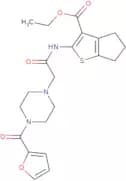
CAS:GLX351322 is a small molecule drug that blocks the activity of TNF-α, which is a proinflammatory cytokine. The drug has been shown to reduce insulin resistance and improve insulin sensitivity in diabetic patients. GLX351322 also has an anti-inflammatory effect by reducing chronic cough and suppressing cholesterol synthesis in rats. It is a synthetic compound that binds to the response element-binding protein (RBP) and prevents the binding of transcription factors to DNA. This prevents the production of inflammatory cytokines and reactive oxygen species (ROS) by immune cells, which are responsible for synaptic dysfunction and neuronal cell death in Alzheimer's disease patients. GLX351322 has been found to have no adverse effects on healthy subjects after short-term exposure.END>>Formula:C21H25N3O5SPurity:Min. 95%Molecular weight:431.51 g/molOvotransferrin (328-332)
Ovotransferrin 328-332, also called Conalbumin 328-332, is a part of the egg white albumen.
OTS186935
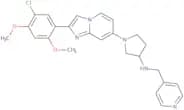
CAS:OTS186935 is a small molecule that binds to the MDA-MB-231 breast cancer cell line. The observed effect of this compound on cellular viability is due to apoptotic cell death. OTS186935 induces apoptosis by inhibiting transcriptional regulation and the polymerase chain reaction (PCR). It also inhibits DNA methylation, which is an epigenetic process important for various cellular functions. These findings suggest that OTS186935 may be a potential therapeutic agent in cancer therapy.Formula:C25H26ClN5O2Purity:Min. 95%Molecular weight:464 g/mol5-Fluorouracil-15N2
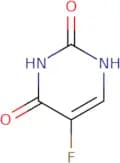
CAS:5-Fluorouracil-15N2 is an anticancer drug that acts as a potent inhibitor of kinases involved in cell division and proliferation. It is used to treat various types of cancer, including breast, colon, and prostate cancer. This drug works by interfering with the synthesis of DNA and RNA, leading to the inhibition of protein synthesis and ultimately inducing apoptosis in cancer cells. 5-Fluorouracil-15N2 has been shown to be effective against human cancer cell lines in vitro as well as in vivo tumor models. This medicinal analog can be detected in urine samples after administration and has been studied for its potential use as a biomarker for monitoring cancer therapy. Additionally, recent studies have shown that 5-Fluorouracil-15N2 may have anti-tumor effects in Chinese hamster ovary cells by inhibiting protein kinase C activity.Formula:C4H3FN2O2Purity:Min. 95%Molecular weight:132.06 g/molH-QYIKANSKFIGITE-OH
Tetanus toxin TetTox-B (830-843) DRB1*07:01 is a short part of the tetanus toxin. Tetanus toxin is produced by Clostridium tetani and is a potent neurotoxin. Indeed, tetanus toxin arrives on bloodstream and moves to a receptor complex at the neuromuscular junction. TetTox-B (830-843) DRB1*07:01 TetTox-B (830-843) DRB1*07:01 is used to stimulate the immune response and to generate DRB1*07:01-restricted T cells specific for the tetanus toxin peptide. TetTox-B (830-843) is also a classical peptide reference for the binding affinity with DRB1*07:01 molecules.