Biochemicals and Reagents
Subcategories of "Biochemicals and Reagents"
- Biomolecules(98,556 products)
- By Biological Target(100,854 products)
- By Pharmacological Effects(6,941 products)
- Cryopreservatives(21 products)
- Desinfectants and Related Compounds(28 products)
- Hormones(528 products)
- Plant Biology(6,904 products)
- Secondary Metabolites(14,368 products)
Found 130538 products of "Biochemicals and Reagents"
(-)-Normacromerine-d3
CAS:Controlled ProductPlease enquire for more information about (-)-Normacromerine-d3 including the price, delivery time and more detailed product information at the technical inquiry form on this pageFormula:C11H17NO3Purity:Min. 95%Molecular weight:214.28 g/molNemiralisib
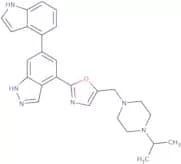
CAS:Nemiralisib is a small molecule that inhibits the PD-L1 protein. It can be used to treat cancer and autoimmune diseases. Nemiralisib binds to the PD-L1 protein and prevents it from binding to its ligands, CD80 or CD86. This prevents the immune system from being suppressed by the PD-L1 protein and may enable an anti-PD-L1 therapy to induce tumor regression in patients with cancer. Nemiralisib has been shown to inhibit P-glycoprotein (Pgp) activity in vitro, which may result in drug interactions with other drugs that are substrates of this transporter. Nemiralisib has a terminal half life of approximately 6 hours, meaning that most of it will be eliminated from the body within 24 hours after administration. The chemical name for nemiralisib is 1-[3-(4-chlorophenyl)phenyl]-3-[2-(methylsulfonyl)phenyl]urea. The
Formula:C26H28N6OPurity:Min. 95%Molecular weight:440.54 g/molCD40 antibody (biotin)
CD40 antibody (biotin) was raised in rat using CD40 as the immunogen
Purity:Min. 95%GW 542573X
CAS:GW 542573X is a synthetic compound that binds to the cytochrome P450 protein and inhibits its activity. This drug has been shown to activate cellular potassium ion channels, which leads to an increase in intracellular calcium levels by activating voltage-gated calcium channels. This causes cancer cell death and can be used as a potential therapeutic agent for cancer treatment. GW 542573X is also an antagonist of calmodulin that binds to this protein with high affinity, but does not inhibit its biological function.
Formula:C19H28N2O5Purity:Min. 95%Molecular weight:364.44 g/molGR 144053 Trihydrochloride
CAS:GR 144053 is a glucocorticoid that inhibits the growth of cancer cells by binding to the glucocorticoid receptor. It has been shown to inhibit tumor progression and reduce tumor size in animal models. GR 144053 has also been shown to inhibit the production of TGF-β, which is involved in tumor growth and metastasis. This drug also inhibits stem cell proliferation, which may contribute to its anti-tumor effects. The microenvironment of the tumor seems to play an important role in GR 144053's ability to suppress cancer cell growth.Formula:C18H27N5O2•(HCl)3Purity:Min. 95%Molecular weight:345.44 g/molMRL-871
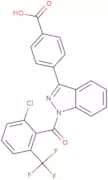
CAS:MRL-871 is a peptide that activates the receptor for the protein CXCR4, which is a chemokine receptor. It binds to the receptor and induces its dimerization, changing the conformation of the receptor and increasing the affinity for its ligands. The MRL-871 peptide has been shown to inhibit HIV replication in vitro by binding to CXCR4 on CD4+ T cells.Formula:C22H12ClF3N2O3Purity:Min. 95%Molecular weight:444.8 g/molCD154 antibody (PE)
CD154 antibody (biotin) was raised in hamster using activated murine Th1 clone D1.6 as the immunogen.Purity:Min. 95%AMPK Activator 991
CAS:AMPK Activator 991 is a small molecule that is structurally related to dinucleotide phosphate. It has been shown to have physiological activities in an animal model, including reducing levels of fatty acids and increasing levels of glucose. AMPK Activator 991 also appears to have beneficial effects on metabolic disorders such as diabetes and obesity, by stimulating the production of cyclic nucleotide phosphodiesterase, which regulates the flow of cyclic nucleotides. This drug also increases camp levels in cells. The α subunit is required for the activity of this compound.Formula:C24H18ClN3O3Purity:Min. 95%Color and Shape:PowderMolecular weight:431.87 g/molVelaresol
CAS:Velaresol is a small molecule drug that binds to the CB2 receptor. It has been shown to have therapeutic potential in treating bowel diseases, such as inflammatory bowel disease and irritable bowel syndrome, as well as autoimmune diseases such as multiple sclerosis and type 1 diabetes. Velaresol has also been shown to be effective against cancer cells in vitro and in vivo, with a mechanism of action that is not yet understood. The drug also inhibits the production of proinflammatory cytokines and ameliorates inflammation by binding to toll-like receptors on immune cells. Velaresol has been synthesized using a biocompatible polymer, which may make it suitable for use in diagnostic applications.
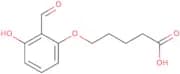
Formula:C12H14O5Purity:Min. 95%Molecular weight:238.24 g/molCP-226269
CAS:CP-226269 is a synthetic glucocorticoid, which is a type of steroid hormone. This compound is derived from chemical synthesis, originating from laboratories dedicated to the development of advanced biomolecules for research. Its mode of action involves binding to glucocorticoid receptors, which are part of the nuclear receptor superfamily. Once bound, it modulates the expression of target genes that play pivotal roles in inflammation, immune response, and metabolic processes.Formula:C18H19FN4Purity:Min. 95%Molecular weight:310.37 g/molCD106 antibody (PE)
CD106 antibody (FITC) was raised in rat using murine CD106/VCAM-1 as the immunogen.Purity:Min. 95%Apcin-A
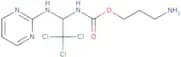
CAS:Apcin-A is an anticancer analog that functions as a kinase inhibitor. It has been shown to inhibit the activity of various kinases, including those involved in cancer cell growth and proliferation. Apcin-A is derived from human urine and has demonstrated potent anticancer activity against a range of tumors. This protein inhibitor induces apoptosis in cancer cells, leading to their death. Apcin-A has also been found to be effective against Chinese hamster ovary cells and elastin-induced cell proliferation. With its ability to target specific kinases, Apcin-A shows great potential as a therapeutic agent for cancer treatment.Formula:C10H14Cl3N5O2Purity:Min. 95%Molecular weight:342.6 g/molBTUM
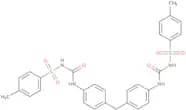
CAS:BTUM is a medicinal compound that acts as an analog of human kinases. It has been shown to have potent anticancer properties, inhibiting the growth and proliferation of cancer cells by inducing apoptosis and disrupting the cell cycle. BTUM works by binding to specific proteins in cancer cells, which are involved in the regulation of cell growth and division. This inhibitor prevents these proteins from functioning properly, leading to the suppression of tumor growth. BTUM has been extensively studied in Chinese medicine, where it has been used for its anti-cancer properties for many years. With its ability to target cancer cells specifically, BTUM is a promising candidate for the development of new cancer therapies.
Formula:C29H28N4O6S2Purity:Min. 95%Molecular weight:592.7 g/molYCN47284
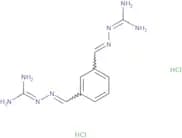
CAS:Please enquire for more information about YCN47284 including the price, delivery time and more detailed product information at the technical inquiry form on this pageFormula:C10H16Cl2N8Purity:Min. 95%Molecular weight:319.19 g/molPiperaquine N-oxide
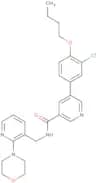
CAS:Please enquire for more information about Piperaquine N-oxide including the price, delivery time and more detailed product information at the technical inquiry form on this pageFormula:C29H32Cl2N6OPurity:Min. 95%Molecular weight:551.5 g/molA-887826-d8
CAS:Please enquire for more information about A-887826-d8 including the price, delivery time and more detailed product information at the technical inquiry form on this page
Formula:C26H29ClN4O3Purity:Min. 95%Molecular weight:489 g/molAcetyloxymethyl 2-[N-[2-(acetyloxymethoxy)-2-oxoethyl]-2-[2-[3-(1,3-benzothiazol-2-yl)-7-[bis[2-(acetyloxymethoxy)-2-oxoethyl]amino] -2-oxochromen-6-yl]oxyethoxy]-4-methylanilino]acetate
CAS:Acetyloxymethyl 2-[N-[2-(acetyloxymethoxy)-2-oxoethyl]-2-[2-[3-(1,3-benzothiazol-2-yl)-7-[bis[2-(acetyloxymethoxy)-2-oxoethyl]amino] -2-oxochromen-6-yl]oxyethoxy]-4-methylanilino]acetate is a fluorescent probe for the detection of potassium ion concentration in nanoliters. It is an acid molecule that can be used to measure concentrations of chloride, calcium, and nucleic acid molecules. This probe has been shown to inhibit efflux by binding to the outer membrane of Gram negative bacteria, which helps prevent bacterial resistance. Acetyloxymethyl 2-[N-[2-(acetyloxymethoxy)-2-oxoethyl]-2-[2-[3-(1,3-benzothiazol-2Formula:C45H45N3O20SPurity:Min. 95%Molecular weight:979.9 g/molTolpyralate
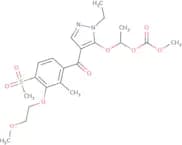
CAS:Tolpyralate is an anticancer drug that has been used in Chinese traditional medicine for centuries. It works by inducing apoptosis, or programmed cell death, in cancer cells. Tolpyralate inhibits the activity of kinases, which are proteins that play a key role in regulating cell growth and division. This drug has been shown to be effective against a variety of tumor types, including breast, lung, and colon cancers. Tolpyralate is structurally similar to oseltamivir, an antiviral drug used to treat influenza. In addition to its anticancer properties, tolpyralate has also been found to have potential as an inhibitor of urinary bladder cancer metastasis.Formula:C21H28N2O9SPurity:Min. 95%Molecular weight:484.5 g/molN-[2-[(2-Hydroxyethyl)amino]ethyl]-(3beta)-cholest-5-ene-3-carboxamide
CAS:N-[2-[(2-Hydroxyethyl)amino]ethyl]-(3beta)-cholest-5-ene-3-carboxamide is a potent kinase inhibitor that has shown promising results in the treatment of cancer. It works by inhibiting kinases, which are enzymes that play a crucial role in cancer cell growth and survival. This compound has been found to induce apoptosis (programmed cell death) in tumor cells, making it a potential anticancer agent. N-[2-[(2-Hydroxyethyl)amino]ethyl]-(3beta)-cholest-5-ene-3-carboxamide has also been shown to be effective against linezolid-resistant strains of bacteria and may serve as an analog for developing new antibiotics. In Chinese hamster ovary cells, this compound has demonstrated potent inhibition of protein kinase CK1δ activity and exhibited cytotoxicity against human cancer cell lines. Overall, N-[2-[(2-Hydroxyethyl)aminoFormula:C32H56N2O2Purity:Min. 95%Molecular weight:500.8 g/molAuristatin F TFA Salt
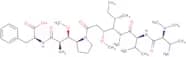
CAS:Auristatin F TFA salt is a potent antitumor agent that can be used for the treatment of solid tumours. It inhibits the growth of cancer cells by binding to epidermal growth factor (EGF) receptors and blocking the action of EGF. Auristatin F TFA salt has been shown to induce apoptosis in prostate cancer cells and can also act as a potential biomarker for tumour response. The drug is not toxic to healthy cells, but it is rapidly eliminated from the body due to its short half-life. Auristatin F TFA salt has been shown to have pharmacokinetic properties that are similar in mice, rats, and humans. This drug also binds monoclonal antibodies against EGFR, which may serve as an alternative treatment for cancer patients who develop resistance to temozolomide.
Formula:C40H67N5O8•(C2HF3O2)xPurity:Min. 95%Molecular weight:745.99 g/mol








![Acetyloxymethyl 2-[N-[2-(acetyloxymethoxy)-2-oxoethyl]-2-[2-[3-(1,3-benzothiazol-2-yl)-7-[bis[2-(a…](/_next/image/?url=https%3A%2Fstatic.cymitquimica.com%2Fproducts%2F3D%2Fthumb-webp%2FBHA76794.webp&w=3840&q=75)
![N-[2-[(2-Hydroxyethyl)amino]ethyl]-(3beta)-cholest-5-ene-3-carboxamide](/_next/image/?url=https%3A%2Fstatic.cymitquimica.com%2Fproducts%2F3D%2Fthumb-webp%2FRHA17382.webp&w=3840&q=75)