Biochemicals and Reagents
Subcategories of "Biochemicals and Reagents"
- Biomolecules(98,557 products)
- By Biological Target(101,015 products)
- By Pharmacological Effects(6,941 products)
- Cryopreservatives(21 products)
- Desinfectants and Related Compounds(28 products)
- Hormones(530 products)
- Plant Biology(6,903 products)
- Secondary Metabolites(14,371 products)
Found 130589 products of "Biochemicals and Reagents"
Diethylstilbestrol antibody
The Diethylstilbestrol antibody is a monoclonal antibody that specifically targets and binds to Diethylstilbestrol (DES), a synthetic estrogen. This antibody has been extensively studied in the field of Life Sciences and has shown significant potential in various applications.Purity:Min. 95%Lamin B2 antibody
Lamin B2 antibody was raised using the N terminal of LMNB2 corresponding to a region with amino acids MATPLPGRAGGPATPLSPTRLSRLQEKEELRELNDRLAHYIDRVRALELESIDT2 antibody
SIDT2 antibody was raised using the N terminal of SIDT2 corresponding to a region with amino acids LNKQKGAPLLFVVRQKEAVVSFQVPLILRGMFQRKYLYQKVERTLCQPPTPurity:Min. 95%hPL antibody
The hPL antibody is a highly specialized monoclonal antibody used in Life Sciences research. It is designed to target and neutralize the activity of human placental lactogen (hPL), which is an important growth factor involved in various physiological processes. The hPL antibody has been extensively studied for its cytotoxic effects on cancer cells, particularly those overexpressing the HER2 protein. It works by binding to HER2 receptors on the surface of cancer cells, inhibiting their growth and promoting cell death. Additionally, the hPL antibody has been shown to interfere with the Wnt/β-catenin signaling pathway, which plays a crucial role in cell proliferation and differentiation. This unique property makes it a valuable tool for studying cellular processes related to development, tissue regeneration, and disease progression. The hPL antibody is highly specific and exhibits excellent binding affinity due to its precise glycosylation pattern. It can be used in a variety of experimental techniques, including immunohistochemistry, Western blotting,Pdyn Blocking Peptide
A synthetic peptide for use as a blocking control in assays to test for specificity of Pdyn antibody, catalog no. 70R-9818Purity:Min. 95%MAK10 antibody
MAK10 antibody was raised using the N terminal Of Mak10 corresponding to a region with amino acids TYGFKMANSVTDLRVTGMLKDVEDDMQRRVKSTRSRQGEERDPEVELEHQ
MFAP1 antibody
MFAP1 antibody was raised using the middle region of MFAP1 corresponding to a region with amino acids TKYTHLVDQDTTSFDSAWGQESAQNTKFFKQKAAGVRDVFERPSAKKRKTMAX antibody
The MAX antibody is a highly specialized product in the field of Life Sciences. It falls under the category of antibodies and is specifically designed for use in research and diagnostic applications. This antibody has been extensively tested and validated for its efficacy in various experimental settings.COG2 Blocking Peptide
A synthetic peptide for use as a blocking control in assays to test for specificity of COG2 antibody, catalog no. 70R-2899Purity:Min. 95%Vabicaserin
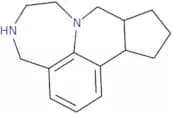
CAS:Vabicaserin is a drug that belongs to the class of glycoside derivatives. It is an agonist of 5-HT2C receptors, which are located in the striatum and other parts of the brain. Vabicaserin has been shown to increase extracellular dopamine levels in the striatum. This drug has also been shown to have a therapeutic effect on chronic fatigue syndrome and other diseases involving inflammation of the nervous system. Vabicaserin has been shown to be effective against sodium-dependent glucose co-transporters 1 and 2 (SGLT1 and SGLT2) in human liver cells, which may lead to its use as a treatment for type 2 diabetes mellitus.Formula:C15H20N2Purity:Min. 95%Molecular weight:228.33 g/molTBAJ-587
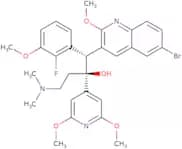
CAS:TBAJ-587 is a novel anti-tuberculosis drug that is a proton pump inhibitor and an antibiotic. TBAJ-587 inhibits bacterial growth by binding to the membrane potential of the bacteria, leading to decreased fatty acid transport and accumulation in the cell. TBAJ-587 also has antibacterial activity against gram positive bacteria, such as methicillin resistant Staphylococcus aureus. Resistant mutants of Mycobacterium tuberculosis have been shown to be more sensitive to TBAJ-587 compared with wild type strains.Formula:C30H33BrFN3O5Purity:Min. 95%Molecular weight:614.5 g/molSch-42495 racemate
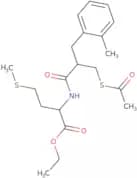
CAS:Sch-42495 racemate is a synthetic compound, categorized as a central nervous system (CNS) agent, derived from laboratory synthesis. This racemate comprises a mixture of enantiomers that display activity affecting neurotransmitter systems, which makes it of particular interest in neuropharmacology. The mode of action involves modulation of specific receptor pathways in the CNS, potentially influencing neurotransmitter release and receptor sensitivity.Formula:C20H29NO4S2Purity:Min. 95%Molecular weight:411.6 g/mol5-((3-Ethynylphenyl)amino)pyrimido[4,5-c]quinoline-8-carboxylic acid
CAS:The 5-((3-Ethynylphenyl)amino)pyrimido[4,5-c]quinoline-8-carboxylic acid is a ligand that has been used as a research tool to study the interactions between antibodies and peptides. It has also been used in pharmacology to study the interactions between ligands and ion channels. The CAS number for this compound is 1009821-06-0.Formula:C20H12N4O2Purity:Min. 95%Molecular weight:340.3 g/molBleomycin A2 chloride
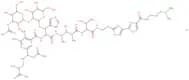
CAS:Bleomycin A2 chloride is an anticancer drug that is used in the treatment of various types of tumors. It induces apoptosis, or programmed cell death, in cancer cells by inhibiting DNA synthesis and causing DNA strand breaks. Bleomycin A2 chloride also acts as an inhibitor of cyclin-dependent kinases, which are enzymes involved in regulating cell division. This drug is excreted primarily through urine and has been shown to be effective against a wide range of cancer cell lines. Bleomycin A2 chloride is a protein analog that binds to DNA and causes damage through the production of reactive oxygen species. It has been investigated as a potential cancer treatment due to its ability to inhibit multiple kinases involved in cancer progression, including Chinese hamster ovary (CHO) cells.
Formula:C55H84ClN17O21S3Purity:Min. 95%Molecular weight:1,451 g/mol






![5-((3-Ethynylphenyl)amino)pyrimido[4,5-c]quinoline-8-carboxylic acid](/_next/image/?url=https%3A%2Fstatic.cymitquimica.com%2Fproducts%2F3D%2Fthumb-webp%2FJQB82106.webp&w=3840&q=75)