Biochemicals and Reagents
Subcategories of "Biochemicals and Reagents"
- Biomolecules(98,574 products)
- By Biological Target(100,743 products)
- By Pharmacological Effects(6,938 products)
- Cryopreservatives(21 products)
- Desinfectants and Related Compounds(28 products)
- Hormones(454 products)
- Plant Biology(6,906 products)
- Secondary Metabolites(14,368 products)
Found 130507 products of "Biochemicals and Reagents"
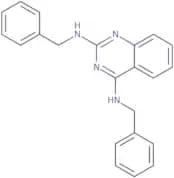
DBeQ
CAS:DBeQ is a small molecule that has been shown to inhibit autophagy. It binds to the hydroxyl group of the ATP synthase and inhibits ATP synthesis, leading to an accumulation of adenosine monophosphate (AMP). DBeQ also affects protein transport by inhibiting the function of certain proteins involved in vesicle trafficking. It has been shown to have clinical relevance in treating hyperproliferative diseases, such as lung damage, and infectious diseases. This drug may be used as a chemical inhibitor or a chemical biology tool for drug repositioning.Formula:C22H20N4Purity:Min. 95%Molecular weight:340.42 g/molX5050
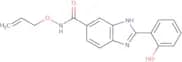
CAS:X5050 is a Chinese medicinal product that has been found to have potent anticancer properties. It is an inhibitor of protein kinases, which are enzymes that play a crucial role in the growth and survival of cancer cells. X5050 has been shown to induce apoptosis, or programmed cell death, in cancer cells, leading to the suppression of tumor growth. This product has also been found to be effective against various types of cancer, including breast cancer and lung cancer. X5050 is an analog of a natural compound found in human urine and has been extensively studied for its medicinal properties. Its unique mechanism of action makes it a promising candidate for the development of new anticancer drugs.
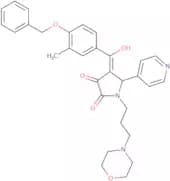
Formula:C17H15N3O3Purity:Min. 95%Molecular weight:309.32 g/molSBC-115076
CAS:SBC-115076 is a monoclonal antibody that binds to the tumor necrosis factor-α (TNF-α) receptor and blocks TNF-α signaling. This drug has been shown to be effective in treating cardiac disease, malignant brain tumors, and atherosclerotic cardiovascular disease. The SBC-115076 antibody is activated by TNF-α, which is released from cells of the immune system or cancer cells. The SBC-115076 antibody prevents TNF-α from binding to its receptor on the surface of other cells and thus prevents activation of those cells. This drug has also been shown to be effective in inhibiting growth of cultured cells, such as cancer cells.Formula:C31H33N3O5Purity:Min. 95%Molecular weight:527.61 g/molPhenytoin antibody
Phenytoin antibody was raised in mouse using phenytoin conjugated to KLH as the immunogen.SLC25A44 antibody
SLC25A44 antibody was raised in rabbit using the middle region of SLC25A44 as the immunogenPurity:Min. 95%YM-01
CAS:YM-01 is a chaperone protein that regulates the stability of other proteins. It has been shown to have potential as a drug target for amyloid protein aggregation and cancer. YM-01 is a molecular chaperone that binds to the unfolded or misfolded proteins and prevents them from aggregating. This protein also interacts with other proteins, which may be involved in regulating the amount of mutant proteins in cells. YM-01 is known to interact with many different protein targets, including the amyloid beta protein and the cytoskeleton, which are involved in cancer and viral life cycle respectively.Formula:C20H20ClN3OS2Purity:Min. 95%Molecular weight:418 g/molGuinea Pig RBC antibody
Guinea pig RBC antibody was raised in rabbit using guinea pig erythrocytes as the immunogen.Purity:Min. 95%p53 antibody
The p53 antibody is a highly specialized monoclonal antibody used in the field of Life Sciences. It specifically targets the growth factor receptor, p53, which plays a crucial role in regulating cell growth and division. This monoclonal antibody is designed to neutralize the activity of p53, making it an invaluable tool for researchers studying cellular processes and signaling pathways.Gstp1 protein
The Gstp1 protein is a conjugated protein that plays a crucial role in various biological processes. It is targeted by a monoclonal antibody and has been shown to inhibit endothelial growth, making it an effective anti-VEGF (vascular endothelial growth factor) agent. This protein is widely studied in the field of Life Sciences and has been found to have chemokine-like properties, influencing cell migration and immune response. Additionally, Gstp1 exhibits antiangiogenic activity, preventing the formation of new blood vessels. Studies have also linked this protein to hemolysis regulation, growth factor signaling pathways, and the differentiation of mesenchymal stem cells. Furthermore, Gstp1 has been associated with dopamine metabolism and autoantibody production. Its interaction with protein kinases further highlights its importance in cellular signaling networks.Purity:Min. 95%ABT 263-d8
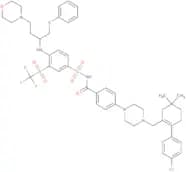
CAS:Please enquire for more information about ABT 263-d8 including the price, delivery time and more detailed product information at the technical inquiry form on this pageFormula:C47H55ClF3N5O6S3Purity:Min. 95%Molecular weight:982.7 g/molCLASP1 antibody
CLASP1 antibody was raised in Rat using alpha-CLASP1-C-termimus and GST fusion protein as the immunogen.ST6GAL1 antibody
The ST6GAL1 antibody is a highly specialized growth factor that plays a crucial role in various biological processes. This monoclonal antibody is specifically designed to target and bind to the ST6GAL1 protein, which is involved in endogenous hematopoietic development and angiogenesis. By binding to this protein, the ST6GAL1 antibody can effectively inhibit its activity, making it a valuable tool for researchers studying these processes.
RAD9B antibody
RAD9B antibody was raised using a synthetic peptide corresponding to a region with amino acids SSVSNTEEVPGSLCLRKFSCMFFGAVSSDQQEHFNHPFDSLARASDSEEDPurity:Min. 95%Dihydroeponemycin
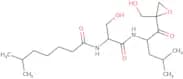
CAS:Dihydroeponemycin is a natural product that has been found to be useful in the treatment of prostate cancer. It inhibits the activity of the proteasome, which is responsible for degrading proteins in cells. Dihydroeponemycin also has anti-inflammatory properties, inhibiting pro-inflammatory cytokine production and inhibiting the production of reactive oxygen species. Dihydroeponemycin also has been shown to have significant inhibitory effects on hepatitis B virus (HBV) replication, as well as on other viruses such as HIV. This compound has also been found to have biological properties that make it a potential drug target for cancer therapy.Formula:C20H36N2O6Purity:Min. 95%Molecular weight:400.5 g/molBMS-846372
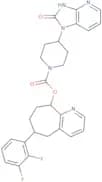
CAS:BMS-846372 is a potent inhibitor of kinases that play a crucial role in the cell cycle and apoptosis. It has been shown to be effective against various types of cancer, including leukemia. BMS-846372 works by blocking the activity of specific kinases in cancer cells, preventing them from dividing and growing. This medicinal compound has been tested on Chinese hamster ovary cell lines and demonstrated significant inhibition of tumor growth. As a kinase inhibitor, BMS-846372 has promising potential as a therapeutic agent for the treatment of cancer.
Formula:C28H27F2N5O3Purity:Min. 95%Molecular weight:519.5 g/mol(±)-Nicotine-d7 (N-methyl-d3 pyridine-d4)
CAS:Please enquire for more information about (±)-Nicotine-d7 (N-methyl-d3 pyridine-d4) including the price, delivery time and more detailed product information at the technical inquiry form on this pageFormula:C10H14N2Purity:Min. 95%Molecular weight:169.27 g/mol3-Bromocaproic acid
CAS:Please enquire for more information about 3-Bromocaproic acid including the price, delivery time and more detailed product information at the technical inquiry form on this pageFormula:C6H11BrO2Purity:Min. 95%Molecular weight:195.05 g/mol