Biochemicals and Reagents
Subcategories of "Biochemicals and Reagents"
- Biomolecules(98,574 products)
- By Biological Target(100,726 products)
- By Pharmacological Effects(6,937 products)
- Cryopreservatives(21 products)
- Desinfectants and Related Compounds(28 products)
- Hormones(439 products)
- Plant Biology(6,907 products)
- Secondary Metabolites(14,367 products)
Found 130493 products of "Biochemicals and Reagents"
CYP2S1 Blocking Peptide
A synthetic peptide for use as a blocking control in assays to test for specificity of CYP2S1 antibody, catalog no. 70R-7970
Purity:Min. 95%MFRP Blocking Peptide
A synthetic peptide for use as a blocking control in assays to test for specificity of MFRP antibody, catalog no. 70R-6525
Purity:Min. 95%SH3BGRL Blocking Peptide
A synthetic peptide for use as a blocking control in assays to test for specificity of SH3BGRL antibody, catalog no. 70R-3848
Purity:Min. 95%TADA1L antibody
TADA1L antibody was raised using a synthetic peptide corresponding to a region with amino acids REVIPTHTVYALNIERIITKLWHPNHEELQQDKVHRQRLAAKEGLLLC
Anti Secretin (Rat) Serum
Anti-Secretin (Rat) Serum is a high purity antibody that can be used as a research tool for studying the interactions between proteins. It is suitable for use in immunoassays, such as ELISA and Western blotting. Anti-Secretin (Rat) Serum has been shown to inhibit the activation of ion channels and receptors, as well as protein synthesis and ligand binding.
Purity:Min. 95%PKNOX1 antibody
The PKNOX1 antibody is a highly specialized monoclonal antibody that targets the PKNOX1 protein. This protein is involved in various cellular processes, including fibrinogen production, cell antigen presentation, and amyloid plaque formation. Additionally, PKNOX1 plays a crucial role as a growth factor and phosphatase regulator.
SSX1 Blocking Peptide
A synthetic peptide for use as a blocking control in assays to test for specificity of SSX1 antibody, catalog no. 70R-9559
Purity:Min. 95%CLCN6 Blocking Peptide
A synthetic peptide for use as a blocking control in assays to test for specificity of CLCN6 antibody, catalog no. 70R-1521
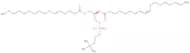
Purity:Min. 95%1-Palmitoyl-2-oleoyl-sn-glycerol-3-phosphocholine
CAS:1-Palmitoyl-2-oleoyl-sn-glycerol-3-phosphocholine (POPC) is a phospholipid that has been shown to have the ability to inhibit the growth of bacteria. POPC is an amphiphilic molecule with hydrophobic and hydrophilic properties, which allows it to form micelles in aqueous environments, thereby increasing its antimicrobial activity. The lipid chains are composed of saturated and unsaturated fatty acids, which confer POPC with thermal expansion properties. These properties allow POPC to be used as a matrix for drug delivery systems, as well as an experimental model for studying metabolic disorders such as hepatic steatosis.
Formula:C42H83NO8PPurity:Min. 95%Molecular weight:761.08 g/molRef: 3D-FP26731
Discontinued productPDPK1 Blocking Peptide
A synthetic peptide for use as a blocking control in assays to test for specificity of PDPK1 antibody, catalog no. 70R-7831
Purity:Min. 95%CES6 antibody
CES6 antibody was raised in rabbit using the middle region of CES6 as the immunogenPurity:Min. 95%RAB39B Blocking Peptide
A synthetic peptide for use as a blocking control in assays to test for specificity of RAB39B antibody, catalog no. 70R-5833
Purity:Min. 95%MGC48628 Blocking Peptide
A synthetic peptide for use as a blocking control in assays to test for specificity of MGC48628 antibody, catalog no. 70R-3620
Purity:Min. 95%VISA Blocking Peptide
A synthetic peptide for use as a blocking control in assays to test for specificity of VISA antibody, catalog no. 70R-6463
Purity:Min. 95%Carboxylesterase 7 Blocking Peptide
A synthetic peptide for use as a blocking control in assays to test for specificity of CES7 antibody, catalog no. 70R-5468
Purity:Min. 95%LIPT1 antibody
LIPT1 antibody was raised using the N terminal of LIPT1 corresponding to a region with amino acids NCFQLLCNCQVPAAGFKKTVKNGLILQSISNDVYQNLAVEDWIHDHMNLE
Dengue NS1 antibody
The Dengue NS1 antibody is a cytotoxic monoclonal antibody that belongs to the class of antibodies known as anti-VEGF (vascular endothelial growth factor). It is widely used in the field of Life Sciences for various applications. This antibody has been shown to have nephrotoxic effects and can be used as an electrode-activated growth factor in endogenous hematopoietic cells. Additionally, it has acidic properties and may interact with insulin, fatty acid, and glucagon receptors. The Dengue NS1 antibody is highly specific and binds to markers expressed at high levels in dengue virus-infected cells, inhibiting viral replication and promoting immune response.