Electrophoresis
In this section, you can find all the reagents and materials necessary to perform electrophoresis, a vital laboratory technique used to separate proteins according to their molecular mass and charge. This technique is essential for analyzing the composition and purity of protein samples, as well as for studying nucleic acids and other biomolecules. Our selection includes high-quality electrophoresis buffers, gels, stains, and markers, along with apparatus and accessories designed to ensure accurate and efficient separation. These products are crucial for research in molecular biology, biochemistry, and genetics, providing reliable results for protein characterization, gene expression analysis, and other applications. At CymitQuimica, we provide everything you need to perform electrophoresis, supporting your research with precision and consistency.
Subcategories of "Electrophoresis"
Found 299 products of "Electrophoresis"
Sort by
Purity (%)
0
100
|
0
|
50
|
90
|
95
|
100
10X Tris-Glycine-SDS Buffer for molecular biology
SDS-PAGE is a method for separating proteins according to their movement in an electrical current and their molecular mass, which relates to the length of their polypeptide chains. A widely recognized system for this technique is the Laemmli system, introduced in 1970. It employs Tris-Glycine gels made up of a stacking gel and a resolving gel, utilizing varying acrylamide concentrations to achieve separation based on molecular weight. This traditional system incorporates a discontinuous buffer setup, with different pH levels and ionic strengths for the buffers: the running buffer (10X Tris-Glycine-SDS Gel Running Buffer) is set at pH 8.3, while the stacking gel operates at pH 6.8, and the resolving gel is at pH 8.8.Color and Shape:Clear, Colourless, Liquid10X Tris-Glycine pH-8.3 Tank Buffer for molecular biology
The 10X Tris-Glycine Buffer, with a pH of 8.3, is designed specifically for use in native PAGE gel electrophoresis. This buffer offers great convenience, as it can be diluted with distilled water or another suitable solvent according to the specific application prior to electrophoresis. Additionally, it is useful for the transfer of protein samples onto nitrocellulose membranes during western blotting. To prevent the gel from swelling during the transfer process and to enhance the binding of protein samples to nitrocellulose, the inclusion of methanol is essential.Color and Shape:Clear, Colourless, Liquid10X TE Buffer pH-8.0 for molecular biology
TE buffer, often called T10E1 buffer is formulated from two primary components: Tris and EDTA. Tris serves to stabilize the pH, while EDTA protects DNA and RNA by chelating metal ions that are necessary for the activity of degrading enzymes, such as nucleases. This combination effectively preserves the integrity of nucleic acids. For optimal RNA protection, the solution should be maintained at a pH of 7.5, while DNA is best stored at a pH of 8.0. Importantly, a pH of 8.0 is also suitable for storing both DNA and RNA T10E1 bufferColor and Shape:Clear, Colourless, Liquid10X Tris Buffered Saline (TBS) for molecular biology
Tris, short for tris(hydroxymethyl)aminomethane, is a commonly used primary amine known for its effectiveness as a buffering agent, particularly in the pH range of about 7.4, with a tolerance of ±0.1. This compound is advantageous because it does not precipitate calcium salts and aids in keeping manganese salts soluble. Additionally, Tris has a low UV absorbance, making it suitable for various experimental applications, although it is notably sensitive to changes in temperature. These characteristics contribute to its widespread use in biochemical and molecular biology experiments.Color and Shape:Clear, Colourless, LiquidAgarose High EEO for molecular biology
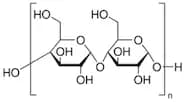
CAS:Color and Shape:White, Free flowing powder, Clear, Colourless10X Tris Buffered Saline Tween-20 (TBST) for molecular biology
10X Tris Buffered Saline Tween-20 (TBST) is a versatile wash solution widely used in Western blotting and ELISA. Its carefully balanced composition of pH stabilizers, salts, and detergents ensures efficient removal of unbound materials from membranes and microtiter plate wells. The Tris Buffered Saline with Tween 20 optimal formulation maintains a favorable buffering environment, preventing disruption of the critical antigen-antibody binding interactions. By effectively washing away excess components, TBST minimizes nonspecific background noise, thereby enhancing the signal-to-noise ratio and improving the overall sensitivity and accuracy of these assays.Color and Shape:Clear, Yellow tinted, LiquidNaphthol Blue Black B
CAS:Formula:C22H14N6Na2O9S2Purity:~ 80%Color and Shape:Brown to black, PowderMolecular weight:616.57Agarose Medium EEO for molecular biology
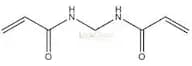
CAS:Color and Shape:White to off-white, Free flowing powder, Clear, ColourlessN,N'-Methylene Bisacrylamide 2% Aq. Solution for molecular biology
CAS:Formula:C7H10N2O2Color and Shape:Clear, Colourless, liquidMolecular weight:154.171X Phosphate Buffered Saline (PBS) for molecular biology
The pH of the buffer is typically maintained within a range of 7.4 ± 0.1, closely resembling the physiological pH found in many biological systems.Color and Shape:Clear, Colourless, LiquidN,N-Methylene Bisacrylamide 3x cryst. for molecular biology, 99.5%
CAS:Formula:C7H10N2O2Purity:min. 99.5%Color and Shape:White, Crystalline powder, Clear, ColourlessMolecular weight:154.172.6M Tris Hydrochloride Buffer (2.6M Tris HCl) pH-8 for molecular biology
CAS:Color and Shape:Clear, Colourless, LiquidTris(Hydroxymethyl) Aminomethane Acetate for molecular biology (Tris Acetate Buffer), 99%
CAS:Formula:C4H11NO3·C2H4O2Purity:min. 99%Color and Shape:White, Crystalline powder, Clear, ColourlessMolecular weight:181.1910X Phosphate Buffered Saline Tween-20 (PBST) for molecular biology
Color and Shape:Clear, Colourless with yellow tinted, Liquid1M Tris Hydrochloride Buffer (1M Tris HCl) pH-7.2 for molecular biology
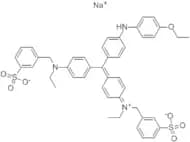
Color and Shape:Clear, Colourless, LiquidBrilliant Blue R-250 for molecular biology
CAS:Formula:C45H44N3NaO7S2Color and Shape:Dark blue with reddish tinge, PowderMolecular weight:825.9810X MOPS Buffer for molecular biology
MOPS, or morpholino propanesulfonic acid, is a structural analog of MES, the ethanesulfonic acid. With a pKa value of 6.80-7.20, MOPS serves as an excellent buffer for many biological systems at near-neutral pH. It is extensively used as a buffering agent in molecular biology and biochemistry and has been tested and recommended for use in polyacrylamide gel electrophoresis. Additionally, MOPS is applicable in various bioanalytical methods, including isoelectric focusing, protein assays, and X-ray crystallographic studies. Furthermore, it can be used as an electrophoresis buffer for agarose gel electrophoresis of RNA.Color and Shape:Clear, Colourless, Liquid20X SSC Buffer pH 6.9-7.1 for molecular biology
The Saline-Sodium Citrate Hybridization Buffer [20X] is a key component in various nucleic acid techniques, ensuring optimal stringency during washing steps in procedures such as Southern blotting, in situ hybridization, DNA microarrays, and Northern blotting. When utilized as 20X SSC, it effectively prevents agarose gels from drying out during vacuum transfers, preserving sample integrity. This solution is specifically formulated to support the diverse needs of end users in nucleic acid hybridizations and blot transfer applications, making it an invaluable resource in molecular biology workflows.Color and Shape:Clear, Colourless, SolutionAlbumin Bovine Solution 10% Diluent Solution in PBS (BSA 10% Diluent/Blocking Solution in PBS)
CAS:Color and Shape:Clear, Pale yellow, Liquid1M Tris Hydrochloride Buffer (1M Tris HCl) pH-8.0 for molecular biology
Color and Shape:Clear, Colourless, Liquid20X SSPE Buffer pH-7.4 suitable for molecular biology
The 20X SSC Buffer, with a pH between 6.9 and 7.1, is essential for in molecular biology, particularly for Southern and Northern hybridization techniques. This solution is sterilized through a 0.22 µm filter, making it suitable for direct use or for dilution based on experimental requirements. In parallel, 20X SSPE is available as a concentrated buffer intended for nucleic acid hybridizations and blot transfer processes. A significant feature of SSPE is its inclusion of EDTA, which chelates divalent metal ions like Mg²+. This property effectively inhibits DNase activity, helping to preserve the concentrations of probe and target DNA during Southern hybridization, thereby enhancing the accuracy of the results.Color and Shape:Clear, Colourless, Liquid10X Tris-Tricine-SDS Buffer for molecular biology
The Tris-Tricine-SDS Gel Running Buffer is specifically designed for separating proteins with molecular weights between 1 and 100 kDa, making it particularly effective for resolving proteins smaller than 30 kDa. This approach differs from traditional SDS-PAGE by substituting glycine (pK 9.6) with tricine (pK 8.15), which enhances the stacking and destacking of low molecular weight proteins and improves the resolution of smaller peptides due to the differing pK values. Incorporating urea into the stacking gel allows for the effective separation of two proteins that share the same molecular weight. Additionally, the lower acrylamide concentrations in Tricine gels facilitate the transfer of hydrophobic proteins during Western blotting. Tricine–SDS-PAGE is therefore commonly employed for the separation of lower molecular weight proteins.Color and Shape:Clear, Colourless, LiquidRef: IN-DA0034YV
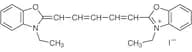
Discontinued product3,3'-Diethyloxadicarbocyanine Iodide
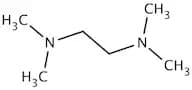
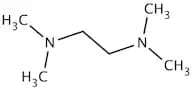
CAS:Formula:C23H23IN2O2Purity:>98.0%(N)Color and Shape:Blue to Dark blue powder to crystalMolecular weight:486.35N,N,N,N-Tetramethyl Ethylenediamine (TEMED) extrapure AR, ExiPlus, Multi-Compendial, 99%
CAS:Formula:C6H16N2Purity:min. 99%Color and Shape:Clear, Colourless, LiquidMolecular weight:116.21Ammonium Persulphate (APS) for electrophoresis, 99%
CAS:Formula:N2H8S2O8Purity:min. 99%Color and Shape:White, Crystalline powder, Clear, ColourlessMolecular weight:228.20N,N,N,N-Tetramethyl Ethylenediamine (TEMED) for molecular biology, 99.5%
CAS:Formula:C6H16N2Purity:min. 99.5%Color and Shape:Clear, Colourless, LiquidMolecular weight:116.21Sodium Lauryl Sulphate (SDS, SLS) extrapure AR, ACS, 99%
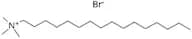
CAS:Formula:C12H25SO4NaPurity:min.99%Color and Shape:White, Crystalline powder, Clear, ColourlessMolecular weight:288.38Cetyltrimethyl Ammonium Bromide (CTAB) for molecular biology, 99%
CAS:Formula:C19H42BrNPurity:min. 99.5%Color and Shape:White, Crystalline powder, Clear, Colourless, Clear, ColourlessMolecular weight:364.45Acrylamide 3x cryst. extrapure AR, 99.9%
CAS:Formula:C3H5NOPurity:min. 99.9%Color and Shape:White, Crystalline powder, Clear, ColourlessMolecular weight:71.08Ethidium Bromide Solution (10mg/ml)
Formula:C21H20N3BrColor and Shape:Dark red, Clear, LiquidMolecular weight:394.3230% Acrylamide / Bis-acrylamide Mix Solution (Ratio 29:1)
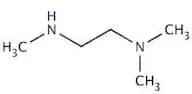
SDS-PAGE is a method employed for separating proteins via electrophoresis, based on the principle that charged molecules migrate through a matrix in response to an applied electric field. The matrix utilized for this separation is polyacrylamide, which is derived from acrylamide, a compound that can be hazardous. Polyacrylamide is commonly used for the size-based separation of proteins and nucleic acids. The gel matrix forms through the free radical polymerization of acrylamide along with a crosslinking agent known as N, N-Methylenebisacrylamide. In this process, acrylamide monomers polymerize into long chains, initiated by a free radical-generating system, and these chains are linked by the cross-linker, resulting in a gel structure. This gel is crucial for effective electrophoretic separation, facilitating the analysis of biomolecules based on size.Color and Shape:Clear, Colourless, LiquidN,N,N-Trimethylethylenediamine pure, 97%
CAS:Formula:C5H14N2Purity:min. 97%Color and Shape:Clear, Colourless, LiquidMolecular weight:102.18Cetyltrimethyl Ammonium Chloride (CTAC) for molecular biology, 99%
CAS:Formula:C19H42NClPurity:min. 99%Color and Shape:White, Crystalline powder, Clear, ColourlessMolecular weight:320.00Ethidium Bromide extrapure, 95%
CAS:Formula:C21H20N3BrPurity:min.95%Color and Shape:Red, Crystalline Powder, Clear, RedMolecular weight:394.32