Antibiotics
Subcategories of "Antibiotics"
- Macrolide Antibiotics(26 products)
- Steroidal Antibiotics(31 products)
- Tetracycline Antibiotics(20 products)
- β-Lactam Antibiotics(11 products)
Found 4473 products of "Antibiotics"
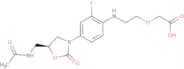
PNU 142300
CAS:PNU 142300 is a non-peptidyl anticoagulant, which is a synthetically derived small molecule. This compound is sourced from advanced chemical synthesis techniques that focus on mimicking biological activity through non-biological materials. PNU 142300 acts by specifically inhibiting factor Xa, a crucial enzyme in the coagulation cascade responsible for the conversion of prothrombin to thrombin. By targeting this enzyme, it effectively prevents the formation of blood clots, thereby exhibiting potent anticoagulant properties.
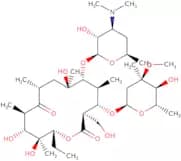
Formula:C16H20FN3O6Purity:Min. 95%Molecular weight:369.35 g/molErythromycin F
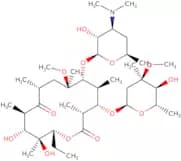
CAS:Erythromycin F is an antibiotic, which is a naturally derived product obtained from the bacterium *Streptomyces erythreus*. It operates by inhibiting bacterial protein synthesis through binding to the 50S ribosomal subunit. This binding effectively blocks the translocation steps in protein elongation, thus preventing the growth and multiplication of susceptible bacteria.Formula:C37H67NO14Purity:Min. 95%Molecular weight:749.93 g/molCeftizoxime alapivoxil
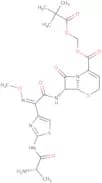
CAS:Ceftizoxime alapivoxil is a prodrug antibiotic, which is derived from ceftizoxime, a third-generation cephalosporin. This semi-synthetic source enables the compound to effectively combat a wide range of bacterial infections by improving oral bioavailability compared to its parent compound. Once administered, ceftizoxime alapivoxil is metabolized in the body to release ceftizoxime, which exerts its antibacterial activity by binding to penicillin-binding proteins (PBPs) on bacterial cell walls. This binding action inhibits the transpeptidation step critical for cell wall synthesis, leading to cell lysis and bacterial death.Purity:Min. 95%Tyrothricin
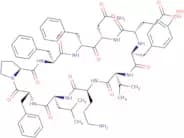
CAS:Tyrothricin is a peptide antibiotic, which is derived from the bacterium Bacillus brevis. This compound comprises a mixture of polypeptides, primarily gramicidin and tyrocidine, both of which are instrumental in its antimicrobial activity. The mode of action of tyrothricin involves disrupting bacterial cell membranes, leading to cell lysis and death. Gramicidin increases the permeability of the bacterial membrane to ions, while tyrocidine promotes disruption of membrane integrity, which together exert bactericidal and bacteriostatic effects.
Formula:C65H85N11O13Purity:Min. 95%Molecular weight:1,228.44 g/molTubulysin A
CAS:Tubulysin A is a natural cytotoxic agent, which is derived from myxobacteria. The compound originates from strains such as Archangium gephyra and Angiococcus disciformis, known for their prolific production of secondary metabolites. Tubulysin A exerts its mode of action by disrupting microtubule dynamics, which are essential for cell division and intracellular transport. It specifically binds to the microtubules and inhibits their polymerization, leading to cell cycle arrest and apoptosis in rapidly dividing cells.Formula:C43H65N5O10SPurity:Min. 95%Molecular weight:844.07 g/molCefquinome
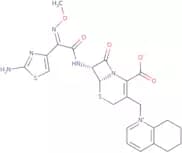
CAS:Cefquinome is a broad-spectrum antibiotic, which is a fourth-generation cephalosporin. It is derived from the β-lactam class of antibiotics and is specifically designed for veterinary applications. Its mode of action involves the inhibition of bacterial cell wall synthesis, leading to cell lysis and death. This action is facilitated through the binding of cefquinome to penicillin-binding proteins, which undermines the structural integrity of bacterial cell walls, proving effective against both Gram-positive and Gram-negative bacteria.
Formula:C23H24N6O5S2Purity:Min. 95%Molecular weight:528.61 g/molTri-O-benzyl FR 900098
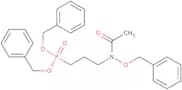
CAS:Tri-O-benzyl FR 900098 is a chemical compound, often referenced in biochemical research contexts. It is a synthetic derivative that originates from complex chemical synthesis, involving multiple benzylation steps to modify the original molecular framework. This structural transformation lends the compound unique chemical properties.
Formula:C26H30NO5PPurity:Min. 95%Molecular weight:467.49 g/molPanipenem
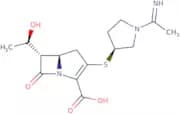
CAS:Panipenem is a carbapenem antibiotic, which is a type of beta-lactam antibiotic derived from thienamycin. It functions by inhibiting penicillin-binding proteins (PBPs), which are essential for bacterial cell wall synthesis. This inhibition disrupts the cell wall construction, leading to cell lysis and death, thereby demonstrating strong bactericidal activity.Formula:C15H21N3O4SPurity:Min. 95%Molecular weight:339.41 g/molSafracin B
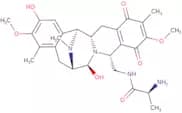
CAS:Exhibits antitumour activity against L1210 and P388 leukemias and B16 melanoma
Formula:C28H36N4O7Purity:Min. 95%Molecular weight:540.61 g/molGentamicin C2 pentaacetate (2 : 1 Mixture of C2 and C2a)
CAS:Controlled ProductGentamicin C2 pentaacetate (2 : 1 Mixture of C2 and C2a) is an aminoglycoside class antibiotic derivative, primarily derived from the fermentation of Micromonospora species. This product is a semi-synthetic compound, combining two closely related gentamicin components, C2 and C2a, in a specified ratio. Its mode of action involves binding to the 30S subunit of the bacterial ribosome, which disrupts protein synthesis resulting in bactericidal activity against a wide spectrum of Gram-negative and some Gram-positive bacteria.
Formula:C30H61N5O17Purity:Min. 95%Molecular weight:763.83 g/molPosizolid
CAS:Posizolid is an oxazolidinone antibiotic, which is a synthetic compound derived from chemical synthesis. It acts by inhibiting bacterial protein synthesis through binding to the 50S subunit of the bacterial ribosome, thereby interfering with the translation process essential for bacterial growth and reproduction.
Formula:C21H21F2N3O7Purity:Min. 95%Color and Shape:SolidMolecular weight:465.4 g/molNeomycin B
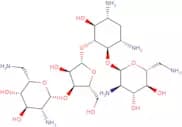
CAS:Neomycin B is an aminoglycoside antibiotic, which is derived from the bacterium *Streptomyces fradiae*. It exerts its antibacterial effects by binding to the 30S subunit of bacterial ribosomes, leading to the inhibition of protein synthesis. This binding disrupts the translation process, thereby preventing the growth and proliferation of bacteria. Neomycin B is effective against a wide range of Gram-negative and some Gram-positive bacteria, making it a valuable tool in both medical and research settings.
Formula:C23H46N6O13Purity:Min. 95%Molecular weight:614.64 g/molClindamycin
CAS:Inhibitor of protein synthesis; lincosamide classFormula:C18H33ClN2O5SPurity:Min. 95%Molecular weight:424.98 g/molSulbenicillin
CAS:Sulbenicillin is a semi-synthetic penicillin antibiotic, which is derived from 6-aminopenicillanic acid, a natural precursor in the biosynthesis of penicillins. With its beta-lactam structure, Sulbenicillin disrupts bacterial cell wall synthesis by inhibiting penicillin-binding proteins, which are essential enzymes in the cross-linking of peptidoglycan layers. This disruption compromises the structural integrity of the bacterial cell wall, resulting in cell lysis and death, particularly in Gram-negative bacteria.Formula:C16H18N2O7S2Purity:Min. 95%Molecular weight:414.46 g/molChlortetracycline
CAS:Chlortetracycline is a tetracycline antibiotic, which is derived from the bacterium *Streptomyces aureofaciens*. It functions by inhibiting protein synthesis through binding to the 30S ribosomal subunit, thereby preventing the attachment of aminoacyl-tRNA to the mRNA-ribosome complex. This mechanism effectively impedes the growth and replication of both gram-positive and gram-negative bacteria.
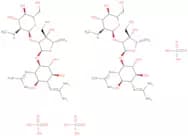
Formula:C22H23ClN2O8Purity:Min. 95%Molecular weight:478.88 g/molDihydrostreptomycin sesquisulfate
CAS:Dihydrostreptomycin sesquisulfate is an aminoglycoside antibiotic, which is derived from the bacterium Streptomyces griseus. Its mode of action involves binding to the 30S subunit of the bacterial ribosome, leading to the disruption of protein synthesis. This binding interferes with the initiation complex formation, causing misreading of mRNA and ultimately inhibiting bacterial growth.Formula:C21H41N7O12•(H2SO4)1Purity:Min. 95%Molecular weight:730.71 g/mol3'-N-Desmethyl-3'-N-tosyl azithromycin
CAS:3'-N-Desmethyl-3'-N-tosyl azithromycin is a semi-synthetic macrolide antibiotic analog, which is a derivative of azithromycin, a well-known member of the macrolide class of antibiotics. This compound is synthesized through chemical modifications of the parent molecule, azithromycin, to potentially enhance its pharmacokinetic and pharmacodynamic properties.Formula:C44H76N2O14SPurity:Min. 95%Molecular weight:889.15 g/molVancomycin CDP-1
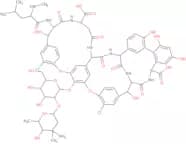
CAS:Vancomycin CDP-1 is a degradation product of vancomycin with no direct therapeutic action but used in research for analytical method development and validation.Formula:C66H74Cl2N8O25Purity:Min. 95%Color and Shape:PowderMolecular weight:1,450.24 g/molVirginiamycin M1
CAS:Inhibitor of protein synthesis; streptogramin
Formula:C28H35N3O7Purity:Min. 95%Molecular weight:525.59 g/molCefotaxime sodium - Sterile grade
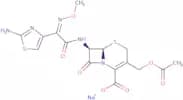
CAS:Cefotaxime sodium - Sterile grade is a cephalosporin antibiotic, which is derived from the beta-lactam class of antibacterial agents. It effectively disrupts bacterial cell wall synthesis by binding to and inhibiting penicillin-binding proteins, leading to cell lysis and death. This mechanism of action is potent against a variety of Gram-positive and Gram-negative bacteria, making it a valuable tool in clinical settings.Formula:C16H17N5O7S2·NaPurity:Min. 95%Molecular weight:478.46 g/mol3'-N-Desmethyl-3'-N-formyl azithromycin
CAS:3'-N-Desmethyl-3'-N-formyl azithromycin is a semi-synthetic macrolide antibiotic, derived from the well-known azithromycin. It is created through structural modification, where the 3'-N-demethylated and 3'-N-formyl groups enhance its pharmacokinetic properties and potentially improve its antimicrobial efficacy.Formula:C38H70N2O13Purity:Min. 95%Molecular weight:762.97 g/molCefoxitin EP impurity F
Cefoxitin EP Impurity F is a pharmaceutical reference impurity, which is a derivative of the cefoxitin antibiotic. This impurity arises from the degradation or synthesis processes related to cefoxitin, a semi-synthetic, beta-lactam antibiotic of the cephamycin group. The mode of action of cefoxitin involves interfering with bacterial cell wall synthesis by binding to penicillin-binding proteins, ultimately leading to cell lysis and death.Formula:C17H19N3O8S2Purity:Min. 95%Molecular weight:457.48 g/molThiostrepton
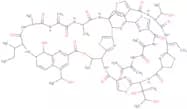
CAS:Thiostrepton is a thiopeptide antibiotic with action on bacterial protein synthesis by binding to the ribosome and is used for treating bacterial infections in veterinary medicine and research applications.Formula:C72H85N19O18S5Purity:Min. 95%Color and Shape:White To Light (Or Pale) Yellow SolidMolecular weight:1,664.89 g/molN-Demethyl rifampin
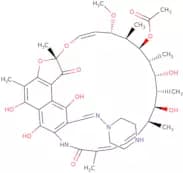
CAS:N-Demethyl rifampin is a metabolite of rifampin, which is a natural product derivative. Rifampin itself is a well-known antibiotic derived from the bacterium *Amycolatopsis rifamycinica*. N-Demethyl rifampin is formed through the metabolic process where rifampin undergoes demethylation. This transformation occurs primarily in the liver, mediated by the cytochrome P450 enzyme system.Formula:C42H56N4O12Purity:Min. 95%Molecular weight:808.91 g/molN-Desisobutyl-N-propyl rifabutin
CAS:N-Desisobutyl-N-propyl rifabutin is a synthetic derivative of rifabutin, which is an antibiotic belonging to the rifamycin class. This compound is sourced from modifications of the parent molecule rifabutin, itself derived from the rifamycin family produced by the bacterium Amycolatopsis, traditionally used for its antimicrobial properties. The mode of action involves the inhibition of bacterial RNA polymerase, effectively preventing the transcription process necessary for bacterial replication and protein synthesis. This disruption of RNA synthesis provides potent antimicrobial activity.
Formula:C45H60N4O11Purity:Min. 95%Molecular weight:832.98 g/mol4-Epitetracycline hydrochloride
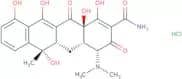
CAS:4-Epitetracycline hydrochloride is a tetracycline antibiotic derivative, which is a secondary metabolite derived from bacterial sources, particularly Streptomyces species. It functions primarily by inhibiting protein synthesis in bacteria through binding to the 30S ribosomal subunit, preventing the attachment of aminoacyl-tRNA to the RNA-ribosome complex. This action hinders bacterial growth by interfering with vital processes necessary for bacterial survival and replication.Formula:C22H25ClN2O8Purity:Min. 95%Color and Shape:PowderMolecular weight:480.9 g/molCefoxitin EP impurity B
Cefoxitin EP impurity B is a chemical reference standard, which is derived from the synthesis and purification processes involved in producing Cefoxitin. As an impurity standard, its primary role is to serve as a benchmark for quality control in pharmaceutical formulations. The mode of action of Cefoxitin EP impurity B involves the structural analysis and quantification of impurity levels, ensuring that the primary pharmaceutical products meet necessary safety and efficacy criteria.Formula:C16H17N3O7S2Purity:Min. 95%Molecular weight:427.45 g/molColistin sulfate, Antibiotic for Culture Media Use Only
CAS:Antibacterial agent with the ability to permeate bacterial membranes and cause cell death. Colistin is a cationic peptide also known as polymyxin E. Colistin is effective in multidrug resistant Gram-positive bacteria such as P. aeruginosa, A. baumannii and K. pneumoniae.Formula:C53H102N16O17SMolecular weight:1,266.73 g/molRef: 3D-Q-200890
-Unit-kgkgTo inquire1kgTo inquire5kgTo inquire10kgTo inquire25kgTo inquire2500gTo inquireClarithromycin-13CD3
CAS:Clarithromycin-13CD3 is an isotopically labeled macrolide antibiotic, which is synthesized to include deuterium (D) and carbon-13 (^13C) in its molecular structure. This modified compound serves as a stable isotope-labeled standard, primarily sourced from chemical synthesis. The incorporation of these isotopes differentiates it from the naturally occurring antibiotic, enabling its use in precise analytical studies.
Formula:C37CH66D3NO13Purity:Min. 95%Molecular weight:751.97 g/molNigericin sodium
CAS:Nigericin transports cations across the membrane of the cell and it is used to study anion transport. It can be used as a buffer to control pH value inside of the cell.
Formula:C40H67NaO11Purity:Min. 95%Molecular weight:746.94 g/mol(+)-Madindoline A
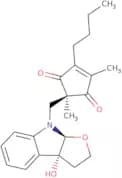
CAS:(+)-Madindoline A is a chemical substance that inhibits the growth of cancer cells. It has been shown to inhibit colon cancer cell proliferation and induce apoptosis by inhibiting signal pathways and suppressing inflammatory responses. (+)-Madindoline A is an experimental model for the study of bowel disease and inflammatory diseases, as it can be used to treat both bowel disease and inflammatory diseases. It also has inhibitory effects on the production of proinflammatory cytokines in human protein cells and natural compounds in experimental models. (+)-Madindoline A is found in small amounts in food compositions such as apples, carrots, cauliflower, celery, cucumbers, garlic, leeks, lettuce, onions, peas, peppers, potatoes and tomatoes.
Formula:C22H27NO4Purity:Min. 95%Molecular weight:369.45 g/molTetracycline hydrochloride, Antibiotic for Culture Media Use Only
CAS:Tetracycline hydrochloride is a broad-spectrum antibiotic and is an electron transfer agent. It has been shown to be effective against bacterial infections in humans and has been used in cultures for the prevention of bacterial contamination. As an electron transfer agent, it is used in electron microscopy to study the surface of biological cells. Tetracycline hydrochloride enters bacterial cells by diffusion and interacts with the cytoplasmic membrane, where it induces a redox reaction that leads to cell death. The efficacy of tetracycline hydrochloride in treating candida albicans (yeast) was studied using in-vitro activity and showed that carboxymethyl chitosan nanoparticles were able to enhance the treatment efficiency.Formula:C22H25ClN2O8Purity:Min. 88.0 Area-%Molecular weight:480.90 g/molRef: 3D-T-1961
-Unit-kgkgTo inquire1kgTo inquire5kgTo inquire10kgTo inquire25kgTo inquire2500gTo inquireVincristine
CAS:Vincristine, a microtubule disruptor, inhibits mitosis in cancer cells, useful in leukemia research.Formula:C46H56N4O10Purity:98.46% - >99.99%Color and Shape:SolidMolecular weight:824.96Boromycin
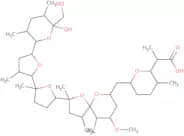
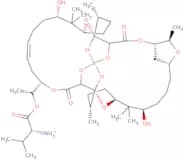
CAS:Boromycin is a macrolide antibiotic, which is derived from the fermentation of certain strains of Streptomyces bacteria. It operates as an ionophore with the ability to transport ions across lipid membranes, effectively disrupting ionic gradients. This mechanism of action compromises essential cellular processes in target organisms, thereby exerting its antimicrobial effects.Formula:C45H74BNO15Purity:Min. 95%Molecular weight:879.88 g/mol11-Deoxyfusidic acid
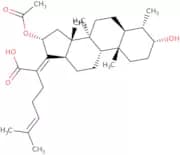
CAS:11-Deoxyfusidic acid is a steroidal antibiotic, which is derived from the fermentation broth of certain strains of fungi, specifically within the Fusidium genus. Its mode of action involves inhibiting bacterial protein synthesis by interacting with elongation factor G (EF-G) on the ribosome, thus disrupting essential processes and impeding bacterial growth.Formula:C31H48O5Purity:Min. 95%Molecular weight:500.71 g/mol(10E)-3-O-De(a-L-cladinose)-10-dehydro-11-dehydroxy-6-O-methyl-erythromycin 2'-acetate
CAS:Erythromycin derivative
Formula:C32H55NO10Purity:Min. 95%Molecular weight:613.78 g/molCefquinome sulfate
CAS:Cefquinome sulfate is a cephalosporin antibiotic, which is a synthetic, broad-spectrum antimicrobial agent. It is derived from the beta-lactam family, specifically designed to combat Gram-positive and Gram-negative bacterial pathogens. The mode of action involves inhibiting bacterial cell wall synthesis. It achieves this by binding to penicillin-binding proteins (PBPs) within the bacterial cell wall, ultimately leading to cell lysis and death due to the interruption of necessary cell wall components.
Formula:C23H26N6O9S3Purity:Min. 95%Color and Shape:White To Light (Or Pale) Yellow To Beige To Light Brown SolidMolecular weight:626.69 g/molDequalinium chloride
CAS:Dequalinium chloride is a novel, broad spectrum antimicrobial agent with a mechanism of action that inhibits the mitochondria-dependent respiratory chain. Studies have shown that it inhibits the growth of resistant microorganisms in cell-based experiments and in bacterial infections. Dequalinium chloride also has cytopathic effects on thp-1 cells, which are specific for Mycobacterium tuberculosis. In addition to inhibiting mitochondria-dependent respiration, this compound also increases acetylcholine receptor sensitivity in A549 lung cancer cells. Dequalinium chloride is a quaternary ammonium cation and has been shown to be effective against clinical isolates and inhibitory concentrations of a variety of virus species, including human rhinovirus (HRV) and Coxsackie virus type B4 (CoxB4).
Formula:C30H40Cl2N4Purity:Min. 95.0 Area-%Molecular weight:527.57 g/molErythromycin B
CAS:Erythromycin B is a semisynthetic macrolide antibiotic, which is derived from the actinomycete *Saccharopolyspora erythraea*. Its mode of action involves inhibiting bacterial protein synthesis by binding to the 50S ribosomal subunit. This interference with protein synthesis effectively hampers bacterial growth, making it a potent bacteriostatic agent.Formula:C37H67NO12Purity:90%NmrMolecular weight:717.93 g/molFosmidomycin sodium
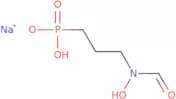
CAS:Fosmidomycin sodium is an antibiotic compound, which is derived from phosphonic acid. It functions as an inhibitor of the enzyme 1-deoxy-D-xylulose 5-phosphate reductoisomerase (DXR), crucial in the non-mevalonate pathway of isoprenoid biosynthesis. By targeting this enzyme, fosmidomycin sodium disrupts the production of isoprenoids, essential components for the growth and survival of certain bacteria and parasites.Formula:C4H9NNaO5PPurity:Min. 95%Molecular weight:205.08 g/molPuromycin aminonucleoside
CAS:Inducer of apoptosis; translational inhibitor; aminonucleoside antibioticFormula:C12H18N6O3Purity:Min. 95%Molecular weight:294.31 g/molDicloxacillin sodium salt monohydrate
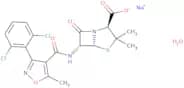
CAS:Dicloxacillin sodium salt monohydrate is a beta-lactam antibiotic with action on bacterial cell wall synthesis and is used for treating infections caused by penicillinase-producing bacteria.
Formula:C19H16Cl2N3NaO5S·H2OPurity:Min. 95%Color and Shape:White PowderMolecular weight:510.32 g/molPirlimycin HCl
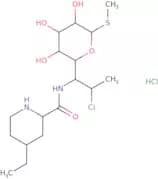
CAS:Pirlimycin HCl is an antibacterial product, which is a semi-synthetic derivative of the natural antibiotic lincomycin produced by Streptomyces lincolnensis. Its mode of action involves the inhibition of bacterial protein synthesis by binding to the 50S ribosomal subunit, thereby preventing the elongation of peptide chains. This action is particularly effective against Gram-positive bacteria, including Staphylococcus and Streptococcus species.
Formula:C17H31ClN2O5S·HClPurity:Min. 95%Color and Shape:White PowderMolecular weight:447.42 g/mol14-Chloro daunorubicin
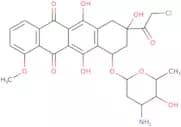
CAS:14-Chloro daunorubicin is a chemotherapeutic agent, which is a synthetic derivative of the naturally occurring anthracycline antibiotic, daunorubicin. This compound is specifically modified to include a chlorine atom at the 14th position, which enhances its pharmacological effectiveness compared to its parent compound. The drug acts primarily by intercalating into DNA, disrupting the function of topoisomerase II, and generating free radicals. These mechanisms collectively inhibit DNA replication and transcription, leading to cell apoptosis, particularly in rapidly dividing cancer cells.Formula:C27H28ClNO10Purity:Min. 95%Molecular weight:561.96 g/mol26-Oxofusidic acid
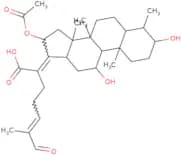
CAS:26-Oxofusidic acid is a derivative of fusidic acid, which is a potent antibacterial compound originally isolated from the fungus Fusidium coccineum. This compound exhibits a unique mode of action by inhibiting bacterial protein synthesis through interference with the elongation factor G (EF-G), a critical component in the translocation step of translation. By targeting this specific aspect of bacterial metabolism, 26-Oxofusidic acid effectively disrupts the growth of gram-positive bacteria, making it an invaluable tool in combating resistant bacterial strains.
Formula:C31H46O7Purity:Min. 95%Molecular weight:530.69 g/mol7-O-Demethyl rapamycin
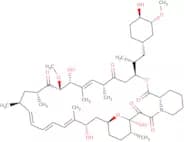
CAS:7-O-Demethyl rapamycin is a macrolide compound, which is a derivative of rapamycin, originally sourced from the bacterial species *Streptomyces hygroscopicus*. This compound operates by binding to the FK506-binding protein 12 (FKBP12), forming a complex that inhibits the mammalian target of rapamycin (mTOR) pathway. This inhibition interferes with cellular processes such as cell growth, proliferation, and survival by altering the phosphorylation state of downstream targets.
Formula:C50H77NO13Purity:80%MinMolecular weight:900.15 g/molAlamethacin
CAS:Alamethacin is a peptide antibiotic, which is derived from the soil fungus Trichoderma viride. This compound consists of a sequence of amino acids that form a helical structure, enabling its interaction with lipid membranes. Alamethacin functions by inserting itself into cellular membranes and forming voltage-dependent ion channels. As a result, it alters membrane permeability, causing ion imbalance and leading to cell death.
Formula:C92H150N22O25Purity:Min. 95%Color and Shape:SolidMolecular weight:1,964.31 g/molHerbimycin
CAS:Herbimycin is an antibiotic, which is a natural product derived from Streptomyces bacteria. It functions primarily as a tyrosine kinase inhibitor, disrupting cellular signaling pathways by binding to the ATP-binding site of kinases and inhibiting phosphorylation events. This mode of action makes it an effective tool for scientists studying signal transduction processes and oncogenic transformation.Formula:C30H42N2O9Purity:Min. 95%Molecular weight:574.66 g/molNafcilllin sodium monohydrate
CAS:Nafcillin sodium monohydrate is a beta-lactam antibiotic, which is derived from the penicillin class of antimicrobials. It is specifically a semi-synthetic penicillin and is commonly sourced through chemical synthesis to enhance its stability and spectrum of activity. Nafcillin primarily exerts its bactericidal effects by inhibiting bacterial cell wall synthesis. It achieves this through its strong affinity for penicillin-binding proteins (PBPs), which are essential for maintaining the bacterial cell wall structure. By disrupting the formation of peptidoglycan cross-links, nafcillin effectively weakens the bacterial cell wall, leading to cell lysis and death, especially in gram-positive bacteria such as Staphylococcus aureus, including methicillin-sensitive strains (MSSA).Formula:C21H21N2O5SNa·H2OPurity:Min. 95%Color and Shape:White to off-white solid.Molecular weight:454.47 g/molNorvancomycin trifluoroacetate
CAS:Norvancomycin trifluoroacetate is an antibiotic compound, which is a glycopeptide derived from the bacterium Amycolatopsis orientalis. Its mode of action involves inhibiting bacterial cell wall synthesis. Specifically, Norvancomycin disrupts the cross-linking of peptidoglycan layers in the bacterial cell wall by binding to the D-alanyl-D-alanine terminus of cell wall precursors. This disruption weakens the bacterial cell wall, ultimately leading to cell lysis and death, thereby exerting a bactericidal effect.Formula:C65H73Cl2N9O24•(C2HF3O2)xPurity:Min. 95%