Antibiotics
Antibiotics are compounds designed to destroy or inhibit the growth of various microorganisms, playing a crucial role in treating infections and preventing the spread of diseases. This category offers a diverse range of active ingredients specifically for research in the biochemical field. These compounds are essential tools in studying bacterial mechanisms, resistance patterns, and the development of new therapeutic agents. Researchers can explore a wide variety of antibiotics to understand their effects, optimize their use, and develop novel treatments to combat emerging microbial threats. The availability of such a broad spectrum of antibiotics supports advanced research and innovation in microbiology and pharmaceutical sciences.
Subcategories of "Antibiotics"
- Macrolide Antibiotics(26 products)
- Steroidal Antibiotics(31 products)
- Tetracycline Antibiotics(20 products)
- β-Lactam Antibiotics(11 products)
Found 4102 products of "Antibiotics"
Sort by
Purity (%)
0
100
|
0
|
50
|
90
|
95
|
100
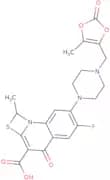
Prulifloxacin
CAS:<p>Prulifloxacin is a fluoroquinolone antibiotic with action on bacterial DNA gyrase and topoisomerase IV and is used for treating urinary tract infections and respiratory infections.</p>Formula:C21H20FN3O6SPurity:Min. 95%Color and Shape:PowderMolecular weight:461.46 g/molPefloxacin
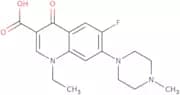
CAS:<p>Pefloxacin is a mesylate prodrug that is converted to pefloxacin in the body. The optimum concentration for pefloxacin is 2 µg/mL, and it has been shown to be active against gram-positive bacteria such as Streptococcus pneumoniae, group A beta-hemolytic streptococci, and Enterococcus faecalis. Pefloxacin has also been shown to inhibit the growth of human leukemia cells (HL-60) and drug interactions have been documented with this drug. Pefloxacin is not active against Mycobacterium tuberculosis or Mycobacterium avium complex.</p>Formula:C17H20FN3O3Purity:Min. 95%Color and Shape:Slightly Yellow PowderMolecular weight:333.36 g/molAnthracycline
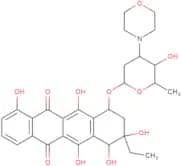
CAS:<p>Anthracycline is a class of chemotherapy drugs, which are anthraquinone antibiotics derived from the bacterial genus Streptomyces. They exert their therapeutic effects primarily through intercalation into DNA, disrupting the function of enzymes such as topoisomerase II, thus preventing the transcription and replication processes in rapidly dividing cancer cells. Furthermore, they generate free radicals, leading to oxidative stress and subsequent cell damage. These mechanisms collectively result in apoptosis of malignant cells. Anthracyclines are utilized extensively in oncology for the treatment of various malignancies, including leukemias, lymphomas, breast cancer, and sarcomas. The efficacy of anthracyclines in inhibiting tumor growth must be balanced against their cardiotoxic potential, which is a significant consideration in their clinical use. This dual nature makes them both pivotal and challenging in chemotherapy regimens, necessitating careful management and monitoring throughout treatment.</p>Formula:C30H35NO11Purity:Min. 95%Molecular weight:585.60 g/molClofazimine
CAS:Controlled Product<p>Clofazimine is a phenazine dye antibiotic with action on bacterial DNA interference and is used for treating leprosy and erythema nodosum leprosum.</p>Formula:C27H22Cl2N4Purity:Min. 95%Color and Shape:PowderMolecular weight:473.4 g/molTulathromycin A
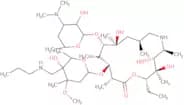
CAS:<p>Inhibitor of protein synthesis; macrolide class</p>Formula:C41H79N3O12Purity:Min. 95%Color and Shape:White PowderMolecular weight:806.08 g/molC-390
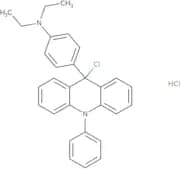
CAS:Antibiotic; used in selective media for P. aeruginosaFormula:C29H27ClN2·HClPurity:Min. 98 Area-%Color and Shape:PowderMolecular weight:475.45 g/molTosufloxacin
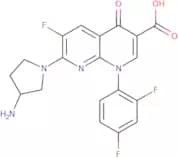
CAS:<p>Inhibitor of DNA replication; inhibitor of theophylline and caffeine metabolism</p>Formula:C19H15F3N4O3Purity:Min. 95%Molecular weight:404.34 g/molCephalosporin C zinc
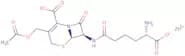
CAS:<p>Cephalosporin C zinc is a zinc salt form of cephalosporin C with action on bacterial cell wall synthesis and is used for studying bacterial resistance and cell wall synthesis.</p>Formula:C16H19N3O8SZnPurity:Min. 95%Color and Shape:White PowderMolecular weight:478.78 g/molOrnidazole
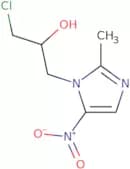
CAS:<p>Ornidazole is a nitroimidazole antibiotic with action on DNA synthesis disruption in anaerobic bacteria and protozoa and is used for treating infections like amoebiasis, giardiasis, and trichomoniasis.</p>Formula:C7H10ClN3O3Purity:Min. 98 Area-%Color and Shape:White Slightly Yellow PowderMolecular weight:219.63 g/molFidaxomicin
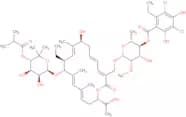
CAS:<p>Fidaxomicin is a macrocyclic antibiotic with action on bacterial RNA polymerase and is used for treating Clostridium difficile infections.</p>Formula:C52H74Cl2O18Purity:Min. 98 Area-%Color and Shape:White PowderMolecular weight:1,058.04 g/molNovobiocin sodium salt, Antibiotic for Culture Media Use Only
CAS:Novobiocin sodium salt inhibits bacterial growth by binding to the 50S subunit of the bacterial ribosome, blocking the peptidyl transferase activity required for protein synthesis. The drug binds to DNA sequences containing glucuronic acid, which are essential for peptide bond formation. Novobiocin sodium can be found in pharmaceuticals due to its antimicrobial activity and membrane stability, which makes it suitable for pressuring ionization techniques. It also exhibits less resistance than other antibiotics like triclosan or nalidixic acid because it does not typically bind to the membranes of cells.Formula:C31H35N2NaO11Purity:Min. 90.0 Area-%Molecular weight:634.61 g/molTomopenem
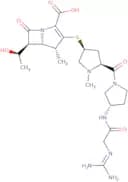
CAS:<p>Tomopenem is a carbapenem antibiotic, which is a product of synthetic origin with broad-spectrum antibacterial properties. It acts by inhibiting the synthesis of bacterial cell walls through binding to penicillin-binding proteins, thereby disrupting the structural integrity of the cell wall and leading to bacterial cell lysis and death.</p>Formula:C23H35N7O6SPurity:Min. 95%Molecular weight:537.63 g/molAlloaureothin
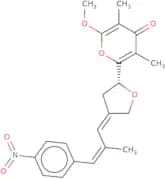
CAS:<p>Alloaureothin is an antibacterial compound, which is a secondary metabolite derived from the bacterial genus *Streptomyces*. This compound functions through a distinct mode of action, primarily targeting bacterial cell components and inhibiting essential growth processes. Alloaureothin disrupts cell wall synthesis and cellular metabolism, leading to effective bacteriostatic or bactericidal outcomes depending on the concentration and specific bacterial species.</p>Purity:Min. 95%Penicillin G potassium
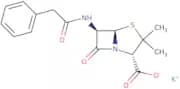
CAS:<p>Penicillin G potassium is a natural penicillin antibiotic with action on bacterial cell wall synthesis and is used for treating severe bacterial infections like meningitis, syphilis, and endocarditis.</p>Formula:C16H17KN2O4SPurity:Min. 95 Area-%Color and Shape:PowderMolecular weight:372.48 g/molTobramycin - high purity
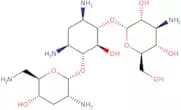
CAS:<p>Inhibitor of protein synthesis; aminoglycoside</p>Formula:C18H37N5O9Purity:Min. 900 Ug/MgColor and Shape:PowderMolecular weight:467.51 g/molCeftolozane sulfate
CAS:<p>Ceftolozane sulfate is a cephalosporin antibiotic with action against multidrug-resistant gram-negative bacteria and is used for treating complicated urinary tract infections and intra-abdominal infections.</p>Formula:C23H31N12O8S2•HO4SPurity:Min. 95%Color and Shape:PowderMolecular weight:764.77 g/molTilmicosin phosphate
CAS:Controlled Product<p>Tilmicosin phosphate is a phosphate salt form of tilmicosin with similar action and applications as tilmicosin.</p>Formula:C46H80N2O13·H3PO4Purity:Min. 95%Color and Shape:White PowderMolecular weight:967.13 g/molMoxalactam Sodium Salt (Mixture of diastereomers)
CAS:<p>Moxalactam Sodium Salt (Mixture of diastereomers) is an oxacephem antibiotic with action on bacterial cell wall synthesis and is used for treating infections caused by gram-negative bacteria like Escherichia coli and Pseudomonas aeruginosa</p>Formula:C20H18N6Na2O9SPurity:Min. 95 Area-%Color and Shape:PowderMolecular weight:564.44 g/molParomomycin sulfate, Antibiotic for Culture Media Use Only
CAS:Paromomycin sulfate is an antibiotic used for culture media to control bacterial contamination of mediums and other laboratory substances. Most Gram-negative bacteria strains are sensitive to paromomycin sulfate, showing a low sensitivity (â€10%) in Enterobacteriaceae, Pseudomonas aeruginosa, Escherichia coli, Proteus vulgaris, Klebsiella pneumoniae and Serratia marcescens. Paromomycin sulfate is also used in the treatment of colorectal cancer by blocking DNA synthesis through inhibition of protein synthesis in susceptible cells. This can result in reduced damage in colon tumor cells within the body, although it may have neurotoxic effects on brain tissue. Furthermore, it has anti-inflammatory properties when given orally or intravenously at therapeutic doses. Acridine orange can be used to identify sulfuric acid resistant gram.Formula:C23H47N5O18SPurity:Min. 95.0 Area-%Molecular weight:713.71 g/molRef: 3D-Q-201537
1kgTo inquire100gTo inquire250gTo inquire500gTo inquire2500gTo inquire-Unit-ggTo inquireTobramycin A
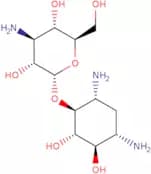
CAS:<p>Inhibitor of protein synthesis; aminoglycoside</p>Formula:C12H25N3O7Purity:Min. 95%Color and Shape:White PowderMolecular weight:323.34 g/mol