Antibiotics
Antibiotics are compounds designed to destroy or inhibit the growth of various microorganisms, playing a crucial role in treating infections and preventing the spread of diseases. This category offers a diverse range of active ingredients specifically for research in the biochemical field. These compounds are essential tools in studying bacterial mechanisms, resistance patterns, and the development of new therapeutic agents. Researchers can explore a wide variety of antibiotics to understand their effects, optimize their use, and develop novel treatments to combat emerging microbial threats. The availability of such a broad spectrum of antibiotics supports advanced research and innovation in microbiology and pharmaceutical sciences.
Subcategories of "Antibiotics"
- Macrolide Antibiotics(26 products)
- Steroidal Antibiotics(31 products)
- Tetracycline Antibiotics(20 products)
- β-Lactam Antibiotics(11 products)
Found 4101 products of "Antibiotics"
Sort by
Purity (%)
0
100
|
0
|
50
|
90
|
95
|
100
Nigericin sodium
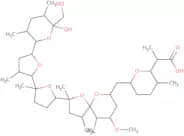
CAS:<p>Nigericin transports cations across the membrane of the cell and it is used to study anion transport. It can be used as a buffer to control pH value inside of the cell.</p>Formula:C40H67NaO11Purity:Min. 95%Molecular weight:746.94 g/molCeftarolin fosamil
CAS:<p>Ceftaroline fosamil is an advanced antibiotic, which is a cephalosporin derived from synthetic sources with a broad spectrum of activity. It is a prodrug that, once metabolized, becomes active in the body, binding to penicillin-binding proteins (PBPs) of bacteria. This binding inhibits the proteins responsible for cell wall synthesis, leading to bacterial cell lysis and death.</p>Formula:C22H21N8O8PS4Purity:Min. 95%Molecular weight:684.69 g/molL-Carnitine fumarate
CAS:<p>L-Carnitine fumarate is a compound that functions as a dietary supplement, which is synthesized by combining L-carnitine, an amino acid derivative naturally found in the body, with fumaric acid. This product is primarily sourced from fermentation or chemical synthesis processes to produce L-carnitine, which is then reacted with fumaric acid to form the fumarate salt. This combination enhances the stability and bioavailability of L-carnitine.</p>Formula:C7H15NO3·C4H4O4Purity:Min. 95%Molecular weight:277.27 g/molHerbimycin
CAS:<p>Herbimycin is an antibiotic, which is a natural product derived from Streptomyces bacteria. It functions primarily as a tyrosine kinase inhibitor, disrupting cellular signaling pathways by binding to the ATP-binding site of kinases and inhibiting phosphorylation events. This mode of action makes it an effective tool for scientists studying signal transduction processes and oncogenic transformation.</p>Formula:C30H42N2O9Purity:Min. 95%Molecular weight:574.66 g/mol3'-N-Desmethyl-3'-N-tosyl azithromycin
CAS:<p>3'-N-Desmethyl-3'-N-tosyl azithromycin is a semi-synthetic macrolide antibiotic analog, which is a derivative of azithromycin, a well-known member of the macrolide class of antibiotics. This compound is synthesized through chemical modifications of the parent molecule, azithromycin, to potentially enhance its pharmacokinetic and pharmacodynamic properties.</p>Formula:C44H76N2O14SPurity:Min. 95%Molecular weight:889.15 g/molCefadroxil monohydrate, Antibiotic for Culture Media Use Only
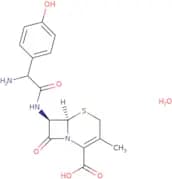
CAS:Cefadroxil is a broad-spectrum bactericidal antibiotic that belongs to the cephalosporin family. It is a semi-synthetic penicillin and inhibits bacterial cell wall synthesis through binding to one or more of the penicillin-binding proteins (PBPs). Cefadroxil monohydrate is used as an antibiotic for culture media and has been proven to be effective against methicillin-resistant Staphylococcus aureus (MRSA). In addition, the drug has been shown to have no significant effect on blood tests or microscopic studies.Formula:C16H19N3O6SPurity:Min. 97.0 Area-%Molecular weight:381.40 g/molPanipenem
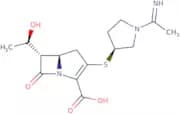
CAS:Panipenem is a carbapenem antibiotic, which is a type of beta-lactam antibiotic derived from thienamycin. It functions by inhibiting penicillin-binding proteins (PBPs), which are essential for bacterial cell wall synthesis. This inhibition disrupts the cell wall construction, leading to cell lysis and death, thereby demonstrating strong bactericidal activity.Formula:C15H21N3O4SPurity:Min. 95%Molecular weight:339.41 g/molChlortetracycline-13C-d3 hydrochloride
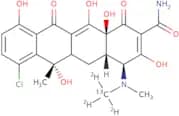
Controlled Product<p>Chlortetracycline-13C-d3 hydrochloride is a stable isotope-labeled antibiotic with action on bacterial protein synthesis inhibition and is used for research in bacterial resistance and analytical studies.</p>Formula:C2113CH21D3Cl2N2O8Color and Shape:PowderMolecular weight:519.35 g/molVincristine
CAS:Vincristine, a microtubule disruptor, inhibits mitosis in cancer cells, useful in leukemia research.Formula:C46H56N4O10Purity:98.46% - >99.99%Color and Shape:SolidMolecular weight:824.96Erythromycin iactobionate
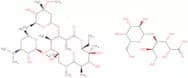
CAS:<p>Erythromycin lactobionate is a macrolide antibiotic, which is derived from the bacterium *Saccharopolyspora erythraea*. Its mode of action involves binding to the 50S subunit of the bacterial ribosome, thereby inhibiting protein synthesis and leading to the suppression of bacterial growth. This mechanism effectively targets gram-positive bacteria and some gram-negative bacteria, making it a crucial agent in the fight against various bacterial infections.</p>Formula:C49H87NO24Purity:Min. 95%Color and Shape:White To Off-White SolidMolecular weight:1,074.21 g/molPuromycin aminonucleoside
CAS:<p>Inducer of apoptosis; translational inhibitor; aminonucleoside antibiotic</p>Formula:C12H18N6O3Purity:Min. 95%Molecular weight:294.31 g/molPiperacillin oxalylamide
CAS:<p>Piperacillin oxalylamide is an investigational antibiotic, which is a synthetic derivative of the widely used β-lactam antibiotic, piperacillin. Its development is rooted in the quest to combat β-lactamase-producing resistant bacterial strains, which are a growing threat in clinical settings. It operates by inhibiting bacterial cell wall synthesis, similar to other β-lactam antibiotics, but possesses a modified structure that enhances its resistance to enzymatic degradation by β-lactamases.</p>Formula:C23H29N5O8SPurity:Min. 95%Molecular weight:535.57 g/molChlortetracycline
CAS:<p>Chlortetracycline is a tetracycline antibiotic, which is derived from the bacterium *Streptomyces aureofaciens*. It functions by inhibiting protein synthesis through binding to the 30S ribosomal subunit, thereby preventing the attachment of aminoacyl-tRNA to the mRNA-ribosome complex. This mechanism effectively impedes the growth and replication of both gram-positive and gram-negative bacteria.</p>Formula:C22H23ClN2O8Purity:Min. 95%Molecular weight:478.88 g/molPorfiromycin
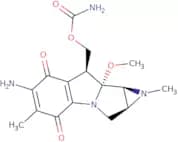
CAS:<p>Porfiromycin is an antineoplastic antibiotic with action on DNA alkylation and cross-linking and is used for research on cancer treatment, particularly for hypoxic tumors.</p>Formula:C16H20N4O5Purity:Min. 95 Area-%Color and Shape:PowderMolecular weight:348.35 g/molKanamycin C
CAS:<p>Inhibitor of protein synthesis; aminoglycoside</p>Formula:C18H36N4O11Purity:Min. 95%Molecular weight:484.5 g/molOxacillin sodium
CAS:<p>Oxacillin sodium is a beta-lactam antibiotic with action on bacterial cell wall synthesis and is used for treating infections caused by penicillin-resistant Staphylococcus aureus.</p>Formula:C19H18N3NaO5SPurity:Min. 95%Color and Shape:PowderMolecular weight:423.42 g/molClindamycin sulfoxide
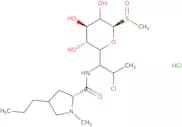
CAS:<p>Clindamycin sulfoxide is a potent metabolite of the lincosamide antibiotic clindamycin, which is derived from the fermentation product of *Streptomyces lincolnensis*. This compound acts by inhibiting bacterial protein synthesis through binding to the 50S ribosomal subunit, thereby interfering with the translocation steps in protein elongation. The mechanism effectively suppresses the growth of a broad range of Gram-positive bacteria, including *Staphylococcus aureus*, *Streptococcus pneumoniae*, and anaerobic microorganisms.</p>Formula:C18H33ClN2O6SPurity:Min. 95%Molecular weight:440.98 g/molLydicamycin
CAS:<p>Lydicamycin is an antibacterial compound, which is a polyketide-derived antibiotic produced by the microorganism Streptomyces. This natural compound functions by inhibiting bacterial protein synthesis, effectively interrupting critical cellular processes within susceptible bacteria. The mode of action primarily focuses on binding to the bacterial ribosome, thereby disrupting protein production and inhibiting bacterial growth.</p>Formula:C47H74N4O10Purity:Min. 95%Molecular weight:855.11 g/molStreptidine
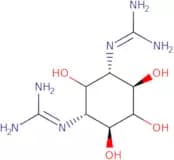
CAS:<p>Streptidine is an amino cyclitol, which is a component of certain aminoglycoside antibiotics. This compound originates from the actinomycete *Streptomyces griseus*, a soil bacterium known for its ability to produce a variety of antibiotics. Streptidine plays a crucial role in the mechanism of aminoglycosides by contributing to the binding affinity of these antibiotics to the bacterial ribosome.</p>Formula:C8H18N6O4Purity:Min. 95%Molecular weight:262.13895Cefodizime
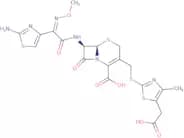
CAS:<p>Cefodizime is a third-generation cephalosporin antibiotic, which is derived from the fungus Acremonium. It exerts its bactericidal effects by inhibiting bacterial cell wall synthesis. This action is achieved through binding to penicillin-binding proteins (PBPs), leading to the interruption of peptidoglycan cross-linking essential for the bacterial cell wall integrity. The breakdown of cell wall synthesis results in the lysis and death of the bacterial cell.</p>Purity:Min. 95%