Antibiotics
Antibiotics are compounds designed to destroy or inhibit the growth of various microorganisms, playing a crucial role in treating infections and preventing the spread of diseases. This category offers a diverse range of active ingredients specifically for research in the biochemical field. These compounds are essential tools in studying bacterial mechanisms, resistance patterns, and the development of new therapeutic agents. Researchers can explore a wide variety of antibiotics to understand their effects, optimize their use, and develop novel treatments to combat emerging microbial threats. The availability of such a broad spectrum of antibiotics supports advanced research and innovation in microbiology and pharmaceutical sciences.
Subcategories of "Antibiotics"
- Macrolide Antibiotics(26 products)
- Steroidal Antibiotics(31 products)
- Tetracycline Antibiotics(20 products)
- β-Lactam Antibiotics(11 products)
Found 4103 products of "Antibiotics"
Sort by
Purity (%)
0
100
|
0
|
50
|
90
|
95
|
100
Kasugamycin
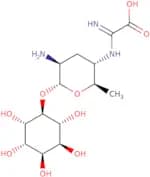
CAS:Kasugamycin is an aminoglycoside antibiotic, which is derived from the actinomycete Streptomyces kasugaensis. Its mode of action involves the inhibition of protein synthesis by interfering with the function of the 30S ribosomal subunit, ultimately preventing the growth and proliferation of sensitive organisms. In agricultural contexts, Kasugamycin is primarily utilized to control bacterial and fungal diseases in a variety of crops, including rice and fruit trees. It is particularly effective against Xanthomonas oryzae, which causes bacterial leaf blight in rice, and other pathogenic organisms detrimental to plant health. The application of Kasugamycin has been an important tool for integrated pest management programs focusing on sustainable agricultural practices. As a compound with a specific mode of activity, it helps to reduce the environmental impact typically associated with broader-spectrum antibiotics, while offering target-specific disease control. Its careful application supports the minimization of resistance development, ensuring continued efficacy in protecting crop yields.Formula:C14H25N3O9Purity:Min. 95%Molecular weight:379.36 g/molPazufloxacin
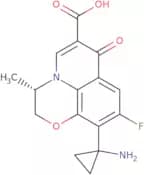
CAS:<p>Pazufloxacin is an antibacterial agent, which is a synthetic derivative originating from the fluoroquinolone class of compounds. This source categorizes it alongside a group of broad-spectrum antibiotics known for their efficacy against a wide variety of bacterial pathogens. The mode of action of pazufloxacin involves the inhibition of bacterial DNA gyrase and topoisomerase IV. These are essential enzymes for bacterial DNA replication, transcription, repair, and recombination processes. By inhibiting these enzymes, pazufloxacin disrupts the bacterial DNA processes, ultimately leading to cell death.</p>Formula:C16H15FN2O4Purity:Min. 95%Molecular weight:318.3 g/molClindamycin 4-phosphate
CAS:<p>Clindamycin 4-phosphate is a semi-synthetic antibiotic, which is a derivative of the natural antibiotic lincomycin. It is specifically synthesized from Streptomyces lincolnensis cultures. The mode of action of Clindamycin 4-phosphate involves inhibiting bacterial protein synthesis by binding to the 50S subunit of the bacterial ribosome, thus preventing peptide chain elongation and subsequent bacterial growth.</p>Formula:C18H34ClN2O8PSPurity:Min. 95%Molecular weight:504.96 g/molCephamycin C
CAS:<p>Cephamycin C is a cephalosporin antibiotic, which is a type of β-lactam antibiotic. It is derived from the fermentation process of certain Streptomyces species and other actinomycetes. Its mode of action involves inhibiting bacterial cell wall synthesis by binding to penicillin-binding proteins (PBPs). This inhibition disrupts the structural integrity of the bacterial cell wall, leading to cell lysis and death.</p>Formula:C16H22N4O9SPurity:Min. 95%Color and Shape:PowderMolecular weight:446.4 g/mol7-O-Demethyl rapamycin
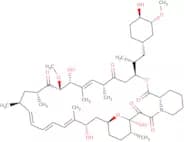
CAS:<p>7-O-Demethyl rapamycin is a macrolide compound, which is a derivative of rapamycin, originally sourced from the bacterial species *Streptomyces hygroscopicus*. This compound operates by binding to the FK506-binding protein 12 (FKBP12), forming a complex that inhibits the mammalian target of rapamycin (mTOR) pathway. This inhibition interferes with cellular processes such as cell growth, proliferation, and survival by altering the phosphorylation state of downstream targets.</p>Formula:C50H77NO13Purity:80%MinMolecular weight:900.15 g/molErythromycin iactobionate
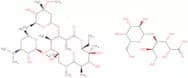
CAS:<p>Erythromycin lactobionate is a macrolide antibiotic, which is derived from the bacterium *Saccharopolyspora erythraea*. Its mode of action involves binding to the 50S subunit of the bacterial ribosome, thereby inhibiting protein synthesis and leading to the suppression of bacterial growth. This mechanism effectively targets gram-positive bacteria and some gram-negative bacteria, making it a crucial agent in the fight against various bacterial infections.</p>Formula:C49H87NO24Purity:Min. 95%Color and Shape:White To Off-White SolidMolecular weight:1,074.21 g/mol25-O-Deacetyl rifabutin
CAS:<p>25-O-Deacetyl rifabutin is an antibiotic derivative, which is sourced from the semi-synthetic modification of rifabutin, a compound originally derived from the fermentation of the bacterium Amycolatopsis mediterranei. This derivative works by inhibiting bacterial RNA synthesis. It achieves this by specifically targeting the DNA-dependent RNA polymerase enzyme, which is essential for bacterial transcription. The mechanism involves binding to the beta-subunit of the polymerase, thereby blocking the elongation of the RNA chain, which ultimately leads to the death of the bacterial cell.</p>Formula:C44H60N4O10Purity:Min. 95%Color and Shape:Purple PowderMolecular weight:804.97 g/mol(10E)-3-O-De(a-L-cladinose)-10-dehydro-11-dehydroxy-6-O-methyl-erythromycin
CAS:Erythromycin derivativeFormula:C30H53NO9Purity:Min. 95%Molecular weight:571.74 g/molKanamycin A
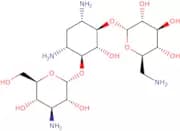
CAS:<p>Inhibitor of protein synthesis; aminoglycoside</p>Formula:C18H36N4O11Purity:Min. 95%Color and Shape:White Clear LiquidMolecular weight:484.5 g/molLincomycin B hydrochloride
CAS:<p>Inhibitor of protein synthesis; lincosamide</p>Formula:C17H33ClN2O6SPurity:Min. 95%Molecular weight:428.97 g/molCeftobiprole medocaril
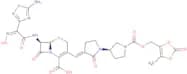
CAS:<p>Ceftobiprole medocaril is a prodrug of the cephalosporin class, which is a beta-lactam antibiotic. It is synthetically derived, designed to combat Gram-positive and Gram-negative bacteria. The mode of action involves binding to penicillin-binding proteins (PBPs), crucial for bacterial cell wall synthesis, ultimately leading to bacterial cell lysis and death.</p>Formula:C26H26N8O11S2Purity:Min. 95%Molecular weight:690.66 g/molNeomycin B
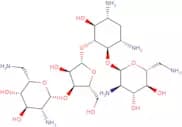
CAS:<p>Neomycin B is an aminoglycoside antibiotic, which is derived from the bacterium *Streptomyces fradiae*. It exerts its antibacterial effects by binding to the 30S subunit of bacterial ribosomes, leading to the inhibition of protein synthesis. This binding disrupts the translation process, thereby preventing the growth and proliferation of bacteria. Neomycin B is effective against a wide range of Gram-negative and some Gram-positive bacteria, making it a valuable tool in both medical and research settings.</p>Formula:C23H46N6O13Purity:Min. 95%Molecular weight:614.64 g/molClindamycin
CAS:<p>Inhibitor of protein synthesis; lincosamide class</p>Formula:C18H33ClN2O5SPurity:Min. 95%Molecular weight:424.98 g/mol10, 11-Dehydrocurvularin
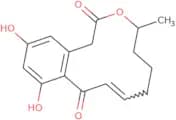
CAS:<p>10, 11-Dehydrocurvularin is a fungal phytotoxin with heat shock response and immune-modulatory activitie. Curvularins inhibit the expression of the inducible nitric oxide synthase (iNOS), thereby acting as anti-inflammatory agents and immune system modulators</p>Purity:Min. 95%Color and Shape:PowderCefteram
CAS:<p>Cefteram is a third-generation cephalosporin antibiotic, which is synthesized through chemical processes starting from cephalosporin C, a compound derived from the fungus Acremonium. As a cephalosporin, it functions by inhibiting bacterial cell wall synthesis. This is achieved through the binding to penicillin-binding proteins (PBPs), which are critical in the formation of the bacterial cell wall. By disrupting this process, Cefteram leads to the lysis and death of the bacteria.</p>Formula:C16H17N9O5S2Purity:Min. 95%Color and Shape:White To Off-White SolidMolecular weight:479.5 g/molPotassium clavulanate - 1:1 mixture with cellulose, Antibiotic for Culture Media Use Only
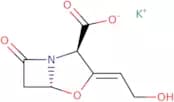
CAS:Potassium clavulanate is a beta-lactamase inhibitor and an antibacterial agent. The presence of potassium clavulanate in culture media inhibits the activity of beta-lactamases, which are enzymes that confer resistance to penicillin and other beta-lactam antibiotics. It also has been shown to be active against bacterial infections such as tuberculosis, sepsis, and pneumonia, where it can inhibit the growth of bacteria by interfering with their ability to form cell walls.Formula:C8H8KNO5Purity:Min. 95.0 Area-%Molecular weight:237.25 g/molThiostrepton
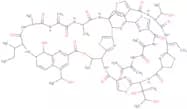
CAS:<p>Thiostrepton is a thiopeptide antibiotic with action on bacterial protein synthesis by binding to the ribosome and is used for treating bacterial infections in veterinary medicine and research applications.</p>Formula:C72H85N19O18S5Purity:Min. 95%Color and Shape:White To Light (Or Pale) Yellow SolidMolecular weight:1,664.89 g/molOligomycin
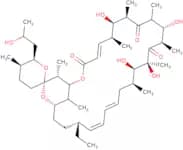
CAS:<p>Oligomycin is a macrolide antibiotic, which is derived from species of the bacterium Streptomyces. It acts as a potent inhibitor of the mitochondrial ATP synthase complex, specifically targeting the F₀ portion of the enzyme. This interference results in the blockage of proton translocation across the mitochondrial membrane, thereby preventing ATP synthesis. Due to this mode of action, Oligomycin is primarily utilized in biochemical research to study cellular respiration and energy metabolism. It serves as a valuable tool in elucidating the mechanisms of oxidative phosphorylation and the role of ATP in various cellular processes. In addition, its application extends to investigations on mitochondrial dysfunctions and the screening of mitochondrial-targeted drugs.</p>Formula:C45H74O11Purity:Min. 95%Molecular weight:791.06 g/molDicloxacillin sodium salt monohydrate
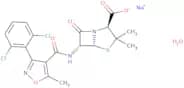
CAS:<p>Dicloxacillin sodium salt monohydrate is a beta-lactam antibiotic with action on bacterial cell wall synthesis and is used for treating infections caused by penicillinase-producing bacteria.</p>Formula:C19H16Cl2N3NaO5S·H2OPurity:Min. 95%Color and Shape:White PowderMolecular weight:510.32 g/molTigecycline hydrate
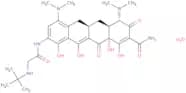
CAS:<p>Inhibitor of protein synthesis; glycylcycline class</p>Formula:C29H39N5O8Purity:Min. 95%Molecular weight:585.65 g/mol