Antibiotics
Antibiotics are compounds designed to destroy or inhibit the growth of various microorganisms, playing a crucial role in treating infections and preventing the spread of diseases. This category offers a diverse range of active ingredients specifically for research in the biochemical field. These compounds are essential tools in studying bacterial mechanisms, resistance patterns, and the development of new therapeutic agents. Researchers can explore a wide variety of antibiotics to understand their effects, optimize their use, and develop novel treatments to combat emerging microbial threats. The availability of such a broad spectrum of antibiotics supports advanced research and innovation in microbiology and pharmaceutical sciences.
Subcategories of "Antibiotics"
- Macrolide Antibiotics(26 products)
- Steroidal Antibiotics(31 products)
- Tetracycline Antibiotics(20 products)
- β-Lactam Antibiotics(11 products)
Found 4086 products of "Antibiotics"
Sort by
Purity (%)
0
100
|
0
|
50
|
90
|
95
|
100
Lomefloxacin hydrochloride
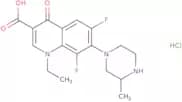
CAS:<p>Lumefantrine is an antimalarial compound with a mode of action that inhibits heme detoxification in Plasmodium parasites. It is used in combination with artemether for treating malaria.</p>Formula:C17H19F2N3O3•HClPurity:Min. 95%Color and Shape:PowderMolecular weight:387.81 g/molQuinupristin
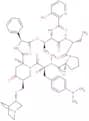
CAS:<p>Quinupristin, a macrolide-lincosamide-streptogramin antibiotic, inhibits protein synthesis in bacteria.</p>Formula:C53H67N9O10SPurity:98.05% - 98.16%Color and Shape:SolidMolecular weight:1022.22Bleomycin A5 hydrochloride
CAS:<p>Bleomycin A5 hydrochloride is an antineoplastic antibiotic, which is derived from the bacterium Streptomyces verticillus. Its mode of action involves binding to DNA and inducing strand breaks through the generation of free radicals, specifically targeting deoxyribose units. This leads to the inhibition of DNA synthesis and cell division, ultimately resulting in cell death.</p>Formula:C57H89N19O21S2•HClPurity:Min. 95%Color and Shape:PowderMolecular weight:1,177.03 g/molTrombodipine
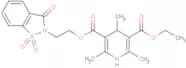
CAS:<p>Trombodipine (PCA-4230) is a platelet aggregation inhibitor with antithrombotic activity and protection against Listeria monocytogenes.</p>Formula:C21H24N2O7SPurity:98.73% - 99.14%Color and Shape:SolidMolecular weight:448.49Laidlomycin
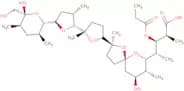
CAS:<p>Laidlomycin is an ionophore compound with a mode of action that disrupts ion gradients in bacterial cells. It is used as a feed additive to improve feed efficiency in cattle.</p>Formula:C37H62O12Purity:Min. 95%Molecular weight:698.88 g/mol7-epi-Clindamycin 2-phosphate
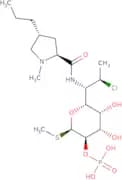
CAS:<p>7-epi-Clindamycin 2-phosphate is a semisynthetic antibiotic derivative, which is sourced from chemical modifications of the natural antibiotic lincomycin. This compound operates by inhibiting bacterial protein synthesis. It achieves this by binding to the 50S subunit of the bacterial ribosome, thereby obstructing the translocation steps in protein elongation.</p>Formula:C18H34ClN2O8PSPurity:Min. 95%Color and Shape:White to off-white solid.Molecular weight:504.96 g/mol14-Bromodaunorubicin HBr
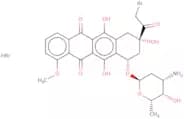
CAS:<p>14-Bromodaunorubicin HBr is a synthetic antitumor antibiotic derivative, which is a modified version of daunorubicin, an anthracycline antibiotic originally isolated from Streptomyces peucetius. With the inclusion of a bromine atom at the 14th position, this compound is designed to enhance the antitumor efficacy and alter pharmacokinetic properties compared to its parent molecule.</p>Formula:C27H28BrNO10·BrHPurity:75%MinMolecular weight:687.33 g/molCefazolin
CAS:<p>Cefazolin is a broad-spectrum antibiotic that inhibits the growth of Gram-positive and Gram-negative bacteria. It is an effective cephalosporin antibiotic against both aerobic and anaerobic bacteria. Cefazolin is used in clinical isolates to inhibit the growth of methicillin-resistant staphylococcus, resistant microorganisms, and systemic inflammation. Some studies has shown good results to inhibit tumor necrosis factor-α (TNFα) production in cell culture.</p>Formula:C14H14N8O4S3Purity:Min. 95%Molecular weight:454.51 g/molHygromycin A
CAS:<p>Hygromycin A is an antimicrobial compound isolated from the bacterium *Streptomyces hygroscopicus*. It functions by inhibiting protein synthesis within microbial cells. This compound disrupts the elongation phase of translation by binding to the ribosomal subunit, therefore impeding mRNA decoding during protein assembly.</p>Formula:C23H29NO12Purity:Min. 95%Molecular weight:511.5 g/molSisomicin sulfate
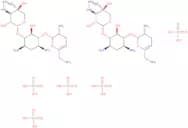
CAS:<p>Sisomicin sulfate is a sulfate salt form of sisomicin with similar action and applications as sisomicin.</p>Formula:C19H37N5O7·5H2SO4Purity:Min. 95%Color and Shape:PowderMolecular weight:1,385.45 g/molSulfadimethoxine sodium
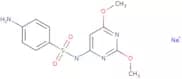
CAS:<p>Sulfadimethoxine sodium is a sulfonamide antibiotic with action on bacterial folate synthesis inhibition and is used for treating respiratory and urinary tract infections in veterinary medicine.</p>Formula:C12H13N4NaO4SPurity:Min. 95%Color and Shape:White Off-White PowderMolecular weight:332.31 g/molSpiramycin I
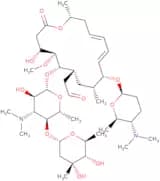
CAS:<p>Spiramycin I is a macrolide antibiotic with action on bacterial protein synthesis inhibition and is used for treating toxoplasmosis and bacterial infections.</p>Formula:C43H74N2O14Purity:Min. 95 Area-%Color and Shape:White PowderMolecular weight:843.05 g/molMonensin
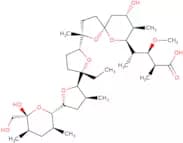
CAS:<p>Monensin is a polyether ionophore antibiotic, which is derived from the fermentation of the bacterium *Streptomyces cinnamonensis*. It operates by disrupting ion transport across biological membranes, primarily by facilitating the exchange of sodium and potassium ions. This ionophore action alters the osmotic balance in target cells, leading to their destabilization and death, particularly in Gram-positive bacteria and certain protozoa.</p>Formula:C36H62O11Purity:Min. 95%Molecular weight:670.87 g/molAzidamfenicol
CAS:<p>Azidamfenicol inhibits ribosomal peptidyltransferase with a Ki of 22 µM. Azidamfenicol is a broad-spectrum chloramphenicol-like antibiotic.</p>Formula:C11H13N5O5Purity:99.61%Color and Shape:SolidMolecular weight:295.254-Demethyl daunomycinone
CAS:<p>4-Demethyl daunomycinone is an anthracycline derivative, which is a natural or semi-synthetic compound derived from the bacterium *Streptomyces*. It is primarily studied for its potential use in anticancer therapies, given its structural similarity to other well-known anthracyclines like daunorubicin and doxorubicin. These compounds are known to intercalate into DNA, thereby disrupting the function of DNA and RNA synthesis, leading to the inhibition of cell proliferation.</p>Formula:C20H16O8Purity:Min. 95%Molecular weight:384.34 g/molDoripenem
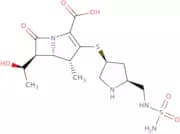
CAS:<p>Doripenem is a carbapenem antibiotic with action on bacterial cell wall synthesis and is used for treating complicated bacterial infections like intra-abdominal infections and urinary tract infections.</p>Formula:C15H24N4O6S2Purity:Min. 95%Color and Shape:White PowderMolecular weight:420.51 g/molGentamicin C2 sulfate
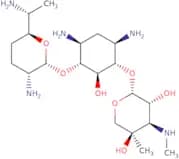
CAS:<p>Gentamicin C2 sulfate is an aminoglycoside antibiotic with action on bacterial protein synthesis inhibition and is used for treating severe bacterial infections.</p>Formula:C20H41N5O7Purity:(%) Min. 90%Color and Shape:PowderMolecular weight:463.57 g/molCurvularin
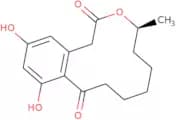
CAS:<p>Curvularin is a secondary metabolite, which is derived from the fungal genus *Curvularia*. This compound is produced through the natural biosynthetic pathways of filamentous fungi, specifically isolated from strains such as *Curvularia lunata*. Curvularin exerts its biological activity primarily through modulation of microtubule dynamics, making it a significant subject of study in cell biology. It disrupts the polymerization processes, impacting the assembly and stability of microtubules, which are critical components of the cytoskeleton involved in cell division, intracellular transport, and structural integrity.</p>Purity:Min. 95%Flucloxacillin
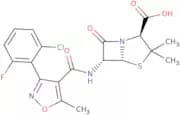
CAS:<p>Flucloxacillin is a beta-lactam antibiotic, which is derived from the penicillin family. It is synthetically produced through chemical modification to enhance its stability against beta-lactamase enzymes. The mode of action of flucloxacillin involves inhibiting bacterial cell wall synthesis. It binds to penicillin-binding proteins (PBPs) located inside the bacterial cell wall, which in turn inhibits the transpeptidation or cross-linking of peptidoglycan chains. This action leads to cell lysis and ultimately, bacterial death.</p>Formula:C19H17ClFN3O5SPurity:Min. 95%Molecular weight:453.87 g/molGusperimus trihydrochloride
CAS:<p>Gusperimus trihydrochloride is a derivative of the antitumor antibiotic spergualin with immunosuppressant activity.</p>Formula:C17H40Cl3N7O3Purity:98%Color and Shape:SolidMolecular weight:496.9