Heterocycles with Sulphur (S)
Subcategories of "Heterocycles with Sulphur (S) "
Found 1000 products of "Heterocycles with Sulphur (S) "
5-Methylthiophene-3-carbohydrazide
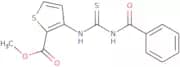
CAS:5-Methylthiophene-3-carbohydrazide is a white powder that is soluble in water and ethanol. It is used as a reagent for organic synthesis, especially for the production of heterocycles. The chemical name for 5-methylthiophene-3-carbohydrazide is methyl 3-(aminocarbonyl)-5-methylthiophenecarboxylate. It has a molecular weight of 160.06 grams per mole and a melting point of 35°C. It reacts with acid to form an N-methylthiophthalimide, which can then be reacted with various amines to produce diverse products. This compound is also used as a building block in the synthesis of complex molecules such as pharmaceuticals, agrochemicals, or fragrances.Formula:C6H8N2OSPurity:Min. 95 Area-%Color and Shape:PowderMolecular weight:156.21 g/molMethyl 3-(((phenylcarbonylamino)thioxomethyl)amino)thiophene-2-carboxylate
CAS:Please enquire for more information about Methyl 3-(((phenylcarbonylamino)thioxomethyl)amino)thiophene-2-carboxylate including the price, delivery time and more detailed product information at the technical inquiry form on this pageFormula:C14H12N2O3S2Purity:Min. 95%Color and Shape:PowderMolecular weight:320.39 g/mol2-Phenylbenzo[B]thiophene
CAS:2-Phenylbenzo[B]thiophene is a diphenyl ether that reacts with chloride in the presence of a base to produce diphenylmethane. It has been shown to bind to estrogen receptors and can be used for the treatment of estrogen-dependent cancers. 2-Phenylbenzo[B]thiophene has been shown to have anti-estrogenic properties, which may be due to its ability to compete with estrogen at the receptor binding site. In addition, it is a radical chain compound that can undergo reactions involving oxygen or nitrogen radicals. The nature of these reactions depends on the reaction products involved in the reactions. 2-Phenylbenzo[B]thiophene can react with xanthates such as diethylxanthate to produce pharmaceutical preparations such as phenyltriethyleneglycolxanthate and phenyldiethoxymethoxyethyleneglycolxanthate.
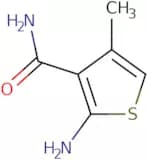
Formula:C14H10SPurity:Min. 95%Color and Shape:PowderMolecular weight:210.3 g/mol2-Amino-4-methylthiophene-3-carboxamide
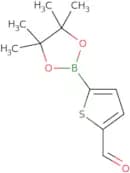
CAS:2-Amino-4-methylthiophene-3-carboxamide is a small molecule that is a potent inhibitor of the JAK2 kinase. This enzyme is associated with human fibrosis and has been shown to be involved in the development of liver fibrosis in rats. 2-Amino-4-methylthiophene-3-carboxamide inhibits the production of cytokines such as IL1α, IL6, and TNFα. It also blocks the activation of transcription factors such as NFκB, which are involved in inflammation. The compound has been shown to be orally active and has demonstrated efficacy in animal studies. Analogues have also been synthesized for this compound that show similar activity.Formula:C6H8N2OSPurity:(%) Min. 85%Color and Shape:PowderMolecular weight:156.21 g/mol5-Formyl-2-thiopheneboronic acid pinacol ester
CAS:5-Formyl-2-thiopheneboronic acid pinacol ester is a boron derivative ester that serves as a Suzuki coupling building block. It is a highly versatile building block that can be used in the synthesis of various organic compounds. This compound has been widely used in the pharmaceutical industry for the development of new drugs and other bioactive molecules. Its unique structure makes it an ideal starting material for the synthesis of complex molecules with diverse biological activities. As a key intermediate in organic synthesis, 5-Formyl-2-thiopheneboronic acid pinacol ester has become an important tool for chemists working in drug discovery, materials science, and other fields. With its exceptional reactivity and versatility, this compound is an essential building block for any chemist's toolkit.
Formula:C11H15BO3SPurity:Min. 95%Color and Shape:PowderMolecular weight:238.11 g/mol4-Methylthiophenol
CAS:4-Methylthiophenol is a colorless liquid that is soluble in water. It has a molecular weight of 98.12 and an empirical formula of C6H7O2S. 4-Methylthiophenol is used as an analytical reagent, solvent, and chemical intermediate. It exhibits hydrogen bonding interactions with sodium carbonate and trifluoroacetic acid and forms a salt with sodium carbonate. The molecule's stability increases when it interacts with amines and the presence of nucleophiles such as water or alcohols. 4-Methylthiophenol has been shown to be effective at enhancing the fluorescence signal emitted by amines, which makes it useful for laser ablation mass spectrometry (LA-MS). 4-Methylthiophenol can also be used for kinetic energy measurements using FTIR spectroscopy because it will absorb infrared light at 1680 cm−1 from the CO2 laser beam.Formula:C7H8SPurity:Min. 95%Color and Shape:White PowderMolecular weight:124.2 g/mol(6α,11β,16α,17α)-6,9-Difluoro-11-hydroxy-16-methyl-spiro[androsta-1,4-diene-17,5'-[1,3]oxathiolane]-2',3,4'-trione
CAS:(6α,11β,16α,17α)-6,9-Difluoro-11-hydroxy-16-methyl-spiro[androsta-1,4-diene-17,5'-[1,3]oxathiolane]-2',3,4'-trione is a fine chemical that can be used as a building block for the synthesis of complex compounds. This compound is also useful as a reagent and specialty chemical. (6α,11β,16α,17α)-6,9-Difluoro-11-hydroxy-16-methyl spiro[androsta-1,4 diene 17.beta., 5'(1'3'oxathiolane)] 2',3',4'-trione has been shown to be an excellent intermediate for organic reactions and may be used as a scaffold in drug design.
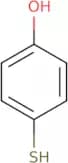
Formula:C22H24F2O5SPurity:Min. 95%Molecular weight:438.49 g/mol4-Hydroxythiophenol
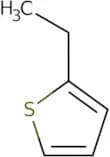
CAS:4-Hydroxythiophenol is an organic compound with the molecular formula C6H4OHO. It is a white crystalline solid that is soluble in water and ethanol. 4-Hydroxythiophenol has been shown to inhibit the growth of bacteria by reacting with free intracellular hydroxyl groups, which are necessary for the biosynthesis of cell walls. This molecule also reacts with other biological molecules, such as nucleic acids and proteins, to form covalent bonds. 4-Hydroxythiophenol has been shown to be effective against both Gram-positive and Gram-negative bacteria in vitro assays.Formula:C6H6OSPurity:(%) Min. 75%Color and Shape:PowderMolecular weight:126.18 g/mol2-Ethylthiophene
CAS:2-Ethylthiophene is a reactive, heterobicyclic compound that is used as a reagent in organic synthesis. It has been shown to have an activation energy of 51 kcal/mol. 2-Ethylthiophene has been shown to be carcinogenic in experimental models, where it was found to cause cervical cancer in mice. It is also a potent inhibitor of the sodium-dependent glucose transporter and may be effective for treating chronic bronchitis when administered with trifluoroacetic acid.Formula:C6H8SPurity:(1H-Nmr) Min. 95 Area-%Color and Shape:Yellow Clear LiquidMolecular weight:112.19 g/molMethyl-2-formyl-4-thiophenecarboxylate
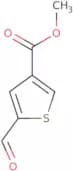
CAS:Methyl-2-formyl-4-thiophenecarboxylate is a high quality reagent that is useful as an intermediate in the synthesis of complex compounds. It has a CAS number of 67808-66-6 and can be used as a building block in the synthesis of biologically active molecules. Methyl-2-formyl-4-thiophenecarboxylate is also a versatile building block that can be used to synthesize speciality chemicals, such as research chemicals and reaction components. This chemical has been shown to have many uses in organic synthesis, including being used for the preparation of pharmaceuticals. Methyl 2 formyl 4 thiophenecarboxylate is also useful for the production of fine chemicals, such as dyes and fragrances.Formula:C7H6O3SPurity:Min. 95%Color and Shape:PowderMolecular weight:170.19 g/mol1-Benzothiophene-3-carbohydrazide
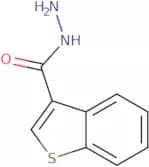
CAS:1-Benzothiophene-3-carbohydrazide (1BZC) is a small molecule that inhibits the growth of cancer cells. It acts by inhibiting the protein kinase pim-1, which is necessary for many cellular processes, including cell proliferation and cell adhesion. 1BZC has been shown to inhibit tumor growth in vivo, as well as in vitro in cancer cell lines and mouse xenografts. The drug has also been shown to disrupt tumor vascularization by targeting the protein vegfr-2. 1BZC has also been shown to be effective against two different human cancers: MDA-MB231 breast cancer cells and MKN45 gastric cancer cells. The drug has anti-proliferative activity against both cell lines and inhibits the growth of MDA-MB231 cells more than MKN45 cells.Formula:C9H8N2OSPurity:Min. 95 Area-%Color and Shape:PowderMolecular weight:192.24 g/mol2,5-Thiophenedicarboxylic acid
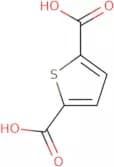
CAS:2,5-Thiophenedicarboxylic acid is an inorganic acid that is a potent inhibitor of the enzyme 2-aminoterephthalic acid (TPA) hydrolase. 2,5-Thiophenedicarboxylic acid has shown antiinflammatory activity and can be used for treating skin cancer. It has been found to inhibit the production of nitric oxide and prostaglandin E2 by inhibiting TPA hydrolase, which is required for the conversion of TPA to its active form. This inhibition causes a reduction in inflammation as well as an anticancer effect. The molecular docking analysis revealed that 2,5-thiophenedicarboxylic acid binds to the active site of TPA hydrolase with high affinity. X-ray crystal structures have revealed coordination geometry between 2,5-thiophenedicarboxylic acid and TPA hydrolase. The fluorescence probe showed thatFormula:C6H4O4SPurity:Min. 95%Color and Shape:White PowderMolecular weight:172.16 g/mol2-Amino-1-(1-aza-2-(4-methylthiophenyl)vinyl)ethene-1,2-dicarbonitrile
CAS:Please enquire for more information about 2-Amino-1-(1-aza-2-(4-methylthiophenyl)vinyl)ethene-1,2-dicarbonitrile including the price, delivery time and more detailed product information at the technical inquiry form on this page
Formula:C12H10N4SPurity:Min. 95%Color and Shape:PowderMolecular weight:242.3 g/molTicarcillin disodium
CAS:Ticarcillin is a bactericidal antibiotic that is used to treat many types of infections caused by gram-positive bacteria, such as Streptococcus pneumoniae, Enterococcus faecalis and Enterococcus faecium. Ticarcillin has been shown to be effective against antibiotic-resistant strains of bacteria, including multidrug efflux pumps. This drug also has been shown to inhibit the growth of gram-negative bacteria such as Escherichia coli and Pseudomonas aeruginosa. Ticarcillin is used in combination with clavulanic acid for the treatment of infections caused by beta-lactamase producing organisms. It is also used in wastewater treatment to inhibit the growth of gram-negative bacteria that are resistant to other antibiotics. Ticarcillin can interfere with other medications by inhibiting their metabolism through cytochrome P450 enzymes or through competition for protein binding sites.Formula:C15H16N2Na2O6S2Purity:Min. 80.0 Area-%Color and Shape:White PowderMolecular weight:430.41 g/mol3-[(Aminocarbonyl)amino]-5-[4-(morpholin-4-ylmethyl)phenyl]thiophene-2-carboxamide
CAS:3-[(Aminocarbonyl)amino]-5-[4-(morpholin-4-ylmethyl)phenyl]thiophene-2-carboxamide is a chemical inhibitor that inhibits the activity of kinases. It has been shown to be cytotoxic against cancer cells and to induce apoptosis through a number of different mechanisms. 3-[(Aminocarbonyl)amino]-5-[4-(morpholin-4-ylmethyl)phenyl]thiophene-2-carboxamide binds to DNA and induces DNA repair, which can lead to cell death. This drug also has an anti-inflammatory effect, which may be due to its ability to inhibit pro-inflammatory cytokines such as TNFα and IL1β.Formula:C17H20N4O3SPurity:Min. 95%Color and Shape:PowderMolecular weight:360.43 g/molBenzo[b]thiophene-2-carboxylic acid
CAS:A raw material for use in pharma, dye and organic synthesis industries.
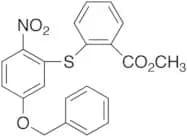
Formula:C9H6O2SPurity:Min. 95%Color and Shape:PowderMolecular weight:178.21 g/mol4-Benzyloxy-2-(2’-carbomethoxy)thiophenylnitrobenzene
CAS:Controlled ProductApplications 4-Benzyloxy-2-(2’-carbomethoxy)thiophenylnitrobenzene (cas# 329217-03-0) is a compound useful in organic synthesis.
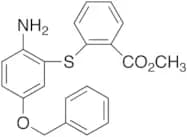
Formula:C21H17NO5SColor and Shape:YellowMolecular weight:395.434-Benzyloxy-2-(2'-carbomethoxy)thiophenylaniline
CAS:Controlled ProductApplications 4-Benzyloxy-2-(2’-carbomethoxy)thiophenylaniline (cas# 329217-05-2) is a compound useful in organic synthesis.
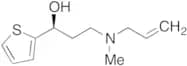
Formula:C21H19NO3SColor and Shape:NeatMolecular weight:365.45(S)-3-(Allyl(methyl)amino)-1-(thiophen-2-yl)propan-1-ol
Controlled ProductApplications (S)-3-(Allyl(methyl)amino)-1-(thiophen-2-yl)propan-1-ol is an intermediate in the syntehsis of 4-Hydroxy Duloxetine β-D-Glucuronide Sodium Salt (H941805), which is a metabolite of Duloxetine.
References Lantz, R.J., et al.: Drug Dispos. Metab., 31, 1142 (2003); Detke, M., et al.: J. Clin Psy., 63, 308 (2002); Bymaster, F.P., et al.: Bioorg. Med., Chem. Lett., 13, 4477 (2003);Formula:C11H17NOSColor and Shape:NeatMolecular weight:211.3243-Thiophenecarboxylic Acid
CAS:Controlled ProductApplications 3-Thiophenecarboxylic Acid was used as a lading compound for the development of a clinic useful D-amino acid inhibitor and have the potential to sever as active site proves to elucidate the structure-function relationships of D-amino acids.
References Katane, M., et al.: J. Med. Chem., 56, 1894 (2013)Formula:C5H4O2SColor and Shape:NeatMolecular weight:128.15


![2-Phenylbenzo[B]thiophene](/_next/image/?url=https%3A%2Fstatic.cymitquimica.com%2Fproducts%2F3D%2Fthumb-webp%2FFP67001.webp&w=3840&q=75)

![(6α,11β,16α,17α)-6,9-Difluoro-11-hydroxy-16-methyl-spiro[androsta-1,4-diene-17,5'-[1,3]oxathiolane…](/_next/image/?url=https%3A%2Fstatic.cymitquimica.com%2Fproducts%2F3D%2Fthumb-webp%2FFD103607.webp&w=3840&q=75)

![3-[(Aminocarbonyl)amino]-5-[4-(morpholin-4-ylmethyl)phenyl]thiophene-2-carboxamide](/_next/image/?url=https%3A%2Fstatic.cymitquimica.com%2Fproducts%2F3D%2Fthumb-webp%2FFA18119.webp&w=3840&q=75)
![Benzo[b]thiophene-2-carboxylic acid](/_next/image/?url=https%3A%2Fstatic.cymitquimica.com%2Fproducts%2F3D%2Fthumb-webp%2FFB01173.webp&w=3840&q=75)