Heterocycles with Oxygen (O)
Heterocycles with oxygen atoms are a class of organic compounds where one or more oxygen atoms are part of the ring structure. These compounds are essential in the synthesis of pharmaceuticals, agrochemicals, and materials due to their unique reactivity and stability. Oxygen-containing heterocycles are used in various applications, including drug development and polymer science. At CymitQuimica, we offer a wide range of high-quality oxygen-containing heterocycles to support your research and industrial needs.
Subcategories of "Heterocycles with Oxygen (O)"
- Dioxanes(197 products)
- Dioxolane(634 products)
- Dioxoles(174 products)
- Furan(3,715 products)
- Isoxazole(1,086 products)
- Oxepanes(21 products)
- Pyrans(2,323 products)
- Trioxan(2 products)
Found 749 products of "Heterocycles with Oxygen (O)"
Sort by
Purity (%)
0
100
|
0
|
50
|
90
|
95
|
100
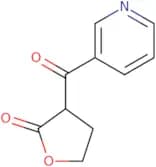
Dihydro-3-(3-pyridoyl)-2-(3H)-furanone
CAS:Please enquire for more information about Dihydro-3-(3-pyridoyl)-2-(3H)-furanone including the price, delivery time and more detailed product information at the technical inquiry form on this pageFormula:C10H9NO3Purity:Min. 95%Molecular weight:191.18 g/mol5-Amino-1-β-D-ribofuranosyl-1H-imidazole-4-carboxamide
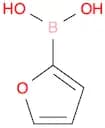
CAS:Formula:C9H14N4O5Purity:95%Color and Shape:SolidMolecular weight:258.2313Boronic acid, B-2-furanyl-
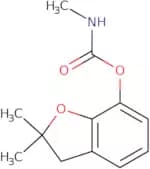
CAS:Formula:C4H5BO3Purity:97%Color and Shape:SolidMolecular weight:111.8917Carbofuran
CAS:Controlled Product<p>Carbofuran is a broad-spectrum insecticide that belongs to the class of carbamates. It is used to control insects that damage crops and other plants. The mechanism of action for carbofuran involves inhibition of the sorbitol dehydrogenase enzyme, which blocks the conversion of glucose to sorbitol in insects, leading to their death. Carbofuran also has synergistic effects with nitrite ions. Carbofuran's chemical name is 3-methyl-2-(methylthio)propanal O-carbamate. It has been shown that carbofuron causes oxidative injury in mitochondria by inhibiting mitochondrial functions and energy metabolism, leading to its acute toxicities at high doses.</p>Formula:C12H15NO3Purity:Min. 98.0 Area-%Color and Shape:White PowderMolecular weight:221.25 g/molRef: 3D-FC19714
Discontinued productmethyl 5-(((4-bromophenyl)sulfonyl)methyl)furan-2-carboxylate
CAS:<p>Please enquire for more information about methyl 5-(((4-bromophenyl)sulfonyl)methyl)furan-2-carboxylate including the price, delivery time and more detailed product information at the technical inquiry form on this page</p>Purity:Min. 95%Ref: 3D-FM169416
Discontinued product(17R)-4-Chloro-5-ethyl-9-fluoro-11b-hydroxy-16b-methylspiro[androsta-1,4-diene-17,2(3H)-furan]-3,3-dione
CAS:<p>Clobetasol propionate is an organic acid with a chemical structure that is stable in pharmaceutical preparations. It is used to treat inflammatory skin disorders such as psoriasis and atopic dermatitis. Clobetasol propionate is an impurity of clobetasol, which has been shown to be chemically stable in preparations. The clobetasol propionate compound has been found to be more potent than other topical corticosteroids for the treatment of plaque psoriasis and atopic dermatitis.</p>Formula:C25H30ClFO4Purity:Min. 95%Molecular weight:448.95 g/molRef: 3D-FF103612
Discontinued productSamarium(II) Iodide (ca. 0.1mol/L in Tetrahydrofuran)
CAS:<p>Samarium(II) iodide is a synthetic carbonyl, soluble in acetonitrile, dioxolane and formyl. It is used as a reactant in preparative methods to produce alkyl halides. Samarium(II) iodide reacts with an aldehyde or ketone in the presence of acetic acid to produce an alkyl halide. This compound has chemoselectivity for the production of secondary alcohols and can be used to prepare coupling products. Samarium(II) iodide can also be used to prepare alkene and ketone compounds by reacting with formaldehyde and acetone respectively.</p>Formula:SmI2Purity:Min. 95%Molecular weight:404.17 g/molRef: 3D-FS61157
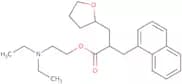
Discontinued productTetrahydro-a-(1-naphthalenylmethyl)-2-furanpropanoic Acid 2-(Diethylamino)ethyl Ester
CAS:Controlled Product<p>Tetrahydro-a-(1-naphthalenylmethyl)-2-furanpropanoic Acid 2-(Diethylamino)ethyl Ester is a fatty acid analog that has antimicrobial properties. It is used in the treatment of bone cancer, and can be used to diagnose and treat other diseases such as glomerular filtration rate, receptor binding, and malonic acid. Tetrahydro-a-(1-naphthalenylmethyl)-2-furanpropanoic Acid 2-(Diethylamino)ethyl Ester binds to receptors on cells, which leads to an increase in the amount of monoamine neurotransmitters released by the cells.</p>Formula:C24H33NO3Purity:Min. 95%Molecular weight:383.52 g/molRef: 3D-FT26121
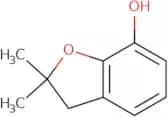
Discontinued product2,3-Dihydro-2,2-dimethyl-7-hydroxybenzofuran
CAS:<p>2,3-Dihydro-2,2-dimethyl-7-hydroxybenzofuran is a human metabolite of carbofuran and has been shown to be an inhibitor of acetylcholinesterase. The bacterial strain CECT 4384 was used to produce the monoclonal antibody against 2,3-dihydro-2,2-dimethyl-7-hydroxybenzofuran. The monoclonal antibody was then purified by a technique called hybridoma cell line. This technique is a way to purify antibodies that are produced by hybridoma cells. It involves incubating the antibodies with an antigen such as 2,3-dihydro-2,2-dimethyl-7-hydroxybenzofuran in order to bind it and remove it from the solution. When the antibody binds to the antigen, it changes its shape and can be removed from the solution with a magnet or other device</p>Formula:C10H12O2Purity:Min. 95%Color and Shape:Clear LiquidMolecular weight:164.2 g/molRef: 3D-FD67082
Discontinued product



![(17R)-4-Chloro-5-ethyl-9-fluoro-11b-hydroxy-16b-methylspiro[androsta-1,4-diene-17,2(3H)-furan]-3,3…](/_next/image/?url=https%3A%2Fstatic.cymitquimica.com%2Fproducts%2F3D%2Fthumb-webp%2FFF103612.webp&w=3840&q=75)