Heterocycles with Nitrogen (N)
In this category, you will find a wide variety of nitrogen-containing heterocycles. Heterocycles are carbon chains that form a cycle in which at least one position is occupied by a heteroatom, in this case, nitrogen. These compounds are integral in the synthesis of pharmaceuticals, agrochemicals, and dyes, offering unique reactivity and stability. At CymitQuimica, we provide a comprehensive selection of high-quality nitrogen-containing heterocycles to support your research and industrial applications
Subcategories of "Heterocycles with Nitrogen (N)"
- Azepane(434 products)
- Benzotriazoles(436 products)
- Diazepanes(331 products)
- Imidazoles(4,011 products)
- Imidazolines(385 products)
- Isoxazole(1,077 products)
- Piperazines(3,736 products)
- Piperidines(8,405 products)
- Pyrazines(1,299 products)
- Pyrazole(5,921 products)
- Pyrazolidine(21 products)
- Pyrazoline(142 products)
- Pyridazine(856 products)
- Pyridines(21,917 products)
- Pyrimidine(6,041 products)
- Pyrroles(2,443 products)
- Pyrrolidines(5,816 products)
- Pyrroline(48 products)
- Pyrrolo[1,2-b]pyridazine(10 products)
- Tetrazole(510 products)
- Triazines(462 products)
- Triazoles(1,680 products)
Show 14 more subcategories
Found 17855 products of "Heterocycles with Nitrogen (N)"
Sort by
Purity (%)
0
100
|
0
|
50
|
90
|
95
|
100
1-Boc-2-methyl (2R,3S)-3-hydroxypyrrolidine-2-carboxylate
CAS:<p>Please enquire for more information about 1-Boc-2-methyl (2R,3S)-3-hydroxypyrrolidine-2-carboxylate including the price, delivery time and more detailed product information at the technical inquiry form on this page</p>Formula:C11H19NO5Purity:Min. 95%Molecular weight:245.27 g/mol4,6-Dichloro-5-nitropyrimidine
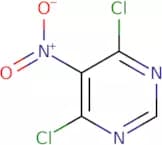
CAS:<p>4,6-Dichloro-5-nitropyrimidine is an intermediate in the synthesis of Tenofovir, a nucleophilic drug that inhibits HIV. It is produced by the reaction of chloride with amines and nitro compounds in the presence of ammonium chloride. 4,6-Dichloro-5-nitropyrimidine has been shown to have anticancer activity against human lymphocytes and other cancer cells. It can also be used for the treatment of AIDS. The biological properties of this compound are dose dependent and are dependent on the size of chlorine atoms attached to nitrogen atoms.</p>Formula:C4HCl2N3O2Purity:Min. 95%Color and Shape:Yellow PowderMolecular weight:193.98 g/mol5-Chloro-2-formylpyridine
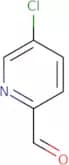
CAS:<p>5-Chloro-2-formylpyridine is a peroxide that reacts with pyridine rings to form epoxides. It has been shown to be a potent oxidant and is used in the synthesis of epoxides. 5-Chloro-2-formylpyridine can also react with imidazoles and form tetradentate ligands, which are compounds that bind to metals. This chemical has selectivity for carboxylic acid groups, hydrogen peroxide, alkene, and piperazine. Irradiation of 5-chloro-2-formylpyridine yields an epoxide group on the pyridine ring.</p>Formula:C6H4NOClPurity:Min. 95%Molecular weight:141.55 g/mol4-Amino-N-(4-methylpyrimidin-2-yl)benzenesulfonamide
CAS:<p>4-Amino-N-(4-methylpyrimidin-2-yl)benzenesulfonamide (AMBPS) is a sulfonamide antimicrobial agent that belongs to the group of sulfa drugs. It is a potent inhibitor of tetracycline resistance in bacterial cells, and has been shown to be effective against infectious diseases such as tuberculosis, leprosy and pneumonia. AMBPS has also been used in wastewater treatment and biological studies with high values. This drug binds to sulfamerazine, which inhibits bacterial growth by inhibiting RNA synthesis. The hydrogen bonding interactions between AMBPS and sulfadiazine are thought to be responsible for the effects on congestive heart failure.</p>Formula:C11H12N4O2SPurity:Min. 95%Molecular weight:264.3 g/mol2-Phenylpyridine
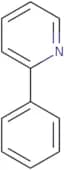
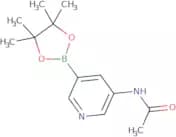
CAS:<p>2-Phenylpyridine is a heterocyclic organic compound that has been shown to have x-ray crystal structures. It has redox potentials, nitrogen atoms, and a fatty acid group attached. 2-Phenylpyridine has been shown to have nmr spectra that are characteristic of a transfer reaction mechanism. The steric interactions and the biphenyl groups have been shown to have ancillary effects on the reaction mechanism. 2-Phenylpyridine is also known to coordinate in a geometric shape called octahedral, which is most likely due to hydrogen bonding and photophysical properties. The analytical chemistry of this molecule consists of determining its melting point, boiling point, and density. 2-phenylpyridine</p>Formula:C11H9NPurity:Min. 95%Molecular weight:155.2 g/molN-(5-(4,4,5,5-Tetramethyl-1,3,2-dioxaborolan-2-yl)pyridin-3-yl)acetamide
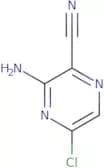
CAS:<p>Please enquire for more information about N-(5-(4,4,5,5-Tetramethyl-1,3,2-dioxaborolan-2-yl)pyridin-3-yl)acetamide including the price, delivery time and more detailed product information at the technical inquiry form on this page</p>Formula:C13H19BN2O3Purity:Min. 95%Molecular weight:262.11 g/mol3-Amino-5-chloropyrazine-2-carbonitrile
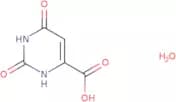
CAS:<p>Please enquire for more information about 3-Amino-5-chloropyrazine-2-carbonitrile including the price, delivery time and more detailed product information at the technical inquiry form on this page</p>Formula:C5H3ClN4Purity:Min. 95%Molecular weight:154.56 g/molOrotic acid hydrate
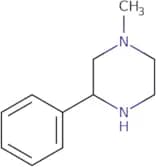
CAS:<p>Orotic acid hydrate is a synthetic compound that is designed to be a growth regulator. Orotic acid hydrate is synthesized by reacting the orotate with pyridoxine hydrochloride, followed by crystallizing the product. Hydrogen bonds form between the water molecules and fatty acids in the crystals of OA hydrate. These hydrogen bonds stabilize the crystal structure and allow for its use as a growth regulator. The stability of this molecule can also be attributed to its ability to form hydrogen bonds with other molecules such as α-tocopherol, calcium carbonate, and synthetic cannabinoids. Orotic acid hydrate has been shown to have an effect on cancer cells because it reacts with daunorubicin in solution and inhibits DNA synthesis, inhibiting cell growth.</p>Formula:C5H4N2O4·H2OPurity:Min. 95 Area-%Color and Shape:PowderMolecular weight:174.11 g/mol1-Methyl-3-phenyl-piperazine
CAS:<p>1-Methyl-3-phenylpiperazine is a molecule with the chemical formula C6H14N2. It is an amide that belongs to the group of hexanes. 1-Methyl-3-phenylpiperazine is a colorless liquid with a strong ammonia odor and an irritating effect on skin. The molecule has been tested in vivo and found to be irritants when applied to the skin of rabbits, and can cause severe irritation when injected into the eyes of rabbits or rats. 1-Methyl-3-phenylpiperazine is not soluble in water but can be dissolved in ethanolamine, dimethyl sulfoxide, acetone, or chloroform.</p>Formula:C11H16N2Purity:Min. 95%Color and Shape:PowderMolecular weight:176.26 g/mol2,5-Diaminopyridine
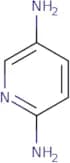
CAS:<p>2,5-Diaminopyridine is an organic compound that is expressed in the human body. It has been shown to inhibit the growth of cells in culture by binding to their DNA and preventing the production of hydrogen bonds. 2,5-Diaminopyridine has also been used clinically to treat inflammatory diseases such as rheumatoid arthritis. The hydrogen bond formation and inhibition of cell growth occurs at a low concentration of 2,5-Diaminopyridine. This drug may have potential as a therapeutic agent for cancer treatment because it inhibits the transcription factor CXCR4.</p>Formula:C5H7N3Purity:Min. 98.0 Area-%Color and Shape:Yellow To Purple To Brown SolidMolecular weight:109.13 g/mol4-(Benzyloxy)piperidine HCl
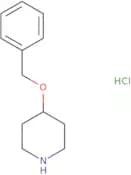
CAS:<p>4-(Benzyloxy)piperidine HCl is a versatile building block that is used in the synthesis of complex compounds such as research chemicals, reagents and speciality chemicals. 4-(Benzyloxy)piperidine HCl is also a useful intermediate in organic synthesis and can be used as a reaction component. 4-(Benzyloxy)piperidine HCl has CAS number 81151-68-0 and is a useful scaffold for chemical syntheses.</p>Formula:C12H17NOHClPurity:Min. 95%Color and Shape:White PowderMolecular weight:227.73 g/mol3-Hydroxy-2-nitropyridine
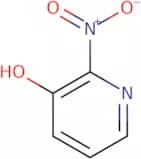
CAS:<p>3-Hydroxy-2-nitropyridine is a chemical compound that has been shown to be an inhibitor of nicotinic acetylcholine receptor. The compound has been found to have luminescence properties and can be used as a fluorescent probe in the study of molecular recognition processes. 3-Hydroxy-2-nitropyridine is also an effective antimicrobial agent and has been shown to have clinical potential for the treatment of neurodegenerative diseases such as Parkinson's disease, Alzheimer's disease, and Huntington's disease. It binds to the nicotinic acetylcholine receptor by forming hydrogen bonds with functional groups on the receptor surface. This binding prevents the agonist from binding and activating the ion channel that leads to depolarization of nerve cells. 3-Hydroxy-2-nitropyridine also reacts with chloride ions in order to form hydrochloric acid, which then inhibits microbial growth by altering their cell membrane permeability. The reaction yield is determined</p>Formula:C5H4N2O3Purity:Min. 95%Molecular weight:140.1 g/mol5-Aminopyridine-3-carboxylic acid
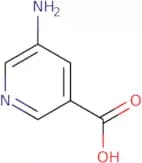
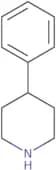
CAS:<p>5-Aminopyridine-3-carboxylic acid (5APC) is a structural analog of nicotinic acid that has been shown to have anti-inflammatory effects. 5APC inhibits the production of inflammatory cytokines, such as IL-10 and IL-17, by inhibiting the activation of NFκB and MAPK pathways. This drug also has significant inhibitory activities against dextran sulfate sodium (DSS)-induced acute colitis in experimental models. 5APC is thought to act by interrupting the assembly of p38 mitogen activated protein kinase (MAPK) and nuclear factor kappa B (NFκB) signaling complexes.</p>Formula:C6H6N2O2Purity:Min. 95%Molecular weight:138.12 g/mol4-Phenyl-piperidine
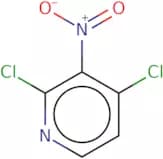
CAS:<p>4-Phenyl-piperidine is a nitro compound that has been shown to be toxic for the kidneys and nervous system. 4-Phenyl-piperidine has been shown to inhibit dopamine uptake in the striatum and locomotor activity in rats. It also inhibits the hydrolysis of hydrochloric acid, which produces hydrogen ion (H+) ions, resulting in an acidic environment. The chemical structures of 4-phenyl-piperidine are similar to those of tricyclic antidepressants drugs, such as amitriptyline and imipramine, with a phenyl ring attached to an amine group. This drug is used as a pharmaceutical preparation for treating depression by inhibiting the reuptake of serotonin and norepinephrine, which are neurotransmitters that affect mood.</p>Formula:C11H15NPurity:Min. 95%Molecular weight:161.24 g/mol2,4-Dichloro-3-nitropyridine
CAS:<p>2,4-Dichloro-3-nitropyridine is a halogenated pyridinium salt that has been shown to inhibit the influenza virus in vitro. This compound is also reactive with nucleophilic groups such as amines, alcohols, and thiols. 2,4-Dichloro-3-nitropyridine has been used for the synthesis of quinoline derivatives that have potential applications in autoimmune diseases or cancer. 2,4-Dichloro-3-nitropyridine has also been found to be an inhibitor of tumor necrosis factor alpha (TNFα) production by LPS stimulated human monocytes.</p>Formula:C5H2Cl2N2O2Purity:Min. 95%Color and Shape:White PowderMolecular weight:192.99 g/mol(-)-(2R,5S)-1-Allyl-2,5-dimethylpiperazine
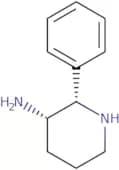
CAS:<p>(-)-(2R,5S)-1-Allyl-2,5-dimethylpiperazine is a novel analog of benzyl alcohols that binds to the delta opioid receptor. The compound was found to be an agonist in vitro and in vivo. It showed no affinity for other opioid receptors or for the benzodiazepine receptor. (-)-(2R,5S)-1-Allyl-2,5-dimethylpiperazine was found to have high affinity for the human cloned delta opioid receptor with a Ki value of 0.6 nM. This compound is also a potent alkylate inhibitor with an IC50 of 6 microM against ethoxy radical formation and an IC50 of 25 microM against lipid peroxidation induced by H2O2.</p>Formula:C9H18N2Purity:Min. 95%Molecular weight:154.25 g/mol(2S,3S)-(-)-3-Amino-2-phenylpiperidine
CAS:<p>The process of asymmetric epoxidation is used to convert alkenes into epoxides in a single step. This reaction is catalyzed by the use of a chiral catalyst with an enantiomeric excess (ee) greater than 50%. The reactants are added to the catalyst and hydrogen peroxide, which oxidizes the alkenes. The resulting epoxides can be isolated from the reaction mixture by distillation or extraction. Factors that affect this reaction include the type of reactant, solvent, temperature, and pressure.</p>Formula:C11H16N2Purity:Min. 95%Molecular weight:176.26 g/moltert-Butyl 6-amino-3-azabicyclo[3.1.0]hexane-3-carboxylate
CAS:<p>Please enquire for more information about tert-Butyl 6-amino-3-azabicyclo[3.1.0]hexane-3-carboxylate including the price, delivery time and more detailed product information at the technical inquiry form on this page</p>Formula:C10H18N2O2Purity:Min. 95%Molecular weight:198.26 g/mol8-Hydroxyquinoline hemisulfate salt hemihydrate
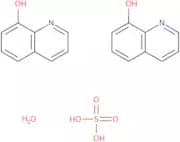
CAS:<p>8-Hydroxyquinoline is a sweet, water soluble, and heat stable inhibitor that has been used in the treatment of kidney disease. 8-Hydoxyquinoline has been shown to inhibit the growth of the rootstock Asiaticus by interfering with cell metabolism. It is also an insecticide that kills insects by causing damage to their cells. 8-Hydoxyquinoline inhibits polymerase chain reaction (PCR) by binding to DNA polymerase, blocking its activity and reducing its ability to synthesize DNA. This drug is also a potent blocker of angiotensinogen synthesis, which leads to reduced blood pressure levels.</p>Formula:C9H7NOH2SO4H2OColor and Shape:Yellow PowderMolecular weight:203.21 g/mol1-Pyridin-2-ylmethylpiperidine-4-carboxylic acid
CAS:<p>Please enquire for more information about 1-Pyridin-2-ylmethylpiperidine-4-carboxylic acid including the price, delivery time and more detailed product information at the technical inquiry form on this page</p>Formula:C12H16N2O2Purity:Min. 95%Molecular weight:220.27 g/mol




![tert-Butyl 6-amino-3-azabicyclo[3.1.0]hexane-3-carboxylate](/_next/image/?url=https%3A%2Fstatic.cymitquimica.com%2Fproducts%2F3D%2Fthumb-webp%2FFM161190.webp&w=3840&q=75)