Hydrocarbon Building Blocks
Hydrocarbon building blocks are organic compounds consisting solely of carbon and hydrogen atoms. These fundamental structures serve as the basis for synthesizing a wide variety of complex molecules. Hydrocarbon building blocks are used in the development of pharmaceuticals, polymers, and other organic compounds. At CymitQuimica, we offer a broad range of high-quality hydrocarbon building blocks to facilitate your synthetic and research projects.
Subcategories of "Hydrocarbon Building Blocks"
Found 5575 products of "Hydrocarbon Building Blocks"
Sort by
Purity (%)
0
100
|
0
|
50
|
90
|
95
|
100
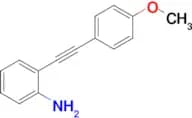
2-((4-Methoxyphenyl)ethynyl)aniline
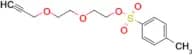
CAS:Formula:C15H13NOPurity:97.0%Color and Shape:SolidMolecular weight:223.2752-(2-(Prop-2-yn-1-yloxy)ethoxy)ethyl 4-methylbenzenesulfonate
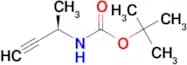
CAS:Purity:98%Molecular weight:298.3500061(R)-tert-Butyl but-3-yn-2-ylcarbamate
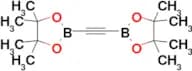
CAS:Formula:C9H15NO2Purity:98%Color and Shape:SolidMolecular weight:169.2241,2-Bis(4,4,5,5-tetramethyl-1,3,2-dioxaborolan-2-yl)ethyne
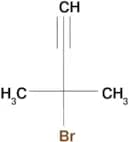
CAS:Purity:98+%Molecular weight:277.95999153-BROMO-3-METHYLBUT-1-YNE
CAS:Formula:C5H7BrPurity:95.0%Color and Shape:LiquidMolecular weight:147.0152-ethynyl-2,6,6-trimethyltetrahydro-2H-pyran
CAS:Formula:C10H16OPurity:95.0%Color and Shape:LiquidMolecular weight:152.2372-(Chloromethyl)-N,N-diethyl-1,4-dihydro-5-methyl-4-oxothieno[2,3-d]pyrimidine-6-carboxamide
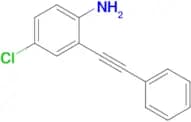
CAS:Purity:97%Molecular weight:313.84-Chloro-2-(phenylethynyl)aniline
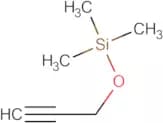
CAS:Formula:C14H10ClNPurity:97%Color and Shape:SolidMolecular weight:227.69O-Trimethylsilylpropargyl alcohol
CAS:<p>S20125 - O-Trimethylsilylpropargyl alcohol</p>Formula:C6H12OSiPurity:97%Color and Shape:Clear to straw liquidMolecular weight:128.246(R)-7-(But-2-ynyl)-8-(3-(1,3-dioxoisoindolin-2-yl)piperidin-1-yl)-3-methyl-1-((4-methylquinazolin-2-yl)methyl)-1H-purine-2,6(3H,7H)-dione
CAS:Purity:98%Molecular weight:602.65502935-((3aS,4S,6aR)-2-Oxohexahydro-1H-thieno[3,4-d]imidazol-4-yl)-N-(3,6,9,12-tetraoxapentadec-14-yn-1-yl)pentanamide
CAS:Purity:95%Molecular weight:457.5899963[(R)-(+)-2,2’-bis(diphenylphosphino)-1,1’-binaphthyl][(1S,2S)-(-)-1,2-diphenylethylenediamine]RuCl2
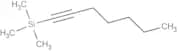
CAS:Purity:98%Molecular weight:1006.951-Heptynyltrimethylsilane
CAS:<p>S09310 - 1-Heptynyltrimethylsilane</p>Formula:C10H20SiColor and Shape:LiquidMolecular weight:168.355Ref: 10-F640814
1g636.00€5g2,200.00€10g3,262.00€2.5g1,144.00€50mg144.00€100mg210.00€250mg285.00€500mg495.00€3-Ethynylbenzoic acid
CAS:Formula:C9H6O2Purity:95%Color and Shape:Solid, White to off-white colour powderMolecular weight:146.145(3,3-Diethoxyprop-1-yn-1-yl)benzene
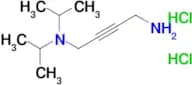
CAS:Purity:≥98%Color and Shape:LiquidMolecular weight:204.2689972N,N-diisopropylbut-2-yne-1,4-diamine dihydrochloride
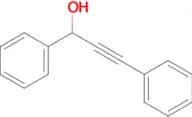
CAS:Formula:C10H22Cl2N2Purity:95.0%Molecular weight:241.21,3-Diphenylprop-2-yn-1-ol
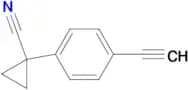
CAS:Purity:90% tech gradeColor and Shape:SolidMolecular weight:208.25999451-(4-ETHYNYLPHENYL)CYCLOPROPANE-1-CARBONITRILE
CAS:Formula:C12H9NPurity:95.0%Molecular weight:167.211(3-Ethynylphenyl)methanamine
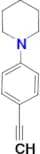
CAS:Formula:C9H9NPurity:96%Color and Shape:LiquidMolecular weight:131.1784′-N-Piperidinophenyl acetylene
CAS:Formula:C13H15NPurity:98%Color and Shape:SolidMolecular weight:185.271-(4-ETHYNYLPHENYL)CYCLOPROPANE-1-CARBOXYLIC ACID
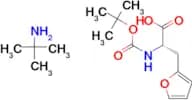
CAS:Formula:C12H10O2Purity:95.0%Molecular weight:186.212-Methylpropan-2-amine (S)-2-((tert-butoxycarbonyl)amino)-3-(furan-2-yl)propanoate
CAS:Purity:98%Molecular weight:328.409Vinylcyclopropane
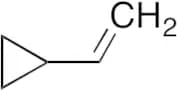
CAS:Controlled Product<p>Stability Highly Volatile<br>Applications Vinylcyclopropane is a useful synthetic intermediate. Vinylcyclopropane and its derivatives can participate in a variety of transition-metal-catalyzed multicomponent cycloadditions to produce five- to eight-membered carbocycles.<br>References Jiao, L., et al.: J. Org. Chem., 78, 6842 (2013); Pasto, D., et al.: Tetrahedron Lett., 9, 713 (1979); Larock, R., et al.: Tetrahedron, 52, 2743 (1996)<br></p>Formula:C5H8Color and Shape:NeatMolecular weight:68.127-Octyn-1-ol
CAS:Controlled Product<p>Applications 7-Octyn-1-ol is used in the synthesis of the sex pheromone of the citrus leafminer, Phyllocnistis citrella.<br>References Ando, T., et al.: Agric. Biol. Chem., 49, 3633 (1985), Beevor, P., et al.: J. Chem. Ecol., 12, 1 (1986), Kerr, D., et al.: J. Med. Chem., 33, 1958 (1990), McElfresh, J., et al.: Ecology, 82, 3505 (2002),<br></p>Formula:C8H14OColor and Shape:NeatMolecular weight:126.202,2,4,4,6,8,8-Heptamethylnonane
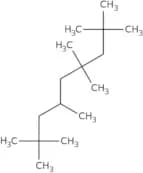
CAS:<p>2,2,4,4,6,8,8-Heptamethylnonane is a hydrogenated form of 2-methylnonane. It is used as a model system for fatty acids in order to study the kinetics of air entrainment and constant pressure distillation. The chemical stability of 2,2,4,4,6,8,8-heptamethylnonane has been shown to be excellent when heated at 200°C under nitrogen. This compound can also be used as an analytical method for ethylene diamine in pharmaceutical preparations of sodium salts and boron nitride. The use of 2-methylnonane as a starting material may lead to the production of chinese herb by reacting with acetic acid or formic acid.</p>Formula:C16H34Purity:Min. 95%Color and Shape:PowderMolecular weight:226.44 g/molChlorobutanol
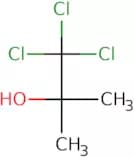
CAS:<p>Chlorobutanol is an antimicrobial agent that is used in the preservation of pharmaceuticals, cosmetics, and other products. It has been shown to be effective against a variety of bacterial and fungal organisms. Chlorobutanol is also used as a preservative in topical ophthalmic preparations. In addition, chlorobutanol has been found to be a potent inhibitor of histone deacetylase (HDAC) activity, which may be due to its ability to bind to the active site of HDACs. This binding prevents acetylation of lysine residues on histones, thereby preventing transcriptional activation.</p>Formula:C4H7OCl3Purity:Min. 95%Color and Shape:White To Off-White SolidMolecular weight:177.46 g/molN-Methyl-1,1,1-trifluoro-2-propylamine hydrochloride
CAS:<p>Please enquire for more information about N-Methyl-1,1,1-trifluoro-2-propylamine hydrochloride including the price, delivery time and more detailed product information at the technical inquiry form on this page</p>Formula:C4H9ClF3NPurity:Min. 95%Molecular weight:163.57 g/molPerfluoroheptanoyl chloride
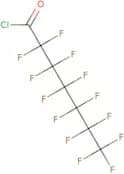
CAS:<p>Perfluoroheptanoyl chloride is a fluorinated hydrocarbon that is used as a surfactant in detergent compositions. It has been shown to be biostable, which means it does not react with other molecules in the environment. This compound also has low environmental toxicity because of its resistance to peroxidation and its ability to form stable complexes with metals. Perfluoroheptanoyl chloride has been shown to cause allergic reactions in some people and may cause adverse effects on animal health. Research on the effects of perfluoroheptanoyl chloride on Xenopus oocytes has demonstrated that this compound can affect gene expression and result in cell death.</p>Formula:C7CIF13OPurity:Min. 95%Color and Shape:Colourless LiquidMolecular weight:382.51 g/mol1,4,7-Triazacyclononane trihydrochloride
CAS:<p>1,4,7-Triazacyclononane trihydrochloride is a coordination compound that belongs to the class of ligands. It is a chelate ring with six phosphate groups and six nitrogen atoms. It has been shown to behave as an irreversible oxidation catalyst for carboxylate and amine molecules. This molecule also has redox potentials in the range of -0.35 to -0.5 volts and can reversibly oxidize inorganic acids with strong electron-donating properties such as phosphoric acid, nitric acid, and sulfuric acid. 1,4,7-Triazacyclononane trihydrochloride has been shown to be effective as a hydrogen bonding agent in x-ray crystal structures.</p>Formula:C6H15N3·3HClPurity:Min. 95%Color and Shape:Off-White PowderMolecular weight:238.59 g/mol2-Nitropropane
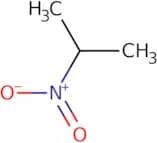
CAS:<p>2-Nitropropane is a pharmacological agent that is used for the treatment of bacterial infections. It is a nitroalkane, which are compounds with nitro groups in their molecular structure. 2-Nitropropane has been shown to inhibit DNA synthesis by binding to nuclear dna and inhibiting enzyme activities in vitro. Toxicological studies on 2-nitropropane have been conducted and show that it does not cause any adverse effects at low doses. The mechanism of action for 2-nitropropane has been investigated and found to inhibit the enzyme activity of nitrate reductase, which leads to an accumulation of the toxic nitrite ion (NO2-) in cells.</p>Formula:C3H7NO2Purity:Min. 95%Color and Shape:Colorless PowderMolecular weight:89.09 g/molDocosane
CAS:<p>Please enquire for more information about Docosane including the price, delivery time and more detailed product information at the technical inquiry form on this page</p>Formula:C22H46Purity:Min. 95%Molecular weight:310.6 g/molHexabromoethane
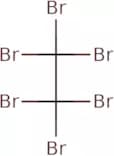
CAS:<p>Hexabromoethane is a metal chelate that has been shown to activate the polymerization of cyclohexane rings. It is often used as a light-sensitive initiator for the production of polymers, such as polyethylene. Hexabromoethane can also be found in some halogenated compounds and hydroxyl groups. The molecule is made up of six bromine atoms, an ethane chain, and one hydrogen atom. Hexabromoethane has significant interactions with other functional groups, including hydroxyls and monomers.</p>Formula:C2Br6Purity:Min. 95%Color and Shape:PowderMolecular weight:503.45 g/molMethanesulfonic anhydride
CAS:<p>Methanesulfonic anhydride is a white crystalline solid that is soluble in water and ethanol. It has been shown to be a potent inhibitor of acetaminophen metabolism and the formation of reactive metabolites. Methanesulfonic anhydride inhibits the metabolic activity of cytochrome P450 enzymes, which are responsible for the oxidation of acetaminophen. This inhibition leads to lower levels of toxic metabolites and less tissue damage. Methanesulfonic anhydride also modulates other assays, such as those for nitric oxide synthase and prostaglandin E2 receptors. Methanesulfonic anhydride is used as a catalyst in chemical reactions, including those that produce hydrogen sulfide gas for use in gold mining. It has also been used to study the localization of various proteins by using probes labeled with methanesulfonic anhydride. Methanesulfonic anhydride may cause hypertension due to its ability to inhibit the degradation of norepinephrine, leading to increased</p>Formula:C2H6O5S2Purity:Min. 95%Color and Shape:PowderMolecular weight:174.2 g/mol









![2-(Chloromethyl)-N,N-diethyl-1,4-dihydro-5-methyl-4-oxothieno[2,3-d]pyrimidine-6-carboxamide](/_next/image/?url=https%3A%2Fstatic.cymitquimica.com%2Fproducts%2F10%2Fthumb-webp%2FF988262.webp&w=3840&q=75)


![5-((3aS,4S,6aR)-2-Oxohexahydro-1H-thieno[3,4-d]imidazol-4-yl)-N-(3,6,9,12-tetraoxapentadec-14-yn-1…](/_next/image/?url=https%3A%2Fstatic.cymitquimica.com%2Fproducts%2F10%2Fthumb-webp%2FF695686.webp&w=3840&q=75)

![[(R)-(+)-2,2’-bis(diphenylphosphino)-1,1’-binaphthyl][(1S,2S)-(-)-1,2-diphenylethylenediamine]RuCl2](/_next/image/?url=https%3A%2Fstatic.cymitquimica.com%2Fproducts%2F10%2Fthumb-webp%2FF986680.webp&w=3840&q=75)










![2-BOC-7-ETHYNYL-2-AZASPIRO[3.5]NONANE](/_next/image/?url=https%3A%2Fstatic.cymitquimica.com%2Fproducts%2F10%2Fthumb-webp%2FF801241.webp&w=3840&q=75)