Hydrocarbon Building Blocks
Subcategories of "Hydrocarbon Building Blocks"
Found 5597 products of "Hydrocarbon Building Blocks"
3-((Trimethylsilyl)ethynyl)aniline
CAS:Formula:C11H15NSiPurity:98%Color and Shape:LiquidMolecular weight:189.333[4-(2-propyn-1-yloxy)phenyl]amine
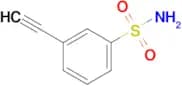
CAS:Formula:C9H9NOPurity:97%Color and Shape:Solid, Brown powderMolecular weight:147.1773-Ethynylbenzenesulfonamide
CAS:Formula:C8H7NO2SPurity:98%Color and Shape:SolidMolecular weight:181.21N,4-dimethyl-N-((trimethylsilyl)ethynyl)benzenesulfonamide
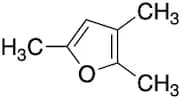
CAS:Purity:98%Molecular weight:281.45001222,3,5-Trimethylfuran
CAS:Controlled ProductApplications 2,3,5-Trimethylfuran (cas# 10504-04-8) is a useful research chemical.
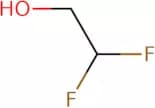
Not a dangerous good if item is equal to or less than 1g/ml and there is less than 100g/ml in the packageFormula:C7H10OColor and Shape:NeatMolecular weight:110.152,2-Difluoroethanol
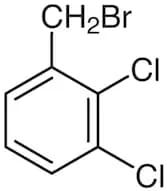
CAS:2,2-Difluoroethanol is a chemical compound with the molecular formula C2H4F2O. It is a colorless liquid that has a distinctive odor and is highly flammable. 2,2-Difluoroethanol reacts in an electrophilic substitution reaction to replace chlorine atoms with hydrogen atoms from the ethyl formate molecule. This reaction can be described by the following equation:Formula:C2H4OF2Purity:Min. 95%Color and Shape:PowderMolecular weight:82.05 g/mol2,3-Dichlorobenzyl Bromide
CAS:Formula:C7H5BrCl2Purity:>98.0%(GC)(T)Color and Shape:White or Colorless to Light yellow powder to lump to clear liquidMolecular weight:239.92N-Butanesulfonyl-O-[4-(4-pyridinyl)-butyl]-(S)-tyrosine
CAS:N-Butanesulfonyl-O-[4-(4-pyridinyl)-butyl]-(S)-tyrosine is a synthetic amino acid. It is soluble in water and forms hydrates. The yield of this reaction is 60%. The molecular weight of this compound is 233.3 g/mol. This compound has been shown to have proteolytic activity, which may be due to its ability to cleave peptide bonds in proteins. N-Butanesulfonyl-O-[4-(4-pyridinyl)-butyl]-(S)-tyrosine may also be used as an intermediate for the synthesis of other compounds, such as aminoglycosides and antibiotics. This chemical can be synthesized by reacting L-tyrosine with butanesulfonyl chloride in the presence of sodium hydroxide and an organic base, such as pyridine. The solvents used in this process are chloroform, dichFormula:C22H30N2O5SPurity:Min. 95%Color and Shape:PowderMolecular weight:434.55 g/mol6-Amino-1-hexanol
CAS:6-Amino-1-hexanol is a chemical compound that belongs to the group of amines. It is also an ester of hexanol and ethylene diamine. 6-Amino-1-hexanol has been shown to have hemolytic activity, which is due to its ability to form an acyl chain with the hydroxyl group on the plate test. 6-Amino-1-hexanol has been used as a chemical intermediate in analytical chemistry and has been shown to be effective against bacterial strains such as Staphylococcus aureus and Bacillus subtilis. This substance also inhibits the growth of Streptococcus pneumoniae and Mycoplasma pneumoniae.6-Amino-1-hexanol does not inhibit uptake by bacteria, which may be due to its lack of amine functionality.
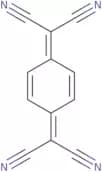
Formula:C6H15NOPurity:(Titration) Min. 97%Color and Shape:PowderMolecular weight:117.19 g/mol7,7,8,8-Tetracyanoquinodimethane
CAS:7,7,8,8-Tetracyanoquinodimethane is a quinoid compound that is used as an analytical chemical reagent. It has been shown to be a powerful reducing agent and can be used in the determination of trace amounts of metals. 7,7,8,8-Tetracyanoquinodimethane also reacts with cationic surfactants and hydroxyl groups to form stable compounds. The nitrogen atoms in this molecule are capable of multiple transfer reactions with other molecules.br>br> The redox potentials of this substance are negative and it has been shown to have the ability to transport pharmaceutical preparations across cell membranes. Boron nitride (BN) has been shown to stabilize the structure of 7,7,8,8-tetracyanoquinodimethane by forming strong hydrogen bonds between the BN and hydroxyl groups on this molecule.Formula:C12H4N4Purity:Min. 95%Color and Shape:Yellow To Green Or Brown SolidMolecular weight:204.19 g/mol2-(4-Methoxyphenyl)ethanol
CAS:2-(4-Methoxyphenyl)ethanol is a chemical compound that can be synthesized in an efficient method. It is a by-product of the reaction of fatty acids with hydroxyl compounds and has been shown to have synergistic effects when combined with chloride. 2-(4-Methoxyphenyl)ethanol is used as a synthetic intermediate for the production of methyl anthranilate, which is an important industrial chemical that is used as a flavor and fragrance additive. 2-(4-Methoxyphenyl)ethanol also has eugenol as one of its cleavage products, which can be found in plants such as clove oil, cinnamon bark, and nutmeg.Formula:C9H12O2Purity:Min. 98%Color and Shape:White PowderMolecular weight:152.19 g/mol12-(t-Boc-amino)-1-dodecanol
CAS:12-(t-Boc-amino)-1-dodecanol is a versatile building block that is used in the synthesis of complex compounds. It can be used by itself or as a reagent or speciality chemical. This compound is useful for the synthesis of high quality research chemicals and useful scaffolds. 12-(t-Boc-amino)-1-dodecanol has CAS No. 67341-03-1 and is a fine chemical that has been widely used in the synthesis of pharmaceuticals, agrochemicals, and other organic compounds.
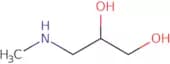
Formula:C17H35NO3Purity:Min. 95%Color and Shape:PowderMolecular weight:301.46 g/mol3-Methylamino-1,2-propanediol
CAS:3-Methylamino-1,2-propanediol is a reactive compound that is used in the synthesis of organic acids. It is also used as an intermediate in the manufacture of polyethylene glycols and particle coatings. 3-Methylamino-1,2-propanediol can be synthesized from allylamine and alkanolamine via a thermal process. It reacts with chloride to form methyl chloroacetate, which can then be converted into 3-methylamino-1,2-propanediol by reaction with methanol. The production process for this substance has been shown to generate low levels of hazardous substances such as polycyclic aromatic hydrocarbons (PAHs) and dioxins.
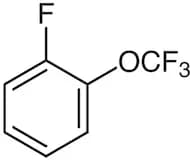
Formula:C4H11NO2Purity:Min. 95%Color and Shape:PowderMolecular weight:105.14 g/mol1-Fluoro-2-(trifluoromethoxy)benzene
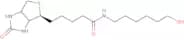
CAS:Formula:C7H4F4OPurity:>98.0%(GC)Color and Shape:Colorless to Almost colorless clear liquidMolecular weight:180.106-N-Biotinylaminohexanol
CAS:6-N-Biotinylaminohexanol is a fine chemical that is used as a reagent or as a speciality chemical in research. This compound has also been shown to be a versatile building block for the synthesis of complex compounds and useful scaffolds for medicinal chemistry. 6-N-Biotinylaminohexanol is soluble in organic solvents, such as alcohols and ethers, but insoluble in water. It can be used as an intermediate in organic synthesis or as a reactant for the preparation of other chemicals.
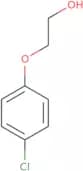
Formula:C16H29N3O3SPurity:Min. 95%Color and Shape:PowderMolecular weight:343.49 g/mol2-(4-Chlorophenoxy)ethanol
CAS:2-(4-Chlorophenoxy)ethanol is a fatty acid that has shown antimicrobial activity against a number of bacteria and fungi. 2-(4-Chlorophenoxy)ethanol is active against the protozoan Trichomonas vaginalis and has been used in the treatment of bacterial vaginosis. The mechanism of action for the antimicrobial activity of 2-(4-Chlorophenoxy)ethanol is unknown, but it may be due to interference with lipid metabolism or by producing reactive oxygen species and damaging cellular membranes. This compound also possesses anti-inflammatory properties and has been shown to inhibit tumor necrosis factor-α (TNF-α) production in human monocytes.Formula:C8H9ClO2Purity:Min. 95%Color and Shape:PowderMolecular weight:172.61 g/mol


![[4-(2-propyn-1-yloxy)phenyl]amine](/_next/image/?url=https%3A%2Fstatic.cymitquimica.com%2Fproducts%2F10%2Fthumb-webp%2FF312487.webp&w=3840&q=75)



![6,7-Dihydro-5H-[1]pyrindin-7-ylamine dihydrochloride](/_next/image/?url=https%3A%2Fstatic.cymitquimica.com%2Fproducts%2F10%2Fthumb-webp%2FF988647.webp&w=3840&q=75)



![N-Butanesulfonyl-O-[4-(4-pyridinyl)-butyl]-(S)-tyrosine](/_next/image/?url=https%3A%2Fstatic.cymitquimica.com%2Fproducts%2F3D%2Fthumb-webp%2FFB19373.webp&w=3840&q=75)