Hydrocarbon Building Blocks
Subcategories of "Hydrocarbon Building Blocks"
Found 5597 products of "Hydrocarbon Building Blocks"
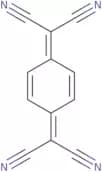
7,7,8,8-Tetracyanoquinodimethane
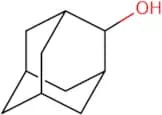
CAS:7,7,8,8-Tetracyanoquinodimethane is a quinoid compound that is used as an analytical chemical reagent. It has been shown to be a powerful reducing agent and can be used in the determination of trace amounts of metals. 7,7,8,8-Tetracyanoquinodimethane also reacts with cationic surfactants and hydroxyl groups to form stable compounds. The nitrogen atoms in this molecule are capable of multiple transfer reactions with other molecules.br>br> The redox potentials of this substance are negative and it has been shown to have the ability to transport pharmaceutical preparations across cell membranes. Boron nitride (BN) has been shown to stabilize the structure of 7,7,8,8-tetracyanoquinodimethane by forming strong hydrogen bonds between the BN and hydroxyl groups on this molecule.Formula:C12H4N4Purity:Min. 95%Color and Shape:Yellow To Green Or Brown SolidMolecular weight:204.19 g/mol2-Adamantanol
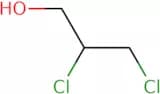
CAS:2-Adamantanol is a biologically active compound that can be found in the form of an oily liquid. It has been shown to have effects on the central nervous system, including analgesia, sedation, and muscle relaxation. 2-Adamantanol is also used as a solvent for organic compounds and as a chemical intermediate. In addition to these properties, it can be found in some polyurethane foam insulation materials and in some rubber products. The mechanism of 2-adamantanol's biological activity is not well understood, but it may involve hydrogen bonding with hydroxyl groups on proteins or other molecules. There are many different ways to synthesize 2-adamantanol; however, one of the most commonly used synthesis methods is through reaction between 1-adamantanol and trifluoroacetic acid followed by hydrogenation with a metal catalyst. 2-Adamantanol has been observed to react with deuterium isotopes through transfer reactions during titrationFormula:C10H16OPurity:Min. 95%Color and Shape:White PowderMolecular weight:152.23 g/mol2,3-Dichloro-1-propanol
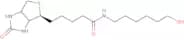
CAS:2,3-Dichloro-1-propanol is a metabolic byproduct of chlorinated solvents. It has been shown to be toxic to mitochondria and can cause mitochondrial membrane potential disruption in rat liver cells. The chemical reacts with fatty acids to form a reactive carbonyl group that can react with the hydrogen bond of membrane phospholipids. This reaction disrupts the structure of the lipid bilayer, leading to mitochondrial degeneration. 2,3-Dichloro-1-propanol also reacts with glutathione and carbonic anhydrase, which leads to the formation of reactive intermediates that react with DNA or proteins. These reactions are responsible for the observed toxicity effects in animals.Formula:C3H6Cl2OPurity:Min. 95%Color and Shape:Clear LiquidMolecular weight:128.98 g/mol6-N-Biotinylaminohexanol
CAS:6-N-Biotinylaminohexanol is a fine chemical that is used as a reagent or as a speciality chemical in research. This compound has also been shown to be a versatile building block for the synthesis of complex compounds and useful scaffolds for medicinal chemistry. 6-N-Biotinylaminohexanol is soluble in organic solvents, such as alcohols and ethers, but insoluble in water. It can be used as an intermediate in organic synthesis or as a reactant for the preparation of other chemicals.
Formula:C16H29N3O3SPurity:Min. 95%Color and Shape:PowderMolecular weight:343.49 g/mol1,2-Dibromo-2,4-dicyanobutane
CAS:1,2-Dibromo-2,4-dicyanobutane is a chemical substance with antimicrobial properties. It is used as an ingredient in the production of health care products and preservatives for food. 1,2-Dibromo-2,4-dicyanobutane inhibits bacterial growth by preventing the synthesis of fatty acids and proteins. This compound has been shown to have synergistic effects when combined with benzalkonium chloride or potassium dichromate. 1,2-Dibromo-2,4-dicyanobutane has not been found to be carcinogenic in animal studies and does not cause allergic reactions.Formula:C6H6Br2N2Purity:Min. 95%Color and Shape:White PowderMolecular weight:265.93 g/molPiperidin-4-ylmethanol
CAS:Piperidin-4-ylmethanol is a synthetic compound that has been used as a fluorescent probe. It has also been used in the synthesis of quinolinium, a medicinal preparation that is used to treat cancer. This chemical has optical properties and can be detected using fluorescence microscopy. Piperidin-4-ylmethanol is soluble in water and can form stable solutions with other compounds. The chemical's reactive site is the hydroxyl group and it reacts with gaseous chlorine to produce hydrochloric acid.
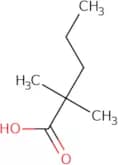
Formula:C6H13NOPurity:Min. 95%Color and Shape:White PowderMolecular weight:115.17 g/mol2,2-Dimethylvaleric acid
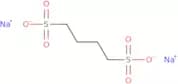
CAS:2,2-Dimethylvaleric acid is a fatty acid that can be synthesized from 2,2-dimethylolpropane. It has been shown to reduce blood pressure in mice by inhibiting the synthesis of certain fatty acids. The mechanism of action may be due to the inhibition of messenger RNA (mRNA) and protein synthesis in the central nervous system. 2,2-Dimethylvaleric acid has also been shown to have neurotrophic effects on cultured cells and is an effective antioxidant. This compound has been used as a control for diode experiments in optical systems.Formula:C7H14O2Purity:Min. 95%Color and Shape:Colorless Clear LiquidMolecular weight:130.18 g/mol1,4-Butanedisulfonic acid disodium salt
CAS:1,4-Butanedisulfonic acid disodium salt is a calcium chelator that is used in the treatment of hypercalcemia and chronic renal failure. It binds to the calcium ion and prevents it from binding to bone, thus lowering the level of calcium in the blood. This drug has been shown to be effective against hepatitis when given orally and also has been shown to be safe for people with liver diseases. 1,4-Butanedisulfonic acid disodium salt also has transport properties and can be administered orally or intravenously.Formula:C4H10Na2O6S2Purity:Min. 95%Color and Shape:PowderMolecular weight:264.23 g/mol1-Amino-1-cyclopropanecarbonitrile hydrochloride
CAS:1-Amino-1-cyclopropanecarbonitrile hydrochloride (ACN) is a synthetic compound that has been shown to be effective against cancer and inflammatory diseases. It is an acidic compound that has been shown to inhibit the growth of tumor cells by inducing apoptosis. This drug also binds to chloride ions and inhibits the production of inflammatory cytokines, such as IL-6, TNFα, and IL-2. 1-Amino-1-cyclopropanecarbonitrile hydrochloride is soluble in water and acetonitrile with a melting point of about 157°C. The molecule's structure was determined through kinetic measurements and thermodynamic calculations.
Formula:C4H6N2·HClPurity:Min. 95%Color and Shape:Off-White PowderMolecular weight:118.56 g/mol4-Iodotoluene
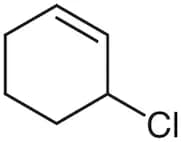
CAS:Formula:C7H7IPurity:>99.0%(GC)Color and Shape:White or Colorless to Yellow powder to lump to clear liquidMolecular weight:218.043-Chlorocyclohexene
CAS:Formula:C6H9ClPurity:>95.0%(GC)Color and Shape:Colorless to Light yellow clear liquidMolecular weight:116.591-Chlorooctane
CAS:Formula:C8H17ClPurity:>99.0%(GC)Color and Shape:Colorless to Almost colorless clear liquidMolecular weight:148.672-Octadecoxyethanol
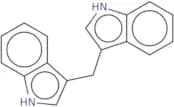
CAS:2-Octadecoxyethanol is a skin cell penetration enhancer. It is a nonionic surfactant that has been shown to increase the permeability of the skin by altering the lipid structure and function of the stratum corneum. This product can be used as an absorption enhancer, or as a plate test for microbial metabolism. 2-Octadecoxyethanol is water soluble and has low toxicity. It is also stable in both acidic and alkaline environments, making it suitable for use in a variety of applications.Formula:C20H42O2Purity:Min. 95%Color and Shape:PowderMolecular weight:314.55 g/mol3,3'-Diindolymethane (synthetic)
CAS:3,3'-Diindolylmethane, also known as DIM, is natural compound derived from indole. In a recent study, DIM was evaluated as a potential agent for preventing biofilm formation by Streptococcus mutans, which is a major cause of dental caries. The researchers found that DIM significantly inhibited biofilm formation (by 92%) and reduced the production of extracellular polymeric substances (EPS), which are important for biofilm stability particularly under acidic conditions. The study suggests that 3,3'-diindolylmethane has anti-biofilm and anti-virulence properties against S. mutans, and it is a potential candidate for reducing biofilm formation and preventing dental caries.
It has been also reported that 3,3'-diindolymethane can act as a chemopreventive agent. DIM has estrogenic effects without interacting with the binding domain of the estrogen receptors. This study found that DIM could suppress cell growth and disrupt cell cycle progression of young adult mouse colonocytes (YAMCs) in vitro. Moreover, DIM altered gene expression associated with apoptosis and cell proliferation, and it induced transcriptional activity of the estrogen receptor (ER), which was inhibited by an ER antagonist.Formula:C17H14N2Purity:Min. 95%Color and Shape:PowderMolecular weight:246.31 g/mol3-Isopropylamino)-1,2-propanediol
CAS:3-Isopropylamino)-1,2-propanediol is a chiral molecule that can exist in two forms, or enantiomers. The two enantiomers of 3-isopropylamino)-1,2-propanediol are mirror images of each other and have different physical properties. One form has a hydroxyl group at the 3 position and the other has a hydroxyl group at the 1 position. These two forms are called R-(+)-3-isopropylamino)-1,2-propanediol and S-(−)-3-isopropylamino)-1,2-propanediol. 3-Isopropylamino)-1,2-propanediol is used in biotechnology to produce chiral compounds and as an intermediate in bioscience research. It is also used as an organic solvent in biochemistry and stereochemistry experiments.Formula:C6H15NO2Purity:Min. 95%Color and Shape:White to off-white solid.Molecular weight:133.19 g/molBoc-1-amino-3,6-dioxa-8-octanediamine
CAS:Boc-1-amino-3,6-dioxa-8-octanediamine is a linker used to attach targeting moieties to drugs. It is capable of binding iron, chlorine and other metals. Boc-1-amino-3,6-dioxa-8-octanediamine has been shown to be a useful tool for the development of novel cancer treatments by enhancing the uptake of chemotherapeutic agents in tumor tissue. This linker can be modified with functional groups such as amines and carboxyls that allow it to bind various types of molecules. The cellular distribution of this compound is not well understood due to its lack of availability in cell culture models.Formula:C11H24N2O4Purity:Min. 95%Color and Shape:Red Clear LiquidMolecular weight:248.32 g/mol2,3-Dichlorobenzyl Bromide
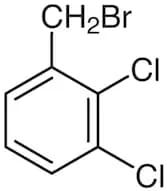
CAS:Formula:C7H5BrCl2Purity:>98.0%(GC)(T)Color and Shape:White or Colorless to Light yellow powder to lump to clear liquidMolecular weight:239.92(1S,2S)-(-)-1,2-Diaminocyclohexane-N,N'-bis(2-diphenylphosphino-1-naphthoyl)
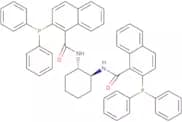
CAS:(1S,2S)-(-)-1,2-Diaminocyclohexane-N,N'-bis(2-diphenylphosphino-1-naphthoyl) is an alkoxyallene that is synthesized from the reaction of allene and ethylene oxide. It has been shown to inhibit abnormal cell growth in vitro. (1S,2S)-(-)-1,2-Diaminocyclohexane-N,N'-bis(2-diphenylphosphino-1-naphthoyl) also inhibits cancer cell proliferation in vivo and shows a high degree of stereoselectivity and enantioselectivity. This compound can be used as an anticancer agent due to its ability to selectively kill cancer cells while leaving normal cells unharmed.Formula:C52H44N2O2P2Purity:Min. 94.5 Area-%Color and Shape:PowderMolecular weight:790.87 g/mol1,2-Bis(diphenylphosphino)ethane
CAS:1,2-Bis(diphenylphosphino)ethane is a ligand that binds to the metal molybdenum. It has been shown to have biochemical properties in relation to its ability to form complexes with adriamycin and other drugs. The redox potential of 1,2-Bis(diphenylphosphino)ethane depends on the presence of sodium ions. This ligand is able to bind to the iron in the mitochondrial membrane and can affect the mitochondrial membrane potential. X-ray crystal structures show that this ligand binds to a monosodium salt. 1,2-Bis(diphenylphosphino)ethane has been shown to be a potent inhibitor of transfer reactions and is used as an analytical reagent for structural analysis.Formula:C26H24P2Purity:Min. 98 Area-%Color and Shape:White Off-White PowderMolecular weight:398.42 g/mol4-Chloro-2-fluoro-1-iodobenzene
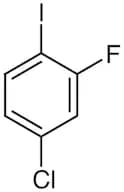
CAS:Formula:C6H3ClFIPurity:>98.0%(GC)Color and Shape:White or Colorles to Yellow to Orange powder to lump to clear liquidMolecular weight:256.44