


Hydrocarbon Building Blocks
Subcategories of "Hydrocarbon Building Blocks"
Found 5597 products of "Hydrocarbon Building Blocks"
6-Amino-1-hexanol
CAS:6-Amino-1-hexanol is a chemical compound that belongs to the group of amines. It is also an ester of hexanol and ethylene diamine. 6-Amino-1-hexanol has been shown to have hemolytic activity, which is due to its ability to form an acyl chain with the hydroxyl group on the plate test. 6-Amino-1-hexanol has been used as a chemical intermediate in analytical chemistry and has been shown to be effective against bacterial strains such as Staphylococcus aureus and Bacillus subtilis. This substance also inhibits the growth of Streptococcus pneumoniae and Mycoplasma pneumoniae.6-Amino-1-hexanol does not inhibit uptake by bacteria, which may be due to its lack of amine functionality.
Formula:C6H15NOPurity:(Titration) Min. 97%Color and Shape:PowderMolecular weight:117.19 g/mol2-(4-Methoxyphenyl)ethanol
CAS:2-(4-Methoxyphenyl)ethanol is a chemical compound that can be synthesized in an efficient method. It is a by-product of the reaction of fatty acids with hydroxyl compounds and has been shown to have synergistic effects when combined with chloride. 2-(4-Methoxyphenyl)ethanol is used as a synthetic intermediate for the production of methyl anthranilate, which is an important industrial chemical that is used as a flavor and fragrance additive. 2-(4-Methoxyphenyl)ethanol also has eugenol as one of its cleavage products, which can be found in plants such as clove oil, cinnamon bark, and nutmeg.Formula:C9H12O2Purity:Min. 98%Color and Shape:White PowderMolecular weight:152.19 g/mol2-Chloro-1-propene
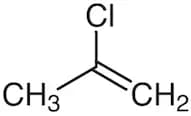
CAS:Formula:C3H5ClPurity:>97.0%(GC)Color and Shape:Colorless to Almost colorless clear liquidMolecular weight:76.524-Chloro-2-fluoro-1-iodobenzene
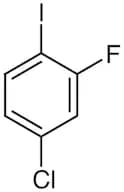
CAS:Formula:C6H3ClFIPurity:>98.0%(GC)Color and Shape:White or Colorles to Yellow to Orange powder to lump to clear liquidMolecular weight:256.442,2-Dimethylvaleric acid
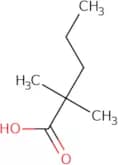
CAS:2,2-Dimethylvaleric acid is a fatty acid that can be synthesized from 2,2-dimethylolpropane. It has been shown to reduce blood pressure in mice by inhibiting the synthesis of certain fatty acids. The mechanism of action may be due to the inhibition of messenger RNA (mRNA) and protein synthesis in the central nervous system. 2,2-Dimethylvaleric acid has also been shown to have neurotrophic effects on cultured cells and is an effective antioxidant. This compound has been used as a control for diode experiments in optical systems.Formula:C7H14O2Purity:Min. 95%Color and Shape:Colorless Clear LiquidMolecular weight:130.18 g/mol1-Hexadecanol
CAS:1-Hexadecanol is a monohydroxy alcohol that is used as a surfactant in analytical chemistry. It can be found naturally in the secretions of some glands and has an optimum concentration of 0.2% to 1%. 1-Hexadecanol has been shown to inhibit bacterial growth by reducing the mitochondrial membrane potential, which leads to cell death. 1-Hexadecanol also reacts with benzalkonium chloride to form ester hydrochloride, which is a reagent for the detection of bacteria. The reaction mechanism for this process is not yet fully understood, but it may involve a metastable form of 1-hexadecanol reacting with benzalkonium chloride.Formula:C16H34OPurity:Min. 95%Color and Shape:PowderMolecular weight:242.44 g/mol1,3-Dibromo-5-hexylbenzene
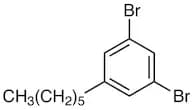
CAS:Formula:C12H16Br2Purity:>95.0%(GC)Color and Shape:Colorless to Light yellow to Light orange clear liquidMolecular weight:320.07N-Methyl methanesulfonamide
CAS:N-Methyl methanesulfonamide is an amide compound that has a vibrational frequency of 1605 cm-1. It is used in the manufacture of covid-19, a pandemic influenza virus vaccine. Covid-19 contains N-methyl methanesulfonamide as one of its ingredients. The vaccine has been shown to have a constant temperature and an inhibitory effect on the production of tyrosine kinase, which is a protein that regulates cell growth and division. The reaction product also inhibits sulfoxide reductase, an enzyme that catalyzes the reduction of sulfoxides. N-Methyl methanesulfonamide is susceptible to acidic hydrolysis and can be structurally represented as follows:Formula:C2H7NO2SPurity:Min. 95%Color and Shape:Light (Or Pale) Yellow To Amber To Brown LiquidMolecular weight:109.15 g/mol6-N-Biotinylaminohexanol
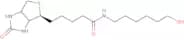
CAS:6-N-Biotinylaminohexanol is a fine chemical that is used as a reagent or as a speciality chemical in research. This compound has also been shown to be a versatile building block for the synthesis of complex compounds and useful scaffolds for medicinal chemistry. 6-N-Biotinylaminohexanol is soluble in organic solvents, such as alcohols and ethers, but insoluble in water. It can be used as an intermediate in organic synthesis or as a reactant for the preparation of other chemicals.
Formula:C16H29N3O3SPurity:Min. 95%Color and Shape:PowderMolecular weight:343.49 g/mol3-Methylamino-1,2-propanediol
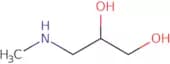
CAS:3-Methylamino-1,2-propanediol is a reactive compound that is used in the synthesis of organic acids. It is also used as an intermediate in the manufacture of polyethylene glycols and particle coatings. 3-Methylamino-1,2-propanediol can be synthesized from allylamine and alkanolamine via a thermal process. It reacts with chloride to form methyl chloroacetate, which can then be converted into 3-methylamino-1,2-propanediol by reaction with methanol. The production process for this substance has been shown to generate low levels of hazardous substances such as polycyclic aromatic hydrocarbons (PAHs) and dioxins.
Formula:C4H11NO2Purity:Min. 95%Color and Shape:PowderMolecular weight:105.14 g/mol1,2-Ethanediol ditosylate
CAS:1,2-Ethanediol ditosylate is a coumarin derivative that is used as a contrast agent in the diagnosis of prostate cancer. It has been shown to be effective against prostate cancer cells in vitro and in vivo. 1,2-Ethanediol ditosylate is injected into the excretory organ (e.g., urinary bladder) and then excreted from the body by the kidneys. The compound accumulates in the prostate gland, where it binds to fatty acids on the cell membrane and induces a positron emission that can be detected with positron emission tomography (PET). This compound also inhibits tumor growth by blocking epidermal growth factor receptor signaling through its ability to bind to carbonic anhydrase II (CAII) receptors on tumor cells.Formula:C16H18O6S2Purity:Min. 95%Color and Shape:White PowderMolecular weight:370.44 g/mol3,5-Dibromo-5'-phenyl-1,1':3',1''-terphenyl
CAS:Formula:C24H16Br2Purity:>98.0%(GC)Color and Shape:White to Light yellow powder to crystalMolecular weight:464.201-Amino-1-cyclopropanecarbonitrile hydrochloride
CAS:1-Amino-1-cyclopropanecarbonitrile hydrochloride (ACN) is a synthetic compound that has been shown to be effective against cancer and inflammatory diseases. It is an acidic compound that has been shown to inhibit the growth of tumor cells by inducing apoptosis. This drug also binds to chloride ions and inhibits the production of inflammatory cytokines, such as IL-6, TNFα, and IL-2. 1-Amino-1-cyclopropanecarbonitrile hydrochloride is soluble in water and acetonitrile with a melting point of about 157°C. The molecule's structure was determined through kinetic measurements and thermodynamic calculations.
Formula:C4H6N2·HClPurity:Min. 95%Color and Shape:Off-White PowderMolecular weight:118.56 g/mol2-Adamantanol
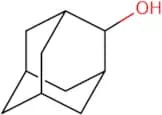
CAS:2-Adamantanol is a biologically active compound that can be found in the form of an oily liquid. It has been shown to have effects on the central nervous system, including analgesia, sedation, and muscle relaxation. 2-Adamantanol is also used as a solvent for organic compounds and as a chemical intermediate. In addition to these properties, it can be found in some polyurethane foam insulation materials and in some rubber products. The mechanism of 2-adamantanol's biological activity is not well understood, but it may involve hydrogen bonding with hydroxyl groups on proteins or other molecules. There are many different ways to synthesize 2-adamantanol; however, one of the most commonly used synthesis methods is through reaction between 1-adamantanol and trifluoroacetic acid followed by hydrogenation with a metal catalyst. 2-Adamantanol has been observed to react with deuterium isotopes through transfer reactions during titrationFormula:C10H16OPurity:Min. 95%Color and Shape:White PowderMolecular weight:152.23 g/molBoc-1-amino-3,6-dioxa-8-octanediamine
CAS:Boc-1-amino-3,6-dioxa-8-octanediamine is a linker used to attach targeting moieties to drugs. It is capable of binding iron, chlorine and other metals. Boc-1-amino-3,6-dioxa-8-octanediamine has been shown to be a useful tool for the development of novel cancer treatments by enhancing the uptake of chemotherapeutic agents in tumor tissue. This linker can be modified with functional groups such as amines and carboxyls that allow it to bind various types of molecules. The cellular distribution of this compound is not well understood due to its lack of availability in cell culture models.Formula:C11H24N2O4Purity:Min. 95%Color and Shape:Red Clear LiquidMolecular weight:248.32 g/mol1,1,3-Trichloro-1-propene
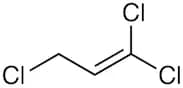
CAS:Formula:C3H3Cl3Purity:>98.0%(GC)Color and Shape:Colorless to Light yellow clear liquidMolecular weight:145.41N-Butanesulfonyl-O-[4-(4-pyridinyl)-butyl]-(S)-tyrosine
CAS:N-Butanesulfonyl-O-[4-(4-pyridinyl)-butyl]-(S)-tyrosine is a synthetic amino acid. It is soluble in water and forms hydrates. The yield of this reaction is 60%. The molecular weight of this compound is 233.3 g/mol. This compound has been shown to have proteolytic activity, which may be due to its ability to cleave peptide bonds in proteins. N-Butanesulfonyl-O-[4-(4-pyridinyl)-butyl]-(S)-tyrosine may also be used as an intermediate for the synthesis of other compounds, such as aminoglycosides and antibiotics. This chemical can be synthesized by reacting L-tyrosine with butanesulfonyl chloride in the presence of sodium hydroxide and an organic base, such as pyridine. The solvents used in this process are chloroform, dichFormula:C22H30N2O5SPurity:Min. 95%Color and Shape:PowderMolecular weight:434.55 g/mol2,3-Dichloro-1-propanol
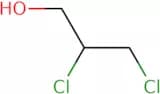
CAS:2,3-Dichloro-1-propanol is a metabolic byproduct of chlorinated solvents. It has been shown to be toxic to mitochondria and can cause mitochondrial membrane potential disruption in rat liver cells. The chemical reacts with fatty acids to form a reactive carbonyl group that can react with the hydrogen bond of membrane phospholipids. This reaction disrupts the structure of the lipid bilayer, leading to mitochondrial degeneration. 2,3-Dichloro-1-propanol also reacts with glutathione and carbonic anhydrase, which leads to the formation of reactive intermediates that react with DNA or proteins. These reactions are responsible for the observed toxicity effects in animals.Formula:C3H6Cl2OPurity:Min. 95%Color and Shape:Clear LiquidMolecular weight:128.98 g/mol4-Bromo-m-xylene
CAS:Formula:C8H9BrPurity:>97.0%(GC)Color and Shape:Colorless to Light orange to Yellow clear liquidMolecular weight:185.061,4-Diazabicyclo[3.2.2]nonane
CAS:Diazepam (also known as Valium) is a benzodiazepine drug used to treat anxiety disorders, muscle spasms, alcohol withdrawal symptoms, and other conditions. Diazepam is a tranquilizer that works by slowing down the activity of the central nervous system. It may also be used to control seizures, prevent certain types of muscle spasms, treat insomnia and relieve anxiety before surgery. Diazepam has been shown to have an affinity for nicotinic acetylcholine receptors in rat brains. This drug can work by blocking these receptors and preventing the transmission of impulses between neurons. Diazepam is marketed in many countries as an anxiolytic agent under trade names such as Valium and Librium. The clinical use of diazepam should be limited because it has been shown to cause birth defects in animal studies when given at high doses or during pregnancy.
Formula:C7H14N2Purity:Min. 95%Color and Shape:White PowderMolecular weight:126.2 g/mol









![N-Butanesulfonyl-O-[4-(4-pyridinyl)-butyl]-(S)-tyrosine](/_next/image/?url=https%3A%2Fstatic.cymitquimica.com%2Fproducts%2F3D%2Fthumb-webp%2FFB19373.webp&w=3840&q=75)

![1,4-Diazabicyclo[3.2.2]nonane](/_next/image/?url=https%3A%2Fstatic.cymitquimica.com%2Fproducts%2F3D%2Fthumb-webp%2FFD07111.webp&w=3840&q=75)