Aliphatic compounds and derivatives
Found 8753 products of "Aliphatic compounds and derivatives"
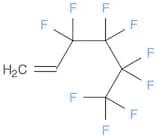
3,3,4,4,5,5,6,6,6-Nonafluoro-1-hexene
CAS:Formula:C6H3F9Purity:97%Color and Shape:LiquidMolecular weight:246.0736Nonafluorobutanesulfonic anhydride
CAS:Formula:C8F18O5S2Purity:98%Color and Shape:LiquidMolecular weight:582.1839Ref: IN-DA003TA1
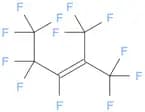
Discontinued product2-Pentene, 1,1,1,3,4,4,5,5,5-nonafluoro-2-(trifluoromethyl)-
CAS:Formula:C6F12Purity:98%Color and Shape:LiquidMolecular weight:300.0450Octane,1,8-dibromo-1,1,2,2,3,3,4,4,5,5,6,6,7,7,8,8-hexadecafluoro-
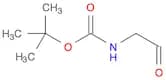
CAS:Formula:C8Br2F16Purity:97%Color and Shape:SolidMolecular weight:559.8680511999997N-Boc-2-aminoacetaldehyde
CAS:Formula:C7H13NO3Purity:98%Color and Shape:LiquidMolecular weight:159.18302,2,2-TRIFLUOROETHYL TRIFLUOROACETATE
CAS:Formula:C4H2F6O2Purity:97%Color and Shape:LiquidMolecular weight:196.0479Ref: IN-DA003DLF
Discontinued product1,1,2,2,3,3,4,4,4-nonafluoro-N,N-bis(2-hydroxyethyl)butane-1-sulphonamide
CAS:Formula:C8H10F9NO4SPurity:98%Color and Shape:SolidMolecular weight:387.21991,2-DIIODOTETRAFLUOROETHANE
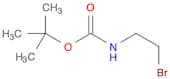
CAS:Formula:C2F4I2Purity:96%Color and Shape:LiquidMolecular weight:353.8240tert-Butyl N-(2-bromoethyl)carbamate
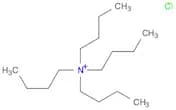
CAS:Formula:C7H14BrNO2Purity:98%Color and Shape:SolidMolecular weight:224.0956Tetrabutylammonium chloride
CAS:Formula:C16H36ClNPurity:95%Color and Shape:SolidMolecular weight:277.9167Hexadecanamide,N-[(1S,2R,3E)-2-hydroxy-1-(hydroxymethyl)-3-heptadecenyl]-
CAS:Formula:C34H67NO3Purity:99%Color and Shape:SolidMolecular weight:537.90071H,1H,2H,2H-Nonafluorohexyl Methacrylate (stabilized with MEHQ)
CAS:Formula:C10H9F9O2Purity:98%Color and Shape:LiquidMolecular weight:332.1629Ref: 4Z-A-301003
Discontinued productEicosafluorononane
CAS:Formula:C9F20Purity:>96.0%(GC)Color and Shape:Colorless to Almost colorless clear liquidMolecular weight:488.073-Ethynyltoluene
CAS:Formula:C9H8Purity:>98.0%(GC)Color and Shape:Colorless to Light orange to Yellow clear liquidMolecular weight:116.16Triphenylethylene
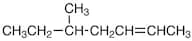
CAS:Formula:C20H16Purity:>98.0%(GC)Color and Shape:White to Light yellow powder to crystalineMolecular weight:256.355-Methyl-2-heptene (cis- and trans- mixture)
CAS:Formula:C8H16Purity:>95.0%(GC)Color and Shape:Colorless to Almost colorless clear liquidMolecular weight:112.22Tetracosane
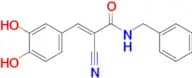
CAS:Formula:C24H50Purity:>99.0%(GC)Color and Shape:White powder to lumpMolecular weight:338.66N-Benzyl-2-cyano-3-(3,4-dihydroxyphenyl)acrylamide
CAS:Purity:99.0%Molecular weight:294.309997558593754-{[2-methyl-6-(trifluoromethyl)pyridin-3-yl]amino}-4-oxobut-2-enoic acid
CAS:Molecular weight:274.19900512695311,7-Bis(4-hydroxyphenyl)hepta-1,6-diene-3,5-dione
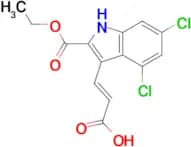
CAS:Purity:95.0%Color and Shape:SolidMolecular weight:308.33300781253-(4,6-Dichloro-2-(ethoxycarbonyl)-1H-indol-3-yl)acrylic acid
CAS:Purity:95.0%Molecular weight:328.1499938964844Ref: 10-F749587
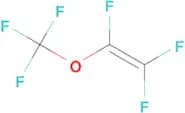
Discontinued productTrifluoromethyl trifluorovinyl ether
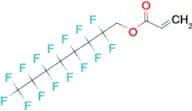
CAS:Purity:99.0%Color and Shape:GasMolecular weight:166.022003173828121H,1H-Pentadecafluorooctyl acrylate
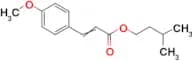
CAS:Purity:99.0%Color and Shape:Liquid, ClearMolecular weight:454.135009765625Isopentyl 3-(4-methoxyphenyl)acrylate
CAS:Purity:95.0%Color and Shape:LiquidMolecular weight:248.32200622558594Allyltrichlorosilane
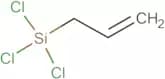
CAS:S00350 - Allyltrichlorosilane
Formula:C3H5Cl3SiColor and Shape:Liquid, ClearMolecular weight:175.50999450683594DL-Tartaric acid
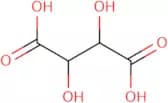
CAS:DL-Tartaric acid is a calcium salt of tartaric acid. It is used as a standard in the analysis of total calcium and tartaric acid content in beverages, wines, foodstuffs, and pharmaceuticals. DL-Tartaric acid can be used to prepare standard solutions for the determination of benzalkonium chloride and other natural compounds by chromatographic methods. The rate constants for the reaction between DL-tartaric acid and calcium pantothenate have been determined by electrochemical impedance spectroscopy. The fluorescence intensity of chemiluminescent reactions with DL-tartaric acid has been found to be proportional to the concentration of tartrate ions in solution. X-ray diffraction data confirm that DL-tartaric acid is an orthorhombic crystal system with space group P2/c.
Formula:C4H6O6Color and Shape:White PowderMolecular weight:150.09 g/molRef: 3D-FT34258
Discontinued product2-(2-Methoxyethoxy)ethanol
CAS:2-(2-Methoxyethoxy)ethanol is a sodium salt that has a synergic effect with other solvents. It is used in the preparation of samples for analytical purposes and in the reaction solution of various glycol ethers. 2-(2-Methoxyethoxy)ethanol also has an effect on thermal expansion, which can be utilized to monitor this parameter during sample preparation. The presence of nitrogen atoms in its structure makes it possible to use it as a reagent for the synthesis of styryl dyes. 2-(2-Methoxyethoxy)ethanol is an antirheumatic drug that belongs to the class of glycol esters and benzalkonium chloride.
Formula:C5H12O3Purity:Min. 95%Color and Shape:Colorless Clear LiquidMolecular weight:120.15 g/molRef: 3D-FM37064
Discontinued productSodium methanethiolate
CAS:Methanethiol is a compound that occurs naturally in the environment. It is used as a fungicide, insecticide and herbicide. Methanethiol inhibits the growth of microorganisms by binding to metal ions on the surface of cells. This prevents DNA replication and protein synthesis, leading to cell death. Methanethiol also has anti-inflammatory properties which may be due to its ability to inhibit adenosine A1 receptor activity in humans.
Formula:CH3NaSPurity:Min. 95%Color and Shape:White PowderMolecular weight:70.09 g/molPutrescine dihydrochloride
CAS:Putrescine is a polyamine plant growth regulator affecting the synthesis of macromolecules. Promotes adventitious root formation. Precursor of spermidine.
Formula:C4H14Cl2N2Purity:Min. 98.0 Area-%Molecular weight:161.08 g/mol1,4-Diazabicyclo[3.2.2]nonane dihydrochloride
CAS:1,4-Diazabicyclo[3.2.2]nonane dihydrochloride is a fine chemical that is used as an intermediate in the synthesis of other chemicals. It has been shown to be a versatile building block for research chemicals and as a reaction component in the synthesis of complex compounds. 1,4-Diazabicyclo[3.2.2]nonane dihydrochloride is also useful in the synthesis of pharmaceuticals and other speciality chemicals due to its high quality and ability to function as a reagent.
1,4-Diazabicyclo[3.2.2]nonane dihydrochloride has been shown to have anti-inflammatory properties by inhibiting prostaglandin synthesis and can be used for the treatment of asthma, arthritis, and other inflammatory conditions.Formula:C7H14N2·2HClPurity:Min. 95%Color and Shape:SolidMolecular weight:199.12 g/molRef: 3D-FD07110
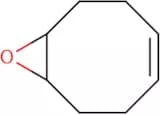
Discontinued product1,2-Epoxy-5-cyclooctene
CAS:1,2-Epoxy-5-cyclooctene is a cyclic epoxide that undergoes ring opening with the addition of a nucleophile. This reaction is catalyzed by a bromonium ion, which acts as the electrophile. The product of this reaction is 2-hydroxy-1,2-epoxycyclohexane. 1,2-Epoxy-5-cyclooctene has been used in synthesizing various compounds such as monoepoxides and hydrosilanes. It can also be used to produce compounds that are difficult to access through other methods. 1,2-Epoxy-5-cyclooctene has been studied using x-ray crystallography and conformational analysis.
Formula:C8H12OPurity:Min. 98 Area-%Color and Shape:Clear LiquidMolecular weight:124.18 g/molRef: 3D-FE03990
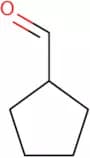
Discontinued productCyclopentanecarbaldehyde
CAS:Cyclopentanecarbaldehyde is a reactive molecule that is used as a ligand in coordination chemistry. It has been shown to bind to the toll-like receptor and may be useful for treating autoimmune diseases. Cyclopentanecarbaldehyde binds with nitrogen atoms in the active site of chelate ligands, which can cause changes in coordination geometry. This reaction mechanism is similar to that of other heterocycles such as 2-picolylhydrazine and 4-picolylhydrazine, which have been shown to be effective in treating Parkinson's disease.
Formula:C6H10OPurity:Min. 95%Color and Shape:Colorless Yellow Clear LiquidMolecular weight:98.14 g/molRef: 3D-FC15277
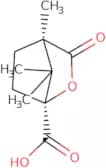
Discontinued product(1S)-(-)-Camphanic acid
CAS:A chiral auxiliary for the separation of racemates
Formula:C10H14O4Purity:Min. 95%Color and Shape:White PowderMolecular weight:198.22 g/molRef: 3D-FC46445
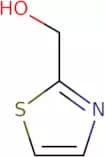
Discontinued product1,3-Thiazol-2-ylmethanol
CAS:1,3-Thiazol-2-ylmethanol is a macrocyclic compound that has a structure similar to that of the natural product phenylbutazone. It is synthesized from 1,3-thiazol-2-amine and benzaldehyde by dehydrogenative condensation. The ligand binds with metal ions via its thionyl group. The metal ion coordinates with the chloride anion and the ligand to produce a planar geometry. This process also produces a distillate that contains phenylbutazone as a major product.
Formula:C4H5NOSPurity:Min. 95%Color and Shape:White PowderMolecular weight:115.15 g/molRef: 3D-FT53502
Discontinued product2-Nonene (cis- and trans- mixture)
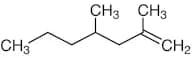
CAS:Formula:C9H18Purity:>94.0%(GC)Color and Shape:Colorless to Almost colorless clear liquidMolecular weight:126.242,4-Dimethyl-1-heptene
CAS:Formula:C9H18Purity:>98.0%(GC)Color and Shape:Colorless to Almost colorless clear liquidMolecular weight:126.24Adamantane-2-carboxylic acid
CAS:Adamantane-2-carboxylic acid is a synthetic polymer that is used as a matrix in molecular electrostatic potential flow chromatography. Adamantane-2-carboxylic acid has been shown to form a polymeric matrix with trifluoromethyl groups and carbon tetrachloride, which can be used to separate neurotensin receptor agonists from dopamine antagonists. This compound also has the ability to cross the blood-brain barrier and bind to dopamine receptors, which may be useful for controlling diabetes. Adamantane-2-carboxylic acid is also an organic solvent and can be used as an alternative to chlorinated solvents such as carbon tetrachloride for environmental pollution control.
Formula:C11H16O2Purity:Min. 95%Color and Shape:White PowderMolecular weight:180.24 g/molRef: 3D-FA13138
Discontinued productMaleic acid
CAS:Maleic acid is dicarboxylic acid. It is the cis isomer. The trans isomer is fumaric acid
Formula:C4H4O4Purity:Min. 95%Color and Shape:White Clear LiquidMolecular weight:116.07 g/molRef: 3D-FM29309
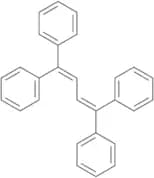
Discontinued product1,1,4,4-Tetraphenyl-1,3-butadiene
CAS:1,1,4,4-Tetraphenyl-1,3-butadiene is a chemical compound that is stable in air and water. It has been shown to be active against pluripotent cells which are the precursor of all cells in the body. 1,1,4,4-Tetraphenyl-1,3-butadiene has been used for a number of biochemical research studies and has been shown to have electrochemical properties as an electrode material. This compound also has high values for toxicological studies. It can be found in the atmosphere at low levels but can also be released into the environment from industrial sources such as electric arc furnaces or coal burning plants.
Formula:C28H22Purity:Min. 99.0%Color and Shape:White PowderMolecular weight:358.47 g/mol2-Bromo-3,3,3-trifluoro-1-propene
CAS:Controlled Product2-Bromo-3,3,3-trifluoro-1-propene is a chemical compound that has been synthesized in an asymmetric reaction. The reactant is bromopropane and the product is 2,2,2-trifluoropropene. The methylene group on the propene molecule is activated by the nucleophilic attack of a fluoride ion from hydrogen fluoride to form a cavity with a highly strained bond. The kinetic study of this reaction revealed that the activation energy for the reaction is 42 kJ/mol. Palladium-catalyzed coupling reactions are catalyzed by palladium and require nonpolar solvents such as toluene or dichloromethane. This type of reaction has been shown to be exothermic with an isolated yield of 1%.
Formula:C3H2BrF3Purity:Min. 95%Color and Shape:Colorless PowderMolecular weight:174.95 g/mol1,2-Bis(chlorodimethylsilyl)ethane
CAS:1,2-Bis(chlorodimethylsilyl)ethane is a reactive chemical that is synthesized from hydroxychloroformates and hydrogen chloride. It reacts with silicon to form chlorosilanes, which are then used in the polymerization of siloxanes. 1,2-Bis(chlorodimethylsilyl)ethane has been shown to be an effective initiator for the polymerization of methyl methacrylate and ethylene glycol dimethacrylate. 1,2-Bis(chlorodimethylsilyl)ethane is also used as a hydroxyl group donor in organic reactions.
Formula:C6H16Cl2Si2Purity:Min. 95 Area-%Color and Shape:PowderMolecular weight:215.27 g/mol






![Hexadecanamide,N-[(1S,2R,3E)-2-hydroxy-1-(hydroxymethyl)-3-heptadecenyl]-](/_next/image/?url=https%3A%2Fstatic.cymitquimica.com%2Fproducts%2FIN%2Fthumb-webp%2FDA00I4QC.webp&w=3840&q=75)









![4-{[2-methyl-6-(trifluoromethyl)pyridin-3-yl]amino}-4-oxobut-2-enoic acid](/_next/image/?url=https%3A%2Fstatic.cymitquimica.com%2Fproducts%2F10%2Fthumb-webp%2FF518653.webp&w=3840&q=75)


![(imidazo[1,2-a]pyridin-6-ylmethylene)malononitrile](/_next/image/?url=https%3A%2Fstatic.cymitquimica.com%2Fproducts%2F10%2Fthumb-webp%2FF518021.webp&w=3840&q=75)




![1,4-Diazabicyclo[3.2.2]nonane dihydrochloride](/_next/image/?url=https%3A%2Fstatic.cymitquimica.com%2Fproducts%2F3D%2Fthumb-webp%2FFD07110.webp&w=3840&q=75)