Silanes
Subcategories of "Silanes"
Found 1234 products of "Silanes"
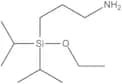
3-AMINOPROPYLDIISOPROPYLETHOXYSILANE
CAS:3-Aminopropyldiisopropylethoxysilane, 3-(diisopropylethoxysilyl)propylamine
Monoamino functional monoalkoxy silaneForms hydrolytically stable amino-functional bonded phases and monolayersPrimary amine coupling agent for UV cure and epoxy systemsUsed in microparticle surface modificationFormula:C11H27NOSiPurity:97%Color and Shape:Straw LiquidMolecular weight:217.43AMINOPROPYLSILSESQUIOXANE IN AQUEOUS SOLUTION
CAS:Aminopropylsilsesquioxane, trihydroxysilylpropylamine condensate; aminopropylsilsesquioxane oligomer
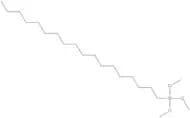
Water-borne amino alkyl silsesquioxane oligomersViscosity: 5-15 cStMole % functional group: 100pH: 10-10.5Internal hydrogen bonding stabilizes solutionPrimers for metalsAmphotericOrganic and silanol functionalityLow VOC coupling agent for siliceous surfacesAdditives for acrylic latex sealantsColor and Shape:Colorless To Amber LiquidMolecular weight:270-550n-OCTADECYLTRIMETHOXYSILANE
CAS:Alkyl Silane - Conventional Surface Bonding
Aliphatic, fluorinated aliphatic or substituted aromatic hydrocarbon substituents are the hydrophobic entities which enable silanes to induce surface hydrophobicity. The organic substitution of the silane must be non-polar. The hydrophobic effect of the organic substitution can be related to the free energy of transfer of hydrocarbon molecules from an aqueous phase to a homogeneous hydrocarbon phase. A successful hydrophobic coating must eliminate or mitigate hydrogen bonding and shield polar surfaces from interaction with water by creating a non-polar interphase. Although silane and silicone derived coatings are in general the most hydrophobic, they maintain a high degree of permeability to water vapor. This allows coatings to breathe and reduce deterioration at the coating interface associated with entrapped water. Since ions are not transported through non-polar silane and silicone coatings, they offer protection to composite structures ranging from pigmented coatings to rebar reinforced concrete. A selection guide for hydrophobic silanes can be found on pages 22-31 of the Hydrophobicity, Hydrophilicity and Silane Surface Modification brochure.
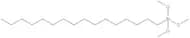
n-Octadecyltrimethoxysilane; Trimethoxyoctadecylsilane; Trimethoxysilyloctadecane
Contains 5-10% C18 isomersMelting point: 13-17 °C (55-63 °F)Forms hydrophobic, oleophilic coatingsForms clear, ordered films with tetramethoxysilaneUndergoes oscillatory adsorption to form SAMsTrialkxoy silaneFormula:C21H46O3SiPurity:92% including isomersColor and Shape:Straw LiquidMolecular weight:374.68TRIISOPROPYLSILANE, 97%
CAS:Trialkylsilyl Blocking Agent
Used as a protecting group for reactive hydrogens in alcohols, amines, thiols, and carboxylic acids. Organosilanes are hydrogen-like, can be introduced in high yield, and can be removed under selective conditions. They are stable over a wide range of reaction conditions and can be removed in the presence of other functional groups, including other protecting groups. The tolerance of silylated alcohols to chemical transformations summary is presented in Table 1 of the Silicon-Based Blocking Agents brochure.
Tri-substituted Silane Reducing Agent
Organosilanes are hydrocarbon-like and possess the ability to serve as both ionic and free-radical reducing agents. These reagents and their reaction by-products are safer and more easily handled and disposed than many other reducing agents. The metallic nature of silicon and its low electronegativity relative to hydrogen lead to polarization of the Si-H bond yielding a hydridic hydrogen and a milder reducing agent compared to aluminum-, boron-, and other metal-based hydrides. A summary of some key silane reductions are presented in Table 1 of the Silicon-Based Reducing Agents brochure.
Triisopropylsilane; Triisopropylsilylhydride; TIPS-H
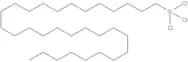
Silylates strong acids with loss of hydrogenSilylates 1° alcohols selectivelySteric bulk allows for selective silylation of compounds with more than one hydroxyl groupSummary of selective deprotection conditions is provided in Table 7 through Table 20 of the Silicon-Based Blocking Agents brochureVery sterically-hindered silaneBlocking agent forming derivatives stable in presence of Grignard reagentsSelectively silylates primary alcohols in presence of secondary alcoholsUsed as a cation scavenger in the deprotection of peptidesExtensive review of silicon based reducing agents: Larson, G.; Fry, J. L. "Ionic and Organometallic-Catalyzed Organosilane Reductions", Wipf, P., Ed.; Wiley, 2007Formula:C9H22SiPurity:97%Color and Shape:LiquidMolecular weight:158.3613-(TRICHLOROSILYLMETHYL)HEPTACOSANE
CAS:Formula:C28H57Cl3SiPurity:techColor and Shape:Straw LiquidMolecular weight:528.211,3-BIS(4-HYDROXYBUTYL)TETRAMETHYLDISILOXANE, 92%
CAS:Formula:C12H30O3Si2Purity:92%Color and Shape:Straw LiquidMolecular weight:278.54DI-t-BUTYLCHLOROSILANE
CAS:Trialkylsilyl Blocking Agent
Used as a protecting group for reactive hydrogens in alcohols, amines, thiols, and carboxylic acids. Organosilanes are hydrogen-like, can be introduced in high yield, and can be removed under selective conditions. They are stable over a wide range of reaction conditions and can be removed in the presence of other functional groups, including other protecting groups. The tolerance of silylated alcohols to chemical transformations summary is presented in Table 1 of the Silicon-Based Blocking Agents brochure.
Di-tert-butylchlorosilane; Chloro-bis(1,1-dimethylethyl)silyl hydride
Used in selective silylation of internal alcohols or diolsSummary of selective deprotection conditions is provided in Table 7 through Table 20 of the Silicon-Based Blocking Agents brochureFormula:C8H19ClSiColor and Shape:LiquidMolecular weight:178.782-(3,4-EPOXYCYCLOHEXYL)ETHYLTRIETHOXYSILANE
CAS:2-(3,4-Epoxycyclohexyl)ethyltriethoxysilane;(2-triethoxysilylethyl)cyclohexyloxirane
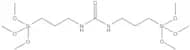
Epoxy functional trialkoxy silaneAdhesion promoter for water-borne coatings on alkaline substratesUsed in microparticle surface modificationCoupling agent for UV cure and epoxy systemsEpoxy silane treated surfaces convert to hydrophilic-diols when exposed to moistureFormula:C14H28O4SiPurity:97%Color and Shape:Straw LiquidMolecular weight:288.46N,N'-BIS(3-TRIMETHOXYSILYLPROPYL)UREA, 95%
CAS:Diamine Functional Alkoxy Silane
Silane coupling agents have the ability to form a durable bond between organic and inorganic materials to generate desired heterogeneous environments or to incorporate the bulk properties of different phases into a uniform composite structure. The general formula has two classes of functionality. The hydrolyzable group forms stable condensation products with siliceous surfaces and other oxides such as those of aluminum, zirconium, tin, titanium, and nickel. The organofunctional group alters the wetting or adhesion characteristics of the substrate, utilizes the substrate to catalyze chemical transformations at the heterogeneous interface, orders the interfacial region, or modifies its partition characteristics, and significantly effects the covalent bond between organic and inorganic materials.
Dipodal Silane
Dipodal silanes are a series of adhesion promoters that have intrinsic hydrolytic stabilities up to ~10,000 times greater than conventional silanes and are used in applications such as plastic optics, multilayer printed circuit boards and as adhesive primers for ferrous and nonferrous metals. They have the ability to form up to six bonds to a substrate compared to conventional silanes with the ability to form only three bonds to a substrate. Many conventional coupling agents are frequently used in combination with 10-40% of a non-functional dipodal silane, where the conventional coupling agent provides the appropriate functionality for the application, and the non-functional dipodal silane provides increased durability. Also known as bis-silanes additives enhance hydrolytic stability, which impacts on increased product shelf life, ensures better substrate bonding and also leads to improved mechanical properties in coatings as well as composite applications.
Hydrophilic Silane - Polar - Hydrogen Bonding
Aliphatic, fluorinated aliphatic or substituted aromatic hydrocarbon substituents are the hydrophobic entities which enable silanes to induce surface hydrophobicity. The organic substitution of the silane must be non-polar. The hydrophobic effect of the organic substitution can be related to the free energy of transfer of hydrocarbon molecules from an aqueous phase to a homogeneous hydrocarbon phase. A successful hydrophobic coating must eliminate or mitigate hydrogen bonding and shield polar surfaces from interaction with water by creating a non-polar interphase. Although silane and silicone derived coatings are in general the most hydrophobic, they maintain a high degree of permeability to water vapor. This allows coatings to breathe and reduce deterioration at the coating interface associated with entrapped water. Since ions are not transported through non-polar silane and silicone coatings, they offer protection to composite structures ranging from pigmented coatings to rebar reinforced concrete. A selection guide for hydrophobic silanes can be found on pages 22-31 of the Hydrophobicity, Hydrophilicity and Silane Surface Modification brochure.
N,N'-Bis(3-trimethoxysilylpropyl)urea
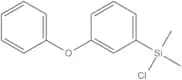
Amber liquidViscosity: 100 - 250 cStAdhesion promoter for 2-part condensation cure silicone RTVsFormula:C13H32N2O7Si2Purity:95%Color and Shape:Straw To Amber LiquidMolecular weight:384.583-PHENOXYPHENYLDIMETHYLCHLOROSILANE, 92%
CAS:Aromatic Silane - Conventional Surface Bonding
Aliphatic, fluorinated aliphatic or substituted aromatic hydrocarbon substituents are the hydrophobic entities which enable silanes to induce surface hydrophobicity. The organic substitution of the silane must be non-polar. The hydrophobic effect of the organic substitution can be related to the free energy of transfer of hydrocarbon molecules from an aqueous phase to a homogeneous hydrocarbon phase. A successful hydrophobic coating must eliminate or mitigate hydrogen bonding and shield polar surfaces from interaction with water by creating a non-polar interphase. Although silane and silicone derived coatings are in general the most hydrophobic, they maintain a high degree of permeability to water vapor. This allows coatings to breathe and reduce deterioration at the coating interface associated with entrapped water. Since ions are not transported through non-polar silane and silicone coatings, they offer protection to composite structures ranging from pigmented coatings to rebar reinforced concrete. A selection guide for hydrophobic silanes can be found on pages 22-31 of the Hydrophobicity, Hydrophilicity and Silane Surface Modification brochure.
3-Phenoxyphenyldimethylchlorosilane; Dimethyl m-phenoxyphenylchlorosilane
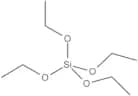
Contains other isomersEnd-capper for low-temperature lubricating fluidsFormula:C14H15ClOSiPurity:92%Color and Shape:Straw LiquidMolecular weight:262.81TETRAETHOXYSILANE, 99.9+%
CAS:Formula:C8H20O4SiPurity:99.9%Color and Shape:LiquidMolecular weight:208.33BIS(TRIMETHYLSILOXY)DICHLOROSILANE
CAS:Specialty Silicon-Based Blocking Agent
Used as a protecting group for reactive hydrogens in alcohols, amines, thiols, and carboxylic acids. Organosilanes are hydrogen-like, can be introduced in high yield, and can be removed under selective conditions. They are stable over a wide range of reaction conditions and can be removed in the presence of other functional groups, including other protecting groups. The tolerance of silylated alcohols to chemical transformations summary is presented in Table 1 of the Silicon-Based Blocking Agents brochure.
Alkyl Silane - Conventional Surface Bonding
Aliphatic, fluorinated aliphatic or substituted aromatic hydrocarbon substituents are the hydrophobic entities which enable silanes to induce surface hydrophobicity. The organic substitution of the silane must be non-polar. The hydrophobic effect of the organic substitution can be related to the free energy of transfer of hydrocarbon molecules from an aqueous phase to a homogeneous hydrocarbon phase. A successful hydrophobic coating must eliminate or mitigate hydrogen bonding and shield polar surfaces from interaction with water by creating a non-polar interphase. Although silane and silicone derived coatings are in general the most hydrophobic, they maintain a high degree of permeability to water vapor. This allows coatings to breathe and reduce deterioration at the coating interface associated with entrapped water. Since ions are not transported through non-polar silane and silicone coatings, they offer protection to composite structures ranging from pigmented coatings to rebar reinforced concrete. A selection guide for hydrophobic silanes can be found on pages 22-31 of the Hydrophobicity, Hydrophilicity and Silane Surface Modification brochure.
Bis(trimethylsiloxy)dichlorosilane; 3,3-Dichlorohexamethyltrisiloxane
Sterically-hindered for the protection of diolsSummary of selective deprotection conditions is provided in Table 7 through Table 20 of the Silicon-Based Blocking Agents brochureFormula:C6H18Cl2O2Si3Purity:92%Color and Shape:Straw LiquidMolecular weight:277.37HEXADECYLTRIMETHOXYSILANE, 92%
CAS:Alkyl Silane - Conventional Surface Bonding
Aliphatic, fluorinated aliphatic or substituted aromatic hydrocarbon substituents are the hydrophobic entities which enable silanes to induce surface hydrophobicity. The organic substitution of the silane must be non-polar. The hydrophobic effect of the organic substitution can be related to the free energy of transfer of hydrocarbon molecules from an aqueous phase to a homogeneous hydrocarbon phase. A successful hydrophobic coating must eliminate or mitigate hydrogen bonding and shield polar surfaces from interaction with water by creating a non-polar interphase. Although silane and silicone derived coatings are in general the most hydrophobic, they maintain a high degree of permeability to water vapor. This allows coatings to breathe and reduce deterioration at the coating interface associated with entrapped water. Since ions are not transported through non-polar silane and silicone coatings, they offer protection to composite structures ranging from pigmented coatings to rebar reinforced concrete. A selection guide for hydrophobic silanes can be found on pages 22-31 of the Hydrophobicity, Hydrophilicity and Silane Surface Modification brochure.
Hexadecyltrimethoxysilane; Trimethoxysilylhexadecane
Viscosity: 7 cStWater scavengerEmployed as rheology modifier for moisture crosslinkable high-density polyethylene (HDPE)Modifier for moisture crosslinkable polyethylene (XLPE)Formula:C19H42O3SiPurity:92%Color and Shape:Straw LiquidMolecular weight:346.631-(TRIETHOXYSILYL)-2-(DIETHOXYMETHYLSILYL)ETHANE
CAS:Alkyl Silane - Dipodal Surface Bonding
Aliphatic, fluorinated aliphatic or substituted aromatic hydrocarbon substituents are the hydrophobic entities which enable silanes to induce surface hydrophobicity. The organic substitution of the silane must be non-polar. The hydrophobic effect of the organic substitution can be related to the free energy of transfer of hydrocarbon molecules from an aqueous phase to a homogeneous hydrocarbon phase. A successful hydrophobic coating must eliminate or mitigate hydrogen bonding and shield polar surfaces from interaction with water by creating a non-polar interphase. Although silane and silicone derived coatings are in general the most hydrophobic, they maintain a high degree of permeability to water vapor. This allows coatings to breathe and reduce deterioration at the coating interface associated with entrapped water. Since ions are not transported through non-polar silane and silicone coatings, they offer protection to composite structures ranging from pigmented coatings to rebar reinforced concrete. A selection guide for hydrophobic silanes can be found on pages 22-31 of the Hydrophobicity, Hydrophilicity and Silane Surface Modification brochure.
Non Functional Alkoxy Silane
Silane coupling agents have the ability to form a durable bond between organic and inorganic materials to generate desired heterogeneous environments or to incorporate the bulk properties of different phases into a uniform composite structure. The general formula has two classes of functionality. The hydrolyzable group forms stable condensation products with siliceous surfaces and other oxides such as those of aluminum, zirconium, tin, titanium, and nickel. The organofunctional group alters the wetting or adhesion characteristics of the substrate, utilizes the substrate to catalyze chemical transformations at the heterogeneous interface, orders the interfacial region, or modifies its partition characteristics, and significantly effects the covalent bond between organic and inorganic materials.
Dipodal Silane
Dipodal silanes are a series of adhesion promoters that have intrinsic hydrolytic stabilities up to ~10,000 times greater than conventional silanes and are used in applications such as plastic optics, multilayer printed circuit boards and as adhesive primers for ferrous and nonferrous metals. They have the ability to form up to six bonds to a substrate compared to conventional silanes with the ability to form only three bonds to a substrate. Many conventional coupling agents are frequently used in combination with 10-40% of a non-functional dipodal silane, where the conventional coupling agent provides the appropriate functionality for the application, and the non-functional dipodal silane provides increased durability. Also known as bis-silanes additives enhance hydrolytic stability, which impacts on increased product shelf life, ensures better substrate bonding and also leads to improved mechanical properties in coatings as well as composite applications.
1-(Triethoxysilyl)-2-(diethoxymethylsilyl)ethane
Forms abrasion resistant sol-gel coatingsLower toxicity, easier to handle than bis(triethoxysilyl)ethane, SIB1817.0Improves hydrolytic stability of silane adhesion promotion systemsUsed in surface modificationFormula:C13H32O5SiPurity:97%Color and Shape:Colourless LiquidMolecular weight:324.56DIETHYLDICHLOROSILANE
CAS:Bridging Silicon-Based Blocking Agent
Used as a protecting group for reactive hydrogens in alcohols, amines, thiols, and carboxylic acids. Organosilanes are hydrogen-like, can be introduced in high yield, and can be removed under selective conditions. They are stable over a wide range of reaction conditions and can be removed in the presence of other functional groups, including other protecting groups. The tolerance of silylated alcohols to chemical transformations summary is presented in Table 1 of the Silicon-Based Blocking Agents brochure.
Alkyl Silane - Conventional Surface Bonding
Aliphatic, fluorinated aliphatic or substituted aromatic hydrocarbon substituents are the hydrophobic entities which enable silanes to induce surface hydrophobicity. The organic substitution of the silane must be non-polar. The hydrophobic effect of the organic substitution can be related to the free energy of transfer of hydrocarbon molecules from an aqueous phase to a homogeneous hydrocarbon phase. A successful hydrophobic coating must eliminate or mitigate hydrogen bonding and shield polar surfaces from interaction with water by creating a non-polar interphase. Although silane and silicone derived coatings are in general the most hydrophobic, they maintain a high degree of permeability to water vapor. This allows coatings to breathe and reduce deterioration at the coating interface associated with entrapped water. Since ions are not transported through non-polar silane and silicone coatings, they offer protection to composite structures ranging from pigmented coatings to rebar reinforced concrete. A selection guide for hydrophobic silanes can be found on pages 22-31 of the Hydrophobicity, Hydrophilicity and Silane Surface Modification brochure.
Diethyldichlorosilane; Dichlorodiethylsilane; DES
ΔHvap: 41.9 kJ/molDipole moment: 2.4 debyeSurface tension: 30.3 mN/mVapor pressure, 21 °C: 10 mmThermal conductivity: 0.134 W/m°CSimilar to, but more stable derivatives than dimethylsilylenesSummary of selective deprotection conditions is provided in Table 7 through Table 20 of the Silicon-Based Blocking Agents brochureFormula:C4H10Cl2SiPurity:97%Color and Shape:Straw To Amber LiquidMolecular weight:157.113-(N,N-DIMETHYLAMINOPROPYL)TRIMETHOXYSILANE
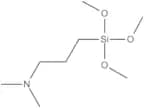
CAS:(N,N-Dimethyl-3-aminopropyl)trimethoxysilane; N-(3-trimethoxysilyl)propyl-N,N-dimethylamine
Tertiary amino functional trialkoxy silaneDerivatized silica catalyzes Michael reactionsFormula:C8H21NO3SiPurity:97%Color and Shape:Straw LiquidMolecular weight:207.34n-BUTYLAMINOPROPYLTRIMETHOXYSILANE
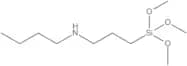
CAS:n-Butylaminopropyltrimethoxysilane; N-[3-(trimethoxysilyl)propyl]butylamine; N-[3-(trimethoxysilyl)propyl]-n-butylamine
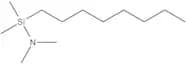
Secondary amino functional trialkoxy silaneReacts with isocyanate resins to form urethane moisture cureable systemsUsed in microparticle surface modificationInternal secondary amine coupling agent for UV cure and epoxy systemsAdvanced cyclic analog available: SIB1932.4Formula:C10H25NO3SiPurity:97%Color and Shape:Straw LiquidMolecular weight:235.4n-OCTYLDIMETHYL(DIMETHYLAMINO)SILANE
CAS:Alkyl Silane - Conventional Surface Bonding
Aliphatic, fluorinated aliphatic or substituted aromatic hydrocarbon substituents are the hydrophobic entities which enable silanes to induce surface hydrophobicity. The organic substitution of the silane must be non-polar. The hydrophobic effect of the organic substitution can be related to the free energy of transfer of hydrocarbon molecules from an aqueous phase to a homogeneous hydrocarbon phase. A successful hydrophobic coating must eliminate or mitigate hydrogen bonding and shield polar surfaces from interaction with water by creating a non-polar interphase. Although silane and silicone derived coatings are in general the most hydrophobic, they maintain a high degree of permeability to water vapor. This allows coatings to breathe and reduce deterioration at the coating interface associated with entrapped water. Since ions are not transported through non-polar silane and silicone coatings, they offer protection to composite structures ranging from pigmented coatings to rebar reinforced concrete. A selection guide for hydrophobic silanes can be found on pages 22-31 of the Hydrophobicity, Hydrophilicity and Silane Surface Modification brochure.
n-Octyldimethyl(dimethylamino)silane; DimethylaminooctyldimethylsilaneFormula:C12H29NSiPurity:95%Color and Shape:Straw LiquidMolecular weight:215.45METHACRYLOXYPROPYLTRIS(VINYLDIMETHYLSILOXY)SILANE, tech
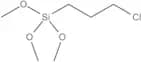
CAS:Formula:C19H38O5Si4Purity:92%Color and Shape:Straw LiquidMolecular weight:458.853-CHLOROPROPYLTRIMETHOXYSILANE, 98%
CAS:Halogen Functional Trialkoxy Silane
Silane coupling agents have the ability to form a durable bond between organic and inorganic materials to generate desired heterogeneous environments or to incorporate the bulk properties of different phases into a uniform composite structure. The general formula has two classes of functionality. The hydrolyzable group forms stable condensation products with siliceous surfaces and other oxides such as those of aluminum, zirconium, tin, titanium, and nickel. The organofunctional group alters the wetting or adhesion characteristics of the substrate, utilizes the substrate to catalyze chemical transformations at the heterogeneous interface, orders the interfacial region, or modifies its partition characteristics, and significantly effects the covalent bond between organic and inorganic materials.
3-Chloropropyltrimethoxysilane; 1-Chloro-3-(trimethoxysilyl)propane
Viscosity, 20 °: 0.56 cStγc of treated surfaces: 40.5 mN/mSpecific wetting surface: 394 m2/gVapor pressure, 100 °C: 40 mmAdhesion promoter for styrene-butadiene rubber, SBR, hot-melt adhesivesPowder flow control additive for dry powder fire extinguishing mediaFormula:C6H15ClO3SiPurity:98%Color and Shape:Straw LiquidMolecular weight:198.72TETRAKIS[(EPOXYCYCLOHEXYL)ETHYL]TETRAMETHYLCYCLOTETRASILOXANE, tech
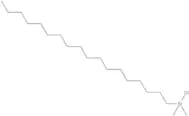
CAS:Formula:C36H64O8Si4Purity:90%Color and Shape:Straw LiquidMolecular weight:737.23n-OCTADECYLDIMETHYLCHLOROSILANE
CAS:Alkyl Silane - Conventional Surface Bonding
Aliphatic, fluorinated aliphatic or substituted aromatic hydrocarbon substituents are the hydrophobic entities which enable silanes to induce surface hydrophobicity. The organic substitution of the silane must be non-polar. The hydrophobic effect of the organic substitution can be related to the free energy of transfer of hydrocarbon molecules from an aqueous phase to a homogeneous hydrocarbon phase. A successful hydrophobic coating must eliminate or mitigate hydrogen bonding and shield polar surfaces from interaction with water by creating a non-polar interphase. Although silane and silicone derived coatings are in general the most hydrophobic, they maintain a high degree of permeability to water vapor. This allows coatings to breathe and reduce deterioration at the coating interface associated with entrapped water. Since ions are not transported through non-polar silane and silicone coatings, they offer protection to composite structures ranging from pigmented coatings to rebar reinforced concrete. A selection guide for hydrophobic silanes can be found on pages 22-31 of the Hydrophobicity, Hydrophilicity and Silane Surface Modification brochure.
n-Octadecyldimethylchlorosilane; Dimethyl-n-octadecylchlorosilane; Chlorodimethyloctadecylsilane; Chlorodimethylsilyl-n-octadecane
Contains 5-10% C18 isomersEmployed in bonded HPLC reverse phasesFormula:C20H43ClSiPurity:97% including isomersColor and Shape:Off-White SolidMolecular weight:347.1VINYLTRIMETHYLSILANE
CAS:Alkenylsilane Cross-Coupling Agent
The cross-coupling reaction is a highly useful methodology for the formation of carbon-carbon bonds. It involves two reagents, with one typically being a suitable organometallic reagent - the nucleophile - and the other a suitable organic substrate, normally an unsaturated halide, tosylate or similar - the electrophile.
Vinyltrimethylsilane; Ethenyltrimethylsilane; Trimethylsilylethene; Trimethylvinylsilane
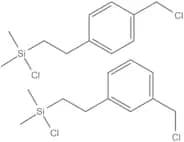
Viscosity, 20 °C: 0.5 cStΔHcomb: 4,133 kJ/molΔHfus: 7.7 kJ/molCopolymerization parameters- e,Q: 0.04, 0.029Forms polymers which can be fabricated into oxygen enrichment membranesPolymerization catalyzed by alkyllithium compoundsReacts w/ azides to form trimethylsilyl-substituted aziridinesUndergoes Heck coupling to (E)-β-substituted vinyltrimethylsilanes, which can then be cross-coupled furtherExtensive review of silicon based cross-coupling agents: Denmark, S. E. et al. "Organic Reactions, Volume 75" Denmark, S. E. ed., John Wiley and Sons, 233, 2011Formula:C5H12SiPurity:97%Color and Shape:Straw LiquidMolecular weight:100.24((CHLOROMETHYL)PHENYLETHYL)DIMETHYLCHLOROSILANE
CAS:Mixed m-, p-isomers
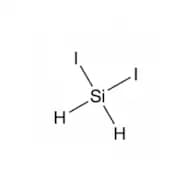
Formula:C11H16Cl2SiPurity:97%Color and Shape:Straw LiquidMolecular weight:247.24DIIODOSILANE, 95%
CAS:Formula:H2I2SiPurity:95%Color and Shape:Pale Yellow To Pink LiquidMolecular weight:283.911,4-BIS(TRIETHOXYSILYL)BENZENE
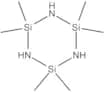
CAS:Formula:C18H34O6Si2Purity:97%Color and Shape:LiquidMolecular weight:402.641,1,3,3,5,5-HEXAMETHYLCYCLOTRISILAZANE
CAS:Bridging Silicon-Based Blocking Agent
Used as a protecting group for reactive hydrogens in alcohols, amines, thiols, and carboxylic acids. Organosilanes are hydrogen-like, can be introduced in high yield, and can be removed under selective conditions. They are stable over a wide range of reaction conditions and can be removed in the presence of other functional groups, including other protecting groups. The tolerance of silylated alcohols to chemical transformations summary is presented in Table 1 of the Silicon-Based Blocking Agents brochure.
Alkyl Silane - Conventional Surface Bonding
Aliphatic, fluorinated aliphatic or substituted aromatic hydrocarbon substituents are the hydrophobic entities which enable silanes to induce surface hydrophobicity. The organic substitution of the silane must be non-polar. The hydrophobic effect of the organic substitution can be related to the free energy of transfer of hydrocarbon molecules from an aqueous phase to a homogeneous hydrocarbon phase. A successful hydrophobic coating must eliminate or mitigate hydrogen bonding and shield polar surfaces from interaction with water by creating a non-polar interphase. Although silane and silicone derived coatings are in general the most hydrophobic, they maintain a high degree of permeability to water vapor. This allows coatings to breathe and reduce deterioration at the coating interface associated with entrapped water. Since ions are not transported through non-polar silane and silicone coatings, they offer protection to composite structures ranging from pigmented coatings to rebar reinforced concrete. A selection guide for hydrophobic silanes can be found on pages 22-31 of the Hydrophobicity, Hydrophilicity and Silane Surface Modification brochure.
Hexamethylcyclotrisilazane; Hexamethylcyclotrisilazane; 2,2,4,4,6,6-Hexamethylcyclotrisilazane
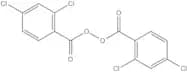
Viscosity, 20 °C: 1.7 cStΔHform: 553 kJ/molDielectric constant: 1000Hz: 2.57Dipole moment: 0.92 debyePolymerizes to polydimethylsilazane oligomer in presence of Ru/H2Modifies positive resists for O2 plasma resistanceSilylates diols with loss of ammoniaSimilar in reactivity to HMDS, SIH6110.0Summary of selective deprotection conditions is provided in Table 7 through Table 20 of the Silicon-Based Blocking Agents brochureFormula:C6H21N3Si3Purity:97%Color and Shape:LiquidMolecular weight:219.512,4-DICHLOROBENZOYL PEROXIDE, 50% in polydimethylsiloxane
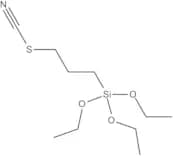
CAS:Formula:C14H6Cl4O4Color and Shape:Off-White SolidMolecular weight:380.03-THIOCYANATOPROPYLTRIETHOXYSILANE, 92%
CAS:3-Thiocyanatopropyltriethoxysilane; 3-(triethoxysilyl)propylthiocyanate
Thiocyanate functional trialkoxy silaneSulfur functional coupling agentMasked isothiocyanate functionalityComplexing agent for Ag, Au, Pd, PtPotential adhesion promoter for goldFormula:C10H21NO3SSiPurity:92%Color and Shape:Straw Yellowish LiquidMolecular weight:263.43TRIETHYLCHLOROSILANE
CAS:Trialkylsilyl Blocking Agent
Used as a protecting group for reactive hydrogens in alcohols, amines, thiols, and carboxylic acids. Organosilanes are hydrogen-like, can be introduced in high yield, and can be removed under selective conditions. They are stable over a wide range of reaction conditions and can be removed in the presence of other functional groups, including other protecting groups. The tolerance of silylated alcohols to chemical transformations summary is presented in Table 1 of the Silicon-Based Blocking Agents brochure.
Triethylchlorosilane; Chlorotriethylsilane; TES-Cl
Stability of ethers intermediate between TMS and TBS ethersGood for 1°, 2°, 3° alcoholsCan be cleaved in presence of TBS, TIPS and TBDPS ethersUsed primarily for the protection of alcoholsCan be used to protect amines and carboxylic acidsSummary of selective deprotection conditions is provided in Table 7 through Table 20 of the Silicon-Based Blocking Agents brochureFormula:C6H15ClSiPurity:97%Color and Shape:LiquidMolecular weight:150.72DIPHENYLMETHYLCHLOROSILANE
CAS:Phenyl-Containing Blocking Agent
Used as a protecting group for reactive hydrogens in alcohols, amines, thiols, and carboxylic acids. Organosilanes are hydrogen-like, can be introduced in high yield, and can be removed under selective conditions. They are stable over a wide range of reaction conditions and can be removed in the presence of other functional groups, including other protecting groups. The tolerance of silylated alcohols to chemical transformations summary is presented in Table 1 of the Silicon-Based Blocking Agents brochure.
Aromatic Silane - Conventional Surface Bonding
Aliphatic, fluorinated aliphatic or substituted aromatic hydrocarbon substituents are the hydrophobic entities which enable silanes to induce surface hydrophobicity. The organic substitution of the silane must be non-polar. The hydrophobic effect of the organic substitution can be related to the free energy of transfer of hydrocarbon molecules from an aqueous phase to a homogeneous hydrocarbon phase. A successful hydrophobic coating must eliminate or mitigate hydrogen bonding and shield polar surfaces from interaction with water by creating a non-polar interphase. Although silane and silicone derived coatings are in general the most hydrophobic, they maintain a high degree of permeability to water vapor. This allows coatings to breathe and reduce deterioration at the coating interface associated with entrapped water. Since ions are not transported through non-polar silane and silicone coatings, they offer protection to composite structures ranging from pigmented coatings to rebar reinforced concrete. A selection guide for hydrophobic silanes can be found on pages 22-31 of the Hydrophobicity, Hydrophilicity and Silane Surface Modification brochure.
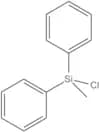
Diphenylmethylchlorosilane; Methyldiphenylchlorosilane; Chloro(methyl)diphenylsilane
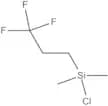
Viscosity: 5.3 cStΔHvap: 623.7 kJ/molSurface tension: 40.0 mN/mVapor pressure, 125 °C: 3 mmThermal conductivity: 0.112 W/m°Cα-Silylates esters, lactones; precursors to silyl enolatesC-Silylates carbamates as shown in the enantioselective example w/ a neryl carbamateStability versus other silyl ethers studiedSummary of selective deprotection conditions is provided in Table 7 through Table 20 of the Silicon-Based Blocking Agents brochureFormula:C13H13ClSiPurity:97%Color and Shape:LiquidMolecular weight:232.78(3,3,3-TRIFLUOROPROPYL)DIMETHYLCHLOROSILANE
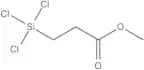
CAS:Formula:C5H10ClF3SiPurity:97%Color and Shape:Straw LiquidMolecular weight:190.672-(CARBOMETHOXY)ETHYLTRICHLOROSILANE, tech
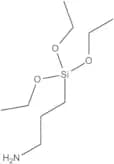
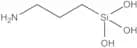
CAS:Formula:C4H7Cl3O2SiPurity:95%Color and Shape:Straw LiquidMolecular weight:221.543-AMINOPROPYLSILANETRIOL, 22-25% in water
CAS:3-Aminopropylsilanetriol, 3-trihydroxysilylpropylamine; 22-25% in water
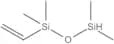
Monoamino functional water-borne silaneMainly oligomers; monomeric at concentrations <5%pH: 10.0-10.5No VOC primary amine coupling agentInternal hydrogen bonding stabilizes solutionSee WSA-7011 for greater hydrolytic stabilityFormula:C3H11NO3SiColor and Shape:Yellow To Dark Amber LiquidMolecular weight:137.21VINYL-1,1,3,3-TETRAMETHYLDISILOXANE
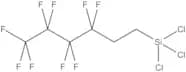
CAS:Formula:C6H16OSi2Purity:97%Color and Shape:Straw LiquidMolecular weight:160.36NONAFLUOROHEXYLTRICHLOROSILANE
CAS:Fluoroalkyl Silane - Conventional Surface Bonding
Aliphatic, fluorinated aliphatic or substituted aromatic hydrocarbon substituents are the hydrophobic entities which enable silanes to induce surface hydrophobicity. The organic substitution of the silane must be non-polar. The hydrophobic effect of the organic substitution can be related to the free energy of transfer of hydrocarbon molecules from an aqueous phase to a homogeneous hydrocarbon phase. A successful hydrophobic coating must eliminate or mitigate hydrogen bonding and shield polar surfaces from interaction with water by creating a non-polar interphase. Although silane and silicone derived coatings are in general the most hydrophobic, they maintain a high degree of permeability to water vapor. This allows coatings to breathe and reduce deterioration at the coating interface associated with entrapped water. Since ions are not transported through non-polar silane and silicone coatings, they offer protection to composite structures ranging from pigmented coatings to rebar reinforced concrete. A selection guide for hydrophobic silanes can be found on pages 22-31 of the Hydrophobicity, Hydrophilicity and Silane Surface Modification brochure.
Nonafluorohexyltrichlorosilane; 1-(Trichlorosilyl)nonafluorofluorohexaneFormula:C6H4Cl3F9SiPurity:97%Color and Shape:Straw LiquidMolecular weight:381.533-[METHOXY(POLYETHYLENEOXY)6-9]PROPYLHEPTAMETHYLTRISILOXANE, tech
CAS:PEGylated Silicone, Trisiloxane (559-691 g/mol)
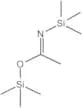
PEO, Trisiloxane termination utilized for hydrophilic surface modificationPEGylation reagent"Super-wetter", surface tension of 0.1% aqueous solution: 21-22 mN/mViscosity: 22 cStFormula:CH3O(CH2CH2O)6-9(CH2)3(CH3)[OSi(CH3)3]2SiColor and Shape:Pale Yellow LiquidMolecular weight:559-691N,O-BIS(TRIMETHYLSILYL)ACETAMIDE
CAS:Trimethylsilyl Blocking Agent
Used as a protecting group for reactive hydrogens in alcohols, amines, thiols, and carboxylic acids. Organosilanes are hydrogen-like, can be introduced in high yield, and can be removed under selective conditions. They are stable over a wide range of reaction conditions and can be removed in the presence of other functional groups, including other protecting groups. The tolerance of silylated alcohols to chemical transformations summary is presented in Table 1 of the Silicon-Based Blocking Agents brochure.
Alkyl Silane - Conventional Surface Bonding
Aliphatic, fluorinated aliphatic or substituted aromatic hydrocarbon substituents are the hydrophobic entities which enable silanes to induce surface hydrophobicity. The organic substitution of the silane must be non-polar. The hydrophobic effect of the organic substitution can be related to the free energy of transfer of hydrocarbon molecules from an aqueous phase to a homogeneous hydrocarbon phase. A successful hydrophobic coating must eliminate or mitigate hydrogen bonding and shield polar surfaces from interaction with water by creating a non-polar interphase. Although silane and silicone derived coatings are in general the most hydrophobic, they maintain a high degree of permeability to water vapor. This allows coatings to breathe and reduce deterioration at the coating interface associated with entrapped water. Since ions are not transported through non-polar silane and silicone coatings, they offer protection to composite structures ranging from pigmented coatings to rebar reinforced concrete. A selection guide for hydrophobic silanes can be found on pages 22-31 of the Hydrophobicity, Hydrophilicity and Silane Surface Modification brochure.
Bis(Trimethylsilyl)acetamide; N,O-Bis(trimethylsilyl)acetamide; Trimethylsilyl-N-Trimethylsilylacetamidate; BSA
More reactive than SIH6110.0Releases neutral acetamide upon reactionBoth silyl groups usedUsed for silylation in analytical applicationsReactions catalyzed by acidForms enol silyl ethers in ionic liquidsNafion SAC-13 has been shown to be a recyclable catalyst for the trimethylsilylation of primary, secondary, and tertiary alcohols in excellent yields and short reaction timesSummary of selective deprotection conditions is provided in Table 7 through Table 20 of the Silicon-Based Blocking Agents brochureFormula:C8H21NOSi2Purity:95%Color and Shape:Straw LiquidMolecular weight:203.43DIMETHYLCHLOROSILANE, 98%
CAS:Tri-substituted Silane Reducing Agent
Organosilanes are hydrocarbon-like and possess the ability to serve as both ionic and free-radical reducing agents. These reagents and their reaction by-products are safer and more easily handled and disposed than many other reducing agents. The metallic nature of silicon and its low electronegativity relative to hydrogen lead to polarization of the Si-H bond yielding a hydridic hydrogen and a milder reducing agent compared to aluminum-, boron-, and other metal-based hydrides. A summary of some key silane reductions are presented in Table 1 of the Silicon-Based Reducing Agents brochure.
Dimethylchlorosilane; Chlorodimethylsilane; Dimethylsilyl chloride
ΔHvap: 26.2 kJ/molSurface tension: 17.1 mN/mSpecific heat: 1.13 J/g/°CThermal conductivity: 0.116 W/mKCritical temperature: 202 °CUndergoes hydrosilylation reactionsEnantioselectively converts ?-hydroxyketones to 1,2-diolsWill form high-boiling polymeric by-products with aqueous work-upExtensive review of silicon based reducing agents: Larson, G.; Fry, J. L. "Ionic and Organometallic-Catalyzed Organosilane Reductions", Wipf, P., Ed.; Wiley, 2007Formula:C2H7ClSiPurity:98%Color and Shape:Straw LiquidMolecular weight:94.62BIS[(p-DIMETHYLSILYL)PHENYL]ETHER, 96%
CAS:Formula:C16H22OSi2Purity:96%Color and Shape:LiquidMolecular weight:286.52SIVATE E610: ENHANCED AMINE FUNCTIONAL SILANE
CAS:SIVATE E610 (Enhanced AMEO)
Enhanced silane blend of aminopropyltriethoxysilane (SIA0610.0), 1,2-bis(triethoxysilyl)ethane (SIB1817.0) and bis(3-triethoxysilylpropyl)amine (SIB1824.5)Performance extended to non-siliceous surfacesImproved mechanical properties and corrosion resistance of metal substratesSuperior film forming properties in primer applicationsHigher bond strength in aggressive aqueous conditionsImparts composites and primers with long-term durability in a wide range of environmentsApplications include: adhesives for metallic and silicon-based substrates, coupling agent for thermoset and thermoplastic composites, functional micro-particles for adhesives and sealants
Enhanced Amine Functional Trialkoxy Silane
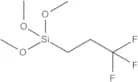
Silane coupling agents have the ability to form a durable bond between organic and inorganic materials to generate desired heterogeneous environments or to incorporate the bulk properties of different phases into a uniform composite structure. The general formula has two classes of functionality. The hydrolyzable group forms stable condensation products with siliceous surfaces and other oxides such as those of aluminum, zirconium, tin, titanium, and nickel. The organofunctional group alters the wetting or adhesion characteristics of the substrate, utilizes the substrate to catalyze chemical transformations at the heterogeneous interface, orders the interfacial region, or modifies its partition characteristics, and significantly effects the covalent bond between organic and inorganic materials.Formula:C9H23NO3SiColor and Shape:Colourless To Straw LiquidMolecular weight:221.37(3,3,3-TRIFLUOROPROPYL)TRIMETHOXYSILANE, 98%
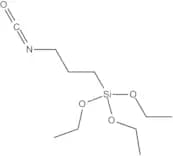
CAS:Formula:C6H13F3O3SiPurity:98%Color and Shape:Straw LiquidMolecular weight:218.253-ISOCYANATOPROPYLTRIETHOXYSILANE, 95%
CAS:3-Isocyanatopropyltriethoxysilane; triethoxysilylpropylisocyanate
Isocyanate functional trialkoxy silaneComponent in hybrid organic/inorganic urethanesCoupling agent for urethanes, polyols, and aminesFormula:C10H21NO4SiPurity:94.50%Color and Shape:Straw LiquidMolecular weight:247.37PHENETHYLTRICHLOROSILANE
CAS:Aromatic Silane - Conventional Surface Bonding
Aliphatic, fluorinated aliphatic or substituted aromatic hydrocarbon substituents are the hydrophobic entities which enable silanes to induce surface hydrophobicity. The organic substitution of the silane must be non-polar. The hydrophobic effect of the organic substitution can be related to the free energy of transfer of hydrocarbon molecules from an aqueous phase to a homogeneous hydrocarbon phase. A successful hydrophobic coating must eliminate or mitigate hydrogen bonding and shield polar surfaces from interaction with water by creating a non-polar interphase. Although silane and silicone derived coatings are in general the most hydrophobic, they maintain a high degree of permeability to water vapor. This allows coatings to breathe and reduce deterioration at the coating interface associated with entrapped water. Since ions are not transported through non-polar silane and silicone coatings, they offer protection to composite structures ranging from pigmented coatings to rebar reinforced concrete. A selection guide for hydrophobic silanes can be found on pages 22-31 of the Hydrophobicity, Hydrophilicity and Silane Surface Modification brochure.
Phenethyltrichlorosilane; 2-(Trichlorosilylethyl) benzene; Trichloro(2-phenylethyl)silane
Contains α-, β-isomersTreated surface contact angle, water: 88°Formula:C8H9Cl3SiPurity:97%Color and Shape:Pale Yellow LiquidMolecular weight:239.6DIMETHYLETHOXYSILANE
CAS:Tri-substituted Silane Reducing Agent
Organosilanes are hydrocarbon-like and possess the ability to serve as both ionic and free-radical reducing agents. These reagents and their reaction by-products are safer and more easily handled and disposed than many other reducing agents. The metallic nature of silicon and its low electronegativity relative to hydrogen lead to polarization of the Si-H bond yielding a hydridic hydrogen and a milder reducing agent compared to aluminum-, boron-, and other metal-based hydrides. A summary of some key silane reductions are presented in Table 1 of the Silicon-Based Reducing Agents brochure.
Alkyl Silane - Conventional Surface Bonding
Aliphatic, fluorinated aliphatic or substituted aromatic hydrocarbon substituents are the hydrophobic entities which enable silanes to induce surface hydrophobicity. The organic substitution of the silane must be non-polar. The hydrophobic effect of the organic substitution can be related to the free energy of transfer of hydrocarbon molecules from an aqueous phase to a homogeneous hydrocarbon phase. A successful hydrophobic coating must eliminate or mitigate hydrogen bonding and shield polar surfaces from interaction with water by creating a non-polar interphase. Although silane and silicone derived coatings are in general the most hydrophobic, they maintain a high degree of permeability to water vapor. This allows coatings to breathe and reduce deterioration at the coating interface associated with entrapped water. Since ions are not transported through non-polar silane and silicone coatings, they offer protection to composite structures ranging from pigmented coatings to rebar reinforced concrete. A selection guide for hydrophobic silanes can be found on pages 22-31 of the Hydrophobicity, Hydrophilicity and Silane Surface Modification brochure.
Dimethylethoxysilane; Ethoxydimethylsilane
Vapor pressure, 20 °C: 281 mmUndergoes hydrosilylation reactionsWaterproofing agent for space shuttle thermal tilesWill form high-boiling polymeric by-products with aqueous work-upExtensive review of silicon based reducing agents: Larson, G.; Fry, J. L. "Ionic and Organometallic-Catalyzed Organosilane Reductions", Wipf, P., Ed.; Wiley, 2007Formula:C4H12OSiPurity:97%Color and Shape:LiquidMolecular weight:104.22TRIMETHYLCHLOROSILANE, 99+%
CAS:Formula:C3H9ClSiPurity:99%Color and Shape:Straw LiquidMolecular weight:108.641,3-BIS(3-AMINOPROPYL)TETRAMETHYLDISILOXANE
CAS:Formula:C10H28N2OSi2Purity:97%Color and Shape:Straw LiquidMolecular weight:248.52










![TETRAKIS[(EPOXYCYCLOHEXYL)ETHYL]TETRAMETHYLCYCLOTETRASILOXANE, tech](/_next/image/?url=https%3A%2Fstatic.cymitquimica.com%2Fproducts%2F3H%2Fthumb-webp%2FSIT7281.5.webp&w=3840&q=75)



![3-[METHOXY(POLYETHYLENEOXY)6-9]PROPYLHEPTAMETHYLTRISILOXANE, tech](/_next/image/?url=https%3A%2Fstatic.cymitquimica.com%2Fproducts%2F3H%2Fthumb-webp%2FSIM6492.6.webp&w=3840&q=75)
![BIS[(p-DIMETHYLSILYL)PHENYL]ETHER, 96%](/_next/image/?url=https%3A%2Fstatic.cymitquimica.com%2Fproducts%2F3H%2Fthumb-webp%2FSIB1090.0.webp&w=3840&q=75)