Synthetic Organic Chemistry
Subcategories of "Synthetic Organic Chemistry"
- Acids and Synthetic Reagents(15,084 products)
- Building Blocks(258,638 products)
- C-C Bond Forming Reactions(887 products)
- Protecting Groups(2,700 products)
- Reagents for Functional Group Introduction/Modification(1,028 products)
Found 207 products of "Synthetic Organic Chemistry"
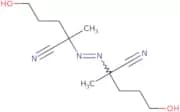
4,4'-Azobis(4-cyano-1-pentanol)
CAS:4,4'-Azobis(4-cyano-1-pentanol) is a polyester stabilizer that is used in the production of polyvinyl chloride. It is an organic solvent that can be used to dissolve ammonium persulfate and hydrogen peroxide. The chemical reaction between 4,4'-azobis(4-cyano-1-pentanol) and these reagents produces chloroprene, isoprene, and hydrogen peroxide. The yields of chloroprene and isoprene depend on the concentration of ammonium persulfate and hydrogen peroxide. 4,4'-Azobis(4-cyano-1-pentanol) can also be used as an extender for polyvinyl chloride.
Formula:C12H20N4O2Purity:Min. 95%Molecular weight:252.31 g/molRef: 3D-EAA69347
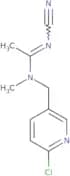
Discontinued productN-(6-Chloro-3-pyridylmethyl)-N-cyano-N-methylacetamidine
CAS:N-(6-Chloro-3-pyridylmethyl)-N-cyano-N-methylacetamidine is a chemical pesticide that belongs to the class of chlorinated acetamides. It has been shown to be highly resistant to biological degradation, which means it can persist in the environment for a long time and accumulate in living organisms. This pesticide has been shown to have genotoxic effects in vivo and in vitro, and it has been shown to have an adverse effect on the kidney bean α subunit gene expression. In vitro assays have also shown that this compound is able to inhibit locomotor activity, as well as surface methodology optical sensor assays. N-(6-Chloro-3-pyridylmethyl)-N-cyano-N-methylacetamidine appears to be a promising candidate for wastewater treatment because it does not appear to be toxic at sublethal doses.
Formula:C10H11ClN4Purity:Min. 95%Molecular weight:222.67 g/molRef: 3D-KGA43064
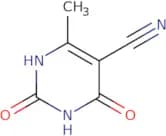
Discontinued product6-Methyl-5-cyanouracil
CAS:Versatile small molecule scaffold
Formula:C6H5N3O2Purity:Min. 95%Molecular weight:151.12 g/molRef: 3D-FAA90040
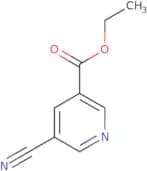
Discontinued productEthyl 5-cyanonicotinate
CAS:Versatile small molecule scaffold
Formula:C9H8N2O2Purity:Min. 95%Molecular weight:176.17 g/molRef: 3D-QDA41731
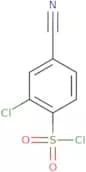
Discontinued product2-Chloro-4-cyanobenzenesulfonyl chloride
CAS:Versatile small molecule scaffold
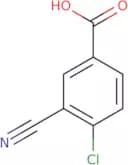
Formula:C7H3Cl2NO2SPurity:Min. 95%Molecular weight:236.08 g/mol4-Chloro-3-cyanobenzoic acid
CAS:Versatile small molecule scaffold
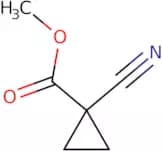
Formula:C8H4ClNO2Purity:Min. 95%Molecular weight:181.58 g/molMethyl 1-cyanocyclopropanecarboxylate
CAS:Versatile small molecule scaffoldFormula:C6H7NO2Purity:Min. 95%Molecular weight:125.13 g/molRef: 3D-GAA91473
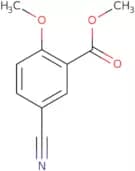
Discontinued productMethyl 5-cyano-2-methoxybenzoate
CAS:Versatile small molecule scaffold
Formula:C10H9NO3Purity:Min. 95%Molecular weight:191.18 g/molMethyl 2-cyano-3-methylbenzoate
CAS:Versatile small molecule scaffold
Formula:C10H9NO2Purity:Min. 95%Molecular weight:175.18 g/molRef: 3D-AVA02427
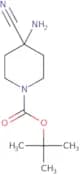
Discontinued product4-Amino-4-cyanopiperidine, N1-BOC protected
CAS:Versatile small molecule scaffold
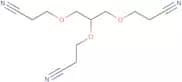
Formula:C11H19N3O2Purity:Min. 95%Molecular weight:225.29 g/mol1,2,3-Tris(2-cyanoethoxy)propane
CAS:1,2,3-Tris(2-cyanoethoxy)propane is a contaminant that has low detection limits and can be detected on-line. It has been shown to interact with oxygenated solutes in the chromatographic method used to analyze silicone. 1,2,3-Tris(2-cyanoethoxy)propane has also been shown to be an injectable solute that can desorb from silicone during the chromatographic analysis. This contaminant is not expressed by S. pneumoniae or S. pyogenes, but is expressed by E. coli and Streptococcus sp.
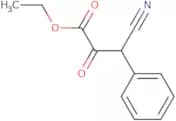
Formula:C12H17N3O3Purity:Min. 95%Molecular weight:251.29 g/molEthyl 3-cyano-3-phenylpyruvate
CAS:Ethyl 3-cyano-3-phenylpyruvate is a chemical compound that is used as an antiviral agent. It has been shown in vitro to inhibit influenza virus and depression. Ethyl 3-cyano-3-phenylpyruvate is synthesized by the alkylation of furyl with phenyl group, followed by the reduction of the tetronic acid formed. The antiviral activity of ethyl 3-cyano-3-phenylpyruvate was analyzed by assessing the ability to inhibit viral replication and production of new viruses. The sodium salt form of this compound is used in foodstuff as a preservative.
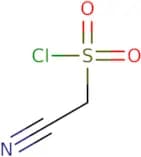
Formula:C12H11NO3Purity:Min. 95%Molecular weight:217.22 g/molcyanomethanesulfonyl chloride
CAS:Cyanomethanesulfonyl chloride is the precursor to a series of pharmaceuticals that are tyrosine kinase inhibitors. These compounds inhibit the growth and proliferation of cells by binding to the receptor tyrosine kinase, preventing it from activating and regulating other proteins. Cyanomethanesulfonyl chloride has been shown to inhibit inflammatory bowel disease in animal models. It also inhibits the production of amines and chloride, which may be responsible for its anti-inflammatory effects.
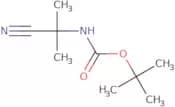
Formula:C2H2ClNO2SPurity:Min. 95%Molecular weight:139.6 g/moltert-Butyl N-(1-cyano-1-methylethyl)carbamate
CAS:Versatile small molecule scaffold
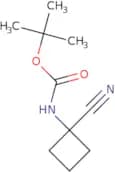
Formula:C9H16N2O2Purity:Min. 95%Molecular weight:184.24 g/moltert-Butyl N-(1-cyanocyclobutyl)carbamate
CAS:Versatile small molecule scaffold
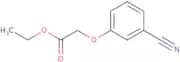
Formula:C10H16N2O2Purity:Min. 95%Molecular weight:196.25 g/molEthyl 2-(3-cyanophenoxy)acetate
CAS:Versatile small molecule scaffold
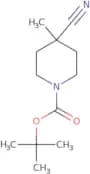
Formula:C11H11NO3Purity:Min. 95%Molecular weight:205.21 g/moltert-Butyl 4-cyano-4-methylpiperidine-1-carboxylate
CAS:Versatile small molecule scaffold
Formula:C12H20N2O2Purity:Min. 95%Molecular weight:224.3 g/molRef: 3D-FWA11596
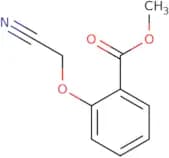
Discontinued productMethyl 2-(cyanomethoxy)benzoate
CAS:Versatile small molecule scaffold
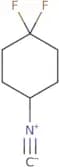
Formula:C10H9NO3Purity:Min. 95%Molecular weight:191.18 g/mol1,1-Difluoro-4-isocyanocyclohexane
CAS:Versatile small molecule scaffold
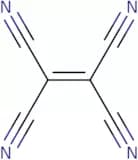
Formula:C7H9NF2Purity:Min. 95%Molecular weight:145.14 g/molTetracyanoethylene
CAS:Used for post-functional addition to polyphenylacetylene derivatives
Formula:C6N4Color and Shape:White PowderMolecular weight:128.09 g/mol