Synthetic Organic Chemistry
Subcategories of "Synthetic Organic Chemistry"
- Acids and Synthetic Reagents(15,037 products)
- Building Blocks(258,655 products)
- C-C Bond Forming Reactions(888 products)
- Protecting Groups(2,703 products)
- Reagents for Functional Group Introduction/Modification(1,028 products)
Found 207 products of "Synthetic Organic Chemistry"
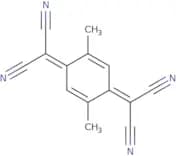
2,5-Dimethyl-7,7,8,8-tetracyanoquinodimethane
CAS:2,5-Dimethyl-7,7,8,8-tetracyanoquinodimethane is a layered compound that has been modified to have magnetic properties. This modification can be used for research purposes and the magnetically induced transfer of elements between compounds. 2,5-Dimethyl-7,7,8,8-tetracyanoquinodimethane can also be modified by adding an acceptor group to one of the layers in order to create an optical probe. The structural modifications of this molecule make it possible to create a sponge that can be used as a nanoreactor for catalysis or other reactions.Formula:C14H8N4Purity:Min. 95%Color and Shape:PowderMolecular weight:232.25 g/mol2-Propenoic acid, 3-(4-cyanophenyl)-, (E)-
CAS:2-Propenoic acid, 3-(4-cyanophenyl)-, (E)- is a fatty acid that is used in the production of biodiesel. This reaction is catalyzed by an acid methyl ester, which can be either reactive or unreactive. The product of this reaction - fatty acid methyl esters - has significant activity as an anion and has a high boiling point. It also has the potential to be used as a fuel in the future.
Formula:C10H7NO2Purity:Min. 95%Molecular weight:173.17 g/molMethyl 4-cyanobicyclo[2.2.2]octane-1-carboxylate
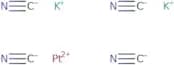
CAS:Versatile small molecule scaffoldFormula:C11H15NO2Purity:Min. 95%Molecular weight:193.24 g/molPotassium tetracyanoplatinate(II)
CAS:Controlled ProductPotassium tetracyanoplatinate(II) is a metal-organic framework that has been synthesized by the layer-by-layer self-assembly of potassium ions and cyanide anions. It can reversibly bind to anions such as chloride, sulfate, nitrate, and phosphate. The structural biology of this material was investigated using X-ray diffraction data in combination with electron microscopy techniques. The salt form of potassium tetracyanoplatinate(II) has been found to be stable up to 100 °C. Potassium tetracyanoplatinate(II) has shown antimicrobial properties against Bordetella pertussis.Formula:C4K2N4PtPurity:Min. 95%Color and Shape:PowderMolecular weight:377.35 g/molEthyl 6-cyanoimidazo[1,2-a]pyridine-2-carboxylate
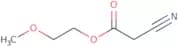
CAS:Versatile small molecule scaffoldFormula:C11H9N3O2Purity:Min. 95%Molecular weight:215.21 g/molAcetic acid, 2-cyano-, 2-methoxyethyl ester
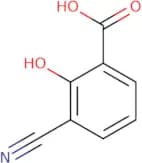
CAS:2-Cyano-2-methoxyethyl acetic acid is a reactive organic solvent that has a boiling point of 152°C. It is soluble in water and has an acidic pH. This compound is used as a monomer, and is also used as an alkylating agent for the synthesis of polymers. 2-Cyano-2-methoxyethyl acetic acid can be copolymerized with other compounds to create a variety of products with different properties. The reaction time depends on the type of product being synthesized, but it typically takes up to 48 hours to complete the reaction. 2-Cyano-2-methoxyethyl acetic acid can react with c1–6 alkyl groups, which may affect its solubility. This compound has a high degree of configurability, which may allow it to be used in more chemical reactions than other organic solvents.Formula:C6H9NO3Purity:Min. 95%Molecular weight:143.14 g/mol3-cyano-2-hydroxybenzoicacid
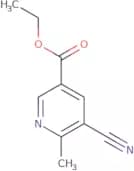
CAS:Versatile small molecule scaffoldFormula:C8H5NO3Purity:Min. 95%Molecular weight:163.13 g/molEthyl 5-cyano-6-methylnicotinate
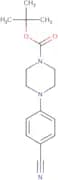
CAS:Versatile small molecule scaffoldFormula:C10H10N2O2Purity:Min. 95%Molecular weight:190.2 g/moltert-Butyl 4-(4-cyanophenyl)tetrahydro-1(2H)-pyrazinecarboxylate
CAS:Versatile small molecule scaffold
Formula:C16H21N3O2Purity:Min. 95%Molecular weight:287.36 g/mol7-Amino-6-cyanopyrazolo[1,5-a]pyrimidine
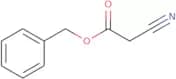
CAS:Versatile small molecule scaffoldFormula:C7H5N5Purity:Min. 95%Molecular weight:159.15 g/molBenzyl 2-cyanoacetate
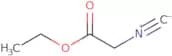
CAS:Benzyl 2-cyanoacetate is an aliphatic hydrocarbon that has been used in the synthesis of various quinoline derivatives. It can be prepared by the reaction of malonic acid with hydrochloric acid, followed by borohydride reduction and the addition of active methylene. Benzyl 2-cyanoacetate is also a precursor to a number of other compounds, including β-amino acids, which are used as pharmaceutical preparations. The chloride ions in benzyl 2-cyanoacetate react with nitro groups to form chloroquinolines. This compound is also an efflux pump inhibitor that blocks bacterial cells from exporting antibiotic molecules out of the cell.Formula:C10H9NO2Purity:Min. 95%Molecular weight:175.19 g/molEthyl-2-isocyanoacetate
CAS:Ethyl-2-isocyanoacetate is a chemical substance that is used in organic chemistry as a reagent for the synthesis of esters and amides. It has been shown to have strong antimicrobial activity against bacteria, including methicillin-resistant Staphylococcus aureus. This compound has also been shown to inhibit the growth of skin cancer cells, which may be due to its ability to induce apoptosis. Ethyl-2-isocyanoacetate reacts with nitro groups in proteins and amino acids by replacement of an oxygen atom from the hydroxyl group with a nitrogen atom from the carboxylic acid group. This reaction mechanism is catalyzed by ns3 protease, which is activated by hydrogen peroxide and thioredoxin reductase.Formula:C5H7NO2Purity:Min. 95%Color and Shape:Clear LiquidMolecular weight:113.11 g/mol3-chloro-4-cyanobenzoic acid
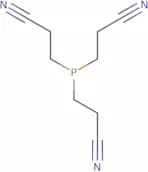
CAS:Versatile small molecule scaffoldFormula:C8H4ClNO2Purity:Min. 95%Molecular weight:181.58 g/molTris(2-cyanoethyl)phosphine
CAS:Tris(2-cyanoethyl)phosphine (TCEP) is a metal carbonyl compound that has been used as a reagent in organic chemistry. TCEP is an amphoteric molecule that can react with both acids and bases, and is stable in the pH range of 5 to 9. It has been shown to have anti-inflammatory properties by inhibiting neutrophil migration. TCEP also has biological properties, such as its ability to inhibit the growth of Cryptococcus neoformans. TCEP binds to the mitochondrial membrane potential, which prevents proton leakage through the membrane and inhibits oxidative phosphorylation. TCEP binds strongly to minerals such as sodium salts, which can be used to isolate this molecule from reaction solutions. TCEP can be obtained by laser ablation or X-ray crystallography techniques.Formula:C9H12N3PPurity:Min. 95 Area-%Molecular weight:193.19 g/mol4-Amino-6-bromo-5-cyano-7H-pyrrol[2,3-d]pyrimidine
CAS:4-Amino-6-bromo-5-cyano-7H-pyrrol[2,3-d]pyrimidine is a synthetic compound that can inhibit the growth of tumor cells by preventing RNA replication. It has been shown to be an efficient method for screening potential antitumor agents. 4AB5C7H is extracted from the tumor cell lines and catalyzed by a variety of enzymes. The debromination process yields high yields of 4AB5C7H, which can be used as a potential inhibitor in cancer therapy.
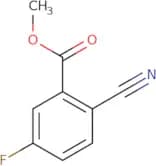
Purity:Min. 95%Methyl 2-cyano-5-fluorobenzoate
CAS:Versatile small molecule scaffold
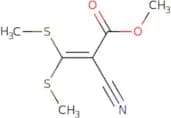
Formula:C9H6FNO2Purity:Min. 95%Molecular weight:179.15 g/molMethyl 3,3-bis(methylthio)-2-cyanoacrylate
CAS:Methyl 3,3-bis(methylthio)-2-cyanoacrylate is a diphenyl ether that is used as a bactericide. It has been shown to be effective against both Gram-positive and Gram-negative bacteria. Methyl 3,3-bis(methylthio)-2-cyanoacrylate is synthesized by the reaction of malonate with dimethylamine chloride in the presence of hydrochloric acid salt in order to produce chloride ions. The reaction is then heated, which causes the methyl 3,3-bis(methylthio)-2-cyanoacrylate to form. This compound is soluble in organic solvents such as formic acid and can be purified by recrystallization or by distillation.Formula:C7H9NO2S2Purity:Min. 95%Molecular weight:203.28 g/mol4-[(4-cyanophenyl)disulfanyl]benzonitrile
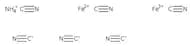
CAS:Please enquire for more information about 4-[(4-cyanophenyl)disulfanyl]benzonitrile including the price, delivery time and more detailed product information at the technical inquiry form on this pageFormula:C14H8N2S2Purity:Min. 95%Molecular weight:268.36 g/molAmmonium iron(III) hexacyanoferrate(II) hydrate, tech.
CAS:It is employed as a intermediate for pharmaceuticals. Also used in decorative cosmetics. This Thermo Scientific Chemicals brand product was originally part of the Alfa Aesar product portfolio. Some documentation and label information may refer to the legacy brand. The original Alfa Aesar product / item code or SKU reference has not changed as a part of the brand transition to Thermo Scientific Chemicals.
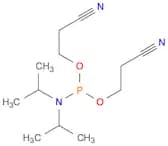
Formula:(NH4)FeFe(CN)6•xH2OColor and Shape:Dark blue, PowderMolecular weight:285.83(anhy)Phosphoramidous acid, N,N-bis(1-methylethyl)-, bis(2-cyanoethyl) ester
CAS:Formula:C12H22N3O2PPurity:95%Color and Shape:LiquidMolecular weight:271.2957


![Methyl 4-cyanobicyclo[2.2.2]octane-1-carboxylate](/_next/image/?url=https%3A%2Fstatic.cymitquimica.com%2Fproducts%2F3D%2Fthumb-webp%2FECA20205.webp&w=3840&q=75)
![Ethyl 6-cyanoimidazo[1,2-a]pyridine-2-carboxylate](/_next/image/?url=https%3A%2Fstatic.cymitquimica.com%2Fproducts%2F3D%2Fthumb-webp%2FPIA95833.webp&w=3840&q=75)
![7-Amino-6-cyanopyrazolo[1,5-a]pyrimidine](/_next/image/?url=https%3A%2Fstatic.cymitquimica.com%2Fproducts%2F3D%2Fthumb-webp%2FPDA97557.webp&w=3840&q=75)

![4-Amino-6-bromo-5-cyano-7H-pyrrol[2,3-d]pyrimidine](/_next/image/?url=https%3A%2Fstatic.cymitquimica.com%2Fproducts%2F3D%2Fthumb-webp%2FFA145040.webp&w=3840&q=75)
![4-[(4-cyanophenyl)disulfanyl]benzonitrile](/_next/image/?url=https%3A%2Fstatic.cymitquimica.com%2Fproducts%2F3D%2Fthumb-webp%2FGAA33951.webp&w=3840&q=75)