Synthetic Organic Chemistry
Synthetic organic chemistry is a branch of chemistry focused on the design and construction of organic molecules through controlled chemical reactions. This field plays a crucial role in the development of pharmaceuticals, agrochemicals, polymers, and advanced materials. At CymitQuimica, we offer a comprehensive range of high-purity reagents, catalysts, and building blocks essential for synthetic organic chemistry. Our catalog includes a variety of functionalized compounds, protecting groups, chiral auxiliaries, and coupling reagents, all meticulously tested for quality and consistency. By providing top-quality materials, we support researchers and industry professionals in achieving precise and efficient synthetic transformations, facilitating the discovery and development of innovative chemical entities and complex organic structures. Our products enable advancements in medicinal chemistry, material science, and chemical biology, driving progress in both research and industrial applications.
Subcategories of "Synthetic Organic Chemistry"
- Acids and Synthetic Reagents(15,037 products)
- Building Blocks(258,656 products)
- C-C Bond Forming Reactions(888 products)
- Protecting Groups(2,703 products)
- Reagents for Functional Group Introduction/Modification(1,028 products)
Found 207 products of "Synthetic Organic Chemistry"
Sort by
Purity (%)
0
100
|
0
|
50
|
90
|
95
|
100
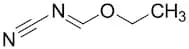
Ethyl Cyanoimidoformate
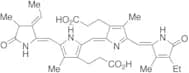
CAS:Controlled ProductFormula:C4H6N2OColor and Shape:NeatMolecular weight:98.103rac-Phycocyanobilin
CAS:Controlled ProductApplications Phycocyanobilin is an open-chain tetrapyrroles used as chromophores for the plant photoreceptor protein phytochrome.
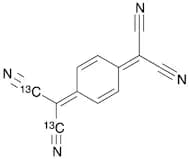
References Li, L., et al.: J. Biol. Chem., 267, 19204 (1992), Murphy, J., et al.: Photochem. Photobiol., 65, 750 (1997), Song, P., et al.: Plant Cell Environ., 20, 707 (1997),Formula:C33H38N4O6Color and Shape:NeatMolecular weight:586.678Tetracyanoquinodimethane-13C2
CAS:Controlled ProductFormula:C2C10H4N4Color and Shape:NeatMolecular weight:206.1724-(Dicyanomethylene)-2-methyl-6-(julolidin-9-yl-vinyl)-4H-pyran
CAS:Controlled ProductApplications 4-(Dicyanomethylene)-2-methyl-6-(julolidin-4-yl-vinyl)-4H-pyran (CAS# 51325-95-2) is a useful research chemical compound.
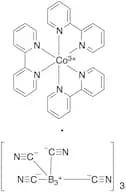
Formula:C23H21N3OColor and Shape:NeatMolecular weight:355.432(OC-6-11)- Tris(2,2'-bipyridine-κN1,κN1')Cobalt(3+) Tetrakis(cyano-κC)borate(1-)
CAS:Controlled ProductApplications (OC-6-11)-Tris(2,2'-bipyridine-κN1,κN1')-tetrakis(cyano-κC)borate(1-) Cobalt(3+) is used as an electrolyte in phenothiazine based dye sensitized solar cells.
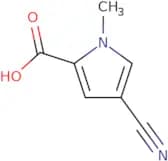
References El-Shishtawy, R, et al.: New J. Chem., 42, 9045 (2018)Formula:C30H24CoN6C4BN4Color and Shape:NeatMolecular weight:642.161044-cyano-1-methyl-1H-pyrrole-2-carboxylic acid
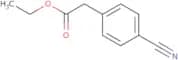
CAS:Versatile small molecule scaffoldFormula:C7H6N2O2Purity:Min. 95%Molecular weight:150.14 g/molEthyl 4-cyanophenylacetate
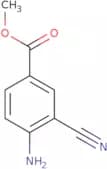
CAS:Versatile small molecule scaffoldFormula:C11H11NO2Purity:Min. 95%Molecular weight:189.21 g/molMethyl 4-amino-3-cyanobenzoate
CAS:Versatile small molecule scaffoldFormula:C9H8N2O2Purity:Min. 95%Molecular weight:176.17 g/molMethyl 3-cyanobicyclo[1.1.1]pentane-1-carboxylate
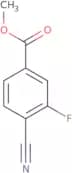
CAS:Versatile small molecule scaffoldFormula:C8H9NO2Purity:Min. 95%Molecular weight:151.16 g/molMethyl 4-cyano-3-fluorobenzoate
CAS:Please enquire for more information about Methyl 4-cyano-3-fluorobenzoate including the price, delivery time and more detailed product information at the technical inquiry form on this pageFormula:C9H6FNO2Purity:Min. 95%Molecular weight:179.15 g/molethyl 3-(cyanomethyl)pyridine-2-carboxylate
CAS:Versatile small molecule scaffoldFormula:C10H10N2O2Purity:Min. 95%Molecular weight:190.2 g/molN-Butyl cyanoacetate
CAS:N-Butyl cyanoacetate is a colorless liquid that has a strong, unpleasant odor. It is used in the production of industrial chemicals and as an active methylene reagent in organic synthesis. It can be used to make diazonium salts and c1-c4 haloalkyl compounds. N-Butyl cyanoacetate is known to cause allergic reactions and has been shown to have an effect on the central nervous system, causing low energy levels and receptor activity.Formula:C7H11NO2Purity:Min. 95%Molecular weight:141.17 g/mol4-chloro-3-cyanobenzenesulfonyl chloride
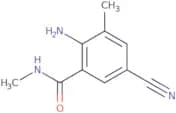
CAS:Versatile small molecule scaffoldFormula:C7H3Cl2NO2SPurity:Min. 95%Molecular weight:236.07 g/mol2-Amino-5-cyano-N,3-dimethylbenzamide
CAS:2-Amino-5-cyano-N,3-dimethylbenzamide is a diester of methylamine and an ester of an acid. It has shown antiinflammatory activity in rats and mice. 2-Amino-5-cyano-N,3-dimethylbenzamide has been shown to inhibit the production of prostaglandin E2 by inhibiting cyclooxygenase (COX) activity.Formula:C10H11N3OPurity:Min. 95%Molecular weight:189.22 g/molMethyl 4-cyanopicolinate
CAS:Versatile small molecule scaffold
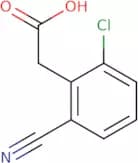
Formula:C8H6N2O2Purity:Min. 95%Molecular weight:162.15 g/mol2-(2-chloro-6-cyanophenyl)acetic acid
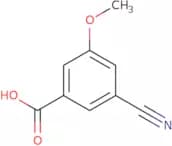
CAS:Versatile small molecule scaffoldFormula:C9H6ClNO2Purity:Min. 95%Molecular weight:195.6 g/mol3-cyano-5-methoxybenzoic acid
CAS:Versatile small molecule scaffoldFormula:C9H7NO3Purity:Min. 95%Molecular weight:177.16 g/mol1-[(tert-butoxy)carbonyl]-3-cyanopyrrolidine-3-carboxylic acid
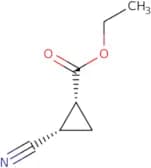
CAS:Versatile small molecule scaffoldFormula:C11H16N2O4Purity:Min. 95%Molecular weight:240.3 g/molcis-ethyl (1R,2S)-2-cyanocyclopropane-1-carboxylate
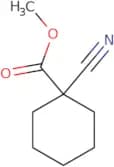
CAS:Versatile small molecule scaffoldFormula:C7H9NO2Purity:Min. 95%Molecular weight:139.15 g/molMethyl 1-cyanocyclohexanecarboxylate
CAS:Versatile small molecule scaffoldFormula:C9H13NO2Purity:Min. 95%Molecular weight:167.21 g/mol



![Methyl 3-cyanobicyclo[1.1.1]pentane-1-carboxylate](/_next/image/?url=https%3A%2Fstatic.cymitquimica.com%2Fproducts%2F3D%2Fthumb-webp%2FGGA32962.webp&w=3840&q=75)



![1-[(tert-butoxy)carbonyl]-3-cyanopyrrolidine-3-carboxylic acid](/_next/image/?url=https%3A%2Fstatic.cymitquimica.com%2Fproducts%2F3D%2Fthumb-webp%2FIWB75928.webp&w=3840&q=75)