Synthetic Organic Chemistry
Synthetic organic chemistry is a branch of chemistry focused on the design and construction of organic molecules through controlled chemical reactions. This field plays a crucial role in the development of pharmaceuticals, agrochemicals, polymers, and advanced materials. At CymitQuimica, we offer a comprehensive range of high-purity reagents, catalysts, and building blocks essential for synthetic organic chemistry. Our catalog includes a variety of functionalized compounds, protecting groups, chiral auxiliaries, and coupling reagents, all meticulously tested for quality and consistency. By providing top-quality materials, we support researchers and industry professionals in achieving precise and efficient synthetic transformations, facilitating the discovery and development of innovative chemical entities and complex organic structures. Our products enable advancements in medicinal chemistry, material science, and chemical biology, driving progress in both research and industrial applications.
Subcategories of "Synthetic Organic Chemistry"
- Acids and Synthetic Reagents(15,037 products)
- Building Blocks(258,655 products)
- C-C Bond Forming Reactions(888 products)
- Protecting Groups(2,703 products)
- Reagents for Functional Group Introduction/Modification(1,028 products)
Found 207 products of "Synthetic Organic Chemistry"
Sort by
Purity (%)
0
100
|
0
|
50
|
90
|
95
|
100
Potassiumhexacyanocobaltate(III)
CAS:Controlled ProductPotassiumhexacyanocobaltate(III) is a compound that is an optical material with a yellow colour. It has a high degree of anisotropy, and it can be used in magneto-optical devices. Potassiumhexacyanocobaltate(III) is bifunctional, meaning that it can have both magnetic and light emitting properties. The magnetic property arises from the spin-orbit coupling between the metal ions, while the light emission is due to radiative transitions involving the electrons in the metal ion. Potassiumhexacyanocobaltate(III) has been used to produce light emission in crystalline materials such as gallium arsenide and zinc selenide, as well as in devices such as LEDs.Formula:C5CoK3N6Purity:Min. 95%Molecular weight:320.32 g/molMethyl 4-cyano-2-methoxybenzoate
CAS:Versatile small molecule scaffoldFormula:C10H9NO3Purity:Min. 95%Molecular weight:191.18 g/molMethyl 6-chloro-5-cyanopicolinate
CAS:Versatile small molecule scaffoldFormula:C8H5ClN2O2Purity:Min. 95%Molecular weight:196.59 g/mol5-cyano-2-methoxybenzoic acid
CAS:Versatile small molecule scaffoldFormula:C9H7NO3Purity:Min. 95%Molecular weight:177.16 g/molSodium Pentacyanoammineferroate(II) Hydrate
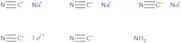
CAS:Controlled ProductPlease enquire for more information about Sodium Pentacyanoammineferroate(II) Hydrate including the price, delivery time and more detailed product information at the technical inquiry form on this page
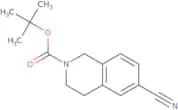
Formula:C5H3FeN6Na3·xH2OPurity:Min. 95%Molecular weight:271.94 g/moltert-Butyl 6-cyano-3,4-dihydroisoquinoline-2(1H)-carboxylate
CAS:Versatile small molecule scaffoldFormula:C15H18N2O2Purity:Min. 95%Molecular weight:258.32 g/mol4-Chloro-2-cyanophenylsulfonyl Chloride
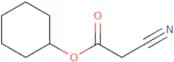
CAS:Versatile small molecule scaffoldFormula:C7H3NO2SCl2Purity:Min. 95%Molecular weight:236.07 g/molCyclohexyl cyanoacetate
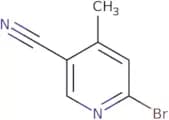
CAS:Cyclohexyl cyanoacetate is an amide derivative and a pyrimidine derivative. It is used in pharmaceutical formulations as an intermediate for the synthesis of pyrazoles, which are used in the treatment of hyperproliferative disorders. Cyclohexyl cyanoacetate inhibits bacterial growth by inhibiting protein synthesis, as it binds to ribosomes and blocks the binding site for amino acids. Cyclohexyl cyanoacetate also has antifungal properties and is an acid catalyst.Formula:C9H13NO2Purity:Min. 95%Molecular weight:167.21 g/mol2-Bromo-5-cyano-4-picoline
CAS:2-Bromo-5-cyano-4-picoline is a tyrosine kinase inhibitor that binds to the ATP binding site of the enzyme, inhibiting its activity. It has been shown to be effective in preclinical studies for the treatment of arthritis and cellular proliferation. 2-Bromo-5-cyano-4-picoline has been shown to be reversible and orally active.Formula:C7H5BrN2Purity:Min. 95%Molecular weight:197.04 g/mol4-Chloro-2-cyano-6-methylpyrimidine
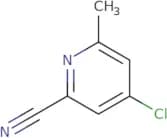
CAS:Versatile small molecule scaffoldFormula:C6H4ClN3Purity:Min. 95%Molecular weight:153.57 g/molMethyl 2-cyano-4-methylbenzoate
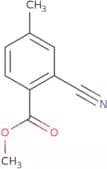
CAS:Versatile small molecule scaffoldFormula:C10H9NO2Purity:Min. 95%Molecular weight:175.18 g/mol2-Isocyanoethylbenzene
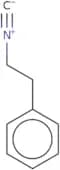
CAS:2-Isocyanoethylbenzene, also known as 2-IBAB, is an organic compound that contains a carbonyl group and two isocyanate groups. It is used as a catalyst in hydrosilylation reactions to synthesize polymers such as polyurethanes. The reaction between 2-isocyanoethylbenzene and copper complex produces an imine that reacts with phosphite to form quinoline derivatives. These quinoline derivatives are then reacted with carboxylates to form ruthenium complexes, which catalyze the polymerization of deionized water. The polymerization initiator for this process is typically an organic peroxide or azide.Formula:C9H9NPurity:Min. 95%Molecular weight:131.18 g/molMethyl 1-cyanocyclobutanecarboxylate
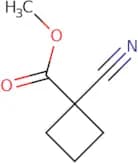
CAS:Versatile small molecule scaffoldFormula:C7H9NO2Purity:Min. 95%Molecular weight:139.16 g/mol(E)-ethyl 2-cyano-3-((3,5-difluorophenyl)amino)acrylate
CAS:Versatile small molecule scaffold
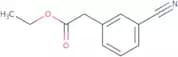
Formula:C12H10F2N2O2Purity:Min. 95%Molecular weight:252.22 g/molEthyl 2-(3-cyanophenyl)acetate
CAS:Versatile small molecule scaffold
Formula:C11H11NO2Purity:Min. 95%Molecular weight:189.21 g/mol2-[4-(2,2-Dicyanovinyl)-N-ethyl-3-Methylaniline]ethyl carbanilate
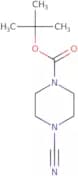
CAS:Please enquire for more information about 2-[4-(2,2-Dicyanovinyl)-N-ethyl-3-Methylaniline]ethyl carbanilate including the price, delivery time and more detailed product information at the technical inquiry form on this pageFormula:C22H22N4O2Purity:Min. 95%Molecular weight:374.44 g/moltert-butyl 4-cyanopiperazine-1-carboxylate
CAS:Versatile small molecule scaffold
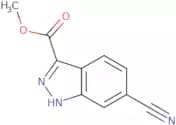
Formula:C10H17N3O2Purity:Min. 95%Molecular weight:211.26 g/molMethyl 6-cyano-1H-indazole-3-carboxylate
CAS:Versatile small molecule scaffoldFormula:C10H7N3O2Purity:Min. 95%Molecular weight:201.18 g/moltert-Butyl 4-(2-cyanoacetyl)piperidine-1-carboxylate
CAS:Versatile small molecule scaffold
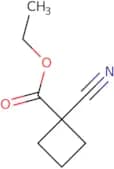
Formula:C13H20N2O3Purity:Min. 95%Molecular weight:252.31 g/molEthyl 1-cyanocyclobutanecarboxylate
CAS:Ethyl 1-cyanocyclobutanecarboxylate is a cyclic molecule that belongs to the homologues of ethylene. This compound has been shown to react with carbanions in the presence of a base to form anionic initiator molecules. Ethyl 1-cyanocyclobutanecarboxylate can be used as an experimental monomer for ring-opening polymerization reactions, which are nonquantitative and may require temperatures as high as 110°C. The rate of these reactions is determined by the concentration of monomers, which should be made as monodisperse as possible.Formula:C8H11NO2Purity:Min. 95%Molecular weight:153.18 g/mol




![2-[4-(2,2-Dicyanovinyl)-N-ethyl-3-Methylaniline]ethyl carbanilate](/_next/image/?url=https%3A%2Fstatic.cymitquimica.com%2Fproducts%2F3D%2Fthumb-webp%2FFD171547.webp&w=3840&q=75)