Building Blocks
Subcategories of "Building Blocks"
- Boronic Acids & Boronic Acid Derivatives(5,778 products)
- Chiral Building Blocks(1,243 products)
- Hydrocarbon Building Blocks(6,098 products)
- Organic Building Blocks(61,042 products)
Found 204339 products of "Building Blocks"
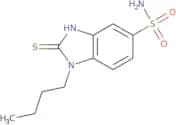
1-Butyl-2-sulfanyl-1H-1,3-benzodiazole-5-sulfonamide
CAS:Versatile small molecule scaffold
Formula:C11H15N3O2S2Purity:Min. 95%Molecular weight:285.4 g/mol5-[(2-Methoxyphenyl)(methyl)sulfamoyl]-2-methylbenzoic acid
CAS:Versatile small molecule scaffold
Formula:C16H17NO5SPurity:Min. 95%Molecular weight:335.4 g/molRef: 3D-FQA34216
Discontinued product2-[(3-Fluoro-2-methoxyphenyl)methyl]pyrrolidine hydrochloride
CAS:Controlled ProductVersatile small molecule scaffold
Formula:C12H17ClFNOPurity:Min. 95%Molecular weight:245.7 g/molRef: 3D-FLD85481
Discontinued productTerbacil
CAS:Terbacil is a herbicide that is used to control perennial ryegrass in agricultural fields. It inhibits the growth of perennial ryegrass by binding to the cytochrome P450 in the mitochondria and preventing fatty acid synthesis. Terbacil also inhibits bacterial growth by binding to metal hydroxide ions and prevents bacterial uptake of nutrients. Terbacil may also be toxic to plant cells, as it has been shown to inhibit root development in cell cultures with solanum tuberosum. Terbacil has a hydroxy derivative, which is likely responsible for its herbicidal properties.
Formula:C9H13ClN2O2Purity:Min. 95%Molecular weight:216.66 g/mol2-Pentyl-1H-benzo[d]imidazole
CAS:2-Pentyl-1H-benzo[d]imidazole is a hydrophobic compound with affinity for the cavity of cytochrome P450. It has been used as a solid catalyst, and is being investigated as an active substance in the treatment of diseases such as asthma and Parkinson's disease. The binding constants have been determined by the microsomal preparations. The nature of this molecule is supramolecular, which means it contains complex molecules that bind to each other through hydrogen bonding or coordination. 2-Pentyl-1H-benzo[d]imidazole binds to substrates by interaction with their functional groups (e.g., OH, NH2).
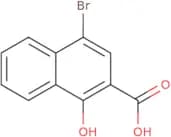
Formula:C12H16N2Purity:Min. 95%Molecular weight:188.27 g/mol4-bromo-1-hydroxynaphthalene-2-carboxylic acid
CAS:4-Bromo-1-hydroxynaphthalene-2-carboxylic acid (4BHN) is a spectroscopic compound that has been used as a radioligand to study the binding of dopamine and dopamine D3 receptors. This compound binds to the d3 receptor with high affinity and specificity, but it does not interact with the d1 or d2 receptors. 4BHN has been shown to act as an agonist at the dopamine D3 receptor. It also acts as an antagonist at the piperidine site of the dopamine D2 receptor. The effects of 4BHN are reversible, which means that it can be displaced by unlabeled 4BHN or other compounds that bind to the same site on the receptor. This technique is useful for studying drug interactions and for determining whether drugs have a subtype selectivity profile.
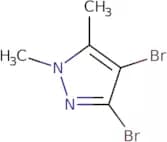
Formula:C11H7BrO3Purity:Min. 95%Molecular weight:267.1 g/mol3,4-Dibromo-1,5-dimethyl-1H-pyrazole
CAS:Versatile small molecule scaffold
Formula:C5H6Br2N2Purity:Min. 95%Molecular weight:253.92 g/molRef: 3D-FAA77595
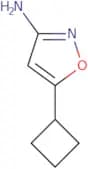
Discontinued product5-Cyclobutyl-1,2-oxazol-3-amine
CAS:Versatile small molecule scaffold
Formula:C7H10N2OPurity:Min. 95%Molecular weight:138.17 g/molRef: 3D-EZB45463
Discontinued producttert-Butyl (4aS,7aS)-octahydro-1H-pyrrolo[3,4-b]pyridine-6-carboxylate
CAS:Versatile small molecule scaffold
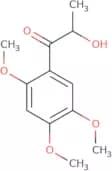
Formula:C12H22N2O2Purity:Min. 95%Molecular weight:226.32 g/mol(2R)-2-Hydroxy-1-(2,4,5-trimethoxyphenyl)propan-1-one
CAS:(2R)-2-Hydroxy-1-(2,4,5-trimethoxyphenyl)propan-1-one is an efficient method for the synthesis of adenosine. This method is based on a cyclic reaction with trimethoxybenzene and yields 2 moles of adenosine per mole of trimethoxybenzene. The reaction time is short and the yield is high. This synthetic route has been used to produce large quantities of adenosine for use in pharmacological studies. (2R)-2-Hydroxy-1-(2,4,5-trimethoxyphenyl)propan-1-one can be used as an enantiomer for the synthesis of other compounds. It was also shown that nitrite mediates this reaction
Formula:C12H16O5Purity:Min. 95%Molecular weight:240.25 g/molRef: 3D-EZB00535
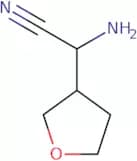
Discontinued product2-Amino-2-(oxolan-3-yl)acetonitrile
CAS:Versatile small molecule scaffold
Formula:C6H10N2OPurity:Min. 95%Molecular weight:126.16 g/molRef: 3D-ENB57845
Discontinued product3-[4-(1-Aminoethyl)phenyl]-1-phenylurea
CAS:Versatile small molecule scaffold
Formula:C15H17N3OPurity:Min. 95%Molecular weight:255.31 g/molRef: 3D-ENB56855
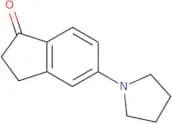
Discontinued product5-Pyrrolidin-1-yl-indan-1-one
CAS:Versatile small molecule scaffold
Formula:C13H15NOPurity:Min. 95%Molecular weight:201.26 g/molRef: 3D-ENB24121
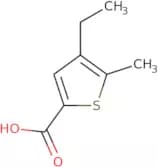
Discontinued product4-Ethyl-5-methylthiophene-2-carboxylic acid
CAS:4-Ethyl-5-methylthiophene-2-carboxylic acid is an organic compound that is soluble in water and has a melting point of around 190 °C. It is used in the synthesis of oxazolines, which are intermediates for the production of drugs such as antihypertensives, antidepressants, and antipsychotics. 4-Ethyl-5-methylthiophene-2-carboxylic acid can be used to investigate metalation reactions because it reacts with magnesium to form Grignard reagent. This reagent can be used to synthesize organic compounds that contain sulfur.
Formula:C8H10O2SPurity:Min. 95%Molecular weight:170.23 g/molRef: 3D-EGA82865
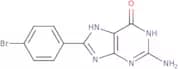
Discontinued product2-Amino-8-(4-bromophenyl)-6,9-dihydro-1H-purin-6-one
CAS:Versatile small molecule scaffold
Formula:C11H8BrN5OPurity:Min. 95%Molecular weight:306.12 g/mol2,2,2-Trifluoro-1-(4-methyl-1H-indol-3-yl)ethan-1-one
CAS:Controlled ProductVersatile small molecule scaffold
Formula:C11H8F3NOPurity:Min. 95%Molecular weight:227.18 g/molRef: 3D-EDA87801
Discontinued product[(2R)-1-Ethylpyrrolidin-2-yl]methanol
CAS:Versatile small molecule scaffold
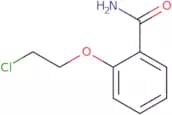
Formula:C7H15NOPurity:Min. 95%Molecular weight:129.2 g/mol2-(2-Chloroethoxy)benzamide
CAS:Versatile small molecule scaffold
Formula:C9H10ClNO2Purity:Min. 95%Molecular weight:199.63 g/molRef: 3D-EBA57913
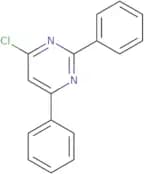
Discontinued product4-Chloro-2,6-diphenylpyrimidine
CAS:4-Chloro-2,6-diphenylpyrimidine is a chemical compound that exhibits growth-regulating properties. It has been used as a solvent for the synthesis of other organic compounds. 4-Chloro-2,6-diphenylpyrimidine is a tautomeric compound with two different forms: the catechol and the ketone form. The catechol form is more stable than the ketone form and can be activated by light or heat to produce an excited state. This excited state can emit light in the visible region of the spectrum, which can be measured using fluorescence spectroscopy. 4-Chloro-2,6-diphenylpyrimidine also has high solubility in water and good transport properties. This chemical has been shown to have thermally activated rearrangements and amide cleavage reactions when heated or subjected to acid conditions.
Formula:C16H11ClN2Purity:Min. 95%Molecular weight:266.73 g/mol1-[(tert-Butoxy)carbonyl]-3-(methoxymethyl)azetidine-3-carboxylic acid
CAS:Versatile small molecule scaffold
Formula:C11H19NO5Purity:Min. 95%Molecular weight:245.27 g/molRef: 3D-EAC94560
Discontinued product1-Cyclopropyl-3-methyl-1H-pyrazole-5-carboxylic acid
CAS:Versatile small molecule scaffold
Formula:C8H10N2O2Purity:Min. 95%Molecular weight:166.18 g/molRef: 3D-EAC19992
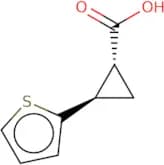
Discontinued productrac-(1R,2R)-2-(Thiophen-2-yl)cyclopropane-1-carboxylic acid
CAS:Versatile small molecule scaffold
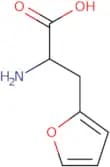
Formula:C8H8O2SPurity:Min. 95%Molecular weight:168.2 g/mol3-(2-Furyl)-DL-alanine
CAS:3-(2-Furyl)-DL-alanine is a chiral amino acid that is used as a building block in the synthesis of peptides and proteins. The enantiomers of 3-(2-furyl)alanine have been shown to have different properties. One enantiomer has been shown to be more soluble in cyclohexane and 2-propanol, while the other has been shown to be more soluble in water. This difference can be optimized by using an appropriate solvent or by adding a complexing agent such as sodium chloride. It also has been found that one enantiomer is more reactive than the other with metal ions such as copper(II).
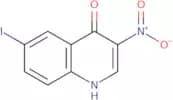
Formula:C7H9NO3Purity:Min. 95%Molecular weight:155.15 g/mol6-Iodo-3-nitroquinolin-4-ol
CAS:Versatile small molecule scaffold
Formula:C9H5IN2O3Purity:Min. 95%Molecular weight:316.05 g/molRef: 3D-DYB57870
Discontinued producttert-Butyl N-[2-(chlorosulfonyl)thiophen-3-yl]carbamate
CAS:Versatile small molecule scaffold
Formula:C9H12ClNO4S2Purity:Min. 95%Molecular weight:297.8 g/molRef: 3D-DXC59366
Discontinued product2-Acetylbenzoic acid
CAS:2-Acetylbenzoic acid is a functional molecule that contains an acetyl group. It can form hydrogen bonds with other molecules and has been shown to induce apoptosis in cells. The reaction products of 2-acetylbenzoic acid are malonic acid, acetylsalicylic acid, and 2-benzoylbenzoic acid. These three compounds are made by the addition of hydrogen or hydroxide to the molecule 2-acetylbenzoic acid. The molecule has two functional groups: a carbonyl group and an acetyl group. The chemical structure of this molecule can be seen in the figure below.
2-Acetylbenzoic AcidFormula:C9H8O3Purity:Min. 95%Color and Shape:PowderMolecular weight:164.16 g/molRef: 3D-FA05086
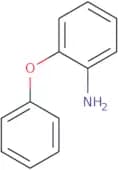
Discontinued product2-Phenoxyaniline
CAS:2-Phenoxyaniline is a nitro compound that can be converted to the corresponding palladium complexes. It is an inhibitor of the acylation reaction, which is a type of chemical reaction in which an organic molecule reacts with an acid. The inhibition of this reaction has been shown to have an effect on heart disease, specifically by lowering cholesterol levels and reducing atherosclerosis. 2-Phenoxyaniline has also been shown to inhibit the activation energy for electron transfer reactions, making it useful as a catalyst in analytical methods. 2-Phenoxyaniline also undergoes vibrational spectroscopy when exposed to liquid chromatography and other analytical methods.
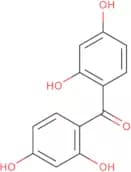
Formula:C12H11NOPurity:Min. 95%Color and Shape:Brown PowderMolecular weight:185.22 g/mol2,2',4,4'-tetrahydroxybenzophenone
CAS:2,2',4,4'-tetrahydroxybenzophenone is a hydroxylated benzophenone that has immunomodulatory effects. It binds to the receptor in the immune system and can cause an increase in cytokine production. 2,2',4,4'-tetrahydroxybenzophenone is cytotoxic and has significant toxicity in vitro. The molecule has been shown to disrupt mitochondrial membrane potential. This may be due to its ability to form hydrogen bonds with molecules on the mitochondrial membrane. 2,2',4,4'-tetrahydroxybenzophenone also modulates transcriptional regulation of genes involved in cell proliferation and apoptosis. The drug is detectable at low levels by mass spectrometry and is not known to have any toxicological effects.END>>
Formula:C13H10O5Purity:Min. 95%Color and Shape:Green PowderMolecular weight:246.22 g/molRef: 3D-FT55663
Discontinued product3-Bromo-6,7-dihydro-4H-pyrazolo[1,5-a]pyrazine-5-carboxylic acid tert-butyl ester
CAS:Versatile small molecule scaffold
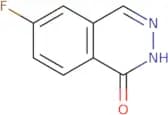
Formula:C11H16BrN3O2Purity:Min. 95%Molecular weight:302.17 g/mol6-fluoro-1,2-dihydrophthalazin-1-one
CAS:Versatile small molecule scaffold
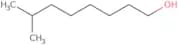
Formula:C8H5FN2OPurity:Min. 95%Molecular weight:164.14 g/molIsononyl alcohol
CAS:Isononyl alcohol is a polycarboxylic acid that has been used in the treatment of skin conditions, such as atopic dermatitis and psoriasis. It has been shown to penetrate the skin and stimulate the production of sebum. Isononyl alcohol is also used as a plasticizer for polyvinyl chloride (PVC) and other plastics, which increases their flexibility. This chemical also has a hydrophobic effect, which may be due to its hydroxyl group. The unsaturated alkyl chain on this chemical also makes it susceptible to oxidation by ozone in air and water vapor in air. Isononyl alcohol is metabolized by humans through conjugation with glucuronic acid or sulfate esters.
Formula:C9H20OPurity:Min. 95%Color and Shape:Clear LiquidMolecular weight:144.25 g/molRef: 3D-FI146181
Discontinued product3-(Methoxycarbonyl)pyridine-4-carboxylic acid
CAS:Versatile small molecule scaffold
Formula:C8H7NO4Purity:Min. 95%Molecular weight:181.15 g/moltert-Butyl 3-(trifluoromethyl)piperazine-1-carboxylate
CAS:Versatile small molecule scaffold
Formula:C10H17F3N2O2Purity:Min. 95%Molecular weight:254.25 g/mol2-Bromo-3,3,3-trifluoro-1-propene
CAS:Controlled Product2-Bromo-3,3,3-trifluoro-1-propene is a chemical compound that has been synthesized in an asymmetric reaction. The reactant is bromopropane and the product is 2,2,2-trifluoropropene. The methylene group on the propene molecule is activated by the nucleophilic attack of a fluoride ion from hydrogen fluoride to form a cavity with a highly strained bond. The kinetic study of this reaction revealed that the activation energy for the reaction is 42 kJ/mol. Palladium-catalyzed coupling reactions are catalyzed by palladium and require nonpolar solvents such as toluene or dichloromethane. This type of reaction has been shown to be exothermic with an isolated yield of 1%.
Formula:C3H2BrF3Purity:Min. 95%Color and Shape:Colorless PowderMolecular weight:174.95 g/mol4-(Methylamino)benzene-1-sulfonamide
CAS:Versatile small molecule scaffold
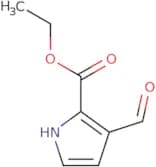
Formula:C7H10N2O2SPurity:Min. 95%Molecular weight:186.23 g/molethyl 3-formyl-1H-pyrrole-2-carboxylate
CAS:Ethyl 3-formyl-1H-pyrrole-2-carboxylate is a formyl compound with the molecular formula C8H8O3. It is a colorless liquid that has a strong odor. The compound can be obtained by the reaction of ethyl acetoacetate and pyrrole in the presence of aluminum chloride. The compound has been studied for its nuclear magnetic resonance (NMR) properties. It has two conformers, which are distinguished by their different chemical shifts, and this difference can be used to study coupling between the carbonyl group and other groups in the molecule.
Formula:C8H9NO3Purity:Min. 95%Molecular weight:167.2 g/moltrans-1,2-Dichloroethylene
CAS:Trans-1,2-Dichloroethylene is a chlorinated hydrocarbon that is used in the production of polyvinyl chloride plastics. When ingested at dietary concentrations, trans-1,2-Dichloroethylene may cause liver damage and death in CD-1 mice. Trans-1,2-Dichloroethylene has been shown to react with nucleophilic substitutions and produce toxic reaction products. This chemical also causes polymerase chain reactions that can lead to cell death. The effective dose for this chemical is unknown because it has not been tested in clinical trials.
Formula:C2H2Cl2Purity:Min. 95%Molecular weight:96.94 g/moltert-Butyl 5-bromo-3,4-dihydro-2,7-naphthyridine-2(1H)-carboxylate
CAS:Versatile small molecule scaffold
Formula:C13H17BrN2O2Purity:Min. 95%Molecular weight:313.19 g/molH-Ser-Ala-Glu-Glu-Tyr-Glu-Tyr-Pro-Ser OH trifluoroacetate
CAS:Please enquire for more information about H-Ser-Ala-Glu-Glu-Tyr-Glu-Tyr-Pro-Ser OH trifluoroacetate including the price, delivery time and more detailed product information at the technical inquiry form on this page
Formula:C47H63N9O20•(C2HF3O2)xPurity:Min. 95%Ref: 3D-FS183525
Discontinued product

![5-[(2-Methoxyphenyl)(methyl)sulfamoyl]-2-methylbenzoic acid](/_next/image/?url=https%3A%2Fstatic.cymitquimica.com%2Fproducts%2F3D%2Fthumb-webp%2FFQA34216.webp&w=3840&q=75)
![2-[(3-Fluoro-2-methoxyphenyl)methyl]pyrrolidine hydrochloride](/_next/image/?url=https%3A%2Fstatic.cymitquimica.com%2Fproducts%2F3D%2Fthumb-webp%2FFLD85481.webp&w=3840&q=75)

![2-Pentyl-1H-benzo[d]imidazole](/_next/image/?url=https%3A%2Fstatic.cymitquimica.com%2Fproducts%2F3D%2Fthumb-webp%2FFAA85146.webp&w=3840&q=75)
![tert-Butyl (4aS,7aS)-octahydro-1H-pyrrolo[3,4-b]pyridine-6-carboxylate](/_next/image/?url=https%3A%2Fstatic.cymitquimica.com%2Fproducts%2F3D%2Fthumb-webp%2FEZB42851.webp&w=3840&q=75)
![3-[4-(1-Aminoethyl)phenyl]-1-phenylurea](/_next/image/?url=https%3A%2Fstatic.cymitquimica.com%2Fproducts%2F3D%2Fthumb-webp%2FENB56855.webp&w=3840&q=75)

![[(2R)-1-Ethylpyrrolidin-2-yl]methanol](/_next/image/?url=https%3A%2Fstatic.cymitquimica.com%2Fproducts%2F3D%2Fthumb-webp%2FEDA80213.webp&w=3840&q=75)
![1-[(tert-Butoxy)carbonyl]-3-(methoxymethyl)azetidine-3-carboxylic acid](/_next/image/?url=https%3A%2Fstatic.cymitquimica.com%2Fproducts%2F3D%2Fthumb-webp%2FEAC94560.webp&w=3840&q=75)

![tert-Butyl N-[2-(chlorosulfonyl)thiophen-3-yl]carbamate](/_next/image/?url=https%3A%2Fstatic.cymitquimica.com%2Fproducts%2F3D%2Fthumb-webp%2FDXC59366.webp&w=3840&q=75)

![3-Bromo-6,7-dihydro-4H-pyrazolo[1,5-a]pyrazine-5-carboxylic acid tert-butyl ester](/_next/image/?url=https%3A%2Fstatic.cymitquimica.com%2Fproducts%2F3D%2Fthumb-webp%2FWXB15425.webp&w=3840&q=75)