Building Blocks
Subcategories of "Building Blocks"
- Boronic Acids & Boronic Acid Derivatives(5,778 products)
- Chiral Building Blocks(1,243 products)
- Hydrocarbon Building Blocks(6,098 products)
- Organic Building Blocks(61,042 products)
Found 204339 products of "Building Blocks"
5-(4-Nitro-phenyl)-[1,3,4]thiadiazol-2-ylamine
CAS:Versatile small molecule scaffold
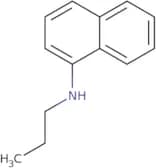
Formula:C8H6N4O2SPurity:Min. 95%Molecular weight:222.23 g/molN-Propylnaphthalen-1-amine
CAS:N-Propylnaphthalen-1-amine is a heterocycle that has two functional groups, fluorescence and photophysical properties. It can be synthesised in nature or synthetically. N-Propylnaphthalen-1-amine is used as an antifungal agent with a mechanism of action that is not yet fully understood. It interacts with the chlorides on the cell wall, which enhances its ability to kill fungi. The constant for this drug is 1×10^5M and the chloride transfer interaction constant is 2×10^2L/mol.
Formula:C13H15NPurity:Min. 95%Molecular weight:185.26 g/molRef: 3D-AAA60760
Discontinued product6-Hydroxynaphthalene-1,2-dione
CAS:Versatile small molecule scaffold
Formula:C10H6O3Purity:Min. 95%Molecular weight:174.15 g/molRef: 3D-AAA60720
Discontinued product2,2,2-Trifluoroethyl N-(6-chloro-3-oxo-3,4-dihydro-2H-1,4-benzoxazin-7-yl)carbamate
CAS:Versatile small molecule scaffold
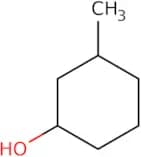
Formula:C11H8ClF3N2O4Purity:Min. 95%Molecular weight:324.64 g/mol3-Methylcyclohexanol
CAS:3-Methylcyclohexanol is a reactive chemical substance with the chemical formula CH3CH2OH. It is used in the synthesis of covid-19, a pandemic antiviral drug that can be used to treat influenza A virus. 3-Methylcyclohexanol is a sodium salt that is stable in water and has an acylation reaction with an acid chloride. This reaction produces an ester and carboxylic acid as byproducts. 3-Methylcyclohexanol can be hydrogenated using metal catalysts, such as palladium, platinum or nickel, to produce fatty acids. The efficient method for this process involves dehydration of the alcohol to form the corresponding hydroxy compound.
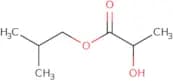
Formula:C7H14OPurity:Min. 95%Molecular weight:114.19 g/mol2-Methylpropyl 2-hydroxypropanoate
CAS:2-Methylpropyl 2-hydroxypropanoate is a hydrocarbon solvent that contains a hydroxyl group and a hydroxy group. It is used as an organic solvent for industrial purposes, such as patterning in semiconductor fabrication. It is also used in the production of polymers, pharmaceuticals, and other chemical products. This compound may be degraded by radiation or hydrolyzed to produce butanol and benzoic acid.
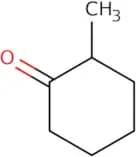
Formula:C7H14O3Purity:Min. 95%Molecular weight:146.18 g/mol2-Methylcyclohexanone
CAS:2-Methylcyclohexanone is an organic compound that is a colorless liquid at room temperature. It is classified as an enolate and has the chemical formula of CH3COCHO. The asymmetric synthesis of 2-methylcyclohexanone can be achieved by adding sodium ethoxide to ethyl formate in the presence of anhydrous sodium. This method produces a 1,3-diketone that can be hydrolyzed to give 2-methylcyclohexanone. Hydrogen bonding interactions between the methyl group and the carbonyl group are important for the stability of this molecule. The solubility data for 2-methylcyclohexanone ranges from 0.015 g/mL at 20 °C to 0.05 g/mL at 100 °C. Activation energies for this molecule range from -2.4 kcal/mol to -1.9 kcal/mol, with a viscosity of 8 cP at
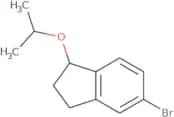
Formula:C7H12OPurity:Min. 95%Color and Shape:Clear LiquidMolecular weight:112.17 g/mol5-Bromo-1-(propan-2-yloxy)-2,3-dihydro-1H-indene
CAS:Versatile small molecule scaffold
Formula:C12H15BrOPurity:Min. 95%Molecular weight:255.15 g/molRef: 3D-WYB72534
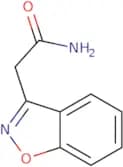
Discontinued product2-(1,2-Benzoxazol-3-yl)acetamide
CAS:Versatile small molecule scaffold
Formula:C9H8N2O2Purity:Min. 95%Molecular weight:176.17 g/molRef: 3D-YAA00868
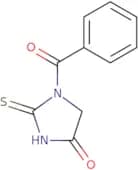
Discontinued product1-Benzoyl-2-sulfanylideneimidazolidin-4-one
CAS:1-Benzoyl-2-sulfanylideneimidazolidin-4-one is a chemical.
Formula:C10H8N2O2SPurity:Min. 95%Molecular weight:220.25 g/mol4-(4-Fluorophenyl)-4-methylpentan-2-one
CAS:Versatile small molecule scaffold
Formula:C12H15FOPurity:Min. 95%Molecular weight:194.24 g/molRef: 3D-AAA56537
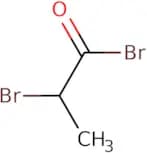
Discontinued product2-Bromopropionyl bromide
CAS:2-Bromopropionyl Bromide is a brominating agent that can be used as a chemical intermediate for the synthesis of polymeric materials. The bromine atom on the propionic acid group reacts with hydroxyl groups to form esters, amides, and phenols. It has minimal toxicity in cell culture and is not cytotoxic at concentrations up to 10%. 2-Bromopropionyl Bromide is an effective macroinitiator for cationic polymerization reactions. The acylation reaction with 3-chloroperoxybenzoic acid yields a diazonium salt which reacts further with tetronic acid or other cross-linking agents to form a polymer film. This product can be used for fluorescence techniques because it emits light when excited by ultraviolet radiation.
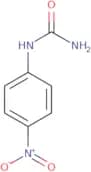
Formula:C3H4Br2OPurity:Min. 95%Color and Shape:Clear LiquidMolecular weight:215.87 g/mol(4-Nitrophenyl)urea
CAS:4-Nitrophenyl Urea (4NPU) is a compound that has antimalarial activity. It is an intramolecular hydrogen transfer agent that forms a reactive intermediate and interacts with anions, such as hydroxide ions, to form covalent bonds. 4NPU inhibits growth factor-mediated cell toxicity and has been shown to have the ability to select for mutant cells in vitro and in vivo. Crystals of 4NPU belong to the monoclinic system with space group P2 1/c. Hydrogen bonding occurs between the nitrogen atom on the urea moiety and water molecules in the crystal lattice, which stabilizes the molecule's structure.
Formula:C7H7N3O3Purity:Min. 95%Molecular weight:181.15 g/mol2-Phenyloxazole-4-carboxylic acid
CAS:Versatile small molecule scaffold
Formula:C10H7NO3Purity:Min. 95%Molecular weight:189.17 g/mol3-(4-Methoxyphenyl)-2-methylpropan-1-amine
CAS:Versatile small molecule scaffold
Formula:C11H17NOPurity:Min. 95%Molecular weight:179.26 g/molRef: 3D-YAA01482
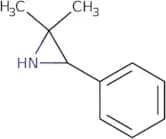
Discontinued product2,2-Dimethyl-3-phenylaziridine
CAS:Versatile small molecule scaffold
Formula:C10H13NPurity:Min. 95%Molecular weight:147.22 g/molRef: 3D-YAA04089
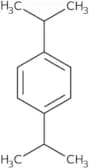
Discontinued product1,4-Diisopropylbenzene
CAS:1,4-Diisopropylbenzene is an aromatic hydrocarbon that can be used in the production of nylon. It is a reactive compound that reacts with hydrogen chloride to form 1,4-dichlorobenzene. It undergoes nucleophilic attack by the addition of hydrogen fluoride to produce a dihydrochloride salt. The reaction of 1,4-diisopropylbenzene with hydrochloric acid yields 1,2-dichlorobenzene and hydrogen chloride gas. The reaction mechanism for this chemical reaction is shown below:
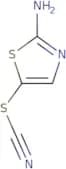
Formula:C12H18Purity:Min. 95%Molecular weight:162.27 g/mol5-Thiocyanato-thiazol-2-ylamine
CAS:5-Thiocyanato-thiazol-2-ylamine is a versatile research chemical that has various applications in the field of chemistry and pharmaceuticals. It is commonly used as a building block for the synthesis of other compounds, including diclofenac, suberoylanilide hydroxamic acid, neonicotinoids, and sildenafil citrate. This compound has been extensively studied and characterized for its unique properties. It exhibits supercritical behavior under certain conditions, making it suitable for use in supercritical fluid chromatography. Additionally, 5-Thiocyanato-thiazol-2-ylamine has low refractive index and surface energy values, which make it useful in the development of coatings and materials with specific optical properties. In addition to its role as a chemical building block, this compound has also shown potential therapeutic effects. Studies have indicated that it possesses natriuretic activity, meaning it can enhance the excretion of sodium from the body. Furthermore, 5-Th
Formula:C4H3N3S2Purity:Min. 95%Molecular weight:157.22 g/mol2-(1,3-Dioxo-2,3-dihydro-1H-isoindol-2-yl)propanal
CAS:Versatile small molecule scaffold
Formula:C11H9NO3Purity:Min. 95%Molecular weight:203.19 g/molRef: 3D-YAA10187
Discontinued product3,3-Diethylpiperidine hydrochloride
CAS:Versatile small molecule scaffold
Formula:C9H20ClNPurity:Min. 95%Molecular weight:177.71 g/molPiperazin-1-amine dihydrochloride
CAS:Versatile small molecule scaffold
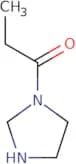
Formula:C4H13Cl2N3Purity:Min. 95%Molecular weight:174.07 g/mol1-(Imidazolidin-1-yl)propan-1-one
CAS:Versatile small molecule scaffold
Formula:C6H12N2OPurity:Min. 95%Molecular weight:128.17 g/molRef: 3D-YXB79515
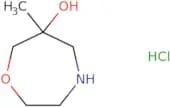
Discontinued product6-Methyl-1,4-oxazepan-6-ol hydrochloride
CAS:Versatile small molecule scaffold
Formula:C6H14ClNO2Purity:Min. 95%Molecular weight:167.63 g/mol2-(2-Carbamoylpyrrolidin-1-yl)-2-oxoacetic acid
CAS:Versatile small molecule scaffold
Formula:C7H10N2O4Purity:Min. 95%Molecular weight:186.17 g/molRef: 3D-YZB93014
Discontinued product4-(Azidomethyl)-1,2-dichlorobenzene
CAS:Versatile small molecule scaffold
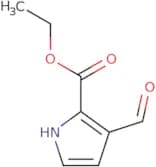
Formula:C7H5Cl2N3Purity:Min. 95%Molecular weight:202.04 g/molethyl 3-formyl-1H-pyrrole-2-carboxylate
CAS:Ethyl 3-formyl-1H-pyrrole-2-carboxylate is a formyl compound with the molecular formula C8H8O3. It is a colorless liquid that has a strong odor. The compound can be obtained by the reaction of ethyl acetoacetate and pyrrole in the presence of aluminum chloride. The compound has been studied for its nuclear magnetic resonance (NMR) properties. It has two conformers, which are distinguished by their different chemical shifts, and this difference can be used to study coupling between the carbonyl group and other groups in the molecule.
Formula:C8H9NO3Purity:Min. 95%Molecular weight:167.2 g/mol3-Bromo-6,7-dihydro-4H-pyrazolo[1,5-a]pyrazine-5-carboxylic acid tert-butyl ester
CAS:Versatile small molecule scaffold
Formula:C11H16BrN3O2Purity:Min. 95%Molecular weight:302.17 g/moltert-Butyl 3-(trifluoromethyl)piperazine-1-carboxylate
CAS:Versatile small molecule scaffold
Formula:C10H17F3N2O2Purity:Min. 95%Molecular weight:254.25 g/moltrans-1,2-Dichloroethylene
CAS:Trans-1,2-Dichloroethylene is a chlorinated hydrocarbon that is used in the production of polyvinyl chloride plastics. When ingested at dietary concentrations, trans-1,2-Dichloroethylene may cause liver damage and death in CD-1 mice. Trans-1,2-Dichloroethylene has been shown to react with nucleophilic substitutions and produce toxic reaction products. This chemical also causes polymerase chain reactions that can lead to cell death. The effective dose for this chemical is unknown because it has not been tested in clinical trials.
Formula:C2H2Cl2Purity:Min. 95%Molecular weight:96.94 g/moltert-Butyl 5-bromo-3,4-dihydro-2,7-naphthyridine-2(1H)-carboxylate
CAS:Versatile small molecule scaffold
Formula:C13H17BrN2O2Purity:Min. 95%Molecular weight:313.19 g/mol2-Acetylbenzoic acid
CAS:2-Acetylbenzoic acid is a functional molecule that contains an acetyl group. It can form hydrogen bonds with other molecules and has been shown to induce apoptosis in cells. The reaction products of 2-acetylbenzoic acid are malonic acid, acetylsalicylic acid, and 2-benzoylbenzoic acid. These three compounds are made by the addition of hydrogen or hydroxide to the molecule 2-acetylbenzoic acid. The molecule has two functional groups: a carbonyl group and an acetyl group. The chemical structure of this molecule can be seen in the figure below.
2-Acetylbenzoic AcidFormula:C9H8O3Purity:Min. 95%Color and Shape:PowderMolecular weight:164.16 g/molRef: 3D-FA05086
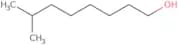
Discontinued productIsononyl alcohol
CAS:Isononyl alcohol is a polycarboxylic acid that has been used in the treatment of skin conditions, such as atopic dermatitis and psoriasis. It has been shown to penetrate the skin and stimulate the production of sebum. Isononyl alcohol is also used as a plasticizer for polyvinyl chloride (PVC) and other plastics, which increases their flexibility. This chemical also has a hydrophobic effect, which may be due to its hydroxyl group. The unsaturated alkyl chain on this chemical also makes it susceptible to oxidation by ozone in air and water vapor in air. Isononyl alcohol is metabolized by humans through conjugation with glucuronic acid or sulfate esters.
Formula:C9H20OPurity:Min. 95%Color and Shape:Clear LiquidMolecular weight:144.25 g/molRef: 3D-FI146181
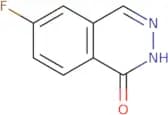
Discontinued product6-fluoro-1,2-dihydrophthalazin-1-one
CAS:Versatile small molecule scaffold
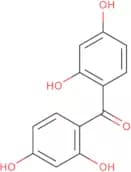
Formula:C8H5FN2OPurity:Min. 95%Molecular weight:164.14 g/mol2,2',4,4'-tetrahydroxybenzophenone
CAS:2,2',4,4'-tetrahydroxybenzophenone is a hydroxylated benzophenone that has immunomodulatory effects. It binds to the receptor in the immune system and can cause an increase in cytokine production. 2,2',4,4'-tetrahydroxybenzophenone is cytotoxic and has significant toxicity in vitro. The molecule has been shown to disrupt mitochondrial membrane potential. This may be due to its ability to form hydrogen bonds with molecules on the mitochondrial membrane. 2,2',4,4'-tetrahydroxybenzophenone also modulates transcriptional regulation of genes involved in cell proliferation and apoptosis. The drug is detectable at low levels by mass spectrometry and is not known to have any toxicological effects.END>>
Formula:C13H10O5Purity:Min. 95%Color and Shape:Green PowderMolecular weight:246.22 g/molRef: 3D-FT55663
Discontinued product2-Bromo-3,3,3-trifluoro-1-propene
CAS:Controlled Product2-Bromo-3,3,3-trifluoro-1-propene is a chemical compound that has been synthesized in an asymmetric reaction. The reactant is bromopropane and the product is 2,2,2-trifluoropropene. The methylene group on the propene molecule is activated by the nucleophilic attack of a fluoride ion from hydrogen fluoride to form a cavity with a highly strained bond. The kinetic study of this reaction revealed that the activation energy for the reaction is 42 kJ/mol. Palladium-catalyzed coupling reactions are catalyzed by palladium and require nonpolar solvents such as toluene or dichloromethane. This type of reaction has been shown to be exothermic with an isolated yield of 1%.
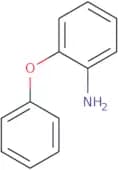
Formula:C3H2BrF3Purity:Min. 95%Color and Shape:Colorless PowderMolecular weight:174.95 g/mol2-Phenoxyaniline
CAS:2-Phenoxyaniline is a nitro compound that can be converted to the corresponding palladium complexes. It is an inhibitor of the acylation reaction, which is a type of chemical reaction in which an organic molecule reacts with an acid. The inhibition of this reaction has been shown to have an effect on heart disease, specifically by lowering cholesterol levels and reducing atherosclerosis. 2-Phenoxyaniline has also been shown to inhibit the activation energy for electron transfer reactions, making it useful as a catalyst in analytical methods. 2-Phenoxyaniline also undergoes vibrational spectroscopy when exposed to liquid chromatography and other analytical methods.
Formula:C12H11NOPurity:Min. 95%Color and Shape:Brown PowderMolecular weight:185.22 g/mol3-(Methoxycarbonyl)pyridine-4-carboxylic acid
CAS:Versatile small molecule scaffold
Formula:C8H7NO4Purity:Min. 95%Molecular weight:181.15 g/mol4-(Methylamino)benzene-1-sulfonamide
CAS:Versatile small molecule scaffold
Formula:C7H10N2O2SPurity:Min. 95%Molecular weight:186.23 g/molH-Ser-Ala-Glu-Glu-Tyr-Glu-Tyr-Pro-Ser OH trifluoroacetate
CAS:Please enquire for more information about H-Ser-Ala-Glu-Glu-Tyr-Glu-Tyr-Pro-Ser OH trifluoroacetate including the price, delivery time and more detailed product information at the technical inquiry form on this page
Formula:C47H63N9O20•(C2HF3O2)xPurity:Min. 95%Ref: 3D-FS183525
Discontinued product
![5-(4-Nitro-phenyl)-[1,3,4]thiadiazol-2-ylamine](/_next/image/?url=https%3A%2Fstatic.cymitquimica.com%2Fproducts%2F3D%2Fthumb-webp%2FAAA83363.webp&w=3840&q=75)






![3-Bromo-6,7-dihydro-4H-pyrazolo[1,5-a]pyrazine-5-carboxylic acid tert-butyl ester](/_next/image/?url=https%3A%2Fstatic.cymitquimica.com%2Fproducts%2F3D%2Fthumb-webp%2FWXB15425.webp&w=3840&q=75)