Building Blocks
Subcategories of "Building Blocks"
- Boronic Acids & Boronic Acid Derivatives(5,774 products)
- Chiral Building Blocks(1,237 products)
- Hydrocarbon Building Blocks(6,098 products)
- Organic Building Blocks(60,970 products)
Found 205134 products of "Building Blocks"
1-Butyl-5-(chloromethyl)-1H-1,2,3,4-tetrazole
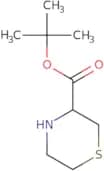
CAS:Versatile small molecule scaffoldFormula:C6H11ClN4Purity:Min. 95%Molecular weight:174.63 g/moltert-Butyl thiomorpholine-3-carboxylate
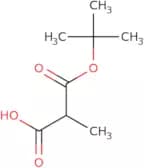
CAS:Versatile small molecule scaffoldFormula:C9H17NO2SPurity:Min. 95%Molecular weight:203.3 g/mol3-(tert-Butoxy)-2-methyl-3-oxopropanoic acid
CAS:Versatile small molecule scaffoldFormula:C8H14O4Purity:Min. 95%Molecular weight:174.19 g/molEthyl 4-chloro-5-formyl-2-methyl-3-thiophenecarboxylate
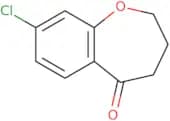
CAS:Versatile small molecule scaffoldFormula:C9H9ClO3SPurity:Min. 95%Molecular weight:232.68 g/mol8-Chloro-2,3,4,5-tetrahydro-1-benzoxepin-5-one
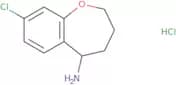
CAS:Versatile small molecule scaffoldFormula:C10H9ClO2Purity:Min. 95%Molecular weight:196.63 g/mol8-Chloro-2,3,4,5-tetrahydro-1-benzoxepin-5-amine hydrochloride
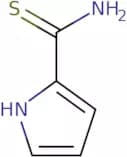
CAS:Versatile small molecule scaffoldFormula:C10H13Cl2NOPurity:Min. 95%Molecular weight:234.12 g/mol1H-Pyrrole-2-carbothioamide
CAS:1H-Pyrrole-2-carbothioamide is an analog of porphyrin. It has a macrocyclic structure with a central metal atom that is bonded to four sulfur atoms and two nitrogen atoms. It absorbs light in the visible region, which makes it appealing for use as a pigment or dye. 1H-Pyrrole-2-carbothioamide has been shown to be biocompatible with living cells and tissues, making it suitable for use in biomedical applications. This molecule can be synthesized by reacting potassium with methanesulfonic acid followed by addition of thiocyanate ion.Formula:C5H6N2SPurity:Min. 95%Molecular weight:126.18 g/mol6-Chloro-3H-pyrido[2,3-b][1,4]thiazin-2-amine
CAS:Versatile small molecule scaffold
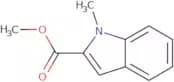
Formula:C7H6ClN3SPurity:Min. 95%Molecular weight:199.66 g/molMethyl 1-methyl-1H-indole-2-carboxylate
CAS:Controlled ProductMethyl 1-methyl-1H-indole-2-carboxylate is an organic compound that belongs to the family of indole carboxylic acid esters. It is an x-ray crystallographic study for the preparation process, and it has been shown to have antileishmanial activity. The methyl ester is a reagent for the synthesis of octahydroaziridine and can be used as a reagent in Grignard reactions.Formula:C11H11NO2Purity:Min. 95%Molecular weight:189.21 g/mol5-Chloro-2-(ethylamino)benzoic acid
CAS:Versatile small molecule scaffoldFormula:C9H10ClNO2Purity:Min. 95%Molecular weight:199.63 g/mol1-Cyclopentyl-4,5-dihydro-1H-1,2,3,4-tetrazol-5-one
CAS:Versatile small molecule scaffoldFormula:C6H10N4OPurity:Min. 95%Molecular weight:154.17 g/mol1-Chloroisoquinoline-4-carboxylic acid methyl ester
CAS:1-Chloroisoquinoline-4-carboxylic acid methyl ester is a potent compound that acts as an antagonist of the prostanoid receptor. It blocks the binding of prostanoids to the receptor and inhibits the production of inflammatory molecules, such as leukotrienes. 1CIQME has been shown to have affinity for both Cox-1 and Cox-2, but is selective for Cox-2. This drug also competitively inhibits the enzyme cyclooxygenase (COX), which produces prostaglandins from arachidonic acid. 1CIQME has been shown to inhibit chemotaxis in mice and to block chemoattractant effects in human neutrophils.
Formula:C11H8ClNO2Purity:Min. 95%Molecular weight:221.64 g/mol7-Bromo-2,3-dihydro-1H-cyclopenta[b]quinoline-9-carboxylic acid
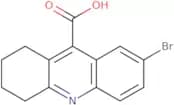
CAS:Versatile small molecule scaffoldFormula:C13H10BrNO2Purity:Min. 95%Molecular weight:292.13 g/mol7-Bromo-1,2,3,4-tetrahydro-acridine-9-carboxylic acid
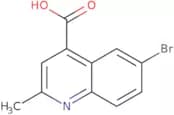
CAS:Versatile small molecule scaffoldFormula:C14H12BrNO2Purity:Min. 95%Molecular weight:306.15 g/mol6-Bromo-2-methylquinoline-4-carboxylic acid
CAS:Versatile small molecule scaffoldFormula:C11H8BrNO2Purity:Min. 95%Molecular weight:266.09 g/mol[(1-Hydroxy-2-oxo-2-phenylethyl)thio]acetic acid
CAS:[(1-Hydroxy-2-oxo-2-phenylethyl)thio]acetic acid (HPTAA) is a selective inhibitor of the enzyme tyrosine kinase. It has been shown to have antiproliferative effects in vitro against glioblastoma cells lines and other cancer cell lines, as well as in vivo against established tumors. HPTAA inhibits the proliferation of cancer cells by interfering with the activation of multiple signaling pathways. This compound has been shown to be selective for cancer cells, while having no effect on normal cells at micromolar concentrations. HPTAA is currently being tested in preselected patients with malignant gliomas and recurrent testicular seminoma.Formula:C10H10O4SPurity:Min. 95%Molecular weight:226.25 g/mol3,3-Dicyclopropylprop-2-enoic acid
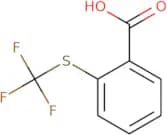
CAS:Versatile small molecule scaffoldFormula:C9H12O2Purity:Min. 95%Molecular weight:152.19 g/mol2-((Trifluoromethyl)thio)benzoic acid
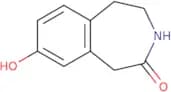
CAS:Versatile small molecule scaffoldFormula:C8H5F3O2SPurity:Min. 95%Molecular weight:222.18 g/mol1,3,4,5-Tetrahydro-8-hydroxy-2H-3-benzazepin-2-one
CAS:Versatile small molecule scaffoldFormula:C10H11NO2Purity:Min. 95%Molecular weight:177.2 g/mol6-Chloro-7H-purin-8(9H)-one
CAS:Versatile small molecule scaffoldFormula:C5H3ClN4OPurity:Min. 95%Molecular weight:170.56 g/mol2-[2-(Ethylsulfanyl)phenyl]acetic acid
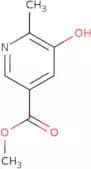
CAS:Versatile small molecule scaffoldFormula:C10H12O2SPurity:Min. 95%Molecular weight:196.27 g/mol5-Hydroxy-6-methyl-nicotinic acid methyl ester
CAS:Versatile small molecule scaffold
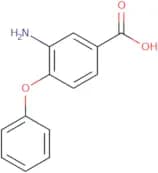
Formula:C8H9NO3Purity:Min. 95%Molecular weight:167.16 g/mol3-Amino-4-phenoxybenzoic acid
CAS:Versatile small molecule scaffold
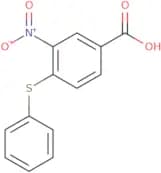
Formula:C13H11NO3Purity:Min. 95%Molecular weight:229.23 g/mol3-Nitro-4-(phenylsulfanyl)benzoic acid
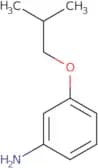
CAS:Versatile small molecule scaffoldFormula:C13H9NO4SPurity:Min. 95%Molecular weight:275.28 g/mol3-Isobutoxy-phenylamine
CAS:Versatile small molecule scaffoldFormula:C10H15NOPurity:Min. 95%Molecular weight:165.24 g/molPyrido[3,2-d]pyrimidin-4(3H)-one
CAS:Pyrido[3,2-d]pyrimidin-4(3H)-one is a molecule that belongs to the class of antimalarial drugs. It inhibits plasmodium falciparum by inhibiting the biosynthesis of purine nucleotides. Pyrido[3,2-d]pyrimidin-4(3H)-one is chemically reactive and apolar. It was isolated from a chemically synthesized compound as an isomer mixture and has been shown to have high activity against erythrocytic stages of plasmodium falciparum in vitro. Pyrido[3,2-d]pyrimidin-4(3H)-one also has a clinical drug application in incrementing the response to other antimalarial drugs.
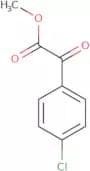
Formula:C7H5N3OPurity:Min. 95%Molecular weight:147.13 g/molMethyl 2-(4-chlorophenyl)-2-oxoacetate
CAS:Versatile small molecule scaffold
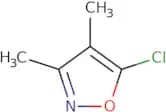
Formula:C9H7ClO3Purity:Min. 95%Molecular weight:198.6 g/mol5-Chloro-3,4-dimethyl-1,2-oxazole
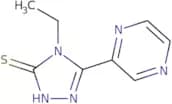
CAS:Versatile small molecule scaffoldFormula:C5H6ClNOPurity:Min. 95%Molecular weight:131.56 g/mol4-Ethyl-5-(pyrazin-2-yl)-4H-1,2,4-triazole-3-thiol
CAS:Versatile small molecule scaffold
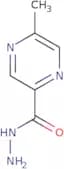
Formula:C8H9N5SPurity:Min. 95%Molecular weight:207.26 g/mol5-Methylpyrazine-2-carbohydrazide
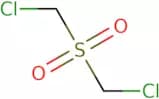
CAS:5-Methylpyrazine-2-carbohydrazide is a nitro compound that has been shown to have anti-diabetic properties. It can be used as an alternative to insulin in the treatment of diabetes mellitus type 2. 5-Methylpyrazine-2-carbohydrazide has also been shown to inhibit the growth of Staphylococcus aureus, which is a bacterium responsible for causing many types of infections including pneumonia and food poisoning. 5-Methylpyrazine-2-carbohydrazide is a fluorinated chemical that contains aluminium, chlorine, and fluorine atoms. This compound is capable of forming supramolecular complexes with electron deficient species such as sulphur, selenium, or tellurium. The synthesis of 5-methylpyrazine-2-carbohydrazide requires refluxing with chloride in hydrochloric acid and protonation with sodium hydroxide.Formula:C6H8N4OPurity:Min. 95%Molecular weight:152.15 g/molChloro(chloromethanesulfonyl)methane
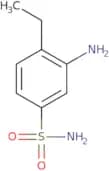
CAS:Chloro(chloromethanesulfonyl)methane is a herbicide that inhibits the growth of plants by blocking the enzyme responsible for synthesizing the amino acid methionine. It is an analog of sulfometuron-methyl and metolachlor, which are also used as herbicides. Chloro(chloromethanesulfonyl)methane has been shown to be toxic to ruminants, due to its ability to block the synthesis of methionine in their gut bacteria. This drug can also produce a metabolic acidosis in some animals, which may be caused by its ability to produce sulfide from sulfur-containing amino acids.Formula:C2H4Cl2O2SPurity:Min. 95%Molecular weight:163.02 g/mol3-Amino-4-ethylbenzene-1-sulfonamide
CAS:Versatile small molecule scaffold
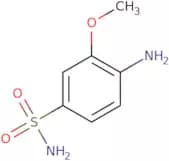
Formula:C8H12N2O2SPurity:Min. 95%Molecular weight:200.26 g/mol4-Amino-3-methoxybenzene-1-sulfonamide
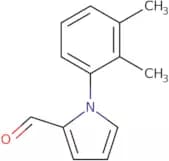
CAS:Versatile small molecule scaffoldFormula:C7H10N2O3SPurity:Min. 95%Molecular weight:202.23 g/mol1-(2,3-Dimethylphenyl)-1H-pyrrole-2-carbaldehyde
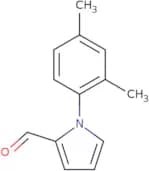
CAS:Versatile small molecule scaffoldFormula:C13H13NOPurity:Min. 95%Molecular weight:199.25 g/mol1-(2,4-Dimethylphenyl)-1H-pyrrole-2-carbaldehyde
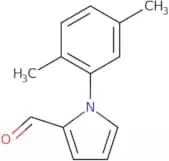
CAS:Versatile small molecule scaffoldFormula:C13H13NOPurity:Min. 95%Molecular weight:199.25 g/mol1-(2,5-Dimethylphenyl)-1H-pyrrole-2-carbaldehyde
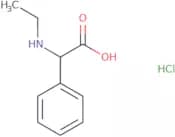
CAS:Versatile small molecule scaffoldFormula:C13H13NOPurity:Min. 95%Molecular weight:199.25 g/mol2-(Ethylamino)-2-phenylacetic acid hydrochloride
CAS:Versatile small molecule scaffold
Formula:C10H14ClNO2Purity:Min. 95%Molecular weight:215.67 g/mol2-[4-(2-Aminoethyl)phenyl]acetic acid hydrochloride
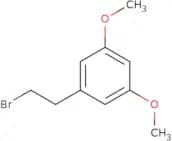
CAS:Versatile small molecule scaffoldFormula:C10H14ClNO2Purity:Min. 95%Molecular weight:215.67 g/mol1-(2-Bromoethyl)-3,5-dimethoxybenzene
CAS:Versatile small molecule scaffold
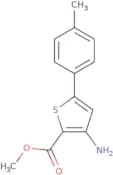
Formula:C10H13BrO2Purity:Min. 95%Molecular weight:245.11 g/molMethyl 3-amino-5-(4-methylphenyl)thiophene-2-carboxylate
CAS:Versatile small molecule scaffold
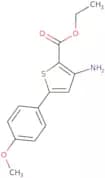
Formula:C13H13NO2SPurity:Min. 95%Molecular weight:247.31 g/molEthyl 3-amino-5-(4-methoxyphenyl)thiophene-2-carboxylate
CAS:Versatile small molecule scaffoldFormula:C14H15NO3SPurity:Min. 95%Molecular weight:277.34 g/mol4-[(2-Methoxyphenyl)methyl]piperidine hydrochloride
CAS:Versatile small molecule scaffold
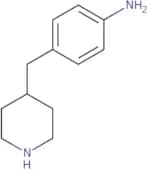
Formula:C13H20ClNOPurity:Min. 95%Molecular weight:241.76 g/mol4-(4-Aminophenylmethyl)piperidine
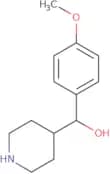
CAS:Versatile small molecule scaffoldFormula:C12H18N2Purity:Min. 95%Molecular weight:190.29 g/mol(4-Methoxyphenyl)(piperidin-4-yl)methanol
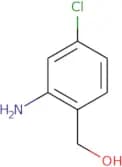
CAS:Versatile small molecule scaffoldFormula:C13H19NO2Purity:Min. 95%Molecular weight:221.29 g/mol(2-amino-4-chlorophenyl)methanol
CAS:Ruthenium-based catalysts can be used for the synthesis of 2-amino-4-chlorophenylmethanol. This catalyst is a sustainable, low cost, and efficient solution to many industrial chemical production problems. The catalyst utilizes magnetic nanoparticles that are inexpensive and easy to produce. It also has a short reaction time, which helps to increase efficiency. The oxidation of this compound produces hydrogen peroxide as an oxidant, which reduces the need for other oxidizing agents in the reaction.
Formula:C7H8ClNOPurity:Min. 95%Molecular weight:157.6 g/mol6-Methoxy-3H-pyrido[2,3-b][1,4]thiazin-2-amine
CAS:Versatile small molecule scaffold
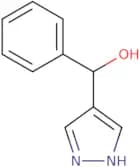
Formula:C8H9N3OSPurity:Min. 95%Molecular weight:195.24 g/molPhenyl(1H-pyrazol-4-yl)methanol
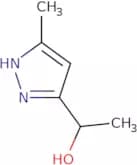
CAS:Versatile small molecule scaffoldFormula:C10H10N2OPurity:Min. 95%Molecular weight:174.2 g/mol1-(5-Methyl-1H-pyrazol-3-yl)ethan-1-ol
CAS:Versatile small molecule scaffoldFormula:C6H10N2OPurity:Min. 95%Molecular weight:126.16 g/molSpiro[3.4]octan-1-one
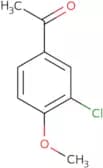
CAS:Spiro[3.4]octan-1-one is an organic compound that is a 2-chloroethyl ketone. It can be prepared by the reaction of dimethyl sulfonium iodide with 2-chloroethanol. This chemical has been used as a reagent in the synthesis of polymers and pharmaceuticals.Formula:C8H12OPurity:Min. 95%Molecular weight:124.18 g/mol3'-Chloro-4'-methoxyacetophenone
CAS:3'-Chloro-4'-methoxyacetophenone (3'-CMA) is a chalcone that is used as an inhibitor of the enzyme acetylcholinesterase. It has been shown to inhibit the activity of acetylcholinesterase, which is responsible for the hydrolysis of acetylcholine. This inhibition leads to an increase in acetylcholine levels and therefore to an increase in the response time of skeletal muscle. 3'-CMA has been shown to have potentiating effects on other compounds, such as phenoxy, which are also inhibitors of acetylcholinesterase.
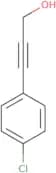
Formula:C9H9ClO2Purity:Min. 95%Molecular weight:184.62 g/mol3-(4-Chloro-phenyl)-prop-2-yn-1-ol
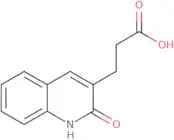
CAS:3-(4-Chloro-phenyl)-prop-2-yn-1-ol is a compound that can be synthesized by the reaction of 3-(4-chlorophenyl)propanal and ammonia. The reaction has been carried out in the presence of ammonium acetate, which acts as a catalyst to promote the formation of this product. This compound may be used for the synthesis of isoquinolines, which are biologically active compounds. The microwave irradiation technique is used for this synthesis to increase yields and decrease time.Formula:C9H7ClOPurity:Min. 95%Molecular weight:166.6 g/mol3-(2-Oxo-1,2-dihydroquinolin-3-yl)propanoic acid
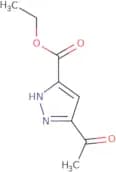
CAS:Versatile small molecule scaffoldFormula:C12H11NO3Purity:Min. 95%Molecular weight:217.22 g/mol5-Acetyl-2H-pyrazole-3-carboxylic acid ethyl ester
CAS:5-Acetyl-2H-pyrazole-3-carboxylic acid ethyl ester is a potent and selective inhibitor of the enzyme carboxamide ribonucleotide transformylase (CRT). The pharmacodynamic properties of this compound are still unknown. 5-Acetyl-2H-pyrazole-3-carboxylic acid ethyl ester has been shown to inhibit tumour growth in xenograft models, but not in mice. It was also found to inhibit the proliferation of myeloproliferative cells, but not normal cells, in vitro. Further research is required to elucidate its mechanism of action and potential clinical applications.
Formula:C8H10N2O3Purity:Min. 95%Molecular weight:182.18 g/mol2-Ethyl-1-oxa-4,8-diazaspiro[4.5]decan-3-one hydrobromide
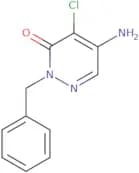
CAS:Versatile small molecule scaffoldFormula:C9H17BrN2O2Purity:Min. 95%Molecular weight:265.15 g/mol5-Amino-2-benzyl-4-chloro-2,3-dihydropyridazin-3-one
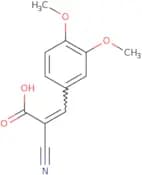
CAS:Versatile small molecule scaffoldFormula:C11H10ClN3OPurity:Min. 95%Molecular weight:235.67 g/mol(2E)-2-Cyano-3-(3,4-dimethoxyphenyl)prop-2-enoic acid
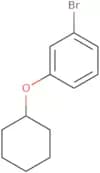
CAS:Versatile small molecule scaffoldFormula:C12H11NO4Purity:Min. 95%Molecular weight:233.22 g/mol1-Bromo-3-(cyclohexyloxy)benzene
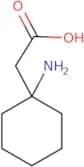
CAS:Versatile small molecule scaffoldFormula:C12H15BrOPurity:Min. 95%Molecular weight:255.15 g/mol(1-Aminocyclohexyl)acetic acid
CAS:(1-Aminocyclohexyl)acetic acid is a molecule that has been shown to have high cytotoxicity in the presence of hydrogen peroxide. It has been shown to be an inhibitor of β-aminoacyl-tRNA synthetase and RNA polymerase, which leads to reduced protein synthesis. The conformational properties and flipping of the cyclohexane ring have been studied using NMR spectroscopy. (1-Aminocyclohexyl)acetic acid is also known as 1-aminocyclopentane carboxylic acid or ACPA.Formula:C8H15NO2Purity:Min. 95%Molecular weight:157.21 g/mol3-Amino-3-cyclohexylpropanoic acid hydrochloride
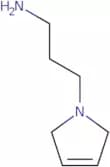
CAS:Versatile small molecule scaffoldPurity:Min. 95%Molecular weight:207.7 g/mol3-(2,5-Dihydro-1H-pyrrol-1-yl)propan-1-amine
CAS:Versatile small molecule scaffold
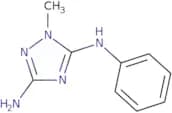
Formula:C7H14N2Purity:Min. 95%Molecular weight:126.2 g/mol1-Methyl-5-N-phenyl-1H-1,2,4-triazole-3,5-diamine
CAS:Versatile small molecule scaffoldFormula:C9H11N5Purity:Min. 95%Molecular weight:189.22 g/molAzepane-2,5-dione
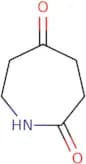
CAS:Azepane-2,5-dione is a dopamine antagonist that blocks the activity of dopamine receptors by binding to them. It has been shown to antagonize the effects of dopamine in the brain and may be used for treatment of schizophrenia.
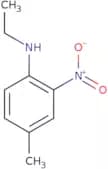
Formula:C6H9NO2Purity:Min. 95%Molecular weight:127.14 g/molN-Ethyl-4-methyl-2-nitroaniline
CAS:Versatile small molecule scaffold
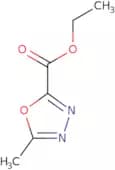
Formula:C9H12N2O2Purity:Min. 95%Molecular weight:180.2 g/molEthyl 5-methyl-1,3,4-oxadiazole-2-carboxylate
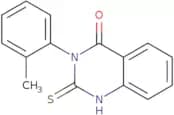
CAS:Versatile small molecule scaffoldFormula:C6H8N2O3Purity:Min. 95%Molecular weight:156.14 g/mol3-(2-Methylphenyl)-2-sulfanyl-3,4-dihydroquinazolin-4-one
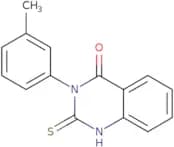
CAS:Versatile small molecule scaffoldFormula:C15H12N2OSPurity:Min. 95%Molecular weight:268.3 g/mol3-(3-Methylphenyl)-2-sulfanyl-3,4-dihydroquinazolin-4-one
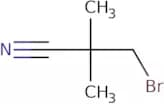
CAS:Versatile small molecule scaffoldFormula:C15H12N2OSPurity:Min. 95%Molecular weight:268.3 g/mol3-Bromo-2,2-dimethylpropanenitrile
CAS:Versatile small molecule scaffoldFormula:C5H8BrNPurity:Min. 95%Molecular weight:162.03 g/mol2-Chloro-4-[(methoxycarbonyl)amino]benzoic acid
CAS:Versatile small molecule scaffold
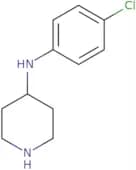
Formula:C9H8ClNO4Purity:Min. 95%Molecular weight:229.62 g/molN-(4-Chlorophenyl)piperidin-4-amine
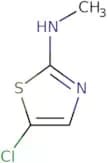
CAS:Controlled ProductVersatile small molecule scaffoldFormula:C11H15ClN2Purity:Min. 95%Molecular weight:210.7 g/mol5-Chloro-N-methyl-1,3-thiazol-2-amine
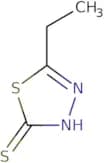
CAS:Versatile small molecule scaffoldFormula:C4H5ClN2SPurity:Min. 95%Molecular weight:148.61 g/mol5-Ethyl-1,3,4-thiadiazole-2-thiol
CAS:Versatile small molecule scaffold
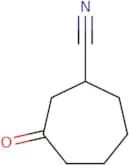
Formula:C4H6N2S2Purity:Min. 95%Molecular weight:146.2 g/mol3-Oxocycloheptane-1-carbonitrile
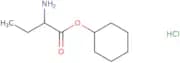
CAS:Versatile small molecule scaffoldFormula:C8H11NOPurity:Min. 95%Molecular weight:137.18 g/molCyclohexyl (2S)-2-aminobutanoate hydrochloride
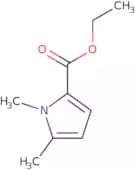
CAS:Versatile small molecule scaffoldFormula:C10H20ClNO2Purity:Min. 95%Molecular weight:221.72 g/molEthyl 1,5-dimethyl-1H-pyrrole-2-carboxylate
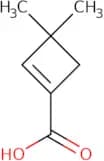
CAS:Versatile small molecule scaffoldFormula:C9H13NO2Purity:Min. 95%Molecular weight:167.2 g/mol3,3-Dimethylcyclobut-1-ene-1-carboxylic acid
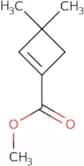
CAS:Versatile small molecule scaffoldFormula:C7H10O2Purity:Min. 95%Molecular weight:126.16 g/mol1-Cyclobutene-1-carboxylic acid, 3,3-dimethyl-, methyl ester
CAS:Versatile small molecule scaffold
Formula:C8H12O2Purity:Min. 95%Molecular weight:140.18 g/mol1-(Bromomethyl)cyclohexene
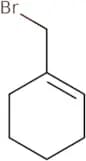
CAS:1-(Bromomethyl)cyclohexene is a synthetic reagent that can be used in the preparation of homoallylic alcohols. The reaction with thionyl chloride leads to the formation of 1-(chloromethyl)cyclohexene, which has been shown to undergo rearrangements to yield cyclic alcohols. This compound is also an intermediate in the synthesis of macrocyclic compounds and can be used as a mediated agent for the synthesis of aldehydes.Formula:C7H11BrPurity:Min. 95%Molecular weight:175.07 g/mol8-Methoxy-4,5-dihydro-1H-benzo[d]azepin-2(3H)-one
CAS:Versatile small molecule scaffoldFormula:C11H13NO2Purity:Min. 95%Molecular weight:191.23 g/mol1-(1H-Pyrazol-4-yl)propan-1-one
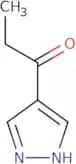
CAS:Versatile small molecule scaffold
Formula:C6H8N2OPurity:Min. 95%Molecular weight:124.14 g/moldiethyl 1H-pyrazole-3,4-dicarboxylate
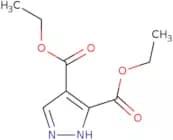
CAS:Versatile small molecule scaffoldFormula:C9H12N2O4Purity:Min. 95%Molecular weight:212.2 g/mol4-(Benzyloxy)-3-chloro-5-methoxybenzaldehyde
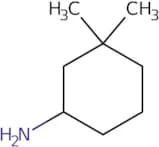
CAS:Versatile small molecule scaffoldFormula:C15H13ClO3Purity:Min. 95%Molecular weight:276.71 g/mol3,3-Dimethylcyclohexan-1-amine
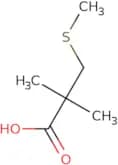
CAS:Versatile small molecule scaffoldFormula:C8H17NPurity:Min. 95%Molecular weight:127.23 g/mol2,2-dimethyl-3-(methylsulfanyl)propanoic acid
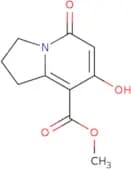
CAS:Versatile small molecule scaffoldFormula:C6H12O2SPurity:Min. 95%Molecular weight:148.22 g/molMethyl 7-hydroxy-5-oxo-1,2,3,5-tetrahydroindolizine-8-carboxylate
CAS:Versatile small molecule scaffold
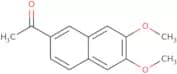
Formula:C10H11NO4Purity:Min. 95%Molecular weight:209.2 g/mol1-(6,7-Dimethoxynaphthalen-2-yl)ethan-1-one
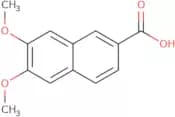
CAS:Versatile small molecule scaffoldFormula:C14H14O3Purity:Min. 95%Molecular weight:230.26 g/mol6,7-Dimethoxynaphthalene-2-carboxylic acid
CAS:Versatile small molecule scaffold
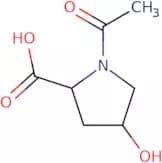
Formula:C13H12O4Purity:Min. 95%Molecular weight:232.23 g/mol(2R,4R)-1-Acetyl-4-hydroxypyrrolidine-2-carboxylic acid
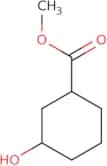
CAS:Versatile small molecule scaffoldFormula:C7H11NO4Purity:Min. 95%Molecular weight:173.17 g/molMethyl 3-hydroxycyclohexanecarboxylate
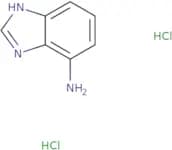
CAS:Versatile small molecule scaffoldFormula:C8H14O3Purity:Min. 95%Molecular weight:158.19 g/mol1H-1,3-Benzodiazol-7-amine dihydrochloride
CAS:Versatile small molecule scaffold
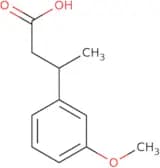
Formula:C7H9Cl2N3Purity:Min. 95%Molecular weight:206.07 g/mol3-(3-Methoxyphenyl)butanoic acid
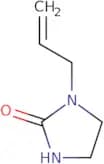
CAS:Versatile small molecule scaffoldFormula:C11H14O3Purity:Min. 95%Molecular weight:194.23 g/mol1-(Prop-2-en-1-yl)imidazolidin-2-one
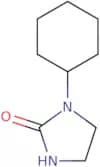
CAS:Versatile small molecule scaffoldFormula:C6H10N2OPurity:Min. 95%Molecular weight:126.16 g/mol1-Cyclohexylimidazolidin-2-one
CAS:Versatile small molecule scaffoldFormula:C9H16N2OPurity:Min. 95%Molecular weight:168.24 g/mol1-[(Pyridin-3-yl)methyl]imidazolidin-2-one
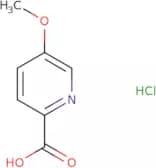
CAS:Versatile small molecule scaffoldFormula:C9H11N3OPurity:Min. 95%Molecular weight:177.2 g/mol5-Methoxypyridine-2-carboxylic acid hydrochloride
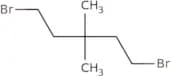
CAS:Versatile small molecule scaffoldFormula:C7H8ClNO3Purity:Min. 95%Molecular weight:189.59 g/mol1,5-Dibromo-3,3-dimethylpentane
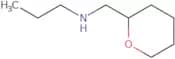
CAS:Versatile small molecule scaffoldFormula:C7H14Br2Purity:Min. 95%Molecular weight:257.99 g/mol(Oxan-2-ylmethyl)(propyl)amine
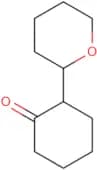
CAS:Versatile small molecule scaffoldFormula:C9H19NOPurity:Min. 95%Molecular weight:157.25 g/mol2-(Oxan-2-yl)cyclohexan-1-one
CAS:Versatile small molecule scaffold
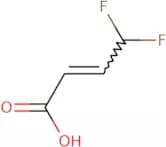
Formula:C11H18O2Purity:Min. 95%Molecular weight:182.3 g/mol4,4-Difluoro-but-2-enoic acid
CAS:Versatile small molecule scaffoldFormula:C4H4F2O2Purity:Min. 95%Molecular weight:122.07 g/mol3-Phenyl-1,2,4-oxadiazole-5-carbonitrile
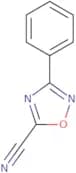
CAS:Versatile small molecule scaffold
Formula:C9H5N3OPurity:Min. 95%Molecular weight:171.16 g/mol1-Bromo-2-(bromomethyl)naphthalene
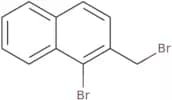
CAS:1-Bromo-2-(bromomethyl)naphthalene is an organic compound that has a chiral center. It is a ligand in coordination chemistry and can be used as a starting material for the synthesis of other compounds. 1-Bromo-2-(bromomethyl)naphthalene crystallizes in the orthorhombic space group Pna21, with cell dimensions of a = 15.02 Å, b = 13.77 Å, c = 13.91 Å, α = 90°, β = 90°, γ = 90°. The molecular structure has been determined by x-ray diffraction data collected at 100 K on beamline I06 at the Advanced Photon Source synchrotron facility in Illinois. The crystal structure contains two molecules per asymmetric unit, with an approximate Z value of 2 (atoms are ordered according to their atomic numbers). One molecule is oriented parallel to
Formula:C11H8Br2Purity:Min. 95%Molecular weight:299.99 g/mol



![6-Chloro-3H-pyrido[2,3-b][1,4]thiazin-2-amine](/_next/image/?url=https%3A%2Fstatic.cymitquimica.com%2Fproducts%2F3D%2Fthumb-webp%2FMBA48937.webp&w=3840&q=75)


![7-Bromo-2,3-dihydro-1H-cyclopenta[b]quinoline-9-carboxylic acid](/_next/image/?url=https%3A%2Fstatic.cymitquimica.com%2Fproducts%2F3D%2Fthumb-webp%2FMBA50866.webp&w=3840&q=75)
![[(1-Hydroxy-2-oxo-2-phenylethyl)thio]acetic acid](/_next/image/?url=https%3A%2Fstatic.cymitquimica.com%2Fproducts%2F3D%2Fthumb-webp%2FMBA51029.webp&w=3840&q=75)


![2-[2-(Ethylsulfanyl)phenyl]acetic acid](/_next/image/?url=https%3A%2Fstatic.cymitquimica.com%2Fproducts%2F3D%2Fthumb-webp%2FMBA52774.webp&w=3840&q=75)
![Pyrido[3,2-d]pyrimidin-4(3H)-one](/_next/image/?url=https%3A%2Fstatic.cymitquimica.com%2Fproducts%2F3D%2Fthumb-webp%2FMBA53867.webp&w=3840&q=75)
![2-[4-(2-Aminoethyl)phenyl]acetic acid hydrochloride](/_next/image/?url=https%3A%2Fstatic.cymitquimica.com%2Fproducts%2F3D%2Fthumb-webp%2FMBA56354.webp&w=3840&q=75)
![4-[(2-Methoxyphenyl)methyl]piperidine hydrochloride](/_next/image/?url=https%3A%2Fstatic.cymitquimica.com%2Fproducts%2F3D%2Fthumb-webp%2FMBA58134.webp&w=3840&q=75)
![6-Methoxy-3H-pyrido[2,3-b][1,4]thiazin-2-amine](/_next/image/?url=https%3A%2Fstatic.cymitquimica.com%2Fproducts%2F3D%2Fthumb-webp%2FMBA59110.webp&w=3840&q=75)
![Spiro[3.4]octan-1-one](/_next/image/?url=https%3A%2Fstatic.cymitquimica.com%2Fproducts%2F3D%2Fthumb-webp%2FMBA60931.webp&w=3840&q=75)
![2-Ethyl-1-oxa-4,8-diazaspiro[4.5]decan-3-one hydrobromide](/_next/image/?url=https%3A%2Fstatic.cymitquimica.com%2Fproducts%2F3D%2Fthumb-webp%2FMBA62320.webp&w=3840&q=75)
![2-Chloro-4-[(methoxycarbonyl)amino]benzoic acid](/_next/image/?url=https%3A%2Fstatic.cymitquimica.com%2Fproducts%2F3D%2Fthumb-webp%2FMBA65389.webp&w=3840&q=75)
![8-Methoxy-4,5-dihydro-1H-benzo[d]azepin-2(3H)-one](/_next/image/?url=https%3A%2Fstatic.cymitquimica.com%2Fproducts%2F3D%2Fthumb-webp%2FMBA68206.webp&w=3840&q=75)

![1-[(Pyridin-3-yl)methyl]imidazolidin-2-one](/_next/image/?url=https%3A%2Fstatic.cymitquimica.com%2Fproducts%2F3D%2Fthumb-webp%2FMBA73290.webp&w=3840&q=75)