Building Blocks
This section contains fundamental products for the synthesis of organic and biological compounds. Building blocks are the essential starting materials used to construct complex molecules through various chemical reactions. They play a critical role in drug discovery, material science, and chemical research. At CymitQuimica, we offer a diverse range of high-quality building blocks to support your innovative research and industrial projects, ensuring you have the essential components for successful synthesis.
Subcategories of "Building Blocks"
- Boronic Acids & Boronic Acid Derivatives(5,756 products)
- Chiral Building Blocks(1,242 products)
- Hydrocarbon Building Blocks(6,095 products)
- Organic Building Blocks(61,055 products)
Found 199650 products of "Building Blocks"
Sort by
Purity (%)
0
100
|
0
|
50
|
90
|
95
|
100
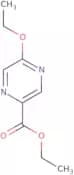
Ethyl 5-ethoxypyrazine-2-carboxylate
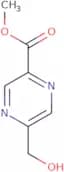
CAS:<p>Versatile small molecule scaffold</p>Formula:C9H12N2O3Purity:Min. 95%Molecular weight:196.2 g/molMethyl 5-(hydroxymethyl)pyrazine-2-carboxylate
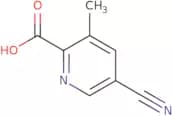
CAS:<p>Versatile small molecule scaffold</p>Formula:C7H8N2O3Purity:Min. 95%Molecular weight:168.15 g/mol5-cyano-3-methylpyridine-2-carboxylic acid
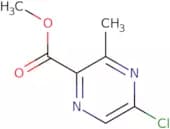
CAS:<p>5-cyano-3-methylpyridine-2-carboxylic acid is a medicinal drug used to treat chronic diseases. It belongs to the group of p-glycoprotein (Pgp) inhibitors, which are trifluoromethylated compounds that are effluxed by Pgp from cells. 5-cyano-3-methylpyridine-2-carboxylic acid has been shown to inhibit BACE1, an enzyme responsible for the production of amyloid beta, which can lead to Alzheimer's disease. This compound also inhibits neural cell growth and nervous system activity in rats. The trifluoromethyl group in this molecule is important for optimization as it increases the affinity for binding with proteins.</p>Formula:C8H6N2O2Purity:Min. 95%Molecular weight:162.14 g/molMethyl 5-chloro-3-methylpyrazine-2-carboxylate
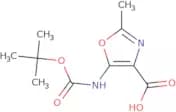
CAS:<p>Versatile small molecule scaffold</p>Formula:C7H7ClN2O2Purity:Min. 95%Molecular weight:186.59 g/mol5-((tert-Butoxycarbonyl)amino)-2-methyloxazole-4-carboxylic acid
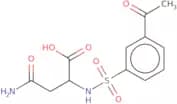
CAS:<p>Versatile small molecule scaffold</p>Formula:C10H14N2O5Purity:Min. 95%Molecular weight:242.23 g/mol2-(3-Acetylbenzenesulfonamido)-3-carbamoylpropanoic acid
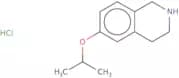
CAS:<p>Versatile small molecule scaffold</p>Formula:C12H14N2O6SPurity:Min. 95%Molecular weight:314.3 g/mol6-(Propan-2-yloxy)-1,2,3,4-tetrahydroisoquinoline hydrochloride
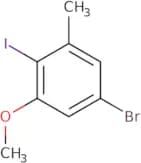
CAS:<p>Versatile small molecule scaffold</p>Formula:C12H18ClNOPurity:Min. 95%Molecular weight:227.7 g/mol5-Bromo-2-iodo-1-methoxy-3-methyl-benzene
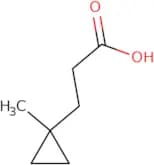
CAS:<p>Versatile small molecule scaffold</p>Formula:C8H8BrIOPurity:Min. 95%Molecular weight:326.96 g/mol3-(1-Methylcyclopropyl)propanoic acid
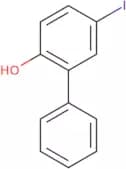
CAS:<p>Versatile small molecule scaffold</p>Formula:C7H12O2Purity:Min. 95%Molecular weight:128.17 g/mol4-Iodo-2-phenylphenol
CAS:<p>Versatile small molecule scaffold</p>Formula:C12H9IOPurity:Min. 95%Molecular weight:296.1 g/mol7-Iodo-1-heptyne
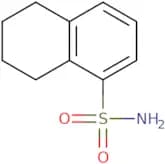
CAS:<p>7-Iodo-1-heptyne is an alkylating agent that is used in organic chemistry. It reacts with a wide range of functional groups and readily undergoes substitution reactions. 7-Iodo-1-heptyne can be prepared by the reaction of 1,2-dibromoethane and iodic acid, which produce the desired product and bromide as a byproduct. The reaction system can be catalyzed with silver nitrate, sodium acetate, and hydrochloric acid. The reagents are heated in a water bath for about two hours at 100 degrees Celsius. The yields for this process are variable depending on the substituents. 7-Iodo-1-heptyne is also used to synthesize other substituted heptynes through alkylation or substitution reactions.</p>Formula:C7H11IPurity:Min. 95%Molecular weight:222.07 g/mol5,6,7,8-Tetrahydronaphthalene-1-sulfonamide
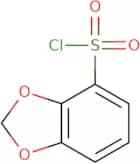
CAS:<p>Versatile small molecule scaffold</p>Formula:C10H13NO2SPurity:Min. 95%Molecular weight:211.28 g/mol1,3-Dioxaindane-4-sulfonyl chloride
CAS:<p>Versatile small molecule scaffold</p>Formula:C7H5ClO4SPurity:Min. 95%Molecular weight:220.63 g/mol2,3-Dihydrobenzo[1,4]dioxine-5-sulfonic acid amide
CAS:<p>Versatile small molecule scaffold</p>Formula:C8H9NO4SPurity:Min. 95%Molecular weight:215.23 g/mol[(2-Aminoethyl)sulfamoyl]dimethylamine hydrochloride
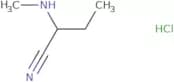
CAS:<p>Versatile small molecule scaffold</p>Formula:C4H14ClN3O2SPurity:Min. 95%Molecular weight:203.69 g/mol2-(Methylamino)butanenitrile hydrochloride
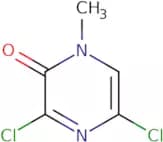
CAS:<p>Versatile small molecule scaffold</p>Formula:C5H11ClN2Purity:Min. 95%Molecular weight:134.61 g/mol3,5-dichloro-1-methyl-1,2-dihydropyrazin-2-one
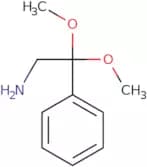
CAS:<p>Versatile small molecule scaffold</p>Formula:C5H4Cl2N2OPurity:Min. 95%Molecular weight:179 g/mol2,2-Dimethoxy-2-phenylethan-1-amine
CAS:<p>Versatile small molecule scaffold</p>Formula:C10H15NO2Purity:Min. 95%Molecular weight:181.23 g/molTricyclo[3.3.1.0,2,7]nonan-6-one
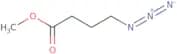
CAS:<p>Versatile small molecule scaffold</p>Formula:C9H12OPurity:Min. 95%Molecular weight:136.2 g/molmethyl 4-azidobutanoate
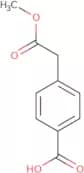
CAS:<p>Methyl 4-azidobutanoate is a reactive moiety that can be used to form ethers with other molecules. It reacts with two-dimensional surfaces, such as those found in electron microscopy grids, and has been shown to be sensitive to the presence of other compounds in solution. The methyl 4-azidobutanoate reacts with succinimide to form an azido moiety. This reaction is efficient and can be used for the study of glycols and azides.</p>Formula:C5H9N3O2Purity:Min. 95%Molecular weight:143.1 g/mol4-(2-methoxy-2-oxoethyl)benzoic acid
CAS:<p>Versatile small molecule scaffold</p>Formula:C10H10O4Purity:Min. 95%Molecular weight:194.2 g/molEthyl 5-amino-4-methyl-1,2-oxazole-3-carboxylate
CAS:<p>Versatile small molecule scaffold</p>Formula:C7H10N2O3Purity:Min. 95%Molecular weight:170.17 g/molEthyl 3-methyl-5-(methylamino)-1,2-oxazole-4-carboxylate
CAS:<p>Versatile small molecule scaffold</p>Formula:C8H12N2O3Purity:Min. 95%Molecular weight:184.19 g/moltert-butyl N-{3-[(3-aminopropyl)(methyl)amino]propyl}carbamate
CAS:<p>Versatile small molecule scaffold</p>Formula:C12H27N3O2Purity:Min. 95%Molecular weight:245.4 g/molMethyl 4-cyanonicotinate
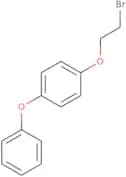
CAS:<p>Versatile small molecule scaffold</p>Formula:C8H6N2O2Purity:Min. 95%Molecular weight:162.15 g/mol1-(2-Bromoethoxy)-4-phenoxybenzene
CAS:<p>Versatile small molecule scaffold</p>Formula:C14H13BrO2Purity:Min. 95%Molecular weight:293.15 g/mol3-(tert-Butoxy)-2-methoxy-3-oxopropanoic acid
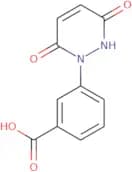
CAS:<p>Versatile small molecule scaffold</p>Formula:C8H14O5Purity:Min. 95%Molecular weight:190.19 g/mol3-(3,6-Dioxo-1,2,3,6-tetrahydropyridazin-1-yl)benzoic acid
CAS:<p>Versatile small molecule scaffold</p>Formula:C11H8N2O4Purity:Min. 95%Molecular weight:232.19 g/mol7-(chloromethyl)-5H-[1,3,4]thiadiazolo[3,2-a]pyrimidin-5-one
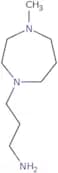
CAS:<p>Versatile small molecule scaffold</p>Formula:C6H4ClN3OSPurity:Min. 95%Molecular weight:201.63 g/mol3-(4-Methyl-1,4-diazepan-1-yl)propan-1-amine
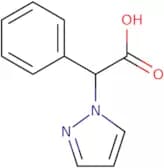
CAS:<p>Versatile small molecule scaffold</p>Formula:C9H21N3Purity:Min. 95%Molecular weight:171.28 g/mol2-Phenyl-2-(1H-pyrazol-1-yl)acetic acid
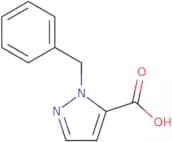
CAS:<p>Versatile small molecule scaffold</p>Formula:C11H10N2O2Purity:Min. 95%Molecular weight:202.21 g/mol1-Benzyl-1H-pyrazole-5-carboxylic acid
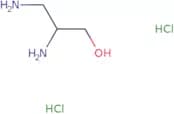
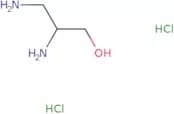
CAS:<p>Versatile small molecule scaffold</p>Formula:C11H10N2O2Purity:Min. 95%Molecular weight:202.21 g/mol(2R)-2,3-Diaminopropan-1-ol dihydrochloride
CAS:<p>Versatile small molecule scaffold</p>Formula:C3H12Cl2N2OPurity:Min. 95%Molecular weight:163.04 g/mol(2S)-2,3-Diaminopropan-1-ol dihydrochloride
CAS:<p>Versatile small molecule scaffold</p>Formula:C3H12Cl2N2OPurity:Min. 95%Molecular weight:163.04 g/molethyl 6,8-dibromoimidazo[1,2-a]pyrazine-2-carboxylate
CAS:<p>Versatile small molecule scaffold</p>Formula:C9H7Br2N3O2Purity:Min. 95%Molecular weight:349 g/mol6,8-Dibromoimidazo[1,2-a]pyrazine-2-carbonitrile
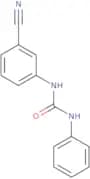
CAS:<p>Versatile small molecule scaffold</p>Formula:C7H2Br2N4Purity:Min. 95%Molecular weight:301.93 g/mol1-(3-Cyanophenyl)-3-phenylurea
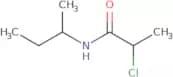
CAS:<p>Versatile small molecule scaffold</p>Formula:C14H11N3OPurity:Min. 95%Molecular weight:237.26 g/molN-(Butan-2-yl)-2-chloropropanamide
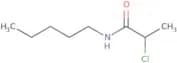
CAS:<p>Versatile small molecule scaffold</p>Formula:C7H14ClNOPurity:Min. 95%Molecular weight:163.64 g/mol2-Chloro-N-pentylpropanamide
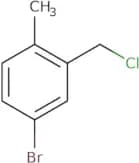
CAS:<p>Versatile small molecule scaffold</p>Formula:C8H16ClNOPurity:Min. 95%Molecular weight:177.67 g/mol4-Bromo-2-(chloromethyl)-1-methylbenzene
CAS:<p>Versatile small molecule scaffold</p>Formula:C8H8BrClPurity:Min. 95%Molecular weight:219.5 g/mol1-[5-(Chloromethyl)-2-methoxyphenyl]ethan-1-one
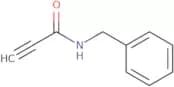
CAS:<p>Versatile small molecule scaffold</p>Formula:C10H11ClO2Purity:Min. 95%Molecular weight:198.64 g/molN-Benzylprop-2-ynamide
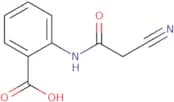
CAS:<p>N-Benzylprop-2-ynamide is an azide that is used in diagnostic imaging. It is a conjugate of the diagnostic agent with a pyridinium, which has been radiolabeled with positron or radiopharmaceutical. The reaction time for N-benzylprop-2-ynamide can be short because it does not require activation by microwaves. This compound could be useful as a diagnostic agent for amine substrates and as a linker in positron emission tomography (PET) imaging.</p>Formula:C10H9NOPurity:Min. 95%Molecular weight:159.18 g/mol2-(2-Cyanoacetamido)benzoic acid
CAS:<p>Versatile small molecule scaffold</p>Formula:C10H8N2O3Purity:Min. 95%Molecular weight:204.18 g/molOctahydro-1H-pyrrolo[1,2-d][1,4]diazepine
CAS:<p>Versatile small molecule scaffold</p>Formula:C8H16N2Purity:Min. 95%Molecular weight:140.23 g/molN-[3-(Morpholin-4-yl)-1-phenylpropylidene]hydroxylamine
CAS:<p>Versatile small molecule scaffold</p>Formula:C13H18N2O2Purity:Min. 95%Molecular weight:234.29 g/mol2-(6-Amino-9H-purin-9-yl)propanoic acid
CAS:<p>Versatile small molecule scaffold</p>Formula:C8H9N5O2Purity:Min. 95%Molecular weight:207.19 g/mol1-Iodo-3,5-dimethylcyclohexane
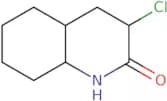
CAS:<p>Versatile small molecule scaffold</p>Formula:C8H15IPurity:Min. 95%Molecular weight:238.11 g/mol3-Chloro-decahydroquinolin-2-one
CAS:<p>Versatile small molecule scaffold</p>Formula:C9H14ClNOPurity:Min. 95%Molecular weight:187.66 g/mol3-Phenyl-1H,4H,5H,6H,7H-pyrazolo[4,3-c]pyridine dihydrochloride
CAS:<p>Versatile small molecule scaffold</p>Formula:C12H14ClN3Purity:Min. 95%Molecular weight:235.71 g/mol1-Cyanocyclopropyl acetate
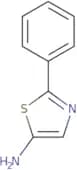
CAS:<p>Versatile small molecule scaffold</p>Formula:C6H7NO2Purity:Min. 95%Molecular weight:125.13 g/mol2-Phenyl-1,3-thiazol-5-amine
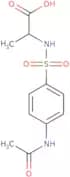
CAS:<p>Versatile small molecule scaffold</p>Formula:C9H8N2SPurity:Min. 95%Molecular weight:176.24 g/mol2-(4-Acetamidobenzenesulfonamido)propanoic acid
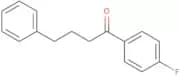
CAS:<p>Versatile small molecule scaffold</p>Formula:C11H14N2O5SPurity:Min. 95%Molecular weight:286.31 g/mol1-(4-Fluorophenyl)-4-phenylbutan-1-one
CAS:<p>Versatile small molecule scaffold</p>Formula:C16H15FOPurity:Min. 95%Molecular weight:242.29 g/mol5-Methyl-6-oxo-1,6-dihydropyridazine-3-carboxylic acid
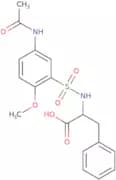
CAS:Versatile small molecule scaffoldFormula:C6H6N2O3Purity:Min. 95%Molecular weight:154.1 g/mol2-(5-Acetamido-2-methoxybenzenesulfonamido)-3-phenylpropanoic acid
CAS:<p>Versatile small molecule scaffold</p>Formula:C18H20N2O6SPurity:Min. 95%Molecular weight:392.4 g/mol1-Methyl-1h,4h,5h,6h,7h-imidazo[4,5-c]pyridine
CAS:<p>Versatile small molecule scaffold</p>Formula:C7H11N3Purity:Min. 95%Molecular weight:137.19 g/mol1-Phenyl-1H,4H,5H,6H,7H-imidazo[4,5-c]pyridine
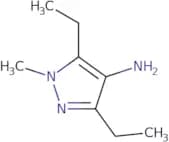
CAS:<p>Versatile small molecule scaffold</p>Formula:C12H13N3Purity:Min. 95%Molecular weight:199.25 g/mol3,5-Diethyl-1-methyl-1H-pyrazol-4-amine
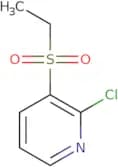
CAS:<p>Versatile small molecule scaffold</p>Formula:C8H15N3Purity:Min. 95%Molecular weight:153.22 g/mol2-Chloro-3-(ethanesulfonyl)pyridine
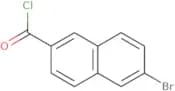
CAS:<p>Versatile small molecule scaffold</p>Formula:C7H8ClNO2SPurity:Min. 95%Molecular weight:205.66 g/mol6-Bromonaphthalene-2-carbonyl chloride
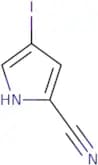
CAS:<p>Versatile small molecule scaffold</p>Formula:C11H6BrClOPurity:Min. 95%Molecular weight:269.52 g/mol4-Iodo-1H-pyrrole-2-carbonitrile
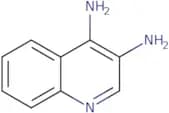
CAS:<p>Versatile small molecule scaffold</p>Formula:C5H3IN2Purity:Min. 95%Molecular weight:218 g/molQuinoline-3,4-diamine
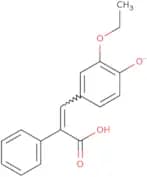
CAS:<p>Quinoline-3,4-diamine is a heterocyclic compound with a nitrogen atom in the ring. It is classified as an aromatic compound and has many different substituents. The most common are the methyl group, ethyl group, and enamine. Quinoline-3,4-diamine is used in the synthesis of pyridine compounds such as carbonyl chlorides and hydroxyl amines. It also reacts with alkoxy groups to form esters. Quinoline-3,4-diamine has been shown to have antioxidant properties and may be useful for treating dementia.</p>Formula:C9H9N3Purity:Min. 95%Molecular weight:159.19 g/mol3-(3-Ethoxy-4-hydroxyphenyl)-2-phenylprop-2-enoic acid
CAS:<p>Versatile small molecule scaffold</p>Formula:C17H15O4Purity:Min. 95%Molecular weight:283.3 g/molPyrazolo[1,5-b]pyridazine-3-carbaldehyde
CAS:<p>Versatile small molecule scaffold</p>Formula:C7H5N3OPurity:Min. 95%Molecular weight:147.13 g/mol2-[(2-Bromophenyl)amino]ethan-1-ol
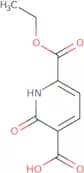
CAS:<p>Versatile small molecule scaffold</p>Formula:C8H10BrNOPurity:Min. 95%Molecular weight:216.07 g/mol6-(Ethoxycarbonyl)-2-hydroxypyridine-3-carboxylic acid
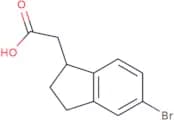
CAS:<p>Versatile small molecule scaffold</p>Formula:C9H9NO5Purity:Min. 95%Molecular weight:211.17 g/mol2-(5-Bromo-2,3-dihydro-1H-inden-1-yl)acetic acid
CAS:<p>Versatile small molecule scaffold</p>Formula:C11H11BrO2Purity:Min. 95%Molecular weight:255.11 g/mol3-Bromo-6,7,8,9-tetrahydro-5H-benzo[7]annulen-5-one
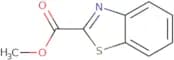
CAS:<p>Versatile small molecule scaffold</p>Formula:C11H11BrOPurity:Min. 95%Molecular weight:239.11 g/molMethyl 1,3-benzothiazole-2-carboxylate
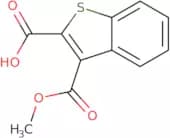
CAS:<p>Versatile small molecule scaffold</p>Formula:C9H7NO2SPurity:Min. 95%Molecular weight:193.22 g/mol3-(Methoxycarbonyl)-1-benzothiophene-2-carboxylic acid
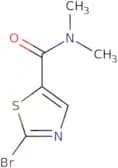
CAS:<p>Versatile small molecule scaffold</p>Formula:C11H8O4SPurity:Min. 95%Molecular weight:236.25 g/mol2-Bromo-N,N-dimethyl-1,3-thiazole-5-carboxamide
CAS:<p>Versatile small molecule scaffold</p>Formula:C6H7BrN2OSPurity:Min. 95%Molecular weight:235.1 g/mol(2S)-2-(4-Chlorophenoxy)propan-1-ol
CAS:<p>Versatile small molecule scaffold</p>Formula:C9H11ClO2Purity:Min. 95%Molecular weight:186.63 g/molMethyl DL-1-benzyl-4-phenylpyrrolidine-3-carboxylate
CAS:<p>Versatile small molecule scaffold</p>Formula:C19H21NO2Purity:Min. 95%Molecular weight:295.38 g/mol2-[2-(Carbamoylmethyl)phenyl]acetic acid
CAS:<p>Versatile small molecule scaffold</p>Formula:C10H11NO3Purity:Min. 95%Molecular weight:193.2 g/mol3-Methylmorpholine-2,5-dione
CAS:<p>3-Methylmorpholine-2,5-dione is an organic compound with the chemical formula CH3N(CH2)6CH3. It has a molecular weight of 118.14 g/mol and a transition temperature of -78.4 °C. 3-Methylmorpholine-2,5-dione is a colorless oily liquid that is soluble in water and ethanol. It can be used to synthesize polymers such as polymethyl methacrylate (PMMA), polyvinyl chloride, polypropylene, ethylene oxide, and ethylene glycol. 3-Methylmorpholine-2,5-dione can also be used as a polymerization initiator for ring opening polymerizations with stannous octoate or triisobutylaluminum.</p>Formula:C5H7NO3Purity:Min. 95%Molecular weight:129.11 g/mol2-(2-Aminopropyl)phenol
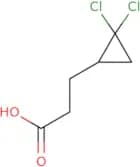
CAS:Controlled Product<p>2-(2-Aminopropyl)phenol is a drug that can be used to treat jaundice. It is an antidote for the treatment of acute and chronic liver disease, including cirrhosis and hepatitis. 2-(2-Aminopropyl)phenol is used to lower blood bilirubin levels in people with high bilirubin levels, such as those with hemolytic disorders or Gilbert's syndrome. This drug also has been shown to reduce the risk of reoccurrence of breast cancer in women who have undergone surgery for this condition. 2-(2-Aminopropyl)phenol binds to serum proteins and may also bind to albumin and haptoglobins in the blood. This compound has a low affinity for erythrocytes and does not affect red blood cells.</p>Formula:C9H13NOPurity:Min. 95%Molecular weight:151.21 g/mol3-(2,2-Dichlorocyclopropyl)propanoic acid
CAS:<p>Versatile small molecule scaffold</p>Formula:C6H8Cl2O2Purity:Min. 95%Molecular weight:183.03 g/mol3-Bromo-[1,2,4]triazolo[4,3-b]pyridazine
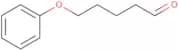
CAS:<p>Versatile small molecule scaffold</p>Formula:C5H3BrN4Purity:Min. 95%Molecular weight:199.01 g/mol5-Phenoxypentanal
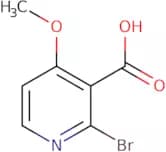
CAS:<p>Versatile small molecule scaffold</p>Formula:C11H14O2Purity:Min. 95%Molecular weight:178.23 g/mol2-Bromo-4-methoxypyridine-3-carboxylic acid
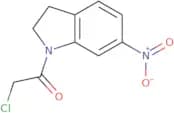
CAS:<p>Versatile small molecule scaffold</p>Formula:C7H6BrNO3Purity:Min. 95%Molecular weight:232.03 g/mol2-Chloro-1-(6-nitro-2,3-dihydro-1H-indol-1-yl)ethan-1-one
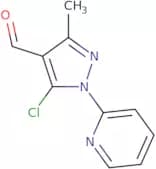
CAS:<p>Versatile small molecule scaffold</p>Formula:C10H9ClN2O3Purity:Min. 95%Molecular weight:240.64 g/mol5-Chloro-3-methyl-1-(pyridin-2-yl)-1H-pyrazole-4-carbaldehyde
CAS:<p>5-Chloro-3-methyl-1-(pyridin-2-yl)-1H-pyrazole-4-carbaldehyde is an organic compound that belongs to the class of substituted phenyl amides. It has a melting point of 187 degrees Celsius, and crystallizes in a centrosymmetric form. This substance reacts with nucleophiles through the hydrogen bonds present in its structure. The substituent on the phenyl group can be electron withdrawing or electron donating, which affects the reactivity. 5-Chloro-3-methyl-1-(pyridin-2-yl)-1H-pyrazole-4-carbaldehyde is useful for condensation reactions and can also form dimers that are stabilized by hydrogen bonding.</p>Formula:C10H8ClN3OPurity:Min. 95%Molecular weight:221.64 g/mol1,4-Dimethyl-3,4-dihydro-2,7-naphthyridine
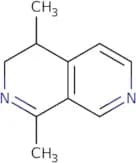
CAS:<p>Versatile small molecule scaffold</p>Formula:C10H12N2Purity:Min. 95%Molecular weight:160.22 g/mol3-Bromo-1-methylpyridin-4(1H)-one
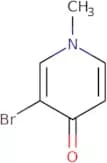
CAS:<p>Versatile small molecule scaffold</p>Formula:C6H6BrNOPurity:Min. 95%Molecular weight:188.02 g/molEthyl(1-phenylpropyl)amine
CAS:<p>Versatile small molecule scaffold</p>Formula:C11H17NPurity:Min. 95%Molecular weight:163.26 g/molMethyl (2S)-2-{[(tert-butoxy)carbonyl]amino}-4-oxobutanoate
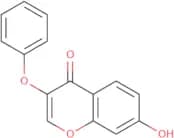
CAS:Versatile small molecule scaffoldFormula:C10H17NO5Purity:Min. 95%Molecular weight:231.25 g/mol7-Hydroxy-3-phenoxy-4H-chromen-4-one
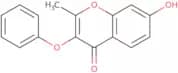
CAS:<p>Versatile small molecule scaffold</p>Formula:C15H10O4Purity:Min. 95%Molecular weight:254.24 g/mol7-Hydroxy-2-methyl-3-phenoxy-4H-chromen-4-one
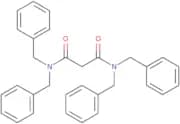
CAS:<p>Versatile small molecule scaffold</p>Formula:C16H12O4Purity:Min. 95%Molecular weight:268.26 g/molN,N,N',N'-Tetrabenzylpropanediamide
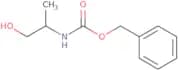
CAS:<p>Versatile small molecule scaffold</p>Formula:C31H30N2O2Purity:Min. 95%Molecular weight:462.6 g/molCbz-DL-Alaninol
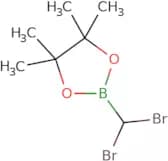
CAS:<p>Versatile small molecule scaffold</p>Formula:C11H15NO3Purity:Min. 95%Molecular weight:209.25 g/mol2-(Dibromomethyl)-4,4,5,5-tetramethyl-1,3,2-dioxaborolane
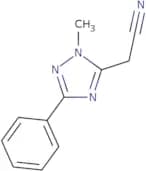
CAS:<p>Versatile small molecule scaffold</p>Formula:C7H13BBr2O2Purity:Min. 95%Molecular weight:299.8 g/mol2-(1-Methyl-3-phenyl-1H-1,2,4-triazol-5-yl)acetonitrile
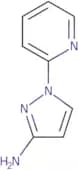
CAS:<p>Versatile small molecule scaffold</p>Formula:C11H10N4Purity:Min. 95%Molecular weight:198.22 g/mol1-(Pyridin-2-yl)-1H-pyrazol-3-amine
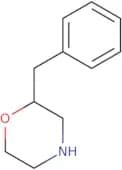
CAS:<p>Versatile small molecule scaffold</p>Formula:C8H8N4Purity:Min. 95%Molecular weight:160.18 g/mol2-Benzylmorpholine
CAS:<p>2-Benzylmorpholine is a chiral compound that is an amine and a structural isomer of morpholine. It has been shown to be a pharmacokinetic suppressant in chronic oral studies, and the profile of the drug is similar to those of other amines. The enantiomer of 2-Benzylmorpholine has been shown to have a more potent interaction with epoxidation than its counterpart, which may lead to different pharmacological properties.</p>Formula:C11H15NOPurity:Min. 95%Molecular weight:177.25 g/mol2-Formylbenzamide
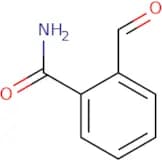
CAS:<p>2-Formylbenzamide is a molecule that has been shown to have inhibitory effects on inflammatory diseases and cancer. It has been shown to reduce the growth of cells by inhibiting the production of inflammatory cytokines, such as tumor necrosis factor (TNF), interleukin-1β, and interleukin-6. 2-Formylbenzamide also inhibits the proliferation of cancer cells in vitro. This compound can be used for detection because it can be allylated, which makes it detectable using electron capture negative ion mass spectrometry. 2-Formylbenzamide can be used as a bioelectronic sensor for monitoring the levels of TNF and IL-6 in patients with inflammatory disease or cancer.</p>Formula:C8H7NO2Purity:Min. 95%Molecular weight:149.15 g/mol5-Ethyl-3-methyl-1,2-oxazole-4-carbaldehyde
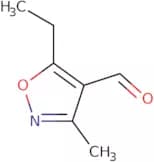
CAS:<p>Versatile small molecule scaffold</p>Formula:C7H9NO2Purity:Min. 95%Molecular weight:139.15 g/mol1-(Propan-2-yl)-4,5-dihydro-1H-pyrazol-5-one hydrochloride
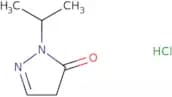
CAS:<p>Versatile small molecule scaffold</p>Formula:C6H11ClN2OPurity:Min. 95%Molecular weight:162.62 g/molEthyl 5-amino-1-(4-methoxyphenyl)-1H-1,2,3-triazole-4-carboxylate
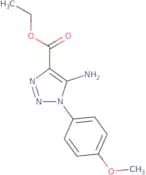
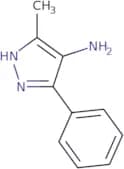
CAS:<p>Versatile small molecule scaffold</p>Formula:C12H14N4O3Purity:Min. 95%Molecular weight:262.26 g/mol3-Methyl-5-phenyl-1H-pyrazol-4-amine
CAS:<p>3-Methyl-5-phenyl-1H-pyrazol-4-amine is an organic compound that belongs to the class of heterocyclic amines. It has been observed in cooked meats, as well as in cigarette smoke and automobile exhaust. 3MPPA has been shown to have a potential interaction with DNA, which may lead to mutations or cancer. The functional theory of 3MPPA suggests that the molecule can form hydrogen bonds with nitrogen nucleophiles. This theory would explain its ability to interact with the nitrogenous bases thymine and cytosine, which are found in DNA.</p>Formula:C10H11N3Purity:Min. 95%Molecular weight:173.21 g/mol2-(Hexylamino)-5-nitrobenzoic acid
CAS:Versatile small molecule scaffoldFormula:C13H18N2O4Purity:Min. 95%Molecular weight:266.3 g/mol


![2,3-Dihydrobenzo[1,4]dioxine-5-sulfonic acid amide](/_next/image/?url=https%3A%2Fstatic.cymitquimica.com%2Fproducts%2F3D%2Fthumb-webp%2FMDA47416.webp&w=3840&q=75)
![[(2-Aminoethyl)sulfamoyl]dimethylamine hydrochloride](/_next/image/?url=https%3A%2Fstatic.cymitquimica.com%2Fproducts%2F3D%2Fthumb-webp%2FMDA48494.webp&w=3840&q=75)
![Tricyclo[3.3.1.0,2,7]nonan-6-one](/_next/image/?url=https%3A%2Fstatic.cymitquimica.com%2Fproducts%2F3D%2Fthumb-webp%2FMDA50736.webp&w=3840&q=75)


![tert-butyl N-{3-[(3-aminopropyl)(methyl)amino]propyl}carbamate](/_next/image/?url=https%3A%2Fstatic.cymitquimica.com%2Fproducts%2F3D%2Fthumb-webp%2FMDA53014.webp&w=3840&q=75)


![7-(chloromethyl)-5H-[1,3,4]thiadiazolo[3,2-a]pyrimidin-5-one](/_next/image/?url=https%3A%2Fstatic.cymitquimica.com%2Fproducts%2F3D%2Fthumb-webp%2FMDA57202.webp&w=3840&q=75)
![ethyl 6,8-dibromoimidazo[1,2-a]pyrazine-2-carboxylate](/_next/image/?url=https%3A%2Fstatic.cymitquimica.com%2Fproducts%2F3D%2Fthumb-webp%2FMDA59721.webp&w=3840&q=75)
![6,8-Dibromoimidazo[1,2-a]pyrazine-2-carbonitrile](/_next/image/?url=https%3A%2Fstatic.cymitquimica.com%2Fproducts%2F3D%2Fthumb-webp%2FMDA59732.webp&w=3840&q=75)
![1-[5-(Chloromethyl)-2-methoxyphenyl]ethan-1-one](/_next/image/?url=https%3A%2Fstatic.cymitquimica.com%2Fproducts%2F3D%2Fthumb-webp%2FMDA60420.webp&w=3840&q=75)
![Octahydro-1H-pyrrolo[1,2-d][1,4]diazepine](/_next/image/?url=https%3A%2Fstatic.cymitquimica.com%2Fproducts%2F3D%2Fthumb-webp%2FMDA61465.webp&w=3840&q=75)
![N-[3-(Morpholin-4-yl)-1-phenylpropylidene]hydroxylamine](/_next/image/?url=https%3A%2Fstatic.cymitquimica.com%2Fproducts%2F3D%2Fthumb-webp%2FMDA62069.webp&w=3840&q=75)


![3-Phenyl-1H,4H,5H,6H,7H-pyrazolo[4,3-c]pyridine dihydrochloride](/_next/image/?url=https%3A%2Fstatic.cymitquimica.com%2Fproducts%2F3D%2Fthumb-webp%2FMDA62850.webp&w=3840&q=75)


![1-Methyl-1h,4h,5h,6h,7h-imidazo[4,5-c]pyridine](/_next/image/?url=https%3A%2Fstatic.cymitquimica.com%2Fproducts%2F3D%2Fthumb-webp%2FMDA67388.webp&w=3840&q=75)
![1-Phenyl-1H,4H,5H,6H,7H-imidazo[4,5-c]pyridine](/_next/image/?url=https%3A%2Fstatic.cymitquimica.com%2Fproducts%2F3D%2Fthumb-webp%2FMDA67389.webp&w=3840&q=75)
![Pyrazolo[1,5-b]pyridazine-3-carbaldehyde](/_next/image/?url=https%3A%2Fstatic.cymitquimica.com%2Fproducts%2F3D%2Fthumb-webp%2FMDA75435.webp&w=3840&q=75)
![2-[(2-Bromophenyl)amino]ethan-1-ol](/_next/image/?url=https%3A%2Fstatic.cymitquimica.com%2Fproducts%2F3D%2Fthumb-webp%2FMDA76220.webp&w=3840&q=75)
![3-Bromo-6,7,8,9-tetrahydro-5H-benzo[7]annulen-5-one](/_next/image/?url=https%3A%2Fstatic.cymitquimica.com%2Fproducts%2F3D%2Fthumb-webp%2FMDA77978.webp&w=3840&q=75)
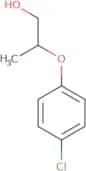
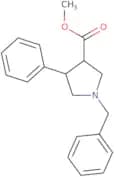
![2-[2-(Carbamoylmethyl)phenyl]acetic acid](/_next/image/?url=https%3A%2Fstatic.cymitquimica.com%2Fproducts%2F3D%2Fthumb-webp%2FMDA81367.webp&w=3840&q=75)
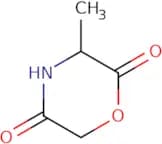
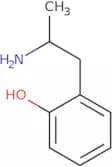
![3-Bromo-[1,2,4]triazolo[4,3-b]pyridazine](/_next/image/?url=https%3A%2Fstatic.cymitquimica.com%2Fproducts%2F3D%2Fthumb-webp%2FMDA84108.webp&w=3840&q=75)

![Methyl (2S)-2-{[(tert-butoxy)carbonyl]amino}-4-oxobutanoate](/_next/image/?url=https%3A%2Fstatic.cymitquimica.com%2Fproducts%2F3D%2Fthumb-webp%2FMDA88414.webp&w=3840&q=75)