


Building Blocks
Subcategories of "Building Blocks"
- Boronic Acids & Boronic Acid Derivatives(5,778 products)
- Chiral Building Blocks(1,243 products)
- Hydrocarbon Building Blocks(6,099 products)
- Organic Building Blocks(61,038 products)
Found 205376 products of "Building Blocks"
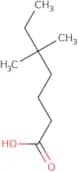
5,5-Dimethylheptanoic acid
CAS:Versatile small molecule scaffold
Formula:C9H18O2Purity:Min. 95%Molecular weight:158.24 g/molRef: 3D-CCA14621
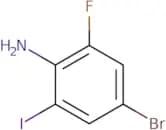
Discontinued product4-Bromo-2-fluoro-6-iodoaniline
CAS:Versatile small molecule scaffold
Formula:C6H4BrFINPurity:Min. 95%Molecular weight:315.91 g/mol1-Oxaspiro[4.5]dec-2-en-4-one
CAS:Versatile small molecule scaffold
Formula:C9H12O2Purity:Min. 95%Molecular weight:152.19 g/molRef: 3D-BDA95195
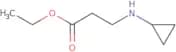
Discontinued productEthyl 3-(cyclopropylamino)propanoate
CAS:Versatile small molecule scaffold
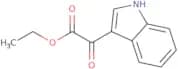
Formula:C8H15NO2Purity:Min. 95%Molecular weight:157.21 g/molEthyl 2-(indol-3-yl)-2-oxoacetate
CAS:Ethyl 2-(indol-3-yl)-2-oxoacetate is a hydroxy derivative of the amino acid tyrosine. It inhibits the enzyme tyrosine hydroxylase, which catalyzes the conversion of tyrosine to L-DOPA. This in turn affects dopamine synthesis and has an inhibitory effect on rat brain. Ethyl 2-(indol-3-yl)-2-oxoacetate also inhibits methylmagnesium borohydride in vitro, which is a reagent that breaks down esters, amides, and nitriles. Tyrosine hydroxylase is inhibited by the presence of two hydroxy groups on the ethyl side chain and one hydroxy group on the indole ring. It can be used as a structural analogue for other drugs that are used to treat Parkinson's disease or depression.
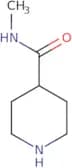
Formula:C12H11NO3Purity:Min. 95%Molecular weight:217.22 g/molN-Methylpiperidine-4-carboxamide
CAS:Versatile small molecule scaffold
Formula:C7H14N2OPurity:Min. 95%Molecular weight:142.2 g/molRef: 3D-BAA90369
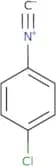
Discontinued product1-Chloro-4-isocyanobenzene
CAS:1-Chloro-4-isocyanobenzene (1CI) is an organic compound that has been used as a chemical probe for the detection of amines and other molecules on metal surfaces. The frequency shift in Raman spectra, which is observed after the addition of 1CI to the metal surface, is used to detect amines. 1CI has also been shown to be a potent inhibitor of mitochondrial function. This molecule binds to nucleophilic sites on metal surfaces and forms covalent bonds with them, leading to a high degree of inhibition.
1CI can be synthesized in three steps from commercially available starting materials and is relatively easy to purify.Formula:C7H4ClNPurity:Min. 95%Molecular weight:137.56 g/mol2-[3-(Propan-2-yl)phenoxy]acetic acid
CAS:2-[3-(Propan-2-yl)phenoxy]acetic acid is a chemical compound that is used as an additive in benzene, and is a phytotoxic chemical. It prevents the formation of chlorophyll by blocking electron transport and inhibiting photosynthesis. 2-[3-(Propan-2-yl)phenoxy]acetic acid is used to induce callus tissue from lettuce, radish, and other plants. This compound also inhibits the growth of various bacteria including Escherichia coli and Pseudomonas aeruginosa.
Formula:C11H14O3Purity:Min. 95%Molecular weight:194.23 g/molRef: 3D-BAA87852
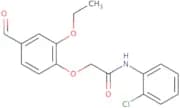
Discontinued productN-(2-Chlorophenyl)-2-(2-ethoxy-4-formylphenoxy)acetamide
CAS:Versatile small molecule scaffold
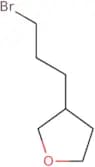
Formula:C17H16ClNO4Purity:Min. 95%Molecular weight:333.8 g/mol3-(3-Bromopropyl)oxolane
CAS:Versatile small molecule scaffold
Formula:C7H13BrOPurity:Min. 95%Molecular weight:193.08 g/molRef: 3D-ASB49655
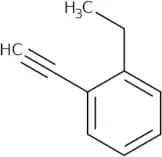
Discontinued product1-Ethyl-2-ethynylbenzene
CAS:1-Ethyl-2-ethynylbenzene is an indene that can be synthesized by the reaction of 1-ethylbenzene with ethynylmagnesium bromide and trifluoroacetyl chloride. 1-Ethyl-2-ethynylbenzene reacts as a nucleophile with electrophiles, such as phenylsulfonyl and acetylene compounds, to form sulfones and acetylenes. It can also react with tetrafluoroborates to form indenes.
Formula:C10H10Purity:Min. 95%Molecular weight:130.19 g/molRef: 3D-ADA65949
Discontinued productMethyl 2-Octynoate
CAS:Methyl 2-octynoate is a chemical that has been shown to bind to the nicotinic acetylcholine receptor. Methyl 2-octynoate has been shown to have antitumor activity in various types of cancer cells, including breast, prostate, and lung cancer cells. This chemical is not known to be chemically stable or film-forming. It also disrupts mitochondrial membrane potential and reduces the endpoints of oxidative phosphorylation. Methyl 2-octynoate was found to have low potency against cancer cells in vitro and in vivo.
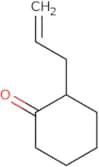
Formula:C9H14O2Purity:Min. 95%Molecular weight:154.21 g/mol2-Allylcyclohexanone
CAS:2-Allylcyclohexanone is an unsaturated ketone that is synthesized by the ring-opening of allyl cyclohexane carboxylate with sodium hydroxide. It can be used as a chemical intermediate for the synthesis of other compounds. 2-Allylcyclohexanone can also be used to react with hydroxide solution to produce a salt and an alcohol. The hydroxide solution can act as a base, reducing the carbonyl group in the presence of an acid to form the corresponding alcohol. This reaction is stereoselective because it only occurs when there are two different groups on adjacent carbons.
2-Allylcyclohexanone has been shown to inhibit non-nucleoside reverse transcriptase inhibitors (NNRTIs) such as nevirapine, efavirenz, and delavirdine. In addition, it has been found to have functional groups that are capable of reactingFormula:C9H14OPurity:Min. 95%Molecular weight:138.21 g/mol5-Amino-1-(2-hydroxyethyl)-1,2-dihydropyridin-2-one
CAS:Versatile small molecule scaffoldFormula:C7H10N2O2Purity:Min. 95%Molecular weight:154.17 g/molRef: 3D-WQB04793
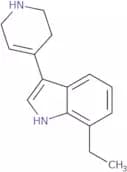
Discontinued product7-Ethyl-3-(1,2,3,6-tetrahydropyridin-4-yl)-1H-indole
CAS:Versatile small molecule scaffoldFormula:C15H18N2Purity:Min. 95%Molecular weight:226.32 g/molRef: 3D-KTA35413
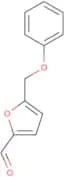
Discontinued product5-(Phenoxymethyl)furan-2-carbaldehyde
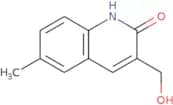
CAS:Versatile small molecule scaffoldFormula:C12H10O3Purity:Min. 95%Molecular weight:202.21 g/mol3-(Hydroxymethyl)-6-methyl-2(1H)-quinolinone
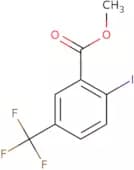
CAS:Versatile small molecule scaffoldFormula:C11H11NO2Purity:Min. 95%Molecular weight:189.21 g/molMethyl 2-iodo-5-(trifluoromethyl)benzoate
CAS:Versatile small molecule scaffold
Formula:C9H6F3IO2Purity:Min. 95%Molecular weight:330.04 g/mol2-Bromo-7-phenyl-5H-[1,3,4]thiadiazolo[3,2-a]pyrimidin-5-one
CAS:Versatile small molecule scaffold
Formula:C11H6BrN3OSPurity:Min. 95%Molecular weight:308.16 g/molRef: 3D-JYB10753
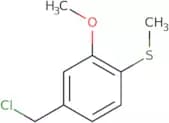
Discontinued product4-(Chloromethyl)-2-methoxy-1-(methylsulfanyl)benzene
CAS:Versatile small molecule scaffold
Formula:C9H11ClOSPurity:Min. 95%Molecular weight:202.7 g/mol[4-(4-Chlorophenyl)-1H-imidazol-2-yl]methanamine dihydrochloride
CAS:Versatile small molecule scaffold
Formula:C10H12Cl3N3Purity:Min. 95%Molecular weight:280.6 g/molRef: 3D-LCC31773
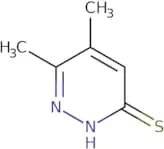
Discontinued product5,6-Dimethylpyridazine-3-thiol
CAS:Versatile small molecule scaffold
Formula:C6H8N2SPurity:Min. 95%Molecular weight:140.2 g/molRef: 3D-JHA21992
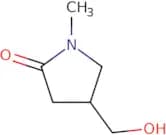
Discontinued product4-(Hydroxymethyl)-1-methylpyrrolidin-2-one
CAS:Versatile small molecule scaffold
Formula:C6H11NO2Purity:Min. 95%Molecular weight:129.16 g/molRef: 3D-JCA88720
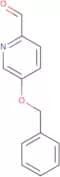
Discontinued product5-(Benzyloxy)pyridine-2-carbaldehyde
CAS:Versatile small molecule scaffold
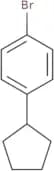
Formula:C13H11NO2Purity:Min. 95%Molecular weight:213.23 g/mol1-Bromo-4-cyclopentylbenzene
CAS:1-Bromo-4-cyclopentylbenzene (1-BCPB) is a chlorinated aromatic compound that can be synthesized by reacting 1-bromo-4-chlorobenzene and cyclopentylmagnesium bromide. The reaction sequence begins with the addition of hydrochloric acid to the first reactant, followed by magnesium chloride and ether. The mixture is heated to produce a liquid solution of ethylhexyloxy pyridine, which reacts with the second reactant in a sequence that leads to the desired product. 1-BCPB is used as an intermediate in organic synthesis. It has been shown to have moderate interaction with paraldehyde and pyridinium salts at room temperature, but it does not react with cycloalkyls or pyridinium salts at elevated temperatures.
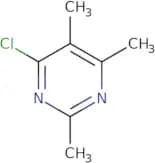
Formula:C11H13BrPurity:Min. 95%Molecular weight:225.13 g/mol4-Chloro-2,5,6-trimethylpyrimidine
CAS:Versatile small molecule scaffold
Formula:C7H9ClN2Purity:Min. 95%Molecular weight:156.61 g/mol4-Bromomethyl-4'-methyl-2,2'-bipyridine
CAS:Please enquire for more information about 4-Bromomethyl-4'-methyl-2,2'-bipyridine including the price, delivery time and more detailed product information at the technical inquiry form on this page
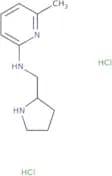
Formula:C12H11BrN2Purity:Min. 91.0 Area-%Molecular weight:263.14 g/mol6-Methyl-N-(pyrrolidin-2-ylmethyl)pyridin-2-amine dihydrochloride
CAS:Versatile small molecule scaffold
Formula:C11H19Cl2N3Purity:Min. 95%Molecular weight:264.19 g/mol4-(Piperazin-1-yl)isoquinoline dihydrochloride
CAS:Versatile small molecule scaffold
Formula:C13H17Cl2N3Purity:Min. 95%Molecular weight:286.2 g/molRef: 3D-ILB29289
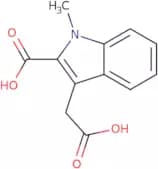
Discontinued product3-(carboxymethyl)-1-methyl-1H-indole-2-carboxylic acid
CAS:Versatile small molecule scaffold
Formula:C12H11NO4Purity:Min. 95%Molecular weight:233.22 g/molRef: 3D-ICA66493
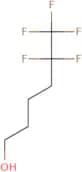
Discontinued product5,5,6,6,6-Pentafluorohexan-1-ol
CAS:Versatile small molecule scaffold
Formula:C6H9F5OPurity:Min. 95%Molecular weight:192.13 g/mol2-Phenyl-2-[(propan-2-yl)amino]acetic acid
CAS:Versatile small molecule scaffold
Formula:C11H15NO2Purity:Min. 95%Molecular weight:193.24 g/molRef: 3D-HXA09010
Discontinued product3-Bromo-5H,6H,8H-[1,2,4]triazolo[3,4-c][1,4]oxazine
CAS:Versatile small molecule scaffoldFormula:C5H6BrN3OPurity:Min. 95%Molecular weight:204.02 g/molRef: 3D-HWC64136
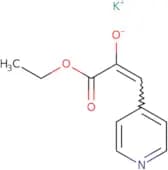
Discontinued productPotassium 3-ethoxy-3-oxo-1-(pyridin-4-yl)prop-1-en-2-olate
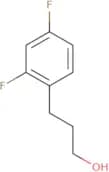
CAS:Versatile small molecule scaffoldFormula:C10H10KNO3Purity:Min. 95%Molecular weight:231.29 g/mol3-(2,4-Difluorophenyl)propan-1-ol
CAS:Versatile small molecule scaffold
Formula:C9H10F2OPurity:Min. 95%Molecular weight:172.17 g/molRef: 3D-HNB20467
Discontinued product1-[(1-Aminopropan-2-yl)oxy]-2-bromobenzene
CAS:Versatile small molecule scaffold
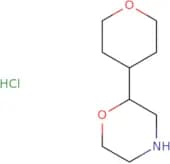
Formula:C9H12BrNOPurity:Min. 95%Molecular weight:230.1 g/mol2-(Oxan-4-yl)morpholine hydrochloride
CAS:Versatile small molecule scaffold
Formula:C9H18ClNO2Purity:Min. 95%Molecular weight:207.7 g/molRef: 3D-LUD64089
Discontinued product3-(Aminomethyl)-2,2-difluoropentane hydrochloride
CAS:Versatile small molecule scaffoldFormula:C6H14ClF2NPurity:Min. 95%Molecular weight:173.6 g/molRef: 3D-LUD64101
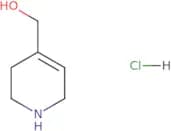
Discontinued product(1,2,3,6-Tetrahydropyridin-4-yl)methanol hydrochloride
CAS:Versatile small molecule scaffold
Formula:C6H12ClNOPurity:Min. 95%Molecular weight:149.6 g/molRef: 3D-LUD67665
Discontinued product[1-(4-Aminophenyl)cyclopropyl]methanol hydrochloride
CAS:Versatile small molecule scaffoldFormula:C10H14ClNOPurity:Min. 95%Molecular weight:199.7 g/molRef: 3D-LUD67881
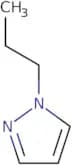
Discontinued product1-Propylpyrazole
CAS:1-Propylpyrazole is a non-classical inhibitor of aldehyde oxidase that has been shown to have an inhibitory effect on pentane. 1-Propylpyrazole has peroxidase-like activity, which means it can bind to lipid hydroperoxides in the presence of hydrogen peroxide or peroxidase. It has also been shown to be an effective inhibitor of dehydrogenase, which is an enzyme that catalyzes the oxidation of aldehydes and ketones to carboxylic acids. This drug is not active against classical aldehyde oxidases such as alcohol dehydrogenase, but it does inhibit polyunsaturated fatty acid synthesis by binding with cytochrome P450 enzymes.
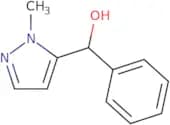
Formula:C6H10N2Purity:Min. 95%Molecular weight:110.16 g/mol(1-Methyl-1H-pyrazol-5-yl)(phenyl)methanol
CAS:Versatile small molecule scaffold
Formula:C11H12N2OPurity:Min. 95%Molecular weight:188.23 g/molRef: 3D-HBA50065
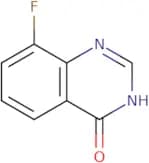
Discontinued product8-Fluoroquinazolin-4(1H)-one
CAS:Versatile small molecule scaffold
Formula:C8H5FN2OPurity:Min. 95%Molecular weight:164.14 g/molRef: 3D-MHA80550
Discontinued product2-[(1-Methyl-5-phenyl-1H-imidazol-2-yl)sulfanyl]acetic acid
CAS:Versatile small molecule scaffoldFormula:C12H12N2O2SPurity:Min. 95%Molecular weight:248.3 g/molRef: 3D-MTA06714
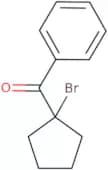
Discontinued product(1-Bromocyclopentyl)(phenyl)methanone
CAS:Versatile small molecule scaffold
Formula:C12H13BrOPurity:Min. 95%Molecular weight:253.13 g/molRef: 3D-GAA74066
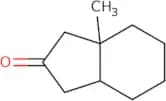
Discontinued productrac-(3aR,7aS)-3a-Methyl-octahydro-1H-inden-2-one
CAS:Versatile small molecule scaffold
Formula:C10H16OPurity:Min. 95%Molecular weight:152.23 g/molRef: 3D-NAA35129
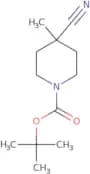
Discontinued producttert-Butyl 4-cyano-4-methylpiperidine-1-carboxylate
CAS:Versatile small molecule scaffold
Formula:C12H20N2O2Purity:Min. 95%Molecular weight:224.3 g/molRef: 3D-FWA11596
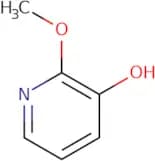
Discontinued product2-Methoxypyridin-3-ol
CAS:2-Methoxypyridin-3-ol is a nitro compound that can be used as a lead compound to produce an inhibitor of oxime reductase. It can also be used as a pyridine ring, which is an important functional group in many organic compounds. 2-Methoxypyridin-3-ol has the ability to inhibit the enzyme oxime reductase, which catalyzes the formation of hydroxyl radicals from nitrosating agents and hydroxylamine, leading to their detoxification. This substance has been shown to be efficient in the orientation of nitro groups and ethers.
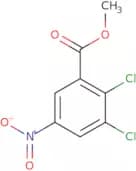
Formula:C6H7NO2Purity:Min. 95%Molecular weight:125.13 g/molMethyl 2,3-dichloro-5-nitrobenzoate
CAS:Versatile small molecule scaffold
Formula:C8H5Cl2NO4Purity:Min. 95%Molecular weight:250.03 g/molRef: 3D-NCA10554
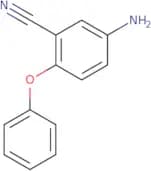
Discontinued product5-Amino-2-phenoxybenzonitrile
CAS:Versatile small molecule scaffold
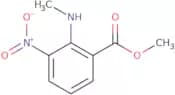
Formula:C13H10N2OPurity:Min. 95%Molecular weight:210.23 g/molMethyl 2-(methylamino)-3-nitrobenzoate
CAS:Versatile small molecule scaffold
Formula:C9H10N2O4Purity:Min. 95%Molecular weight:210.19 g/molRef: 3D-NLB29715
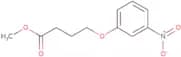
Discontinued productMethyl 4-(3-nitrophenoxy)butanoate
CAS:Controlled ProductVersatile small molecule scaffold
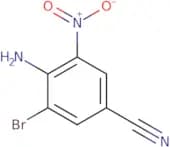
Formula:C11H13NO5Purity:Min. 95%Molecular weight:239.22 g/mol4-Amino-3-bromo-5-nitrobenzonitrile
CAS:Versatile small molecule scaffold
Formula:C7H4BrN3O2Purity:Min. 95%Molecular weight:242.03 g/mol2-(Pyridin-3-yl)-3H,4H,5H,6H,7H-cyclopenta[D]pyrimidin-4-one
CAS:Versatile small molecule scaffold
Formula:C12H11N3OPurity:Min. 95%Molecular weight:213.23 g/molRef: 3D-PZB74791
Discontinued productN-(1-Benzyl-3-phenylpyrrolidin-3-yl)acetamide
CAS:Versatile small molecule scaffoldFormula:C19H22N2OPurity:Min. 95%Molecular weight:294.4 g/molRef: 3D-PZC01626
Discontinued product1-[2-(Propan-2-yloxy)ethyl]cyclopropan-1-amine hydrochloride
CAS:Versatile small molecule scaffoldFormula:C8H18ClNOPurity:Min. 95%Molecular weight:179.69 g/molRef: 3D-PZC01648
Discontinued product1-(2-bromo-4-nitrophenyl)ethanone
CAS:Versatile small molecule scaffold
Formula:C8H6BrNO3Purity:Min. 95%Molecular weight:244.04 g/mol3-(3-Fluorophenoxymethyl)-5H,6H,7H,8H,9H-[1,2,4]triazolo[4,3-a]azepine
CAS:Versatile small molecule scaffoldFormula:C14H16FN3OPurity:Min. 95%Molecular weight:261.29 g/molRef: 3D-QGB27246
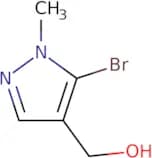
Discontinued product(5-Bromo-1-methyl-1H-pyrazol-4-yl)methanol
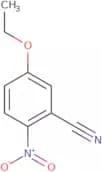
CAS:Versatile small molecule scaffoldFormula:C5H7BrN2OPurity:Min. 95%Molecular weight:191.03 g/mol5-Ethoxy-2-nitrobenzonitrile
CAS:Versatile small molecule scaffold
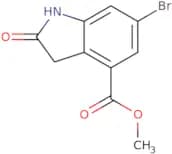
Formula:C9H8N2O3Purity:Min. 95%Molecular weight:192.17 g/molMethyl 6-Bromo-2-oxo-2,3-dihydro-1H-indole-4-carboxylate
CAS:Versatile small molecule scaffoldFormula:C10H8NO3BrPurity:Min. 95%Molecular weight:270.07 g/mol2-(2-{[(9H-Fluoren-9-yl)methoxy]carbonyl}-1,2,3,4-tetrahydroisoquinolin-1-yl)acetic acid
CAS:Versatile small molecule scaffoldFormula:C26H23NO4Purity:Min. 95%Molecular weight:413.5 g/molRef: 3D-QWA48355
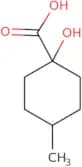
Discontinued product1-Hydroxy-4-methylcyclohexane-1-carboxylic acid
CAS:Versatile small molecule scaffold
Formula:C8H14O3Purity:Min. 95%Molecular weight:158.19 g/molRef: 3D-RBA24815
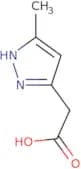
Discontinued product2-(5-Methyl-1H-pyrazol-3-yl)acetic acid
CAS:Versatile small molecule scaffoldFormula:C6H8N2O2Purity:Min. 95%Molecular weight:140.14 g/mol4'-N-Piperidinophenyl acetylene
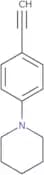
CAS:Versatile small molecule scaffold
Formula:C13H15NPurity:Min. 95%Molecular weight:185.27 g/molRef: 3D-RBA87666
Discontinued product4-Propyl-1-sulfanyl-4H,5H-[1,2,4]triazolo[4,3-a]quinazolin-5-one
CAS:Versatile small molecule scaffold
Formula:C12H12N4OSPurity:Min. 95%Molecular weight:260.32 g/molRef: 3D-REB73179
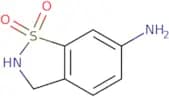
Discontinued product1,1-Dioxo-2,3-dihydro-1,2-benzothiazol-6-amine
CAS:Versatile small molecule scaffold
Formula:C7H8N2O2SPurity:Min. 95%Molecular weight:184.22 g/molRef: 3D-RLB43846
Discontinued product1-Hydroxycyclopentane-1-carbonitrile
CAS:1-Hydroxycyclopentane-1-carbonitrile is a monomer that is hydrolyzed to form benzoin and cyanohydrins. It can be used in the production of scifinder as a monomer or dimerizer.
Formula:C6H9NOPurity:Min. 95%Molecular weight:111.14 g/mol3-Hydroxy-5-methylpyridine
CAS:3-Hydroxy-5-methylpyridine (3HMP) is a chemical substance that has been classified as an amine. It is a product of the metabolism of purines, which are nitrogenous bases found in DNA and RNA. 3HMP is produced by aerogenic bacteria (such as Enterobacter), and can be used to estimate the number of these bacteria present in water samples. 3HMP has been shown to have antiviral properties against influenza virus, and can be used as a biomarker for the presence of other viruses in animals. 3HMP also has mineralization properties, which have been studied extensively, particularly with regards to pancreatic disease.
Formula:C6H7NOPurity:Min. 95%Color and Shape:PowderMolecular weight:109.13 g/molRef: 3D-FH16174
Discontinued product8-Bromo-2-methylimidazo[1,2-a]pyridine
CAS:Versatile small molecule scaffold
Formula:C8H7N2BrPurity:Min. 95%Molecular weight:211.05 g/mol4,5-Dihydro-1H-imidazol-2-amine hydrochloride
CAS:Please enquire for more information about 4,5-Dihydro-1H-imidazol-2-amine hydrochloride including the price, delivery time and more detailed product information at the technical inquiry form on this page
Formula:C3H7N3•HClPurity:Min. 95%Molecular weight:121.57 g/molRef: 3D-FD183639
Discontinued product4-Chloro-2-hydroxy-6-methylphenylboronic acid
CAS:Versatile small molecule scaffoldFormula:C7H8BClO3Purity:Min. 95%Molecular weight:186.4 g/moltert-Butyl (2,2-difluoro-3-hydroxypropyl)carbamate
CAS:Versatile small molecule scaffoldFormula:C10H13NO4Purity:Min. 95%Molecular weight:211.21 g/mol2-Bromo-3,3,3-trifluoro-1-propene
CAS:Controlled Product2-Bromo-3,3,3-trifluoro-1-propene is a chemical compound that has been synthesized in an asymmetric reaction. The reactant is bromopropane and the product is 2,2,2-trifluoropropene. The methylene group on the propene molecule is activated by the nucleophilic attack of a fluoride ion from hydrogen fluoride to form a cavity with a highly strained bond. The kinetic study of this reaction revealed that the activation energy for the reaction is 42 kJ/mol. Palladium-catalyzed coupling reactions are catalyzed by palladium and require nonpolar solvents such as toluene or dichloromethane. This type of reaction has been shown to be exothermic with an isolated yield of 1%.
Formula:C3H2BrF3Purity:Min. 95%Color and Shape:Colorless PowderMolecular weight:174.95 g/mol4,5-Dihydroxy-2,3-Pentanedione
CAS:4,5-Dihydroxy-2,3-pentanedione is a carbonyl compound that is the product of the oxidation of ascorbic acid. It is used in wastewater treatment and has antimicrobial properties against infectious diseases. This compound has been shown to inhibit protein synthesis by binding to the ribosome and preventing the formation of peptide bonds between amino acids. 4,5-Dihydroxy-2,3-pentanedione has also been shown to bind to plasma proteins, which may be due to its acyl chain structure. 4,5-Dihydroxy-2,3-pentanedione can be synthesized in a catalytic mechanism that involves dehydroascorbic acid and molecular oxygen.
Formula:C5H8O4Purity:Min. 95%Color and Shape:PowderMolecular weight:132.11 g/molRef: 3D-FD180770
Discontinued productPiperyline
CAS:Piperyline is an alkanoic acid that has shown to be effective against skin cancer. It also has antimicrobial properties, which may be due to its ability to bind metal ions and form polymeric compounds. Piperyline inhibits microbial growth by inhibiting the synthesis of proteins and nucleic acids. The antimicrobial activity is related to its cationic polymerization with hydroxyl groups, which forms a structure that can inhibit microbial enzymes and disrupt microbial cell membranes. This compound also interacts with the skin's natural lipids, making it difficult for microorganisms to attach and grow on the skin. Piperyline is synthesized in organic chemistry laboratories as an amide precursor of other pharmaceuticals such as penicillin.
Formula:C16H17NO3Purity:Min. 95%Molecular weight:271.31 g/mol

![1-Oxaspiro[4.5]dec-2-en-4-one](/_next/image/?url=https%3A%2Fstatic.cymitquimica.com%2Fproducts%2F3D%2Fthumb-webp%2FBDA95195.webp&w=3840&q=75)
![2-[3-(Propan-2-yl)phenoxy]acetic acid](/_next/image/?url=https%3A%2Fstatic.cymitquimica.com%2Fproducts%2F3D%2Fthumb-webp%2FBAA87852.webp&w=3840&q=75)


![2-Bromo-7-phenyl-5H-[1,3,4]thiadiazolo[3,2-a]pyrimidin-5-one](/_next/image/?url=https%3A%2Fstatic.cymitquimica.com%2Fproducts%2F3D%2Fthumb-webp%2FJYB10753.webp&w=3840&q=75)
![[4-(4-Chlorophenyl)-1H-imidazol-2-yl]methanamine dihydrochloride](/_next/image/?url=https%3A%2Fstatic.cymitquimica.com%2Fproducts%2F3D%2Fthumb-webp%2FLCC31773.webp&w=3840&q=75)


![2-Phenyl-2-[(propan-2-yl)amino]acetic acid](/_next/image/?url=https%3A%2Fstatic.cymitquimica.com%2Fproducts%2F3D%2Fthumb-webp%2FHXA09010.webp&w=3840&q=75)
![3-Bromo-5H,6H,8H-[1,2,4]triazolo[3,4-c][1,4]oxazine](/_next/image/?url=https%3A%2Fstatic.cymitquimica.com%2Fproducts%2F3D%2Fthumb-webp%2FHWC64136.webp&w=3840&q=75)
![1-[(1-Aminopropan-2-yl)oxy]-2-bromobenzene](/_next/image/?url=https%3A%2Fstatic.cymitquimica.com%2Fproducts%2F3D%2Fthumb-webp%2FLKB76331.webp&w=3840&q=75)

![[1-(4-Aminophenyl)cyclopropyl]methanol hydrochloride](/_next/image/?url=https%3A%2Fstatic.cymitquimica.com%2Fproducts%2F3D%2Fthumb-webp%2FLUD67881.webp&w=3840&q=75)
![2-[(1-Methyl-5-phenyl-1H-imidazol-2-yl)sulfanyl]acetic acid](/_next/image/?url=https%3A%2Fstatic.cymitquimica.com%2Fproducts%2F3D%2Fthumb-webp%2FMTA06714.webp&w=3840&q=75)
![2-(Pyridin-3-yl)-3H,4H,5H,6H,7H-cyclopenta[D]pyrimidin-4-one](/_next/image/?url=https%3A%2Fstatic.cymitquimica.com%2Fproducts%2F3D%2Fthumb-webp%2FPZB74791.webp&w=3840&q=75)

![1-[2-(Propan-2-yloxy)ethyl]cyclopropan-1-amine hydrochloride](/_next/image/?url=https%3A%2Fstatic.cymitquimica.com%2Fproducts%2F3D%2Fthumb-webp%2FPZC01648.webp&w=3840&q=75)
![3-(3-Fluorophenoxymethyl)-5H,6H,7H,8H,9H-[1,2,4]triazolo[4,3-a]azepine](/_next/image/?url=https%3A%2Fstatic.cymitquimica.com%2Fproducts%2F3D%2Fthumb-webp%2FQGB27246.webp&w=3840&q=75)
![2-(2-{[(9H-Fluoren-9-yl)methoxy]carbonyl}-1,2,3,4-tetrahydroisoquinolin-1-yl)acetic acid](/_next/image/?url=https%3A%2Fstatic.cymitquimica.com%2Fproducts%2F3D%2Fthumb-webp%2FQWA48355.webp&w=3840&q=75)
![4-Propyl-1-sulfanyl-4H,5H-[1,2,4]triazolo[4,3-a]quinazolin-5-one](/_next/image/?url=https%3A%2Fstatic.cymitquimica.com%2Fproducts%2F3D%2Fthumb-webp%2FREB73179.webp&w=3840&q=75)


![8-Bromo-2-methylimidazo[1,2-a]pyridine](/_next/image/?url=https%3A%2Fstatic.cymitquimica.com%2Fproducts%2F3D%2Fthumb-webp%2FUXB37475.webp&w=3840&q=75)





