Building Blocks
Subcategories of "Building Blocks"
- Boronic Acids & Boronic Acid Derivatives(5,778 products)
- Chiral Building Blocks(1,243 products)
- Hydrocarbon Building Blocks(6,099 products)
- Organic Building Blocks(61,038 products)
Found 205375 products of "Building Blocks"
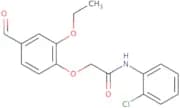
N-(2-Chlorophenyl)-2-(2-ethoxy-4-formylphenoxy)acetamide
CAS:Versatile small molecule scaffold
Formula:C17H16ClNO4Purity:Min. 95%Molecular weight:333.8 g/mol4-(Dimethyl-1,2-oxazol-4-yl)phenol
CAS:Versatile small molecule scaffold
Formula:C11H11NO2Purity:Min. 95%Molecular weight:189.21 g/molRef: 3D-AKB62875
Discontinued product2-(2-{[(9H-Fluoren-9-yl)methoxy]carbonyl}-1,2,3,4-tetrahydroisoquinolin-1-yl)acetic acid
CAS:Versatile small molecule scaffoldFormula:C26H23NO4Purity:Min. 95%Molecular weight:413.5 g/molRef: 3D-QWA48355
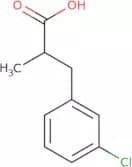
Discontinued product3-(3-Chlorophenyl)-2-methylpropanoic acid
CAS:Versatile small molecule scaffoldFormula:C10H11ClO2Purity:Min. 95%Molecular weight:198.64 g/molRef: 3D-RCA73500
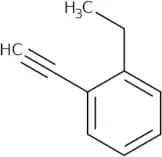
Discontinued product1-Ethyl-2-ethynylbenzene
CAS:1-Ethyl-2-ethynylbenzene is an indene that can be synthesized by the reaction of 1-ethylbenzene with ethynylmagnesium bromide and trifluoroacetyl chloride. 1-Ethyl-2-ethynylbenzene reacts as a nucleophile with electrophiles, such as phenylsulfonyl and acetylene compounds, to form sulfones and acetylenes. It can also react with tetrafluoroborates to form indenes.
Formula:C10H10Purity:Min. 95%Molecular weight:130.19 g/molRef: 3D-ADA65949
Discontinued product4-[4-(Methylsulfanyl)phenyl]butanoic acid
CAS:Versatile small molecule scaffold
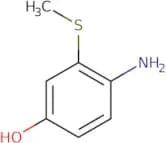
Formula:C11H14O2SPurity:Min. 95%Molecular weight:210.29 g/mol4-amino-3-(methylsulfanyl)phenol
CAS:Versatile small molecule scaffold
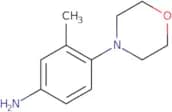
Formula:C7H9NOSPurity:Min. 95%Molecular weight:155.21 g/mol3-Methyl-4-(4-morpholinyl)aniline
CAS:Versatile small molecule scaffold
Formula:C11H16N2OPurity:Min. 95%Molecular weight:192.26 g/molRef: 3D-MEA90082
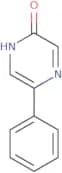
Discontinued product5-Phenyl-1H-pyrazin-2-one
CAS:5-Phenyl-1H-pyrazin-2-one is a potent inhibitor of tyrosine kinase, which is an enzyme that regulates the activity of cells by transferring phosphate groups from ATP to tyrosine residues. This drug binds to the ATP binding site, resulting in inhibition of the enzyme's activity and reduced cell proliferation. 5-Phenyl-1H-pyrazin-2-one has been shown to be effective in treating rheumatoid arthritis and other autoimmune diseases, with no adverse effects on bone metabolism or blood pressure. It also has no effect on platelet aggregation or erythrocytes.
Formula:C10H8N2OPurity:Min. 95%Molecular weight:172.18 g/mol7-Bromo-1H,2H,3H-pyrazolo[1,5-a]imidazole
CAS:Versatile small molecule scaffoldFormula:C5H6BrN3Purity:Min. 95%Molecular weight:188.03 g/molRef: 3D-REA24833
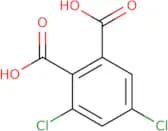
Discontinued product3,5-Dichlorophthalic acid
CAS:3,5-Dichlorophthalic acid is a divalent organic acid that is used as an intermediate in the production of other chemicals. 3,5-Dichlorophthalic acid is used as a regulator of plant growth and development. It can also be used to make different n-substituted compounds, such as naphthalene, phthalic anhydride, and 2,6-dichloro-pyridine.
Formula:C8H4Cl2O4Purity:Min. 95%Molecular weight:235.02 g/molRef: 3D-ABA64198
Discontinued product[2-(2-Ethoxyethoxy)ethyl](methyl)amine
CAS:Versatile small molecule scaffold
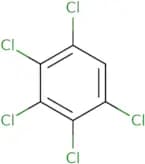
Formula:C7H17NO2Purity:Min. 95%Molecular weight:147.22 g/mol1,2,3,4,5-Pentachlorobenzene
CAS:1,2,3,4,5-Pentachlorobenzene is a chlorinated hydrocarbon that is used in the production of pesticides and herbicides. It is an ingredient in the manufacturing of pentachlorophenol and pentachloronitrobenzene. 1,2,3,4,5-Pentachlorobenzene has been used as a chemical intermediate or solvent for the production of other chemicals. The emissions from this chemical can be harmful to humans and animals because it has been shown to affect enzyme activities at sublethal doses. It also affects rat liver microsomes and causes DNA damage that can lead to cancer.
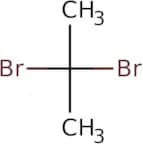
Formula:C6HCl5Purity:Min. 95%Molecular weight:250.34 g/mol2,2-Dibromopropane
CAS:2,2-Dibromopropane is a synthetic chemical that has been used as a precursor in the production of nylon. It is an activator that can be used to form covalent bonds with reactive groups on other molecules. The activation energy for the reaction with piperazine is between 104 and 106 kJ/mol. 2,2-Dibromopropane undergoes acylation reactions under certain conditions, forming reaction products such as 2,2-dibromoethyl acetate and 2,2-dibromoethanol. The molecular weight of 2,2-dibromopropane is 192.19 g/mol and its structural formula is CHBrCHBrCHBrCHBrC≡C≡C≡C≡C≡C≡CC(O)OH.
Formula:C3H6Br2Purity:Min. 95%Molecular weight:201.89 g/mol2,4-Diiodo-6-nitroaniline
CAS:Versatile small molecule scaffold
Formula:C6H4I2N2O2Purity:Min. 95%Molecular weight:389.92 g/molRef: 3D-REA52949
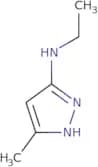
Discontinued productN-Ethyl-5-methyl-1H-pyrazol-3-amine
CAS:Versatile small molecule scaffold
Formula:C6H11N3Purity:Min. 95%Molecular weight:125.17 g/molRef: 3D-REA54520
Discontinued product2-[(tert-Butyldimethylsilyl)oxy]benzaldehyde
CAS:2-[(tert-Butyldimethylsilyl)oxy]benzaldehyde (BBSA) is a traceless synthetic reagent that is used for the termination of peptide synthesis. It can also be used in the synthesis of benzofurans, carbonyl compounds, and thioacetals. The high yield and chemoselectivity makes BBSA a competitive reagent for these types of reactions. BBSA can be prepared from hydrogen peroxide, esters, enol ethers, or peroxides. These latter reactants are more selective than hydrogen peroxide and do not lead to oxidation of substrates or side products. This product is also useful for the synthesis of thioketals.
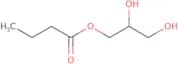
Formula:C13H20O2SiPurity:Min. 95%Molecular weight:236.38 g/mol1-Monotetranoin
CAS:1-Monotetranoin is a fatty ester that is involved in the process of lipolysis, which is the breakdown of fat cells. Lipolysis occurs when an enzyme called lipase hydrolyzes triglycerides into glycerol and three fatty acids. 1-Monotetranoin has been shown to be a potent stimulator of growth factor production and cell proliferation in vivo models. It has also been shown to be effective at inhibiting angiogenic processes in vitro, including the release of growth factors from fat cells. The neutral pH optimum for 1-monotetranoin is between 7 and 8, which may be due to its hydrophobic nature.
Formula:C7H14O4Purity:Min. 95%Molecular weight:162.18 g/molRef: 3D-AAA55725
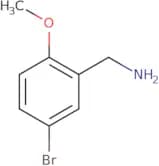
Discontinued product(5-bromo-2-methoxyphenyl)methanamine
CAS:Versatile small molecule scaffold
Formula:C8H10BrNOPurity:Min. 95%Molecular weight:216.1 g/molRef: 3D-RGA53078
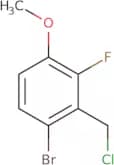
Discontinued product1-Bromo-2-(chloromethyl)-3-fluoro-4-methoxybenzene
CAS:Versatile small molecule scaffoldFormula:C8H7BrClFOPurity:Min. 95%Molecular weight:253.5 g/molMethyl 5-ethynylpyridine-2-carboxylate
CAS:Methyl 5-ethynylpyridine-2-carboxylate is a ligand that binds in the active site of many enzymes. It can enhance the activity of these enzymes and also change their conformations. Methyl 5-ethynylpyridine-2-carboxylate interacts with four subunits to form a tetradentate framework, which is responsible for this molecule's ability to bind to any type of ligand. This enhancement effect is reversible, and it can be reversed by oxidizing methyl 5-ethynylpyridine-2-carboxylate with nitric acid. The yield of methyl 5-ethynylpyridine-2-carboxylate depends on the reaction conditions and the type of arylacetylene used. Methyl 5-ethynylpyridine-2-carboxylate has been shown to be an effective ligand with a high emission yield when using 1,3
Formula:C9H7NO2Purity:Min. 95%Molecular weight:161.2 g/mol2-(5-Chloro-1-methyl-1H-imidazol-2-yl)-2,2-difluoroacetic acid hydrochloride
CAS:Versatile small molecule scaffoldFormula:C6H6Cl2F2N2O2Purity:Min. 95%Molecular weight:247 g/molRef: 3D-YGC02390
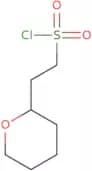
Discontinued product2-(Oxan-2-yl)ethane-1-sulfonyl chloride
CAS:Versatile small molecule scaffold
Formula:C7H13ClO3SPurity:Min. 95%Molecular weight:212.7 g/molRef: 3D-SAC21574
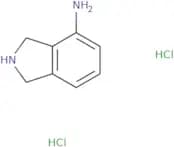
Discontinued productIsoindolin-4-amine dihydrochloride
CAS:Versatile small molecule scaffold
Formula:C8H10N2HClPurity:Min. 95%Molecular weight:207.1 g/mol4-Acetyl-5-methyl-3-(propan-2-yl)-1H-pyrrole-2-carboxylic acid
CAS:Versatile small molecule scaffold
Formula:C11H15NO3Purity:Min. 95%Molecular weight:209.24 g/molRef: 3D-YGC02414
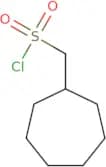
Discontinued productCycloheptylmethanesulfonyl chloride
CAS:Cycloheptylmethanesulfonyl chloride is a heterocyclic compound that has been shown to cause neurotoxicity, or nerve damage. It inhibits the activity of two enzymes, acetylcholinesterase and butyrylcholinesterase, which are responsible for regulating the production of the neurotransmitter acetylcholine in the brain. Cycloheptylmethanesulfonyl chloride also inhibits other enzymes involved in the synthesis of proteins in neurons, leading to neuronal damage. Cycloheptylmethanesulfonyl chloride has been shown to be effective against neurological disorders such as neurodegenerative diseases and nerve damage.Formula:C8H15ClO2SPurity:Min. 95%Molecular weight:210.72 g/molRef: 3D-SJA45987
Discontinued productMethyl 4-chloro-1-ethyl-1H-pyrazole-5-carboxylate
CAS:Versatile small molecule scaffold
Formula:C7H9ClN2O2Purity:Min. 95%Molecular weight:188.61 g/molRef: 3D-SSC71497
Discontinued product5-Amino-1-(2-hydroxyethyl)-1,2-dihydropyridin-2-one
CAS:Versatile small molecule scaffoldFormula:C7H10N2O2Purity:Min. 95%Molecular weight:154.17 g/molRef: 3D-WQB04793
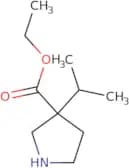
Discontinued productEthyl 3-(propan-2-yl)pyrrolidine-3-carboxylate
CAS:Versatile small molecule scaffold
Formula:C10H19NO2Purity:Min. 95%Molecular weight:185.26 g/molRef: 3D-SSC72215
Discontinued productrac-(1R,2S,6R,7S)-2-Methyl-4-oxatricyclo[5.2.1.0,2,6]dec-8-ene-3,5-dione
CAS:Rac-2,2'-Methylenebis(4-oxatricyclo[5.2.1.0,2,6]dec-8-ene)-3,5-dione is a polyvalent anhydride that has been used as a crosslinking agent in epoxy resin systems and as a viscosity modifier in polymerizable systems. It is also used as an additive to improve the properties of powder coatings and to produce polycarboxylic acid dispersions for use in alkyd resins and oil field chemical additives. The material is supplied as a colloidal suspension in water with a particle size of less than 1 micron. Racemic 2,2'-Methylenebis(4-oxatricyclo[5.2.1.0,2,6]dec-8-ene)-3,5-dione (rac-(1R,2S,6R,7S)-
Formula:C10H10O3Purity:Min. 95%Molecular weight:178.18 g/molRef: 3D-TAA31060
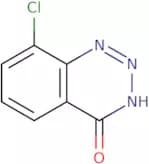
Discontinued product8-Chloro-3,4-dihydro-1,2,3-benzotriazin-4-one
CAS:Versatile small molecule scaffold
Formula:C7H4ClN3OPurity:Min. 95%Molecular weight:181.58 g/molRef: 3D-TAA34345
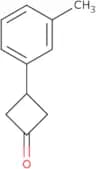
Discontinued product3-(3-Methylphenyl)cyclobutan-1-one
CAS:Versatile small molecule scaffold
Formula:C11H12OPurity:Min. 95%Molecular weight:160.21 g/molRef: 3D-TJA86756
Discontinued product2-[1-(Difluoromethyl)-3,5-dimethyl-1H-pyrazol-4-yl]acetic acid
CAS:Controlled Product2-[1-(Difluoromethyl)-3,5-dimethyl-1H-pyrazol-4-yl]acetic acid is a potent inhibitor of peptide binding to the receptor. It has a Kd value of 0.2 μM and a Ki value of 1.6 μM in the inhibition of insulin binding to its receptor. 2-[1-(Difluoromethyl)-3,5-dimethyl-1H-pyrazol-4-yl]acetic acid is also an activator of protein interactions and ligand for research tools used for studying ion channels and other receptors. This chemical can be used as high purity reagent for life sciences, including cell biology and pharmacology.
Formula:C8H10F2N2O2Purity:Min. 95%Molecular weight:204.17 g/mol3-[(Pyridin-4-yl)methyl]-1,2,4-oxadiazol-5-amine
CAS:Versatile small molecule scaffold
Formula:C8H8N4OPurity:Min. 95%Molecular weight:176.18 g/molRef: 3D-YZB21426
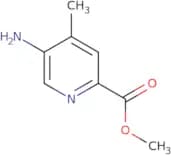
Discontinued productmethyl 5-amino-4-methylpyridine-2-carboxylate
CAS:Versatile small molecule scaffoldFormula:C8H10N2O2Purity:Min. 95%Molecular weight:166.18 g/mol1-(Pyridin-3-yl)-1H-pyrazole-4-carboxylic acid hydrochloride
CAS:Versatile small molecule scaffold
Formula:C9H8ClN3O2Purity:Min. 95%Molecular weight:225.63 g/molMethyl 3-(4-nitro-1H-pyrazol-1-yl)propanoate
CAS:Versatile small molecule scaffold
Formula:C7H9N3O4Purity:Min. 95%Molecular weight:199.16 g/molRef: 3D-UUA74722
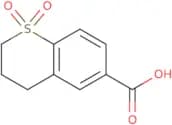
Discontinued product3,4-Dihydro-2H-1-benzothiopyran-6-carboxylic acid 1,1-dioxide
CAS:Versatile small molecule scaffold
Formula:C10H10O4SPurity:Min. 95%Molecular weight:226.25 g/molRef: 3D-VDB69313
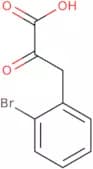
Discontinued product3-(2-Bromophenyl)-2-oxopropanoic acid
CAS:Versatile small molecule scaffold
Formula:C9H7BrO3Purity:Min. 95%Molecular weight:243.05 g/molRef: 3D-VEA24065
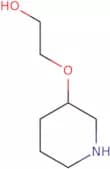
Discontinued product2-(Piperidin-3-yloxy)ethan-1-ol
CAS:Versatile small molecule scaffold
Formula:C7H15NO2Purity:Min. 95%Molecular weight:145.2 g/molRef: 3D-VQB97119
Discontinued product1-[(3-Bromothiophen-2-yl)methyl]piperazine
CAS:Versatile small molecule scaffold
Formula:C9H13BrN2SPurity:Min. 95%Molecular weight:261.18 g/molRef: 3D-WYB72635
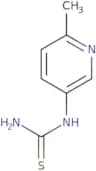
Discontinued product(6-Methylpyridin-3-yl)thiourea
CAS:Versatile small molecule scaffold
Formula:C7H9N3SPurity:Min. 95%Molecular weight:167.23 g/molRef: 3D-VRA13075
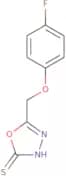
Discontinued product5-(4-Fluorophenoxymethyl)-1,3,4-oxadiazole-2-thiol
CAS:Versatile small molecule scaffoldFormula:C9H7FN2O2SPurity:Min. 95%Molecular weight:226.23 g/molRef: 3D-VSA22441
Discontinued product4-oxo-2-spiro(N-Boc-piperidine-4-yl)-benzopyran
CAS:Versatile small molecule scaffold
Formula:C18H23NO4Purity:Min. 95%Molecular weight:317.39 g/molRef: 3D-ZIB92822
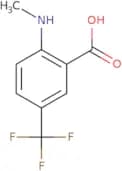
Discontinued product2-(Methylamino)-5-(trifluoromethyl)benzoic acid
CAS:Versatile small molecule scaffold
Formula:C9H8F3NO2Purity:Min. 95%Molecular weight:219.16 g/molRef: 3D-VSA47960
Discontinued product1-[5-(Trifluoromethyl)-1,3,4-thiadiazol-2-yl]piperazine hydrochloride
CAS:Versatile small molecule scaffold
Formula:C7H10ClF3N4SPurity:Min. 95%Molecular weight:274.7 g/molRef: 3D-WAC73867
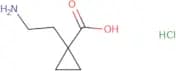
Discontinued product1-(2-aminoethyl)cyclopropane-1-carboxylic acid hydrochloride
CAS:Versatile small molecule scaffold
Formula:C6H12ClNO2Purity:Min. 95%Molecular weight:165.62 g/molRef: 3D-WGC60217
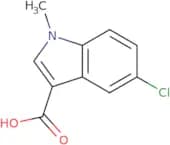
Discontinued product5-Chloro-1-methyl-1H-indole-3-carboxylic acid
CAS:Controlled ProductVersatile small molecule scaffoldFormula:C10H8ClNO2Purity:Min. 95%Molecular weight:209.63 g/molRef: 3D-XGA59662
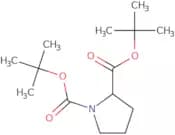
Discontinued product1,2-Di-tert-butyl pyrrolidine-1,2-dicarboxylate
CAS:Versatile small molecule scaffoldFormula:C14H25NO4Purity:Min. 95%Molecular weight:271.35 g/molRef: 3D-XNA18918
Discontinued product5-Fluoropyridine-3-sulfonamide
CAS:Versatile small molecule scaffold
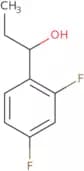
Formula:C5H5FN2O2SPurity:Min. 95%Molecular weight:176.17 g/mol1-(2,4-Difluorophenyl)propan-1-ol
CAS:Versatile small molecule scaffold
Formula:C9H10F2OPurity:Min. 95%Molecular weight:172.17 g/molRef: 3D-XZB99805
Discontinued productMethyl 2-(hydroxymethyl)-4-methylpyrimidine-5-carboxylate
CAS:Versatile small molecule scaffold
Formula:C8H10N2O3Purity:Min. 95%Molecular weight:182.2 g/molRef: 3D-LUD63599
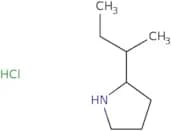
Discontinued product2-(Butan-2-yl)pyrrolidine hydrochloride
CAS:Versatile small molecule scaffold
Formula:C8H18ClNPurity:Min. 95%Molecular weight:163.7 g/molRef: 3D-LUD63585
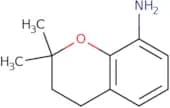
Discontinued product2,2-Dimethyl-3,4-dihydro-2H-1-benzopyran-8-amine
CAS:Versatile small molecule scaffoldFormula:C11H15NOPurity:Min. 95%Molecular weight:177.24 g/molRef: 3D-LJC87188
Discontinued productN-[(Quinolin-8-yl)methyl]methanesulfonamide
CAS:Versatile small molecule scaffold
Formula:C11H12N2O2SPurity:Min. 95%Molecular weight:236.29 g/molRef: 3D-LJC51797
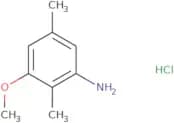
Discontinued product3-Methoxy-2,5-dimethylaniline hydrochloride
CAS:Versatile small molecule scaffold
Formula:C9H14ClNOPurity:Min. 95%Molecular weight:187.66 g/molRef: 3D-LJB55559
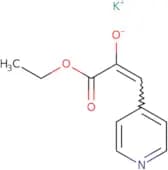
Discontinued productPotassium 3-ethoxy-3-oxo-1-(pyridin-4-yl)prop-1-en-2-olate
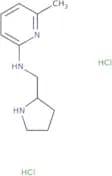
CAS:Versatile small molecule scaffoldFormula:C10H10KNO3Purity:Min. 95%Molecular weight:231.29 g/mol6-Methyl-N-(pyrrolidin-2-ylmethyl)pyridin-2-amine dihydrochloride
CAS:Versatile small molecule scaffold
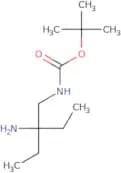
Formula:C11H19Cl2N3Purity:Min. 95%Molecular weight:264.19 g/moltert-Butyl N-(2-amino-2-ethylbutyl)carbamate
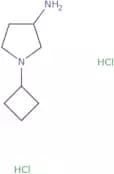
CAS:Versatile small molecule scaffoldFormula:C11H24N2O2Purity:Min. 95%Molecular weight:216.32 g/mol(R)-1-Cyclobutylpyrrolidin-3-amine dihydrochloride
CAS:Versatile small molecule scaffoldFormula:C8H18Cl2N2Purity:Min. 95%Molecular weight:213.15 g/mol3-[(4-Bromo-1H-pyrazol-1-yl)methyl]aniline hydrochloride
CAS:Versatile small molecule scaffold
Formula:C10H11BrClN3Purity:Min. 95%Molecular weight:288.57 g/molRef: 3D-KXB48392
Discontinued product1-(4-Fluoro-benzyl)-3,5-dimethyl-1H-pyrazol-4-ylamine hydrochloride
CAS:Versatile small molecule scaffoldFormula:C12H15ClFN3Purity:Min. 95%Molecular weight:255.72 g/mol(5-Chloro-1H-benzo[d]imidazol-2-yl)methanamine dihydrochloride
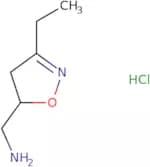
CAS:Versatile small molecule scaffoldFormula:C8H10Cl3N3Purity:Min. 95%Molecular weight:254.54 g/mol(3-Ethyl-4,5-dihydro-1,2-oxazol-5-yl)methanamine hydrochloride
CAS:Versatile small molecule scaffold
Formula:C6H13ClN2OPurity:Min. 95%Molecular weight:164.63 g/molRef: 3D-KXB29497
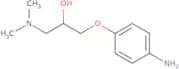
Discontinued product1-(4-Aminophenoxy)-3-(dimethylamino)propan-2-ol
CAS:Versatile small molecule scaffold
Formula:C11H18N2O2Purity:Min. 95%Molecular weight:210.27 g/molRef: 3D-KKA04560
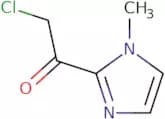
Discontinued product2-Chloro-1-(1-methyl-1H-imidazol-2-yl)ethan-1-one
CAS:Versatile small molecule scaffold
Formula:C6H7ClN2OPurity:Min. 95%Molecular weight:158.58 g/mol1-Hydroxycyclopentane-1-carbonitrile
CAS:1-Hydroxycyclopentane-1-carbonitrile is a monomer that is hydrolyzed to form benzoin and cyanohydrins. It can be used in the production of scifinder as a monomer or dimerizer.
Formula:C6H9NOPurity:Min. 95%Molecular weight:111.14 g/mol3-Hydroxy-5-methylpyridine
CAS:3-Hydroxy-5-methylpyridine (3HMP) is a chemical substance that has been classified as an amine. It is a product of the metabolism of purines, which are nitrogenous bases found in DNA and RNA. 3HMP is produced by aerogenic bacteria (such as Enterobacter), and can be used to estimate the number of these bacteria present in water samples. 3HMP has been shown to have antiviral properties against influenza virus, and can be used as a biomarker for the presence of other viruses in animals. 3HMP also has mineralization properties, which have been studied extensively, particularly with regards to pancreatic disease.
Formula:C6H7NOPurity:Min. 95%Color and Shape:PowderMolecular weight:109.13 g/molRef: 3D-FH16174
Discontinued product8-Bromo-2-methylimidazo[1,2-a]pyridine
CAS:Versatile small molecule scaffold
Formula:C8H7N2BrPurity:Min. 95%Molecular weight:211.05 g/mol2-Bromo-3,3,3-trifluoro-1-propene
CAS:Controlled Product2-Bromo-3,3,3-trifluoro-1-propene is a chemical compound that has been synthesized in an asymmetric reaction. The reactant is bromopropane and the product is 2,2,2-trifluoropropene. The methylene group on the propene molecule is activated by the nucleophilic attack of a fluoride ion from hydrogen fluoride to form a cavity with a highly strained bond. The kinetic study of this reaction revealed that the activation energy for the reaction is 42 kJ/mol. Palladium-catalyzed coupling reactions are catalyzed by palladium and require nonpolar solvents such as toluene or dichloromethane. This type of reaction has been shown to be exothermic with an isolated yield of 1%.
Formula:C3H2BrF3Purity:Min. 95%Color and Shape:Colorless PowderMolecular weight:174.95 g/mol4-Chloro-2-hydroxy-6-methylphenylboronic acid
CAS:Versatile small molecule scaffoldFormula:C7H8BClO3Purity:Min. 95%Molecular weight:186.4 g/mol4,5-Dihydro-1H-imidazol-2-amine hydrochloride
CAS:Please enquire for more information about 4,5-Dihydro-1H-imidazol-2-amine hydrochloride including the price, delivery time and more detailed product information at the technical inquiry form on this page
Formula:C3H7N3•HClPurity:Min. 95%Molecular weight:121.57 g/molRef: 3D-FD183639
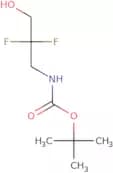
Discontinued producttert-Butyl (2,2-difluoro-3-hydroxypropyl)carbamate
CAS:Versatile small molecule scaffoldFormula:C10H13NO4Purity:Min. 95%Molecular weight:211.21 g/mol4,5-Dihydroxy-2,3-Pentanedione
CAS:4,5-Dihydroxy-2,3-pentanedione is a carbonyl compound that is the product of the oxidation of ascorbic acid. It is used in wastewater treatment and has antimicrobial properties against infectious diseases. This compound has been shown to inhibit protein synthesis by binding to the ribosome and preventing the formation of peptide bonds between amino acids. 4,5-Dihydroxy-2,3-pentanedione has also been shown to bind to plasma proteins, which may be due to its acyl chain structure. 4,5-Dihydroxy-2,3-pentanedione can be synthesized in a catalytic mechanism that involves dehydroascorbic acid and molecular oxygen.
Formula:C5H8O4Purity:Min. 95%Color and Shape:PowderMolecular weight:132.11 g/molRef: 3D-FD180770
Discontinued productPiperyline
CAS:Piperyline is an alkanoic acid that has shown to be effective against skin cancer. It also has antimicrobial properties, which may be due to its ability to bind metal ions and form polymeric compounds. Piperyline inhibits microbial growth by inhibiting the synthesis of proteins and nucleic acids. The antimicrobial activity is related to its cationic polymerization with hydroxyl groups, which forms a structure that can inhibit microbial enzymes and disrupt microbial cell membranes. This compound also interacts with the skin's natural lipids, making it difficult for microorganisms to attach and grow on the skin. Piperyline is synthesized in organic chemistry laboratories as an amide precursor of other pharmaceuticals such as penicillin.
Formula:C16H17NO3Purity:Min. 95%Molecular weight:271.31 g/mol


![2-(2-{[(9H-Fluoren-9-yl)methoxy]carbonyl}-1,2,3,4-tetrahydroisoquinolin-1-yl)acetic acid](/_next/image/?url=https%3A%2Fstatic.cymitquimica.com%2Fproducts%2F3D%2Fthumb-webp%2FQWA48355.webp&w=3840&q=75)
![4-[4-(Methylsulfanyl)phenyl]butanoic acid](/_next/image/?url=https%3A%2Fstatic.cymitquimica.com%2Fproducts%2F3D%2Fthumb-webp%2FREA17433.webp&w=3840&q=75)
![7-Bromo-1H,2H,3H-pyrazolo[1,5-a]imidazole](/_next/image/?url=https%3A%2Fstatic.cymitquimica.com%2Fproducts%2F3D%2Fthumb-webp%2FREA24833.webp&w=3840&q=75)
amine](/_next/image/?url=https%3A%2Fstatic.cymitquimica.com%2Fproducts%2F3D%2Fthumb-webp%2FAAC06291.webp&w=3840&q=75)

![2-[(tert-Butyldimethylsilyl)oxy]benzaldehyde](/_next/image/?url=https%3A%2Fstatic.cymitquimica.com%2Fproducts%2F3D%2Fthumb-webp%2FREA58512.webp&w=3840&q=75)




![rac-(1R,2S,6R,7S)-2-Methyl-4-oxatricyclo[5.2.1.0,2,6]dec-8-ene-3,5-dione](/_next/image/?url=https%3A%2Fstatic.cymitquimica.com%2Fproducts%2F3D%2Fthumb-webp%2FTAA31060.webp&w=3840&q=75)
![2-[1-(Difluoromethyl)-3,5-dimethyl-1H-pyrazol-4-yl]acetic acid](/_next/image/?url=https%3A%2Fstatic.cymitquimica.com%2Fproducts%2F3D%2Fthumb-webp%2FWYB72452.webp&w=3840&q=75)
![3-[(Pyridin-4-yl)methyl]-1,2,4-oxadiazol-5-amine](/_next/image/?url=https%3A%2Fstatic.cymitquimica.com%2Fproducts%2F3D%2Fthumb-webp%2FYZB21426.webp&w=3840&q=75)


![1-[(3-Bromothiophen-2-yl)methyl]piperazine](/_next/image/?url=https%3A%2Fstatic.cymitquimica.com%2Fproducts%2F3D%2Fthumb-webp%2FWYB72635.webp&w=3840&q=75)
![1-[5-(Trifluoromethyl)-1,3,4-thiadiazol-2-yl]piperazine hydrochloride](/_next/image/?url=https%3A%2Fstatic.cymitquimica.com%2Fproducts%2F3D%2Fthumb-webp%2FWAC73867.webp&w=3840&q=75)

![N-[(Quinolin-8-yl)methyl]methanesulfonamide](/_next/image/?url=https%3A%2Fstatic.cymitquimica.com%2Fproducts%2F3D%2Fthumb-webp%2FLJC51797.webp&w=3840&q=75)
![3-[(4-Bromo-1H-pyrazol-1-yl)methyl]aniline hydrochloride](/_next/image/?url=https%3A%2Fstatic.cymitquimica.com%2Fproducts%2F3D%2Fthumb-webp%2FKXB48392.webp&w=3840&q=75)

![(5-Chloro-1H-benzo[d]imidazol-2-yl)methanamine dihydrochloride](/_next/image/?url=https%3A%2Fstatic.cymitquimica.com%2Fproducts%2F3D%2Fthumb-webp%2FKXB29700.webp&w=3840&q=75)


![8-Bromo-2-methylimidazo[1,2-a]pyridine](/_next/image/?url=https%3A%2Fstatic.cymitquimica.com%2Fproducts%2F3D%2Fthumb-webp%2FUXB37475.webp&w=3840&q=75)