Building Blocks
Subcategories of "Building Blocks"
- Boronic Acids & Boronic Acid Derivatives(5,778 products)
- Chiral Building Blocks(1,243 products)
- Hydrocarbon Building Blocks(6,099 products)
- Organic Building Blocks(61,038 products)
Found 205373 products of "Building Blocks"
6-bromoimidazo[1,2-a]pyrazin-2-amine
CAS:Versatile small molecule scaffold
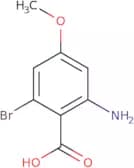
Formula:C6H5BrN4Purity:Min. 95%Molecular weight:213 g/mol2-Amino-6-bromo-4-methoxybenzoic acid
CAS:Versatile small molecule scaffold
Formula:C8H8BrNO3Purity:Min. 95%Molecular weight:246.06 g/mol3-(4-Ethylphenyl)butanoic acid
CAS:Versatile small molecule scaffold
Formula:C12H16O2Purity:Min. 95%Molecular weight:192.25 g/molRef: 3D-DCA08649
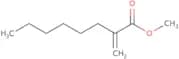
Discontinued productMethyl 2-methylideneoctanoate
CAS:Versatile small molecule scaffold
Formula:C10H18O2Purity:Min. 95%Molecular weight:170.25 g/molRef: 3D-DAA61840
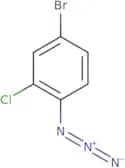
Discontinued product1-Azido-4-bromo-2-chlorobenzene
CAS:Versatile small molecule scaffold
Formula:C6H3BrClN3Purity:Min. 95%Molecular weight:232.46 g/molRef: 3D-CWB94347
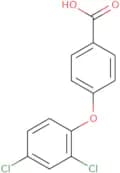
Discontinued product4-(2,4-Dichlorophenoxy)benzoic acid
CAS:Versatile small molecule scaffold
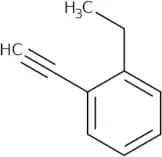
Formula:C13H8Cl2O3Purity:Min. 95%Molecular weight:283.1 g/mol1-Ethyl-2-ethynylbenzene
CAS:1-Ethyl-2-ethynylbenzene is an indene that can be synthesized by the reaction of 1-ethylbenzene with ethynylmagnesium bromide and trifluoroacetyl chloride. 1-Ethyl-2-ethynylbenzene reacts as a nucleophile with electrophiles, such as phenylsulfonyl and acetylene compounds, to form sulfones and acetylenes. It can also react with tetrafluoroborates to form indenes.
Formula:C10H10Purity:Min. 95%Molecular weight:130.19 g/molRef: 3D-ADA65949
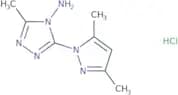
Discontinued product3-(3,5-Dimethyl-1H-pyrazol-1-yl)-5-methyl-4H-1,2,4-triazol-4-amine hydrochloride
CAS:Versatile small molecule scaffold
Formula:C8H13ClN6Purity:Min. 95%Molecular weight:228.68 g/molRef: 3D-AAA88092
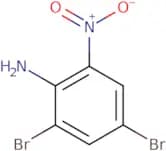
Discontinued product2,4-Dibromo-6-nitroaniline
CAS:2,4-Dibromo-6-nitroaniline is a nitro compound that has been used in the production of dyes. It is also used as a component in the synthesis of other organic compounds. 2,4-Dibromo-6-nitroaniline can be produced by electrolysis of an acid solution containing radical cations and benzene. The radical cations are formed by proton transfer from the acid to the benzene, followed by electron transfer from benzene to the electrode. This process results in the formation of nitro groups on the benzene ring, which undergoes oxidation to form 2,4-dibromo-6-nitroaniline. The cyclic voltammetry shows that this process occurs via two pathways: one with a fast rate and one with a slow rate. The mechanism for this reaction is not yet known.
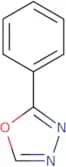
Formula:C6H4Br2N2O2Purity:Min. 95%Molecular weight:295.92 g/mol2-Phenyl-1,3,4-oxadiazole
CAS:2-Phenyl-1,3,4-oxadiazole is a 2-phenyloxazole with an oxygen atom at the 1 position. It is a white crystalline solid that is soluble in water and has antibacterial properties. This chemical can be used as a catalyst for the synthesis of organic compounds. 2-Phenyl-1,3,4-oxadiazole reacts with nitro groups to form oxime derivatives and has been shown to inhibit the growth of fungi such as Candida albicans and Aspergillus niger. 2-Phenyl-1,3,4-oxadiazole can also be used as an antifungal agent against Trichophyton rubrum.
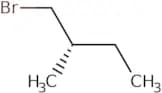
2-Phenyl-1,3,4-oxadiazole may be synthesized by reacting phenol with acetone in the presence of nitric acid or sulfuric acid. The structural formula for this compound isFormula:C8H6N2OPurity:Min. 95%Molecular weight:146.15 g/mol(S)-(+)-1-Bromo-2-methylbutane
CAS:(S)-(+)-1-Bromo-2-methylbutane is a chiral molecule with two stereoisomers, the cis and trans forms. The cis form has been observed to be the more stable of the two. It is a functional theory that these two forms are not mirror images of each other because they have different conformations. (S)-(+)-1-Bromo-2-methylbutane has been used in the synthesis of a number of important molecules. The stereoisomers can be distinguished by conformational analysis and optical microscopy. (S)-(+)-1-Bromo-2-methylbutane also has an application in biotechnology for use as a precursor for hydrazones, which are important in organic chemistry and molecular biology, such as DNA sequencing.
Formula:C5H11BrPurity:Min. 95%Molecular weight:151.04 g/molMethyl 5-bromo-3-(bromomethyl)furan-2-carboxylate
CAS:Versatile small molecule scaffold
Formula:C7H6Br2O3Purity:Min. 95%Molecular weight:297.93 g/mol1-Hydroxymethyl-2-Oxa-5-Aza-Bicyclo[2.2.1]Heptane-5-Carboxylic Acid Tert-Butyl Ester
CAS:Versatile small molecule scaffold
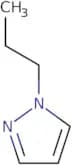
Formula:C11H19NO4Purity:Min. 95%Molecular weight:229.27 g/mol1-Propylpyrazole
CAS:1-Propylpyrazole is a non-classical inhibitor of aldehyde oxidase that has been shown to have an inhibitory effect on pentane. 1-Propylpyrazole has peroxidase-like activity, which means it can bind to lipid hydroperoxides in the presence of hydrogen peroxide or peroxidase. It has also been shown to be an effective inhibitor of dehydrogenase, which is an enzyme that catalyzes the oxidation of aldehydes and ketones to carboxylic acids. This drug is not active against classical aldehyde oxidases such as alcohol dehydrogenase, but it does inhibit polyunsaturated fatty acid synthesis by binding with cytochrome P450 enzymes.
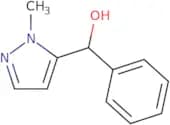
Formula:C6H10N2Purity:Min. 95%Molecular weight:110.16 g/mol(1-Methyl-1H-pyrazol-5-yl)(phenyl)methanol
CAS:Versatile small molecule scaffold
Formula:C11H12N2OPurity:Min. 95%Molecular weight:188.23 g/molRef: 3D-HBA50065
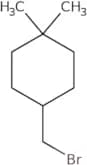
Discontinued product4-(Bromomethyl)-1,1-dimethylcyclohexane
CAS:Versatile small molecule scaffoldFormula:C9H17BrPurity:Min. 95%Molecular weight:205.13 g/molRef: 3D-HHC68120
Discontinued product2-{4-[2-(Pyrrolidin-1-yl)ethoxy]phenyl}ethan-1-amine dihydrochloride
CAS:Versatile small molecule scaffold
Formula:C14H24Cl2N2OPurity:Min. 95%Molecular weight:307.3 g/molRef: 3D-HHC68177
Discontinued product4H-pyrrolo[2,3-D]thiazole-5-carboxylic acid
CAS:Versatile small molecule scaffold
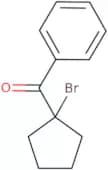
Formula:C6H4N2O2SPurity:Min. 95%Molecular weight:168.17 g/mol(1-Bromocyclopentyl)(phenyl)methanone
CAS:Versatile small molecule scaffold
Formula:C12H13BrOPurity:Min. 95%Molecular weight:253.13 g/molRef: 3D-GAA74066
Discontinued product[1-(1-Ethyl-3-methyl-1H-pyrazol-4-yl)propyl]amine
CAS:Versatile small molecule scaffold
Formula:C9H17N3Purity:Min. 95%Molecular weight:167.25 g/molRef: 3D-HQB46021
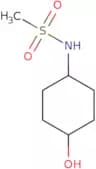
Discontinued productN-(4-Hydroxycyclohexyl)methanesulfonamide
CAS:Versatile small molecule scaffold
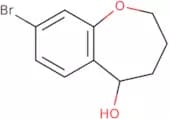
Formula:C7H15NO3SPurity:Min. 95%Molecular weight:193.27 g/mol8-Bromo-2,3,4,5-tetrahydro-1-benzoxepin-5-ol
CAS:Versatile small molecule scaffold
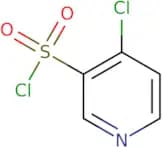
Formula:C10H11BrO2Purity:Min. 95%Molecular weight:243.1 g/mol4-chloropyridine-3-sulfonyl chloride
CAS:4-Chloropyridine-3-sulfonyl chloride is a thrombin inhibitor that has been discovered through the use of in vitro screening methods. It is a small molecule with lipophilic properties and oral bioavailability. This compound inhibits thrombin by binding to the active site of the enzyme, which prevents the formation of an enzyme-thrombin complex. The discovery was made using a pharmacophore-based approach and further modifications were made to improve its potency and increase its lipophilicity. This compound also exhibits an acceptable level of bioavailability in vivo, which may be due to its high solubility in water.Formula:C5H3Cl2NO2SPurity:Min. 95%Molecular weight:212.1 g/molRef: 3D-IBA26344
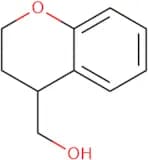
Discontinued product3,4-Dihydro-2H-1-benzopyran-4-ylmethanol
CAS:Versatile small molecule scaffold
Formula:C10H12O2Purity:Min. 95%Molecular weight:164.2 g/molRef: 3D-IBA31382
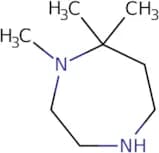
Discontinued product1,7,7-Trimethyl-1,4-diazepane
CAS:Versatile small molecule scaffold
Formula:C8H18N2Purity:Min. 95%Molecular weight:142.24 g/molRef: 3D-IMB71635
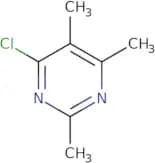
Discontinued product4-Chloro-2,5,6-trimethylpyrimidine
CAS:Versatile small molecule scaffold
Formula:C7H9ClN2Purity:Min. 95%Molecular weight:156.61 g/mol5-Methyl-7-oxa-5-azaspiro[3.4]octane-6,8-dione
CAS:Versatile small molecule scaffold
Formula:C7H9NO3Purity:Min. 95%Molecular weight:155.15 g/molRef: 3D-JBD32590
Discontinued product5-Cyclopropyl-7-oxa-5-azaspiro[3.4]octane-6,8-dione
CAS:Versatile small molecule scaffold
Formula:C9H11NO3Purity:Min. 95%Molecular weight:181.19 g/molRef: 3D-JBD33609
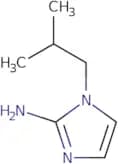
Discontinued product1-(2-Methylpropyl)-1H-imidazol-2-amine
CAS:Versatile small molecule scaffold
Formula:C7H13N3Purity:Min. 95%Molecular weight:139.2 g/molRef: 3D-JXB01789
Discontinued product[(1,4-Dioxan-2-yl)methyl]urea
CAS:Versatile small molecule scaffold
Formula:C6H12N2O3Purity:Min. 95%Molecular weight:160.17 g/molRef: 3D-JXB82665
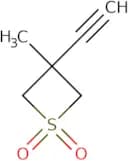
Discontinued product3-Ethynyl-3-methylthietane 1,1-dioxide
CAS:Versatile small molecule scaffold
Formula:C6H8O2SPurity:Min. 95%Molecular weight:144.2 g/molRef: 3D-KQD93720
Discontinued product4-Chloro-5H,6H,7H-pyrimido[4,5-b][1,4]oxazin-6-one
CAS:Versatile small molecule scaffoldFormula:C6H4ClN3O2Purity:Min. 95%Molecular weight:185.57 g/molRef: 3D-LYB52467
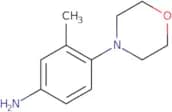
Discontinued product3-Methyl-4-(4-morpholinyl)aniline
CAS:Versatile small molecule scaffold
Formula:C11H16N2OPurity:Min. 95%Molecular weight:192.26 g/molRef: 3D-MEA90082
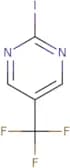
Discontinued product2-Iodo-5-(trifluoromethyl)pyrimidine
CAS:Versatile small molecule scaffold
Formula:C5H2F3IN2Purity:Min. 95%Molecular weight:273.98 g/mol1-[(4-Chlorophenyl)methyl]-3,6-dimethyl-1H-pyrazolo[3,4-b]pyridine-4-carboxylic acid
CAS:Versatile small molecule scaffold
Formula:C16H14ClN3O2Purity:Min. 95%Molecular weight:315.75 g/mol4-{3-Methyl-1H-pyrazolo[3,4-b]pyridin-1-yl}benzoic acid
CAS:Versatile small molecule scaffoldFormula:C14H11N3O2Purity:Min. 95%Molecular weight:253.26 g/molEthyl 2-[(4-amino-5-cyanopyrimidin-2-yl)sulfanyl]acetate
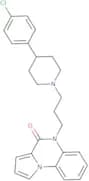
CAS:Versatile small molecule scaffoldFormula:C9H10N4O2SPurity:Min. 95%Molecular weight:238.27 g/molJMS-17-2
CAS:JMS-17-2 is a small molecule that was shown to have a potent and selective inhibitory effect on the production of chemokines in cancer cells. It blocks the interaction between CXCL12 and its receptor, CXCR4. This interaction is important for normal bone tissue development and function, as well as for chemotaxis and metastasis of cancer cells. JMS-17-2 has been shown to prevent tumor growth in animal models by inhibiting angiogenesis, or the formation of new blood vessels to supply nutrients to tumors. The drug also inhibits tumor growth by decreasing the number of primary tumors, reducing bone lesions, and inhibiting the progression of pancreatic cancer. Clinical trials are currently being conducted to assess the efficacy of JMS-17-2 in humans with advanced solid tumors.
Formula:C25H26ClN3OPurity:Min. 95%Molecular weight:419.95 g/molRef: 3D-FFC39205
Discontinued product4-[(tert-Butoxy)methyl]piperidine hydrochloride
CAS:Versatile small molecule scaffold
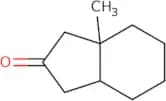
Formula:C10H22ClNOPurity:Min. 95%Molecular weight:207.74 g/molrac-(3aR,7aS)-3a-Methyl-octahydro-1H-inden-2-one
CAS:Versatile small molecule scaffold
Formula:C10H16OPurity:Min. 95%Molecular weight:152.23 g/molRef: 3D-NAA35129
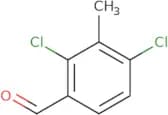
Discontinued product2,4-Dichloro-3-methylbenzaldehyde
CAS:Versatile small molecule scaffold
Formula:C8H6Cl2OPurity:Min. 95%Molecular weight:189.04 g/molRef: 3D-NCA52518
Discontinued productPyrrolo[1,2-b]pyridazin-4(1H)-one
CAS:Versatile small molecule scaffold
Formula:C7H6N2OPurity:Min. 95%Molecular weight:134.14 g/molRef: 3D-NKB72026
Discontinued product1-(3-Aminophenyl)imidazolidin-2-one
CAS:Versatile small molecule scaffold
Formula:C9H11N3OPurity:Min. 95%Molecular weight:177.21 g/molRef: 3D-NMB45914
Discontinued product3-(Chloromethyl)-5-phenylisoxazole
CAS:3-(Chloromethyl)-5-phenylisoxazole is a water soluble moiety that is used in the synthesis of conjugates with antitumor activity. 3-(Chloromethyl)-5-phenylisoxazole has been shown to inhibit the growth of brain tumors by binding to DNA, inhibiting transcription and replication. The drug also inhibits protein synthesis and cell division. This compound can be esterified and isothiazole substituted to form an antitumor drug that has a strong antiproliferative effect on human leukemia cells. The biological activity of 3-(chloromethyl)-5-phenylisoxazole can be enhanced by catalytic hydrogenation with methanol in acidic conditions.
Formula:C10H8ClNOPurity:Min. 95%Molecular weight:193.63 g/molRef: 3D-PAA73110
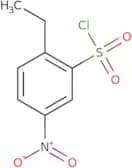
Discontinued product2-Ethyl-5-nitrobenzene-1-sulfonyl chloride
CAS:Versatile small molecule scaffold
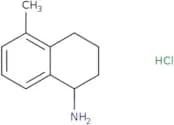
Formula:C8H8ClNO4SPurity:Min. 95%Molecular weight:249.67 g/mol5-Methyl-1,2,3,4-tetrahydronaphthalen-1-amine hydrochloride
CAS:Versatile small molecule scaffold
Formula:C11H16ClNPurity:Min. 95%Molecular weight:197.7 g/mol8-Fluoro-3-methyl-1,2,3,4-tetrahydroquinoline hydrochloride
CAS:Versatile small molecule scaffold
Formula:C10H13ClFNPurity:Min. 95%Molecular weight:201.67 g/molRef: 3D-PID25606
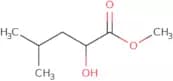
Discontinued productMethyl 2-hydroxy-4-methylvalerate
CAS:Methyl 2-hydroxy-4-methylvalerate is an organic compound that belongs to the class of fatty acids. It is a colorless liquid with a fruity odor. Methyl 2-hydroxy-4-methylvalerate has been shown to inhibit the formation of reactive oxygen species and has antioxidant potential. It also inhibits bone resorption, which may be due to its ability to reduce levels of isobutyric acid in rats and humans. Methyl 2-hydroxy-4-methylvalerate has been found in tropical fruits such as mangoes, durians, and papayas.
Formula:C7H14O3Purity:Min. 95%Molecular weight:146.18 g/mol2-Bromo-6-chloroimidazo[1,2-a]pyridine
CAS:Versatile small molecule scaffold
Formula:C7H4BrClN2Purity:Min. 95%Molecular weight:231.48 g/molRef: 3D-QHA07448
Discontinued product(5,6,7,8-Tetrahydro-4H-cyclohepta[D]isoxazol-3-yl)methanol
CAS:Versatile small molecule scaffold
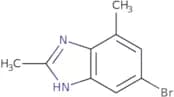
Formula:C9H13NO2Purity:Min. 95%Molecular weight:167.2 g/mol5-Bromo-2,7-dimethyl-1H-1,3-benzodiazole
CAS:Versatile small molecule scaffoldFormula:C9H9BrN2Purity:Min. 95%Molecular weight:225.08 g/mol2-Mercaptobenzo[d]thiazole-6-carbonitrile
CAS:Versatile small molecule scaffoldFormula:C8H4N2S2Purity:Min. 95%Molecular weight:192.25 g/molRef: 3D-QMA22879
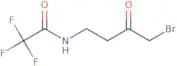
Discontinued productN-(4-Bromo-3-oxobutyl)-2,2,2-trifluoroacetamide
CAS:Versatile small molecule scaffoldFormula:C6H7BrF3NO2Purity:Min. 95%Molecular weight:262.02 g/molRef: 3D-QMC39617
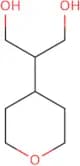
Discontinued product2-(Oxan-4-yl)propane-1,3-diol
CAS:Versatile small molecule scaffold
Formula:C8H16O3Purity:Min. 95%Molecular weight:160.21 g/molRef: 3D-RAD15754
Discontinued product1',2'-Dihydrospiro[cyclopentane-1,3'-indole]-2'-one
CAS:1',2'-Dihydrospiro[cyclopentane-1,3'-indole]-2'-one is a bromodomain inhibitor that inhibits the function of the bromodomain and prevents it from binding to acetylated lysine residues in the N-terminal domain of histones. This drug has been shown to inhibit the growth and proliferation of cancer cells in vitro. 1',2'-Dihydrospiro[cyclopentane-1,3'-indole]-2'-one is used as an excipient or diluent in pharmaceutical formulations. The drug is also used therapeutically as bromodomain inhibitors for cancers including breast, prostate, and colorectal cancers.Formula:C12H13NOPurity:Min. 95%Molecular weight:187.24 g/mol5-Methyl-2-sulfanyl-4H,7H-[1,2,4]triazolo[1,5-a]pyrimidin-7-one
CAS:Versatile small molecule scaffold
Formula:C6H6N4OSPurity:Min. 95%Molecular weight:182.2 g/molRef: 3D-RBA12281
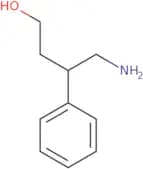
Discontinued product4-Amino-3-phenylbutan-1-ol
CAS:Versatile small molecule scaffold
Formula:C10H15NOPurity:Min. 95%Molecular weight:165.23 g/molRef: 3D-RBA17540
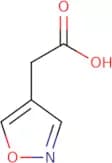
Discontinued product2-(1,2-Oxazol-4-yl)acetic acid
CAS:Versatile small molecule scaffold
Formula:C5H5NO3Purity:Min. 95%Molecular weight:127.1 g/molRef: 3D-RFA67957
Discontinued product5-(Dimethylamino)-2-fluorobenzoic acid
CAS:Versatile small molecule scaffold
Formula:C9H10FNO2Purity:Min. 95%Molecular weight:183.18 g/molRef: 3D-RFA94034
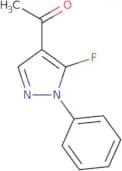
Discontinued product1-(5-Fluoro-1-phenyl-1H-pyrazol-4-yl)ethan-1-one
CAS:Versatile small molecule scaffold
Formula:C11H9FN2OPurity:Min. 95%Molecular weight:204.2 g/molRef: 3D-RSC00051
Discontinued product1-{[5-Chloro-2-(difluoromethoxy)phenyl]methyl}-5-nitro-1,2-dihydropyridin-2-one
CAS:Versatile small molecule scaffold
Formula:C13H9ClF2N2O4Purity:Min. 95%Molecular weight:330.67 g/molRef: 3D-RZB30774
Discontinued product4-[(Methylsulfanyl)methyl]benzoic acid
CAS:4-[(Methylsulfanyl)methyl]benzoic acid is a chiral compound with a sulfur atom. It can be prepared by the reaction between methylsulfonyl chloride and benzoyl chloride in chloroform or by the reaction of methoxysulfur trifluoride with benzoic acid. 4-[(Methylsulfanyl)methyl]benzoic acid can also be synthesized by the reaction of sulfone and carboxylic acid derivatives, such as benzyl or cyano. 4-[(Methylsulfanyl)methyl]benzoic acid is used as a fungicide, insecticide, and herbicide. The substituents on this molecule are able to form bonds with other molecules to create an array of different structures. The most common substitution is for methoxy, which has a hydroxy group attached to it. This substitution is found in many different types of molecules including some drugs, hormones, vitamins,
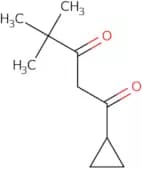
Formula:C9H10O2SPurity:Min. 95%Molecular weight:182.24 g/mol1-Cyclopropyl-4,4-dimethylpentane-1,3-dione
CAS:Versatile small molecule scaffold
Formula:C10H16O2Purity:Min. 95%Molecular weight:168.23 g/molRef: 3D-SCA07876
Discontinued product2-Amino-4-chloro-3-methoxybenzoic acid
CAS:Versatile small molecule scaffold
Formula:C8H8ClNO3Purity:Min. 95%Molecular weight:201.61 g/molRef: 3D-SCA30346
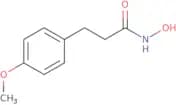
Discontinued productN-Hydroxy-3-(4-methoxyphenyl)propanamide
CAS:Versatile small molecule scaffold
Formula:C10H13NO3Purity:Min. 95%Molecular weight:195.21 g/mol5,6,7,8-Tetrahydroindolizine-1-carbonitrile
CAS:Versatile small molecule scaffold
Formula:C9H10N2Purity:Min. 95%Molecular weight:146.19 g/molRef: 3D-SCA42169
Discontinued product2-Bromo-3,3,3-trifluoro-1-propene
CAS:Controlled Product2-Bromo-3,3,3-trifluoro-1-propene is a chemical compound that has been synthesized in an asymmetric reaction. The reactant is bromopropane and the product is 2,2,2-trifluoropropene. The methylene group on the propene molecule is activated by the nucleophilic attack of a fluoride ion from hydrogen fluoride to form a cavity with a highly strained bond. The kinetic study of this reaction revealed that the activation energy for the reaction is 42 kJ/mol. Palladium-catalyzed coupling reactions are catalyzed by palladium and require nonpolar solvents such as toluene or dichloromethane. This type of reaction has been shown to be exothermic with an isolated yield of 1%.
Formula:C3H2BrF3Purity:Min. 95%Color and Shape:Colorless PowderMolecular weight:174.95 g/mol8-Bromo-2-methylimidazo[1,2-a]pyridine
CAS:Versatile small molecule scaffold
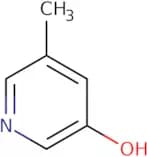
Formula:C8H7N2BrPurity:Min. 95%Molecular weight:211.05 g/mol3-Hydroxy-5-methylpyridine
CAS:3-Hydroxy-5-methylpyridine (3HMP) is a chemical substance that has been classified as an amine. It is a product of the metabolism of purines, which are nitrogenous bases found in DNA and RNA. 3HMP is produced by aerogenic bacteria (such as Enterobacter), and can be used to estimate the number of these bacteria present in water samples. 3HMP has been shown to have antiviral properties against influenza virus, and can be used as a biomarker for the presence of other viruses in animals. 3HMP also has mineralization properties, which have been studied extensively, particularly with regards to pancreatic disease.
Formula:C6H7NOPurity:Min. 95%Color and Shape:PowderMolecular weight:109.13 g/molRef: 3D-FH16174
Discontinued product4-Chloro-2-hydroxy-6-methylphenylboronic acid
CAS:Versatile small molecule scaffoldFormula:C7H8BClO3Purity:Min. 95%Molecular weight:186.4 g/mol1-Hydroxycyclopentane-1-carbonitrile
CAS:1-Hydroxycyclopentane-1-carbonitrile is a monomer that is hydrolyzed to form benzoin and cyanohydrins. It can be used in the production of scifinder as a monomer or dimerizer.
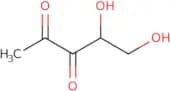
Formula:C6H9NOPurity:Min. 95%Molecular weight:111.14 g/mol4,5-Dihydroxy-2,3-Pentanedione
CAS:4,5-Dihydroxy-2,3-pentanedione is a carbonyl compound that is the product of the oxidation of ascorbic acid. It is used in wastewater treatment and has antimicrobial properties against infectious diseases. This compound has been shown to inhibit protein synthesis by binding to the ribosome and preventing the formation of peptide bonds between amino acids. 4,5-Dihydroxy-2,3-pentanedione has also been shown to bind to plasma proteins, which may be due to its acyl chain structure. 4,5-Dihydroxy-2,3-pentanedione can be synthesized in a catalytic mechanism that involves dehydroascorbic acid and molecular oxygen.
Formula:C5H8O4Purity:Min. 95%Color and Shape:PowderMolecular weight:132.11 g/molRef: 3D-FD180770
Discontinued productPiperyline
CAS:Piperyline is an alkanoic acid that has shown to be effective against skin cancer. It also has antimicrobial properties, which may be due to its ability to bind metal ions and form polymeric compounds. Piperyline inhibits microbial growth by inhibiting the synthesis of proteins and nucleic acids. The antimicrobial activity is related to its cationic polymerization with hydroxyl groups, which forms a structure that can inhibit microbial enzymes and disrupt microbial cell membranes. This compound also interacts with the skin's natural lipids, making it difficult for microorganisms to attach and grow on the skin. Piperyline is synthesized in organic chemistry laboratories as an amide precursor of other pharmaceuticals such as penicillin.
Formula:C16H17NO3Purity:Min. 95%Molecular weight:271.31 g/mol
![6-bromoimidazo[1,2-a]pyrazin-2-amine](/_next/image/?url=https%3A%2Fstatic.cymitquimica.com%2Fproducts%2F3D%2Fthumb-webp%2FDUB86138.webp&w=3840&q=75)


![1-Hydroxymethyl-2-Oxa-5-Aza-Bicyclo[2.2.1]Heptane-5-Carboxylic Acid Tert-Butyl Ester](/_next/image/?url=https%3A%2Fstatic.cymitquimica.com%2Fproducts%2F3D%2Fthumb-webp%2FHEC35186.webp&w=3840&q=75)
![2-{4-[2-(Pyrrolidin-1-yl)ethoxy]phenyl}ethan-1-amine dihydrochloride](/_next/image/?url=https%3A%2Fstatic.cymitquimica.com%2Fproducts%2F3D%2Fthumb-webp%2FHHC68177.webp&w=3840&q=75)
![4H-pyrrolo[2,3-D]thiazole-5-carboxylic acid](/_next/image/?url=https%3A%2Fstatic.cymitquimica.com%2Fproducts%2F3D%2Fthumb-webp%2FHQB38672.webp&w=3840&q=75)
![[1-(1-Ethyl-3-methyl-1H-pyrazol-4-yl)propyl]amine](/_next/image/?url=https%3A%2Fstatic.cymitquimica.com%2Fproducts%2F3D%2Fthumb-webp%2FHQB46021.webp&w=3840&q=75)
![5-Methyl-7-oxa-5-azaspiro[3.4]octane-6,8-dione](/_next/image/?url=https%3A%2Fstatic.cymitquimica.com%2Fproducts%2F3D%2Fthumb-webp%2FJBD32590.webp&w=3840&q=75)
![5-Cyclopropyl-7-oxa-5-azaspiro[3.4]octane-6,8-dione](/_next/image/?url=https%3A%2Fstatic.cymitquimica.com%2Fproducts%2F3D%2Fthumb-webp%2FJBD33609.webp&w=3840&q=75)
![[(1,4-Dioxan-2-yl)methyl]urea](/_next/image/?url=https%3A%2Fstatic.cymitquimica.com%2Fproducts%2F3D%2Fthumb-webp%2FJXB82665.webp&w=3840&q=75)
![4-Chloro-5H,6H,7H-pyrimido[4,5-b][1,4]oxazin-6-one](/_next/image/?url=https%3A%2Fstatic.cymitquimica.com%2Fproducts%2F3D%2Fthumb-webp%2FLYB52467.webp&w=3840&q=75)
![1-[(4-Chlorophenyl)methyl]-3,6-dimethyl-1H-pyrazolo[3,4-b]pyridine-4-carboxylic acid](/_next/image/?url=https%3A%2Fstatic.cymitquimica.com%2Fproducts%2F3D%2Fthumb-webp%2FMMB59774.webp&w=3840&q=75)
![4-{3-Methyl-1H-pyrazolo[3,4-b]pyridin-1-yl}benzoic acid](/_next/image/?url=https%3A%2Fstatic.cymitquimica.com%2Fproducts%2F3D%2Fthumb-webp%2FMMB60004.webp&w=3840&q=75)
![Ethyl 2-[(4-amino-5-cyanopyrimidin-2-yl)sulfanyl]acetate](/_next/image/?url=https%3A%2Fstatic.cymitquimica.com%2Fproducts%2F3D%2Fthumb-webp%2FMMB60132.webp&w=3840&q=75)
![4-[(tert-Butoxy)methyl]piperidine hydrochloride](/_next/image/?url=https%3A%2Fstatic.cymitquimica.com%2Fproducts%2F3D%2Fthumb-webp%2FMRD31454.webp&w=3840&q=75)
![Pyrrolo[1,2-b]pyridazin-4(1H)-one](/_next/image/?url=https%3A%2Fstatic.cymitquimica.com%2Fproducts%2F3D%2Fthumb-webp%2FNKB72026.webp&w=3840&q=75)



![2-Bromo-6-chloroimidazo[1,2-a]pyridine](/_next/image/?url=https%3A%2Fstatic.cymitquimica.com%2Fproducts%2F3D%2Fthumb-webp%2FQHA07448.webp&w=3840&q=75)
![(5,6,7,8-Tetrahydro-4H-cyclohepta[D]isoxazol-3-yl)methanol](/_next/image/?url=https%3A%2Fstatic.cymitquimica.com%2Fproducts%2F3D%2Fthumb-webp%2FQHC96192.webp&w=3840&q=75)
![2-Mercaptobenzo[d]thiazole-6-carbonitrile](/_next/image/?url=https%3A%2Fstatic.cymitquimica.com%2Fproducts%2F3D%2Fthumb-webp%2FQMA22879.webp&w=3840&q=75)
![1',2'-Dihydrospiro[cyclopentane-1,3'-indole]-2'-one](/_next/image/?url=https%3A%2Fstatic.cymitquimica.com%2Fproducts%2F3D%2Fthumb-webp%2FRBA05867.webp&w=3840&q=75)
![5-Methyl-2-sulfanyl-4H,7H-[1,2,4]triazolo[1,5-a]pyrimidin-7-one](/_next/image/?url=https%3A%2Fstatic.cymitquimica.com%2Fproducts%2F3D%2Fthumb-webp%2FRBA12281.webp&w=3840&q=75)

![1-{[5-Chloro-2-(difluoromethoxy)phenyl]methyl}-5-nitro-1,2-dihydropyridin-2-one](/_next/image/?url=https%3A%2Fstatic.cymitquimica.com%2Fproducts%2F3D%2Fthumb-webp%2FRZB30774.webp&w=3840&q=75)
![4-[(Methylsulfanyl)methyl]benzoic acid](/_next/image/?url=https%3A%2Fstatic.cymitquimica.com%2Fproducts%2F3D%2Fthumb-webp%2FSCA00348.webp&w=3840&q=75)



![8-Bromo-2-methylimidazo[1,2-a]pyridine](/_next/image/?url=https%3A%2Fstatic.cymitquimica.com%2Fproducts%2F3D%2Fthumb-webp%2FUXB37475.webp&w=3840&q=75)