Building Blocks
Subcategories of "Building Blocks"
- Boronic Acids & Boronic Acid Derivatives(5,778 products)
- Chiral Building Blocks(1,243 products)
- Hydrocarbon Building Blocks(6,098 products)
- Organic Building Blocks(61,042 products)
Found 204339 products of "Building Blocks"
2-[4-(4-Methoxyphenoxy)phenyl]ethan-1-amine hydrochloride
CAS:Versatile small molecule scaffold
Formula:C15H18ClNO2Purity:Min. 95%Molecular weight:279.76 g/molRef: 3D-AEA95600
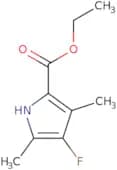
Discontinued product4-Fluoro-3,5-dimethyl-1H-pyrrole-2-carboxylic acid ethyl ester
CAS:Versatile small molecule scaffold
Formula:C9H12FNO2Purity:Min. 95%Molecular weight:185.2 g/molRef: 3D-AEA81858
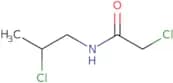
Discontinued product2-Chloro-N-(2-chloropropyl)acetamide
CAS:Versatile small molecule scaffold
Formula:C5H9Cl2NOPurity:Min. 95%Molecular weight:170.03 g/molRef: 3D-AEA79198
Discontinued product2-Cyclopropyl-5-fluorobenzoic acid
CAS:Versatile small molecule scaffold
Formula:C10H9FO2Purity:Min. 95%Molecular weight:180.17 g/molRef: 3D-AAC50478
Discontinued product3-[(6-Chloropyrimidin-4-yl)amino]propanamide
CAS:Versatile small molecule scaffold
Formula:C7H9ClN4OPurity:Min. 95%Molecular weight:200.62 g/mol1-(3-Methoxyphenyl)ethane-1-sulfonamide
CAS:Versatile small molecule scaffold
Formula:C9H13NO3SPurity:Min. 95%Molecular weight:215.27 g/molRef: 3D-AAC48760
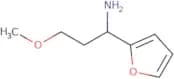
Discontinued product1-(Furan-2-yl)-3-methoxypropan-1-amine
CAS:Versatile small molecule scaffold
Formula:C8H13NO2Purity:Min. 95%Molecular weight:155.19 g/molRef: 3D-AAC28244
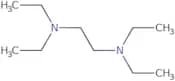
Discontinued productN,N,N',N'-Tetraethylethylenediamine
CAS:N,N,N',N'-Tetraethylethylenediamine is a chemical compound that is used in the production of polyurethane. It can be synthesized from ethylenediamine by reaction with a trialkyl orthoformate and an acid catalyst. This chemical has a hydroxyl group and two asymmetric nitrogen atoms. The steric interactions between the hydrogen atom on the nitrogen atom and the three methyl groups on one carbon atom are responsible for its kinetic data. Tetraethylethylenediamine has been shown to react with copper complexes to form new palladium complexes. These reactions are catalyzed by serine proteases such as subtilisin and pepsin. N,N,N',N'-Tetraethylethylenediamine is also used as a cross-linking agent in polyurethanes. Cross-linked polyurethanes have improved mechanical properties and resistance to abrasion compared
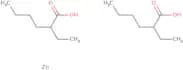
Formula:C10H24N2Purity:Min. 95%Molecular weight:172.32 g/molEthylhexanoic acid zinc
CAS:Ethylhexanoic acid zinc salt is a viscosity-increasing agent that is used in the production of high-viscosity polymers. It is a carboxylate salt of ethyl hexanoic acid and zinc. The reaction of ethylhexane with zirconium oxide produces a viscous liquid with a strong cationic polymerization activity. This product reacts with diphenyl ether and aromatic hydrocarbons to form solid products. The reaction with calcium stearate, an ester of glycerol, results in the formation of particles that are insoluble in water but soluble in organic solvents. Ethylhexane also reacts with ethylene diamine to form methyl myristate, which has kinetic data available for it.
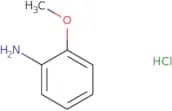
Formula:C16H30O4ZnPurity:Min. 95%Molecular weight:351.8 g/molo-Anisidine Hydrochloride
CAS:O-Anisidine Hydrochloride is a sulfa drug that belongs to the group of sulfonamides. It inhibits bacterial growth by interfering with the synthesis of folic acid, which is necessary for cell growth. O-Anisidine Hydrochloride has been shown to have genotoxic effects in vitro and in vivo, as well as carcinogenic potential. Studies have also shown that it has synergistic effects when combined with other drugs. Chronic oral administration of o-anisidine hydrochloride can cause long-term toxicity and genotoxicity, including atp levels.
Formula:C7H9NO·HClPurity:Min. 95%Molecular weight:159.61 g/mol2-Phenyl-3-butyn-2-ol
CAS:2-Phenyl-3-butyn-2-ol (2PB2) is an organic compound that has been shown to inhibit the growth of cancer cells in vitro. It is a structural analogue of phenylacetate, which inhibits cell proliferation by inducing apoptosis. 2PB2 induces regression by altering the functional theory of population growth. It is also an isomeric compound and its structure activity relationship has been studied using logistic regression. 2PB2 is protonated at acidic pH, but not at physiological pH, which may be due to its carbinol group. This compound also has a lipase inhibitor effect and was found to interact with molecular descriptors that are involved in cancer cell proliferation.
Formula:C10H10OPurity:Min. 95%Molecular weight:146.19 g/mol1-Bromo-2,2-dimethoxypropane
CAS:1-Bromo-2,2-dimethoxypropane is a drug that is used in the synthesis of other compounds. It has been shown to have an inhibitory effect on the reuptake of serotonin, dopamine and norepinephrine by 5-HT1A receptors. This drug may also act as an agonist at β-adrenergic receptors. 1-Bromo-2,2-dimethoxypropane selectively binds to 5-HT1A receptors, leading to increased serotonin levels in the brain.
Formula:C5H11BrO2Purity:Min. 95%Molecular weight:183.04 g/molOctanenitrile
CAS:Octanenitrile is a colorless liquid with a boiling point of 29.8 °C. It is soluble in water, ether, and chloroform, but insoluble in hexane. Octanenitrile has been shown to have an effect on the phase transition temperature by using deuterium isotopes. This compound can also be used to study the deuterium isotope effect on autoimmune diseases and cancer. The amine group in octanenitrile can be used to synthesize methylamines, one of which is malonic acid. The ph optimum for octanenitrile is 7-8. Octanenitrile reacts with hydrochloric acid to produce hydrogen chloride gas and dipropyl ether (CH3-CH2-O-CH3). Octanenitrile also has intramolecular hydrogen bonding that stabilizes the molecule, reducing activation energies for subsequent reactions such as fatty acid synthesis or polyunsaturated fatty acid synthesis
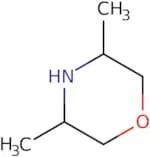
Formula:C8H15NPurity:Min. 95%Molecular weight:125.21 g/mol3,5-Dimethylmorpholine
CAS:3,5-Dimethylmorpholine is a chiral amide that has anticancer activity. It is a linker that can be used to form amide bonds between two molecules. 3,5-Dimethylmorpholine has been shown to have labile proton and cellular reactivity in vitro. The reaction selectivity of 3,5-dimethylmorpholine can be improved by using piperidine as the solvent. This compound exhibits anticancer activity against CDK4/6 (cyclin-dependent kinase 4/6) inhibitor-resistant cell lines. It also exhibits anticancerc activity in vitro against cells with high levels of cdk4/6 inhibition.
Formula:C6H13NOPurity:Min. 95%Molecular weight:115.17 g/mol3-(4-Methoxyphenyl)-2-methylpropan-1-amine
CAS:Versatile small molecule scaffold
Formula:C11H17NOPurity:Min. 95%Molecular weight:179.26 g/molRef: 3D-YAA01482
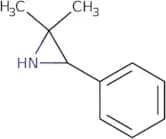
Discontinued product2,2-Dimethyl-3-phenylaziridine
CAS:Versatile small molecule scaffold
Formula:C10H13NPurity:Min. 95%Molecular weight:147.22 g/molRef: 3D-YAA04089
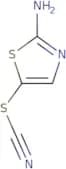
Discontinued product5-Thiocyanato-thiazol-2-ylamine
CAS:5-Thiocyanato-thiazol-2-ylamine is a versatile research chemical that has various applications in the field of chemistry and pharmaceuticals. It is commonly used as a building block for the synthesis of other compounds, including diclofenac, suberoylanilide hydroxamic acid, neonicotinoids, and sildenafil citrate. This compound has been extensively studied and characterized for its unique properties. It exhibits supercritical behavior under certain conditions, making it suitable for use in supercritical fluid chromatography. Additionally, 5-Thiocyanato-thiazol-2-ylamine has low refractive index and surface energy values, which make it useful in the development of coatings and materials with specific optical properties. In addition to its role as a chemical building block, this compound has also shown potential therapeutic effects. Studies have indicated that it possesses natriuretic activity, meaning it can enhance the excretion of sodium from the body. Furthermore, 5-Th
Formula:C4H3N3S2Purity:Min. 95%Molecular weight:157.22 g/mol2-(1,3-Dioxo-2,3-dihydro-1H-isoindol-2-yl)propanal
CAS:Versatile small molecule scaffold
Formula:C11H9NO3Purity:Min. 95%Molecular weight:203.19 g/molRef: 3D-YAA10187
Discontinued product(R)-1-(4-Chlorophenyl)propan-1-amine hydrochloride
CAS:Versatile small molecule scaffold
Formula:C9H12NCl•HClPurity:Min. 95%Molecular weight:206.11 g/molRef: 3D-YHC90218
Discontinued product4-(4H-1,2,4-Triazol-4-yl)aniline dihydrochloride
CAS:Versatile small molecule scaffold
Formula:C8H10Cl2N4Purity:Min. 95%Molecular weight:233.09 g/mol3-(2-Bromo-4-methylbenzoyl)-4H,5H,6H-cyclopenta[b]thiophen-2-amine
CAS:Versatile small molecule scaffold
Formula:C15H14BrNOSPurity:Min. 95%Molecular weight:336.2 g/molRef: 3D-YWC74274
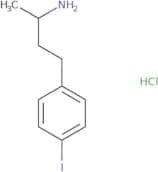
Discontinued product4-(4-Iodophenyl)butan-2-amine hydrochloride
CAS:Versatile small molecule scaffold
Formula:C10H15ClINPurity:Min. 95%Molecular weight:311.59 g/molRef: 3D-YWC75075
Discontinued product2-(2-Carbamoylpyrrolidin-1-yl)-2-oxoacetic acid
CAS:Versatile small molecule scaffold
Formula:C7H10N2O4Purity:Min. 95%Molecular weight:186.17 g/molRef: 3D-YZB93014
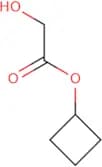
Discontinued productCyclobutyl 2-hydroxyacetate
CAS:Versatile small molecule scaffold
Formula:C6H10O3Purity:Min. 95%Molecular weight:130.1 g/molRef: 3D-ZYC31050
Discontinued product3-Fluoro-4-[2-(trifluoromethyl)phenoxy]aniline
CAS:Versatile small molecule scaffold
Formula:C13H9F4NOPurity:Min. 95%Molecular weight:271.21 g/molRef: 3D-PRB86892
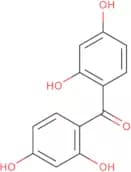
Discontinued product2,2',4,4'-tetrahydroxybenzophenone
CAS:2,2',4,4'-tetrahydroxybenzophenone is a hydroxylated benzophenone that has immunomodulatory effects. It binds to the receptor in the immune system and can cause an increase in cytokine production. 2,2',4,4'-tetrahydroxybenzophenone is cytotoxic and has significant toxicity in vitro. The molecule has been shown to disrupt mitochondrial membrane potential. This may be due to its ability to form hydrogen bonds with molecules on the mitochondrial membrane. 2,2',4,4'-tetrahydroxybenzophenone also modulates transcriptional regulation of genes involved in cell proliferation and apoptosis. The drug is detectable at low levels by mass spectrometry and is not known to have any toxicological effects.END>>
Formula:C13H10O5Purity:Min. 95%Color and Shape:Green PowderMolecular weight:246.22 g/molRef: 3D-FT55663
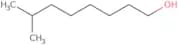
Discontinued productIsononyl alcohol
CAS:Isononyl alcohol is a polycarboxylic acid that has been used in the treatment of skin conditions, such as atopic dermatitis and psoriasis. It has been shown to penetrate the skin and stimulate the production of sebum. Isononyl alcohol is also used as a plasticizer for polyvinyl chloride (PVC) and other plastics, which increases their flexibility. This chemical also has a hydrophobic effect, which may be due to its hydroxyl group. The unsaturated alkyl chain on this chemical also makes it susceptible to oxidation by ozone in air and water vapor in air. Isononyl alcohol is metabolized by humans through conjugation with glucuronic acid or sulfate esters.
Formula:C9H20OPurity:Min. 95%Color and Shape:Clear LiquidMolecular weight:144.25 g/molRef: 3D-FI146181
Discontinued producttert-Butyl 3-(trifluoromethyl)piperazine-1-carboxylate
CAS:Versatile small molecule scaffold
Formula:C10H17F3N2O2Purity:Min. 95%Molecular weight:254.25 g/mol2-Acetylbenzoic acid
CAS:2-Acetylbenzoic acid is a functional molecule that contains an acetyl group. It can form hydrogen bonds with other molecules and has been shown to induce apoptosis in cells. The reaction products of 2-acetylbenzoic acid are malonic acid, acetylsalicylic acid, and 2-benzoylbenzoic acid. These three compounds are made by the addition of hydrogen or hydroxide to the molecule 2-acetylbenzoic acid. The molecule has two functional groups: a carbonyl group and an acetyl group. The chemical structure of this molecule can be seen in the figure below.
2-Acetylbenzoic AcidFormula:C9H8O3Purity:Min. 95%Color and Shape:PowderMolecular weight:164.16 g/molRef: 3D-FA05086
Discontinued product2-Bromo-3,3,3-trifluoro-1-propene
CAS:Controlled Product2-Bromo-3,3,3-trifluoro-1-propene is a chemical compound that has been synthesized in an asymmetric reaction. The reactant is bromopropane and the product is 2,2,2-trifluoropropene. The methylene group on the propene molecule is activated by the nucleophilic attack of a fluoride ion from hydrogen fluoride to form a cavity with a highly strained bond. The kinetic study of this reaction revealed that the activation energy for the reaction is 42 kJ/mol. Palladium-catalyzed coupling reactions are catalyzed by palladium and require nonpolar solvents such as toluene or dichloromethane. This type of reaction has been shown to be exothermic with an isolated yield of 1%.
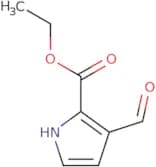
Formula:C3H2BrF3Purity:Min. 95%Color and Shape:Colorless PowderMolecular weight:174.95 g/molethyl 3-formyl-1H-pyrrole-2-carboxylate
CAS:Ethyl 3-formyl-1H-pyrrole-2-carboxylate is a formyl compound with the molecular formula C8H8O3. It is a colorless liquid that has a strong odor. The compound can be obtained by the reaction of ethyl acetoacetate and pyrrole in the presence of aluminum chloride. The compound has been studied for its nuclear magnetic resonance (NMR) properties. It has two conformers, which are distinguished by their different chemical shifts, and this difference can be used to study coupling between the carbonyl group and other groups in the molecule.
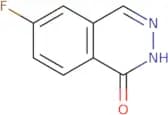
Formula:C8H9NO3Purity:Min. 95%Molecular weight:167.2 g/mol6-fluoro-1,2-dihydrophthalazin-1-one
CAS:Versatile small molecule scaffold
Formula:C8H5FN2OPurity:Min. 95%Molecular weight:164.14 g/mol3-(Methoxycarbonyl)pyridine-4-carboxylic acid
CAS:Versatile small molecule scaffold
Formula:C8H7NO4Purity:Min. 95%Molecular weight:181.15 g/mol4-(Methylamino)benzene-1-sulfonamide
CAS:Versatile small molecule scaffold
Formula:C7H10N2O2SPurity:Min. 95%Molecular weight:186.23 g/moltrans-1,2-Dichloroethylene
CAS:Trans-1,2-Dichloroethylene is a chlorinated hydrocarbon that is used in the production of polyvinyl chloride plastics. When ingested at dietary concentrations, trans-1,2-Dichloroethylene may cause liver damage and death in CD-1 mice. Trans-1,2-Dichloroethylene has been shown to react with nucleophilic substitutions and produce toxic reaction products. This chemical also causes polymerase chain reactions that can lead to cell death. The effective dose for this chemical is unknown because it has not been tested in clinical trials.
Formula:C2H2Cl2Purity:Min. 95%Molecular weight:96.94 g/moltert-Butyl 5-bromo-3,4-dihydro-2,7-naphthyridine-2(1H)-carboxylate
CAS:Versatile small molecule scaffold
Formula:C13H17BrN2O2Purity:Min. 95%Molecular weight:313.19 g/mol3-Bromo-6,7-dihydro-4H-pyrazolo[1,5-a]pyrazine-5-carboxylic acid tert-butyl ester
CAS:Versatile small molecule scaffold
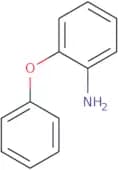
Formula:C11H16BrN3O2Purity:Min. 95%Molecular weight:302.17 g/mol2-Phenoxyaniline
CAS:2-Phenoxyaniline is a nitro compound that can be converted to the corresponding palladium complexes. It is an inhibitor of the acylation reaction, which is a type of chemical reaction in which an organic molecule reacts with an acid. The inhibition of this reaction has been shown to have an effect on heart disease, specifically by lowering cholesterol levels and reducing atherosclerosis. 2-Phenoxyaniline has also been shown to inhibit the activation energy for electron transfer reactions, making it useful as a catalyst in analytical methods. 2-Phenoxyaniline also undergoes vibrational spectroscopy when exposed to liquid chromatography and other analytical methods.
Formula:C12H11NOPurity:Min. 95%Color and Shape:Brown PowderMolecular weight:185.22 g/molH-Ser-Ala-Glu-Glu-Tyr-Glu-Tyr-Pro-Ser OH trifluoroacetate
CAS:Please enquire for more information about H-Ser-Ala-Glu-Glu-Tyr-Glu-Tyr-Pro-Ser OH trifluoroacetate including the price, delivery time and more detailed product information at the technical inquiry form on this page
Formula:C47H63N9O20•(C2HF3O2)xPurity:Min. 95%Ref: 3D-FS183525
Discontinued product
![2-[4-(4-Methoxyphenoxy)phenyl]ethan-1-amine hydrochloride](/_next/image/?url=https%3A%2Fstatic.cymitquimica.com%2Fproducts%2F3D%2Fthumb-webp%2FAEA95600.webp&w=3840&q=75)


![3-[(6-Chloropyrimidin-4-yl)amino]propanamide](/_next/image/?url=https%3A%2Fstatic.cymitquimica.com%2Fproducts%2F3D%2Fthumb-webp%2FAAC48959.webp&w=3840&q=75)





![3-(2-Bromo-4-methylbenzoyl)-4H,5H,6H-cyclopenta[b]thiophen-2-amine](/_next/image/?url=https%3A%2Fstatic.cymitquimica.com%2Fproducts%2F3D%2Fthumb-webp%2FYWC74274.webp&w=3840&q=75)
![3-Fluoro-4-[2-(trifluoromethyl)phenoxy]aniline](/_next/image/?url=https%3A%2Fstatic.cymitquimica.com%2Fproducts%2F3D%2Fthumb-webp%2FPRB86892.webp&w=3840&q=75)




![3-Bromo-6,7-dihydro-4H-pyrazolo[1,5-a]pyrazine-5-carboxylic acid tert-butyl ester](/_next/image/?url=https%3A%2Fstatic.cymitquimica.com%2Fproducts%2F3D%2Fthumb-webp%2FWXB15425.webp&w=3840&q=75)