


Building Blocks
This section contains fundamental products for the synthesis of organic and biological compounds. Building blocks are the essential starting materials used to construct complex molecules through various chemical reactions. They play a critical role in drug discovery, material science, and chemical research. At CymitQuimica, we offer a diverse range of high-quality building blocks to support your innovative research and industrial projects, ensuring you have the essential components for successful synthesis.
Subcategories of "Building Blocks"
- Boronic Acids & Boronic Acid Derivatives(5,778 products)
- Chiral Building Blocks(1,242 products)
- Hydrocarbon Building Blocks(6,098 products)
- Organic Building Blocks(61,059 products)
Found 199580 products of "Building Blocks"
Sort by
Purity (%)
0
100
|
0
|
50
|
90
|
95
|
100
8-[(tert-Butoxy)carbonyl]-2-oxa-8-azaspiro[4.5]decane-6-carboxylic acid
CAS:<p>Versatile small molecule scaffold</p>Formula:C14H23NO5Purity:Min. 95%Molecular weight:285.3 g/molRef: 3D-ZLD00165
Discontinued producttert-Butyl 4-[(1,3-thiazol-2-yl)amino]piperidine-1-carboxylate
CAS:<p>Versatile small molecule scaffold</p>Formula:C13H21N3O2SPurity:Min. 95%Molecular weight:283.39 g/molRef: 3D-ZIB54665
Discontinued productImidazo[1,2-c]pyrimidin-5(1H)-one
CAS:<p>Imidazo[1,2-c]pyrimidin-5(1H)-one is a compound that exhibits various characteristics and functions. It acts as a glycosylase, which is an enzyme involved in DNA repair processes. Additionally, it interacts with melatonin receptors and racemase enzymes. Imidazo[1,2-c]pyrimidin-5(1H)-one has been found to have reactive properties towards diclofenac and amino groups. It can also form complexes with zeolite and glycosylases.</p>Formula:C6H5N3OPurity:Min. 95%Molecular weight:135.1 g/molRef: 3D-ZIB03592
Discontinued producttert-Butyl 4-aminocyclohexane-1-carboxylate
CAS:<p>Versatile small molecule scaffold</p>Formula:C11H21NO2Purity:Min. 95%Molecular weight:199.29 g/mol1-Benzyl-3-phenylpyrrolidin-3-amine
CAS:<p>Versatile small molecule scaffold</p>Formula:C17H20N2Purity:Min. 95%Molecular weight:252.35 g/molRef: 3D-ZEA56309
Discontinued productN-tert-Butyl 4-nitrophenylsulfonamide
CAS:<p>N-tert-Butyl 4-nitrophenylsulfonamide is a versatile compound with various applications. It can be used as a research chemical in scientific studies or as an ingredient in the synthesis of other compounds. This compound has been found to exhibit antinociceptive properties, making it potentially useful in pain management. Additionally, N-tert-Butyl 4-nitrophenylsulfonamide can act as an electrode material and has been studied for its electrochemical properties. It reacts with certain chemicals such as dioscin, 5-hydroxymethylfurfural (5-HMF), and nicl2, forming new compounds with unique characteristics. Its carbonyl group allows for the formation of N-substituted carbamic acid derivatives, which have shown potential in various fields such as medicinal chemistry and materials science. With its wide range of applications and diverse reactivity, N-tert-Butyl 4-nit</p>Formula:C10H14N2O4SPurity:Min. 95%Molecular weight:258.3 g/molRef: 3D-ZBA69009
Discontinued product4-(4-Acetylphenoxy)benzoic acid
CAS:<p>Versatile small molecule scaffold</p>Formula:C15H12O4Purity:Min. 95%Molecular weight:256.25 g/molRef: 3D-ZAC13582
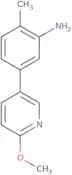
Discontinued product5-(6-Methoxypyridin-3-yl)-2-methylaniline
CAS:<p>Versatile small molecule scaffold</p>Formula:C13H14N2OPurity:Min. 95%Molecular weight:214.26 g/molRef: 3D-YZB68836
Discontinued product7-(Pyrrolidin-1-yl)-1,4-dioxaspiro[4.5]decan-8-ol
CAS:<p>Versatile small molecule scaffold</p>Formula:C12H21NO3Purity:Min. 95%Molecular weight:227.3 g/molRef: 3D-YZB66011
Discontinued product2-(3-Chlorophenyl)-2-(methylsulfanyl)ethan-1-amine
CAS:<p>Versatile small molecule scaffold</p>Formula:C9H12ClNSPurity:Min. 95%Molecular weight:201.72 g/molRef: 3D-YZB60156
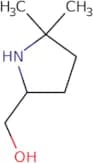
Discontinued product(5,5-Dimethylpyrrolidin-2-yl)methanol
CAS:<p>Versatile small molecule scaffold</p>Formula:C7H15NOPurity:Min. 95%Molecular weight:129.2 g/molRef: 3D-YZB55144
Discontinued productMethyl 2-(2,3-dimethylphenyl)-2-hydroxyacetate
CAS:<p>Versatile small molecule scaffold</p>Formula:C11H14O3Purity:Min. 95%Molecular weight:194.23 g/molRef: 3D-YZB50745
Discontinued product2-Hydroxy-1,8-naphthyridine-4-carboxylic acid
CAS:<p>Versatile small molecule scaffold</p>Formula:C9H6N2O3Purity:Min. 95%Molecular weight:190.16 g/molRef: 3D-YXC90195
Discontinued product2-[3-(4-Methylphenyl)propanamido]acetic acid
CAS:<p>Versatile small molecule scaffold</p>Formula:C12H15NO3Purity:Min. 95%Molecular weight:221.25 g/mol1-tert-Butyl 2,5-dimethyl 1H-pyrrole-1,2,5-tricarboxylate
CAS:<p>Versatile small molecule scaffold</p>Formula:C13H17NO6Purity:Min. 95%Molecular weight:283.3 g/molrac-Methyl (2R)-2-amino-2-[(2R)-2,3-dihydro-1-benzofuran-2-yl]acetate hydrochloride
CAS:<p>Versatile small molecule scaffold</p>Formula:C11H14ClNO3Purity:Min. 95%Molecular weight:243.7 g/molRef: 3D-YPD40693
Discontinued product(1-Fluoronaphthalen-2-yl)methanamine hydrochloride
CAS:<p>Versatile small molecule scaffold</p>Formula:C11H11ClFNPurity:Min. 95%Molecular weight:211.7 g/molRef: 3D-YPD35653
Discontinued product2-[(Piperidin-4-yl)methyl]-1,3-thiazole-4-carboxylic acid dihydrochloride
CAS:<p>Versatile small molecule scaffold</p>Formula:C10H16Cl2N2O2SPurity:Min. 95%Molecular weight:299.2 g/molRef: 3D-YPD34383
Discontinued productrac-tert-Butyl (4aR,8aS)-octahydro-2H-pyrido[4,3-b][1,4]oxazine-6-carboxylate
CAS:<p>Versatile small molecule scaffold</p>Formula:C12H22N2O3Purity:Min. 95%Molecular weight:242.31 g/molRef: 3D-WZB65098
Discontinued productEthyl 5-{[(tert-butoxy)carbonyl]amino}-1,3-thiazole-2-carboxylate
CAS:<p>Versatile small molecule scaffold</p>Formula:C11H16N2O4SPurity:Min. 95%Molecular weight:272.32 g/mol3-[4-(Trifluoromethoxy)phenyl]piperazin-2-one
CAS:<p>Versatile small molecule scaffold</p>Formula:C11H11F3N2O2Purity:Min. 95%Molecular weight:260.21 g/molRef: 3D-WZB54845
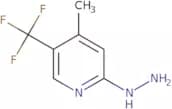
Discontinued product2-Hydrazinyl-4-methyl-5-(trifluoromethyl)pyridine
CAS:<p>Versatile small molecule scaffold</p>Formula:C7H8F3N3Purity:Min. 95%Molecular weight:191.15 g/molRef: 3D-WZB47119
Discontinued product8-Methoxy-6-methylquinolin-4-ol
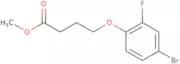
CAS:<p>8-Methoxy-6-methylquinolin-4-ol (8MQ) is a mitochondrial substrate that has been shown to have physiological functions in energy metabolism and lysine biosynthesis. 8MQ has been shown to be a potential drug target for the treatment of corynebacterium glutamicum, which produces acid formation. 8MQ also inhibits wild-type strains of bacteria and clinical isolates of HIV. The m2 phenotype is an HIV-1 protein that is essential for viral replication. 8MQ binding to this protein prevents it from binding with other proteins on the surface of the virus, inhibiting its ability to bind with CD4 cells and infect new cells.</p>Formula:C11H11NO2Purity:Min. 95%Molecular weight:189.21 g/molMethyl 4-(4-bromo-2-fluorophenoxy)butanoate
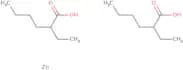
CAS:Controlled Product<p>Versatile small molecule scaffold</p>Formula:C11H12BrFO3Purity:Min. 95%Molecular weight:291.11 g/molEthylhexanoic acid zinc
CAS:<p>Ethylhexanoic acid zinc salt is a viscosity-increasing agent that is used in the production of high-viscosity polymers. It is a carboxylate salt of ethyl hexanoic acid and zinc. The reaction of ethylhexane with zirconium oxide produces a viscous liquid with a strong cationic polymerization activity. This product reacts with diphenyl ether and aromatic hydrocarbons to form solid products. The reaction with calcium stearate, an ester of glycerol, results in the formation of particles that are insoluble in water but soluble in organic solvents. Ethylhexane also reacts with ethylene diamine to form methyl myristate, which has kinetic data available for it.</p>Formula:C16H30O4ZnPurity:Min. 95%Molecular weight:351.8 g/molGlyoxal bis(sodium hydrogen sulfite) adduct hydrate
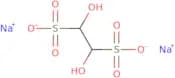
CAS:<p>Glyoxal bis(sodium hydrogen sulfite) adduct hydrate is a reactive compound that has been shown to react with quinoxaline derivatives. The nitrogen atoms in the amide and nitrogen atoms in the quinoxaline derivative are oxidized by oxidation catalyst, such as sodium carbonate, to form an amide-quinone. This reaction leads to the formation of a polyvinyl polymer that can be used for sample preparation. In addition, this compound has been shown to have receptor activity and detergent compositions. Glyoxal bis(sodium hydrogen sulfite) adduct hydrate also has antimicrobial properties and can be used for plant physiology studies and pharmacokinetic properties.</p>Formula:OHCCHO·2NaHSO3Purity:Min. 95%Molecular weight:266.16 g/molRef: 3D-AAA51721
Discontinued product5-(4-Nitro-phenyl)-[1,3,4]thiadiazol-2-ylamine
CAS:<p>Versatile small molecule scaffold</p>Formula:C8H6N4O2SPurity:Min. 95%Molecular weight:222.23 g/mol4-Bromo-6-methyl-2,3-dihydro-1H-inden-1-one
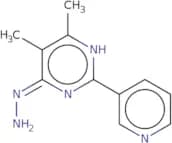
CAS:<p>Versatile small molecule scaffold</p>Formula:C10H9BrOPurity:Min. 95%Molecular weight:225.09 g/mol4-Hydrazinylidene-5,6-dimethyl-2-(pyridin-3-yl)-1,4-dihydropyrimidine
CAS:<p>Versatile small molecule scaffold</p>Formula:C11H13N5Purity:Min. 95%Molecular weight:215.3 g/molRef: 3D-AAC57157
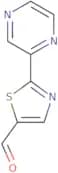
Discontinued product2-(Pyrazin-2-yl)-1,3-thiazole-5-carbaldehyde
CAS:Versatile small molecule scaffoldFormula:C8H5N3OSPurity:Min. 95%Molecular weight:191.21 g/molRef: 3D-AAC59409
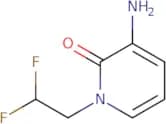
Discontinued product3-Amino-1-(2,2-difluoroethyl)-1,2-dihydropyridin-2-one
CAS:<p>Versatile small molecule scaffold</p>Formula:C7H8F2N2OPurity:Min. 95%Molecular weight:174.15 g/molRef: 3D-AAC64665
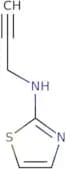
Discontinued productN-(Prop-2-yn-1-yl)-1,3-thiazol-2-amine
CAS:<p>N-(Prop-2-yn-1-yl)-1,3-thiazol-2-amine (P2Y) is a nonselective antagonist for the P2Y receptors. It has been shown to inhibit hyperplasia in the rat prostate and to reduce gland size in rabbits with induced hyperplasia. It also has been shown to be effective in preventing cancer development in an animal model. This drug is used as a pharmaceutical formulation to treat prostate conditions such as benign prostatic hyperplasia and prostatitis.</p>Formula:C6H6N2SPurity:Min. 95%Molecular weight:138.19 g/molRef: 3D-AAC67692
Discontinued product1-{4H,6H,7H-Pyrano[4,3-d][1,3]thiazol-2-yl}ethan-1-amine
CAS:<p>Versatile small molecule scaffold</p>Formula:C8H12N2OSPurity:Min. 95%Molecular weight:184.26 g/molRef: 3D-AAC71900
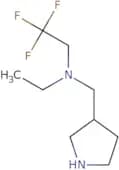
Discontinued productEthyl(pyrrolidin-3-ylmethyl)(2,2,2-trifluoroethyl)amine
CAS:<p>Versatile small molecule scaffold</p>Formula:C9H17F3N2Purity:Min. 95%Molecular weight:210.24 g/molRef: 3D-AAC82034
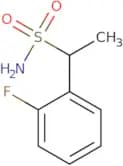
Discontinued product1-(2-Fluorophenyl)ethane-1-sulfonamide
CAS:<p>Versatile small molecule scaffold</p>Formula:C8H10FNO2SPurity:Min. 95%Molecular weight:203.24 g/mol2-[(2-Methoxyphenoxy)methyl]benzoic acid
CAS:<p>Versatile small molecule scaffold</p>Formula:C15H14O4Purity:Min. 95%Molecular weight:258.27 g/molRef: 3D-ACA45688
Discontinued product5-bromo-4-methyl-1H-indole-2-carboxylic acid
CAS:<p>Versatile small molecule scaffold</p>Formula:C10H8BrNO2Purity:Min. 95%Molecular weight:254.1 g/molRef: 3D-ACA53658
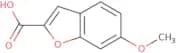
Discontinued product6-Methoxybenzofuran-2-carboxylic acid
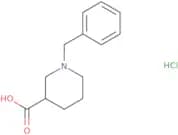
CAS:<p>6-Methoxybenzofuran-2-carboxylic acid is a synthetic compound that can be used as an intermediate in organic synthesis. It is stable and resistant to aqueous conditions, making it suitable for use in organic synthesis. 6-Methoxybenzofuran-2-carboxylic acid is also analogous to benzofurancarboxylic acids, which are characterized by their dianionic character. It has been shown to react with aldehydes at low temperatures and form tetrahydrofuran derivatives. 6-Methoxybenzofuran-2-carboxylic acid can be metallated with various metals to form stable complexes.</p>Formula:C10H8O4Purity:Min. 95%Molecular weight:192.17 g/mol1-Benzylpiperidine-3-carboxylic acid hydrochloride
CAS:<p>Versatile small molecule scaffold</p>Formula:C13H18ClNO2Purity:Min. 95%Molecular weight:255.75 g/molRef: 3D-ACA58592
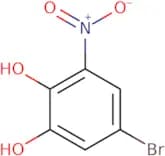
Discontinued product5-bromo-3-nitrobenzene-1,2-diol
CAS:<p>Versatile small molecule scaffold</p>Formula:C6H4BrNO4Purity:Min. 95%Molecular weight:234.01 g/molRef: 3D-WBB77999
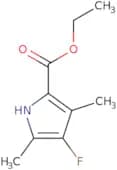
Discontinued product4-Fluoro-3,5-dimethyl-1H-pyrrole-2-carboxylic acid ethyl ester
CAS:<p>Versatile small molecule scaffold</p>Formula:C9H12FNO2Purity:Min. 95%Molecular weight:185.2 g/molRef: 3D-AEA81858
Discontinued product2-[4-(4-Methoxyphenoxy)phenyl]ethan-1-amine hydrochloride
CAS:<p>Versatile small molecule scaffold</p>Formula:C15H18ClNO2Purity:Min. 95%Molecular weight:279.76 g/molRef: 3D-AEA95600
Discontinued product3-[(4-Aminopiperidin-1-yl)methyl]benzonitrile
CAS:<p>Versatile small molecule scaffold</p>Formula:C13H17N3Purity:Min. 95%Molecular weight:215.29 g/molRef: 3D-AEB21223
Discontinued product2-(Aminomethyl)-5-methyl-[1,2,4]triazolo[1,5-a]pyrimidin-7-ol
CAS:<p>Versatile small molecule scaffold</p>Formula:C7H9N5OPurity:Min. 95%Molecular weight:179.18 g/molRef: 3D-AGA19092
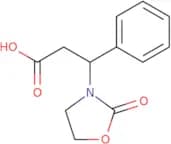
Discontinued product3-(2-Oxo-1,3-oxazolidin-3-yl)-3-phenylpropanoic acid
CAS:<p>Versatile small molecule scaffold</p>Formula:C12H13NO4Purity:Min. 95%Molecular weight:235.24 g/molRef: 3D-AGA81264
Discontinued product3-Amino-2-methyl-5-(4-methylphenyl)-3H,4H-thieno[2,3-d]pyrimidin-4-one
CAS:<p>Versatile small molecule scaffold</p>Formula:C14H13N3OSPurity:Min. 95%Molecular weight:271.34 g/mol5-[(3-Methylphenyl)methyl]-1,3-thiazol-2-amine
CAS:<p>Versatile small molecule scaffold</p>Formula:C11H12N2SPurity:Min. 95%Molecular weight:204.29 g/molRef: 3D-AMA82754
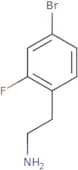
Discontinued product2-(4-Bromo-2-fluorophenyl)ethan-1-amine
CAS:Controlled Product<p>Versatile small molecule scaffold</p>Formula:C8H9BrFNPurity:Min. 95%Molecular weight:218.07 g/mol3-Cyclopropyl-3-azabicyclo[3.3.1]nonan-9-one
CAS:<p>Versatile small molecule scaffold</p>Formula:C11H17NOPurity:Min. 95%Molecular weight:179.26 g/molRef: 3D-AQB93118
Discontinued product2-Chloro-3H-pyrrolo[2,3-d]pyrimidin-4(7H)-one
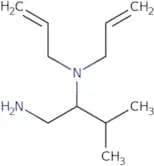
CAS:<p>Versatile small molecule scaffold</p>Formula:C6H4N3OClPurity:Min. 95%Molecular weight:169.56 g/mol(1-Amino-3-methylbutan-2-yl)bis(prop-2-en-1-yl)amine
CAS:<p>Versatile small molecule scaffold</p>Formula:C11H22N2Purity:Min. 95%Molecular weight:182.31 g/molRef: 3D-AQB93194
Discontinued product2-Chlorothieno[3,2-d]pyrimidin-4(3H)-one
CAS:<p>Versatile small molecule scaffold</p>Formula:C6H3N2OSClPurity:Min. 95%Molecular weight:186.61 g/molRef: 3D-VZB81120
Discontinued productPyrazolo[1,5-a]pyrazine-4-carboxylic acid
CAS:<p>Versatile small molecule scaffold</p>Formula:C7H5N3O2Purity:Min. 95%Molecular weight:163.13 g/molRef: 3D-SID33098
Discontinued product[1,2,4]Triazolo[4,3-a]pyrazine-6-carboxylic acid
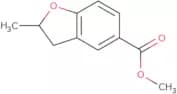
CAS:<p>Versatile small molecule scaffold</p>Formula:C6H4N4O2Purity:Min. 95%Molecular weight:164.12 g/molMethyl 2-methyl-2,3-dihydro-1-benzofuran-5-carboxylate
CAS:<p>Versatile small molecule scaffold</p>Formula:C11H12O3Purity:Min. 95%Molecular weight:192.21 g/molRef: 3D-DCA59664
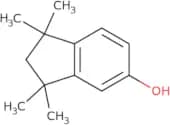
Discontinued product1,1,3,3-Tetramethyl-2,3-dihydro-1H-inden-5-ol
CAS:<p>Versatile small molecule scaffold</p>Formula:C13H18OPurity:Min. 95%Molecular weight:190.28 g/molRef: 3D-DCA71826
Discontinued product2-[(5-Mercapto-1,3,4-thiadiazol-2-yl)thio]acetic acid
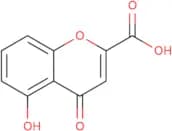
CAS:<p>2-[(5-Mercapto-1,3,4-thiadiazol-2-yl)thio]acetic acid (MTTSA) is a fluorescent probe that emits light at a wavelength of 590 nm when irradiated with light. MTTSA has been synthesized using gold nanoclusters as the catalyst. The average diameter of the nanoclusters was determined to be in the range of 2.0 - 3.0 nm, and their average quantum yield was found to be 0.097%. The emission wavelengths can be tuned by varying the size of the nanoclusters. When MTTSA is irradiated with UV radiation, it undergoes photocatalysis and converts organic matter into water and carbon dioxide gas.</p>Formula:C4H4N2O2S3Purity:Min. 95%Molecular weight:208.29 g/mol5-Hydroxy-4-oxo-4H-chromene-2-carboxylic acid
CAS:<p>Versatile small molecule scaffold</p>Formula:C10H6O5Purity:Min. 95%Molecular weight:206.15 g/mol4-Azatricyclo[9.4.0.0,3,8]pentadeca-1(15),3,5,7,11,13-hexaen-2-one
CAS:<p>Versatile small molecule scaffold</p>Formula:C14H11NOPurity:Min. 95%Molecular weight:209.24 g/molRef: 3D-DAA96473
Discontinued product1-[(2-Bromoethyl)sulfanyl]-3-chlorobenzene
CAS:<p>Versatile small molecule scaffold</p>Formula:C8H8BrClSPurity:Min. 95%Molecular weight:251.57 g/molRef: 3D-DAA98371
Discontinued product6-Cyanospiro[3.3]heptane-2-carboxylic acid
CAS:<p>Versatile small molecule scaffold</p>Formula:C9H11NO2Purity:Min. 95%Molecular weight:165.19 g/molRef: 3D-DBA11489
Discontinued product5-[(tert-Butoxy)carbonyl]pyridine-3-carboxylic acid
CAS:<p>Versatile small molecule scaffold</p>Formula:C11H13NO4Purity:Min. 95%Molecular weight:223.22 g/molRef: 3D-SQB79326
Discontinued product6-Bromo-5-methyl-1H-imidazo[4,5-b]pyridine
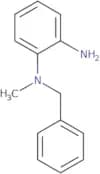
CAS:<p>6-Bromo-5-methyl-1H-imidazo[4,5-b]pyridine is a stabilizer that is used to protect polymers from degradation by light or heat. It can also be used to give plastics a yellow color.</p>Formula:C7H6BrN3Purity:Min. 95%Molecular weight:212.05 g/mol1-N-benzyl-1-N-methylbenzene-1,2-diamine
CAS:<p>Versatile small molecule scaffold</p>Formula:C14H16N2Purity:90%MinMolecular weight:212.3 g/molRef: 3D-DBA45869
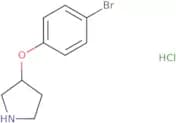
Discontinued product3-(4-Bromophenoxy)pyrrolidine hydrochloride
CAS:<p>Versatile small molecule scaffold</p>Formula:C10H13BrClNOPurity:Min. 95%Molecular weight:278.57 g/mol3-Methylbenzo[b]thiophene-2-carboxylic acid
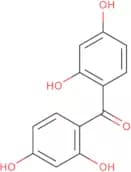
CAS:<p>3-Methylbenzo[b]thiophene-2-carboxylic acid (MBTCA) is a heterocyclic compound that is an intermediate in the synthesis of 3-methylthiophene-2-carboxylic acid, a precursor to other drugs. MBTCA is an aerobic, nonpolar compound that has shown antimicrobial activity against some bacteria and fungi. It also has been shown to have practicality as a biomolecular probe for methyl groups in organic solvents. MBTCA can be synthesized by nitration of benzene in the presence of sulfur and sulfoxides. This reaction produces nitrobenzene, which can then be oxidized by potassium permanganate or hydrogen peroxide to produce MBTCA. The most common isomer of MBTCA is 2-(3,5-dimethoxybenzylidene)tetrahydrofuran, with three methyl groups on the</p>Formula:C10H8O2SPurity:Min. 95%Molecular weight:192.23 g/mol2,2',4,4'-tetrahydroxybenzophenone
CAS:<p>2,2',4,4'-tetrahydroxybenzophenone is a hydroxylated benzophenone that has immunomodulatory effects. It binds to the receptor in the immune system and can cause an increase in cytokine production. 2,2',4,4'-tetrahydroxybenzophenone is cytotoxic and has significant toxicity in vitro. The molecule has been shown to disrupt mitochondrial membrane potential. This may be due to its ability to form hydrogen bonds with molecules on the mitochondrial membrane. 2,2',4,4'-tetrahydroxybenzophenone also modulates transcriptional regulation of genes involved in cell proliferation and apoptosis. The drug is detectable at low levels by mass spectrometry and is not known to have any toxicological effects.END>></p>Formula:C13H10O5Purity:Min. 95%Color and Shape:Green PowderMolecular weight:246.22 g/molRef: 3D-FT55663
Discontinued product4-(Methylamino)benzene-1-sulfonamide
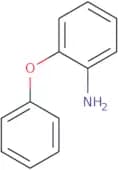
CAS:<p>Versatile small molecule scaffold</p>Formula:C7H10N2O2SPurity:Min. 95%Molecular weight:186.23 g/mol2-Phenoxyaniline
CAS:<p>2-Phenoxyaniline is a nitro compound that can be converted to the corresponding palladium complexes. It is an inhibitor of the acylation reaction, which is a type of chemical reaction in which an organic molecule reacts with an acid. The inhibition of this reaction has been shown to have an effect on heart disease, specifically by lowering cholesterol levels and reducing atherosclerosis. 2-Phenoxyaniline has also been shown to inhibit the activation energy for electron transfer reactions, making it useful as a catalyst in analytical methods. 2-Phenoxyaniline also undergoes vibrational spectroscopy when exposed to liquid chromatography and other analytical methods.</p>Formula:C12H11NOPurity:Min. 95%Color and Shape:Brown PowderMolecular weight:185.22 g/mol2-Bromo-3,3,3-trifluoro-1-propene
CAS:Controlled Product<p>2-Bromo-3,3,3-trifluoro-1-propene is a chemical compound that has been synthesized in an asymmetric reaction. The reactant is bromopropane and the product is 2,2,2-trifluoropropene. The methylene group on the propene molecule is activated by the nucleophilic attack of a fluoride ion from hydrogen fluoride to form a cavity with a highly strained bond. The kinetic study of this reaction revealed that the activation energy for the reaction is 42 kJ/mol. Palladium-catalyzed coupling reactions are catalyzed by palladium and require nonpolar solvents such as toluene or dichloromethane. This type of reaction has been shown to be exothermic with an isolated yield of 1%.</p>Formula:C3H2BrF3Purity:Min. 95%Color and Shape:Colorless PowderMolecular weight:174.95 g/mol(2S,3R)-2-((((9H-Fluoren-9-yl)methoxy)carbonyl)amino)-3-methoxybutanoic acid
CAS:<p>Versatile small molecule scaffold</p>Formula:C20H21NO5Purity:Min. 95%Molecular weight:355.4 g/mol3-(Methoxycarbonyl)pyridine-4-carboxylic acid
CAS:<p>Versatile small molecule scaffold</p>Formula:C8H7NO4Purity:Min. 95%Molecular weight:181.15 g/mol3-amino-6-bromopyridin-2-ol hydrobromide
CAS:<p>Versatile small molecule scaffold</p>Formula:C5H6Br2N2OPurity:Min. 95%Molecular weight:269.9 g/mol1-[3-(Dimethylamino)propyl]-1-(4-fluorophenyl)-1,3-dihydro-3-oxo-5-isobenzofurancarbonitrile
CAS:<p>Please enquire for more information about 1-[3-(Dimethylamino)propyl]-1-(4-fluorophenyl)-1,3-dihydro-3-oxo-5-isobenzofurancarbonitrile including the price, delivery time and more detailed product information at the technical inquiry form on this page</p>Formula:C20H19FN2O2Purity:Min. 95%Molecular weight:338.38 g/molRef: 3D-FD184085
Discontinued producttert-Butyl 5-bromo-3,4-dihydro-2,7-naphthyridine-2(1H)-carboxylate
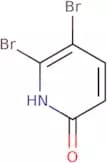
CAS:<p>Versatile small molecule scaffold</p>Formula:C13H17BrN2O2Purity:Min. 95%Molecular weight:313.19 g/mol5,6-Dibromopyridin-2-ol
CAS:<p>Versatile small molecule scaffold</p>Formula:C5H3Br2NOPurity:Min. 95%Molecular weight:252.89 g/mol2-Acetylbenzoic acid
CAS:<p>2-Acetylbenzoic acid is a functional molecule that contains an acetyl group. It can form hydrogen bonds with other molecules and has been shown to induce apoptosis in cells. The reaction products of 2-acetylbenzoic acid are malonic acid, acetylsalicylic acid, and 2-benzoylbenzoic acid. These three compounds are made by the addition of hydrogen or hydroxide to the molecule 2-acetylbenzoic acid. The molecule has two functional groups: a carbonyl group and an acetyl group. The chemical structure of this molecule can be seen in the figure below.<br>2-Acetylbenzoic Acid</p>Formula:C9H8O3Purity:Min. 95%Color and Shape:PowderMolecular weight:164.16 g/molRef: 3D-FA05086
Discontinued product3-[5-(Aminomethyl)-1-oxo-2,3-dihydro-1H-isoindol-2-yl]piperidine-2,6-dione hydrochloride
CAS:<p>Versatile small molecule scaffold</p>Formula:C14H16ClN3O3Purity:Min. 95%Molecular weight:309.75 g/molH-Ser-Ala-Glu-Glu-Tyr-Glu-Tyr-Pro-Ser OH trifluoroacetate
CAS:<p>Please enquire for more information about H-Ser-Ala-Glu-Glu-Tyr-Glu-Tyr-Pro-Ser OH trifluoroacetate including the price, delivery time and more detailed product information at the technical inquiry form on this page</p>Formula:C47H63N9O20•(C2HF3O2)xPurity:Min. 95%Ref: 3D-FS183525
Discontinued productGivinostat hydrochloride
CAS:<p>Givinostat hydrochloride is a research chemical that has shown potential in various fields. It is a molybdenum-based compound that has been studied for its effects on dopamine release and hydrogen evolution. Givinostat hydrochloride has also been investigated as an osteoclast inhibitor, which may be beneficial in the treatment of bone-related disorders such as osteoporosis. Additionally, it has shown promise as a retinoid and calpain inhibitor, suggesting its potential use in dermatological conditions and neurodegenerative diseases. The compound contains fluorine atoms, making it suitable for imaging studies using fluorine MRI techniques. Givinostat hydrochloride has been tested on MDA-MB-231 cells and has shown inhibitory effects on their growth, indicating its potential as an anticancer agent.</p>Formula:C24H27N3O4·HClPurity:Min. 95%Molecular weight:457.95 g/mol
![8-[(tert-Butoxy)carbonyl]-2-oxa-8-azaspiro[4.5]decane-6-carboxylic acid](/_next/image/?url=https%3A%2Fstatic.cymitquimica.com%2Fproducts%2F3D%2Fthumb-webp%2FZLD00165.webp&w=3840&q=75)

![tert-Butyl 4-[(1,3-thiazol-2-yl)amino]piperidine-1-carboxylate](/_next/image/?url=https%3A%2Fstatic.cymitquimica.com%2Fproducts%2F3D%2Fthumb-webp%2FZIB54665.webp&w=3840&q=75)
![Imidazo[1,2-c]pyrimidin-5(1H)-one](/_next/image/?url=https%3A%2Fstatic.cymitquimica.com%2Fproducts%2F3D%2Fthumb-webp%2FZIB03592.webp&w=3840&q=75)


![7-(Pyrrolidin-1-yl)-1,4-dioxaspiro[4.5]decan-8-ol](/_next/image/?url=https%3A%2Fstatic.cymitquimica.com%2Fproducts%2F3D%2Fthumb-webp%2FYZB66011.webp&w=3840&q=75)
![2-[3-(4-Methylphenyl)propanamido]acetic acid](/_next/image/?url=https%3A%2Fstatic.cymitquimica.com%2Fproducts%2F3D%2Fthumb-webp%2FYTB36746.webp&w=3840&q=75)
![rac-Methyl (2R)-2-amino-2-[(2R)-2,3-dihydro-1-benzofuran-2-yl]acetate hydrochloride](/_next/image/?url=https%3A%2Fstatic.cymitquimica.com%2Fproducts%2F3D%2Fthumb-webp%2FYPD40693.webp&w=3840&q=75)
![2-[(Piperidin-4-yl)methyl]-1,3-thiazole-4-carboxylic acid dihydrochloride](/_next/image/?url=https%3A%2Fstatic.cymitquimica.com%2Fproducts%2F3D%2Fthumb-webp%2FYPD34383.webp&w=3840&q=75)
![rac-tert-Butyl (4aR,8aS)-octahydro-2H-pyrido[4,3-b][1,4]oxazine-6-carboxylate](/_next/image/?url=https%3A%2Fstatic.cymitquimica.com%2Fproducts%2F3D%2Fthumb-webp%2FWZB65098.webp&w=3840&q=75)
![Ethyl 5-{[(tert-butoxy)carbonyl]amino}-1,3-thiazole-2-carboxylate](/_next/image/?url=https%3A%2Fstatic.cymitquimica.com%2Fproducts%2F3D%2Fthumb-webp%2FWZB54982.webp&w=3840&q=75)
![3-[4-(Trifluoromethoxy)phenyl]piperazin-2-one](/_next/image/?url=https%3A%2Fstatic.cymitquimica.com%2Fproducts%2F3D%2Fthumb-webp%2FWZB54845.webp&w=3840&q=75)

![5-(4-Nitro-phenyl)-[1,3,4]thiadiazol-2-ylamine](/_next/image/?url=https%3A%2Fstatic.cymitquimica.com%2Fproducts%2F3D%2Fthumb-webp%2FAAA83363.webp&w=3840&q=75)

![1-{4H,6H,7H-Pyrano[4,3-d][1,3]thiazol-2-yl}ethan-1-amine](/_next/image/?url=https%3A%2Fstatic.cymitquimica.com%2Fproducts%2F3D%2Fthumb-webp%2FAAC71900.webp&w=3840&q=75)
![2-[(2-Methoxyphenoxy)methyl]benzoic acid](/_next/image/?url=https%3A%2Fstatic.cymitquimica.com%2Fproducts%2F3D%2Fthumb-webp%2FACA45688.webp&w=3840&q=75)

![2-[4-(4-Methoxyphenoxy)phenyl]ethan-1-amine hydrochloride](/_next/image/?url=https%3A%2Fstatic.cymitquimica.com%2Fproducts%2F3D%2Fthumb-webp%2FAEA95600.webp&w=3840&q=75)
![3-[(4-Aminopiperidin-1-yl)methyl]benzonitrile](/_next/image/?url=https%3A%2Fstatic.cymitquimica.com%2Fproducts%2F3D%2Fthumb-webp%2FAEB21223.webp&w=3840&q=75)
![2-(Aminomethyl)-5-methyl-[1,2,4]triazolo[1,5-a]pyrimidin-7-ol](/_next/image/?url=https%3A%2Fstatic.cymitquimica.com%2Fproducts%2F3D%2Fthumb-webp%2FAGA19092.webp&w=3840&q=75)
![3-Amino-2-methyl-5-(4-methylphenyl)-3H,4H-thieno[2,3-d]pyrimidin-4-one](/_next/image/?url=https%3A%2Fstatic.cymitquimica.com%2Fproducts%2F3D%2Fthumb-webp%2FAMA81836.webp&w=3840&q=75)
![5-[(3-Methylphenyl)methyl]-1,3-thiazol-2-amine](/_next/image/?url=https%3A%2Fstatic.cymitquimica.com%2Fproducts%2F3D%2Fthumb-webp%2FAMA82754.webp&w=3840&q=75)
![3-Cyclopropyl-3-azabicyclo[3.3.1]nonan-9-one](/_next/image/?url=https%3A%2Fstatic.cymitquimica.com%2Fproducts%2F3D%2Fthumb-webp%2FAQB93118.webp&w=3840&q=75)
![2-Chloro-3H-pyrrolo[2,3-d]pyrimidin-4(7H)-one](/_next/image/?url=https%3A%2Fstatic.cymitquimica.com%2Fproducts%2F3D%2Fthumb-webp%2FVZB81122.webp&w=3840&q=75)
![2-Chlorothieno[3,2-d]pyrimidin-4(3H)-one](/_next/image/?url=https%3A%2Fstatic.cymitquimica.com%2Fproducts%2F3D%2Fthumb-webp%2FVZB81120.webp&w=3840&q=75)
![Pyrazolo[1,5-a]pyrazine-4-carboxylic acid](/_next/image/?url=https%3A%2Fstatic.cymitquimica.com%2Fproducts%2F3D%2Fthumb-webp%2FSID33098.webp&w=3840&q=75)
![[1,2,4]Triazolo[4,3-a]pyrazine-6-carboxylic acid](/_next/image/?url=https%3A%2Fstatic.cymitquimica.com%2Fproducts%2F3D%2Fthumb-webp%2FSID08338.webp&w=3840&q=75)
![2-[(5-Mercapto-1,3,4-thiadiazol-2-yl)thio]acetic acid](/_next/image/?url=https%3A%2Fstatic.cymitquimica.com%2Fproducts%2F3D%2Fthumb-webp%2FDCA72388.webp&w=3840&q=75)
![4-Azatricyclo[9.4.0.0,3,8]pentadeca-1(15),3,5,7,11,13-hexaen-2-one](/_next/image/?url=https%3A%2Fstatic.cymitquimica.com%2Fproducts%2F3D%2Fthumb-webp%2FDAA96473.webp&w=3840&q=75)
![1-[(2-Bromoethyl)sulfanyl]-3-chlorobenzene](/_next/image/?url=https%3A%2Fstatic.cymitquimica.com%2Fproducts%2F3D%2Fthumb-webp%2FDAA98371.webp&w=3840&q=75)
![6-Cyanospiro[3.3]heptane-2-carboxylic acid](/_next/image/?url=https%3A%2Fstatic.cymitquimica.com%2Fproducts%2F3D%2Fthumb-webp%2FDBA11489.webp&w=3840&q=75)
![5-[(tert-Butoxy)carbonyl]pyridine-3-carboxylic acid](/_next/image/?url=https%3A%2Fstatic.cymitquimica.com%2Fproducts%2F3D%2Fthumb-webp%2FSQB79326.webp&w=3840&q=75)
![6-Bromo-5-methyl-1H-imidazo[4,5-b]pyridine](/_next/image/?url=https%3A%2Fstatic.cymitquimica.com%2Fproducts%2F3D%2Fthumb-webp%2FDBA27941.webp&w=3840&q=75)
![3-Methylbenzo[b]thiophene-2-carboxylic acid](/_next/image/?url=https%3A%2Fstatic.cymitquimica.com%2Fproducts%2F3D%2Fthumb-webp%2FDAA13378.webp&w=3840&q=75)




![1-[3-(Dimethylamino)propyl]-1-(4-fluorophenyl)-1,3-dihydro-3-oxo-5-isobenzofurancarbonitrile](/_next/image/?url=https%3A%2Fstatic.cymitquimica.com%2Fproducts%2F3D%2Fthumb-webp%2FFD184085.webp&w=3840&q=75)


![3-[5-(Aminomethyl)-1-oxo-2,3-dihydro-1H-isoindol-2-yl]piperidine-2,6-dione hydrochloride](/_next/image/?url=https%3A%2Fstatic.cymitquimica.com%2Fproducts%2F3D%2Fthumb-webp%2FIWB26469.webp&w=3840&q=75)

