Building Blocks
This section contains fundamental products for the synthesis of organic and biological compounds. Building blocks are the essential starting materials used to construct complex molecules through various chemical reactions. They play a critical role in drug discovery, material science, and chemical research. At CymitQuimica, we offer a diverse range of high-quality building blocks to support your innovative research and industrial projects, ensuring you have the essential components for successful synthesis.
Subcategories of "Building Blocks"
- Boronic Acids & Boronic Acid Derivatives(5,778 products)
- Chiral Building Blocks(1,242 products)
- Hydrocarbon Building Blocks(6,098 products)
- Organic Building Blocks(61,092 products)
Found 199296 products of "Building Blocks"
Sort by
Purity (%)
0
100
|
0
|
50
|
90
|
95
|
100
rac-(4aR,7aS)-1-{[(9H-Fluoren-9-yl)methoxy]carbonyl}-octahydro-1H-cyclopenta[b]pyridine-4a-carboxylic acid
CAS:<p>Versatile small molecule scaffold</p>Formula:C24H25NO4Purity:Min. 95%Molecular weight:391.5 g/molRef: 3D-DQD62972
Discontinued product(1R)-2,2-Difluoro-1-[4-(trifluoromethyl)phenyl]ethan-1-amine hydrochloride
CAS:<p>Versatile small molecule scaffold</p>Formula:C9H9ClF5NPurity:Min. 95%Molecular weight:261.6 g/molRef: 3D-DQD61959
Discontinued productrac-tert-Butyl N-[(3R,4S)-4-(4-fluorophenyl)pyrrolidin-3-yl]carbamate
CAS:<p>Versatile small molecule scaffold</p>Formula:C15H21FN2O2Purity:Min. 95%Molecular weight:280.34 g/mol3-[4,6-Dimethyl-1-(propan-2-yl)-1H-pyrazolo[3,4-b]pyridin-5-yl]propanoic acid
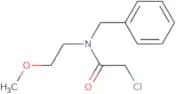
CAS:<p>Versatile small molecule scaffold</p>Formula:C14H19N3O2Purity:Min. 95%Molecular weight:261.32 g/molN-Benzyl-2-chloro-N-(2-methoxyethyl)acetamide
CAS:<p>Versatile small molecule scaffold</p>Formula:C12H16ClNO2Purity:Min. 95%Molecular weight:241.71 g/molRef: 3D-DEA46305
Discontinued product1-[(2-Bromoethyl)sulfanyl]-3-chlorobenzene
CAS:<p>Versatile small molecule scaffold</p>Formula:C8H8BrClSPurity:Min. 95%Molecular weight:251.57 g/molRef: 3D-DAA98371
Discontinued product4-Azatricyclo[9.4.0.0,3,8]pentadeca-1(15),3,5,7,11,13-hexaen-2-one
CAS:<p>Versatile small molecule scaffold</p>Formula:C14H11NOPurity:Min. 95%Molecular weight:209.24 g/molRef: 3D-DAA96473
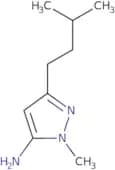
Discontinued product1-Methyl-3-(3-methylbutyl)-1H-pyrazol-5-amine
CAS:<p>Versatile small molecule scaffold</p>Formula:C9H17N3Purity:Min. 95%Molecular weight:167.25 g/molRef: 3D-CWB70775
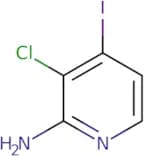
Discontinued product3-Chloro-4-iodopyridin-2-amine
CAS:<p>3-Chloro-4-iodopyridin-2-amine is a chemical compound with the formula CHI. It is a white solid that can be used in evaluating cross-coupling reactions, such as the coupling of an alkyne with a chlorine atom. This chemical has been shown to react well with chlorination reagents and to form substituted cyanides. The nature of the substituent on the chlorine atom determines its regioselectivity and reactivity, making this compound useful for regiocontrolled synthesis.</p>Formula:C5H4ClIN2Purity:Min. 95%Molecular weight:254.46 g/mol3-Ethyl-3-(4-methylphenyl)pyrrolidine-2,5-dione
CAS:<p>Versatile small molecule scaffold</p>Formula:C13H15NO2Purity:Min. 95%Molecular weight:217.26 g/molRef: 3D-CWB58411
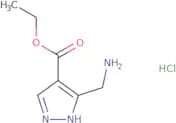
Discontinued productEthyl 3-(aminomethyl)-1H-pyrazole-4-carboxylate hydrochloride
CAS:<p>Versatile small molecule scaffold</p>Formula:C7H12ClN3O2Purity:Min. 95%Molecular weight:205.64 g/molRef: 3D-CMD25749
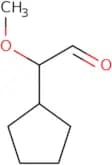
Discontinued product2-Cyclopentyl-2-methoxyacetaldehyde
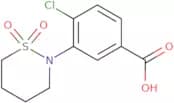
CAS:<p>Versatile small molecule scaffold</p>Formula:C8H14O2Purity:Min. 95%Molecular weight:142.2 g/mol4-Chloro-3-(1,1-dioxido-1,2-thiazinan-2-yl)benzoic acid
CAS:<p>Versatile small molecule scaffold</p>Formula:C11H12ClNO4SPurity:Min. 95%Molecular weight:289.74 g/mol1-(7-Hydroxy-2-methylpyrazolo[1,5-a]pyrimidin-6-yl)-ethanone
CAS:<p>Versatile small molecule scaffold</p>Formula:C9H9N3O2Purity:Min. 95%Molecular weight:191.19 g/molRef: 3D-CMB17733
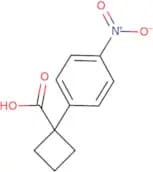
Discontinued product1-(4-Nitrophenyl)cyclobutanecarboxylic acid
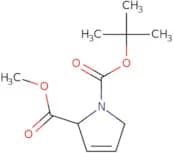
CAS:<p>Versatile small molecule scaffold</p>Formula:C11H11NO4Purity:Min. 95%Molecular weight:221.21 g/mol1-tert-Butyl 2-methyl 2,5-dihydro-1H-pyrrole-1,2-dicarboxylate
CAS:<p>Versatile small molecule scaffold</p>Formula:C11H17NO4Purity:Min. 95%Molecular weight:227.26 g/mol4-{8-Nitro-2,4-dioxo-3-azatricyclo[7.3.1.0,5,13]trideca-1(13),5,7,9,11-pentaen-3-yl}benzoic acid
CAS:<p>Versatile small molecule scaffold</p>Formula:C19H10N2O6Purity:Min. 95%Molecular weight:362.3 g/molEthyl 3-amino-4,6-dimethylthieno[2,3-b]pyridine-2-carboxylate
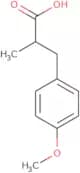
CAS:<p>Ethyl 3-amino-4,6-dimethylthieno[2,3-b]pyridine-2-carboxylate is a heterocyclic compound that is used as a reagent in organic synthesis. It is a polyfunctionalized heterocycle that contains an ethyl ester and an acid ethyl ester moiety. The compound can be prepared by the reaction of thiophene with nitromethane and ethyl iodide followed by hydrolysis.</p>Formula:C12H14N2O2SPurity:Min. 95%Molecular weight:250.32 g/mol3-(4-Methoxyphenyl)-2-methylpropanoic acid
CAS:<p>Versatile small molecule scaffold</p>Formula:C11H14O3Purity:Min. 95%Molecular weight:194.23 g/molRef: 3D-CCA42711
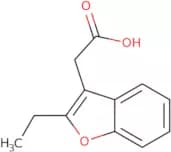
Discontinued product2-(2-Ethyl-1-benzofuran-3-yl)acetic acid
CAS:<p>Versatile small molecule scaffold</p>Formula:C12H12O3Purity:Min. 95%Molecular weight:204.22 g/molRef: 3D-CCA40748
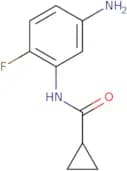
Discontinued productN-(5-Amino-2-fluorophenyl)cyclopropanecarboxamide
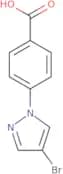
CAS:<p>Versatile small molecule scaffold</p>Formula:C10H11FN2OPurity:Min. 95%Molecular weight:194.21 g/mol4-(4-bromo-1H-pyrazol-1-yl)benzoic acid
CAS:<p>Versatile small molecule scaffold</p>Formula:C10H7BrN2O2Purity:Min. 95%Molecular weight:267.1 g/molRef: 3D-BMB21284
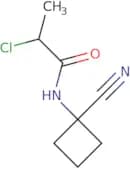
Discontinued product2-Chloro-N-(1-cyanocyclobutyl)propanamide
CAS:<p>Versatile small molecule scaffold</p>Formula:C8H11ClN2OPurity:Min. 95%Molecular weight:186.64 g/molRef: 3D-BMB21268
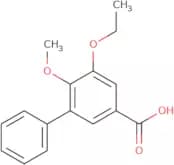
Discontinued product3-Ethoxy-4-methoxy-5-phenylbenzoic acid
CAS:<p>Versatile small molecule scaffold</p>Formula:C16H16O4Purity:Min. 95%Molecular weight:272.29 g/molRef: 3D-BMB20081
Discontinued productN'-Hydroxy-4-(morpholin-4-ylmethyl)benzene-1-carboximidamide
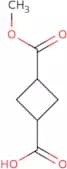
CAS:<p>Versatile small molecule scaffold</p>Formula:C12H17N3O2Purity:Min. 95%Molecular weight:235.28 g/mol3-(METHOXYCARBONYL)CYCLOBUTANECARBOXYLIC ACID, trans
CAS:<p>Versatile small molecule scaffold</p>Formula:C7H10O4Purity:Min. 95%Molecular weight:158.2 g/molRef: 3D-BGC10371
Discontinued product(7S)-5-Oxo-5H,6H,7H,8H-imidazo[1,5-c]pyrimidine-7-carboxylic acid hydrochloride
CAS:<p>Versatile small molecule scaffold</p>Formula:C7H8ClN3O3Purity:Min. 95%Molecular weight:217.61 g/molRef: 3D-BGA11205
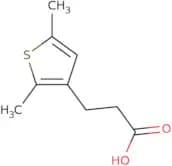
Discontinued product3-(2,5-Dimethylthiophen-3-yl)propanoic acid
CAS:<p>Versatile small molecule scaffold</p>Formula:C9H12O2SPurity:Min. 95%Molecular weight:184.26 g/molRef: 3D-BBA42138
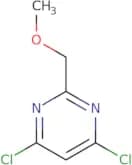
Discontinued product4,6-dichloro-2-(methoxymethyl)pyrimidine
CAS:<p>Versatile small molecule scaffold</p>Formula:C6H6Cl2N2OPurity:Min. 95%Molecular weight:193 g/molRef: 3D-BAA90392
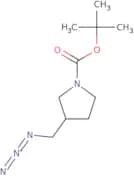
Discontinued producttert-Butyl 3-(azidomethyl)pyrrolidine-1-carboxylate
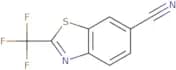
CAS:<p>Versatile small molecule scaffold</p>Formula:C10H18N4O2Purity:Min. 95%Molecular weight:226.28 g/mol2-(Trifluoromethyl)-1,3-benzothiazole-6-carbonitrile
CAS:<p>2-(Trifluoromethyl)-1,3-benzothiazole-6-carbonitrile (2TFB) is a volatile chemical used in the diagnosis of infectious diseases. It is extracted from sample by solid phase microextraction and then analyzed by gas chromatography with mass spectrometry. 2TFB has been shown to be an influential compound in the synthesis of microspheres for drug delivery. The imprinting process is also influenced by this compound and can be used for the production of microspheres with different properties on demand. It has been shown that 2-TFB inhibits virus growth and can be used as a potential anti-viral agent.</p>Formula:C9H3F3N2SPurity:Min. 95%Molecular weight:228.2 g/molRef: 3D-AZB04114
Discontinued product4-[(2-Chlorophenyl)methyl]piperidine hydrochloride
CAS:<p>Versatile small molecule scaffold</p>Formula:C12H17Cl2NPurity:Min. 95%Molecular weight:246.17 g/molRef: 3D-AXC30294
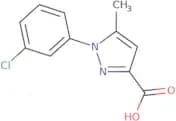
Discontinued product1-(3-Chlorophenyl)-5-methyl-1H-pyrazole-3-carboxylic acid
CAS:<p>Versatile small molecule scaffold</p>Formula:C11H9ClN2O2Purity:Min. 95%Molecular weight:236.65 g/molRef: 3D-AXB97208
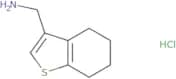
Discontinued product1-(4,5,6,7-Tetrahydro-1-benzothiophen-3-yl)methanamine hydrochloride
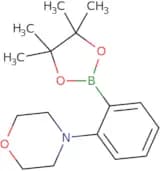
CAS:<p>Versatile small molecule scaffold</p>Formula:C9H14ClNSPurity:Min. 95%Molecular weight:203.73 g/mol2-(Morpholino)phenylboronic acid pinacolate
CAS:<p>Versatile small molecule scaffold</p>Formula:C16H24BNO3Purity:Min. 95%Molecular weight:289.2 g/molN-[(5-Methyl-2-thienyl)methyl]cyclopropanamine hydrochloride
CAS:<p>Versatile small molecule scaffold</p>Formula:C9H14ClNSPurity:Min. 95%Molecular weight:203.73 g/molN,N-Dimethyl-N'-[(5-methyl-2-thienyl)methyl]-1,2-ethanediamine dihydrochloride
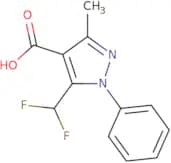
CAS:<p>Versatile small molecule scaffold</p>Formula:C10H20Cl2N2SPurity:Min. 95%Molecular weight:271.2 g/mol5-(Difluoromethyl)-3-methyl-1-phenyl-1H-pyrazole-4-carboxylic acid
CAS:<p>Versatile small molecule scaffold</p>Formula:C12H10F2N2O2Purity:Min. 95%Molecular weight:252.22 g/molRef: 3D-AFC47355
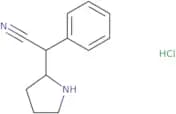
Discontinued product2-Phenyl-2-(pyrrolidin-2-yl)acetonitrile hydrochloride
CAS:<p>Versatile small molecule scaffold</p>Formula:C12H15ClN2Purity:Min. 95%Molecular weight:222.71 g/molRef: 3D-AFC47353
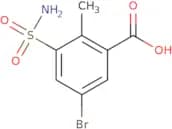
Discontinued product5-Bromo-2-methyl-3-sulfamoylbenzoic acid
CAS:<p>Versatile small molecule scaffold</p>Formula:C8H8BrNO4SPurity:Min. 95%Molecular weight:294.12 g/molRef: 3D-AFC47231
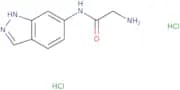
Discontinued product2-Amino-N-(2H-indazol-6-yl)acetamide dihydrochloride
CAS:<p>Versatile small molecule scaffold</p>Formula:C9H12Cl2N4OPurity:Min. 95%Molecular weight:263.12 g/molRef: 3D-AFC47212
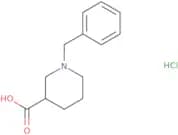
Discontinued product1-Benzylpiperidine-3-carboxylic acid hydrochloride
CAS:<p>Versatile small molecule scaffold</p>Formula:C13H18ClNO2Purity:Min. 95%Molecular weight:255.75 g/molRef: 3D-ACA58592
Discontinued product5-bromo-4-methyl-1H-indole-2-carboxylic acid
CAS:<p>Versatile small molecule scaffold</p>Formula:C10H8BrNO2Purity:Min. 95%Molecular weight:254.1 g/molRef: 3D-ACA53658
Discontinued product[4-(2,2-Difluoroethoxy)phenyl]methanol
CAS:<p>Versatile small molecule scaffold</p>Formula:C9H10F2O2Purity:Min. 95%Molecular weight:188.17 g/molRef: 3D-JXB38953
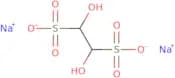
Discontinued productGlyoxal bis(sodium hydrogen sulfite) adduct hydrate
CAS:<p>Glyoxal bis(sodium hydrogen sulfite) adduct hydrate is a reactive compound that has been shown to react with quinoxaline derivatives. The nitrogen atoms in the amide and nitrogen atoms in the quinoxaline derivative are oxidized by oxidation catalyst, such as sodium carbonate, to form an amide-quinone. This reaction leads to the formation of a polyvinyl polymer that can be used for sample preparation. In addition, this compound has been shown to have receptor activity and detergent compositions. Glyoxal bis(sodium hydrogen sulfite) adduct hydrate also has antimicrobial properties and can be used for plant physiology studies and pharmacokinetic properties.</p>Formula:OHCCHO·2NaHSO3Purity:Min. 95%Molecular weight:266.16 g/molRef: 3D-AAA51721
Discontinued product1-[(2-Methyl-1,3-thiazol-5-yl)methyl]piperazine
CAS:<p>Versatile small molecule scaffold</p>Formula:C9H15N3SPurity:Min. 95%Molecular weight:197.3 g/molRef: 3D-AAC11820
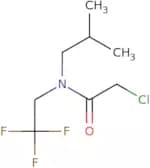
Discontinued product2-Chloro-N-(2-methylpropyl)-N-(2,2,2-trifluoroethyl)acetamide
CAS:<p>Versatile small molecule scaffold</p>Formula:C8H13ClF3NOPurity:Min. 95%Molecular weight:231.64 g/molRef: 3D-JXB08809
Discontinued productMethyl 2-[(phenoxycarbonyl)amino]benzoate
CAS:<p>Versatile small molecule scaffold</p>Formula:C15H13NO4Purity:Min. 95%Molecular weight:271.27 g/molMethyl 2-[3-(chlorosulfonyl)phenyl]acetate
CAS:<p>Versatile small molecule scaffold</p>Formula:C9H9ClO4SPurity:Min. 95%Molecular weight:248.68 g/molRef: 3D-JKA19192
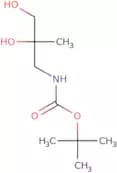
Discontinued producttert-Butyl N-(2,3-dihydroxy-2-methylpropyl)carbamate
CAS:<p>Versatile small molecule scaffold</p>Formula:C9H19NO4Purity:Min. 95%Molecular weight:205.25 g/molRef: 3D-JJC63705
Discontinued product5-Bromo-6-hydroxypyrimidine-4-carboxylic acid
CAS:<p>5-Bromo-6-hydroxypyrimidine-4-carboxylic acid is a homologous organic acid that is used as a pharmaceutical preservative. It is most commonly found in acidic pharmaceutical formulations. 5-Bromo-6-hydroxypyrimidine-4-carboxylic acid inhibits the growth of bacteria and fungi by acting as an enzyme inhibitor. The inhibition of enzymes such as lactamase, which breaks down the lactam ring in penicillin, prevents bacterial and fungal growth by preventing them from breaking down their natural cell walls. 5-Bromo-6-hydroxypyrimidine-4-carboxylic acid has also been shown to have potent anticancer activity in the lab setting, although the clinical significance of this has not yet been determined.</p>Formula:C5H3BrN2O3Purity:Min. 95%Molecular weight:218.99 g/molRef: 3D-KFA27482
Discontinued product3-Bromopyridine-2-sulfonyl fluoride
CAS:<p>Versatile small molecule scaffold</p>Formula:C5H3BrFNO2SPurity:Min. 95%Molecular weight:240.05 g/molRef: 3D-JCD83495
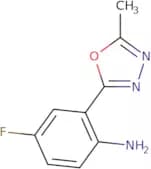
Discontinued product4-Fluoro-2-(5-methyl-1,3,4-oxadiazol-2-yl)aniline
CAS:<p>Versatile small molecule scaffold</p>Formula:C9H8FN3OPurity:Min. 95%Molecular weight:193.18 g/molRef: 3D-IXB48241
Discontinued product2-[(2,2-Difluoroethyl)sulfanyl]-5-(trifluoromethyl)aniline
CAS:<p>Versatile small molecule scaffold</p>Formula:C9H8F5NSPurity:Min. 95%Molecular weight:257.23 g/molRef: 3D-IXB29341
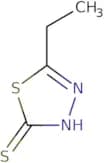
Discontinued product5-Ethyl-1,3,4-thiadiazole-2-thiol
CAS:<p>Versatile small molecule scaffold</p>Formula:C4H6N2S2Purity:Min. 95%Molecular weight:146.2 g/molRef: 3D-MBA66351
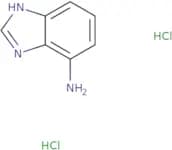
Discontinued product1H-1,3-Benzodiazol-7-amine dihydrochloride
CAS:<p>Versatile small molecule scaffold</p>Formula:C7H9Cl2N3Purity:Min. 95%Molecular weight:206.07 g/molRef: 3D-MBA72428
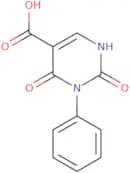
Discontinued product2,4-Dioxo-3-phenyl-1,2,3,4-tetrahydropyrimidine-5-carboxylic acid
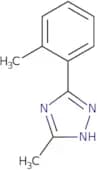
CAS:<p>Versatile small molecule scaffold</p>Formula:C11H8N2O4Purity:Min. 95%Molecular weight:232.19 g/mol3-Methyl-5-(2-methylphenyl)-1H-1,2,4-triazole
CAS:<p>Versatile small molecule scaffold</p>Formula:C10H11N3Purity:Min. 95%Molecular weight:173.21 g/moltert-Butyl 3-(prop-2-yn-1-yl)pyrrolidine-1-carboxylate
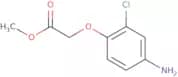
CAS:<p>Versatile small molecule scaffold</p>Formula:C12H19NO2Purity:Min. 95%Molecular weight:209.28 g/molMethyl 2-(4-amino-2-chlorophenoxy)acetate
CAS:<p>Versatile small molecule scaffold</p>Formula:C9H10ClNO3Purity:Min. 95%Molecular weight:215.63 g/molRef: 3D-MBB21580
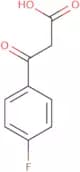
Discontinued product3-(4-Fluorophenyl)-2-oxopropanoic acid
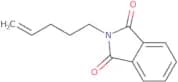
CAS:<p>Versatile small molecule scaffold</p>Formula:C9H7FO3Purity:Min. 95%Molecular weight:182.15 g/mol2-(Pent-4-en-1-yl)-2,3-dihydro-1H-isoindole-1,3-dione
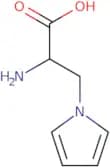
CAS:<p>Versatile small molecule scaffold</p>Formula:C13H13NO2Purity:Min. 95%Molecular weight:215.25 g/mol2-Amino-3-(1H-pyrrol-1-yl)propanoic acid
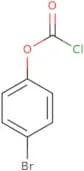
CAS:<p>Versatile small molecule scaffold</p>Formula:C7H10N2O2Purity:Min. 95%Molecular weight:154.17 g/mol4-Bromophenyl chloroformate
CAS:<p>Versatile small molecule scaffold</p>Formula:C7H4BrClO2Purity:Min. 95%Molecular weight:235.46 g/mol1,3-Dichloro-5,6-dihydro-4H-cyclopenta[c]thiophen-4-one
CAS:<p>Versatile small molecule scaffold</p>Formula:C7H4Cl2OSPurity:Min. 95%Molecular weight:207.08 g/mol(2S)-3-Hydroxy-2-(4-methylbenzenesulfonamido)propanoic acid
CAS:<p>The chemical formula for 2-amino-3-(methylsulfonamido)propanoic acid is C6H12N2O4S. It has a molecular weight of 218.25, and the molecular formula is CH3N(SO2CH3)COOH. This product is a white crystalline powder that can be dissolved in water or ethanol.</p>Formula:C10H13NO5SPurity:Min. 95%Molecular weight:259.28 g/molRef: 3D-HAA66392
Discontinued product1-Bromo-2-(2-bromoethanesulfonyl)ethane
CAS:<p>Versatile small molecule scaffold</p>Formula:C4H8Br2O2SPurity:Min. 95%Molecular weight:279.98 g/molRef: 3D-HAA61767
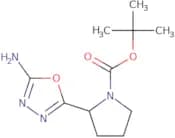
Discontinued producttert-Butyl 2-(5-amino-1,3,4-oxadiazol-2-yl)pyrrolidine-1-carboxylate
CAS:<p>Versatile small molecule scaffold</p>Formula:C11H18N4O3Purity:Min. 95%Molecular weight:254.29 g/molRef: 3D-MKB58793
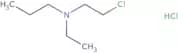
Discontinued productN-(2-Chloroethyl)-N-ethylpropan-1-amine hydrochloride
CAS:Controlled Product<p>Versatile small molecule scaffold</p>Formula:C7H17Cl2NPurity:Min. 95%Molecular weight:186.12 g/molRef: 3D-NAA10593
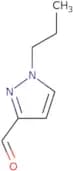
Discontinued product1-Propyl-1H-pyrazole-3-carbaldehyde
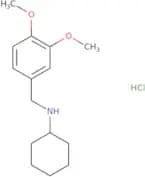
CAS:<p>Versatile small molecule scaffold</p>Formula:C7H10N2OPurity:Min. 95%Molecular weight:138.17 g/molBenzenemethanamine, N-cyclohexyl-3,4-dimethoxy-, hydrochloride
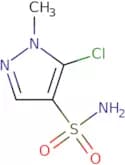
CAS:<p>Versatile small molecule scaffold</p>Formula:C15H24ClNO2Purity:Min. 95%Molecular weight:285.81 g/mol5-Chloro-1-methyl-1H-pyrazole-4-sulfonamide
CAS:<p>Versatile small molecule scaffold</p>Formula:C4H6ClN3O2SPurity:Min. 95%Molecular weight:195.63 g/molRef: 3D-NDA39850
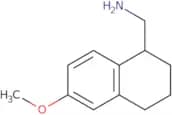
Discontinued product(6-Methoxy-1,2,3,4-tetrahydronaphthalen-1-yl)methanamine
CAS:<p>Versatile small molecule scaffold</p>Formula:C12H17NOPurity:Min. 95%Molecular weight:191.27 g/molRef: 3D-NDA63110
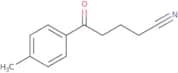
Discontinued product5-(4-Methylphenyl)-5-oxopentanenitrile
CAS:<p>Versatile small molecule scaffold</p>Formula:C12H13NOPurity:Min. 95%Molecular weight:187.24 g/molRef: 3D-NDA63641
Discontinued productBicyclo[4.1.0]heptan-7-ylmethanol
CAS:<p>Bicyclo[4.1.0]heptan-7-ylmethanol is a hydride inhibitor of lactate dehydrogenase, which is an enzyme that catalyzes the conversion of pyruvate to lactate in the liver. Bicyclo[4.1.0]heptan-7-ylmethanol has inhibitory properties against aldehyde dehydrogenase and alcohol dehydrogenase, which are enzymes involved in the metabolism of aldehydes and alcohols respectively. This substance also inhibits mitochondrial monoamine oxidase (MAO), which is an enzyme that breaks down neurotransmitters such as dopamine, norepinephrine, and serotonin. Bicyclo[4.1.0]heptan-7-ylmethanol can be used to inhibit the function of MAO in order to increase levels of these neurotransmitters in the brain, which may be helpful for conditions like depression or Parkinson</p>Formula:C8H14OPurity:Min. 95%Molecular weight:126.2 g/molRef: 3D-GAA22639
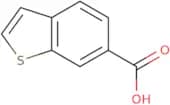
Discontinued product1-Benzothiophene-6-carboxylic acid
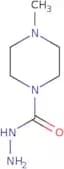
CAS:<p>1-Benzothiophene-6-carboxylic acid is a nicotinic acetylcholine receptor agonist that has been shown to have high oral bioavailability and efficacy in vivo. It binds to the α7 nicotinic acetylcholine receptor and activates the receptor, leading to increased neurotransmitter release. 1-Benzothiophene-6-carboxylic acid has been shown to be effective in vivo in models of neuropathic pain and Parkinson's disease. This drug also has a low affinity for other receptors, such as muscarinic acetylcholine receptors, which reduces the chance of adverse effects.</p>Formula:C9H6O2SPurity:Min. 95%Molecular weight:178.21 g/mol4-Methylpiperazine-1-carbohydrazide
CAS:<p>Versatile small molecule scaffold</p>Formula:C6H14N4OPurity:Min. 95%Molecular weight:158.2 g/molRef: 3D-NDA70165
Discontinued product4-{[(5-Nitrofuran-2-yl)methyl]amino}benzoic acid
CAS:<p>Versatile small molecule scaffold</p>Formula:C12H10N2O5Purity:Min. 95%Molecular weight:262.22 g/molRef: 3D-NDA79661
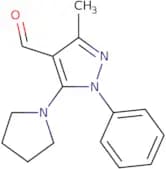
Discontinued product3-Methyl-1-phenyl-5-(pyrrolidin-1-yl)-1H-pyrazole-4-carbaldehyde
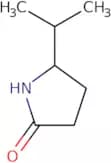
CAS:<p>Versatile small molecule scaffold</p>Formula:C15H17N3OPurity:Min. 95%Molecular weight:255.31 g/mol(5S)-5-(Propan-2-yl)pyrrolidin-2-one
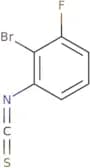
CAS:<p>(5S)-5-(Propan-2-yl)pyrrolidin-2-one is a vinyl compound that is used in the production of polyvinyl acetate. It is produced by transesterification of vinyl acetate and ethylene oxide, followed by hydrolysis of the ester group. The reaction proceeds via an enzymatic process, which is initiated by lipases.br><br>(5S)-5-(Propan-2-yl)pyrrolidin-2-one can be converted to other compounds through a number of chemical reactions. For example, it can be oxidized to (5S)-5-(propane-2,3-dione)pyrrolidine with hydrogen peroxide or sodium hypochlorite. It also reacts with potassium permanganate to form (5S)-5-(propane-1,3 diol)pyrrolidine and manganese dioxide to form (5S</p>Formula:C7H13NOPurity:Min. 95%Molecular weight:127.18 g/mol2-Bromo-3-fluorophenylisothiocyanate
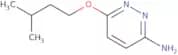
CAS:<p>Versatile small molecule scaffold</p>Formula:C7H3BrFNSPurity:Min. 95%Molecular weight:232.08 g/mol6-(3-Methylbutoxy)pyridazin-3-amine
CAS:<p>Versatile small molecule scaffold</p>Formula:C9H15N3OPurity:Min. 95%Molecular weight:181.23 g/mol1-[3-(Dimethylamino)propyl]-1-(4-fluorophenyl)-1,3-dihydro-3-oxo-5-isobenzofurancarbonitrile
CAS:<p>Please enquire for more information about 1-[3-(Dimethylamino)propyl]-1-(4-fluorophenyl)-1,3-dihydro-3-oxo-5-isobenzofurancarbonitrile including the price, delivery time and more detailed product information at the technical inquiry form on this page</p>Formula:C20H19FN2O2Purity:Min. 95%Molecular weight:338.38 g/molRef: 3D-FD184085
Discontinued product2-Bromo-4-(4-fluorophenyl)-1,3-thiazole
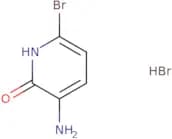
CAS:<p>Versatile small molecule scaffold</p>Formula:C9H5NFSBrPurity:Min. 95%Molecular weight:258.11 g/mol3-amino-6-bromopyridin-2-ol hydrobromide
CAS:<p>Versatile small molecule scaffold</p>Formula:C5H6Br2N2OPurity:Min. 95%Molecular weight:269.9 g/mol2-Bromo-3,3,3-trifluoro-1-propene
CAS:Controlled Product<p>2-Bromo-3,3,3-trifluoro-1-propene is a chemical compound that has been synthesized in an asymmetric reaction. The reactant is bromopropane and the product is 2,2,2-trifluoropropene. The methylene group on the propene molecule is activated by the nucleophilic attack of a fluoride ion from hydrogen fluoride to form a cavity with a highly strained bond. The kinetic study of this reaction revealed that the activation energy for the reaction is 42 kJ/mol. Palladium-catalyzed coupling reactions are catalyzed by palladium and require nonpolar solvents such as toluene or dichloromethane. This type of reaction has been shown to be exothermic with an isolated yield of 1%.</p>Formula:C3H2BrF3Purity:Min. 95%Color and Shape:Colorless PowderMolecular weight:174.95 g/moltert-Butyl 5-bromo-3,4-dihydro-2,7-naphthyridine-2(1H)-carboxylate
CAS:<p>Versatile small molecule scaffold</p>Formula:C13H17BrN2O2Purity:Min. 95%Molecular weight:313.19 g/mol3-[5-(Aminomethyl)-1-oxo-2,3-dihydro-1H-isoindol-2-yl]piperidine-2,6-dione hydrochloride
CAS:<p>Versatile small molecule scaffold</p>Formula:C14H16ClN3O3Purity:Min. 95%Molecular weight:309.75 g/mol3-Methylbenzo[b]thiophene-2-carboxylic acid
CAS:<p>3-Methylbenzo[b]thiophene-2-carboxylic acid (MBTCA) is a heterocyclic compound that is an intermediate in the synthesis of 3-methylthiophene-2-carboxylic acid, a precursor to other drugs. MBTCA is an aerobic, nonpolar compound that has shown antimicrobial activity against some bacteria and fungi. It also has been shown to have practicality as a biomolecular probe for methyl groups in organic solvents. MBTCA can be synthesized by nitration of benzene in the presence of sulfur and sulfoxides. This reaction produces nitrobenzene, which can then be oxidized by potassium permanganate or hydrogen peroxide to produce MBTCA. The most common isomer of MBTCA is 2-(3,5-dimethoxybenzylidene)tetrahydrofuran, with three methyl groups on the</p>Formula:C10H8O2SPurity:Min. 95%Molecular weight:192.23 g/mol3-Boc-3-azabicyclo[3.2.1]octan-8-amine
CAS:<p>Versatile small molecule scaffold</p>Formula:C12H22N2O2Purity:Min. 95%Molecular weight:226.32 g/mol3-(Methoxycarbonyl)pyridine-4-carboxylic acid
CAS:<p>Versatile small molecule scaffold</p>Formula:C8H7NO4Purity:Min. 95%Molecular weight:181.15 g/mol(2S,3R)-2-((((9H-Fluoren-9-yl)methoxy)carbonyl)amino)-3-methoxybutanoic acid
CAS:<p>Versatile small molecule scaffold</p>Formula:C20H21NO5Purity:Min. 95%Molecular weight:355.4 g/mol6,6-Difluorospiro[3.3]heptan-2-amine Hydrochloride
CAS:<p>Versatile small molecule scaffold</p>Formula:C7H11F2N·HClPurity:Min. 95%Molecular weight:147.17 g/mol2-Acetylbenzoic acid
CAS:<p>2-Acetylbenzoic acid is a functional molecule that contains an acetyl group. It can form hydrogen bonds with other molecules and has been shown to induce apoptosis in cells. The reaction products of 2-acetylbenzoic acid are malonic acid, acetylsalicylic acid, and 2-benzoylbenzoic acid. These three compounds are made by the addition of hydrogen or hydroxide to the molecule 2-acetylbenzoic acid. The molecule has two functional groups: a carbonyl group and an acetyl group. The chemical structure of this molecule can be seen in the figure below.<br>2-Acetylbenzoic Acid</p>Formula:C9H8O3Purity:Min. 95%Color and Shape:PowderMolecular weight:164.16 g/molRef: 3D-FA05086
Discontinued productH-Ser-Ala-Glu-Glu-Tyr-Glu-Tyr-Pro-Ser OH trifluoroacetate
CAS:<p>Please enquire for more information about H-Ser-Ala-Glu-Glu-Tyr-Glu-Tyr-Pro-Ser OH trifluoroacetate including the price, delivery time and more detailed product information at the technical inquiry form on this page</p>Formula:C47H63N9O20•(C2HF3O2)xPurity:Min. 95%Ref: 3D-FS183525
Discontinued productGivinostat hydrochloride
CAS:<p>Givinostat hydrochloride is a research chemical that has shown potential in various fields. It is a molybdenum-based compound that has been studied for its effects on dopamine release and hydrogen evolution. Givinostat hydrochloride has also been investigated as an osteoclast inhibitor, which may be beneficial in the treatment of bone-related disorders such as osteoporosis. Additionally, it has shown promise as a retinoid and calpain inhibitor, suggesting its potential use in dermatological conditions and neurodegenerative diseases. The compound contains fluorine atoms, making it suitable for imaging studies using fluorine MRI techniques. Givinostat hydrochloride has been tested on MDA-MB-231 cells and has shown inhibitory effects on their growth, indicating its potential as an anticancer agent.</p>Formula:C24H27N3O4·HClPurity:Min. 95%Molecular weight:457.95 g/mol
![rac-(4aR,7aS)-1-{[(9H-Fluoren-9-yl)methoxy]carbonyl}-octahydro-1H-cyclopenta[b]pyridine-4a-carboxy…](/_next/image/?url=https%3A%2Fstatic.cymitquimica.com%2Fproducts%2F3D%2Fthumb-webp%2FDQD62972.webp&w=3840&q=75)

![(1R)-2,2-Difluoro-1-[4-(trifluoromethyl)phenyl]ethan-1-amine hydrochloride](/_next/image/?url=https%3A%2Fstatic.cymitquimica.com%2Fproducts%2F3D%2Fthumb-webp%2FDQD61959.webp&w=3840&q=75)
![rac-tert-Butyl N-[(3R,4S)-4-(4-fluorophenyl)pyrrolidin-3-yl]carbamate](/_next/image/?url=https%3A%2Fstatic.cymitquimica.com%2Fproducts%2F3D%2Fthumb-webp%2FDQC54964.webp&w=3840&q=75)
![3-[4,6-Dimethyl-1-(propan-2-yl)-1H-pyrazolo[3,4-b]pyridin-5-yl]propanoic acid](/_next/image/?url=https%3A%2Fstatic.cymitquimica.com%2Fproducts%2F3D%2Fthumb-webp%2FDJB57449.webp&w=3840&q=75)
![1-[(2-Bromoethyl)sulfanyl]-3-chlorobenzene](/_next/image/?url=https%3A%2Fstatic.cymitquimica.com%2Fproducts%2F3D%2Fthumb-webp%2FDAA98371.webp&w=3840&q=75)
![4-Azatricyclo[9.4.0.0,3,8]pentadeca-1(15),3,5,7,11,13-hexaen-2-one](/_next/image/?url=https%3A%2Fstatic.cymitquimica.com%2Fproducts%2F3D%2Fthumb-webp%2FDAA96473.webp&w=3840&q=75)

![1-(7-Hydroxy-2-methylpyrazolo[1,5-a]pyrimidin-6-yl)-ethanone](/_next/image/?url=https%3A%2Fstatic.cymitquimica.com%2Fproducts%2F3D%2Fthumb-webp%2FCMB17733.webp&w=3840&q=75)
![4-{8-Nitro-2,4-dioxo-3-azatricyclo[7.3.1.0,5,13]trideca-1(13),5,7,9,11-pentaen-3-yl}benzoic acid](/_next/image/?url=https%3A%2Fstatic.cymitquimica.com%2Fproducts%2F3D%2Fthumb-webp%2FCIA34140.webp&w=3840&q=75)
![Ethyl 3-amino-4,6-dimethylthieno[2,3-b]pyridine-2-carboxylate](/_next/image/?url=https%3A%2Fstatic.cymitquimica.com%2Fproducts%2F3D%2Fthumb-webp%2FCCA50556.webp&w=3840&q=75)

![(7S)-5-Oxo-5H,6H,7H,8H-imidazo[1,5-c]pyrimidine-7-carboxylic acid hydrochloride](/_next/image/?url=https%3A%2Fstatic.cymitquimica.com%2Fproducts%2F3D%2Fthumb-webp%2FBGA11205.webp&w=3840&q=75)
![4-[(2-Chlorophenyl)methyl]piperidine hydrochloride](/_next/image/?url=https%3A%2Fstatic.cymitquimica.com%2Fproducts%2F3D%2Fthumb-webp%2FAXC30294.webp&w=3840&q=75)
![N-[(5-Methyl-2-thienyl)methyl]cyclopropanamine hydrochloride](/_next/image/?url=https%3A%2Fstatic.cymitquimica.com%2Fproducts%2F3D%2Fthumb-webp%2FASB21404.webp&w=3840&q=75)
![N,N-Dimethyl-N'-[(5-methyl-2-thienyl)methyl]-1,2-ethanediamine dihydrochloride](/_next/image/?url=https%3A%2Fstatic.cymitquimica.com%2Fproducts%2F3D%2Fthumb-webp%2FASB21396.webp&w=3840&q=75)

![[4-(2,2-Difluoroethoxy)phenyl]methanol](/_next/image/?url=https%3A%2Fstatic.cymitquimica.com%2Fproducts%2F3D%2Fthumb-webp%2FJXB38953.webp&w=3840&q=75)
![1-[(2-Methyl-1,3-thiazol-5-yl)methyl]piperazine](/_next/image/?url=https%3A%2Fstatic.cymitquimica.com%2Fproducts%2F3D%2Fthumb-webp%2FAAC11820.webp&w=3840&q=75)
![Methyl 2-[(phenoxycarbonyl)amino]benzoate](/_next/image/?url=https%3A%2Fstatic.cymitquimica.com%2Fproducts%2F3D%2Fthumb-webp%2FJKA53723.webp&w=3840&q=75)
![Methyl 2-[3-(chlorosulfonyl)phenyl]acetate](/_next/image/?url=https%3A%2Fstatic.cymitquimica.com%2Fproducts%2F3D%2Fthumb-webp%2FJKA19192.webp&w=3840&q=75)


![2-[(2,2-Difluoroethyl)sulfanyl]-5-(trifluoromethyl)aniline](/_next/image/?url=https%3A%2Fstatic.cymitquimica.com%2Fproducts%2F3D%2Fthumb-webp%2FIXB29341.webp&w=3840&q=75)

![1,3-Dichloro-5,6-dihydro-4H-cyclopenta[c]thiophen-4-one](/_next/image/?url=https%3A%2Fstatic.cymitquimica.com%2Fproducts%2F3D%2Fthumb-webp%2FHAA68779.webp&w=3840&q=75)


![Bicyclo[4.1.0]heptan-7-ylmethanol](/_next/image/?url=https%3A%2Fstatic.cymitquimica.com%2Fproducts%2F3D%2Fthumb-webp%2FGAA22639.webp&w=3840&q=75)
![4-{[(5-Nitrofuran-2-yl)methyl]amino}benzoic acid](/_next/image/?url=https%3A%2Fstatic.cymitquimica.com%2Fproducts%2F3D%2Fthumb-webp%2FNDA79661.webp&w=3840&q=75)
![1-[3-(Dimethylamino)propyl]-1-(4-fluorophenyl)-1,3-dihydro-3-oxo-5-isobenzofurancarbonitrile](/_next/image/?url=https%3A%2Fstatic.cymitquimica.com%2Fproducts%2F3D%2Fthumb-webp%2FFD184085.webp&w=3840&q=75)



![3-[5-(Aminomethyl)-1-oxo-2,3-dihydro-1H-isoindol-2-yl]piperidine-2,6-dione hydrochloride](/_next/image/?url=https%3A%2Fstatic.cymitquimica.com%2Fproducts%2F3D%2Fthumb-webp%2FIWB26469.webp&w=3840&q=75)
![3-Methylbenzo[b]thiophene-2-carboxylic acid](/_next/image/?url=https%3A%2Fstatic.cymitquimica.com%2Fproducts%2F3D%2Fthumb-webp%2FDAA13378.webp&w=3840&q=75)
![3-Boc-3-azabicyclo[3.2.1]octan-8-amine](/_next/image/?url=https%3A%2Fstatic.cymitquimica.com%2Fproducts%2F3D%2Fthumb-webp%2FFDC76351.webp&w=3840&q=75)


![6,6-Difluorospiro[3.3]heptan-2-amine Hydrochloride](/_next/image/?url=https%3A%2Fstatic.cymitquimica.com%2Fproducts%2F3D%2Fthumb-webp%2FYGC03271.webp&w=3840&q=75)