


Building Blocks
Subcategories of "Building Blocks"
- Boronic Acids & Boronic Acid Derivatives(5,778 products)
- Chiral Building Blocks(1,243 products)
- Hydrocarbon Building Blocks(6,098 products)
- Organic Building Blocks(61,036 products)
Found 205240 products of "Building Blocks"
2-[Benzyl(methyl)ao]propanoic acid
CAS:2-[Benzyl(methyl)ao]propanoic acid is a glycine analogue that has been synthesized and characterized. It is an α-amino acid with the chemical formula C5H11NO2. The molecule has a chiral carbon atom at the center of the propanoic acid group and contains two asymmetric carbon atoms on the benzene ring, which enable it to exist in two stereoisomers. The compound has been shown to exhibit interligand interactions with copper as well as stereoselectivity in its interactions with l-amino acids. 2-[Benzyl(methyl)ao]propanoic acid also exhibits dichroism spectra, which are unique to these types of molecules.
Formula:C11H15NO2Purity:Min. 95%Molecular weight:193.24 g/molRef: 3D-BEA69294
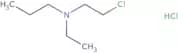
Discontinued productN-(2-Chloroethyl)-N-ethylpropan-1-amine hydrochloride
CAS:Controlled ProductVersatile small molecule scaffold
Formula:C7H17Cl2NPurity:Min. 95%Molecular weight:186.12 g/molRef: 3D-NAA10593
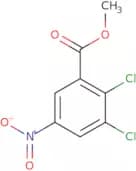
Discontinued productMethyl 2,3-dichloro-5-nitrobenzoate
CAS:Versatile small molecule scaffold
Formula:C8H5Cl2NO4Purity:Min. 95%Molecular weight:250.03 g/molRef: 3D-NCA10554
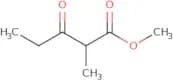
Discontinued product2-Methyl-3-oxo-pentanoicacid methyl ester
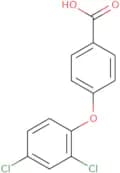
CAS:The synthesis of 2-methyl-3-oxo-pentanoic acid methyl ester is accomplished by a three step process. The first step is the intramolecular condensation of 2,2-dimethylpropionic acid with acetone to form a 1:1 mixture of 3,4-dihydroxybutyl and 4,4-dihydroxybutyl esters. The second step is the selective transesterification of the 3,4-dihydroxybutyl ester with benzaldehyde. This reaction provides an optically pure 2-methyl-3-oxo-pentanoic acid methyl ester as the major product. The third step is an aldol condensation between the ketone from the second step and acetone to produce another optically pure 2,2 dimethylpropionic acid methyl ester.Formula:C7H12O3Purity:Min. 95%Molecular weight:144.17 g/mol4-(2,4-Dichlorophenoxy)benzoic acid
CAS:Versatile small molecule scaffold
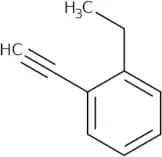
Formula:C13H8Cl2O3Purity:Min. 95%Molecular weight:283.1 g/mol1-Ethyl-2-ethynylbenzene
CAS:1-Ethyl-2-ethynylbenzene is an indene that can be synthesized by the reaction of 1-ethylbenzene with ethynylmagnesium bromide and trifluoroacetyl chloride. 1-Ethyl-2-ethynylbenzene reacts as a nucleophile with electrophiles, such as phenylsulfonyl and acetylene compounds, to form sulfones and acetylenes. It can also react with tetrafluoroborates to form indenes.
Formula:C10H10Purity:Min. 95%Molecular weight:130.19 g/molRef: 3D-ADA65949
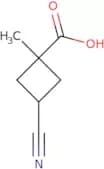
Discontinued product3-Cyano-1-methylcyclobutane-1-carboxylic acid
CAS:Versatile small molecule scaffoldFormula:C7H9NO2Purity:Min. 95%Molecular weight:139.15 g/molRef: 3D-NKD04501
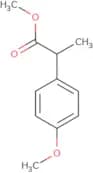
Discontinued productMethyl 2-(4-methoxyphenyl)propanoate
CAS:Versatile small molecule scaffold
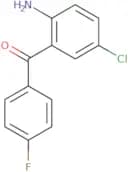
Formula:C11H14O3Purity:Min. 95%Molecular weight:194.23 g/mol4-Chloro-2-(4-fluorobenzoyl)aniline
CAS:Versatile small molecule scaffold
Formula:C13H9ClFNOPurity:Min. 95%Molecular weight:249.67 g/mol5-Chloro-3-cyclobutyl-1,2,4-oxadiazole
CAS:Versatile small molecule scaffold
Formula:C6H7ClN2OPurity:Min. 95%Molecular weight:158.58 g/molRef: 3D-NXB26496
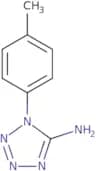
Discontinued product1-(4-Methylphenyl)-1H-1,2,3,4-tetrazol-5-amine
CAS:Versatile small molecule scaffold
Formula:C8H9N5Purity:Min. 95%Molecular weight:175.19 g/molRef: 3D-PBA88977
Discontinued productN-{[2-(Trifluoromethyl)phenyl]methyl}oxetan-3-amine
CAS:Versatile small molecule scaffoldFormula:C11H12F3NOPurity:Min. 95%Molecular weight:231.21 g/molRef: 3D-PDC89412
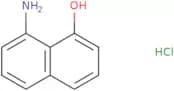
Discontinued product8-Aminonaphthalen-1-ol hydrochloride
CAS:Versatile small molecule scaffold
Formula:C10H10ClNOPurity:Min. 95%Molecular weight:195.64 g/molRef: 3D-QBA47130
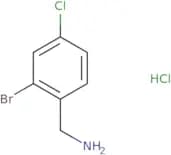
Discontinued product(2-Bromo-4-chlorophenyl)methanamine hydrochloride
CAS:Versatile small molecule scaffold
Formula:C7H8BrCl2NPurity:Min. 95%Molecular weight:256.95 g/molRef: 3D-YGD27370
Discontinued product1-{[1-(Bromomethyl)cyclopropyl]methoxy}-3-(methoxymethyl)benzene
CAS:Versatile small molecule scaffold
Formula:C13H17BrO2Purity:Min. 95%Molecular weight:285.18 g/molRef: 3D-YGC03501
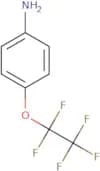
Discontinued product4-(Perfluoroethoxy)aniline
CAS:Versatile small molecule scaffold
Formula:C8H6F5NOPurity:Min. 95%Molecular weight:227.13 g/molRef: 3D-AAA71785
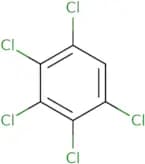
Discontinued product1,2,3,4,5-Pentachlorobenzene
CAS:1,2,3,4,5-Pentachlorobenzene is a chlorinated hydrocarbon that is used in the production of pesticides and herbicides. It is an ingredient in the manufacturing of pentachlorophenol and pentachloronitrobenzene. 1,2,3,4,5-Pentachlorobenzene has been used as a chemical intermediate or solvent for the production of other chemicals. The emissions from this chemical can be harmful to humans and animals because it has been shown to affect enzyme activities at sublethal doses. It also affects rat liver microsomes and causes DNA damage that can lead to cancer.
Formula:C6HCl5Purity:Min. 95%Molecular weight:250.34 g/mol5-Fluoropyridine-3-sulfonamide
CAS:Versatile small molecule scaffold
Formula:C5H5FN2O2SPurity:Min. 95%Molecular weight:176.17 g/mol3-([(tert-Butoxy)carbonyl]amino)-2-(cyclopentylmethyl)propanoic acid
CAS:Versatile small molecule scaffold
Formula:C14H25NO4Purity:Min. 95%Molecular weight:271.35 g/molRef: 3D-XXC61525
Discontinued producttert-Butyl N-[(2R)-4-chloro-3-oxobutan-2-yl]carbamate
CAS:Versatile small molecule scaffold
Formula:C9H16ClNO3Purity:Min. 95%Color and Shape:PowderMolecular weight:221.68 g/molRef: 3D-XKC24150
Discontinued product2-(5-Phenyl-2H-1,2,3,4-tetrazol-2-yl)propanoic acid
CAS:Versatile small molecule scaffoldFormula:C10H10N4O2Purity:Min. 95%Molecular weight:218.21 g/molRef: 3D-XAA30740
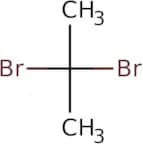
Discontinued product2,2-Dibromopropane
CAS:2,2-Dibromopropane is a synthetic chemical that has been used as a precursor in the production of nylon. It is an activator that can be used to form covalent bonds with reactive groups on other molecules. The activation energy for the reaction with piperazine is between 104 and 106 kJ/mol. 2,2-Dibromopropane undergoes acylation reactions under certain conditions, forming reaction products such as 2,2-dibromoethyl acetate and 2,2-dibromoethanol. The molecular weight of 2,2-dibromopropane is 192.19 g/mol and its structural formula is CHBrCHBrCHBrCHBrC≡C≡C≡C≡C≡C≡CC(O)OH.
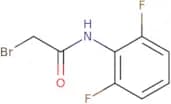
Formula:C3H6Br2Purity:Min. 95%Molecular weight:201.89 g/mol2-Bromo-N-(2,6-difluorophenyl)acetamide
CAS:Versatile small molecule scaffold
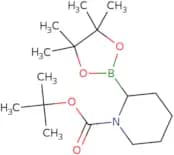
Formula:C8H6BrF2NOPurity:Min. 95%Molecular weight:250.04 g/mol1-Boc-piperidine-2-boronic Acid Pinacol Ester
CAS:Versatile small molecule scaffoldFormula:C16H30BNO4Purity:Min. 95%Molecular weight:311.23 g/molRef: 3D-WHD19258
Discontinued product5-(Dimethylamino)-2-fluorobenzoic acid
CAS:Versatile small molecule scaffold
Formula:C9H10FNO2Purity:Min. 95%Molecular weight:183.18 g/molRef: 3D-RFA94034
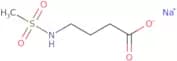
Discontinued productSodium 4-methanesulfonamidobutanoate
CAS:Versatile small molecule scaffold
Formula:C5H10NNaO4SPurity:Min. 95%Molecular weight:203.19 g/mol[2-(3-Methoxyphenyl)ethyl][(trimethyl-1H-pyrazol-4-yl)methyl]amine
CAS:Versatile small molecule scaffold
Formula:C16H23N3OPurity:Min. 95%Molecular weight:273.37 g/molRef: 3D-VWB92946
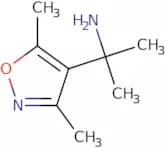
Discontinued product2-(Dimethyl-1,2-oxazol-4-yl)propan-2-amine
CAS:Versatile small molecule scaffold
Formula:C8H14N2OPurity:Min. 95%Molecular weight:154.21 g/molRef: 3D-VKC10832
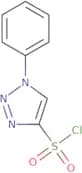
Discontinued product1-Phenyl-1H-1,2,3-triazole-4-sulfonyl chloride
CAS:Versatile small molecule scaffoldFormula:C8H6ClN3O2SPurity:Min. 95%Molecular weight:243.67 g/molRef: 3D-VAD19583
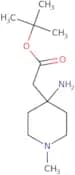
Discontinued producttert-Butyl 2-(4-amino-1-methylpiperidin-4-yl)acetate
CAS:Versatile small molecule scaffold
Formula:C12H24N2O2Purity:Min. 95%Molecular weight:228.33 g/molRef: 3D-VAD15400
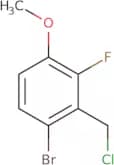
Discontinued product1-Bromo-2-(chloromethyl)-3-fluoro-4-methoxybenzene
CAS:Versatile small molecule scaffoldFormula:C8H7BrClFOPurity:Min. 95%Molecular weight:253.5 g/mol2-Cyclopropylbenzaldehyde
CAS:Versatile small molecule scaffold
Formula:C10H10OPurity:Min. 95%Molecular weight:146.19 g/mol[3-Bromo-4-(morpholin-4-yl)phenyl]methanol
CAS:Versatile small molecule scaffold
Formula:C11H14BrNO2Purity:Min. 95%Molecular weight:272.14 g/molRef: 3D-USC85031
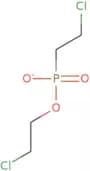
Discontinued product(2-Chloroethoxy)(2-chloroethyl)phosphinic acid
CAS:Versatile small molecule scaffold
Formula:C4H8Cl2O3PPurity:Min. 95%Molecular weight:205.98 g/mol2-(Sulfanylmethyl)-4H-pyrido[1,2-a]pyrimidin-4-one
CAS:Versatile small molecule scaffold
Formula:C9H8N2OSPurity:Min. 95%Molecular weight:192.24 g/molRef: 3D-RQB69641
Discontinued product4-Chloro-2-hydroxy-6-methylphenylboronic acid
CAS:Versatile small molecule scaffoldFormula:C7H8BClO3Purity:Min. 95%Molecular weight:186.4 g/mol2-Bromo-3,3,3-trifluoro-1-propene
CAS:Controlled Product2-Bromo-3,3,3-trifluoro-1-propene is a chemical compound that has been synthesized in an asymmetric reaction. The reactant is bromopropane and the product is 2,2,2-trifluoropropene. The methylene group on the propene molecule is activated by the nucleophilic attack of a fluoride ion from hydrogen fluoride to form a cavity with a highly strained bond. The kinetic study of this reaction revealed that the activation energy for the reaction is 42 kJ/mol. Palladium-catalyzed coupling reactions are catalyzed by palladium and require nonpolar solvents such as toluene or dichloromethane. This type of reaction has been shown to be exothermic with an isolated yield of 1%.
Formula:C3H2BrF3Purity:Min. 95%Color and Shape:Colorless PowderMolecular weight:174.95 g/mol3-Hydroxy-5-methylpyridine
CAS:3-Hydroxy-5-methylpyridine (3HMP) is a chemical substance that has been classified as an amine. It is a product of the metabolism of purines, which are nitrogenous bases found in DNA and RNA. 3HMP is produced by aerogenic bacteria (such as Enterobacter), and can be used to estimate the number of these bacteria present in water samples. 3HMP has been shown to have antiviral properties against influenza virus, and can be used as a biomarker for the presence of other viruses in animals. 3HMP also has mineralization properties, which have been studied extensively, particularly with regards to pancreatic disease.
Formula:C6H7NOPurity:Min. 95%Color and Shape:PowderMolecular weight:109.13 g/molRef: 3D-FH16174
Discontinued product4,5-Dihydroxy-2,3-Pentanedione
CAS:4,5-Dihydroxy-2,3-pentanedione is a carbonyl compound that is the product of the oxidation of ascorbic acid. It is used in wastewater treatment and has antimicrobial properties against infectious diseases. This compound has been shown to inhibit protein synthesis by binding to the ribosome and preventing the formation of peptide bonds between amino acids. 4,5-Dihydroxy-2,3-pentanedione has also been shown to bind to plasma proteins, which may be due to its acyl chain structure. 4,5-Dihydroxy-2,3-pentanedione can be synthesized in a catalytic mechanism that involves dehydroascorbic acid and molecular oxygen.
Formula:C5H8O4Purity:Min. 95%Color and Shape:PowderMolecular weight:132.11 g/molRef: 3D-FD180770
Discontinued productPiperyline
CAS:Piperyline is an alkanoic acid that has shown to be effective against skin cancer. It also has antimicrobial properties, which may be due to its ability to bind metal ions and form polymeric compounds. Piperyline inhibits microbial growth by inhibiting the synthesis of proteins and nucleic acids. The antimicrobial activity is related to its cationic polymerization with hydroxyl groups, which forms a structure that can inhibit microbial enzymes and disrupt microbial cell membranes. This compound also interacts with the skin's natural lipids, making it difficult for microorganisms to attach and grow on the skin. Piperyline is synthesized in organic chemistry laboratories as an amide precursor of other pharmaceuticals such as penicillin.
Formula:C16H17NO3Purity:Min. 95%Molecular weight:271.31 g/mol
![2-[Benzyl(methyl)ao]propanoic acid](/_next/image/?url=https%3A%2Fstatic.cymitquimica.com%2Fproducts%2F3D%2Fthumb-webp%2FBEA69294.webp&w=3840&q=75)


![N-{[2-(Trifluoromethyl)phenyl]methyl}oxetan-3-amine](/_next/image/?url=https%3A%2Fstatic.cymitquimica.com%2Fproducts%2F3D%2Fthumb-webp%2FPDC89412.webp&w=3840&q=75)
![1-{[1-(Bromomethyl)cyclopropyl]methoxy}-3-(methoxymethyl)benzene](/_next/image/?url=https%3A%2Fstatic.cymitquimica.com%2Fproducts%2F3D%2Fthumb-webp%2FYGC03501.webp&w=3840&q=75)

![3-([(tert-Butoxy)carbonyl]amino)-2-(cyclopentylmethyl)propanoic acid](/_next/image/?url=https%3A%2Fstatic.cymitquimica.com%2Fproducts%2F3D%2Fthumb-webp%2FXXC61525.webp&w=3840&q=75)
![tert-Butyl N-[(2R)-4-chloro-3-oxobutan-2-yl]carbamate](/_next/image/?url=https%3A%2Fstatic.cymitquimica.com%2Fproducts%2F3D%2Fthumb-webp%2FXKC24150.webp&w=3840&q=75)


![[2-(3-Methoxyphenyl)ethyl][(trimethyl-1H-pyrazol-4-yl)methyl]amine](/_next/image/?url=https%3A%2Fstatic.cymitquimica.com%2Fproducts%2F3D%2Fthumb-webp%2FVWB92946.webp&w=3840&q=75)

![[3-Bromo-4-(morpholin-4-yl)phenyl]methanol](/_next/image/?url=https%3A%2Fstatic.cymitquimica.com%2Fproducts%2F3D%2Fthumb-webp%2FUSC85031.webp&w=3840&q=75)
![2-(Sulfanylmethyl)-4H-pyrido[1,2-a]pyrimidin-4-one](/_next/image/?url=https%3A%2Fstatic.cymitquimica.com%2Fproducts%2F3D%2Fthumb-webp%2FRQB69641.webp&w=3840&q=75)




