Building Blocks
This section contains fundamental products for the synthesis of organic and biological compounds. Building blocks are the essential starting materials used to construct complex molecules through various chemical reactions. They play a critical role in drug discovery, material science, and chemical research. At CymitQuimica, we offer a diverse range of high-quality building blocks to support your innovative research and industrial projects, ensuring you have the essential components for successful synthesis.
Subcategories of "Building Blocks"
- Boronic Acids & Boronic Acid Derivatives(5,756 products)
- Chiral Building Blocks(1,242 products)
- Hydrocarbon Building Blocks(6,093 products)
- Organic Building Blocks(60,529 products)
Found 195534 products of "Building Blocks"
Sort by
Purity (%)
0
100
|
0
|
50
|
90
|
95
|
100
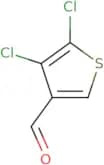
4,5-Dichlorothiophene-3-carbaldehyde
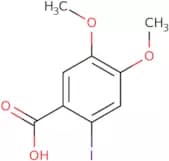
CAS:<p>Versatile small molecule scaffold</p>Formula:C5H2Cl2OSPurity:Min. 95%Molecular weight:181.04 g/mol4,5-Dimethoxy-2-iodobenzoic acid
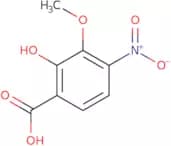
CAS:<p>4,5-Dimethoxy-2-iodobenzoic acid is a diazo compound that belongs to the class of aryl ethyl compounds. It is an efficient method for the synthesis of unsymmetrical aryl ethyl compounds. This compound has been shown to have potent antitumor activity against experimental tumors in mice when given orally. 4,5-Dimethoxy-2-iodobenzoic acid inhibits tumor cell proliferation by blocking DNA synthesis and transcription. It also binds to receptor protein kinase C, which may be responsible for its antitumor activity.</p>Formula:C9H9IO4Purity:Min. 95%Molecular weight:308.07 g/mol2-Hydroxy-3-methoxy-4-nitrobenzoic acid
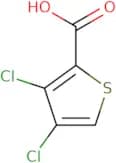
CAS:<p>Versatile small molecule scaffold</p>Formula:C8H7NO6Purity:Min. 95%Molecular weight:213.14 g/mol3,4-Dichlorothiophene-2-carboxylic acid
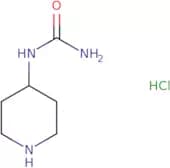
CAS:<p>Versatile small molecule scaffold</p>Formula:C5H2Cl2O2SPurity:Min. 95%Molecular weight:197.04 g/mol(Piperidin-4-yl)urea
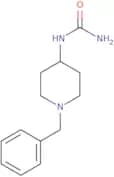
CAS:<p>Versatile small molecule scaffold</p>Formula:C6H14ClN3OPurity:Min. 95%Molecular weight:179.65 g/mol(1-Benzylpiperidin-4-yl)urea
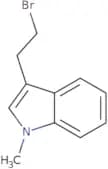
CAS:<p>Versatile small molecule scaffold</p>Formula:C13H19N3OPurity:Min. 95%Molecular weight:233.31 g/mol3-(2-Bromoethyl)-1-methyl-1H-indole
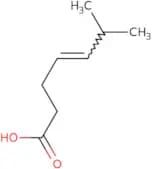
CAS:Controlled Product<p>Versatile small molecule scaffold</p>Formula:C11H12BrNPurity:Min. 95%Molecular weight:238.12 g/mol(4E)-6-Methylhept-4-enoic acid
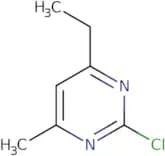
CAS:<p>Versatile small molecule scaffold</p>Formula:C8H14O2Purity:Min. 95%Molecular weight:142.2 g/mol2-Chloro-4-ethyl-6-methylpyrimidine
CAS:<p>Versatile small molecule scaffold</p>Formula:C7H9ClN2Purity:Min. 95%Molecular weight:156.61 g/mol1-{[1,1'-Biphenyl]-2-yl}-2-bromoethan-1-one
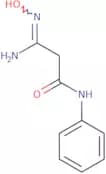
CAS:<p>Versatile small molecule scaffold</p>Formula:C14H11BrOPurity:Min. 95%Molecular weight:275.14 g/mol2-(N'-Hydroxycarbamimidoyl)-N-phenylacetamide
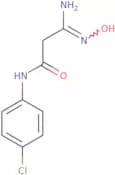
CAS:<p>Versatile small molecule scaffold</p>Formula:C9H11N3O2Purity:Min. 95%Molecular weight:193.2 g/molN-(4-Chlorophenyl)-2-(N'-hydroxycarbamimidoyl)acetamide
CAS:<p>Versatile small molecule scaffold</p>Formula:C9H10ClN3O2Purity:Min. 95%Molecular weight:227.65 g/molN-Benzyl-6-chlorobenzo[D]thiazol-2-amine
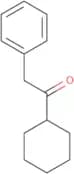
CAS:<p>Versatile small molecule scaffold</p>Formula:C14H11ClN2SPurity:Min. 95%Molecular weight:274.8 g/mol1-Cyclohexyl-2-phenyl-1-ethanone
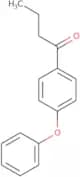
CAS:<p>1-Cyclohexyl-2-phenyl-1-ethanone is a serotonergic drug that belongs to the group of arylpiperazines. It has been shown to have therapeutic potential for the treatment of symptoms associated with depression, anxiety, and other mood disorders. 1-Cyclohexyl-2-phenyl-1-ethanone inhibits serotonin reuptake in the brain by binding to the serotonin transporter (SERT) and preventing it from recycling serotonin into the presynaptic neuron. This active form of 1-cyclohexyl-2-phenyl-1 -ethanone can be synthesized by reacting benzylamine derivatives with birefringent crystals in hydrochloric acid. The reaction products are then purified using inorganic acid and polymer film amines. 1C2PE also binds to and inhibits protein kinase C, which is involved in inflammatory processes.</p>Formula:C14H18OPurity:Min. 95%Molecular weight:202.29 g/mol1-(4-Phenoxyphenyl)butan-1-one
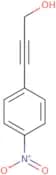
CAS:<p>Versatile small molecule scaffold</p>Formula:C16H16O2Purity:Min. 95%Molecular weight:240.3 g/mol3-(4-Nitrophenyl)prop-2-yn-1-ol
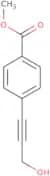
CAS:<p>Versatile small molecule scaffold</p>Formula:C9H7NO3Purity:Min. 95%Molecular weight:177.16 g/molMethyl 4-(3-hydroxyprop-1-ynyl)benzoate
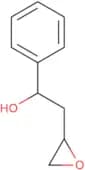
CAS:<p>Versatile small molecule scaffold</p>Formula:C11H10O3Purity:Min. 95%Molecular weight:190.19 g/mol2-(Oxiran-2-yl)-1-phenylethan-1-ol
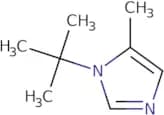
CAS:<p>Versatile small molecule scaffold</p>Formula:C10H12O2Purity:Min. 95%Molecular weight:164.2 g/mol1-tert-Butyl-5-methyl-1H-imidazole
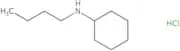
CAS:<p>Versatile small molecule scaffold</p>Formula:C8H14N2Purity:Min. 95%Molecular weight:138.21 g/molN-Butylcyclohexanamine hydrochloride
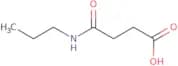
CAS:<p>Versatile small molecule scaffold</p>Formula:C10H22ClNPurity:Min. 95%Molecular weight:191.74 g/mol3-(Propylcarbamoyl)propanoic acid
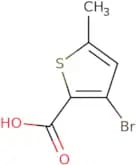
CAS:<p>Versatile small molecule scaffold</p>Formula:C7H13NO3Purity:Min. 95%Molecular weight:159.18 g/mol3-bromo-5-methylthiophene-2-carboxylic acid
CAS:<p>3-Bromo-5-methylthiophene-2-carboxylic acid (3BMT) is a drug that inhibits the enzyme succinate dehydrogenase. Succinate dehydrogenase is an enzyme that catalyzes the conversion of succinate to fumarate in the citric acid cycle, which is a series of biochemical reactions in cellular respiration. 3BMT prevents the formation of acetyl coenzyme A, which is needed for the production of energy in cells. This drug also has a pyrrole moiety that can be oxidized by difluoromethylating it and then reacting with pyrrole to form 2,4-dichloropyrimidine. 3BMT has been shown to inhibit carboxamides such as L-aspartate oxidase and glutamate decarboxylase.</p>Formula:C6H5BrO2SPurity:Min. 95%Molecular weight:221.1 g/molSpiro[bicyclo[3.2.0]heptane-2,1'-cyclopropan]-3-en-7-one
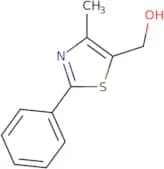
CAS:<p>Versatile small molecule scaffold</p>Formula:C9H10OPurity:Min. 95%Molecular weight:134.2 g/mol(4-Methyl-2-phenyl-1,3-thiazol-5-yl)methanol
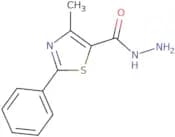
CAS:<p>Versatile small molecule scaffold</p>Formula:C11H11NOSPurity:Min. 95%Molecular weight:205.28 g/mol4-Methyl-2-phenylthiazole-5-carboxylic acid hydrazide
CAS:<p>4-Methyl-2-phenylthiazole-5-carboxylic acid hydrazide is a potent anticancer agent. It has been shown to inhibit the growth of cancer cells through inhibition of DNA synthesis and protein synthesis, as well as by inducing apoptosis. 4-Methyl-2-phenylthiazole-5-carboxylic acid hydrazide binds to the active site of DNA gyrase, an enzyme that maintains the integrity of bacterial DNA. This binding prevents the formation of an antibiotic-inhibitor complex with the enzyme cell wall synthesis that is required for cell wall biosynthesis, inhibiting protein synthesis and cell division. The antitumor activity was found to be mediated through interactions with pharmacological targets such as butanamide, phenacyl, dioxane, and chlorides. These drugs bind to pharmacophores on tumor cells and are able to penetrate into tumor cells more easily than other drugs. The potent anticancer</p>Formula:C11H11N3OSPurity:Min. 95%Molecular weight:233.29 g/mol2-[(1-Imidazolyl)methyl]aniline
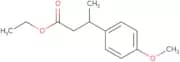
CAS:<p>Versatile small molecule scaffold</p>Formula:C10H11N3Purity:Min. 95%Molecular weight:173.21 g/molEthyl 3-(4-methoxyphenyl)butanoate
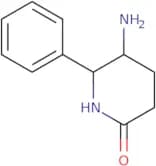
CAS:<p>Versatile small molecule scaffold</p>Formula:C13H18O3Purity:Min. 95%Molecular weight:222.28 g/molrac-(5R,6S)-5-Amino-6-phenylpiperidin-2-one
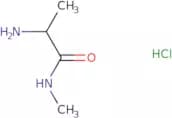
CAS:<p>Versatile small molecule scaffold</p>Formula:C11H14N2OPurity:Min. 95%Molecular weight:190.24 g/mol(2R)-2-Amino-N-methylpropanamide hydrochloride
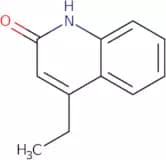
CAS:<p>Versatile small molecule scaffold</p>Formula:C4H11ClN2OPurity:Min. 95%Molecular weight:138.59 g/mol4-Ethyl-1,2-dihydroquinolin-2-one
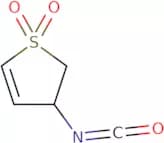
CAS:<p>Versatile small molecule scaffold</p>Formula:C11H11NOPurity:Min. 95%Molecular weight:173.21 g/mol3-Isocyanato-2,3-dihydrothiophene 1,1-dioxide
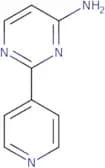
CAS:<p>Versatile small molecule scaffold</p>Formula:C5H5NO3SPurity:Min. 95%Molecular weight:159.17 g/mol2-(4-Pyridinyl)-4-pyrimidinamine
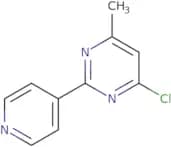
CAS:<p>Versatile small molecule scaffold</p>Formula:C9H8N4Purity:Min. 95%Molecular weight:172.19 g/mol4-Chloro-6-methyl-2-(pyridin-4-yl)pyrimidine
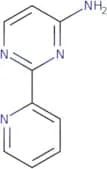
CAS:<p>Versatile small molecule scaffold</p>Formula:C10H8ClN3Purity:Min. 95%Molecular weight:205.64 g/mol2-(Pyridin-2-yl)pyrimidin-4-amine
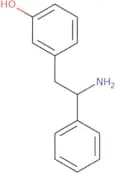
CAS:<p>2-(Pyridin-2-yl)pyrimidin-4-amine (PPPA) is an antimicrobial agent that is used in the treatment of bacterial infections. It binds to the chloride ion in the cell wall and prevents the formation of a functional pore, causing leakage of cellular contents. PPPA reacts with cyanamide to form 2-(pyridin-2-yl)pyrimidin-4(1H)-one (PPPOH), which is more reactive than PPPA. The reactivity of PPPOH causes damage to the cell's cytoplasmic membrane, leading to cell death. PPPA also reacts with nitro, alkynyl, and alkylaminoalkyl groups, as well as carboxy, cyano, and alkenyl groups on proteins and amino acids. PPPA hydrolyzes phenoxy and cyclohexane rings found in some antibiotics such as tetracycline.</p>Formula:C9H8N4Purity:Min. 95%Molecular weight:172.19 g/mol3-(2-Amino-2-phenylethyl)phenol
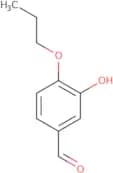
CAS:<p>Versatile small molecule scaffold</p>Formula:C14H15NOPurity:Min. 95%Molecular weight:213.27 g/mol3-Hydroxy-4-propoxybenzaldehyde
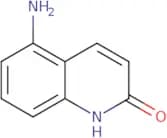
CAS:<p>3-Hydroxy-4-propoxybenzaldehyde is a metabolically stable inhibitor of the enzyme, phenylalanine 4-hydroxylase. 3HPA inhibits the production of phenolic compounds and reduces the risk of cancer. It has been shown to be potently active against human leukemia cells in vitro, but less active against other cell lines. 3HPA is also selective for tumor cells, which may be due to its ability to inhibit DNA synthesis by preventing the formation of n-substituted benzylamino compounds. 3HPA stabilizes DNA and RNA synthesis, which may help prevent tumor growth.</p>Formula:C10H12O3Purity:Min. 95%Molecular weight:180.2 g/mol5-Aminoquinolin-2(1H)-one
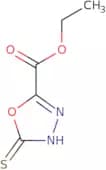
CAS:<p>5-Aminoquinolin-2(1H)-one is an antimicrobial agent that has been shown to have antibacterial activity against gram-positive and gram-negative organisms. The structure of 5-aminoquinolin-2(1H)-one is a carboxylic acid with a hydrogen atom on the alpha carbon, which gives it an alkylamino group and amino group. The tautomeric form of this compound is a quinolinate ester. 5-Aminoquinolin-2(1H)-one has been shown to be effective against drug resistant bacteria, such as Staphylococcus aureus, Streptococcus pneumoniae, and Pseudomonas aeruginosa. This drug also inhibits the growth of Mycobacterium tuberculosis at low concentrations.<br>5-Aminoquinolin-2(1H)-one may act by inhibiting the synthesis of proteins or DNA in cells by</p>Formula:C9H8N2OPurity:Min. 95%Molecular weight:160.17 g/molEthyl 5-sulfanyl-1,3,4-oxadiazole-2-carboxylate
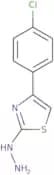
CAS:<p>Versatile small molecule scaffold</p>Formula:C5H6N2O3SPurity:Min. 95%Molecular weight:174.18 g/mol4-(4-Chlorophenyl)-2-hydrazino-1,3-thiazole
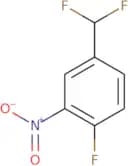
CAS:<p>Versatile small molecule scaffold</p>Formula:C9H8ClN3SPurity:Min. 95%Molecular weight:225.7 g/mol4-(Difluoromethyl)-1-fluoro-2-nitrobenzene
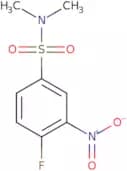
CAS:<p>Versatile small molecule scaffold</p>Formula:C7H4F3NO2Purity:Min. 95%Molecular weight:191.11 g/mol4-Fluoro-N,N-dimethyl-3-nitrobenzene-1-sulfonamide
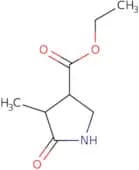
CAS:<p>Versatile small molecule scaffold</p>Formula:C8H9FN2O4SPurity:Min. 95%Molecular weight:248.23 g/molEthyl 4-methyl-5-oxopyrrolidine-3-carboxylate
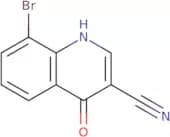
CAS:<p>Versatile small molecule scaffold</p>Formula:C8H13NO3Purity:Min. 95%Molecular weight:171.19 g/mol8-Bromo-4-hydroxyquinoline-3-carbonitrile
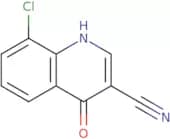
CAS:<p>Versatile small molecule scaffold</p>Formula:C10H5BrN2OPurity:Min. 95%Molecular weight:249.06 g/mol8-Chloro-4-hydroxyquinoline-3-carbonitrile
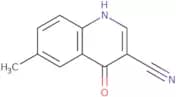
CAS:<p>Versatile small molecule scaffold</p>Formula:C10H5ClN2OPurity:Min. 95%Molecular weight:204.61 g/mol4-Hydroxy-6-methylquinoline-3-carbonitrile
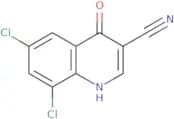
CAS:<p>Versatile small molecule scaffold</p>Formula:C11H8N2OPurity:Min. 95%Molecular weight:184.19 g/mol6,8-Dichloro-4-hydroxyquinoline-3-carbonitrile
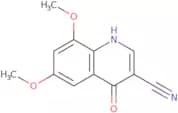
CAS:<p>Versatile small molecule scaffold</p>Formula:C10H4Cl2N2OPurity:Min. 95%Molecular weight:239.05 g/mol4-Hydroxy-6,8-dimethoxyquinoline-3-carbonitrile
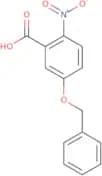
CAS:<p>Versatile small molecule scaffold</p>Formula:C12H10N2O3Purity:Min. 95%Molecular weight:230.22 g/mol5-(benzyloxy)-2-nitrobenzoic acid
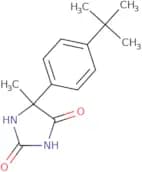
CAS:<p>Versatile small molecule scaffold</p>Formula:C14H11NO5Purity:Min. 95%Molecular weight:273.2 g/mol5-(4-tert-Butylphenyl)-5-methylimidazolidine-2,4-dione
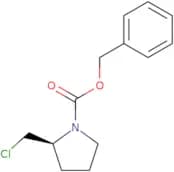
CAS:<p>Versatile small molecule scaffold</p>Formula:C14H18N2O2Purity:Min. 95%Molecular weight:246.3 g/mol(S)-1-N-Cbz-2-chloromethyl-pyrrolidine
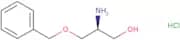
CAS:<p>Versatile small molecule scaffold</p>Formula:C13H16ClNO2Purity:Min. 95%Molecular weight:253.73 g/mol(S)-(-)-2-Amino-3-benzyloxy-1-propanol Hydrochloride
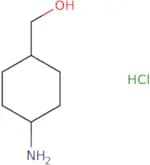
CAS:<p>Versatile small molecule scaffold</p>Formula:C10H16ClNO2Purity:Min. 95%Molecular weight:217.69 g/molcis-4-aminocyclohexanemethanol hcl
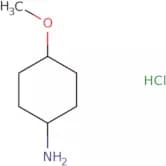
CAS:<p>Versatile small molecule scaffold</p>Formula:C7H16ClNOPurity:Min. 95%Molecular weight:165.66 g/molcis-4-methoxy-cyclohexylamine hcl
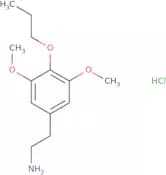
CAS:<p>Versatile small molecule scaffold</p>Formula:C7H16ClNOPurity:Min. 95%Molecular weight:165.66 g/mol2-(3,5-Dimethoxy-4-propoxyphenyl)ethan-1-amine hydrochloride
CAS:Controlled Product<p>Versatile small molecule scaffold</p>Formula:C13H22ClNO3Purity:Min. 95%Molecular weight:275.77 g/mol2-[3,5-Dimethoxy-4-(propan-2-yloxy)phenyl]ethan-1-amine hydrochloride
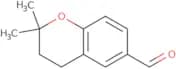
CAS:Controlled Product<p>Versatile small molecule scaffold</p>Formula:C13H22ClNO3Purity:Min. 95%Molecular weight:275.77 g/mol2,2-Dimethylchromane-6-carbaldehyde
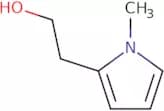
CAS:<p>2,2-Dimethylchromane-6-carbaldehyde is a flavonoid compound that is structurally similar to abyssinone and resacetophenone. It has been shown to have anti-oxidant activity in the presence of hydrogen peroxide in vitro. 2,2-Dimethylchromane-6-carbaldehyde has also been shown to inhibit the growth of MCF7 cells by inducing apoptosis and cell cycle arrest at G0/G1 phase.</p>Formula:C12H14O2Purity:Min. 95%Molecular weight:190.24 g/mol2-(1-Methyl-1H-pyrrol-2-yl)ethan-1-ol
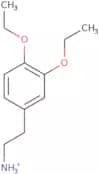
CAS:<p>Versatile small molecule scaffold</p>Formula:C7H11NOPurity:Min. 95%Molecular weight:125.17 g/mol2-(3,4-diethoxyphenyl)ethanamine
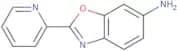
CAS:Controlled Product<p>2-(3,4-Diethoxyphenyl)ethanamine is a quinazolone derivative that is electron deficient. It has been shown to inhibit the contractility of isolated rat ileum and guinea pig vas deferens preparations. 2-(3,4-Diethoxyphenyl)ethanamine also potently inhibits phosphorylation of myosin light chain and can be used as a tool for studying the involvement of phosphorylation in muscle contraction. It has been shown to inhibit lipid droplet formation in L6 cells by activating AMP-activated protein kinase (AMPK).</p>Formula:C12H19NO2Purity:Min. 95%Molecular weight:209.28 g/mol2-(Pyridin-2-yl)-1,3-benzoxazol-6-amine
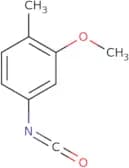
CAS:<p>Versatile small molecule scaffold</p>Formula:C12H9N3OPurity:Min. 95%Molecular weight:211.22 g/mol4-Isocyanato-2-methoxy-1-methylbenzene
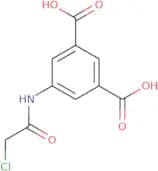
CAS:<p>Versatile small molecule scaffold</p>Formula:C9H9NO2Purity:Min. 95%Molecular weight:163.17 g/mol5-(2-Chloroacetamido)benzene-1,3-dicarboxylic acid
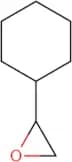
CAS:<p>Versatile small molecule scaffold</p>Formula:C10H8ClNO5Purity:Min. 95%Molecular weight:257.63 g/mol(2S)-2-Cyclohexyloxirane
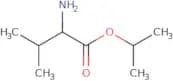
CAS:<p>Versatile small molecule scaffold</p>Formula:C8H14OPurity:Min. 95%Molecular weight:126.2 g/molPropan-2-yl (2S)-2-amino-3-methylbutanoate
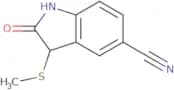
CAS:<p>Propan-2-yl (2S)-2-amino-3-methylbutanoate is an amino acid derivative that is used as a chiral auxiliary. The compound has been used in the synthesis of amides, esters, and other amine products. It has also been used in the preparation of enantiomerically pure protonated amines. Propan-2-yl (2S)-2-amino-3-methylbutanoate can be used as a chiral auxiliary in chromatographic techniques to separate racemic mixtures into their enantiomers. This compound is mesomorphic at low temperatures and becomes isotropic at higher temperatures. Propan-2-yl (2S)-2-amino-3-methylbutanoate is also soluble in solvents with different polarities, such as water and chloroform, and has a molecular weight of 158.25 g/mol.</p>Formula:C8H17NO2Purity:Min. 95%Molecular weight:159.23 g/mol3-(Methylsulfanyl)-2-oxo-2,3-dihydro-1H-indole-5-carbonitrile
CAS:<p>Versatile small molecule scaffold</p>Formula:C10H8N2OSPurity:Min. 95%Molecular weight:204.25 g/mol2-[(4-Fluorophenyl)methyl]oxirane
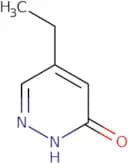
CAS:<p>Versatile small molecule scaffold</p>Formula:C9H9FOPurity:Min. 95%Molecular weight:152.16 g/mol5-Ethylpyridazin-3(2H)-one
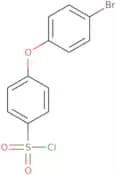
CAS:<p>Versatile small molecule scaffold</p>Formula:C6H8N2OPurity:Min. 95%Molecular weight:124.14 g/mol4-(4-Bromophenoxy)benzene-1-sulfonyl chloride
CAS:<p>Versatile small molecule scaffold</p>Formula:C12H8BrClO3SPurity:Min. 95%Molecular weight:347.61 g/mol3,3-Dimethylpyrrolidine-2-carboxylic Acid Hydrochloride
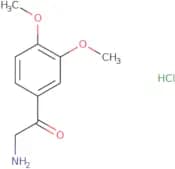
CAS:<p>Versatile small molecule scaffold</p>Formula:C7H13NO2·HClPurity:Min. 95%Molecular weight:179.64 g/mol2-(3,4-Dimethoxy-phenyl)-2-oxo-ethyl-ammonium chloride
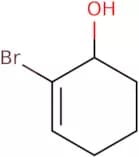
CAS:Controlled Product<p>Versatile small molecule scaffold</p>Formula:C10H14NO3ClPurity:Min. 95%Molecular weight:231.68 g/mol2-Bromo-2-cyclohexen-1-ol
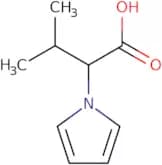
CAS:<p>2-Bromo-2-cyclohexen-1-ol is an organic compound that belongs to the group of chlorides, iodides, and yields. Mechanistic studies have shown that this compound reacts by nucleophilic attack at a reactive site that contains halides. The chloride ion is a terminal alkyne and has been shown to be reactive with 2-bromo-2-cyclohexen-1-ol. The indole nitrogen in 2-bromo-2-cyclohexenol has been shown to undergo nucleophilic substitution with an aryl chloride substrate. This reaction has been shown to be reversible by adding base.</p>Formula:C6H9BrOPurity:Min. 95%Molecular weight:177.04 g/mol3-Methyl-2-(1H-pyrrol-1-yl)butanoic acid
CAS:<p>Versatile small molecule scaffold</p>Formula:C9H13NO2Purity:Min. 95%Molecular weight:167.21 g/mol2-(Prop-2-en-1-yl)benzoic acid
CAS:<p>Prop-2-en-1-yl benzoic acid is an alkenoic, organometallic compound that is a metabolite of 2-bromopropane. It can be obtained from the bromolactonization of tetrahydrofuran with lithium aluminum hydride followed by allylic oxidation with chromium oxide and sodium hydroxide. Prop-2-en-1-yl benzoic acid has been shown to inhibit the enzyme acetylcholinesterase, which leads to increased levels of acetylcholine in the brain. This leads to increased activity on nicotinic receptors and improved cognition. This compound has also been shown to be a ligand for donepezil, which is an inhibitor of cholinesterases. Donepezil is used as a treatment for Alzheimer's disease and other forms of dementia, but it does not cross the blood brain barrier. In this case, prop-2-en-1</p>Formula:C10H10O2Purity:Min. 95%Molecular weight:162.18 g/mol7-Methyl-5H-pyrano[4,3-b]pyridin-5-one
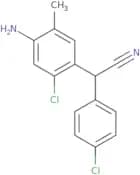
CAS:<p>Versatile small molecule scaffold</p>Formula:C9H7NO2Purity:Min. 95%Molecular weight:161.16 g/mol2-(4-Amino-2-chloro-5-methylphenyl)-2-(4-chlorophenyl)acetonitrile
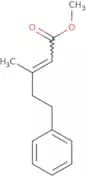
CAS:<p>2-(4-Amino-2-chloro-5-methylphenyl)-2-(4-chlorophenyl)acetonitrile is an analogue of diazocine. It has a dihedral angle of 12.3° and a benzene ring.</p>Formula:C15H12Cl2N2Purity:Min. 95%Molecular weight:291.2 g/molMethyl 3-methyl-5-phenylpent-2-enoate
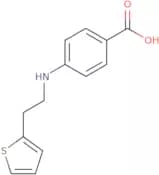
CAS:<p>Versatile small molecule scaffold</p>Formula:C13H16O2Purity:Min. 95%Molecular weight:204.26 g/mol4-((2-(Thiophen-2-yl)ethyl)amino)benzoic acid
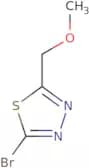
CAS:<p>Versatile small molecule scaffold</p>Formula:C13H13NO2SPurity:Min. 95%Molecular weight:247.31 g/mol2-Bromo-5-(methoxymethyl)-1,3,4-thiadiazole
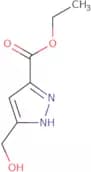
CAS:<p>Versatile small molecule scaffold</p>Formula:C4H5BrN2OSPurity:Min. 95%Molecular weight:209.07 g/molEthyl 5-(hydroxymethyl)-1H-pyrazole-3-carboxylate
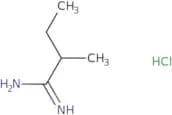
CAS:<p>Versatile small molecule scaffold</p>Formula:C7H10N2O3Purity:Min. 95%Molecular weight:170.17 g/mol2-Methylbutanimidamide hydrochloride
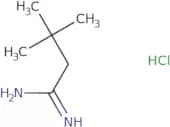
CAS:<p>Versatile small molecule scaffold</p>Formula:C5H13ClN2Purity:Min. 95%Molecular weight:136.62 g/mol3,3-Dimethylbutanimidamide hydrochloride
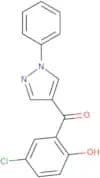
CAS:<p>Versatile small molecule scaffold</p>Formula:C6H15ClN2Purity:Min. 95%Molecular weight:150.65 g/mol(5-Chloro-2-hydroxyphenyl)(1-phenyl-1H-pyrazol-4-yl)methanone
CAS:<p>Versatile small molecule scaffold</p>Formula:C16H11ClN2O2Purity:Min. 95%Molecular weight:298.72 g/molEthyl 3-oxo-4-(thiophen-2-yl)butanoate
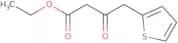
CAS:<p>Versatile small molecule scaffold</p>Formula:C10H12O3SPurity:Min. 95%Molecular weight:212.27 g/mol2-phenyl-octahydro-pyrrolo[3,4-cpyrrole
CAS:<p>Versatile small molecule scaffold</p>Formula:C12H16N2Purity:Min. 95%Molecular weight:188.26 g/mol3-(Benzyloxy)-2-hydroxybenzaldehyde
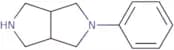
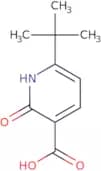
CAS:<p>3-(Benzyloxy)-2-hydroxybenzaldehyde is an enamine that is used in the synthesis of benzofuran derivatives. This compound can be synthesized by a sequence of reactions that starts with the condensation of benzaldehyde and 2-hydroxyacetophenone. The lactaldehyde formed in this reaction is then converted to the desired product by treatment with sodium methoxide. 3-(Benzyloxy)-2-hydroxybenzaldehyde may also be used for the asymmetric synthesis of benzoquinones, imines, and other heterocycles.</p>Formula:C14H12O3Purity:Min. 95%Molecular weight:228.24 g/mol6-tert-Butyl-2-oxo-1,2-dihydro-pyridine-3-carboxylic acid
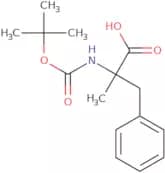
CAS:<p>Versatile small molecule scaffold</p>Formula:C10H13NO3Purity:Min. 95%Molecular weight:195.21 g/mol2-(Boc-amino)-2-methyl-3-phenylpropanoic acid
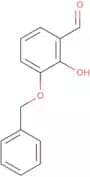
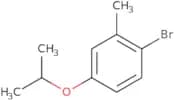
CAS:<p>Versatile small molecule scaffold</p>Formula:C15H21NO4Purity:Min. 95%Molecular weight:279.33 g/mol2-Bromo-5-isopropoxytoluene
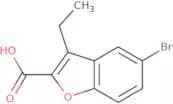
CAS:<p>Versatile small molecule scaffold</p>Formula:C10H13OBrPurity:Min. 95%Molecular weight:229.11 g/mol5-Bromo-3-ethyl-1-benzofuran-2-carboxylic acid
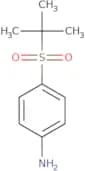
CAS:<p>Versatile small molecule scaffold</p>Formula:C11H9BrO3Purity:Min. 95%Molecular weight:269.09 g/mol4-(2-Methylpropane-2-sulfonyl)aniline
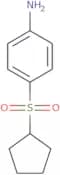
CAS:<p>Versatile small molecule scaffold</p>Formula:C10H15NO2SPurity:Min. 95%Molecular weight:213.3 g/mol4-(Cyclopentanesulfonyl)aniline
CAS:<p>Versatile small molecule scaffold</p>Formula:C11H15NO2SPurity:Min. 95%Molecular weight:225.31 g/mol4-[(3,4-Dichlorophenyl)methoxy]piperidine hydrochloride
CAS:<p>Versatile small molecule scaffold</p>Formula:C12H16Cl3NOPurity:Min. 95%Molecular weight:296.6 g/mol4-[(4-Bromobenzyl)oxy]piperidine hydrochloride
CAS:<p>Versatile small molecule scaffold</p>Formula:C12H17BrClNOPurity:Min. 95%Molecular weight:306.62 g/mol1,3-Dimethyl-1H,4H,6H,7H-pyrano[4,3-b]pyrrole-4,6-dione
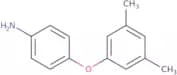
CAS:<p>Versatile small molecule scaffold</p>Formula:C9H9NO3Purity:Min. 95%Molecular weight:179.17 g/mol4-(3,5-Dimethylphenoxy)aniline
CAS:<p>Versatile small molecule scaffold</p>Formula:C14H15NOPurity:Min. 95%Molecular weight:213.27 g/mol4-Chlorothieno[2,3-d]pyrimidine-6-carboxylic acid
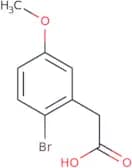
CAS:<p>Versatile small molecule scaffold</p>Formula:C7H3ClN2O2SPurity:Min. 95%Molecular weight:214.63 g/mol2-(2-bromo-5-methoxyphenyl)acetic acid
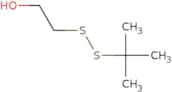
CAS:<p>Versatile small molecule scaffold</p>Formula:C9H9BrO3Purity:Min. 95%Molecular weight:245.1 g/mol2-(tert-Butyldisulfanyl)ethan-1-ol
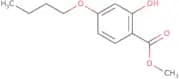
CAS:<p>Versatile small molecule scaffold</p>Formula:C6H14OS2Purity:Min. 95%Color and Shape:Clear LiquidMolecular weight:166.3 g/molMethyl 4-butoxy-2-hydroxybenzoate
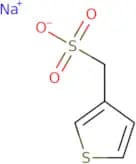
CAS:<p>Versatile small molecule scaffold</p>Formula:C12H16O4Purity:Min. 95%Molecular weight:224.25 g/molSodium thiophen-3-ylmethanesulfonate
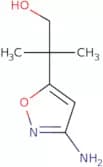
CAS:<p>Versatile small molecule scaffold</p>Formula:C5H5NaO3S2Purity:Min. 95%Molecular weight:200.2 g/mol2-(3-Amino-1,2-oxazol-5-yl)-2-methylpropan-1-ol
CAS:<p>Versatile small molecule scaffold</p>Formula:C7H12N2O2Purity:Min. 95%Molecular weight:156.18 g/mol

![1-{[1,1'-Biphenyl]-2-yl}-2-bromoethan-1-one](/_next/image/?url=https%3A%2Fstatic.cymitquimica.com%2Fproducts%2F3D%2Fthumb-webp%2FLCA23614.webp&w=3840&q=75)
![N-Benzyl-6-chlorobenzo[D]thiazol-2-amine](/_next/image/?url=https%3A%2Fstatic.cymitquimica.com%2Fproducts%2F3D%2Fthumb-webp%2FLCA24937.webp&w=3840&q=75)
![Spiro[bicyclo[3.2.0]heptane-2,1'-cyclopropan]-3-en-7-one](/_next/image/?url=https%3A%2Fstatic.cymitquimica.com%2Fproducts%2F3D%2Fthumb-webp%2FLCA28688.webp&w=3840&q=75)
![2-[(1-Imidazolyl)methyl]aniline](/_next/image/?url=https%3A%2Fstatic.cymitquimica.com%2Fproducts%2F3D%2Fthumb-webp%2FLCA29250.webp&w=3840&q=75)
![2-[3,5-Dimethoxy-4-(propan-2-yloxy)phenyl]ethan-1-amine hydrochloride](/_next/image/?url=https%3A%2Fstatic.cymitquimica.com%2Fproducts%2F3D%2Fthumb-webp%2FLCA36770.webp&w=3840&q=75)
![2-[(4-Fluorophenyl)methyl]oxirane](/_next/image/?url=https%3A%2Fstatic.cymitquimica.com%2Fproducts%2F3D%2Fthumb-webp%2FLCA39662.webp&w=3840&q=75)


![7-Methyl-5H-pyrano[4,3-b]pyridin-5-one](/_next/image/?url=https%3A%2Fstatic.cymitquimica.com%2Fproducts%2F3D%2Fthumb-webp%2FLCA43683.webp&w=3840&q=75)
![4-[(3,4-Dichlorophenyl)methoxy]piperidine hydrochloride](/_next/image/?url=https%3A%2Fstatic.cymitquimica.com%2Fproducts%2F3D%2Fthumb-webp%2FLDA81096.webp&w=3840&q=75)
![4-[(4-Bromobenzyl)oxy]piperidine hydrochloride](/_next/image/?url=https%3A%2Fstatic.cymitquimica.com%2Fproducts%2F3D%2Fthumb-webp%2FLDA81134.webp&w=3840&q=75)
![1,3-Dimethyl-1H,4H,6H,7H-pyrano[4,3-b]pyrrole-4,6-dione](/_next/image/?url=https%3A%2Fstatic.cymitquimica.com%2Fproducts%2F3D%2Fthumb-webp%2FLDA81497.webp&w=3840&q=75)
![4-Chlorothieno[2,3-d]pyrimidine-6-carboxylic acid](/_next/image/?url=https%3A%2Fstatic.cymitquimica.com%2Fproducts%2F3D%2Fthumb-webp%2FLDA82596.webp&w=3840&q=75)