


Building Blocks
This section contains fundamental products for the synthesis of organic and biological compounds. Building blocks are the essential starting materials used to construct complex molecules through various chemical reactions. They play a critical role in drug discovery, material science, and chemical research. At CymitQuimica, we offer a diverse range of high-quality building blocks to support your innovative research and industrial projects, ensuring you have the essential components for successful synthesis.
Subcategories of "Building Blocks"
- Boronic Acids & Boronic Acid Derivatives(5,756 products)
- Chiral Building Blocks(1,242 products)
- Hydrocarbon Building Blocks(6,095 products)
- Organic Building Blocks(61,055 products)
Found 199650 products of "Building Blocks"
Sort by
Purity (%)
0
100
|
0
|
50
|
90
|
95
|
100
Quinoline-5-carbonitrile
CAS:<p>Quinoline-5-carbonitrile is a cyanide compound that can be used in the synthesis of heterocyclic compounds. The reaction between quinoline and 5-cyanovaleric acid produces 6-nitroquinoline, which is then converted to dimethyl sulfoxide by alcoholysis. This reaction product can then be used to synthesize an amide or nucleophile. Quinoline-5-carbonitrile reacts with potassium in the presence of bifunctional hydrazide to produce a cyanide ion, which can be hydrolyzed by an acid to release hydrogen cyanide gas. This experiment has been shown as a model for reactions involving cyano compounds.</p>Formula:C10H6N2Purity:Min. 95%Molecular weight:154.17 g/molRef: 3D-JCA55102
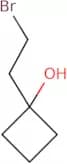
Discontinued product1-(2-Bromoethyl)cyclobutan-1-ol
CAS:<p>Versatile small molecule scaffold</p>Formula:C6H11BrOPurity:Min. 95%Molecular weight:179.05 g/molRef: 3D-JBD30961
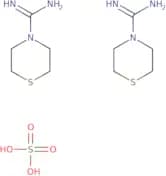
Discontinued productBis(thiomorpholine-4-carboximidamide) sulfate
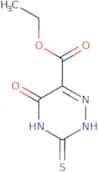
CAS:<p>Versatile small molecule scaffold</p>Formula:C10H24N6O4S3Purity:Min. 95%Molecular weight:388.5 g/molEthyl 5-oxo-3-thioxo-2H-1,2,4-triazine-6-carboxylate
CAS:<p>Ethyl 5-oxo-3-thioxo-2H-1,2,4-triazine-6-carboxylate is an acid ethyl ester of the triazine compound ethyl 3,5,6,7,8,-tetrahydro-2H-[1]benzothiopyran-2,4(3H)-dione. It has been shown to inhibit bacterial growth by binding to the enzyme ribonucleotide reductase.</p>Formula:C6H7N3O3SPurity:Min. 95%Molecular weight:201.21 g/mol2-Cyclopropylbenzaldehyde
CAS:<p>Versatile small molecule scaffold</p>Formula:C10H10OPurity:Min. 95%Molecular weight:146.19 g/mol[1-(1H-Pyrazole-4-sulfonyl)piperidin-3-yl]methanamine
CAS:<p>Versatile small molecule scaffold</p>Formula:C9H16N4O2SPurity:Min. 95%Molecular weight:244.32 g/molRef: 3D-XZB14507
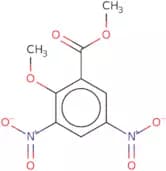
Discontinued productMethyl 2-methoxy-3,5-dinitrobenzoate
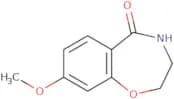
CAS:<p>Versatile small molecule scaffold</p>Formula:C9H8N2O7Purity:Min. 95%Molecular weight:256.2 g/mol8-Methoxy-2,3,4,5-tetrahydro-1,4-benzoxazepin-5-one
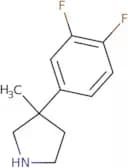
CAS:<p>Versatile small molecule scaffold</p>Formula:C10H11NO3Purity:Min. 95%Molecular weight:193.2 g/mol3-(3,4-Difluorophenyl)-3-methylpyrrolidine
CAS:<p>Versatile small molecule scaffold</p>Formula:C11H13F2NPurity:Min. 95%Molecular weight:197.22 g/molPyrazolo[1,5-a]pyridin-4-ol
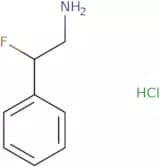
CAS:<p>Pyrazolo[1,5-a]pyridin-4-ol is a heteroaromatic compound that acts as an inhibitor of phosphodiesterase (PDE). It prevents the breakdown of cyclic nucleotides and thus leads to increased levels of cAMP and cGMP. Pyrazolo[1,5-a]pyridin-4-ol has been shown to have bronchodilatory activity in animal models. The drug also inhibits the production of inflammatory mediators such as prostaglandins by inhibiting cyclooxygenases. In addition, pyrazolo[1,5-a]pyridin-4-ol has been shown to be a potential PDE inhibitor replacement for the more commonly used PDE inhibitors such as sildenafil and tadalafil. However, due to its lack of stereochemistry and its bicyclic chemical structure, pyrazolo[1,5-a]</p>Formula:C7H6N2OPurity:Min. 95%Molecular weight:134.14 g/mol(2S)-2-Fluoro-2-phenylethan-1-amine hydrochloride
CAS:<p>Versatile small molecule scaffold</p>Formula:C8H11ClFNPurity:Min. 95%Molecular weight:175.63 g/molRef: 3D-XZB16372
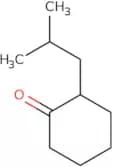
Discontinued product2-(2-Methylpropyl)cyclohexan-1-one
CAS:<p>2-(2-Methylpropyl)cyclohexan-1-one is a heterobicyclic compound with a hydroxyl group and two cyclohexane rings. It has a nitrogen atom with three substituents, one of which is a trifluoromethyl group. This molecule is used as a polymerization initiator for polyester and polycarbonate production. It also can be used in the production of liquid crystal compositions, aliphatic hydrocarbons, and organic solvents. 2-(2-Methylpropyl)cyclohexan-1-one is an organic solvent that can be used in the preparation of monomers such as carbonyl groups or cyanates.</p>Formula:C10H18OPurity:Min. 95%Molecular weight:154.25 g/molRef: 3D-EAA66864
Discontinued product3-Methoxyazetidine-3-carboxamide hydrochloride
CAS:Versatile small molecule scaffoldFormula:C5H11ClN2O2Purity:Min. 95%Molecular weight:166.6 g/molRef: 3D-MRD33097
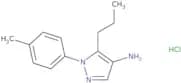
Discontinued product1-(4-Methylphenyl)-5-propyl-1H-pyrazol-4-amine hydrochloride
CAS:<p>Versatile small molecule scaffold</p>Formula:C13H18ClN3Purity:Min. 95%Molecular weight:251.75 g/molRef: 3D-DXC60792
Discontinued product2,6-Dichloro-N'-hydroxybenzene-1-carboximidamide
CAS:<p>Versatile small molecule scaffold</p>Formula:C7H6Cl2N2OPurity:Min. 95%Molecular weight:205.04 g/molRef: 3D-YAA50521
Discontinued product2-[1-(Difluoromethyl)-1H-imidazol-2-yl]-1-phenylethan-1-amine
CAS:<p>Versatile small molecule scaffold</p>Formula:C12H13F2N3Purity:Min. 95%Molecular weight:237.25 g/molRef: 3D-BAC92276
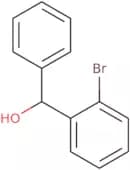
Discontinued product(2-Bromophenyl)(phenyl)methanol
CAS:<p>The synthesis of (2-bromophenyl)(phenyl)methanol is accomplished by the reaction of an aldehyde with bromine followed by an alkylation with magnesium. The product is obtained as a racemic mixture of enantiomers with a chiral center, which can be resolved by fractional crystallization or other separation methods. This method has been shown to be efficient for the synthesis of alcohols and carbinols, and stereogenic reactions.</p>Formula:C13H11OBrPurity:Min. 95%Molecular weight:263.12 g/molRef: 3D-JCA14247
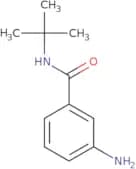
Discontinued product3-Amino-N-(tert-butyl)benzamide
CAS:<p>Versatile small molecule scaffold</p>Formula:C11H16N2OPurity:Min. 95%Molecular weight:192.26 g/molRef: 3D-ABA90062
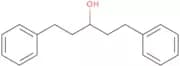
Discontinued product1,5-Diphenylpentan-3-ol
CAS:<p>Flindersia laevicarpa is a small tree native to Australia. The leaves of the tree are used for medicinal purposes and contain 1,5-diphenylpentan-3-ol. Flindersia laevicarpa has been shown to have anti-inflammatory and antioxidant properties, as well as an ability to inhibit platelet aggregation.</p>Formula:C17H20OPurity:Min. 95%Molecular weight:240.34 g/molRef: 3D-SAA48686
Discontinued product3-[(4-Chlorophenyl)amino]propanenitrile
CAS:<p>Versatile small molecule scaffold</p>Formula:C9H9ClN2Purity:Min. 95%Molecular weight:180.63 g/molRef: 3D-RBA83357
Discontinued productOctahydro-pyrazino[2,1-c][1,4]thiazine 2,2-dioxide hydrochloride
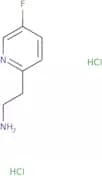
CAS:<p>Versatile small molecule scaffold</p>Formula:C7H16Cl2N2O2SPurity:Min. 95%Molecular weight:263.18 g/mol2-(5-Fluoropyridin-2-yl)ethan-1-amine dihydrochloride
CAS:<p>Versatile small molecule scaffold</p>Formula:C7H11Cl2FN2Purity:Min. 95%Molecular weight:213.08 g/molRef: 3D-DXC58935
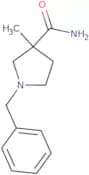
Discontinued product1-Benzyl-3-methylpyrrolidine-3-carboxamide
CAS:<p>Versatile small molecule scaffold</p>Formula:C13H18N2OPurity:Min. 95%Molecular weight:218.29 g/molRef: 3D-DXC58898
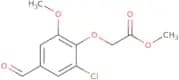
Discontinued productMethyl (2-chloro-4-formyl-6-methoxyphenoxy)acetate
CAS:<p>Versatile small molecule scaffold</p>Formula:C11H11ClO5Purity:Min. 95%Molecular weight:258.65 g/mol7-Bromopyrazolo[1,5-a]pyrimidine
CAS:<p>Versatile small molecule scaffold</p>Formula:C6H4BrN3Purity:Min. 95%Molecular weight:198.02 g/molRef: 3D-JWB98304
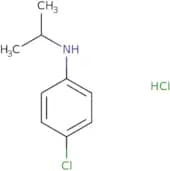
Discontinued product4-Chloro-N-(propan-2-yl)aniline hydrochloride
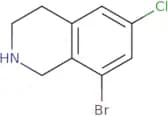
CAS:<p>Versatile small molecule scaffold</p>Formula:C9H13Cl2NPurity:Min. 95%Molecular weight:206.11 g/mol8-Bromo-6-chloro-1,2,3,4-tetrahydroisoquinoline
CAS:<p>Versatile small molecule scaffold</p>Formula:C9H9BrClNPurity:Min. 95%Molecular weight:246.53 g/molRef: 3D-DLC43685
Discontinued product2-[3-(Difluoromethoxy)-4-methoxyphenyl]ethan-1-amine
CAS:Controlled Product<p>Versatile small molecule scaffold</p>Formula:C10H13F2NO2Purity:Min. 95%Molecular weight:217.21 g/molRef: 3D-YHB23469
Discontinued product6-Amino-1-(phenylsulfanyl)hexan-1-one hydrochloride
CAS:<p>Versatile small molecule scaffold</p>Formula:C12H18ClNOSPurity:Min. 95%Molecular weight:259.8 g/molRef: 3D-NDA31385
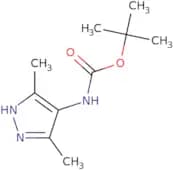
Discontinued producttert-Butyl N-(3,5-dimethyl-1H-pyrazol-4-yl)carbamate
CAS:<p>Versatile small molecule scaffold</p>Formula:C10H17N3O2Purity:Min. 95%Molecular weight:211.26 g/molRef: 3D-MXB34103
Discontinued product2-[2-(Furan-2-yl)-2-oxoethylidene]-3-methyl-1,3-thiazolidin-4-one
CAS:<p>Versatile small molecule scaffold</p>Formula:C10H9NO3SPurity:Min. 95%Molecular weight:223.25 g/molRef: 3D-AQB93221
Discontinued product2-{[3-(Dimethylamino)propyl]sulfanyl}aniline
CAS:<p>Versatile small molecule scaffold</p>Formula:C11H18N2SPurity:Min. 95%Molecular weight:210.34 g/molRef: 3D-BAA13477
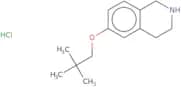
Discontinued product6-(2,2-Dimethylpropoxy)-1,2,3,4-tetrahydroisoquinoline hydrochloride
CAS:<p>Versatile small molecule scaffold</p>Formula:C14H22ClNOPurity:Min. 95%Molecular weight:255.8 g/molRef: 3D-APD14408
Discontinued productMethyl 2-[4-(2-aminoethyl)phenoxy]acetate hydrochloride
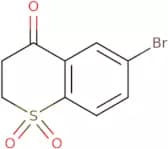
CAS:<p>Versatile small molecule scaffold</p>Formula:C11H16ClNO3Purity:Min. 95%Molecular weight:245.7 g/mol6-Bromo-2,3-dihydrothiochromen-1,1-dioxide-4-one
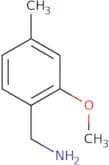
CAS:<p>Versatile small molecule scaffold</p>Formula:C9H7BrO3SPurity:Min. 95%Molecular weight:275.12 g/mol(2-Methoxy-4-methylphenyl)methanamine
CAS:<p>Versatile small molecule scaffold</p>Formula:C9H13NOPurity:Min. 95%Molecular weight:151.21 g/molRef: 3D-BJB67022
Discontinued product1-[4-(Methylsulfanyl)phenyl]ethan-1-amine hydrochloride
CAS:<p>Versatile small molecule scaffold</p>Formula:C9H14ClNSPurity:Min. 95%Molecular weight:203.73 g/molRef: 3D-FIA93777
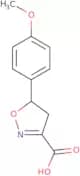
Discontinued product5-(4-Methoxyphenyl)-4,5-dihydro-1,2-oxazole-3-carboxylic acid
CAS:<p>Versatile small molecule scaffold</p>Formula:C11H11NO4Purity:Min. 95%Molecular weight:221.21 g/mol1-(2,4-Dimethylphenyl)-1H,4H,5H,6H-cyclopenta[C]pyrazole-3-carboxylic acid
CAS:<p>Versatile small molecule scaffold</p>Formula:C15H16N2O2Purity:Min. 95%Molecular weight:256.3 g/molRef: 3D-CWB53585
Discontinued product4-Bromo-1-cyclohexyl-1H-pyrazole
CAS:<p>Versatile small molecule scaffold</p>Formula:C9H13BrN2Purity:Min. 95%Molecular weight:229.12 g/mol2-(4,5-Dichloro-2-nitrophenyl)-4,4,5,5-tetramethyl-1,3,2-dioxaborolane
CAS:<p>Versatile small molecule scaffold</p>Formula:C12H14BCl2NO4Purity:Min. 95%Molecular weight:317.96 g/molRef: 3D-CVD60911
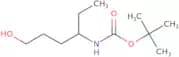
Discontinued producttert-Butyl 6-hydroxyhexan-3-ylcarbamate
CAS:<p>Versatile small molecule scaffold</p>Formula:C11H23NO3Purity:Min. 95%Molecular weight:217.31 g/molRef: 3D-UCB44687
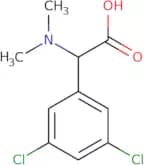
Discontinued product2-(3,5-Dichlorophenyl)-2-(dimethylamino)acetic acid
CAS:<p>Versatile small molecule scaffold</p>Formula:C10H11Cl2NO2Purity:Min. 95%Molecular weight:248.1 g/molRef: 3D-TYB32000
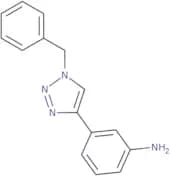
Discontinued product3-(1-Benzyl-1H-1,2,3-triazol-4-yl)aniline
CAS:<p>Versatile small molecule scaffold</p>Formula:C15H14N4Purity:Min. 95%Molecular weight:250.3 g/molRef: 3D-BWB92000
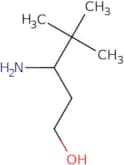
Discontinued product3-Amino-4,4-dimethylpentan-1-ol
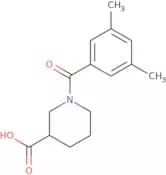
CAS:<p>Versatile small molecule scaffold</p>Formula:C7H17NOPurity:Min. 95%Molecular weight:131.22 g/mol1-(3,5-Dimethylbenzoyl)piperidine-3-carboxylic acid
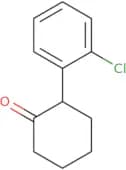
CAS:<p>Versatile small molecule scaffold</p>Formula:C15H19NO3Purity:Min. 95%Molecular weight:261.32 g/mol2-(2-Chlorophenyl)cyclohexan-1-one
CAS:<p>Versatile small molecule scaffold</p>Formula:C12H13ClOPurity:Min. 95%Molecular weight:208.68 g/molRef: 3D-RDA39349
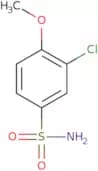
Discontinued product3-Chloro-4-methoxybenzene-1-sulfonamide
CAS:<p>Versatile small molecule scaffold</p>Formula:C7H8ClNO3SPurity:Min. 95%Molecular weight:221.66 g/mol3-Boc-3-azabicyclo[3.2.1]octan-8-amine
CAS:<p>Versatile small molecule scaffold</p>Formula:C12H22N2O2Purity:Min. 95%Molecular weight:226.32 g/mol2-Bromo-3,3,3-trifluoro-1-propene
CAS:Controlled Product<p>2-Bromo-3,3,3-trifluoro-1-propene is a chemical compound that has been synthesized in an asymmetric reaction. The reactant is bromopropane and the product is 2,2,2-trifluoropropene. The methylene group on the propene molecule is activated by the nucleophilic attack of a fluoride ion from hydrogen fluoride to form a cavity with a highly strained bond. The kinetic study of this reaction revealed that the activation energy for the reaction is 42 kJ/mol. Palladium-catalyzed coupling reactions are catalyzed by palladium and require nonpolar solvents such as toluene or dichloromethane. This type of reaction has been shown to be exothermic with an isolated yield of 1%.</p>Formula:C3H2BrF3Purity:Min. 95%Color and Shape:Colorless PowderMolecular weight:174.95 g/mol


![[1-(1H-Pyrazole-4-sulfonyl)piperidin-3-yl]methanamine](/_next/image/?url=https%3A%2Fstatic.cymitquimica.com%2Fproducts%2F3D%2Fthumb-webp%2FXZB14507.webp&w=3840&q=75)
![Pyrazolo[1,5-a]pyridin-4-ol](/_next/image/?url=https%3A%2Fstatic.cymitquimica.com%2Fproducts%2F3D%2Fthumb-webp%2FRFA03272.webp&w=3840&q=75)
![2-[1-(Difluoromethyl)-1H-imidazol-2-yl]-1-phenylethan-1-amine](/_next/image/?url=https%3A%2Fstatic.cymitquimica.com%2Fproducts%2F3D%2Fthumb-webp%2FBAC92276.webp&w=3840&q=75)
![3-[(4-Chlorophenyl)amino]propanenitrile](/_next/image/?url=https%3A%2Fstatic.cymitquimica.com%2Fproducts%2F3D%2Fthumb-webp%2FRBA83357.webp&w=3840&q=75)
![Octahydro-pyrazino[2,1-c][1,4]thiazine 2,2-dioxide hydrochloride](/_next/image/?url=https%3A%2Fstatic.cymitquimica.com%2Fproducts%2F3D%2Fthumb-webp%2FDXC60335.webp&w=3840&q=75)
![7-Bromopyrazolo[1,5-a]pyrimidine](/_next/image/?url=https%3A%2Fstatic.cymitquimica.com%2Fproducts%2F3D%2Fthumb-webp%2FJWB98304.webp&w=3840&q=75)
![2-[3-(Difluoromethoxy)-4-methoxyphenyl]ethan-1-amine](/_next/image/?url=https%3A%2Fstatic.cymitquimica.com%2Fproducts%2F3D%2Fthumb-webp%2FYHB23469.webp&w=3840&q=75)

![2-[2-(Furan-2-yl)-2-oxoethylidene]-3-methyl-1,3-thiazolidin-4-one](/_next/image/?url=https%3A%2Fstatic.cymitquimica.com%2Fproducts%2F3D%2Fthumb-webp%2FAQB93221.webp&w=3840&q=75)
![2-{[3-(Dimethylamino)propyl]sulfanyl}aniline](/_next/image/?url=https%3A%2Fstatic.cymitquimica.com%2Fproducts%2F3D%2Fthumb-webp%2FBAA13477.webp&w=3840&q=75)
![Methyl 2-[4-(2-aminoethyl)phenoxy]acetate hydrochloride](/_next/image/?url=https%3A%2Fstatic.cymitquimica.com%2Fproducts%2F3D%2Fthumb-webp%2FHFA22482.webp&w=3840&q=75)
![1-[4-(Methylsulfanyl)phenyl]ethan-1-amine hydrochloride](/_next/image/?url=https%3A%2Fstatic.cymitquimica.com%2Fproducts%2F3D%2Fthumb-webp%2FFIA93777.webp&w=3840&q=75)
![1-(2,4-Dimethylphenyl)-1H,4H,5H,6H-cyclopenta[C]pyrazole-3-carboxylic acid](/_next/image/?url=https%3A%2Fstatic.cymitquimica.com%2Fproducts%2F3D%2Fthumb-webp%2FCWB53585.webp&w=3840&q=75)

![3-Boc-3-azabicyclo[3.2.1]octan-8-amine](/_next/image/?url=https%3A%2Fstatic.cymitquimica.com%2Fproducts%2F3D%2Fthumb-webp%2FFDC76351.webp&w=3840&q=75)
