Building Blocks
This section contains fundamental products for the synthesis of organic and biological compounds. Building blocks are the essential starting materials used to construct complex molecules through various chemical reactions. They play a critical role in drug discovery, material science, and chemical research. At CymitQuimica, we offer a diverse range of high-quality building blocks to support your innovative research and industrial projects, ensuring you have the essential components for successful synthesis.
Subcategories of "Building Blocks"
- Boronic Acids & Boronic Acid Derivatives(5,756 products)
- Chiral Building Blocks(1,242 products)
- Hydrocarbon Building Blocks(6,095 products)
- Organic Building Blocks(61,036 products)
Found 195887 products of "Building Blocks"
Sort by
Purity (%)
0
100
|
0
|
50
|
90
|
95
|
100
1-Bicyclo[4.2.0]octa-1,3,5-trien-7-ylmethanamine
CAS:<p>1-Bicyclo[4.2.0]octa-1,3,5-trien-7-ylmethanamine is an antitussive drug that acts as a radical and analgesic by binding to the opioid receptors in cells. 1-Bicyclo[4.2.0]octa-1,3,5-trien-7-ylmethanamine has been shown to have antitussive effects in animal models with no observable side effects on the central nervous system and cardiovascular system. The identity of this compound has not yet been confirmed.END></p>Formula:C9H11NPurity:Min. 95%Molecular weight:133.19 g/mol1-Chloro-2-(2-chloroethyl)benzene
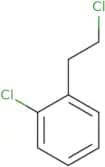
CAS:<p>Versatile small molecule scaffold</p>Formula:C8H8Cl2Purity:Min. 95%Molecular weight:175.05 g/mol2-(Bromomethyl)naphthalene
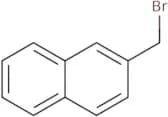
CAS:<p>2-(Bromomethyl)naphthalene is a chemical that has been studied extensively for its ability to inhibit the growth of cancer cells. It binds with high affinity to the mitochondrial membrane potential and inhibits the production of ATP, leading to cell death. 2-(Bromomethyl)naphthalene has also been shown to produce reactive oxygen species (ROS), which can also induce tumor cell death. This compound has been used in a variety of biological samples, including urine samples, which have shown promising results. A potential target for this drug is an enzyme called hydrolysis, which may be found at higher concentrations in tumor cells. The proposed reaction mechanism is shown below: 2- (bromomethyl) naphthalene + H 2 O → bromide ion + 2- (hydroxymethyl) naphthalene The kinetic data and diphenyl sulfoxide are unknown at this time.</p>Formula:C11H9BrPurity:Min. 98 Area-%Color and Shape:Off-White PowderMolecular weight:221.09 g/molN-Aminopyridine-2-carboximidamide
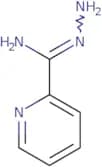
CAS:<p>N-Aminopyridine-2-carboximidamide (NAP) is a potent inhibitor of the β-catenin pathway. It is used to treat autoimmune diseases and cancer. NAP inhibits the activity of amidrazone, which is an inhibitor of the β-catenin pathway in mammalian cells. NAP has been shown to inhibit tumor growth and increase survival rates in mice with cancer. NAP also inhibits chloride channels, leading to hyperpolarization of human erythrocytes, which may contribute to its anti-inflammatory activity.</p>Formula:C6H8N4Purity:Min. 95%Molecular weight:136.15 g/molMethyl 3-methylisoxazole-5-carboxylate
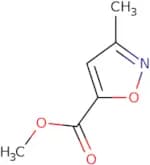
CAS:<p>Methyl 3-methylisoxazole-5-carboxylate is an organic compound that belongs to the aldoxime class. It is used as a reagent in organic synthesis and as an intermediate in the synthesis of other compounds. Methyl 3-methylisoxazole-5-carboxylate can be prepared by the reaction of methyl chloroformate and 3-methylisoxazol-5-one. This compound reacts with nitrite to form hypochlorite, which can be used as a bleach or disinfectant. Methyl 3-methylisoxazole-5-carboxylate also reacts with amides, nitriles, and oxides to give tertiary amines and oximes respectively. The reaction system can be further modified by bromination or oxidation to give bromomethyl or methyl isoxazolines respectively.</p>Formula:C6H7NO3Purity:Min. 95%Molecular weight:141.1 g/molBromoacetaldehyde diethyl acetal
CAS:<p>Bromoacetaldehyde diethyl acetal (BDAE) is an organic compound that has been shown to have receptor binding activity. BDAE binds to the ethylene diamine receptor and competes with ethylene diamine for binding sites. It also forms acid from sodium carbonate and hydrochloric acid, which may be due to its ability to act as a solid catalyst. BDAE has shown activity in hiv infection, with a potency comparable to that of dimethyl fumarate. The synthesis of BDAE can be accomplished by reacting monosodium malonate ester hydrochloride with adenine nucleotide and malonic acid. The reaction solution is heated until the desired product crystallizes out of solution.</p>Formula:C6H13BrO2Purity:Min. 95%Molecular weight:197.07 g/molBis[2-(perfluorooctyl)ethyl] phosphate
CAS:Controlled Product<p>Bis[2-(perfluorooctyl)ethyl] phosphate is a perfluorinated compound that can be used as an alternative to polyvinyl chloride in the manufacture of children's toys and other consumer products. It has been shown to have no health effects on humans, unlike other perfluorinated compounds, in a study where human serum was analyzed. Bis[2-(perfluorooctyl)ethyl] phosphate also has a high affinity for polyfluoroalkyl substances (PFASs) and can be used in analytical methods for their detection. The optimised extraction procedure is simple and rapid, using ultrasonic extraction with no need for any organic solvents. Recoveries are high (>99%) and the method does not require any volatile solvents.</p>Formula:C20H9F34O4PPurity:Min. 95%Molecular weight:990.2 g/molBis[(pinacolato)boryl]methane
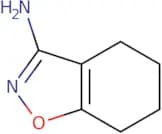
CAS:<p>Bis[(pinacolato)boryl]methane is a bifunctional organoboron reagent with an allyl group on one end and a cyclopropane on the other end. It is useful in organic synthesis as a nucleophile for allylation, as well as for the synthesis of unsymmetrical cyclopropanes. This compound can be used to catalyze asymmetric methods, such as the synthesis of alicyclic compounds. Bis[(pinacolato)boryl]methane can also be used to synthesize biomolecules.</p>Formula:C13H26B2O4Purity:Min. 95%Color and Shape:White To Off-White SolidMolecular weight:267.97 g/mol4,5,6,7-Tetrahydro-1,2-benzoxazol-3-amine
CAS:<p>Versatile small molecule scaffold</p>Formula:C7H10N2OPurity:Min. 95%Molecular weight:138.17 g/mol2-Azaspiro[4.4]nonan-1-one
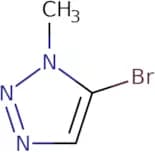
CAS:<p>Versatile small molecule scaffold</p>Formula:C8H13NOPurity:Min. 95%Molecular weight:139.19 g/mol5-Bromo-1-methyl-1H-1,2,3-triazole
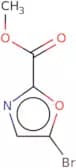
CAS:<p>Please enquire for more information about 5-Bromo-1-methyl-1H-1,2,3-triazole including the price, delivery time and more detailed product information at the technical inquiry form on this page</p>Formula:C3H4BrN3Purity:Min. 95%Molecular weight:162 g/mol5-Bromo-oxazole-2-carboxylic acid methyl ester
CAS:<p>Please enquire for more information about 5-Bromo-oxazole-2-carboxylic acid methyl ester including the price, delivery time and more detailed product information at the technical inquiry form on this page</p>Formula:C5H4BrNO3Purity:Min. 95%Molecular weight:205.99 g/mol2,6-Dimethyl-4H-pyran-4-thione
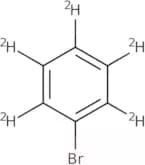
CAS:<p>2,6-Dimethyl-4H-pyran-4-thione is a ligand that binds to metal ions and forms coordination complexes. It has been shown to be an effective catalyst for the oxidation of alcohols and amines with molecular oxygen. 2,6-Dimethyl-4H-pyran-4-thione can also be used in the synthesis of organic compounds by reacting with halides. The optical and vibrational spectra are linear at low temperatures and exponentially increase at higher temperatures. This compound can be crystallized by XRD or fluorescence methods, depending on the desired outcome. Solvents such as acetone, NMP, DMSO, THF, water, and chloroform have been shown to affect the crystal structure of this compound in varying degrees.</p>Formula:C7H8OSPurity:Min. 95%Molecular weight:140.2 g/molBromobenzene-d5
CAS:Controlled Product<p>Bromobenzene-d5 is a chemical compound that can be used as a chemical reagent for the production of other chemicals. It has a molecular weight of 188.21 and a melting point of -100°C. Bromobenzene-d5 has shown to be reactive with chloride and tert-butyl isocyanate, which are both strong bases. The molecule has an amorphous nature and exhibits vibrational properties at high frequencies. Bromobenzene-d5 also shows polarizability in the intramolecular hydrogen bond region, which is evident by an NMR spectrum of heterocycle bromobenzene-d5.</p>Formula:C6BrD5Purity:Min. 95%Molecular weight:162.04 g/mol(4-Methylenecyclohexyl)methanol
CAS:<p>(4-Methylenecyclohexyl)methanol is a high-boiling liquid that is used as a solvent for various organic reactions. It is prepared by the oxymercuration of 4-methylcyclohexanol in the presence of tert-butyl alcohol and borohydride. The reaction proceeds with the formation of tert-butyl (4-methylenecyclohexyl) ether, which is hydrolyzed to give (4-methylenecyclohexyl)methanol. This intermediate can be further reduced with borohydride to yield tert-butyl alcohol.</p>Formula:C8H14OPurity:Min. 95%Molecular weight:126.2 g/mol4-Aminomethyl-phenol hydrochloride
CAS:<p>4-Aminomethyl-phenol hydrochloride is a chemical compound that belongs to the group of amines. It is a white solid with a melting point of 126 °C and can be found in 5-ht7 receptor binding studies. 4-Aminomethyl-phenol hydrochloride has been shown to have an inhibitory effect on the dopamine receptors, which are involved in the regulation of movement and emotions. The inhibition of these receptors leads to decreased heart rate and blood pressure, as well as other symptoms such as nausea and vomiting. 4-Aminomethyl-phenol hydrochloride has also been shown to be a natriuretic agent, which reduces the concentration of sodium ions in urine by inhibiting the reabsorption of sodium ions from the kidney tubules. This drug is used for the treatment of high blood pressure.END></p>Formula:C7H10ClNOPurity:Min. 95%Molecular weight:159.61 g/mol3-Cyano-1-methylpyridin-1-ium iodide
CAS:<p>3-Cyano-1-methylpyridin-1-ium iodide is a reactive chemical that can be used as an electrophilic reagent. It reacts with amines, anilines, and pyridones to produce N-substituted pyridinium salts. 3-Cyano-1-methylpyridin-1-ium iodide also reacts with chloride ions to form the corresponding chlorides. This compound has been used in the synthesis of nucleophilic attack products such as benzyl bromide and phenylacetaldehyde.</p>Formula:C7H7IN2Purity:Min. 95%Molecular weight:246.05 g/mol3-Amino-6-methyl-4,5-dihydro-1,2,4-triazin-5-one
CAS:<p>Versatile small molecule scaffold</p>Formula:C4H6N4OPurity:Min. 95%Molecular weight:126.12 g/mol5-Bromopyrimidine-2,4-diamine
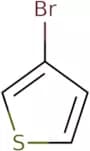
CAS:<p>Versatile small molecule scaffold</p>Formula:C4H5BrN4Purity:Min. 95%Molecular weight:189.02 g/mol3-Bromothiophene
CAS:<p>3-Bromothiophene is a homogeneous catalyst that can be used in organic synthesis. It has been shown to convert all-trans retinoic acid into 9-cis,11-trans retinoic acid. This conversion occurs through nucleophilic attack of the bromide ion on the carbon atom adjacent to the double bond in the carboxyl group of all-trans retinoic acid. 3-Bromothiophene has also been shown to have light emission properties in polymer films and metal halides.</p>Formula:C4H3BrSPurity:Min. 98%Color and Shape:Colorless Clear LiquidMolecular weight:163.04 g/mol5,5-Dimethyl-1,3,2λ4-dioxathian-2-one
CAS:<p>Versatile small molecule scaffold</p>Formula:C5H10O3SPurity:Min. 95%Molecular weight:150.2 g/mol4,7-Dihydro-2,2-dimethyl-1,3-dioxepin
CAS:<p>4,7-Dihydro-2,2-dimethyl-1,3-dioxepin is a cyclopropane. It has been used as a model substrate for the study of carbene mechanisms. The cyclopropanation of 4,7-dihydro-2,2-dimethyl-1,3-dioxepin is catalyzed by a metal carbene complex. The reaction mechanism and energetics have been studied in detail using dimethyl diazomalonate as the substrate.</p>Formula:C7H12O2Purity:Min. 95%Molecular weight:128.17 g/mol(3-Methylmorpholin-3-yl)methanol
CAS:<p>Versatile small molecule scaffold</p>Formula:C6H13NO2Purity:Min. 95%Molecular weight:131.17 g/mol2,5-Dimethylpiperazine dihydrochloride
CAS:<p>Versatile small molecule scaffold</p>Formula:C6H16Cl2N2Purity:Min. 95%Molecular weight:187.11 g/mol5-Amino-2,4-dihydro-3H-1,2,4-triazol-3-one
CAS:<p>Versatile small molecule scaffold</p>Formula:C2H4N4OPurity:Min. 95%Molecular weight:100.08 g/mol2,2-Bis(chloromethyl)oxirane
CAS:<p>2,2-Bis(chloromethyl)oxirane is a chemical intermediate that can be used as a binder in the production of polyurethane and polyester resins. It can also be used to produce target products such as hydroxyethyl acrylate, methacrylic acid, and acrylic acid esters. 2,2-Bis(chloromethyl)oxirane is usually prepared by reacting methylene chloride with chloromethyl methyl ether in the presence of a catalyst such as tetrabutylammonium. The reaction mixture is heated to reflux for at least one hour before cooling to room temperature and adding an excess of water to quench the reaction.</p>Formula:C4H6Cl2OPurity:Min. 95%Molecular weight:140.99 g/molN-(5-Aminopentyl)hydroxylamine dihydrochloride
CAS:<p>Versatile small molecule scaffold</p>Formula:C5H15ClN2OPurity:Min. 95%Molecular weight:154.64 g/mol(S)-tert-Butyl 3-(methylamino)pyrrolidine-1-carboxylate
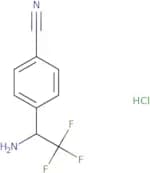
CAS:<p>(S)-tert-Butyl 3-(methylamino)pyrrolidine-1-carboxylate is a research chemical that can be used as a versatile building block for the synthesis of complex compounds. It is also a reaction component in the synthesis of speciality chemicals and useful scaffolds. It has been shown to have high quality, reagent grade and purity.</p>Formula:C10H20N2O2Purity:Min. 95%Color and Shape:PowderMolecular weight:200.28 g/mol4-(1-Amino-2,2,2-trifluoroethyl)benzonitrile hydrochloride
CAS:<p>Versatile small molecule scaffold</p>Formula:C9H8ClF3N2Purity:Min. 95%Molecular weight:236.62 g/mol2-[2-(2-Nitrophenoxy)ethoxy]ethan-1-amine hydrochloride
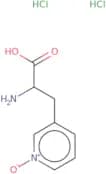
CAS:<p>Versatile small molecule scaffold</p>Formula:C10H15ClN2O4Purity:Min. 95%Molecular weight:262.7 g/mol3-(2-Amino-2-carboxyethyl)pyridin-1-ium-1-olate dihydrochloride
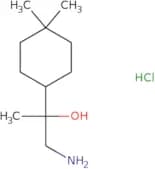
CAS:<p>Versatile small molecule scaffold</p>Formula:C8H12Cl2N2O3Purity:Min. 95%Molecular weight:255.1 g/mol1-Amino-2-(4,4-dimethylcyclohexyl)propan-2-ol hydrochloride
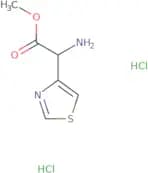
CAS:<p>Versatile small molecule scaffold</p>Formula:C11H24ClNOPurity:Min. 95%Molecular weight:221.8 g/molMethyl 2-amino-2-(1,3-thiazol-4-yl)acetate dihydrochloride
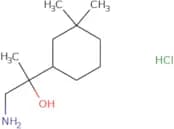
CAS:<p>Versatile small molecule scaffold</p>Formula:C6H10Cl2N2O2SPurity:Min. 95%Molecular weight:245.1 g/mol1-Amino-2-(3,3-dimethylcyclohexyl)propan-2-ol hydrochloride
CAS:<p>Versatile small molecule scaffold</p>Formula:C11H24ClNOPurity:Min. 95%Molecular weight:221.8 g/molSodium 4-{[(benzyloxy)carbonyl]amino}benzene-1-sulfinate
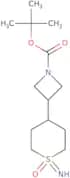
CAS:<p>Versatile small molecule scaffold</p>Formula:C14H12NNaO4SPurity:Min. 95%Molecular weight:313.3 g/moltert-Butyl 3-(1-imino-1-oxo-1λ⁶-thian-4-yl)azetidine-1-carboxylate
CAS:<p>Versatile small molecule scaffold</p>Formula:C13H24N2O3SPurity:Min. 95%Molecular weight:288.4 g/mol4-(Iodomethyl)-5-oxaspiro[2.4]heptan-6-one
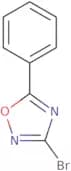
CAS:<p>Versatile small molecule scaffold</p>Formula:C7H9IO2Purity:Min. 95%Molecular weight:252 g/mol3-Bromo-5-phenyl-1,2,4-oxadiazole
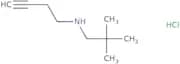
CAS:<p>3-Bromo-5-phenyl-1,2,4-oxadiazole (3BrO) is an organic compound that can be synthesized by coupling a benzoyl chloride with a cyanide salt. 3BrO is also produced in the pyrolysis of benzophenone and 1,2,4-triazole. The fragmentation of 3BrO produces catechol and phenylhydrazine. The deoxygenative coupling reaction of 3BrO with sodium azide produces the explosive compound 2,4,6-trinitrobenzamide. This chemical has been used as the starting material for the synthesis of many other explosives such as RDX and TNT.</p>Formula:C8H5BrN2OPurity:Min. 95%Molecular weight:225.04 g/mol(But-3-yn-1-yl)(2,2-dimethylpropyl)amine hydrochloride
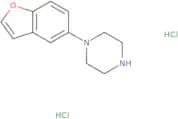
CAS:<p>Versatile small molecule scaffold</p>Formula:C9H18ClNPurity:Min. 95%Molecular weight:175.7 g/mol1-(1-Benzofuran-5-yl)piperazine dihydrochloride
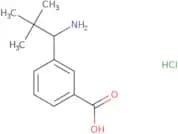
CAS:<p>Versatile small molecule scaffold</p>Formula:C12H16Cl2N2OPurity:Min. 95%Molecular weight:275.2 g/mol3-(1-Amino-2,2-dimethylpropyl)benzoic acid hydrochloride
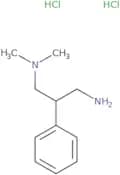
CAS:<p>Versatile small molecule scaffold</p>Formula:C12H18ClNO2Purity:Min. 95%Molecular weight:243.7 g/mol(3-Amino-2-phenylpropyl)dimethylamine dihydrochloride
CAS:<p>Versatile small molecule scaffold</p>Formula:C11H20Cl2N2Purity:Min. 95%Molecular weight:251.2 g/moltert-Butyl 6-amino-7,7-dimethyl-2-azabicyclo[3.2.0]heptane-2-carboxylate
CAS:<p>Versatile small molecule scaffold</p>Formula:C13H24N2O2Purity:Min. 95%Molecular weight:240.3 g/mol1-[(tert-Butoxy)carbonyl]-1-azaspiro[5.5]undecane-3-carboxylic acid
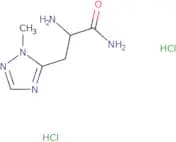
CAS:<p>Versatile small molecule scaffold</p>Formula:C16H27NO4Purity:Min. 95%Molecular weight:297.4 g/mol2-Amino-3-(1-methyl-1H-1,2,4-triazol-5-yl)propanamide dihydrochloride
CAS:<p>Versatile small molecule scaffold</p>Formula:C6H13Cl2N5OPurity:Min. 95%Molecular weight:242.1 g/mol5H,6H,7H,8H-[1,2,4]Triazolo[1,5-a]pyridin-7-amine dihydrochloride
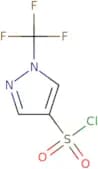
CAS:<p>Versatile small molecule scaffold</p>Formula:C6H12Cl2N4Purity:Min. 95%Molecular weight:211.1 g/mol1-(Trifluoromethyl)-1H-pyrazole-4-sulfonyl chloride
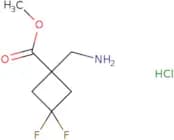
CAS:<p>Versatile small molecule scaffold</p>Formula:C4H2ClF3N2O2SPurity:Min. 95%Molecular weight:234.59 g/molMethyl 1-(aminomethyl)-3,3-difluorocyclobutane-1-carboxylate hydrochloride
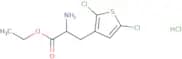
CAS:<p>Versatile small molecule scaffold</p>Formula:C7H12ClF2NO2Purity:Min. 95%Molecular weight:215.6 g/molEthyl 2-amino-3-(2,5-dichlorothiophen-3-yl)propanoate hydrochloride
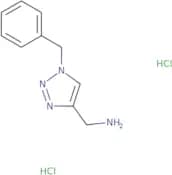
CAS:<p>Versatile small molecule scaffold</p>Formula:C9H12Cl3NO2SPurity:Min. 95%Molecular weight:304.6 g/mol(1-Benzyl-1H-1,2,3-triazol-4-yl)methanamine dihydrochloride
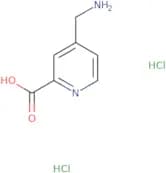
CAS:<p>Versatile small molecule scaffold</p>Formula:C10H14Cl2N4Purity:Min. 95%Molecular weight:261.2 g/mol4-(Aminomethyl)pyridine-2-carboxylic acid dihydrochloride
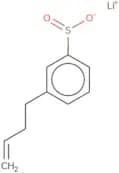
CAS:<p>Versatile small molecule scaffold</p>Formula:C7H10Cl2N2O2Purity:Min. 95%Molecular weight:225.1 g/mol3-(but-3-en-1-yl)benzene-1-sulfinate lithium
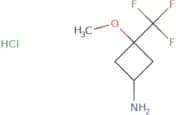
CAS:<p>Versatile small molecule scaffold</p>Formula:C10H11LiO2SPurity:Min. 95%Molecular weight:202.2 g/mol3-Methoxy-3-(trifluoromethyl)cyclobutan-1-amine hydrochloride
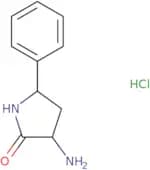
CAS:<p>Versatile small molecule scaffold</p>Formula:C6H11ClF3NOPurity:Min. 95%Molecular weight:205.6 g/mol3-Amino-5-phenylpyrrolidin-2-one hydrochloride
CAS:<p>Versatile small molecule scaffold</p>Formula:C10H13ClN2OPurity:Min. 95%Molecular weight:212.7 g/moltert-Butyl 2-(2,2,2-trifluoroethyl)piperazine-1-carboxylate hydrochloride
CAS:<p>Versatile small molecule scaffold</p>Formula:C11H20ClF3N2O2Purity:Min. 95%Molecular weight:304.74 g/mol2-Butynoic acid
CAS:<p>2-Butynoic acid is a trifluoroacetic acid derivative that has been shown to inhibit the production of cytokines and inflammatory mediators in human macrophages. It has been used as a model system for studying the effects of alkanoic acids on antibody production. This drug may also be useful in treating autoimmune diseases by inhibiting the formation of antibodies. 2-Butynoic acid is an α-subunit inhibitor that prevents cellular transformation and tumor growth by preventing proliferation and metastasis. The drug inhibits the formation of disulfide bonds, which are essential for protein folding and function. 2-Butynoic acid has also shown synergistic effects with other drugs such as doxorubicin or hydrogen fluoride, which may lead to a more effective treatment for cancerous cells.</p>Formula:C4H4O2Purity:Min. 95%Color and Shape:Yellow PowderMolecular weight:84.07 g/mol[2-(Prop-2-en-1-yl)piperidin-2-yl]methanol hydrochloride
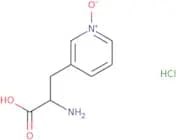
CAS:<p>Versatile small molecule scaffold</p>Formula:C9H18ClNOPurity:Min. 95%Molecular weight:191.7 g/mol3-(2-Amino-2-carboxyethyl)pyridin-1-ium-1-olate hydrochloride
CAS:<p>Versatile small molecule scaffold</p>Formula:C8H11ClN2O3Purity:Min. 95%Molecular weight:218.6 g/mol8,8-Dimethyl-2-azatricyclo[7.3.1.0,5,13]trideca-1(12),9(13),10-triene hydrochloride
CAS:<p>Versatile small molecule scaffold</p>Formula:C14H20ClNPurity:Min. 95%Molecular weight:237.8 g/molMethyl({[2-(propan-2-yl)phenyl]methyl})amine hydrochloride
CAS:<p>Versatile small molecule scaffold</p>Formula:C11H18ClNPurity:Min. 95%Molecular weight:199.7 g/mol2-(1,1-Dioxothian-4-yl)propan-2-amine hydrochloride
CAS:<p>Versatile small molecule scaffold</p>Formula:C8H18ClNO2SPurity:Min. 95%Molecular weight:227.8 g/mol5-Bromo-2,3-dihydrobenzo[b]furan
CAS:<p>Please enquire for more information about 5-Bromo-2,3-dihydrobenzo[b]furan including the price, delivery time and more detailed product information at the technical inquiry form on this page</p>Formula:C8H7BrOPurity:Min. 95%Color and Shape:White to pale red solid.Molecular weight:199.04 g/mol2,2-Dimethylpiperidine-4-carboxylic acid hydrochloride
CAS:<p>Versatile small molecule scaffold</p>Formula:C8H16ClNO2Purity:Min. 95%Molecular weight:193.7 g/molMethyl N-(3-aminopropyl)carbamate hydrochloride
CAS:<p>Versatile small molecule scaffold</p>Formula:C5H13ClN2O2Purity:Min. 95%Molecular weight:168.6 g/molMethyl 2-amino-3-(2,5-dichlorothiophen-3-yl)propanoate hydrochloride
CAS:<p>Versatile small molecule scaffold</p>Formula:C8H10Cl3NO2SPurity:Min. 95%Molecular weight:290.6 g/mol2-[1-(Diphenylmethyl)azetidin-3-yl]acetic acid hydrochloride
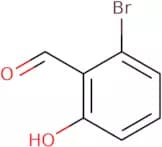
CAS:<p>Versatile small molecule scaffold</p>Formula:C18H20ClNO2Purity:Min. 95%Molecular weight:317.8 g/mol2-Bromo-6-hydroxybenzaldehyde
CAS:<p>2-Bromo-6-hydroxybenzaldehyde is a synthetic chemical that consists of a furan ring with an acetonitrile group. It has been shown to be a constant in cyclic electroreduction and is used as a biomolecular surfactant. 2-Bromo-6-hydroxybenzaldehyde has also been shown to react intramolecularly with the hydroxyl group on the benzene ring, which results in the formation of a dimer. This chemical can be produced by solvolysis or electroreduction.</p>Formula:C7H5BrO2Purity:Min. 95%Color and Shape:PowderMolecular weight:201.02 g/mol5H,6H,7H,8H-[1,2,3,4]Tetrazolo[1,5-a]pyridin-6-amine hydrochloride
CAS:<p>Versatile small molecule scaffold</p>Formula:C5H10ClN5Purity:Min. 95%Molecular weight:175.6 g/mol3-(Azetidin-3-yloxy)benzoic acid hydrochloride
CAS:<p>Versatile small molecule scaffold</p>Formula:C10H12ClNO3Purity:Min. 95%Molecular weight:229.7 g/molMethyl 3-(hydroxymethyl)azetidine-3-carboxylate hydrochloride
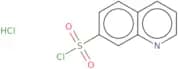
CAS:<p>Versatile small molecule scaffold</p>Formula:C6H12ClNO3Purity:Min. 95%Molecular weight:181.6 g/molQuinoline-7-sulfonyl chloride hydrochloride
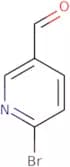
CAS:<p>Versatile small molecule scaffold</p>Formula:C9H7Cl2NO2SPurity:Min. 95%Molecular weight:264.1 g/mol6-Bromopyridine-3-carboxaldehyde
CAS:<p>6-Bromopyridine-3-carboxaldehyde (6-BPAR) is a synthetic compound that binds to copper ions and has been shown to have inhibitory activities against trifluoroacetic acid, calcium carbonate, optical properties, and low energy. 6-BPAR also has an aldehyde group and hydroxamic acid group. This chemical can be used as a catalyst for the hydrogenation reduction of metal ions such as chloride or formyl groups.</p>Formula:C6H4BrNOPurity:Min. 95%Color and Shape:White To Dark Red Or Brown SolidMolecular weight:186.01 g/mol2,8-Diazaspiro[5.5]undecan-3-one hydrochloride
CAS:<p>Versatile small molecule scaffold</p>Formula:C9H17ClN2OPurity:Min. 95%Molecular weight:204.7 g/mol{1-Methyl-1-azaspiro[3.3]heptan-6-yl}methanamine
CAS:<p>Versatile small molecule scaffold</p>Formula:C8H16N2Purity:Min. 95%Molecular weight:140.2 g/mol2-(3-Aminooxolan-3-yl)propan-2-ol hydrochloride
CAS:<p>Versatile small molecule scaffold</p>Formula:C7H16ClNO2Purity:Min. 95%Molecular weight:181.7 g/mol8,8-Dimethyl-4-oxo-4H,5H,6H,7H,8H-furo[3,2-c]azepine-2-carboxylic acid
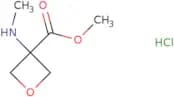
CAS:<p>Versatile small molecule scaffold</p>Formula:C11H13NO4Purity:Min. 95%Molecular weight:223.2 g/molMethyl 3-(methylamino)oxetane-3-carboxylate hydrochloride
CAS:<p>Versatile small molecule scaffold</p>Formula:C6H12ClNO3Purity:Min. 95%Molecular weight:181.6 g/mol2-Fluoro-1-(2-fluorophenyl)ethan-1-amine hydrochloride
CAS:<p>Versatile small molecule scaffold</p>Formula:C8H10ClF2NPurity:Min. 95%Molecular weight:193.6 g/mol1-[3-(Dimethylamino)-2-hydroxypropyl]cyclobutane-1-carbonitrile hydrochloride
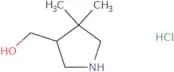
CAS:<p>Versatile small molecule scaffold</p>Formula:C10H19ClN2OPurity:Min. 95%Molecular weight:218.7 g/mol(4,4-Dimethylpyrrolidin-3-yl)methanol hydrochloride
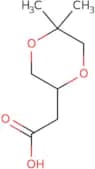
CAS:<p>Versatile small molecule scaffold</p>Formula:C7H16ClNOPurity:Min. 95%Molecular weight:165.66 g/mol2-(5,5-Dimethyl-1,4-dioxan-2-yl)acetic acid
CAS:<p>Versatile small molecule scaffold</p>Formula:C8H14O4Purity:Min. 95%Molecular weight:174.2 g/mol1-Amino-2-(cyclohex-3-en-1-yl)propan-2-ol hydrochloride
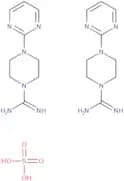
CAS:<p>Versatile small molecule scaffold</p>Formula:C9H18ClNOPurity:Min. 95%Molecular weight:191.7 g/molBis(4-(pyrimidin-2-yl)piperazine-1-carboximidamide), sulfuric acid
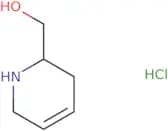
CAS:<p>Versatile small molecule scaffold</p>Formula:C18H30N12O4SPurity:Min. 95%Molecular weight:510.6 g/mol(1,2,3,6-Tetrahydropyridin-2-yl)methanol hydrochloride
CAS:<p>Versatile small molecule scaffold</p>Formula:C6H12ClNOPurity:Min. 95%Molecular weight:149.6 g/mol5-(1,2,2,2-Tetrafluoroethyl)pyridin-2-amine hydrochloride
CAS:<p>Versatile small molecule scaffold</p>Formula:C7H7ClF4N2Purity:Min. 95%Molecular weight:230.6 g/mol[(2-tert-Butylphenyl)methyl](methyl)amine hydrochloride
CAS:<p>Versatile small molecule scaffold</p>Formula:C12H20ClNPurity:Min. 95%Molecular weight:213.7 g/mol4-(Azetidin-3-yl)-4H-1,2,4-triazole dihydrochloride
CAS:<p>Versatile small molecule scaffold</p>Formula:C5H10Cl2N4Purity:Min. 95%Molecular weight:197.1 g/mol(1-Cyclopropylcyclopentyl)methanamine hydrochloride
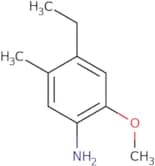
CAS:<p>Versatile small molecule scaffold</p>Formula:C9H18ClNPurity:Min. 95%Molecular weight:175.7 g/mol4-Ethyl-2-methoxy-5-methylaniline
CAS:<p>Versatile small molecule scaffold</p>Formula:C10H15NOPurity:Min. 95%Molecular weight:165.23 g/molEthyl 2-(5,5-dimethyl-4-oxooxolan-3-yl)-2-oxoacetate
CAS:<p>Versatile small molecule scaffold</p>Formula:C10H14O5Purity:Min. 95%Molecular weight:214.21 g/molSodium 4,4,4-trifluorobutane-1-sulfinate
CAS:<p>Versatile small molecule scaffold</p>Formula:C4H6F3NaO2SPurity:Min. 95%Molecular weight:198.14 g/mol1-[(3-Bromopyridin-2-yl)methyl]cyclopropane-1-carbonitrile
CAS:<p>Versatile small molecule scaffold</p>Formula:C10H9BrN2Purity:Min. 95%Molecular weight:237.1 g/mol6,6-Dimethyl-4,5,6,7-tetrahydro-1,3-benzothiazole
CAS:<p>Versatile small molecule scaffold</p>Formula:C9H13NSPurity:Min. 95%Molecular weight:167.27 g/molrac-tert-Butyl N-[(1S,3S)-3-(cyanomethyl)cyclobutyl]carbamate
CAS:<p>Versatile small molecule scaffold</p>Formula:C11H18N2O2Purity:Min. 95%Molecular weight:210.3 g/mol5-Methyl-5H,6H,7H-pyrrolo[1,2-a]imidazol-7-amine
CAS:<p>Versatile small molecule scaffold</p>Formula:C7H11N3Purity:Min. 95%Molecular weight:137.18 g/mol6'-Bromo-2',3'-dihydrospiro[imidazolidine-4,1'-indene]-2,5-dione
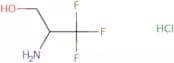
CAS:<p>Versatile small molecule scaffold</p>Formula:C11H9BrN2O2Purity:Min. 95%Molecular weight:281.1 g/mol(2S)-2-Amino-3,3,3-trifluoropropan-1-ol HCl
CAS:<p>Versatile small molecule scaffold</p>Formula:C3H7ClF3NOPurity:Min. 95%Molecular weight:165.74 g/mol1-Benzyl-N'-hydroxy-1H-1,2,3-triazole-4-carboximidamide
CAS:<p>Versatile small molecule scaffold</p>Formula:C10H11N5OPurity:Min. 95%Molecular weight:217.23 g/molMethyl 4-amino-2-(dimethylamino)-1,3-thiazole-5-carboxylate
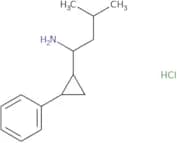
CAS:<p>Versatile small molecule scaffold</p>Formula:C7H11N3O2SPurity:Min. 95%Molecular weight:201.25 g/mol3-Methyl-1-(2-phenylcyclopropyl)butan-1-amine hydrochloride
CAS:<p>Versatile small molecule scaffold</p>Formula:C14H22ClNPurity:Min. 95%Molecular weight:239.8 g/mol
![1-Bicyclo[4.2.0]octa-1,3,5-trien-7-ylmethanamine](/_next/image/?url=https%3A%2Fstatic.cymitquimica.com%2Fproducts%2F3D%2Fthumb-webp%2FBAA00519.webp&w=3840&q=75)


![Bis[2-(perfluorooctyl)ethyl] phosphate](/_next/image/?url=https%3A%2Fstatic.cymitquimica.com%2Fproducts%2F3D%2Fthumb-webp%2FFB18790.webp&w=3840&q=75)
![Bis[(pinacolato)boryl]methane](/_next/image/?url=https%3A%2Fstatic.cymitquimica.com%2Fproducts%2F3D%2Fthumb-webp%2FFB18774.webp&w=3840&q=75)
![2-Azaspiro[4.4]nonan-1-one](/_next/image/?url=https%3A%2Fstatic.cymitquimica.com%2Fproducts%2F3D%2Fthumb-webp%2FBAA00451.webp&w=3840&q=75)





![2-[2-(2-Nitrophenoxy)ethoxy]ethan-1-amine hydrochloride](/_next/image/?url=https%3A%2Fstatic.cymitquimica.com%2Fproducts%2F3D%2Fthumb-webp%2FAVD26881.webp&w=3840&q=75)
![Sodium 4-{[(benzyloxy)carbonyl]amino}benzene-1-sulfinate](/_next/image/?url=https%3A%2Fstatic.cymitquimica.com%2Fproducts%2F3D%2Fthumb-webp%2FAVD26847.webp&w=3840&q=75)
![4-(Iodomethyl)-5-oxaspiro[2.4]heptan-6-one](/_next/image/?url=https%3A%2Fstatic.cymitquimica.com%2Fproducts%2F3D%2Fthumb-webp%2FAVD26840.webp&w=3840&q=75)
![tert-Butyl 6-amino-7,7-dimethyl-2-azabicyclo[3.2.0]heptane-2-carboxylate](/_next/image/?url=https%3A%2Fstatic.cymitquimica.com%2Fproducts%2F3D%2Fthumb-webp%2FAVD26807.webp&w=3840&q=75)
![1-[(tert-Butoxy)carbonyl]-1-azaspiro[5.5]undecane-3-carboxylic acid](/_next/image/?url=https%3A%2Fstatic.cymitquimica.com%2Fproducts%2F3D%2Fthumb-webp%2FAVD26805.webp&w=3840&q=75)
![5H,6H,7H,8H-[1,2,4]Triazolo[1,5-a]pyridin-7-amine dihydrochloride](/_next/image/?url=https%3A%2Fstatic.cymitquimica.com%2Fproducts%2F3D%2Fthumb-webp%2FAVD26803.webp&w=3840&q=75)


![[2-(Prop-2-en-1-yl)piperidin-2-yl]methanol hydrochloride](/_next/image/?url=https%3A%2Fstatic.cymitquimica.com%2Fproducts%2F3D%2Fthumb-webp%2FAVD26778.webp&w=3840&q=75)
![8,8-Dimethyl-2-azatricyclo[7.3.1.0,5,13]trideca-1(12),9(13),10-triene hydrochloride](/_next/image/?url=https%3A%2Fstatic.cymitquimica.com%2Fproducts%2F3D%2Fthumb-webp%2FAVD26774.webp&w=3840&q=75)
![Methyl({[2-(propan-2-yl)phenyl]methyl})amine hydrochloride](/_next/image/?url=https%3A%2Fstatic.cymitquimica.com%2Fproducts%2F3D%2Fthumb-webp%2FAVD26769.webp&w=3840&q=75)

![5-Bromo-2,3-dihydrobenzo[b]furan](/_next/image/?url=https%3A%2Fstatic.cymitquimica.com%2Fproducts%2F3D%2Fthumb-webp%2FFB11160.webp&w=3840&q=75)


![2-[1-(Diphenylmethyl)azetidin-3-yl]acetic acid hydrochloride](/_next/image/?url=https%3A%2Fstatic.cymitquimica.com%2Fproducts%2F3D%2Fthumb-webp%2FAVD26756.webp&w=3840&q=75)
![5H,6H,7H,8H-[1,2,3,4]Tetrazolo[1,5-a]pyridin-6-amine hydrochloride](/_next/image/?url=https%3A%2Fstatic.cymitquimica.com%2Fproducts%2F3D%2Fthumb-webp%2FAVD26744.webp&w=3840&q=75)


![2,8-Diazaspiro[5.5]undecan-3-one hydrochloride](/_next/image/?url=https%3A%2Fstatic.cymitquimica.com%2Fproducts%2F3D%2Fthumb-webp%2FAVD26257.webp&w=3840&q=75)
![{1-Methyl-1-azaspiro[3.3]heptan-6-yl}methanamine](/_next/image/?url=https%3A%2Fstatic.cymitquimica.com%2Fproducts%2F3D%2Fthumb-webp%2FAVD26254.webp&w=3840&q=75)

![8,8-Dimethyl-4-oxo-4H,5H,6H,7H,8H-furo[3,2-c]azepine-2-carboxylic acid](/_next/image/?url=https%3A%2Fstatic.cymitquimica.com%2Fproducts%2F3D%2Fthumb-webp%2FAVD26246.webp&w=3840&q=75)

![1-[3-(Dimethylamino)-2-hydroxypropyl]cyclobutane-1-carbonitrile hydrochloride](/_next/image/?url=https%3A%2Fstatic.cymitquimica.com%2Fproducts%2F3D%2Fthumb-webp%2FAVD26235.webp&w=3840&q=75)


amine hydrochloride](/_next/image/?url=https%3A%2Fstatic.cymitquimica.com%2Fproducts%2F3D%2Fthumb-webp%2FAVD26207.webp&w=3840&q=75)




![1-[(3-Bromopyridin-2-yl)methyl]cyclopropane-1-carbonitrile](/_next/image/?url=https%3A%2Fstatic.cymitquimica.com%2Fproducts%2F3D%2Fthumb-webp%2FFAD69996.webp&w=3840&q=75)

![rac-tert-Butyl N-[(1S,3S)-3-(cyanomethyl)cyclobutyl]carbamate](/_next/image/?url=https%3A%2Fstatic.cymitquimica.com%2Fproducts%2F3D%2Fthumb-webp%2FAVD26199.webp&w=3840&q=75)
![5-Methyl-5H,6H,7H-pyrrolo[1,2-a]imidazol-7-amine](/_next/image/?url=https%3A%2Fstatic.cymitquimica.com%2Fproducts%2F3D%2Fthumb-webp%2FFAD45710.webp&w=3840&q=75)
![6'-Bromo-2',3'-dihydrospiro[imidazolidine-4,1'-indene]-2,5-dione](/_next/image/?url=https%3A%2Fstatic.cymitquimica.com%2Fproducts%2F3D%2Fthumb-webp%2FFAD20567.webp&w=3840&q=75)