Building Blocks
This section contains fundamental products for the synthesis of organic and biological compounds. Building blocks are the essential starting materials used to construct complex molecules through various chemical reactions. They play a critical role in drug discovery, material science, and chemical research. At CymitQuimica, we offer a diverse range of high-quality building blocks to support your innovative research and industrial projects, ensuring you have the essential components for successful synthesis.
Subcategories of "Building Blocks"
- Boronic Acids & Boronic Acid Derivatives(5,756 products)
- Chiral Building Blocks(1,242 products)
- Hydrocarbon Building Blocks(6,095 products)
- Organic Building Blocks(61,055 products)
Found 199650 products of "Building Blocks"
Sort by
Purity (%)
0
100
|
0
|
50
|
90
|
95
|
100
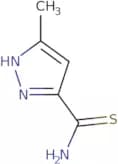
5-Methyl-1H-pyrazole-3-carbothioamide
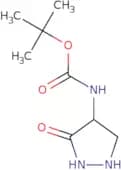
CAS:<p>Versatile small molecule scaffold</p>Formula:C5H7N3SPurity:Min. 95%Molecular weight:141.2 g/moltert-Butyl N-(3-oxopyrazolidin-4-yl)carbamate
CAS:Versatile small molecule scaffoldFormula:C8H15N3O3Purity:Min. 95%Molecular weight:201.22 g/mol4-Chloro-6-methylthieno[2,3-d]pyrimidine
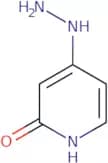
CAS:<p>Versatile small molecule scaffold</p>Formula:C7H5ClN2SPurity:Min. 95%Molecular weight:184.65 g/mol4-Hydrazinylpyridin-2(1H)-one
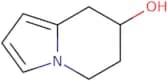
CAS:<p>Versatile small molecule scaffold</p>Formula:C5H7N3OPurity:Min. 95%Molecular weight:125.13 g/mol5,6,7,8-Tetrahydroindolizin-7-ol
CAS:<p>Versatile small molecule scaffold</p>Formula:C8H11NOPurity:Min. 95%Molecular weight:137.18 g/mol1-[2-(Oxiran-2-yl)ethyl]-1H-pyrrole
CAS:<p>Versatile small molecule scaffold</p>Formula:C8H11NOPurity:Min. 95%Molecular weight:137.18 g/mol2-[(Naphthalen-1-ylmethyl)sulfanyl]ethan-1-amine
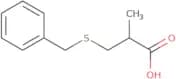
CAS:<p>Versatile small molecule scaffold</p>Formula:C13H15NSPurity:Min. 95%Molecular weight:217.33 g/mol3-(Benzylsulfanyl)-2-methylpropanoic acid
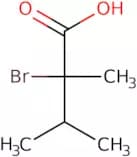
CAS:<p>Versatile small molecule scaffold</p>Formula:C11H14O2SPurity:Min. 95%Molecular weight:210.29 g/mol2-Bromo-2,3-dimethylbutanoic acid
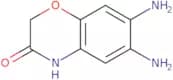
CAS:<p>Versatile small molecule scaffold</p>Formula:C6H11BrO2Purity:Min. 95%Molecular weight:195.05 g/mol6,7-Diamino-3,4-dihydro-2H-1,4-benzoxazin-3-one
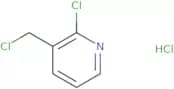
CAS:<p>Versatile small molecule scaffold</p>Formula:C8H9N3O2Purity:Min. 95%Molecular weight:179.18 g/mol2-chloro-3-(chloromethyl)pyridine
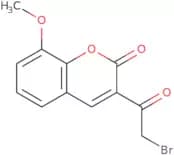
CAS:<p>Versatile small molecule scaffold</p>Formula:C6H6Cl3NPurity:Min. 95%Molecular weight:198.47 g/mol3-(2-Bromoacetyl)-8-methoxy-2H-chromen-2-one
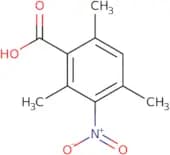
CAS:<p>Versatile small molecule scaffold</p>Formula:C12H9BrO4Purity:Min. 95%Molecular weight:297.1 g/mol2,4,6-Trimethyl-3-nitrobenzoic acid
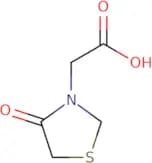
CAS:<p>Versatile small molecule scaffold</p>Formula:C10H11NO4Purity:Min. 95%Molecular weight:209.2 g/mol2-(4-Oxo-1,3-thiazolidin-3-yl)acetic acid
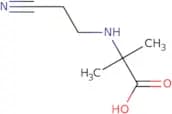
CAS:<p>2-(4-Oxo-1,3-thiazolidin-3-yl)acetic acid is a reactive compound that is used as an intermediate in organic synthesis. It has been shown to be a potential precursor for the synthesis of psychotropic drugs. The carboxyl group on the molecule can be oxidized or eliminated under acidic conditions. 2-(4-Oxo-1,3-thiazolidin-3-yl)acetic acid also undergoes an elimination reaction with an alcohol and a base to form an ethyl ester and an acid ethyl ester.</p>Formula:C5H7NO3SPurity:Min. 95%Molecular weight:161.18 g/mol2-(2-Cyanoethylamino)-2-methyl-propanoic acid
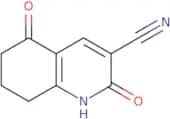
CAS:<p>Versatile small molecule scaffold</p>Formula:C7H12N2O2Purity:Min. 95%Molecular weight:156.18 g/mol2,5-Dioxo-1,2,5,6,7,8-hexahydroquinoline-3-carbonitrile
CAS:<p>Versatile small molecule scaffold</p>Formula:C10H8N2O2Purity:Min. 95%Molecular weight:188.18 g/moltert-Butyl N-(4-iodobutan-2-yl)carbamate
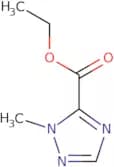
CAS:<p>Versatile small molecule scaffold</p>Formula:C9H18INO2Purity:Min. 95%Molecular weight:299.1 g/molEthyl 1-methyl-1H-1,2,4-triazole-5-carboxylate
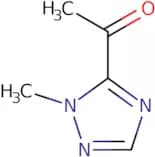
CAS:<p>Versatile small molecule scaffold</p>Formula:C6H9N3O2Purity:Min. 95%Molecular weight:155.15 g/molEthanone, 1-(1-methyl-1H-1,2,4-triazol-5-yl)-
CAS:<p>Versatile small molecule scaffold</p>Formula:C5H7N3OPurity:Min. 95%Molecular weight:125.13 g/molFuro[2,3-c]pyridin-3-one hydrochloride
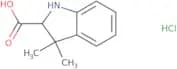
CAS:<p>Versatile small molecule scaffold</p>Formula:C7H6ClNO2Purity:Min. 95%Molecular weight:171.58 g/mol3,3-Dimethyl-2,3-dihydro-1H-indole-2-carboxylic acid hydrochloride
CAS:<p>Versatile small molecule scaffold</p>Formula:C11H14ClNO2Purity:Min. 95%Molecular weight:227.69 g/molBenzyl[1-(morpholin-4-yl)propan-2-yl]amine
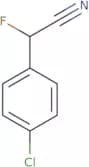
CAS:<p>Versatile small molecule scaffold</p>Formula:C14H22N2OPurity:Min. 95%Molecular weight:234.34 g/mol2-(4-Chlorophenyl)-2-fluoroacetonitrile
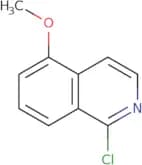
CAS:<p>Versatile small molecule scaffold</p>Formula:C8H5ClFNPurity:Min. 95%Molecular weight:169.58 g/mol1-chloro-5-methoxyisoquinoline
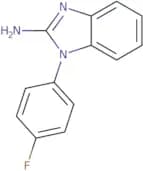
CAS:<p>Versatile small molecule scaffold</p>Formula:C10H8ClNOPurity:Min. 95%Molecular weight:193.63 g/mol1-(4-Fluorophenyl)-1H-1,3-benzodiazol-2-amine
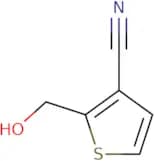
CAS:<p>Versatile small molecule scaffold</p>Formula:C13H10FN3Purity:Min. 95%Molecular weight:227.24 g/mol2-(Hydroxymethyl)thiophene-3-carbonitrile
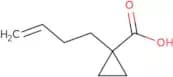
CAS:<p>Versatile small molecule scaffold</p>Formula:C6H5NOSPurity:Min. 95%Molecular weight:139.18 g/mol1-(But-3-en-1-yl)cyclopropane-1-carboxylic acid
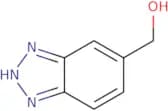
CAS:<p>Versatile small molecule scaffold</p>Formula:C8H12O2Purity:Min. 95%Molecular weight:140.18 g/mol1H-1,2,3-Benzotriazol-5-ylmethanol
CAS:<p>Versatile small molecule scaffold</p>Formula:C7H7N3OPurity:Min. 95%Molecular weight:149.15 g/molethyl 2-amino-4,5,6,7-tetrahydrobenzo[d]thiazole-4-carboxylate
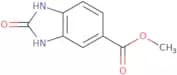
CAS:<p>Versatile small molecule scaffold</p>Formula:C8H6N2O2Purity:Min. 95%Molecular weight:162.15 g/molMethyl 2-oxo-2,3-dihydro-1H-1,3-benzimidazole-5-carboxylate
CAS:<p>Versatile small molecule scaffold</p>Formula:C9H8N2O3Purity:Min. 95%Molecular weight:192.18 g/molN-Boc-µ-caprolactam
CAS:<p>N-Boc-µ-caprolactam is a heterocyclic compound that is synthesized through the palladium-catalyzed coupling of boronic acids and vinyl phosphates. This compound can be converted to a variety of heteroaryl compounds using the Suzuki reaction, which involves the addition of an organometallic reagent to an unsaturated bond. The nitrogen atom in this molecule can also react with metal catalysts to form nitrogen-containing compounds. N-Boc-µ-caprolactam has been shown to be effective for palladium-catalyzed coupling reactions with various boronic acids and acetylenes.</p>Formula:C11H19NO3Purity:Min. 95%Molecular weight:213.27 g/mol7-Oxa-1-azaspiro[3.5]nonane
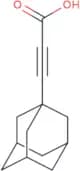
CAS:Versatile small molecule scaffoldFormula:C7H13NOPurity:Min. 95%Molecular weight:127.18 g/mol3-(Adamantan-1-yl)prop-2-ynoic acid
CAS:<p>Versatile small molecule scaffold</p>Formula:C13H16O2Purity:Min. 95%Molecular weight:204.26 g/molMethyl 2,3,4,5-tetrahydro-1H-azepine-1-carboxylate
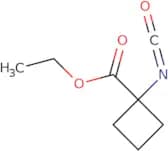
CAS:<p>Versatile small molecule scaffold</p>Formula:C8H13NO2Purity:Min. 95%Molecular weight:155.2 g/molEthyl 1-isocyanatocyclobutane-1-carboxylate
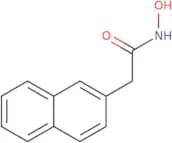
CAS:<p>Versatile small molecule scaffold</p>Formula:C8H11NO3Purity:Min. 95%Molecular weight:169.18 g/molN-Hydroxy-2-(naphthalen-2-yl)acetamide
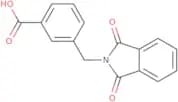
CAS:<p>Versatile small molecule scaffold</p>Formula:C12H11NO2Purity:Min. 95%Molecular weight:201.22 g/mol3-(1,3-Dioxo-1,3-dihydro-isoindol-2-ylmethyl)-benzoic acid
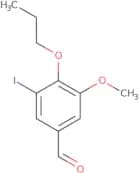
CAS:<p>Versatile small molecule scaffold</p>Formula:C16H11NO4Purity:Min. 95%Molecular weight:281.27 g/mol3-Iodo-5-methoxy-4-propoxybenzaldehyde
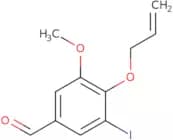
CAS:<p>Versatile small molecule scaffold</p>Formula:C11H13IO3Purity:Min. 95%Molecular weight:320.12 g/mol3-Iodo-5-methoxy-4-(prop-2-en-1-yloxy)benzaldehyde
CAS:<p>Versatile small molecule scaffold</p>Formula:C11H11IO3Purity:Min. 95%Molecular weight:318.11 g/molEthyl 3,4,4-trimethylpentanoate
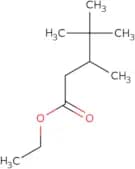
CAS:<p>Ethyl 3,4,4-trimethylpentanoate is an alkane with the chemical formula C5H12O2. This compound can be produced by the disproportionation of ethyl 2-methylbutanoate and is a precursor to propylene oxide. It is an important intermediate for other chemicals, such as alkylating agents and pharmaceuticals. Ethyl 3,4,4-trimethylpentanoate has been shown to undergo diastereoselective reactions in the presence of Lewis acids, which produces a single stereoisomer.</p>Formula:C10H20O2Purity:Min. 95%Molecular weight:172.26 g/mol1-(Piperidin-2-yl)ethanone hydrochloride
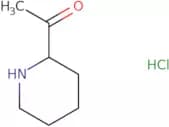
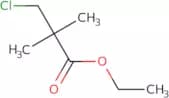
CAS:<p>Versatile small molecule scaffold</p>Formula:C7H13NO·HClPurity:Min. 95%Molecular weight:163.65 g/molEthyl 3-chloro-2,2-dimethylpropanoate
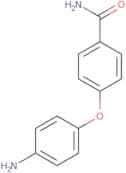
CAS:<p>Versatile small molecule scaffold</p>Formula:C7H13ClO2Purity:Min. 95%Molecular weight:164.63 g/mol4-(4-Aminophenoxy)benzamide
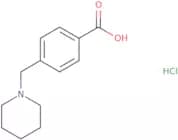
CAS:<p>Versatile small molecule scaffold</p>Formula:C13H12N2O2Purity:Min. 95%Molecular weight:228.25 g/mol4-(Piperidin-1-ylmethyl)benzoic acid hydrochloride
CAS:<p>Versatile small molecule scaffold</p>Formula:C13H18ClNO2Purity:Min. 95%Molecular weight:255.74 g/mol1-{Thieno[3,2-c]pyridin-4-yl}piperazine
CAS:<p>Versatile small molecule scaffold</p>Formula:C11H13N3SPurity:Min. 95%Molecular weight:219.31 g/mol2-(Benzyloxy)-4-fluorophenol
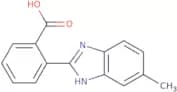
CAS:<p>Versatile small molecule scaffold</p>Formula:C13H11FO2Purity:Min. 95%Molecular weight:218.22 g/mol2-(6-Methyl-1H-1,3-benzodiazol-2-yl)benzoic acid
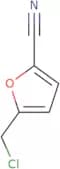
CAS:<p>Versatile small molecule scaffold</p>Formula:C15H12N2O2Purity:Min. 95%Molecular weight:252.27 g/mol5-(Chloromethyl)furan-2-carbonitrile
CAS:<p>Versatile small molecule scaffold</p>Formula:C6H4ClNOPurity:Min. 95%Molecular weight:141.55 g/mol2-Oxatricyclo[3.3.1.1,3,7]decane-1-carboxylic acid
CAS:<p>Versatile small molecule scaffold</p>Formula:C10H14O3Purity:Min. 95%Molecular weight:182.22 g/mol{2-Oxatricyclo[3.3.1.1,3,7]decan-1-yl}methanamine
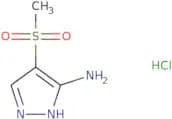
CAS:<p>Versatile small molecule scaffold</p>Formula:C10H17NOPurity:Min. 95%Molecular weight:167.2 g/mol4-Methanesulfonyl-1H-pyrazol-5-amine hydrochloride
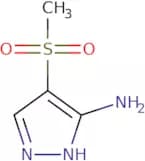
CAS:<p>Versatile small molecule scaffold</p>Formula:C4H8ClN3O2SPurity:Min. 95%Molecular weight:197.64 g/mol4-Methanesulfonyl-1H-pyrazol-3-amine
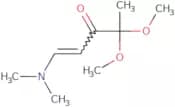
CAS:<p>Versatile small molecule scaffold</p>Formula:C4H7N3O2SPurity:Min. 95%Molecular weight:161.19 g/mol(E)-1-Dimethylamino-4,4-dimethoxy-pent-1-en-3-one
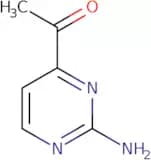
CAS:<p>Versatile small molecule scaffold</p>Formula:C9H17NO3Purity:Min. 95%Molecular weight:187.24 g/mol1-(2-Aminopyrimidin-4-yl)ethanone
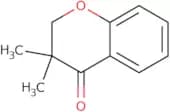
CAS:<p>Versatile small molecule scaffold</p>Formula:C6H7N3OPurity:Min. 95%Molecular weight:137.14 g/mol3,3-Dimethyl-3,4-dihydro-2H-1-benzopyran-4-one
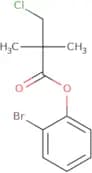
CAS:<p>The compound 3,3-dimethyl-3,4-dihydro-2H-1-benzopyran-4-one is a chromanone that is prepared by the reaction of methylene chloride with an alkyl halide. This compound has been shown to have a low melting point and can be used as a solvent in organic reactions at low temperatures. The use of this compound is limited because it reacts with alkoxides to form alkyl halides.</p>Formula:C11H12O2Purity:Min. 95%Molecular weight:176.21 g/mol2-Bromophenyl 3-chloro-2,2-dimethylpropanoate
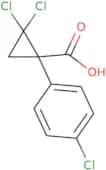
CAS:<p>Versatile small molecule scaffold</p>Formula:C11H12BrClO2Purity:Min. 95%Molecular weight:291.57 g/mol2,2-Dichloro-1-(4-chlorophenyl)cyclopropane-1-carboxylic acid
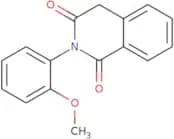
CAS:<p>Versatile small molecule scaffold</p>Formula:C10H7Cl3O2Purity:Min. 95%Molecular weight:265.5 g/mol2-(2-Methoxyphenyl)-1,2,3,4-tetrahydroisoquinoline-1,3-dione
CAS:<p>Versatile small molecule scaffold</p>Formula:C16H13NO3Purity:Min. 95%Molecular weight:267.28 g/molMethyl 2-oxopiperidine-3-carboxylate
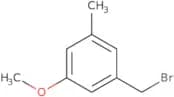
CAS:<p>Versatile small molecule scaffold</p>Formula:C10H7NOPurity:Min. 95%Molecular weight:157.17 g/mol1-(Bromomethyl)-3-methoxy-5-methylbenzene
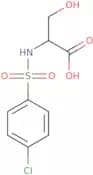
CAS:<p>1-(Bromomethyl)-3-methoxy-5-methylbenzene is a synthetase inhibitor that binds to the active site of the synthetase and inhibits protein synthesis. The binding causes structural changes in the enzyme, which are detected by mass spectrometry. This compound has been shown to be a promiscuous substrate for many aminoacyl-tRNA synthetases (ARSs). It is structurally similar to other analogues that have been shown to inhibit ARSs, such as dicyclohexylcarbodiimide. 1-(Bromomethyl)-3-methoxy-5-methylbenzene has been shown to be an effective inhibitor of protein synthesis in cell-free systems and can be used for the quantification of proteins in cell lysates.</p>Formula:C9H11BrOPurity:Min. 95%Molecular weight:215.09 g/mol2-(4-Chlorobenzenesulfonamido)-3-hydroxypropanoic acid
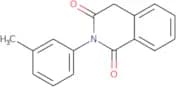
CAS:<p>Versatile small molecule scaffold</p>Formula:C9H10ClNO5SPurity:Min. 95%Molecular weight:279.7 g/mol2-(3-Methylphenyl)-1,2,3,4-tetrahydroisoquinoline-1,3-dione
CAS:Versatile small molecule scaffoldFormula:C16H13NO2Purity:Min. 95%Molecular weight:251.28 g/mol1-[2-(Diethylamino)ethyl]-2,3-dihydro-1H-indole-2,3-dione
CAS:<p>Versatile small molecule scaffold</p>Formula:C14H18N2O2Purity:Min. 95%Molecular weight:246.3 g/mol1-[2-(Dimethylamino)ethyl]-2,3-dihydro-1H-indole-2,3-dione
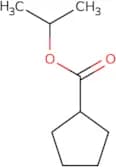
CAS:<p>Versatile small molecule scaffold</p>Formula:C12H14N2O2Purity:Min. 95%Molecular weight:218.25 g/molPropan-2-yl cyclopentanecarboxylate
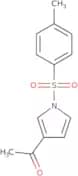
CAS:<p>Propan-2-yl cyclopentanecarboxylate is an inorganic compound that inhibits the pericyclic reaction of dienolate and cyclopentadiene. It has been shown to bind to tyrosine kinase, which is a protein involved in many cellular processes such as cell growth, proliferation, differentiation, and survival. The inhibitory activity of this compound was found to be mediated by its benzamide function. Propan-2-yl cyclopentanecarboxylate has been used as a pesticide for controlling weeds and pests on agricultural crops. It can also be used as an intermediate for the synthesis of other compounds such as imidazopyrazine or carbocycles.</p>Formula:C9H16O2Purity:Min. 95%Molecular weight:156.22 g/mol3-Acetyl-1-tosylpyrrole
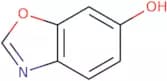
CAS:<p>3-Acetyl-1-tosylpyrrole is a lipid peroxidation inhibitor that acts as an electron donor to react with free radicals. It can be used in the synthesis of anilines, which are used for the manufacture of dyes and pharmaceuticals. 3-Acetyl-1-tosylpyrrole has also been shown to have antioxidant properties, inhibiting carrageenan induced paw oedema. The compound is synthesized by a Wittig reaction using 1,3-dibromoindole and ethyl acetate in the presence of hydrochloric acid.</p>Formula:C13H13NO3SPurity:Min. 95%Molecular weight:263.32 g/mol1,3-benzoxazol-6-ol
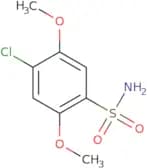
CAS:<p>1,3-Benzoxazol-6-ol is a polymer that is synthesized by the reaction of piperonyl butoxide and polyphosphoric acid with a high molecular weight. The polymer solution has been shown to be stable at room temperature for up to six weeks. The polymer can be used as an additive in polyphosphoric acid solutions to prevent the formation of precipitates. It also has applications in the synthesis of other polymers with different molecular weights.</p>Formula:C7H5NO2Purity:Min. 95%Molecular weight:135.12 g/mol4-Chloro-2,5-dimethoxybenzene-1-sulfonamide
CAS:<p>Versatile small molecule scaffold</p>Formula:C8H10ClNO4SPurity:Min. 95%Molecular weight:251.69 g/mol[2-(4-Chlorophenoxy)ethyl]amine hydrochloride
CAS:<p>Versatile small molecule scaffold</p>Formula:C8H11Cl2NOPurity:Min. 95%Molecular weight:208.08 g/mol(2-Methoxyethyl)[(5-methylfuran-2-yl)methyl]amine
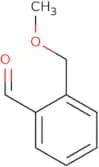
CAS:<p>Versatile small molecule scaffold</p>Formula:C9H15NO2Purity:Min. 95%Molecular weight:169.22 g/mol2-(Methoxymethyl)benzaldehyde
CAS:<p>2-(Methoxymethyl)benzaldehyde is a naturally occurring compound that can be found in the environment and in food. It has been shown to have antioxidant properties, which is due to its ability to inhibit reductase enzymes. This process is important for maintaining a healthy balance of cholesterol levels in the body. The high level of 2-(Methoxymethyl)benzaldehyde in some plants may be due to the conversion from 3-hydroxy-3-methylglutaryl coenzyme A (HMG CoA), which is an intermediate in the synthesis of cholesterol.<br>2-(Methoxymethyl)benzaldehyde has been shown to have potential as a supplement for weight loss and diabetes treatment.</p>Formula:C9H10O2Purity:Min. 95%Molecular weight:150.17 g/molN-[2-(Diethylamino)ethyl]-4-hydroxybenzamide
CAS:<p>Versatile small molecule scaffold</p>Formula:C13H20N2O2Purity:Min. 95%Molecular weight:236.31 g/molImidazo[1,2-a]pyrazine-3-carbaldehyde
CAS:<p>Versatile small molecule scaffold</p>Formula:C7H5N3OPurity:Min. 95%Molecular weight:147.13 g/molImidazo[1,2-a]pyrimidine-3-carbaldehyde
CAS:<p>Imidazo[1,2-a]pyrimidine-3-carbaldehyde is a pyridine that has been shown to have antibacterial activity. The imidazopyridines are a class of compounds with a 1,2-imidazole ring fused to a pyridine ring. Imidazo[1,2-a]pyrimidine-3-carbaldehyde is an example of such a compound. Imidazopyridines may be used as scaffolds for the development of new antibiotics. The chemical structure and activity of this compound may be related to its ability to bind to the 50S ribosomal subunit in bacteria and inhibit protein synthesis. This inhibition leads to cell death by inhibiting the production of proteins vital for cell division.</p>Formula:C7H5N3OPurity:Min. 95%Molecular weight:147.13 g/mol2-[2-(Ethylamino)ethoxy]ethan-1-ol
CAS:<p>Versatile small molecule scaffold</p>Formula:C6H15NO2Purity:Min. 95%Molecular weight:133.19 g/molDimethyl bicyclo[3.2.1]octane-1,5-dicarboxylate
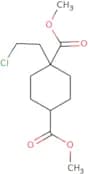
CAS:<p>Versatile small molecule scaffold</p>Formula:C12H18O4Purity:Min. 95%Molecular weight:226.27 g/molDimethyl 1-(2-chloroethyl)cyclohexane-1,4-dicarboxylate
CAS:<p>Versatile small molecule scaffold</p>Formula:C12H19ClO4Purity:Min. 95%Molecular weight:262.73 g/mol2-[(2-Cyanoethyl)sulfanyl]acetic acid
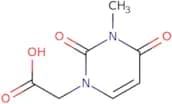
CAS:<p>Versatile small molecule scaffold</p>Formula:C5H7NO2SPurity:Min. 95%Molecular weight:145.2 g/mol2-(3-Methyl-2,4-dioxo-1,2,3,4-tetrahydropyrimidin-1-yl)acetic acid
CAS:<p>Versatile small molecule scaffold</p>Formula:C7H8N2O4Purity:Min. 95%Molecular weight:184.15 g/mol(S)-1-(4-Chlorophenyl)ethanamine hydrochloride
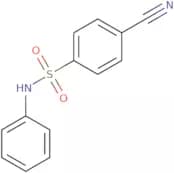
CAS:<p>Versatile small molecule scaffold</p>Formula:C8H11Cl2NPurity:Min. 95%Molecular weight:192.09 g/mol4-Cyano-N-phenylbenzene-1-sulfonamide
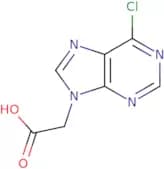
CAS:<p>4-Cyano-N-phenylbenzene-1-sulfonamide is a salt that belongs to the group of aromatic sulfonamides. It is a white, crystalline solid with a melting point of 197 °C. 4-Cyano-N-phenylbenzene-1-sulfonamide has been found to be a polymorphic substance, which means that it can exist in more than one form. The systematic name for this compound is 1-(4'-cyano-3'-nitrophenyl)-4-(4'-cyano-3'-nitrophenyl)benzenesulfonamide monohydrochloride (2:1), and it has two polymorphs: the tetragonal crystal system and the orthorhombic crystal system. 4-Cyano-N-phenylbenzene-1 -sulfonamide also has hydrogen bonding interactions between its molecules and diffraction patterns</p>Formula:C13H10N2O2SPurity:Min. 95%Molecular weight:258.3 g/mol2-(6-Chloro-9H-purin-9-yl)acetic acid
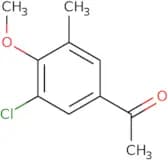
CAS:<p>Versatile small molecule scaffold</p>Formula:C7H5ClN4O2Purity:Min. 95%Molecular weight:212.59 g/mol1-(3-Chloro-4-methoxy-5-methylphenyl)ethan-1-one
CAS:<p>Versatile small molecule scaffold</p>Formula:C10H11ClO2Purity:Min. 95%Molecular weight:198.64 g/mol4-Cyano-1H-imidazole-5-carboxylic acid
CAS:<p>Versatile small molecule scaffold</p>Formula:C5H3N3O2Purity:Min. 95%Molecular weight:137.1 g/molEthyl 3-(2-methylcyclopropyl)-3-oxopropanoates
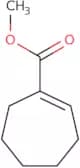
CAS:<p>Versatile small molecule scaffold</p>Formula:C9H14O3Purity:Min. 95%Molecular weight:170.2 g/molMethyl cyclohept-1-ene-1-carboxylate
CAS:<p>Methyl cyclohept-1-ene-1-carboxylate is a histone methyltransferase inhibitor that inhibits the synthesis of histones in mammalian cells. Methyl cyclohept-1-ene-1-carboxylate is used for the treatment of cancers, such as leukemia, lymphoma, and multiple myeloma. It binds to the DNA at specific sites and blocks the formation of histones by inhibiting the transfer of methyl groups. This process leads to changes in gene expression and cellular proliferation. Methyl cyclohept-1-ene-1-carboxylate has also been shown to inhibit demethylation, leading to increased methylation of DNA. The effector proteins may be involved in regulating this process, but more research is needed to confirm this hypothesis.</p>Formula:C9H14O2Purity:Min. 95%Molecular weight:154.21 g/mol1-[1-(Pyridin-3-yl)ethyl]piperazine
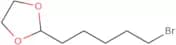
CAS:<p>Versatile small molecule scaffold</p>Formula:C11H17N3Purity:Min. 95%Molecular weight:191.27 g/mol2-(5-Bromopentyl)-1,3-dioxolane
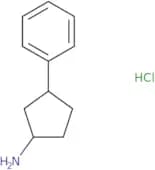
CAS:<p>Versatile small molecule scaffold</p>Formula:C8H15BrO2Purity:Min. 95%Molecular weight:223.11 g/mol3-Phenylcyclopentan-1-amine hydrochloride
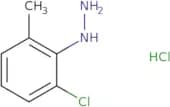
CAS:<p>Versatile small molecule scaffold</p>Formula:C11H16ClNPurity:Min. 95%Molecular weight:197.7 g/mol(2-Chloro-6-methylphenyl)hydrazine hydrochloride
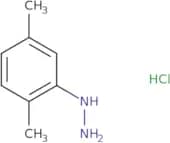
CAS:<p>Versatile small molecule scaffold</p>Formula:C7H10Cl2N2Purity:Min. 95%Molecular weight:193.07 g/mol2,5-Dimethylphenylhydrazine hydrochloride
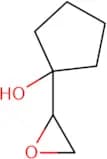
CAS:Versatile small molecule scaffoldFormula:C8H12N2·HClPurity:Min. 95%Molecular weight:172.66 g/mol1-(Oxiran-2-yl)cyclopentan-1-ol
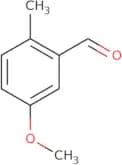
CAS:<p>Versatile small molecule scaffold</p>Formula:C7H12O2Purity:Min. 95%Molecular weight:128.17 g/mol5-Methoxy-2-methylbenzaldehyde
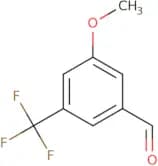
CAS:<p>5-Methoxy-2-methylbenzaldehyde is a piperazine derivative that is used in the synthesis of other organic compounds. It is an intermediate for the production of fluoroquinolones, which are broad spectrum antibiotics. 5-Methoxy-2-methylbenzaldehyde can be synthesized using the liquid phase technique, which involves the use of solvents such as chloroform and ethanol. It has two isomers, methoxy methyl and methoxymethyl, which can be separated by chromatography or mass spectrometry. The synthesis of 5-methoxy-2-methylbenzaldehyde starts with a reaction between trimethylamine and formaldehyde in concentrated sulfuric acid. This reaction produces diethyl fumarate, which reacts with hydrochloric acid to produce diethyl malonate. The next step in this process involves heating the malonate mixture to produce 5-methoxy-2-methylbenz</p>Formula:C9H10O2Purity:Min. 95%Molecular weight:150.18 g/mol3-Methoxy-5-(trifluoromethyl)benzaldehyde
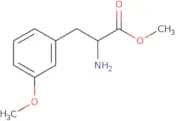
CAS:<p>Versatile small molecule scaffold</p>Formula:C9H7F3O2Purity:Min. 95%Molecular weight:204.15 g/molMethyl 2-amino-3-(3-methoxyphenyl)propanoate
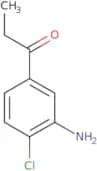
CAS:<p>Versatile small molecule scaffold</p>Formula:C11H15NO3Purity:Min. 95%Molecular weight:209.24 g/mol1-(3-Amino-4-chlorophenyl)propan-1-one
CAS:<p>Versatile small molecule scaffold</p>Formula:C9H10ClNOPurity:Min. 95%Molecular weight:183.63 g/molEthyl 2-[(1-phenylethyl)amino]acetate
CAS:<p>Versatile small molecule scaffold</p>Formula:C12H17NO2Purity:Min. 95%Molecular weight:207.27 g/mol2-[(1-Phenylethyl)amino]acetohydrazide
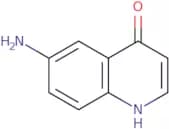
CAS:<p>Versatile small molecule scaffold</p>Formula:C10H15N3OPurity:Min. 95%Molecular weight:193.25 g/mol6-Aminoquinolin-4-ol
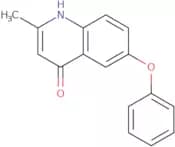
CAS:<p>Versatile small molecule scaffold</p>Formula:C9H8N2OPurity:Min. 95%Molecular weight:160.17 g/mol2-Methyl-6-phenoxyquinolin-4-ol
CAS:<p>Versatile small molecule scaffold</p>Formula:C16H13NO2Purity:Min. 95%Molecular weight:251.28 g/mol

![4-Chloro-6-methylthieno[2,3-d]pyrimidine](/_next/image/?url=https%3A%2Fstatic.cymitquimica.com%2Fproducts%2F3D%2Fthumb-webp%2FGEA69121.webp&w=3840&q=75)
![1-[2-(Oxiran-2-yl)ethyl]-1H-pyrrole](/_next/image/?url=https%3A%2Fstatic.cymitquimica.com%2Fproducts%2F3D%2Fthumb-webp%2FGEA68122.webp&w=3840&q=75)
![2-[(Naphthalen-1-ylmethyl)sulfanyl]ethan-1-amine](/_next/image/?url=https%3A%2Fstatic.cymitquimica.com%2Fproducts%2F3D%2Fthumb-webp%2FGEA67025.webp&w=3840&q=75)
![Furo[2,3-c]pyridin-3-one hydrochloride](/_next/image/?url=https%3A%2Fstatic.cymitquimica.com%2Fproducts%2F3D%2Fthumb-webp%2FGEA53151.webp&w=3840&q=75)
![Benzyl[1-(morpholin-4-yl)propan-2-yl]amine](/_next/image/?url=https%3A%2Fstatic.cymitquimica.com%2Fproducts%2F3D%2Fthumb-webp%2FGEA47634.webp&w=3840&q=75)
![ethyl 2-amino-4,5,6,7-tetrahydrobenzo[d]thiazole-4-carboxylate](/_next/image/?url=https%3A%2Fstatic.cymitquimica.com%2Fproducts%2F3D%2Fthumb-webp%2FGEA42959.webp&w=3840&q=75)
![7-Oxa-1-azaspiro[3.5]nonane](/_next/image/?url=https%3A%2Fstatic.cymitquimica.com%2Fproducts%2F3D%2Fthumb-webp%2FGEA40452.webp&w=3840&q=75)
![1-{Thieno[3,2-c]pyridin-4-yl}piperazine](/_next/image/?url=https%3A%2Fstatic.cymitquimica.com%2Fproducts%2F3D%2Fthumb-webp%2FGEA26127.webp&w=3840&q=75)

![2-Oxatricyclo[3.3.1.1,3,7]decane-1-carboxylic acid](/_next/image/?url=https%3A%2Fstatic.cymitquimica.com%2Fproducts%2F3D%2Fthumb-webp%2FGEA23717.webp&w=3840&q=75)
![{2-Oxatricyclo[3.3.1.1,3,7]decan-1-yl}methanamine](/_next/image/?url=https%3A%2Fstatic.cymitquimica.com%2Fproducts%2F3D%2Fthumb-webp%2FGEA23715.webp&w=3840&q=75)

![1-[2-(Diethylamino)ethyl]-2,3-dihydro-1H-indole-2,3-dione](/_next/image/?url=https%3A%2Fstatic.cymitquimica.com%2Fproducts%2F3D%2Fthumb-webp%2FGEA11061.webp&w=3840&q=75)
![1-[2-(Dimethylamino)ethyl]-2,3-dihydro-1H-indole-2,3-dione](/_next/image/?url=https%3A%2Fstatic.cymitquimica.com%2Fproducts%2F3D%2Fthumb-webp%2FGEA11060.webp&w=3840&q=75)
![[2-(4-Chlorophenoxy)ethyl]amine hydrochloride](/_next/image/?url=https%3A%2Fstatic.cymitquimica.com%2Fproducts%2F3D%2Fthumb-webp%2FGEA03800.webp&w=3840&q=75)
![(2-Methoxyethyl)[(5-methylfuran-2-yl)methyl]amine](/_next/image/?url=https%3A%2Fstatic.cymitquimica.com%2Fproducts%2F3D%2Fthumb-webp%2FGEA02747.webp&w=3840&q=75)
![N-[2-(Diethylamino)ethyl]-4-hydroxybenzamide](/_next/image/?url=https%3A%2Fstatic.cymitquimica.com%2Fproducts%2F3D%2Fthumb-webp%2FGEA01837.webp&w=3840&q=75)
![Imidazo[1,2-a]pyrazine-3-carbaldehyde](/_next/image/?url=https%3A%2Fstatic.cymitquimica.com%2Fproducts%2F3D%2Fthumb-webp%2FGEA01258.webp&w=3840&q=75)
![Imidazo[1,2-a]pyrimidine-3-carbaldehyde](/_next/image/?url=https%3A%2Fstatic.cymitquimica.com%2Fproducts%2F3D%2Fthumb-webp%2FGEA01256.webp&w=3840&q=75)
![2-[2-(Ethylamino)ethoxy]ethan-1-ol](/_next/image/?url=https%3A%2Fstatic.cymitquimica.com%2Fproducts%2F3D%2Fthumb-webp%2FGEA00799.webp&w=3840&q=75)
![Dimethyl bicyclo[3.2.1]octane-1,5-dicarboxylate](/_next/image/?url=https%3A%2Fstatic.cymitquimica.com%2Fproducts%2F3D%2Fthumb-webp%2FGEA00411.webp&w=3840&q=75)
![2-[(2-Cyanoethyl)sulfanyl]acetic acid](/_next/image/?url=https%3A%2Fstatic.cymitquimica.com%2Fproducts%2F3D%2Fthumb-webp%2FGCA79610.webp&w=3840&q=75)


![1-[1-(Pyridin-3-yl)ethyl]piperazine](/_next/image/?url=https%3A%2Fstatic.cymitquimica.com%2Fproducts%2F3D%2Fthumb-webp%2FGCA74361.webp&w=3840&q=75)
![Ethyl 2-[(1-phenylethyl)amino]acetate](/_next/image/?url=https%3A%2Fstatic.cymitquimica.com%2Fproducts%2F3D%2Fthumb-webp%2FGCA72098.webp&w=3840&q=75)
![2-[(1-Phenylethyl)amino]acetohydrazide](/_next/image/?url=https%3A%2Fstatic.cymitquimica.com%2Fproducts%2F3D%2Fthumb-webp%2FGCA72093.webp&w=3840&q=75)