Building Blocks
This section contains fundamental products for the synthesis of organic and biological compounds. Building blocks are the essential starting materials used to construct complex molecules through various chemical reactions. They play a critical role in drug discovery, material science, and chemical research. At CymitQuimica, we offer a diverse range of high-quality building blocks to support your innovative research and industrial projects, ensuring you have the essential components for successful synthesis.
Subcategories of "Building Blocks"
- Boronic Acids & Boronic Acid Derivatives(5,756 products)
- Chiral Building Blocks(1,242 products)
- Hydrocarbon Building Blocks(6,095 products)
- Organic Building Blocks(61,051 products)
Found 199813 products of "Building Blocks"
Sort by
Purity (%)
0
100
|
0
|
50
|
90
|
95
|
100
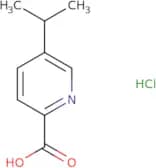
5-(Propan-2-yl)pyridine-2-carboxylic acid hydrochloride
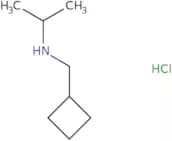
CAS:<p>Versatile small molecule scaffold</p>Formula:C9H12ClNO2Purity:Min. 95%Molecular weight:201.65 g/mol(Cyclobutylmethyl)(propan-2-yl)amine hydrochloride
CAS:<p>Versatile small molecule scaffold</p>Formula:C8H18ClNPurity:Min. 95%Molecular weight:163.69 g/mol9-Amino-5-azaspiro[3.5]nonan-6-one
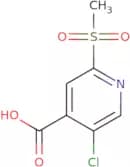
CAS:<p>Versatile small molecule scaffold</p>Formula:C8H14N2OPurity:Min. 95%Molecular weight:154.21 g/mol5-Chloro-2-methanesulfonylpyridine-4-carboxylic acid
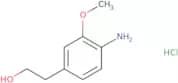
CAS:Versatile small molecule scaffoldFormula:C7H6ClNO4SPurity:Min. 95%Molecular weight:235.65 g/mol2-(4-Amino-3-methoxyphenyl)ethan-1-ol hydrochloride
CAS:<p>Versatile small molecule scaffold</p>Formula:C9H14ClNO2Purity:Min. 95%Molecular weight:203.66 g/mol7-Benzyl-2-[4-(trifluoromethyl)phenyl]-3H,4H,5H,6H,7H,8H-pyrido[3,4-d]pyrimidin-4-one hydrochloride
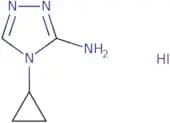
CAS:<p>Versatile small molecule scaffold</p>Formula:C21H19ClF3N3OPurity:Min. 95%Molecular weight:421.8 g/mol4-Cyclopropyl-4H-1,2,4-triazol-3-amine hydroiodide
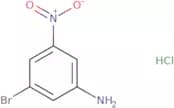
CAS:<p>Versatile small molecule scaffold</p>Formula:C5H9IN4Purity:Min. 95%Molecular weight:252.06 g/mol3-Bromo-5-nitroaniline hydrochloride
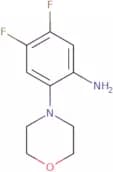
CAS:Versatile small molecule scaffoldFormula:C6H6BrClN2O2Purity:Min. 95%Molecular weight:253.48 g/mol4,5-Difluoro-2-(morpholin-4-yl)aniline
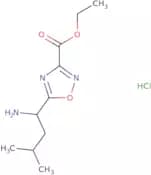
CAS:<p>Versatile small molecule scaffold</p>Formula:C10H12F2N2OPurity:Min. 95%Molecular weight:214.21 g/molEthyl 5-(1-amino-3-methylbutyl)-1,2,4-oxadiazole-3-carboxylate hydrochloride
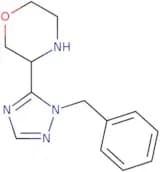
CAS:<p>Versatile small molecule scaffold</p>Formula:C10H18ClN3O3Purity:Min. 95%Molecular weight:263.72 g/mol3-(1-Benzyl-1H-1,2,4-triazol-5-yl)morpholine
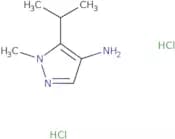
CAS:<p>Versatile small molecule scaffold</p>Formula:C13H16N4OPurity:Min. 95%Molecular weight:244.29 g/mol1-Methyl-5-(propan-2-yl)-1H-pyrazol-4-amine dihydrochloride
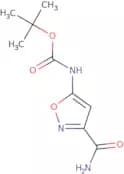
CAS:<p>Versatile small molecule scaffold</p>Formula:C7H15Cl2N3Purity:Min. 95%Molecular weight:212.12 g/moltert-Butyl N-(3-carbamoyl-1,2-oxazol-5-yl)carbamate
CAS:<p>Versatile small molecule scaffold</p>Formula:C9H13N3O4Purity:Min. 95%Molecular weight:227.22 g/mol1-[(Dimethylamino)methyl]cyclopropane-1-carboxylic acid hydrochloride
CAS:<p>Versatile small molecule scaffold</p>Formula:C7H14ClNO2Purity:Min. 95%Molecular weight:179.64 g/mol8-Amino-1,3-diazaspiro[4.5]decane-2,4-dione hydrochloride
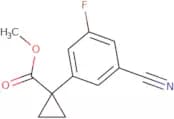
CAS:<p>Versatile small molecule scaffold</p>Formula:C8H14ClN3O2Purity:Min. 95%Molecular weight:219.67 g/molMethyl 1-(3-cyano-5-fluorophenyl)cyclopropane-1-carboxylate
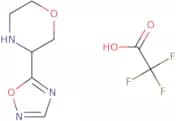
CAS:Versatile small molecule scaffoldFormula:C12H10FNO2Purity:Min. 95%Molecular weight:219.21 g/mol3-(1,2,4-Oxadiazol-5-yl)morpholine trifluoroacetate
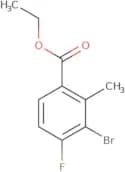
CAS:<p>Versatile small molecule scaffold</p>Formula:C8H10F3N3O4Purity:Min. 95%Molecular weight:269.18 g/molEthyl 3-bromo-4-fluoro-2-methylbenzoate
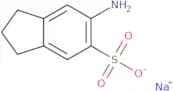
CAS:<p>Versatile small molecule scaffold</p>Formula:C10H10BrFO2Purity:Min. 95%Molecular weight:261.09 g/molSodium 6-amino-2,3-dihydro-1H-indene-5-sulfonate
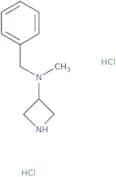
CAS:Versatile small molecule scaffoldFormula:C9H10NNaO3SPurity:Min. 95%Molecular weight:235.24 g/molN-Benzyl-N-methylazetidin-3-amine dihydrochloride
CAS:<p>Versatile small molecule scaffold</p>Formula:C11H18Cl2N2Purity:Min. 95%Molecular weight:249.18 g/mol3-[5-(Thiophen-2-yl)-1,3,4-oxadiazol-2-yl]morpholine hydrochloride
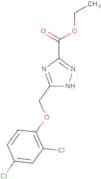
CAS:<p>Versatile small molecule scaffold</p>Formula:C10H12ClN3O2SPurity:Min. 95%Molecular weight:273.74 g/molEthyl 3-(2,4-dichlorophenoxymethyl)-1H-1,2,4-triazole-5-carboxylate
CAS:<p>Versatile small molecule scaffold</p>Formula:C12H11Cl2N3O3Purity:Min. 95%Molecular weight:316.14 g/mol4-Fluoro-2-(oxan-4-yloxy)aniline hydrochloride
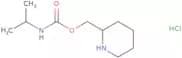
CAS:<p>Versatile small molecule scaffold</p>Formula:C11H15ClFNO2Purity:Min. 95%Molecular weight:247.69 g/molPiperidin-2-ylmethyl N-(propan-2-yl)carbamate hydrochloride
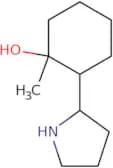
CAS:<p>Versatile small molecule scaffold</p>Formula:C10H21ClN2O2Purity:Min. 95%Molecular weight:236.74 g/mol1-Methyl-2-(pyrrolidin-2-yl)cyclohexan-1-ol
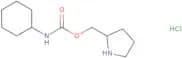
CAS:<p>Versatile small molecule scaffold</p>Formula:C11H21NOPurity:Min. 95%Molecular weight:183.29 g/molPyrrolidin-2-ylmethyl N-cyclohexylcarbamate hydrochloride
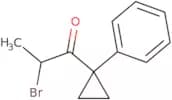
CAS:<p>Versatile small molecule scaffold</p>Formula:C12H23ClN2O2Purity:Min. 95%Molecular weight:262.77 g/mol2-Bromo-1-(1-phenylcyclopropyl)propan-1-one
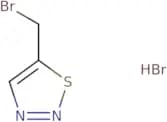
CAS:<p>Versatile small molecule scaffold</p>Formula:C12H13BrOPurity:Min. 95%Molecular weight:253.13 g/mol5-(Bromomethyl)-1,2,3-thiadiazole hydrobromide
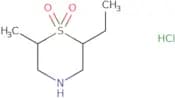
CAS:Versatile small molecule scaffoldFormula:C3H4Br2N2SPurity:Min. 95%Molecular weight:259.95 g/mol2-ethyl-6-methyl-1,4-thiazinane 1,1-dioxide hydrochloride
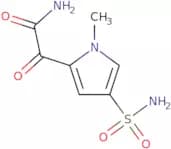
CAS:<p>Versatile small molecule scaffold</p>Formula:C7H16ClNO2SPurity:Min. 95%Molecular weight:213.73 g/mol2-(1-Methyl-4-sulfamoyl-1H-pyrrol-2-yl)-2-oxoacetamide
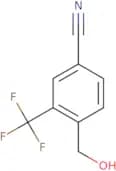
CAS:<p>Versatile small molecule scaffold</p>Formula:C7H9N3O4SPurity:Min. 95%Molecular weight:231.23 g/mol4-(Hydroxymethyl)-3-(trifluoromethyl)benzonitrile
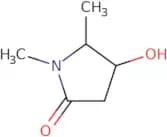
CAS:<p>Versatile small molecule scaffold</p>Formula:C9H6F3NOPurity:Min. 95%Molecular weight:201.14 g/mol4-Hydroxy-1,5-dimethylpyrrolidin-2-one
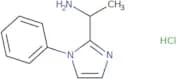
CAS:<p>Versatile small molecule scaffold</p>Formula:C6H11NO2Purity:Min. 95%Molecular weight:129.16 g/mol1-(1-Phenyl-1H-imidazol-2-yl)ethan-1-amine hydrochloride
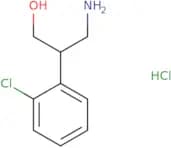
CAS:<p>Versatile small molecule scaffold</p>Formula:C11H14ClN3Purity:Min. 95%Molecular weight:223.7 g/mol3-Amino-2-(2-chlorophenyl)propan-1-ol hydrochloride
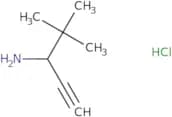
CAS:Versatile small molecule scaffoldFormula:C9H13Cl2NOPurity:Min. 95%Molecular weight:222.11 g/mol4,4-Dimethylpent-1-yn-3-amine hydrochloride
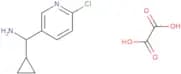
CAS:<p>Versatile small molecule scaffold</p>Formula:C7H14ClNPurity:Min. 95%Molecular weight:147.64 g/mol(6-Chloropyridin-3-yl)(cyclopropyl)methanamine, oxalic acid
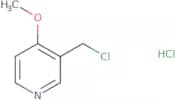
CAS:<p>Versatile small molecule scaffold</p>Formula:C11H13ClN2O4Purity:Min. 95%Molecular weight:272.68 g/mol3-(Chloromethyl)-4-methoxypyridine hydrochloride
CAS:<p>Versatile small molecule scaffold</p>Formula:C7H9Cl2NOPurity:Min. 95%Molecular weight:194.06 g/moltert-Butyl 3-[(chlorosulfonyl)methyl]-3-fluoroazetidine-1-carboxylate
CAS:<p>Versatile small molecule scaffold</p>Formula:C9H15ClFNO4SPurity:Min. 95%Molecular weight:287.74 g/mol2-[3-(Trifluoromethoxy)phenyl]morpholine
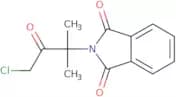
CAS:<p>Versatile small molecule scaffold</p>Formula:C11H12F3NO2Purity:Min. 95%Molecular weight:247.21 g/mol2-(4-Chloro-2-methyl-3-oxobutan-2-yl)-2,3-dihydro-1H-isoindole-1,3-dione
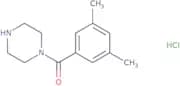
CAS:Versatile small molecule scaffoldFormula:C13H12ClNO3Purity:Min. 95%Molecular weight:265.69 g/mol1-(3,5-Dimethylbenzoyl)piperazine hydrochloride
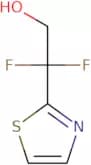
CAS:<p>Versatile small molecule scaffold</p>Formula:C13H19ClN2OPurity:Min. 95%Molecular weight:254.75 g/mol2,2-Difluoro-2-(1,3-thiazol-2-yl)ethan-1-ol
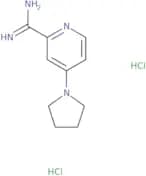
CAS:Versatile small molecule scaffoldFormula:C5H5F2NOSPurity:Min. 95%Molecular weight:165.16 g/mol4-(Pyrrolidin-1-yl)pyridine-2-carboximidamide dihydrochloride
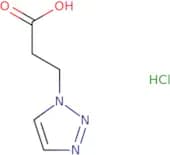
CAS:<p>Versatile small molecule scaffold</p>Formula:C10H16Cl2N4Purity:Min. 95%Molecular weight:263.16 g/mol3-(1H-1,2,3-Triazol-1-yl)propanoic acid hydrochloride
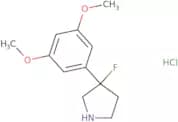
CAS:<p>Versatile small molecule scaffold</p>Formula:C5H8ClN3O2Purity:Min. 95%Molecular weight:177.59 g/mol3-(3,5-Dimethoxyphenyl)-3-fluoropyrrolidine hydrochloride
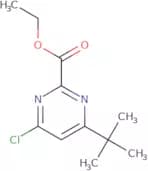
CAS:<p>Versatile small molecule scaffold</p>Formula:C12H17ClFNO2Purity:Min. 95%Molecular weight:261.72 g/molEthyl 4-tert-butyl-6-chloropyrimidine-2-carboxylate
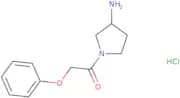
CAS:<p>Versatile small molecule scaffold</p>Formula:C11H15ClN2O2Purity:Min. 95%Molecular weight:242.7 g/mol1-(3-Aminopyrrolidin-1-yl)-2-phenoxyethan-1-one hydrochloride
CAS:<p>Versatile small molecule scaffold</p>Formula:C12H17ClN2O2Purity:Min. 95%Molecular weight:256.73 g/moltert-Butyl N-{2-[5-(4-chlorophenyl)-4H-1,2,4-triazol-3-yl]ethyl}carbamate
CAS:<p>Versatile small molecule scaffold</p>Formula:C15H19ClN4O2Purity:Min. 95%Molecular weight:322.79 g/mol{4,5-Dimethyl-4H,7H-[1,2,3,4]tetrazolo[1,5-a]pyrimidin-6-yl}methanol
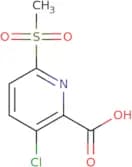
CAS:<p>Versatile small molecule scaffold</p>Formula:C7H11N5OPurity:Min. 95%Molecular weight:181.2 g/mol3-Chloro-6-methanesulfonylpyridine-2-carboxylic acid
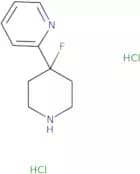
CAS:<p>Versatile small molecule scaffold</p>Formula:C7H6ClNO4SPurity:Min. 95%Molecular weight:235.65 g/mol2-(4-Fluoropiperidin-4-yl)pyridine dihydrochloride
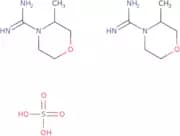
CAS:Versatile small molecule scaffoldFormula:C10H15Cl2FN2Purity:Min. 95%Molecular weight:253.14 g/molBis(3-methylmorpholine-4-carboximidamide), sulfuric acid
CAS:Versatile small molecule scaffoldFormula:C12H28N6O6SPurity:Min. 95%Molecular weight:384.46 g/molMethyl 3-[(5-nitro-1,3-thiazol-2-yl)sulfonyl]propanoate
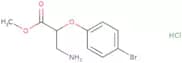
CAS:<p>Versatile small molecule scaffold</p>Formula:C7H8N2O6S2Purity:Min. 95%Molecular weight:280.3 g/molMethyl 3-amino-2-(4-bromophenoxy)propanoate hydrochloride
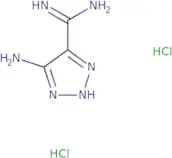
CAS:Versatile small molecule scaffoldFormula:C10H13BrClNO3Purity:Min. 95%Molecular weight:310.57 g/mol5-Amino-1H-1,2,3-triazole-4-carboximidamide dihydrochloride
CAS:<p>Versatile small molecule scaffold</p>Formula:C3H8Cl2N6Purity:Min. 95%Molecular weight:199.04 g/mol(1H-Imidazol-2-ylmethyl)[2-(2-methylphenyl)ethyl]amine hydrochloride
CAS:Controlled Product<p>Versatile small molecule scaffold</p>Formula:C13H18ClN3Purity:Min. 95%Molecular weight:251.75 g/mol5-Bromo-6-hydroxy-2-methylpyridine-3-carboxylic acid
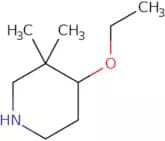
CAS:Versatile small molecule scaffoldFormula:C7H6BrNO3Purity:Min. 95%Molecular weight:232.03 g/mol4-Ethoxy-3,3-dimethylpiperidine
CAS:<p>Versatile small molecule scaffold</p>Formula:C9H19NOPurity:Min. 95%Molecular weight:157.25 g/molMethyl 2-bromo-6H-thieno[2,3-b]pyrrole-5-carboxylate
CAS:<p>Versatile small molecule scaffold</p>Formula:C8H6BrNO2SPurity:Min. 95%Molecular weight:260.11 g/mol2-(4-Methylpiperidin-4-yl)-1,3-benzothiazole hydrochloride
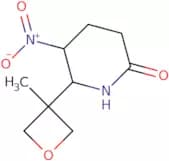
CAS:<p>Versatile small molecule scaffold</p>Formula:C13H17ClN2SPurity:Min. 95%Molecular weight:268.81 g/mol6-(3-Methyloxetan-3-yl)-5-nitropiperidin-2-one
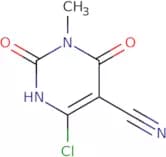
CAS:<p>Versatile small molecule scaffold</p>Formula:C9H14N2O4Purity:Min. 95%Molecular weight:214.22 g/mol6-Chloro-3-methyl-2,4-dioxo-1,2,3,4-tetrahydropyrimidine-5-carbonitrile
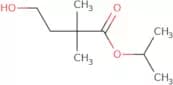
CAS:Versatile small molecule scaffoldFormula:C6H4ClN3O2Purity:Min. 95%Molecular weight:185.57 g/molPropan-2-yl 4-hydroxy-2,2-dimethylbutanoate
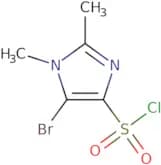
CAS:<p>Versatile small molecule scaffold</p>Formula:C9H18O3Purity:Min. 95%Molecular weight:174.24 g/mol5-Bromo-1,2-dimethyl-1H-imidazole-4-sulfonyl chloride
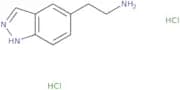
CAS:Versatile small molecule scaffoldFormula:C5H6BrClN2O2SPurity:Min. 95%Molecular weight:273.54 g/mol2-(1H-Indazol-5-yl)ethan-1-amine dihydrochloride
CAS:<p>Versatile small molecule scaffold</p>Formula:C9H13Cl2N3Purity:Min. 95%Molecular weight:234.12 g/mol[1-(Trifluoromethyl)cyclobutyl]methanamine hydrochloride
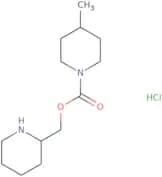
CAS:<p>Versatile small molecule scaffold</p>Formula:C6H11ClF3NPurity:Min. 95%Molecular weight:189.6 g/molPiperidin-2-ylmethyl 4-methylpiperidine-1-carboxylate hydrochloride
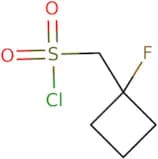
CAS:<p>Versatile small molecule scaffold</p>Formula:C13H25ClN2O2Purity:Min. 95%Molecular weight:276.8 g/mol(1-Fluorocyclobutyl)methanesulfonyl chloride
CAS:<p>Versatile small molecule scaffold</p>Formula:C5H8ClFO2SPurity:Min. 95%Molecular weight:186.63 g/moltert-Butyl N-(3-{[(3,5-dichlorophenyl)methyl]amino}propyl)carbamate hydrochloride
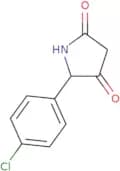
CAS:<p>Versatile small molecule scaffold</p>Formula:C15H23Cl3N2O2Purity:Min. 95%Molecular weight:369.7 g/mol5-(4-Chlorophenyl)pyrrolidine-2,4-dione
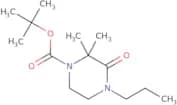
CAS:<p>Versatile small molecule scaffold</p>Formula:C10H8ClNO2Purity:Min. 95%Molecular weight:209.63 g/moltert-Butyl 2,2-dimethyl-3-oxo-4-propylpiperazine-1-carboxylate
CAS:<p>Versatile small molecule scaffold</p>Formula:C14H26N2O3Purity:Min. 95%Molecular weight:270.37 g/molMethyl[2-(3-nitrophenyl)ethyl]amine hydrochloride
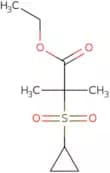
CAS:Controlled Product<p>Versatile small molecule scaffold</p>Formula:C9H13ClN2O2Purity:Min. 95%Molecular weight:216.66 g/molEthyl 2-(cyclopropanesulfonyl)-2-methylpropanoate
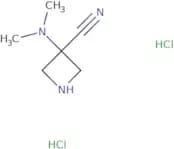
CAS:<p>Versatile small molecule scaffold</p>Formula:C9H16O4SPurity:Min. 95%Molecular weight:220.29 g/mol3-(Dimethylamino)azetidine-3-carbonitrile dihydrochloride
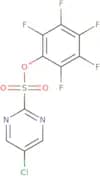
CAS:<p>Versatile small molecule scaffold</p>Formula:C6H13Cl2N3Purity:Min. 95%Molecular weight:198.09 g/molPentafluorophenyl 5-chloropyrimidine-2-sulfonate
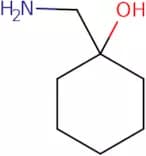
CAS:<p>Versatile small molecule scaffold</p>Formula:C10H2ClF5N2O3SPurity:Min. 95%Molecular weight:360.64 g/mol1-(Aminomethyl)cyclohexanol
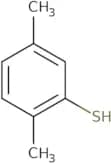
CAS:<p>1-(Aminomethyl)cyclohexanol (1-ACOH) is a ligand that binds to the benzodiazepine receptor that has a neuroprotective effect. 1-ACOH is orally bioavailable and exhibits anticonvulsant, hypoglycemic, and anti-inflammatory activities. 1-ACOH has been shown to be a fluorescent compound with an absorption maximum at 337 nm. It can bind covalently to anions such as chloride, bromide, iodide, and fluoride via its amine group. The binding of 1-ACOH to these anions results in changes in its fluorescence properties. Deramciclane fumarate is a prodrug that undergoes hydrolysis by esterases to form dibutyl 1-(Aminomethyl)cyclohexanol (DBA). DBA is the active form of deramciclane fumarate that binds to the benzodiazepine</p>Formula:C7H15NOPurity:Min. 95%Molecular weight:129.2 g/mol2,5-Dimethylbenzenethiol
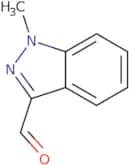
CAS:<p>2,5-Dimethylbenzenethiol is a functionalized thiol that is used in cross-coupling reactions. It can be used to synthesize organic compounds with a wide range of structures, including alcohols, amines, carbonyls, and esters. In addition to being an efficient method for the synthesis of these compounds, this thiol has been shown to be cytotoxic against cancer cells. 2,5-Dimethylbenzenethiol has also been shown to have gas sensing properties. The synthesis of this thiol is achieved through a reaction between 2-bromobenzene and ethanethiol. This reaction produces 2-bromoethanethiol and 2,5-dimethylbenzenethiol as products. This molecule then undergoes hydrolysis in order to produce the final product. The molecular structure of this compound consists of two benzene rings connected by a carbon chain with two methyl groups on either end of the</p>Formula:C8H10SPurity:Min. 95%Molecular weight:138.23 g/mol1-Methyl-1H-indazole-3-carbaldehyde
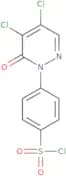
CAS:<p>1-Methyl-1H-indazole-3-carbaldehyde is a chemical compound that belongs to the family of heterocyclic compounds. It is used as a starting material for other chemicals, including hydantoins and semicarbazones. The condensation reaction between 1-methyl-1H-indazole-3-carbaldehyde and malonic acid yields hippuric acid and semicarbazone. Oximes may be prepared from 1-methyl-1H-indazole-3-carbaldehyde by reaction with sulfuric acid or dichromate.</p>Formula:C9H8N2OPurity:Min. 95%Molecular weight:160.18 g/mol4-(4,5-Dichloro-6-oxopyridazin-1-yl)benzenesulfonyl chloride
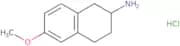
CAS:Versatile small molecule scaffoldFormula:C10H5Cl3N2O3SPurity:Min. 95%Molecular weight:339.6 g/mol6-Methoxy-1,2,3,4-tetrahydro-naphthalen-2-ylamine hydrochloride
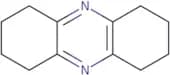
CAS:Controlled ProductVersatile small molecule scaffoldFormula:C11H16ClNOPurity:Min. 95%Molecular weight:213.7 g/mol1,2,3,4,6,7,8,9-Octahydrophenazine
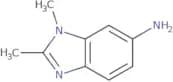
CAS:<p>1,2,3,4,6,7,8,9-Octahydrophenazine is a cyclic ether that is usually obtained by the hydrogenation of diethylene. It is used as a pharmaceutical intermediate. 1,2,3,4,6,7,8,9-Octahydrophenazine has been shown to coordinate with metal ions such as copper and copper chromite. This coordination stabilizes the molecule and prevents decomposition. 1,2,3,4-Octahydrophenazine also has anti-inflammatory properties due to its ability to inhibit prostaglandin synthesis by inhibiting enzyme activity in the cyclooxygenase pathway.</p>Formula:C12H16N2Purity:Min. 95%Molecular weight:188.27 g/mol1,2-Dimethyl-1H-1,3-benzodiazol-6-amine
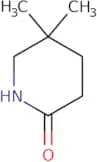
CAS:<p>Versatile small molecule scaffold</p>Formula:C9H11N3Purity:Min. 95%Molecular weight:161.2 g/mol5,5-Dimethylpiperidin-2-one
CAS:<p>Versatile small molecule scaffold</p>Formula:C7H13NOPurity:Min. 95%Molecular weight:127.18 g/mol1,2,3,4-Tetrahydroquinolin-2-imine
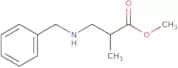
CAS:<p>Versatile small molecule scaffold</p>Formula:C9H10N2Purity:Min. 95%Molecular weight:146.2 g/molMethyl 3-(benzylamino)-2-methylpropanoate
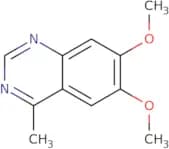
CAS:<p>Versatile small molecule scaffold</p>Formula:C12H17NO2Purity:Min. 95%Molecular weight:207.27 g/mol6,7-Dimethoxy-4-methylquinazoline
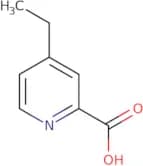
CAS:<p>Versatile small molecule scaffold</p>Formula:C11H12N2O2Purity:Min. 95%Molecular weight:204.22 g/mol4-Ethylpyridine-2-carboxylic acid
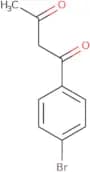
CAS:<p>Versatile small molecule scaffold</p>Formula:C8H9NO2Purity:Min. 95%Molecular weight:151.16 g/mol1-(4-Bromophenyl)-1,3-butanedione
CAS:<p>1-(4-Bromophenyl)-1,3-butanedione is a colorless liquid that has a molecular weight of 98.09 and an elemental analysis of C, H, Br, O. It is soluble in water and alcohols and has an enol form. 1-(4-Bromophenyl)-1,3-butanedione reacts with tantalum to give the tantalum salt with a molecular weight of 203.59. 1-(4-Bromophenyl)-1,3-butanedione can be used as a raw material for organic synthesis or as an intermediate for chemical reactions involving bromine or halogens.</p>Formula:C10H9BrO2Purity:Min. 95%Molecular weight:241.08 g/mol2-Hydroxy-3,3-dimethylbutanoic acid
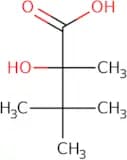
CAS:<p>2-Hydroxy-3,3-dimethylbutanoic acid is an organic compound that is used as a precursor to hypochlorite. It is synthesized by the catalytic oxidation of ethyl formate with a palladium catalyst in an alkaline solution. The resulting 2-hydroxy-3,3-dimethylbutanoic acid has a high yield and can be used as a starting material for the manufacture of sodium hypochlorite and other chlorinating agents. The optical purity of the product can be improved by using ruthenium or copper catalysts in place of palladium.</p>Formula:C6H12O3Purity:Min. 95%Molecular weight:132.16 g/mol2-Hydroxy-2,3,3-trimethylbutanoic acid
CAS:<p>2-Hydroxy-2,3,3-trimethylbutanoic acid is a molecule that has been used in the synthesis of ligands and is also used to stabilize the carboxylic acid group. The protonation of this molecule leads to its acidic properties, which are useful for many purposes, including as a precursor for insect pheromones. The addition of chloride ions to 2-hydroxy-2,3,3-trimethylbutanoic acid produces an ion with a mononuclear charge that can be detected by nmr spectroscopy. This molecule forms hydrogen bonds with water molecules.</p>Formula:C7H14O3Purity:Min. 95%Molecular weight:146.18 g/molSpiro[4.5]decan-8-one
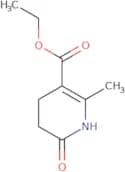
CAS:<p>Spiro[4.5]decan-8-one is a phenylhydrazine that has been used in the synthesis of indole and cycloalkyl compounds. The spectra of this compound show two peaks at 6.3 and 8.7 ppm in the IR spectrum, which correspond to the C=C stretching mode for the cycloalkyl group and the C=N stretch for the phenylhydrazine moiety respectively. This structural isomer shows different chemical properties when compared to other isomers because it has a spirocyclic ring system with an 8-membered ring fused to a 10-membered ring, whereas other isomers have a 9-membered ring fused to a 10-membered ring.</p>Formula:C10H16OPurity:Min. 95%Molecular weight:152.23 g/molEthyl 2-methyl-6-oxo-1,4,5,6-tetrahydropyridine-3-carboxylate
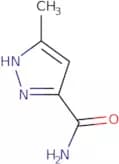
CAS:<p>Versatile small molecule scaffold</p>Formula:C9H13NO3Purity:Min. 95%Molecular weight:183.2 g/mol5-Methyl-1H-pyrazole-3-carboxylic acid amide
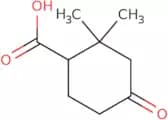
CAS:<p>Versatile small molecule scaffold</p>Formula:C5H7N3OPurity:Min. 95%Molecular weight:125.13 g/mol2,2-Dimethyl-4-oxocyclohexanecarboxylic acid
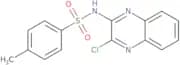
CAS:<p>Versatile small molecule scaffold</p>Formula:C9H14O3Purity:Min. 95%Molecular weight:170.21 g/molN-(3-Chloroquinoxalin-2-yl)-4-methylbenzenesulfonamide
CAS:<p>3-Chloroquinoxaline-2-carboxylic acid (3CQC) is a halogen atom, oxadiazole, benzene, alkoxycarbonyl, alkoxy, cyano, trifluoromethyl, dihedral and halogen. 3CQC is used as a chemical intermediate in organic synthesis. It can be used as a starting material for the synthesis of other organic compounds and pharmaceuticals. 3CQC has been found to inhibit bacterial growth by inhibiting RNA polymerase. This compound also inhibits protein synthesis by binding to the ribosome's 50S subunit and prevents the production of proteins vital for cell division.</p>Formula:C15H12ClN3O2SPurity:Min. 95%Molecular weight:333.79 g/molN-{4-[(3-Chloroquinoxalin-2-yl)sulfamoyl]phenyl}acetamide
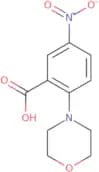
CAS:<p>Versatile small molecule scaffold</p>Formula:C16H13ClN4O3SPurity:Min. 95%Molecular weight:376.8 g/mol5-Nitro-2-(morpholin-4-yl)benzoic acid
CAS:<p>5-Nitro-2-(morpholin-4-yl)benzoic acid is a cytotoxic agent that induces apoptosis in cells. This compound binds to tubulin and inhibits its polymerization, which leads to the disruption of microtubules. 5NMBA has potent cytotoxicity against cancer cells, including human lung cancer cells. It has been shown to be a potent inhibitor of paclitaxel polymerization, and also can disrupt the polymerization of other drugs such as colchicine and vinblastine. 5NMBA expresses itself at high levels in human lung cancer tissues and is often found in multidrug resistant tumor cells.</p>Formula:C11H12N2O5Purity:Min. 95%Molecular weight:252.22 g/mol(2,5-Dimethoxyphenyl)(phenyl)methanone
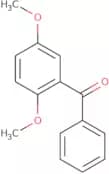
CAS:<p>Versatile small molecule scaffold</p>Formula:C15H14O3Purity:Min. 95%Molecular weight:242.27 g/mol2,4,4Prime-Trimethoxybenzophenone
CAS:<p>Versatile small molecule scaffold</p>Formula:C16H16O4Purity:Min. 95%Molecular weight:272.29 g/molPropargyl Benzyl Ether
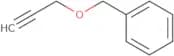
CAS:<p>Propargyl benzyl ether is an organic compound with the formula CHCH=C(CH)OCH. It is a colorless liquid that has been used as a synthetic intermediate in organic synthesis. Propargyl benzyl ether has been shown to induce apoptotic cell death, which may be due to its ability to bind and inhibit the activity of pyrazole-3-carboxamide ribonucleotide transformylase, an enzyme involved in purine metabolism. This compound also induces apoptosis through the activation of caspases. The sample is pretreated before analysis by activating the cells with a solution of HCl and KOH before adding propargyl benzyl ether. Analysis is then conducted using analytical chemistry techniques such as gas chromatography or mass spectrometry. The chemical synthesis can be accomplished by reacting a β-unsaturated ketone with an acid catalyst such as HCl or acetic acid in the presence of a chelate ligand such as pyridine hydro</p>Formula:C10H10OPurity:Min. 95%Molecular weight:146.19 g/mol

![9-Amino-5-azaspiro[3.5]nonan-6-one](/_next/image/?url=https%3A%2Fstatic.cymitquimica.com%2Fproducts%2F3D%2Fthumb-webp%2FDXC60381.webp&w=3840&q=75)
![7-Benzyl-2-[4-(trifluoromethyl)phenyl]-3H,4H,5H,6H,7H,8H-pyrido[3,4-d]pyrimidin-4-one hydrochloride](/_next/image/?url=https%3A%2Fstatic.cymitquimica.com%2Fproducts%2F3D%2Fthumb-webp%2FDXC60384.webp&w=3840&q=75)
![1-[(Dimethylamino)methyl]cyclopropane-1-carboxylic acid hydrochloride](/_next/image/?url=https%3A%2Fstatic.cymitquimica.com%2Fproducts%2F3D%2Fthumb-webp%2FDXC60395.webp&w=3840&q=75)
![8-Amino-1,3-diazaspiro[4.5]decane-2,4-dione hydrochloride](/_next/image/?url=https%3A%2Fstatic.cymitquimica.com%2Fproducts%2F3D%2Fthumb-webp%2FDXC60396.webp&w=3840&q=75)
![3-[5-(Thiophen-2-yl)-1,3,4-oxadiazol-2-yl]morpholine hydrochloride](/_next/image/?url=https%3A%2Fstatic.cymitquimica.com%2Fproducts%2F3D%2Fthumb-webp%2FDXC60403.webp&w=3840&q=75)

![tert-Butyl 3-[(chlorosulfonyl)methyl]-3-fluoroazetidine-1-carboxylate](/_next/image/?url=https%3A%2Fstatic.cymitquimica.com%2Fproducts%2F3D%2Fthumb-webp%2FDXC60430.webp&w=3840&q=75)
![2-[3-(Trifluoromethoxy)phenyl]morpholine](/_next/image/?url=https%3A%2Fstatic.cymitquimica.com%2Fproducts%2F3D%2Fthumb-webp%2FDXC60431.webp&w=3840&q=75)
![tert-Butyl N-{2-[5-(4-chlorophenyl)-4H-1,2,4-triazol-3-yl]ethyl}carbamate](/_next/image/?url=https%3A%2Fstatic.cymitquimica.com%2Fproducts%2F3D%2Fthumb-webp%2FDXC60442.webp&w=3840&q=75)
![{4,5-Dimethyl-4H,7H-[1,2,3,4]tetrazolo[1,5-a]pyrimidin-6-yl}methanol](/_next/image/?url=https%3A%2Fstatic.cymitquimica.com%2Fproducts%2F3D%2Fthumb-webp%2FDXC60443.webp&w=3840&q=75)
![Methyl 3-[(5-nitro-1,3-thiazol-2-yl)sulfonyl]propanoate](/_next/image/?url=https%3A%2Fstatic.cymitquimica.com%2Fproducts%2F3D%2Fthumb-webp%2FDXC60449.webp&w=3840&q=75)
![(1H-Imidazol-2-ylmethyl)[2-(2-methylphenyl)ethyl]amine hydrochloride](/_next/image/?url=https%3A%2Fstatic.cymitquimica.com%2Fproducts%2F3D%2Fthumb-webp%2FDXC60453.webp&w=3840&q=75)

![Methyl 2-bromo-6H-thieno[2,3-b]pyrrole-5-carboxylate](/_next/image/?url=https%3A%2Fstatic.cymitquimica.com%2Fproducts%2F3D%2Fthumb-webp%2FDXC60459.webp&w=3840&q=75)

![[1-(Trifluoromethyl)cyclobutyl]methanamine hydrochloride](/_next/image/?url=https%3A%2Fstatic.cymitquimica.com%2Fproducts%2F3D%2Fthumb-webp%2FDXC60467.webp&w=3840&q=75)
![tert-Butyl N-(3-{[(3,5-dichlorophenyl)methyl]amino}propyl)carbamate hydrochloride](/_next/image/?url=https%3A%2Fstatic.cymitquimica.com%2Fproducts%2F3D%2Fthumb-webp%2FDXC60471.webp&w=3840&q=75)
![Methyl[2-(3-nitrophenyl)ethyl]amine hydrochloride](/_next/image/?url=https%3A%2Fstatic.cymitquimica.com%2Fproducts%2F3D%2Fthumb-webp%2FDXC60479.webp&w=3840&q=75)

![Spiro[4.5]decan-8-one](/_next/image/?url=https%3A%2Fstatic.cymitquimica.com%2Fproducts%2F3D%2Fthumb-webp%2FEAA02735.webp&w=3840&q=75)
![N-{4-[(3-Chloroquinoxalin-2-yl)sulfamoyl]phenyl}acetamide](/_next/image/?url=https%3A%2Fstatic.cymitquimica.com%2Fproducts%2F3D%2Fthumb-webp%2FEAA02942.webp&w=3840&q=75)