Building Blocks
This section contains fundamental products for the synthesis of organic and biological compounds. Building blocks are the essential starting materials used to construct complex molecules through various chemical reactions. They play a critical role in drug discovery, material science, and chemical research. At CymitQuimica, we offer a diverse range of high-quality building blocks to support your innovative research and industrial projects, ensuring you have the essential components for successful synthesis.
Subcategories of "Building Blocks"
- Boronic Acids & Boronic Acid Derivatives(5,756 products)
- Chiral Building Blocks(1,242 products)
- Hydrocarbon Building Blocks(6,095 products)
- Organic Building Blocks(61,055 products)
Found 199650 products of "Building Blocks"
Sort by
Purity (%)
0
100
|
0
|
50
|
90
|
95
|
100
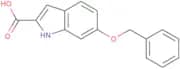
6-(Benzyloxy)-1H-indole-2-carboxylic acid
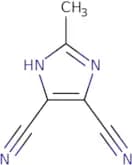
CAS:<p>Versatile small molecule scaffold</p>Formula:C16H13NO3Purity:Min. 95%Molecular weight:267.28 g/mol2-Methyl-1H-imidazole-4,5-dicarbonitrile
CAS:<p>Versatile small molecule scaffold</p>Formula:C6H4N4Purity:Min. 95%Molecular weight:132.12 g/mol2-[(Cyclopropylcarbonyl)amino]Benzoic Acid
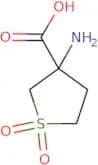
CAS:<p>Versatile small molecule scaffold</p>Formula:C11H11NO3Purity:Min. 95%Molecular weight:205.21 g/mol3-Aminotetrahydro-3-thiophenecarboxylic acid 1,1-dioxide
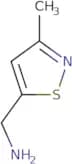
CAS:<p>Versatile small molecule scaffold</p>Formula:C5H9NO4SPurity:Min. 95%Molecular weight:179.2 g/mol(3-Methyl-1,2-thiazol-5-yl)methanamine
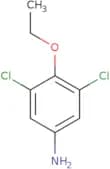
CAS:<p>Versatile small molecule scaffold</p>Formula:C5H8N2SPurity:Min. 95%Molecular weight:128.2 g/mol3,5-Dichloro-4-ethoxyaniline
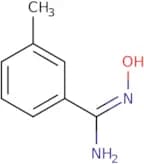
CAS:<p>Versatile small molecule scaffold</p>Formula:C8H9Cl2NOPurity:Min. 95%Molecular weight:206.07 g/mol3-Methylbenzamide oxime
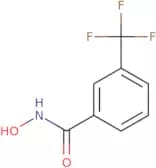
CAS:<p>3-Methylbenzamide oxime is a chemical compound that has the chemical formula C6H5N3O. It is used as a reagent in organic synthesis. 3-Methylbenzamide oxime also acts as a silver-containing oxidant, which can be used to generate hydrogen peroxide or silver oxide.</p>Formula:C8H10N2OPurity:Min. 95%Molecular weight:150.18 g/molN-Hydroxy-3-(trifluoromethyl)benzamide
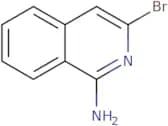
CAS:<p>N-Hydroxymethyl-3-(trifluoromethyl)benzamide is an oxidative and reductive elimination agent that can be used in a variety of synthetic reactions. This compound can be used to synthesize hydroxamic acids, alkenylations, carboxylates, and other functionalized organic compounds. This compound is also useful for the preparation of aromatic carboxylic acid derivatives. The mechanism for this reaction is the hydroxamic acid formation through reductive elimination followed by the addition of an alcohol or amine. The reaction begins with the oxidative cleavage of an ester or amide bond to form a carbonyl group and a hydroxylamine moiety. The hydroxylamine then undergoes reductive elimination to yield a hydroxamic acid. This process is catalyzed by metal ions such as copper (Cu), zinc (Zn), and iron (Fe).</p>Formula:C8H6F3NO2Purity:Min. 95%Molecular weight:205.13 g/mol3-bromoisoquinolin-1-amine
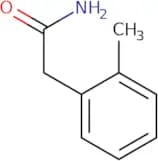
CAS:<p>Versatile small molecule scaffold</p>Formula:C9H7BrN2Purity:Min. 95%Molecular weight:223.1 g/mol2-(2-Methylphenyl)acetamide
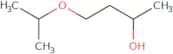
CAS:<p>Versatile small molecule scaffold</p>Formula:C9H11NOPurity:Min. 95%Molecular weight:149.19 g/mol4-(Propan-2-yloxy)butan-2-ol
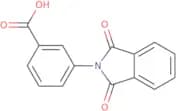
CAS:<p>Versatile small molecule scaffold</p>Formula:C7H16O2Purity:Min. 95%Molecular weight:132.2 g/mol3-(1,3-Dioxo-1,3-dihydroisoindol-2-yl)benzoic acid
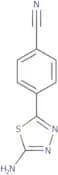
CAS:<p>Versatile small molecule scaffold</p>Formula:C15H9NO4Purity:Min. 95%Molecular weight:267.24 g/mol4-(5-Amino-1,3,4-thiadiazol-2-yl)benzonitrile
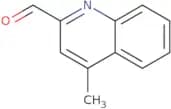
CAS:<p>Versatile small molecule scaffold</p>Formula:C9H6N4SPurity:Min. 95%Molecular weight:202.24 g/mol4-Methylquinoline-2-carboxaldehyde
CAS:<p>4-Methylquinoline-2-carboxaldehyde is a formylating agent that is used in the synthesis of heterocycles. It has been shown to react with methanol and mediated by oxidative conditions to produce formaldehyde. This reagent can be used for the functionalization of biomolecules by reacting with amines, thiols, and hydroxyl groups. 4-Methylquinoline-2-carboxaldehyde can also be used for the oxidative coupling of phenols and naphthols. The functional group on this compound is a carboxylic acid (-COH).</p>Formula:C11H9NOPurity:Min. 95%Molecular weight:171.19 g/mol8-Thia-4,6-diazatricyclo[7.5.0.0,2,7]tetradeca-1(9),2(7),5-trien-3-one
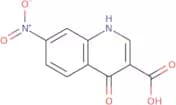
CAS:<p>8-Thia-4,6-diazatricyclo[7.5.0.0,2,7]tetradeca-1(9),2(7),5-trien-3-one is a synthetic antifungal molecule with inhibitory properties against the growth of fungi. This compound inhibits the biosynthesis of ergosterol, an essential component of the fungal cell membrane, by inhibiting the enzyme squalene epoxidase. 8-Thia-4,6-diazatricyclo[7.5.0.0,2,7]tetradeca-1(9),2(7),5-trien-3-one has been shown to be effective in killing Candida albicans and other species of pathogenic fungi in cell culture and animal models.</p>Formula:C11H12N2OSPurity:Min. 95%Molecular weight:220.29 g/mol4-Hydroxy-7-nitroquinoline-3-carboxylic acid
CAS:<p>Versatile small molecule scaffold</p>Formula:C10H6N2O5Purity:Min. 95%Molecular weight:234.16 g/mol4-Chloro-6-methyl-1H,2H,3H-pyrrolo[3,4-c]pyridine-1,3-dione
CAS:<p>Versatile small molecule scaffold</p>Formula:C8H5ClN2O2Purity:Min. 95%Molecular weight:196.59 g/mol6,7-Dihydro-5H-pyrrolo[3,4-b]pyridin-5-one
CAS:<p>6,7-Dihydro-5H-pyrrolo[3,4-b]pyridin-5-one (6,7-DHP) is a muscarinic acetylcholine receptor agonist that has been shown to have profiles of both an agonist and antagonist. It was discovered by screening compounds against the acetylcholine receptor in the presence of different concentrations of acetylcholine. 6,7-DHP activates the receptor at low concentrations and inhibits it at higher concentrations. 6,7-DHP is used as an experimental tool to investigate the function of the muscarinic acetylcholine receptor in various diseases such as psychiatric disorders and inflammatory diseases. The molecule also has potential therapeutic applications for these disorders.</p>Formula:C7H6N2OPurity:Min. 95%Molecular weight:134.14 g/mol1H,2H,3H-pyrrolo[3,4-c]pyridin-3-one
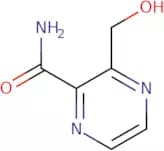
CAS:<p>1H,2H,3H-pyrrolo[3,4-c]pyridin-3-one is a phosphoinositide synthesis inhibitor. It is an important drug target for the treatment of cancer due to its ability to inhibit the production of phosphoinositides that are necessary for the regulation of cell growth, proliferation and differentiation. The therapeutic potential of 1H,2H,3H-pyrrolo[3,4-c]pyridin-3-one has been demonstrated through chemistry studies and medicinal chemistry approaches. This molecule was synthesized with a 3-kinase inhibitor moiety and a reactive carboxamides group.</p>Formula:C7H6N2OPurity:Min. 95%Molecular weight:134.14 g/mol3-(Hydroxymethyl)pyrazine-2-carboxamide
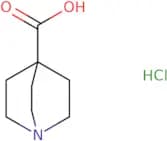
CAS:Versatile small molecule scaffoldFormula:C6H7N3O2Purity:Min. 95%Molecular weight:153.14 g/molQuinuclidine-4-carboxylic acid hydrochloride
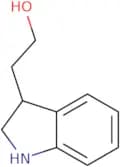
CAS:<p>Versatile small molecule scaffold</p>Formula:C8H14ClNO2Purity:Min. 95%Molecular weight:191.66 g/mol2-(2,3-Dihydro-1H-indol-3-yl)ethan-1-ol
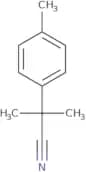
CAS:<p>2-(2,3-Dihydro-1H-indol-3-yl)ethan-1-ol is a crystalline compound that can be prepared by the addition of hydrogen chloride to 2-(2,3-dihydroindol-3-yl)ethanol. It is an enantiomer of 1-(2,3-dihydroindol-3-yl)ethanone. The compound has been used as a reagent in analytical chemistry and as a substrate for oxidases and other enzymes.</p>Formula:C10H13NOPurity:Min. 95%Molecular weight:163.22 g/mol2-Methyl-2-(p-tolyl)propanenitrile
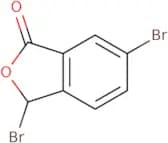
CAS:<p>Versatile small molecule scaffold</p>Formula:C11H13NPurity:Min. 95%Molecular weight:159.23 g/mol3,6-Dibromo-1,3-dihydro-2-benzofuran-1-one
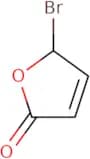
CAS:Versatile small molecule scaffoldFormula:C8H4Br2O2Purity:Min. 95%Molecular weight:291.92 g/mol5-bromo-2,5-dihydrofuran-2-one
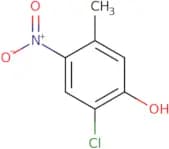
CAS:<p>Versatile small molecule scaffold</p>Formula:C4H3BrO2Purity:Min. 95%Molecular weight:162.97 g/mol2-Chloro-5-methyl-4-nitrophenol
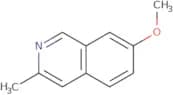
CAS:<p>Versatile small molecule scaffold</p>Formula:C7H6ClNO3Purity:Min. 95%Molecular weight:187.58 g/mol7-Methoxy-3-methylisoquinoline
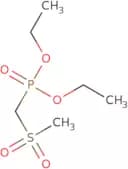
CAS:<p>Versatile small molecule scaffold</p>Formula:C11H11NOPurity:Min. 95%Molecular weight:173.21 g/molDiethyl(methylsulfonylmethyl)phosphonate
CAS:<p>Diethyl (methylsulfonylmethyl)phosphonate is a synthetic compound that has been shown to inhibit the mineralocorticoid receptor. This receptor is involved in the regulation of electrolyte and fluid balance. The inhibition of this receptor by diethyl (methylsulfonylmethyl)phosphonate may be due to its ability to bind to the receptor's active site and prevent it from binding with other hormones, such as aldosterone. Diethyl (methylsulfonylmethyl)phosphonate also has antiviral and anti-cancer properties. It can inhibit the proteolytic activity of a virus, such as hepatitis, or protease enzymes found in cancer cells. Diethyl (methylsulfonylmethyl)phosphonate can also act as an allergen for some people and cause skin irritation.</p>Formula:C6H15O5PSPurity:Min. 95%Molecular weight:230.21 g/mol2,2-Dimethyl-1,3-dioxan-5-amine
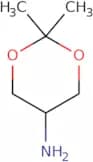
CAS:<p>2,2-Dimethyl-1,3-dioxan-5-amine is an organic molecule that utilizes electron affinity to synthesize with a variety of orientations. The hydrophobic and intramolecular orientations are the most common. The 2,2-dimethyl-1,3-dioxan-5-amine molecule has been shown to be capable of utilizing the hydrogen atom in water as an electron acceptor and donor. It can also form a monolayer on a gold electrode surface. This molecule is hydrophilic and therefore prefers hydrophilic environments such as the electrode surface or water. Impurities in this compound may include fluoride ion or chloride ion.</p>Formula:C6H13NO2Purity:Min. 95%Molecular weight:131.18 g/mol1-(3-Chlorophenyl)-2-fluoroethan-1-ol
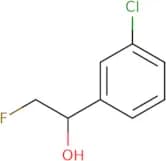
CAS:<p>Versatile small molecule scaffold</p>Formula:C8H8ClFOPurity:Min. 95%Molecular weight:174.6 g/mol2-Fluoro-1-(4-fluorophenyl)ethanol
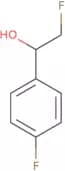
CAS:<p>Versatile small molecule scaffold</p>Formula:C8H8F2OPurity:Min. 95%Molecular weight:158.14 g/mol2-Fluoro-1-(3-methoxyphenyl)ethan-1-ol
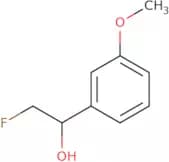
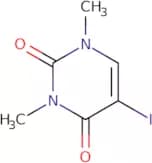
CAS:<p>Versatile small molecule scaffold</p>Formula:C9H11FO2Purity:Min. 95%Molecular weight:170.18 g/mol5-Iodo-1,3-dimethyluracil
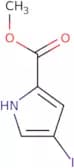
CAS:<p>5-Iodo-1,3-dimethyluracil (5IDMU) is a nucleoside that is used in cancer diagnosis. 5IDMU can be synthesized by the Suzuki coupling reaction with an amine and a halide. The synthesis of 5IDMU can also be accomplished by the cross-coupling of an amine and a tautomeric methylene compound. The methylene group in the heterocycle is electron donating, which makes it more reactive than other groups. This nucleoside has been shown to have anti-inflammatory properties, which may be due to its ability to inhibit prostaglandin synthesis. 5IDMU has also been shown to have anticancer effects in vitro and in vivo.</p>Formula:C6H7IN2O2Purity:Min. 95%Molecular weight:266.04 g/molMethyl 4-iodo-1H-pyrrole-2-carboxylate
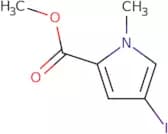
CAS:<p>Versatile small molecule scaffold</p>Formula:C6H6INO2Purity:Min. 95%Molecular weight:251.02 g/molMethyl 4-iodo-1-methyl-1H-pyrrole-2-carboxylate
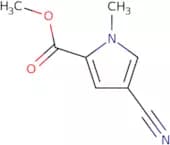
CAS:<p>Versatile small molecule scaffold</p>Formula:C7H8INO2Purity:Min. 95%Molecular weight:265.05 g/molMethyl 4-cyano-1-methyl-1H-pyrrole-2-carboxylate
CAS:<p>Versatile small molecule scaffold</p>Formula:C8H8N2O2Purity:Min. 95%Molecular weight:164.16 g/mol5-Fluoro-benzo[b]thiophene-3-carboxylic acid
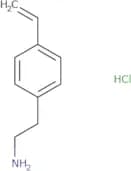
CAS:<p>Versatile small molecule scaffold</p>Formula:C9H5FO2SPurity:Min. 95%Molecular weight:196.2 g/mol2-(4-Ethenylphenyl)ethan-1-amine hydrochloride
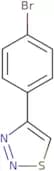
CAS:Controlled Product<p>Versatile small molecule scaffold</p>Formula:C10H14ClNPurity:Min. 95%Molecular weight:183.68 g/mol4-(4-Bromophenyl)-1,2,3-thiadiazole
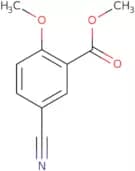
CAS:<p>4-(4-Bromophenyl)-1,2,3-thiadiazole is a mediated drug that belongs to the class of retinoids. It has been shown to have anticancer activity in vitro and in vivo. 4-(4-Bromophenyl)-1,2,3-thiadiazole is an endogenous metabolite of all-trans-retinoic acid (ATRA), which is a molecule synthesized from vitamin A. This drug also inhibits cytochrome p450 enzymes and can be used as an antidote for poisoning by itraconazole and other drugs that inhibit the same enzyme system.</p>Formula:C8H5BrN2SPurity:Min. 95%Molecular weight:241.11 g/molMethyl 5-cyano-2-methoxybenzoate
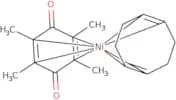
CAS:<p>Versatile small molecule scaffold</p>Formula:C10H9NO3Purity:Min. 95%Molecular weight:191.18 g/molBis(1,5-cyclooctadiene)(duroquinone) nickel(0)
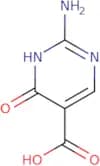
CAS:<p>Bis(1,5-cyclooctadiene)(duroquinone) nickel(0) is a synthetic compound that belongs to the class of organometallic compounds. It is used as a ligand in cross-coupling reactions and as a catalyst in organic synthesis. Bis(1,5-cyclooctadiene)(duroquinone) nickel(0) has been shown to react with Grignard reagents and boronic acids to form complex molecules with stereospecificity. This compound also reacts with aldehydes and triflates to form alkenylation products. The mechanism for this reaction is not well understood, but it is thought that the bis(1,5-cyclooctadiene)(duroquinone) nickel(0) binds to the electrophilic carbon atom of the carbonyl group through its duroquinone moiety and then undergoes oxidative addition with the Grignard reagent</p>Formula:C18H24NiO2Purity:Min. 95%Molecular weight:331.08 g/mol2-Amino-4-hydroxypyrimidine-5-carboxylic acid
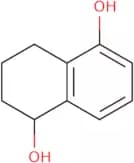
CAS:<p>Versatile small molecule scaffold</p>Formula:C5H5N3O3Purity:Min. 95%Molecular weight:155.11 g/mol1,5-Dihydroxy-1,2,3,4-tetrahydronaphthalene
CAS:1,5-Dihydroxy-1,2,3,4-tetrahydronaphthalene is an experimentally studied chemical compound. It has been studied for its ability to catalyze the transesterification of vinyl acetate and tetrahydrofuran. This reaction is a good example of a ternary catalyst that is operational under both kinetic and optimal conditions. 1,5-Dihydroxy-1,2,3,4-tetrahydronaphthalene is also an enantiomeric mixture with a selectivity of the order of 90% for the (S)-enantiomer.Formula:C10H12O2Purity:Min. 95%Molecular weight:164.2 g/mol5-Propyl-[1,2,4]triazolo[1,5-a]pyrimidin-7-ol
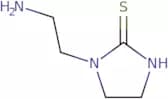
CAS:<p>Versatile small molecule scaffold</p>Formula:C8H10N4OPurity:Min. 95%Molecular weight:178.19 g/mol1-(2-Aminoethyl)imidazolidine-2-thione
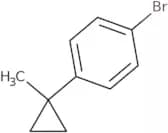
CAS:1-(2-Aminoethyl)imidazolidine-2-thione is a hydrocarbon that inhibits corrosion by binding to metal ions and preventing the formation of corrosion products. It has been shown to be a potent inhibitor of corrosion in water, with more than 50% inhibition at pH 7.1. 1-(2-Aminoethyl)imidazolidine-2-thione has been shown to inhibit the deprotonation of thiourea in acidic conditions, which is an important step in the corrosion process. In addition, 1-(2-Aminoethyl)imidazolidine-2-thione binds to metal ions via its electron donor group and prevents the formation of anions. The molecular structure consists of a heterocyclic ring with five members, with the nitrogen atom occupying one position on the ring. As such, it can be classified as a heterocyclic amine or imidazolidinethFormula:C5H11N3SPurity:Min. 95%Molecular weight:145.23 g/mol1-Bromo-4-(1-methylcyclopropyl)benzene
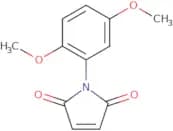
CAS:<p>Versatile small molecule scaffold</p>Formula:C10H11BrPurity:Min. 95%Molecular weight:211.1 g/mol1-(2,5-Dimethoxyphenyl)-1H-pyrrole-2,5-dione
CAS:<p>Versatile small molecule scaffold</p>Formula:C12H11NO4Purity:Min. 95%Molecular weight:233.22 g/mol2-(2-tert-Butylphenoxymethyl)oxirane
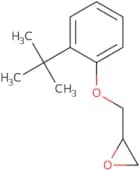
CAS:<p>Versatile small molecule scaffold</p>Formula:C13H18O2Purity:Min. 95%Molecular weight:206.28 g/mol1-(1,1-Difluoroethyl)-3-nitrobenzene
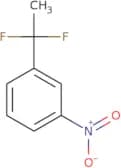
CAS:<p>Versatile small molecule scaffold</p>Formula:C8H7F2NO2Purity:Min. 95%Molecular weight:187.15 g/mol5-Ethylcyclohex-2-en-1-one
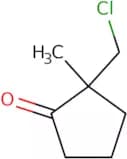
CAS:<p>Versatile small molecule scaffold</p>Formula:C8H12OPurity:Min. 95%Molecular weight:124.18 g/mol2-(Chloromethyl)-2-methylcyclopentan-1-one
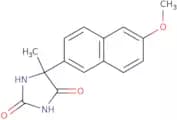
CAS:Versatile small molecule scaffoldFormula:C7H11ClOPurity:Min. 95%Molecular weight:146.61 g/mol5-(6-Methoxynaphthalen-2-yl)-5-methylimidazolidine-2,4-dione
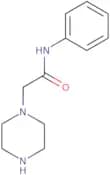
CAS:<p>Versatile small molecule scaffold</p>Formula:C15H14N2O3Purity:Min. 95%Molecular weight:270.28 g/molN-Phenyl-2-(piperazin-1-yl)acetamide
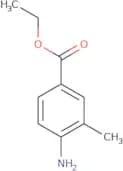
CAS:<p>Versatile small molecule scaffold</p>Formula:C12H17N3OPurity:Min. 95%Molecular weight:219.28 g/molEthyl 4-amino-3-methylbenzoate
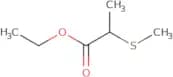
CAS:<p>Ethyl 4-amino-3-methylbenzoate is a dimer that can be formed by the reaction of ethyl benzoate with anilines. This dimer has been shown to have an asymmetric center and can form hydrogen bonds with other molecules. The reactivity of this molecule is similar to benzocaine, which is also a dimer, but it does not contain any nitrogen atoms.</p>Formula:C10H13NO2Purity:Min. 95%Molecular weight:179.22 g/molEthyl 2-(methylsulfanyl)propanoate
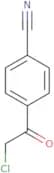
CAS:<p>Versatile small molecule scaffold</p>Formula:C6H12O2SPurity:Min. 95%Molecular weight:148.23 g/mol4-(2-Chloroacetyl)benzonitrile
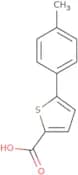
CAS:<p>Versatile small molecule scaffold</p>Formula:C9H6ClNOPurity:Min. 95%Molecular weight:179.6 g/mol5-(4-Methylphenyl)-2-thiophenecarboxylic acid
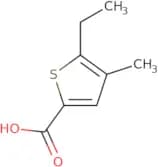
CAS:<p>Versatile small molecule scaffold</p>Formula:C12H10O2SPurity:Min. 95%Molecular weight:218.27 g/mol5-Ethyl-4-methylthiophene-2-carboxylic acid
CAS:<p>Versatile small molecule scaffold</p>Formula:C8H10O2SPurity:Min. 95%Molecular weight:170.23 g/mol2-(4-Methoxypyridin-2-yl)acetonitrile
CAS:<p>Versatile small molecule scaffold</p>Formula:C8H8N2OPurity:Min. 95%Molecular weight:148.16 g/mol3-Nitro-4-(pyrrolidin-1-yl)benzoic acid
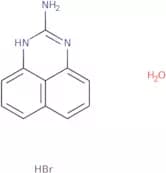
CAS:<p>Versatile small molecule scaffold</p>Formula:C11H12N2O4Purity:Min. 95%Molecular weight:236.22 g/mol2-Aminoperimidine hydrobromide sesquihydrate
CAS:<p>2-Aminoperimidine hydrobromide sesquihydrate (2AP) is a sulfonamide antibiotic that inhibits bacterial growth by binding to the ribosome. 2AP is a potentiometric titrant, with an endpoint of 1.5 M NaOH. It has been shown to inhibit the growth of bacteria, such as Staphylococcus aureus and Escherichia coli, in vitro. The synthesis of 2AP can be achieved through a two-step reaction between ammonium salt and sulfate ester. This chemical synthesis uses the following parameters:</p>Formula:C11H9N3•HBr•(H2O)1Purity:Min. 95%Molecular weight:291.14 g/mol3-(1H-Imidazol-4-yl)propanenitrile hydrochloride
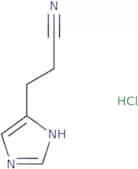
CAS:<p>Versatile small molecule scaffold</p>Formula:C6H8ClN3Purity:Min. 95%Molecular weight:157.6 g/mol3-(1H-Imidazol-4-yl)propan-1-amine dihydrochloride
CAS:<p>Versatile small molecule scaffold</p>Formula:C6H13Cl2N3Purity:Min. 95%Molecular weight:198.09 g/mol1-Benzyl-4-chlorophthalazine
CAS:<p>1-Benzyl-4-chlorophthalazine (1BCP) is a heterocyclic compound that inhibits the piperazine pathway. It has been shown to be a lead compound for inhibiting the growth of medulloblastoma cells in vivo and allografts in vitro. 1BCP inhibits the proliferation of mouse cells by blocking the production of pyrimidine nucleotides and DNA synthesis. This inhibition is due to its ability to inhibit the enzymes involved in pyrimidine biosynthesis, including dihydropteroate synthase, dihydrooratase, and ribonucleotide reductase. The observed effects are mediated through inhibiting key enzymes in the pyrimidine biosynthetic pathway, which leads to cell cycle arrest and apoptosis.</p>Formula:C15H11ClN2Purity:Min. 95%Molecular weight:254.71 g/molMethyl 2-(o-tolyl)acetate
CAS:<p>Methyl 2-(o-tolyl)acetate is a methylester that is used in organic chemistry as a pharmacophore. It is synthesized by the acylation reaction of chlorobenzene and formyl chloride in the presence of methanol. The product can be hydrolyzed to methyl 2-(o-tolyl)acrylate with an alkali metal hydroxide or ammonia, or it can undergo formylation with triazolinone to yield methyl 3-(o-tolyl)propionate. Methyl 2-(o-tolyl)acetate has been shown to react with metal cations such as copper(II) and mercury(II). This product is also stable isotope labeled for use as a tracer in biological studies.</p>Formula:C10H12O2Purity:Min. 95%Molecular weight:164.2 g/mol5-Chloro-2-methyl-3H-imidazo[4,5-b]pyridine
CAS:<p>Versatile small molecule scaffold</p>Formula:C7H6ClN3Purity:Min. 95%Molecular weight:167.6 g/mol(5S)-5-[(1H-Indol-3-yl)methyl]imidazolidine-2,4-dione
CAS:<p>The enzyme 5S-5-[(1H-Indol-3-yl)methyl]imidazolidine-2,4-dione is a multiphase enzyme that has two binding sites for the substrate. The first site is at the top of the cavity and the second site is at the bottom of the cavity. The first site binds to substrates with a low yield, while the second site binds to substrates with a high yield. The multiphase mechanism allows for transport of substrates through the enzyme by an alternating flow or plenum. This enzyme also has magnetic properties, which can be used in calibration and tabulation.</p>Formula:C12H11N3O2Purity:Min. 95%Molecular weight:229.23 g/mol2,4-Difluoro-5-nitropyrimidine
CAS:<p>Versatile small molecule scaffold</p>Formula:C4HF2N3O2Purity:Min. 95%Molecular weight:161.07 g/mol1-[3-(Dimethylamino)propyl]-6-hydroxy-4-methyl-2-oxo-1,2-dihydropyridine-3-carbonitrile
CAS:<p>Versatile small molecule scaffold</p>Formula:C12H17N3O2Purity:Min. 95%Molecular weight:235.28 g/molMethyl 1-cyanocyclopentanecarboxylate
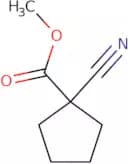
CAS:<p>Versatile small molecule scaffold</p>Formula:C8H11NO2Purity:Min. 95%Molecular weight:153.18 g/mol3-(4-Bromophenoxy)pyridazine
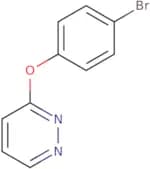
CAS:<p>Versatile small molecule scaffold</p>Formula:C10H7BrN2OPurity:Min. 95%Molecular weight:251.08 g/mol3-Bromo-2,2-dimethyl-1-propanol
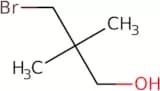
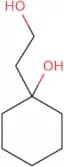
CAS:<p>3-Bromo-2,2-dimethyl-1-propanol is a thioether with a dithiol structure. It is an intermediate in the synthesis of other compounds and has been used as a ligand for copper in asymmetric synthesis. 3-Bromo-2,2-dimethyl-1-propanol reacts with formaldehyde to produce 2,4,6-trimethylaniline in the presence of a catalyst, such as palladium chloride or platinum oxide. The reaction can be carried out at room temperature without hazardous conditions. 3Br 2 DMPr is also used as an optical reagent for the detection of metals. This compound is selective in its reactivity and can be used for alkylation reactions on various metal surfaces with high selectivity. The optical properties of 3Br 2 DMPr are due to its ability to absorb light strongly at 285 nm and weakly at 365 nm. This property can be</p>Formula:C5H11BrOPurity:Min. 95%Molecular weight:167.04 g/mol1-(2-Hydroxyethyl)cyclohexan-1-ol
CAS:<p>Versatile small molecule scaffold</p>Formula:C8H16O2Purity:Min. 95%Molecular weight:144.21 g/mol(2-Methyl-3-nitrophenyl)methanamine hydrochloride
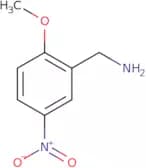
CAS:<p>Versatile small molecule scaffold</p>Formula:C8H11ClN2O2Purity:Min. 95%Molecular weight:202.6 g/mol(2-Methoxy-5-nitrophenyl)methanamine
CAS:<p>Versatile small molecule scaffold</p>Formula:C8H10N2O3Purity:Min. 95%Molecular weight:182.18 g/mol3-(1-Hydroxy-1-methylethyl)benzoic acid
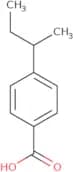
CAS:<p>Versatile small molecule scaffold</p>Formula:C10H12O3Purity:Min. 95%Molecular weight:180.2 g/mol4-(Butan-2-yl)benzoic acid
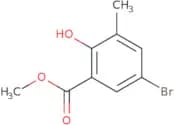
CAS:<p>Versatile small molecule scaffold</p>Formula:C11H14O2Purity:Min. 95%Molecular weight:178.23 g/molMethyl 5-bromo-2-hydroxy-3-methylbenzoate
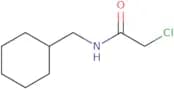
CAS:<p>Versatile small molecule scaffold</p>Formula:C9H9BrO3Purity:Min. 95%Molecular weight:245.07 g/mol2-Chloro-N-(cyclohexylmethyl)acetamide
CAS:<p>Versatile small molecule scaffold</p>Formula:C9H16ClNOPurity:Min. 95%Molecular weight:189.68 g/mol7-Methylbenzo[d]oxazol-2(3H)-O
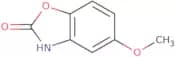
CAS:<p>Versatile small molecule scaffold</p>Formula:C8H7NO2Purity:Min. 95%Molecular weight:149.15 g/mol5-Methoxy-2,3-dihydro-1,3-benzoxazol-2-one
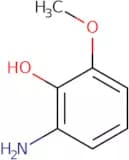
CAS:Versatile small molecule scaffoldFormula:C8H7NO3Purity:Min. 95%Molecular weight:165.15 g/mol2-Amino-6-methoxyphenol
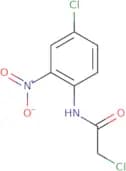
CAS:<p>Versatile small molecule scaffold</p>Formula:C7H9NO2Purity:Min. 95%Molecular weight:139.15 g/mol2-Chloro-N-(4-chloro-2-nitrophenyl)acetamide
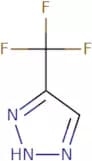
CAS:<p>Versatile small molecule scaffold</p>Formula:C8H6Cl2N2O3Purity:Min. 95%Molecular weight:249.05 g/mol4-(Trifluoromethyl)-1H-1,2,3-triazole
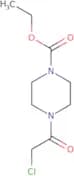
CAS:<p>Versatile small molecule scaffold</p>Formula:C3H2F3N3Purity:Min. 95%Molecular weight:137.06 g/mol4-(2-Chloro-acetyl)-piperazine-1-carboxylic acid ethyl ester
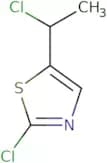
CAS:Versatile small molecule scaffoldFormula:C9H15ClN2O3Purity:Min. 95%Molecular weight:234.68 g/mol2-Chloro-5-(1-chloroethyl)-1,3-thiazole
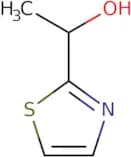
CAS:<p>Versatile small molecule scaffold</p>Formula:C5H5Cl2NSPurity:Min. 95%Molecular weight:182.07 g/mol2-Thiazolemethanol, ±-methyl- (7CI,9CI)
CAS:<p>2-Thiazolemethanol, ±-methyl- (7CI,9CI) is a catalytic agent that is used for the manufacture of enantiomerically pure (+)-2-thiazolemethanol. It is also used as a photoactive chemical in the production of cotton and has been shown to be an effective catalyst for a number of reactions. This chiral compound has been used in penicillin synthesis and was shown to be biologically active against erythromycin resistant strains of Penicillium notatum.</p>Formula:C5H7NOSPurity:Min. 95%Molecular weight:129.18 g/mol2-(1-Chloro-ethyl)-thiazole
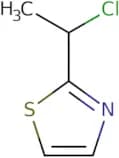
CAS:<p>Versatile small molecule scaffold</p>Formula:C5H6ClNSPurity:Min. 95%Molecular weight:147.62 g/mol4-Methyl-2-(hydroxymethyl)morpholine
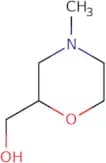
CAS:<p>Versatile small molecule scaffold</p>Formula:C6H13NO2Purity:Min. 95%Molecular weight:131.17 g/mol[4-(Propan-2-yl)morpholin-2-yl]methanol
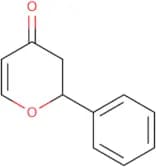
CAS:<p>Versatile small molecule scaffold</p>Formula:C8H17NO2Purity:Min. 95%Molecular weight:159.23 g/mol2-Phenyl-3,4-dihydro-2H-pyran-4-one
CAS:<p>Versatile small molecule scaffold</p>Formula:C11H10O2Purity:Min. 95%Molecular weight:174.2 g/mol1-Oxaspiro[4.4]non-2-en-4-one
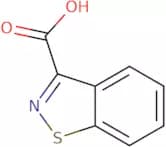
CAS:<p>Versatile small molecule scaffold</p>Formula:C8H10O2Purity:Min. 95%Molecular weight:138.16 g/mol1,2-Benzothiazole-3-carboxylic acid
CAS:<p>Versatile small molecule scaffold</p>Formula:C8H5NO2SPurity:Min. 95%Molecular weight:179.2 g/molN-[4-Bromo-3-(trifluoromethyl)phenyl]-2-chloroacetamide
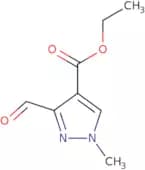
CAS:Versatile small molecule scaffoldFormula:C9H6BrClF3NOPurity:Min. 95%Molecular weight:316.5 g/molEthyl 3-formyl-1-methyl-1H-pyrazole-4-carboxylate
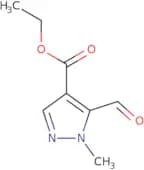
CAS:<p>Versatile small molecule scaffold</p>Formula:C8H10N2O3Purity:Min. 95%Molecular weight:182.18 g/molEthyl 5-formyl-1-methyl-1H-pyrazole-4-carboxylate
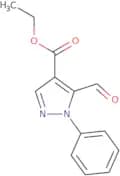
CAS:<p>Versatile small molecule scaffold</p>Formula:C8H10N2O3Purity:Min. 95%Molecular weight:182.18 g/molEthyl 5-formyl-1-phenyl-1H-pyrazole-4-carboxylate
CAS:<p>Versatile small molecule scaffold</p>Formula:C13H12N2O3Purity:Min. 95%Molecular weight:244.25 g/mol1-Methyl-1H,4H,5H-pyrazolo[3,4-d]pyridazin-4-one
CAS:<p>Versatile small molecule scaffold</p>Formula:C6H6N4OPurity:Min. 95%Molecular weight:150.14 g/mol1-Phenyl-1H,4H,5H-pyrazolo[3,4-d]pyridazin-4-one
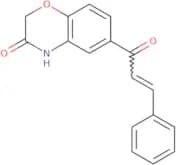
CAS:<p>Versatile small molecule scaffold</p>Formula:C11H8N4OPurity:Min. 95%Molecular weight:212.21 g/mol6-(3-Phenylprop-2-enoyl)-3,4-dihydro-2H-1,4-benzoxazin-3-one
CAS:<p>Versatile small molecule scaffold</p>Formula:C17H13NO3Purity:Min. 95%Molecular weight:279.29 g/mol

![2-[(Cyclopropylcarbonyl)amino]Benzoic Acid](/_next/image/?url=https%3A%2Fstatic.cymitquimica.com%2Fproducts%2F3D%2Fthumb-webp%2FQBA05721.webp&w=3840&q=75)
![8-Thia-4,6-diazatricyclo[7.5.0.0,2,7]tetradeca-1(9),2(7),5-trien-3-one](/_next/image/?url=https%3A%2Fstatic.cymitquimica.com%2Fproducts%2F3D%2Fthumb-webp%2FQBA10631.webp&w=3840&q=75)
![4-Chloro-6-methyl-1H,2H,3H-pyrrolo[3,4-c]pyridine-1,3-dione](/_next/image/?url=https%3A%2Fstatic.cymitquimica.com%2Fproducts%2F3D%2Fthumb-webp%2FQBA10791.webp&w=3840&q=75)
![6,7-Dihydro-5H-pyrrolo[3,4-b]pyridin-5-one](/_next/image/?url=https%3A%2Fstatic.cymitquimica.com%2Fproducts%2F3D%2Fthumb-webp%2FQBA10793.webp&w=3840&q=75)
![1H,2H,3H-pyrrolo[3,4-c]pyridin-3-one](/_next/image/?url=https%3A%2Fstatic.cymitquimica.com%2Fproducts%2F3D%2Fthumb-webp%2FQBA10795.webp&w=3840&q=75)
![5-Fluoro-benzo[b]thiophene-3-carboxylic acid](/_next/image/?url=https%3A%2Fstatic.cymitquimica.com%2Fproducts%2F3D%2Fthumb-webp%2FQBA74057.webp&w=3840&q=75)
![5-Propyl-[1,2,4]triazolo[1,5-a]pyrimidin-7-ol](/_next/image/?url=https%3A%2Fstatic.cymitquimica.com%2Fproducts%2F3D%2Fthumb-webp%2FQBA77587.webp&w=3840&q=75)





![5-Chloro-2-methyl-3H-imidazo[4,5-b]pyridine](/_next/image/?url=https%3A%2Fstatic.cymitquimica.com%2Fproducts%2F3D%2Fthumb-webp%2FQBA85192.webp&w=3840&q=75)
![(5S)-5-[(1H-Indol-3-yl)methyl]imidazolidine-2,4-dione](/_next/image/?url=https%3A%2Fstatic.cymitquimica.com%2Fproducts%2F3D%2Fthumb-webp%2FQBA85680.webp&w=3840&q=75)

![1-[3-(Dimethylamino)propyl]-6-hydroxy-4-methyl-2-oxo-1,2-dihydropyridine-3-carbonitrile](/_next/image/?url=https%3A%2Fstatic.cymitquimica.com%2Fproducts%2F3D%2Fthumb-webp%2FQBA85937.webp&w=3840&q=75)

![7-Methylbenzo[d]oxazol-2(3H)-O](/_next/image/?url=https%3A%2Fstatic.cymitquimica.com%2Fproducts%2F3D%2Fthumb-webp%2FQBA92560.webp&w=3840&q=75)
![[4-(Propan-2-yl)morpholin-2-yl]methanol](/_next/image/?url=https%3A%2Fstatic.cymitquimica.com%2Fproducts%2F3D%2Fthumb-webp%2FQBA98747.webp&w=3840&q=75)
![1-Oxaspiro[4.4]non-2-en-4-one](/_next/image/?url=https%3A%2Fstatic.cymitquimica.com%2Fproducts%2F3D%2Fthumb-webp%2FQBA99001.webp&w=3840&q=75)
![N-[4-Bromo-3-(trifluoromethyl)phenyl]-2-chloroacetamide](/_next/image/?url=https%3A%2Fstatic.cymitquimica.com%2Fproducts%2F3D%2Fthumb-webp%2FQBA99267.webp&w=3840&q=75)
![1-Methyl-1H,4H,5H-pyrazolo[3,4-d]pyridazin-4-one](/_next/image/?url=https%3A%2Fstatic.cymitquimica.com%2Fproducts%2F3D%2Fthumb-webp%2FQBA99546.webp&w=3840&q=75)
![1-Phenyl-1H,4H,5H-pyrazolo[3,4-d]pyridazin-4-one](/_next/image/?url=https%3A%2Fstatic.cymitquimica.com%2Fproducts%2F3D%2Fthumb-webp%2FQBA99547.webp&w=3840&q=75)