Building Blocks
This section contains fundamental products for the synthesis of organic and biological compounds. Building blocks are the essential starting materials used to construct complex molecules through various chemical reactions. They play a critical role in drug discovery, material science, and chemical research. At CymitQuimica, we offer a diverse range of high-quality building blocks to support your innovative research and industrial projects, ensuring you have the essential components for successful synthesis.
Subcategories of "Building Blocks"
- Boronic Acids & Boronic Acid Derivatives(5,756 products)
- Chiral Building Blocks(1,242 products)
- Hydrocarbon Building Blocks(6,093 products)
- Organic Building Blocks(60,522 products)
Found 195533 products of "Building Blocks"
Sort by
Purity (%)
0
100
|
0
|
50
|
90
|
95
|
100
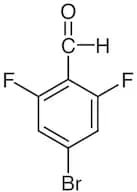
4-Bromo-2,6-difluorobenzaldehyde
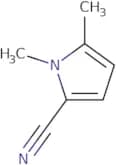
CAS:Formula:C7H3BrF2OPurity:>98.0%(GC)Color and Shape:White to Light yellow to Light orange powder to crystalMolecular weight:221.002-Cyano-1,5-dimethylpyrrole
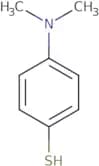
CAS:<p>2-Cyano-1,5-dimethylpyrrole is a quinone antibiotic. It has been shown to have antibacterial activity against organisms such as Staphylococcus, Streptococcus, and Pyogenes. This chemical has been shown to be active in the gaseous phase and against test organisms in alcohol extracts. 2-Cyano-1,5-dimethylpyrrole also exhibits flavonoid and saponin properties that may contribute to its antimicrobial activity.</p>Formula:C7H8N2Purity:Min. 95%Color and Shape:PowderMolecular weight:120.15 g/mol4-(Dimethylamino)benzenethiol
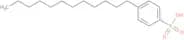
CAS:<p>4-(Dimethylamino)benzenethiol (DMAT) is a thiol that has coordination chemistry with metal ions. DMAT exhibits transport properties, such as solubility in water and chloride, which may be due to its electrochemical properties. DMAT can be photooxidized by ultraviolet light to form the reactive species, 4-dimethylaminobenzoquinone. This reactive species can then react with hydrogen peroxide to produce the intermediate radical cation, which can react with other molecules to produce singlet oxygen and superoxide radicals. These reactions are responsible for the photooxidation of organic materials.<br>The enhanced Raman spectra of DMAT have been studied using surface-enhanced Raman spectroscopy (SERS). The SERS technique enhances the intensity of scattered laser light by orders of magnitude by tapping into a phenomenon known as surface plasmon resonance. The nmr spectra of DMAT have been studied and show that it is</p>Formula:C8H11NSPurity:Min. 95%Color and Shape:PowderMolecular weight:153.25 g/mol4-Dodecylbenzenesulfonic acid - mixture of C10-C13 isomers
CAS:<p>4-Dodecylbenzenesulfonic acid is a mixture of C10-C13 isomers. It is used as an additive to biodiesel or petroleum diesel fuel to reduce the corrosivity of the fuel and protect the engine. 4-Dodecylbenzenesulfonic acid can be synthesized by reacting hydrochloric acid with a fatty acid. The product is then purified by hydrophilic interaction chromatography and sodium carbonate. 4-Dodecylbenzenesulfonic acid has been shown to have synergistic effects when combined with other compounds, such as boron nitride, in treating breast cancer cells. This compound has also been shown to have antimicrobial properties against bacteria, fungi, and protozoa through its hydroxide solution reaction with nitrogen atoms on the surface of multi-walled carbon nanotubes. 4-Dodecylbenzenesulfonic acid is a white solid that can be crystallized at room</p>Formula:C18H30O3SPurity:Min. 95%Color and Shape:Brown Clear LiquidMolecular weight:326.5 g/mol2,6-Dimethylbenzaldehyde
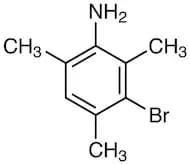
CAS:<p>2,6-Dimethylbenzaldehyde is a colorless liquid with a sweet odor. It is used in the synthesis of fatty acids and as an intermediate for other compounds. This chemical has significant cytotoxicity against leukemia cells, and is used in the production of acrylonitrile. 2,6-Dimethylbenzaldehyde can be synthesized by reacting an amine with an acyl chloride, followed by hydrolysis of the resulting ester. A contactor is usually added to facilitate the reaction. The reaction can also be carried out in the presence of a phosphorane or organic solvent.<br>2,6-Dimethylbenzaldehyde can be hydrogenated to produce 2,4-dimethylaniline and 2,4,6-trimethylaniline.</p>Formula:C9H10OPurity:Min. 95%Color and Shape:Clear White Solid Or Liquid (May Vary)Molecular weight:134.18 g/mol3-Bromo-2,4,6-trimethylaniline
CAS:Formula:C9H12BrNPurity:>98.0%(GC)(T)Color and Shape:White to Light yellow to Light orange powder to crystalMolecular weight:214.11N,N-Bis[2-(p-tolylsulfonyloxy)ethyl]-p-toluenesulfonamide
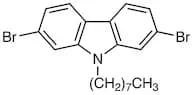
CAS:Formula:C25H29NO8S3Purity:>98.0%(HPLC)(N)Color and Shape:White to Almost white powder to crystalMolecular weight:567.692,7-Dibromo-9-n-octylcarbazole
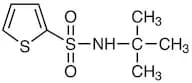
CAS:Formula:C20H23Br2NPurity:>98.0%(GC)Color and Shape:Light yellow to Yellow to Orange powder to crystalMolecular weight:437.22N-tert-Butyl-2-thiophenesulfonamide
CAS:Formula:C8H13NO2S2Purity:>98.0%(GC)Color and Shape:White to Almost white powder to crystalMolecular weight:219.324-(Hydroxymethyl)cyclohexanol
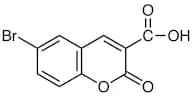
CAS:<p>4-(Hydroxymethyl)cyclohexanol is a versatile building block that can be used in the synthesis of complex compounds. This chemical has been shown to have a high degree of purity and is a useful intermediate or reaction component for many different reactions. It is also an excellent scaffold for synthesizing other organic molecules.</p>Formula:C7H14O2Purity:Min. 95%Color and Shape:Clear To White To Off-White SolidMolecular weight:130.18 g/mol6-Bromocoumarin-3-carboxylic Acid
CAS:Formula:C10H5BrO4Purity:>98.0%(HPLC)Color and Shape:White to Orange to Green powder to crystalMolecular weight:269.052'-Hydroxy-4',5'-dimethylacetophenone
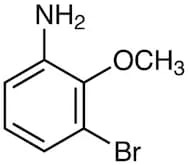
CAS:<p>2'-Hydroxy-4',5'-dimethylacetophenone is a chalcone that is structurally similar to the catecholamines. It has been shown to inhibit bacterial growth in vitro and in vivo and to be active against both Gram-positive and Gram-negative bacteria. This compound also has antiviral activity, inhibiting the replication of herpes simplex virus type 1 (HSV-1) in cell culture. 2'-Hydroxy-4',5'-dimethylacetophenone also has antibacterial activity against Trichophyton mentagrophytes and Melaleuca alternifolia, an Australian tree that produces a range of bioactive compounds with antimicrobial properties. 2'-Hydroxy-4',5'-dimethylacetophenone binds to the enzyme phosphodiesterase, blocking the conversion of cyclic adenosine monophosphate (cAMP) into its inactive form cAMP hydrolysis product (cAMP). Inhibition of this enzyme</p>Formula:C10H12O2Purity:Min. 95%Color and Shape:Off-White To Yellow SolidMolecular weight:164.2 g/mol3-Bromo-2-methoxyaniline
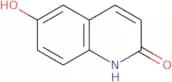
CAS:Formula:C7H8BrNOPurity:>98.0%(GC)(T)Color and Shape:Light yellow to Brown clear liquidMolecular weight:202.056-Hydroxyquinoline-(1H)-2-one
CAS:<p>6-Hydroxyquinoline-(1H)-2-one is an organic compound that has been shown to inhibit the uptake of carbostyril by bacterial cells. This inhibition causes increased uptake of xanthurenic acid and anthranilic acid, which are two compounds that are found in wastewater treatment. 6-Hydroxyquinoline-(1H)-2-one may be a potential anticancer agent, as it inhibits the growth of astroglia cells and bladder cancer cells. It also reacts with acylation reactions to form quinolinic acid, which has been shown to have anticancer effects.</p>Formula:C9H7NO2Purity:Min. 95%Color and Shape:White SolidMolecular weight:161.16 g/mol2-Hydroxytetrahydrofuran
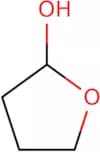
CAS:<p>2-Hydroxytetrahydrofuran is a glycol ether that is used as an agent in various industrial processes. It has been shown to be a potent inhibitor of the Mcl-1 protein, which plays an important role in apoptosis. 2-Hydroxytetrahydrofuran has also been found to be effective against autoimmune diseases and metabolic disorders such as diabetes mellitus. In addition, this chemical is known for its ability to inhibit the oxidation of hydrogen peroxide by acting as a catalyst. 2-Hydroxytetrahydrofuran is used in wastewater treatment because it prevents the formation of nitrates and nitrites from nitrogen-containing organic compounds. This chemical can also cause eye disorders if it penetrates the cornea or other parts of the eye.</p>Formula:C4H8O2Purity:Min. 95 Area-%Color and Shape:Colorless Clear LiquidMolecular weight:88.11 g/mol1-Hydroxy-2,3-dimethylbenzene
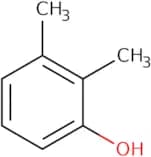
CAS:<p>1-Hydroxy-2,3-dimethylbenzene (1,2-DMB) is a chemical compound that is used as an industrial catalyst. It has been shown to be an efficient catalyst for the treatment of wastewater, and has been studied in the removal of nitrogen from industrial gases. 1,2-DMB has also been found to be active against bacteria such as Pseudomonas aeruginosa and Staphylococcus aureus. This compound reacts with copper ions to form an organometallic complex, which then reacts with trifluoroacetic acid in an organic solution to form an aldehyde group.</p>Formula:C8H10OPurity:Min. 95%Color and Shape:Off-White PowderMolecular weight:122.16 g/mol3-Hydrazinopyridine 2HCl
CAS:<p>3-Hydrazinopyridine 2HCl is a carboxylic acid that occurs naturally in the form of its dihydrochloride salt, 3-hydrazinopyridine dihydrochloride. It is an intermediate in the synthesis of numerous other compounds and has been used as a precursor to maleic anhydride. 3-Hydrazinopyridine 2HCl is also a reagent for the production of dialkylated or chlorinated derivatives. The hydrolysis of 3-hydrazinopyridine 2HCl with sodium hydroxide yields acetic acid, which can be oxidized to form maleic acid, or reduced to form acrylonitrile.</p>Formula:C5H9Cl2N3Purity:Min. 95%Color and Shape:PowderMolecular weight:182.05 g/mol1-Hexen-3-one
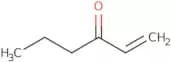
CAS:<p>1-Hexen-3-one is a carbonyl compound that has been shown to act as an estrogen receptor modulator. It has been isolated from the reaction product of hexene and formaldehyde, in which the intramolecular hydrogen is transferred to the carbon atom adjacent to the carbonyl group. 1-Hexen-3-one has been shown to induce muscle cell proliferation in vitro and inhibit liver microsomal protein synthesis in vivo. The 1-hexen-3-one can be prepared by reacting hexene with formaldehyde. The yield of this reaction is about 80%.<br>2 HCHO + C6H12 → C6H14O + 2 HCOOH</p>Formula:C6H10OPurity:Min. 95%Color and Shape:PowderMolecular weight:98.14 g/mol4-Hydroxymethylpiperidine hydrochloride
CAS:<p>4-Hydroxymethylpiperidine hydrochloride is a fine chemical that has been used as a versatile building block for the synthesis of complex compounds. It is available for sale as a research chemical, and can be used as an intermediate or reagent in the synthesis of specialty chemicals. This compound is useful in the production of pharmaceuticals, agrochemicals, dyes, and fragrances. 4-Hydroxymethylpiperidine hydrochloride has been found to be useful in the manufacture of high-quality products.</p>Formula:C6H13NO·HClPurity:Min. 95%Color and Shape:White PowderMolecular weight:151.63 g/mol(S)-(+)-3-Methyl-1-pentanol
CAS:<p>(S)-(+)-3-Methyl-1-pentanol is a branched-chain, β-unsaturated aldehyde that is produced by the elimination of two molecules of water from (R)-(+)-3-methylbutanal. It is an organocatalytic substrate for the family of enzymes that catalyze the first step in the biosynthetic pathway to abiotic long-chain alcohols. The product is an intermediate in the biosynthesis of escherichia coli and other bacteria. The enzyme involved in this reaction is initially activated by acetate and then inhibited by NADH. In nature, this compound can be found as a natural product or as a metabolic intermediate.</p>Formula:C6H14OPurity:Min. 95%Color and Shape:Colorless Clear LiquidMolecular weight:102.17 g/mol



![N,N-Bis[2-(p-tolylsulfonyloxy)ethyl]-p-toluenesulfonamide](/_next/image/?url=https%3A%2Fstatic.cymitquimica.com%2Fproducts%2F3B%2Fthumb-webp%2FB4136.webp&w=3840&q=75)