Building Blocks
This section contains fundamental products for the synthesis of organic and biological compounds. Building blocks are the essential starting materials used to construct complex molecules through various chemical reactions. They play a critical role in drug discovery, material science, and chemical research. At CymitQuimica, we offer a diverse range of high-quality building blocks to support your innovative research and industrial projects, ensuring you have the essential components for successful synthesis.
Subcategories of "Building Blocks"
- Boronic Acids & Boronic Acid Derivatives(5,756 products)
- Chiral Building Blocks(1,242 products)
- Hydrocarbon Building Blocks(6,095 products)
- Organic Building Blocks(61,038 products)
Found 196817 products of "Building Blocks"
Sort by
Purity (%)
0
100
|
0
|
50
|
90
|
95
|
100
6-Bromoveratraldehyde
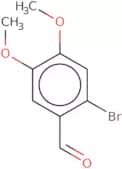
CAS:<p>6-Bromoveratraldehyde (6BrA) is a synthetic compound that has been shown to be an effective agent for inducing apoptosis in leukemia cells. It is an efficient method for synthesizing the compound and has been used as a model study for biphenyl and naphthalene. 6BrA induces cell death by topoisomerase-mediated DNA cleavage, which results in chromosomal fragmentation and high levels of reactive oxygen species in the cell.</p>Formula:C9H9BrO3Purity:Min. 95%Color and Shape:White PowderMolecular weight:245.07 g/mol5-(2-Fluorophenyl)-1-methyl-1H-pyrrole-2-carboxylic acid
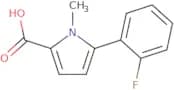
CAS:<p>Versatile small molecule scaffold</p>Formula:C12H10FNO2Purity:Min. 95%Color and Shape:PowderMolecular weight:219.21 g/molN-b-Boc-L-2,3-diaminopropionic acid
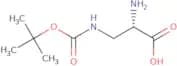
CAS:<p>N-Boc-L-2,3-diaminopropionic acid is an antimicrobial agent that has been shown to be active against Listeria monocytogenes. It inhibits the growth of bacteria by binding to cell walls and interfering with their functions. This compound has been shown to inhibit the growth of bacterial strains such as Camembert and lactobacillus at a concentration of 10mg/mL. N-Boc-L-2,3-diaminopropionic acid also has a high heat transfer coefficient, which makes it suitable for use in cooling systems for food processing plants.</p>Formula:C8H16N2O4Purity:Min. 95%Color and Shape:White PowderMolecular weight:204.22 g/mol2,3-Dimethoxybenzaldehyde
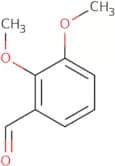
CAS:<p>2,3-Dimethoxybenzaldehyde is a chemical substance that binds to its ligands by hydrogen bonding and van der Waals forces. It is used in the synthesis of diethyl succinate. 2,3-Dimethoxybenzaldehyde has been shown to inhibit the growth of squamous carcinoma cells. The conversion of 2,3-dimethoxybenzaldehyde into benzoquinone is catalyzed by glucose oxidase and peroxidase. This oxidation process results in a loss of two electrons and one proton from the molecule, changing it from a phenol to an aromatic hydrocarbon.</p>Formula:C9H10O3Purity:Min. 95%Color and Shape:PowderMolecular weight:166.17 g/mol1-Boc-4-bromomethylpiperidine
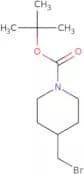
CAS:<p>1-Boc-4-bromomethylpiperidine is a versatile building block for the synthesis of complex compounds with diverse biological activity. It is an excellent reagent for the synthesis of 1,2,3-triazoles, which are useful scaffolds in the synthesis of high quality pharmaceuticals. This compound can be used as a reaction component and as a useful intermediate in various chemical reactions.</p>Formula:C11H20BrNO2Purity:Min. 97 Area-%Color and Shape:PowderMolecular weight:278.19 g/mol4-Chloro-2-methyl-5-(propan-2-yl)phenol
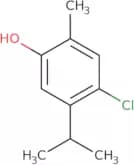
CAS:<p>4-Chloro-2-methyl-5-(propan-2-yl)phenol (4CMPP) is a synthetic compound that belongs to the group of fatty alcohols. It is used in clinical diagnostics for the detection of cancer cells. 4CMPP was detected in the human plasma and erythrocytes using solid phase microextraction (SPME). The homologues of 4CMPP were also identified. The chemical structure of 4CMPP consists of a chain with two methyl groups and a phenolic group at opposite ends. This compound has been shown to be cytotoxic, as well as an inhibitor of translation and protein synthesis.</p>Formula:C10H13ClOPurity:Min. 95%Color and Shape:PowderMolecular weight:184.66 g/mol2-(Trifluoromethoxy)aniline
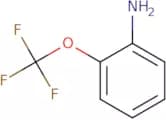
CAS:<p>2-(Trifluoromethoxy)aniline is a heterocyclic aromatic compound that can act as an electrophilic catalyst. It is a strong nucleophile and reacts with various types of nucleophiles. 2-(Trifluoromethoxy)aniline has been used for the synthesis of aliphatic sulfoxides under acidic conditions, including alcohols, phenols, and thiols. The reaction mechanism is often a 1,2-addition of the nucleophile to the carbonyl group of 2-(trifluoromethoxy)aniline. This reaction is catalytic and produces a stable dimerized product. 2-(Trifluoromethoxy)aniline also has mesoporous properties, which allow it to be used in reactions involving alcohols or other polar molecules because they are soluble in the pores.</p>Formula:C7H6F3NOPurity:Min. 95%Color and Shape:Clear LiquidMolecular weight:177.12 g/mol[Bis(trifluoroacetoxy)iodo]benzene
CAS:<p>Bis(trifluoroacetoxy)iodobenzene is a reactive, radiating, profile, planar molecule with a frequency of low energy. It has been shown to react in acid analysis and the carbonyl group. The reaction mechanism involves the generation of an intermediate that reacts with oxygen to produce the desired product. The impedance is high at resonance frequencies.</p>Formula:C10H5F6IO4Purity:Min. 95%Color and Shape:White PowderMolecular weight:430.04 g/molN,N'-Thiocarbonyldiimidazole
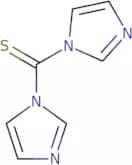
CAS:<p>N,N'-Thiocarbonyldiimidazole is a potent inhibitor of the enzyme acetylcholinesterase. It is used in research as an inhibitor molecule for receptor activity and to study the mechanism of action of other drugs. N,N'-Thiocarbonyldiimidazole inhibits the production of ester hydrochloride by rat liver microsomes and muscle cell proliferation. In addition, this compound has been shown to be a protonophore that can transport protons across membranes without energy input. This can be done through Langmuir adsorption isotherm and electrochemical impedance spectroscopy.</p>Formula:C7H6N4SPurity:Min. 95%Color and Shape:Yellow PowderMolecular weight:178.22 g/molEthyl 4-ethoxybenzoate
CAS:<p>Ethyl 4-ethoxybenzoate is an antimicrobial agent that inhibits bacterial growth by interfering with the synthesis of DNA. It also has a genotoxic potential and can induce mutations in cells. Ethyl 4-ethoxybenzoate is used as an impurity in pharmaceutical drug production, such as solanum tuberosum extract, to prevent microbial contamination. It also has been shown to inhibit the growth of bacteria in cell cultures by binding to DNA and inhibiting DNA replication. Ethyl 4-ethoxybenzoate is used as a control agent for the detection of antibiotics in natural products, such as ethanol extracts from plants.</p>Formula:C11H14O3Purity:Min. 97.5 Area-%Color and Shape:Colorless Clear LiquidMolecular weight:194.23 g/molDL-Tyrosine
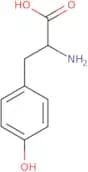
CAS:<p>DL-Tyrosine is a non-essential amino acid that can be synthesized in the body from phenylalanine or obtained from food. DL-Tyrosine is a precursor of the neurotransmitter dopamine, which is involved in regulating mood, movement, and cognitive functions. DL-Tyrosine has been shown to inhibit the conversion of tyrosine to 3,4-dihydroxyphenylacetic acid (DOPAC) by dopamine β-hydroxylase. Tyrosine also prevents the formation of reactive oxygen species due to its chemical stability and ability to scavenge free radicals. DL-Tyrosine may have implications for treating Parkinson's disease, ADHD, depression, and chronic fatigue syndrome.</p>Formula:C9H11NO3Purity:Min. 95%Color and Shape:PowderMolecular weight:181.19 g/mol3-(9-((6-(2,5-Dioxopyrrolidin-1-yloxy)-6-oxohexyl)(tosyl)carbamoyl)acridinium-10-yl)propane-1-sulfonate
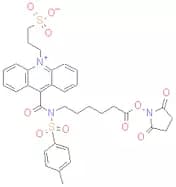
CAS:<p>3-(9-((6-(2,5-Dioxopyrrolidin-1-yloxy)-6-oxohexyl)(tosyl)carbamoyl)acridinium-10-yl)propane-1-sulfonate is a fine chemical that is used as a versatile building block for complex compounds. It can be used in the synthesis of research chemicals or reagents, or as a speciality chemical. 3-(9-((6-(2,5-Dioxopyrrolidin-1-yloxy)-6-oxohexyl)(tosyl)carbamoyl)acridinium-10-yl)propane sulfonate can be reacted with other compounds to form useful scaffolds and reaction components. This compound has CAS number 866366–12–3.</p>Formula:C34H35N3O10S2Purity:Min. 95%Color and Shape:PowderMolecular weight:709.79 g/mol1,3,3-Trimethoxypropene
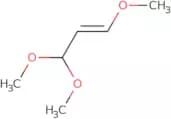
CAS:<p>1,3,3-Trimethoxypropene is a fluorophore that can be used for the labeling of nucleic acids. It has been shown to be photostable and can be used in fluorescence techniques. 1,3,3-Trimethoxypropene has also been used in structural biology research and studies on the physicochemical properties of fluorescent probes. This compound can also be used as a building block for the synthesis of supramolecular structures and conjugates with other molecules that have different properties. 1,3,3-Trimethoxypropene is a fluorophore that emits cyanines in the visible range of light.</p>Formula:C6H12O3Purity:Min. 95%Color and Shape:Clear LiquidMolecular weight:132.16 g/mol3,4,5-Trihydroxybenzaldehyde monohydrate
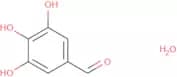
CAS:<p>3,4,5-Trihydroxybenzaldehyde monohydrate is a chemical compound that belongs to the class of aromatic hydrocarbons. It has been shown to have a neurotoxic effect on the mouse brain and is used in the diagnosis of neurological diseases. 3,4,5-Trihydroxybenzaldehyde monohydrate is also used as an intermediate in the synthesis of other chemicals. The molecular formula for this substance is C9H7O3 and it contains three nitrogen atoms. The molecular weight is 179.06 g/mol and its sequence length is 707 amino acids long. This substance has been found to be present in humans with chronic kidney disease and insulin resistance.</p>Formula:C7H6O4·H2OPurity:(%) Min. 95%Color and Shape:PowderMolecular weight:172.14 g/mol1,2,4-Triazole
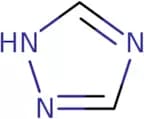
CAS:<p>1,2,4-Triazole is a heterocyclic compound that is used as an intermediate in the synthesis of many other organic compounds. It can be obtained by reacting trifluoroacetic acid with nitrobenzene in the presence of ammonia. This reaction yields a protonated 1,2,4-triazole and ammonium chloride as byproducts. The thermodynamic data for this compound has been determined using an electrochemical impedance spectroscopy method and it was found that the protonation state of 1,2,4-triazole depends on pH. <br>1,2,4-Triazole has been shown to cause genotoxic effects in carcinoma cell lines. It is also capable of inhibiting the growth of bacteria by binding to nitrogen atoms present on their surface. This leads to a decrease in bacterial activity and may be useful for biological treatment purposes. Nitro groups are able to react with 1,2,4</p>Formula:C2H3N3Purity:Min. 95%Color and Shape:PowderMolecular weight:69.07 g/mol2,4-Dimethoxybenzylamine
CAS:<p>Tak-659 is an amide compound that inhibits the serine protease activity of a number of enzymes, including cathepsin B and L. Tak-659 has been shown to have inhibitory effects on inflammation in animal models by inhibiting the production of inflammatory cytokines. Tak-659 has also been shown to impair protein synthesis in gram-negative bacteria, such as Escherichia coli and Pseudomonas aeruginosa. The mechanism for this inhibition is not entirely clear but may be due to tak-659 binding to the ribosomal RNA near the peptidyl transferase center, blocking the entry of amino acids into the ribosome. Tak-659 binds with high affinity to adenosine receptors and has been shown to reduce levels of inflammatory cytokines in mouse tumor cells.</p>Formula:C9H13NO2Purity:Min. 95%Color and Shape:Colorless Clear LiquidMolecular weight:167.21 g/mol6-(2-Aminoethyl)-1,2-dihydropyridin-2-one dihydrochloride
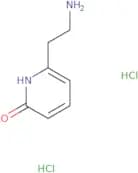
CAS:<p>6-(2-Aminoethyl)-1,2-dihydropyridin-2-one dihydrochloride (CEP) is a versatile building block that is used in the research and development of complex compounds, reagents, and speciality chemicals. It is an intermediate for the production of other compounds that can be used in pharmaceuticals or agrochemicals. CEP has also been shown to be a useful scaffold for the synthesis of new compounds with potential applications as anti-cancer agents.</p>Formula:C7H12Cl2N2OPurity:Min. 95%Color and Shape:PowderMolecular weight:211.09 g/mol2,3-Butanedione monoxime
CAS:<p>2,3-Butanedione monoxime (BDM) is a metabolite of the glycol ether, 2,3-butanedione. It has been shown to have a beneficial effect on metabolic disorders in rats by modulating several enzyme activities. The optimum concentration of BDM is 2 mmol/L. This compound has also been shown to inhibit the oxidation of xanthine oxidase and the formation of hydroxyl radicals in vitro. BDM has also been found to have synchronous fluorescence with papillary muscles from guinea pigs and cytosolic ca2+ levels in rat liver cells. The structure analysis revealed that BDM binds to the active site of the x-ray crystal structures for mitochondrial cytochrome C oxidase and cardiac ATP synthase with an affinity similar to that of CoQ10. The Langmuir adsorption isotherm for BDM was calculated as 0.913 +/- 0.034 cm/g at 20 degrees Celsius,</p>Formula:C4H7O2NPurity:(%) Min. 99%Color and Shape:White PowderMolecular weight:101.1 g/moltert-Butyl isocyanoacetate
CAS:<p>tert-Butyl isocyanoacetate is an organic compound that belongs to the diacid class of organic compounds. It reacts with water to produce the amide and squaramide. Tert-butyl isocyanoacetate has a high affinity for nitrogen atoms, and can be used in uv absorption spectroscopy. It also has a stepwise mechanism and can react with other chemicals to produce new substances. The compound has fluorescence properties and is used in optical devices such as lasers. Tert-butyl isocyanoacetate also has an ester hydrochloride form which is low potency but active methylene catalysed.</p>Formula:C7H11NO2Purity:Min. 95%Color and Shape:Brown Clear LiquidMolecular weight:141.17 g/molBenzoic acid N-hydroxysuccinimide ester
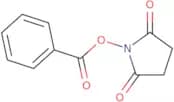
CAS:<p>Benzoic acid N-hydroxysuccinimide ester is a chemical compound that is used for the diagnosis of cancer. It is used as a reagent in chromatographic methods and as a sample preparation agent in amine extraction techniques. The benzoate group reacts with amines to form an aminobenzoate ester, which can be detected by ionization techniques. This reaction mechanism has been studied extensively with spinorphin and epidermal growth factor.</p>Formula:C11H9NO4Purity:Min. 95%Color and Shape:White PowderMolecular weight:219.19 g/mol

![[Bis(trifluoroacetoxy)iodo]benzene](/_next/image/?url=https%3A%2Fstatic.cymitquimica.com%2Fproducts%2F3D%2Fthumb-webp%2FFB49107.webp&w=3840&q=75)