Building Blocks
This section contains fundamental products for the synthesis of organic and biological compounds. Building blocks are the essential starting materials used to construct complex molecules through various chemical reactions. They play a critical role in drug discovery, material science, and chemical research. At CymitQuimica, we offer a diverse range of high-quality building blocks to support your innovative research and industrial projects, ensuring you have the essential components for successful synthesis.
Subcategories of "Building Blocks"
- Boronic Acids & Boronic Acid Derivatives(5,756 products)
- Chiral Building Blocks(1,242 products)
- Hydrocarbon Building Blocks(6,095 products)
- Organic Building Blocks(61,037 products)
Found 196200 products of "Building Blocks"
Sort by
Purity (%)
0
100
|
0
|
50
|
90
|
95
|
100
Ferulic acid
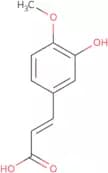
CAS:<p>Ferulic acid is a plant polyphenol that has been shown to induce apoptosis in human leukemia cells and inhibit the production of tumor necrosis factor-α (TNF-α), thereby improving glucose tolerance. Ferulic acid inhibits the mitochondrial membrane potential by binding to the Mcl-1 protein and inducing its degradation, leading to anion radical scavenging. This compound also has significant cytotoxicity in a model system and has been shown to have hypoglycemic effects in animal studies. Ferulic acid also induces cell cycle arrest by inhibiting the expression of cyclin D1, which is involved in regulating the G1 phase of the cell cycle.</p>Formula:C10H10O4Purity:Min. 95%Color and Shape:PowderMolecular weight:194.18 g/mol4-Hydroxy-3-nitrophenylacetic acid
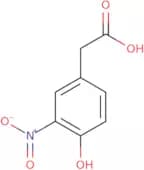
CAS:<p>4-Hydroxy-3-nitrophenylacetic acid is a metabolite of caproic acid in the mouse. It is also an analytical marker for caproic acid in human serum and a biochemical marker for 4-hydroxybenzoic acid in human urine. The affinity of 4-hydroxy-3-nitrophenylacetic acid to antibodies has been shown by its ability to be titrated calorimetrically with antibodies, which are used as a model system. The antibody response has been studied by immunizing mice with 4-hydroxybenzoic acid, which resulted in the production of antibodies that had the same reactivity as those against 4-hydoxy-3-nitrophenylacetic acid. The reaction mechanism of hydrolysis of 4-hydroxybenzoic acid by monoclonal antibodies has been proposed and was supported by the results obtained from titration calorimetry experiments.</p>Formula:C8H7NO5Purity:Min. 95%Color and Shape:Off-White PowderMolecular weight:197.14 g/mol1-Hydroxy-2-naphthoic acid
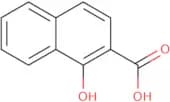
CAS:<p>1-Hydroxy-2-naphthoic acid is a chemical compound that belongs to the group of carboxylic acids. It is used in the treatment of malonic acidemia and as a reagent for the structural analysis of organic compounds. 1-Hydroxy-2-naphthoic acid has been shown to react with protonated malonic acid in a synchronous fluorescence experiment. The reaction mechanism involves an intramolecular hydrogen transfer from the carboxylate group to the naphthalene ring, leading to formation of a methyl ethyl cation. This cation can then either react with another malonic acid molecule or be deprotonated by water, depending on pH and concentration. 1-Hydroxy-2-naphthoic acid has also shown photochemical properties and can be used for wastewater treatment due to its ability to degrade organic pollutants such as phenols and amines.</p>Formula:C11H8O3Purity:Min. 98 Area-%Color and Shape:PowderMolecular weight:188.18 g/mol4-Hydroxy-2-methoxybenzaldehyde
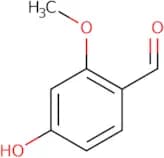
CAS:<p>Echinatin is a benzaldehyde derivative that is found in the roots of Echinacea purpurea. It is a phenolic compound with a carbonyl group and two benzyl groups. 4-Hydroxy-2-methoxybenzaldehyde has been shown to have photophysical, cell culture, and functional group properties. This compound is used as a precursor for the production of echinatin and other plant polyphenols such as malonic acid. The biosynthesis of 4-hydroxy-2-methoxybenzaldehyde begins with the oxidation of cinnamic acid by cytochrome P450 monooxygenase to form cinnamoyl CoA. The enzyme cinnamate decarboxylase then converts this intermediate to p-hydroxybenzoic acid, which is then hydroxylated to form 4-hydroxy-2-methoxybenzaldehyde.</p>Formula:C8H8O3Purity:Min. 95%Color and Shape:PowderMolecular weight:152.15 g/molHomovanillic acid
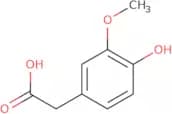
CAS:<p>Homovanillic acid is widely used as a fluorogenic substrate of peroxidase. The reaction is however not specific and has been shown to react also with soybean lipoxygenase in the presence of hydrogen peroxide. Excitation and emission wavelengths for homovanillic acid are 312 and 420 nm, respectively.</p>Formula:C9H10O4Purity:Min. 97.5 Area-%Color and Shape:Red PowderMolecular weight:182.17 g/molD,L-Homotryptophan
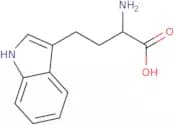
CAS:<p>D,L-Homotryptophan is a fine chemical that is used as a building block in the synthesis of complex compounds. It has been used as a reagent, speciality chemical, and intermediate. D,L-Homotryptophan is also versatile in its use as a building block for the synthesis of various chemicals. This compound has been shown to react with other chemicals to form useful scaffolds.</p>Formula:C12H14N2O2Purity:Min. 95%Color and Shape:PowderMolecular weight:218.25 g/mol3-Bromo-2-methylbenzene-1-sulfonamide
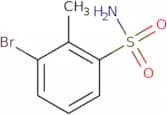
CAS:<p>3-Bromo-2-methylbenzene-1-sulfonamide is a chemical compound that is used as an intermediate in the production of other chemicals. 3-Bromo-2-methylbenzene-1-sulfonamide is a versatile building block, which can be used to make the reagent 3,3'-dimethoxybiphenyl by reacting with acetone and sodium methoxide. It can also be used to make a variety of useful compounds, such as 1,2,4,5 tetrahydroisoquinoline. This compound has CAS Number 1032507-35-9 and is a fine chemical that can be found on the list of speciality chemicals.</p>Formula:C7H8BrNO2SPurity:Min. 95%Color and Shape:PowderMolecular weight:250.12 g/molHomogentisic acid
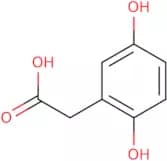
CAS:<p>Precursor of melanine synthesis in bacteria</p>Formula:C8H8O4Purity:Min 96%Color and Shape:White PowderMolecular weight:168.15 g/molL-Histidine acetate
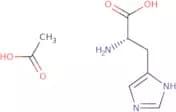
CAS:Controlled Product<p>L-Histidine acetate is a white, crystalline powder that has a constant melting point and can be soluble in water. It has a monoclinic crystal system with a crystal form of α-l-histidine dihydrogen acetate. L-Histidine acetate is an amino acid that is necessary for the biosynthesis of proteins and the metabolism of histamine. L-Histidine acetate has been studied using x-ray diffraction and optical properties to determine its functional groups. The activation energy for this compound is found to be at 4.1 kcal/mol, which is lower than most other compounds in nature. The frequencies of light waves are measured at 3,040 cm-1 and the evaporation rate at 15°C is 0.039 cm3/s.</p>Formula:C6H9N3O2•C2H4O2Purity:Min. 95%Molecular weight:215.21 g/mol(2S,5R)-5-Hydroxypiperidine-2-carboxylic acid hydrochloride
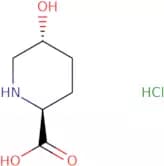
CAS:<p>(2S,5R)-5-Hydroxypiperidine-2-carboxylic acid hydrochloride is a fine chemical that is useful as a building block in organic synthesis. It is also used as an intermediate in the production of other chemicals and may be used to synthesize complex compounds. This compound has a CAS number of 824943-40-0 and may be available at competitive prices.</p>Formula:C6H12ClNO3Purity:Min. 95%Color and Shape:Off-White PowderMolecular weight:181.62 g/mol8-Hydroxypenillic acid
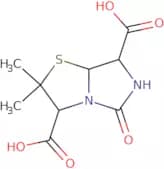
CAS:<p>8-Hydroxypenillic acid is an intermediate in the synthesis of penicillin. It is produced by the enzyme 8-hydroxylase, which converts L-lysine to L-3,4-dihydroxyphenylalanine. This reaction requires a number of cofactors, including magnesium ions and oxygen. The product is then converted to 8-hydroxypenillic acid by the enzyme hydroxypenicillinase. Inhibition of this enzyme leads to accumulation of 8-hydroxypenillic acid, which can be used as a biomarker for production of penicillin.</p>Formula:C9H12N2O5SPurity:Min. 95%Color and Shape:PowderMolecular weight:260.27 g/molDiisopropyl Malonate
CAS:Controlled Product<p>Applications Diisopropyl Malonate is a disinfection byproduct of Isoprothiolane (I874300); a dithiolane pesticide commonly used in agriculture as a fungicide to control planthoppers and blast disease in rice plants.<br>References Chin, K.M.: Malay. Agric. J., 50, 221 (1975); Ikeda, Y. et al.: Biosci. Biotech. Biochem., 57, 288 (1993); Nakamura, H.: Rev. Plant Prot. Res., 10, 1 (1977); Reddy, A.P.K. et al.: Pesticide, 22, 21 (1988); Jinno, H., et al.: Arch. Toxicol., 71, 550 (1997)<br></p>Formula:C9H16O4Color and Shape:NeatMolecular weight:188.22o-Phthaloyl Dichloride
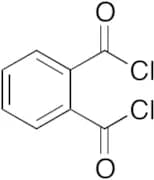
CAS:Controlled ProductFormula:C8H4Cl2O2Color and Shape:NeatMolecular weight:203.028-Bromooctanoic Acid
CAS:Controlled Product<p>Applications 8-Bromooctanoic Acid (cas# 17696-11-6) is a compound useful in organic synthesis.<br> Not a dangerous good if item is equal to or less than 1g/ml and there is less than 100g/ml in the package<br></p>Formula:C8H15BrO2Color and Shape:NeatMolecular weight:223.113,5-Diiodosalicylic Acid
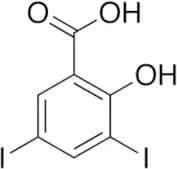
CAS:Controlled Product<p>Applications 3,5-Diiodosalicylic Acid is an metabolite of Aspirin (A187780), an anti-inflammatory, anti-platelet and cancer-preventive agent. 3,5-Diiodosalicylic Acid was shown to exhibit agonist activity at GPR35, a orphan G protein coupled receptor.<br>References Deng, H.Y., et al.: Arch. Pharmacol., 385, 729 (2012); Blandin, V., et al.: Molec. Pharmacol., 58, 1461 (2000);<br></p>Formula:C7H4I2O3Color and Shape:NeatMolecular weight:389.91Methyl 4-Methoxyphenylacetate
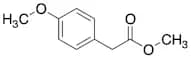
CAS:Controlled Product<p>Applications Methyl 4-Methoxyphenylacetate (cas# 23786-14-3) is a useful research chemical.<br></p>Formula:C10H12O3Color and Shape:NeatMolecular weight:180.22-Cyano-1-methyl-2-propen-1-yl Methyl Ester Carbonic Acid
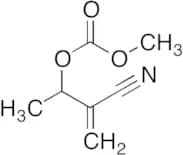
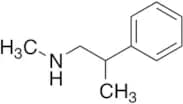
CAS:Controlled ProductFormula:C7H9NO3Color and Shape:NeatMolecular weight:155.15N-Methyl-2-phenylpropan-1-amine
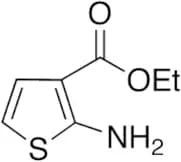
CAS:Controlled Product<p>Stability Hygroscopic<br>Applications N-methyl-2-phenylpropan-1-amine (cas# 93-88-9) is a useful research chemical.<br></p>Formula:C10H15NColor and Shape:NeatMolecular weight:149.23Ethyl 2-Aminothiophene-3-carboxylate
CAS:Controlled Product<p>Applications Ethyl 2-Aminothiophene-3-carboxylate (cas# 31891-06-2) is a compound useful in organic synthesis.<br></p>Formula:C7H9NO2SColor and Shape:NeatMolecular weight:171.22